Support WBUR
The secrets of super agers
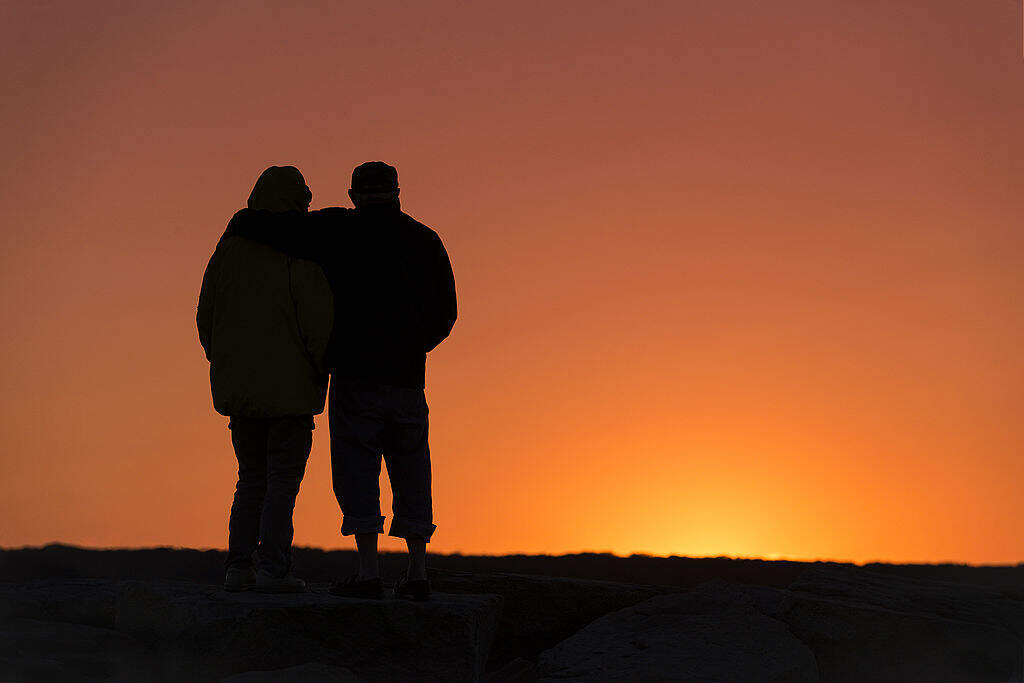
“Super agers” are people who live well into their 80s without developing chronic diseases, such as cancer, diabetes or cardiovascular issues. What can we learn from them to promote healthier, longer lives?
Guests
Dr. Eric Topol, cardiologist, scientist and author. Chair of the Department of Translational Medicine at Scripps Research. Author of: Super Agers: An Evidence-Based Approach to Longevity.
Also Featured
Lee Rushall, a “super ager.”
Transcript
Part I
DEBORAH BECKER: Today we're taking up an age-old question about age. Why is it that some people drastically deteriorate in their later years? While others, like 98-year-old Lee Rushall seemingly do not.
LEE RUSHALL: I don't think about age myself. I am pretty much doing everything I used to do, except when I look in the mirror, there's an old lady looking back at me and I don't recognize that person too.
BECKER: Lee is an artist who just had a showing of her paintings in her hometown of San Diego. She has no chronic diseases, a large group of friends, and remains independent and active.
RUSHALL: I also like to do jigsaw puzzles. 1,000 to 1,500 pieces. I knit. I read. I play games. I play cards twice a week and keep myself busy.
BECKER: Lee says she really doesn't know why she's aged so well.
RUSHALL: My doctor that I used to have, she said I had good genes, but I don't see how that's possible.
BECKER: Seems impossible, she says, because her parents both died of health-related issues before they were 70. Her brothers passed away decades ago. Lee says she doesn't do anything special to maintain her health, but she does maintain a positive attitude.
RUSHALL: I was married for 72.5 years. And we had a wonderful life. Many ups and downs, but many joyous times. And if I can't be in my own home with my husband, I'm glad I'm here.
BECKER: And Lee Rushall is defying the odds. In the U.S., about 95% of people get some type of chronic disease by the time they reach age 60.
How did Lee escape that fate? This hour we're gonna talk with one of her physicians. Dr. Eric Topol is a cardiologist and scientist, he's also author of the new book titled Super Agers: An Evidence-Based Approach to Longevity. Dr. Topol and his team studied more than 1,400 people, likely people he calls super agers.
That's someone who's over 80 and has never had a chronic medical condition. Dr. Eric Topol, welcome to On Point.
ERIC TOPOL: Thank you, Deborah, and great to be with you.
BECKER: So you're one of Lee's doctors, not the one who told her that good genes might be why she's so vibrant at almost 100. Because your book says genes aren't really a big factor as far as we know right now.
That's surprising.
TOPOL: It is surprising. It surprised us when we did that work that you just alluded to, the ['wellderly'] study, but we did whole genome sequences on all 1,400 people and we found little differences in their genomes from the elderly. That is the people over age 65 who do have age related diseases.
And the other thing, Deborah, that you mentioned, is that Lee, the patient I present in the book, had all her relatives die at much younger ages, 30, 40 years younger than her. And so that also defies that this is a genetic story.
BECKER: And your book is full of research. It's terrific. About age, chronic disease, what we know about healthy aging.
And on the one hand you say, we're witnessing this sort of incomparable time for the life sciences. And we have a blueprint, at least, we're close to a blueprint to help prevent some of the major age-related diseases. And yet you have those statistics, right? 95% of Americans getting a chronic disease by age 60.
The average American having only one healthy birthday after 65. Those are really sobering numbers. So I wonder, first tell us why we're seeing those kinds of numbers in the U.S., which also has the highest health care costs, and then let's talk about what a super ager is. So we know some of the reasons why chronic disease is such a problem here, but how, what do you say about that?
TOPOL: It's partly because we have not adopted the ways we could prevent these diseases. We've never prevented cardiovascular, neurodegenerative, and cancer. We are reactive to those and so that's not gonna help matters, when you don't prevent them.
BECKER: And we have ways to prevent them, you're saying.
TOPOL: Exactly. And as you mentioned, an incomparable time, which is right now, we've never been able to prevent them because we didn't have the tools to do that. But that's completely changed now and we've got to get on it because, as you say, the toll of people with chronic age-related major diseases in those three categories is so profound.
And part of it is we have a generally a poor lifestyle and there's many factors I'm sure we'll talk about that contribute. And part of it is our medical community, our bias is not towards prevention. It's much more towards being reactive.
BECKER: And so how is it that things have changed really to give us these tools to prevent these major age-related diseases?
TOPOL: Yeah, that's the important thing is that we have new ways to anticipate many years before, one of these age-related diseases occurs. So all three, heart disease, cancer, neurodegenerative, specifically Alzheimer's or Parkinson's, they take 20 years or longer to incubate in our body. So we have a long runway to work with, and we now have proteins, genes, and biomarkers to be able to detect who is at high risk and to get all over those individuals regarding surveillance and prevention.
So essentially, we didn't have these different ways to detect high risk. We didn't have the AI to process all the data, but we do now. And so we have for the first time, a realistic exceptionally promising way to prevent the big three age related diseases.
BECKER: And so what would you say then, what do we have to change to be able to do some of these things?
What's the main thing that we need to do to be able to take some of these preventative steps?
TOPOL: For example, one of the diseases that most people dread would be Alzheimer's. And we now have a biomarker for Alzheimer's. It's called PT 217. A lot of people don't know about it, but it's been out for a couple years.
And there are people who are at high risk because they have Alzheimer's in their family or because they had an APOE 4, which 20 or 25% of the population has that allele. Or they have a polygenic risk that's high for Alzheimer's. So any one of those three or all three of those factors denote possible high risk, but then they could get a P-Tau 217, nail that down, and it's modifiable.
That is exercise, healthy lifestyle brings those, the marker down and would forestall or even prevent the disease.
BECKER: So it would really prevent, it was always my understanding that even if you found out you were at risk of some of these things, there really wasn't much you could do about it. So maybe it's better just not to know.
TOPOL: Alright, that was the case, Deborah, until now, and that was one of the reasons I wrote the book. Because now things are so different, whereas before, let's say you had a APOE 4 or you had family history, you didn't know when you're going to get Alzheimer's. It just was yes or no risk.
Now we can say specifically the timing, once you have the marker, that P-Tau 217 or one of the other neuro markers, we can say exactly when you're going to develop what's called MCI cognitive impairment, mild cognitive impairment, a precursor to Alzheimer's. So we can not only just say yes or no, but we can give a temporal forecast very accurately.
BECKER: And then what about the others? What about cardiovascular disease and cancer?
TOPOL: Yeah, the same thing. It's a little bit different, because the markers are different, but basically, it's a combination of defining who's at high risk and polygenic risk scores are part of that. So we have one for all of the common cancers.
So whether it's breast or colon or prostate or any of them, we can define who's at high risk. Again, we can't say when, just sometime in that person's lifetime, they're at high risk. And then basically we would be checking these clocks. That are now soon to be available. Organ clocks. These are also proteins in the body.
We can assay up to 11,000 of them with a milliliter of blood at low cost. And then we can say, there's one of these organs is aging fast. Faster than all the others in the person, and say that could be a source of potential cancer. So when you combine all these data points, which humans, doctors can't do, we really need help from AI.
But when you can process all that, analyze it, you say we're gonna put this person under surveillance for, let's say it's colon cancer, because that's the organ that lights up with respect to pace of aging. We also have body-wide aging clocks. So these are the ways that we can then say someone's at high risk, and we can also do a new blood test called multi-cancer early detection.
Which picks up any tumor, DNA, very low quantity, in the blood, long before it would show up on a scan like a MRI. So we have new tools we didn't have before.
BECKER: But so should people be asking their doctors, can I get my polygenic risk score? Can I get a multi cancer early detection test? If we have these things, they're certainly not widely used, as far as I can tell.
So what should people do to try to see if they can get a window on some of these potential preventative measures?
TOPOL: Yeah, no I lay that out thoroughly in the book. But I think the key here is that there needs to be public awareness. We're stuck in this ritualistic, like for example, cancer.
We do mass screening. Based only on age. Whether it's mammography or colonoscopy.
BECKER: Colonoscopies.
TOPOL: Yeah. That's so crazy. Because it's not age, that's the risk can be defined. So for example, 88% of women will never in their life develop breast cancer. 88%, but we can define the 12% who are at high risk.
Why are we putting all women through frequent mammograms, which often have false positives and no less even false negatives, so we can do so much better. And the problem is that the medical community is just stuck. It just needs to reboot on how we do screening for these three major diseases, and we're not doing it.
Part II
BECKER: We asked some of you what you think is the secret to longevity. Here's some of what you told us.
FRANKIE: I'm 80 and I'm in perfect health. My doctors can never believe it. Nothing's wrong with me.
MATTHEW: After dealing with my parents in their elder years. I am convinced that genetics has much more to do with longevity than probably just about anything else.
FRANKIE: I think my Comanche heritage helps, but I only eat organic. I get deathly ill if I eat the chemicals in American food. I was raised on a 1,000-acre farm with no chemicals.
MATTHEW: My mother passed in her mid-eighties and my father is still with us in his nineties, and both are, or were morbidly obese. They really had their health declined after their mid-forties, yet they persisted.
JON: I believe the secret to longevity is to enjoy life. When I was a motivational speaker, my tagline was, if you're not having fun, you're doing it wrong.
BECKER: Those were On Point listeners, Frankie in North Carolina, Matthew in Pennsylvania, and Jon in Georgia. Today, Dr. Eric Topol is with us. Dr. Topol, what do you think when you hear those listener responses about longevity?
TOPOL: It is very interesting, Deborah. Everybody has a theory. I think the data supports that the predominant reason people have this healthy aging pattern is because their immune system is so intact. And it's the immune, it's immunosenescence. As we get older, our immune system loses its protection, gets dysregulated, that is, can overreact, and also inflammation that's tied into that, because that drives the inflammation, inflammaging.
And so that's what sets up these age-related major diseases. And so lifestyle like the one mentioned, obesity that promotes inflammation. And things like an exercise program, decreases inflammation and improves the immune system function. So there's a model here where almost all that we know, all the different factors work through this immune system inflammation story.
BECKER: And so let's talk about some of those things, some of the things people can do. We talked about what the medical system should do in terms of perhaps testing and outlining potential preventative steps, right? But what about what people can do to perhaps improve their immune systems, sleep, exercise.
So let's tick off some of them. Sleep first, recommended hours per night. What would you say, Dr. Topol?
TOPOL: Surprisingly, the data comes in at seven hours, not eight, where most people think, but of course, that's at the population level, individuals will vary optimal sleep. The best way to determine one's optimal sleep is actually to track it for a stretch, a couple weeks or a month.
Ideally, that can be done with fitness bands or with rings or mattress sensors. But the point is deep sleep. Which is the slow way, sleep typically occurring early in the night.
That's the precious deep sleep that we lose a lot of while as we age, and it's during deep sleep where the brain clears its waste products, its toxic metabolites, that accumulate each day, and they go through this channel, these micro channels called glymphatics, as opposed to lymphatics. And so if you don't get enough deep sleep, you're not clearing these metabolites that are inflammatory to the brain, which sets up the problem of higher risk of Alzheimer's. And other neurodegenerative diseases.
Deep sleep is essential, and a lot of people don't know whether they have adequate, particularly as they get older. So it's not just quantity, it's quality. And one last thing is about regularity. We didn't realize how important that is until recent times, but going to bed, particularly earlier than most people might assume, and being on a regular pattern, our body wants to be in a circadian rhythm, and we defy that so frequently, but sleep regularity is tied into cardiovascular, cancer and neurodegenerative age-related diseases.
BECKER: Okay. Now let's take up exercise next. Sleep, we need it. We need to be consistent about it. We also need to be consistent about exercise. You mentioned that in particular, when it comes to inflammation and boosting the immune system.
So 10,000 steps we've heard about over and over again, that this is the thing we need to do. But in your book, you say not necessarily. How come?
TOPOL: That 10,000 step number was never validated. There have been lots of studies Deborah, on steps in the quantity, even at 4,000 steps. And we're not talking about walking around the house; we're talking about a dedicated walk.
That is a beginning to show substantial benefit. And of course, the more walking, the more steps, there's also proportionate benefit, but it isn't just steps or whether that's aerobic exercise from bicycling or treadmill or other activities, jogging. The other part is that we need to have balance training and resistance training.
And turns out, particularly resistance training is just as important as aerobic. To get a few sessions, a week of a half hour of resistance training is really vital, because that correlates and is an essential part of keeping our immune system intact with the prevention of these three age related diseases.
BECKER: And you say that was something that was new to you, you used to recommend just aerobic exercise. And you didn't really focus on the resistance and strength and balance training, but you've changed. Do you think most cardiologists have changed their opinion, or is there still this focus on aerobic without emphasizing the balance training and things like that?
TOPOL: I think the aerobic emphasis is still there. And I think some of the younger cardiologists have figured this out. But no, I think the new data that's going to be really come about in the last few years is really compelling. So I think eventually, all cardiologists would revise their recommendations. I used to see these patients, I still do, who come in with incredibly buffed and working out with lifting weights. And I would say, don't do that. Work on aerobics. Now I can say, it's okay if you do that, but you sure don't want to miss aerobics.
So it's a whole different type of position now.
BECKER: One thing I found really interesting in the book, you talk about balance and grip. And what that says about your health. Can you tell our listeners that and what is a good kind of standard exercise that someone could easily do to improve balance or test their balance?
TOPOL: Yeah, our balance, the fancy term proprioception is really compromised as we get older. So it's so important that people as they get past 65, 70, work on balance, standing on one leg, one foot for at least a minute. You want to work towards that. And then when you get to that point, when you're on each, then you start to do touchdowns.
Touching below your shins, on one leg, or you can do it on a foam pad and make it even more challenging. But this exercise of balance is so important because it does improve not just your brain proprioception, but it also helps to prevent falls and falls are a critical problem in people of advanced age, and we want to prevent those for sure.
BECKER: And what about grip? Because I found that very fascinating.
TOPOL: The grip is fascinating, and the stronger your hand grip is, the better longevity and health span, you're gonna likely experience the problem with hand grip it probably isn't just the hand grip, it's a reflection.
Since we don't have other ways to measure upper body strength. Or total body strength. The hand grip is a very convenient way to get a window into that. So yeah, I think this is important. A lot of people haven't realized how important strength is with respect to promoting health span.
BECKER: Okay let's wade into diet, right?
Because that's always a big factor here. And many folks think if they just eat right, they're going to be okay. So let's start with plant-based eating. Many folks are have gone to plant-based eating. They know it's better for them, it's better for the environment. Yes. Should people do that?
Is that a key here, Dr. Topol?
TOPOL: Yes. Plant-based eating diets are anti-inflammatory. And so every study, randomized trials, a recent large study of 105,000 people followed for 30 years, only 9% got to healthy aging at age 70. And what did they eat?
A plant, predominantly plant-based diet. The Mediterranean diet, of course, would include not just plants, certainly, salmon, seafood. But emphasizing fruits and vegetables. And so it's fine to have occasional red meat and things that we know are pro-inflammatory, but they shouldn't be a core part of a person's diet, because they're pushing the body wide inflammation in the wrong direction.
BECKER: And then there's the protein issue, right? Which folks bring up when somebody is on a plant-based diet and getting enough of, but there's a lot of debate about what is enough, right? So I wonder, what does the research tell us about how much protein people should have every day?
TOPOL: There's a craze right now on protein and it's unfounded.
It isn't based on data. Some call it bro science, but the problem we have is that the recommendation in the country generally around the world is 0.8 grams per kilogram per day. So a body weight, so that can be upward 1, 1.2, even a little bit more than that, per gram of grams per kilogram.
That's a very good amount of protein. The problem is we have some people recommending one gram per pound. Okay. I'm 180 pounds, to get 180 grams of protein every day. That's crazy, right? So it turns out the studies show that if you have too much protein, that you are getting pro-inflammatory, the last thing you want.
And experimental studies show that it promotes atherosclerosis. That's another thing we don't want. So you don't want to overdose protein, but you do want to, as you get older, because there's muscle mass loss, a small increase in protein from the recommended allowances is quite reasonable. The other thing is, if you're going to get extra protein, you don't really want to get that from animal-based protein.
Plant-based protein is a better source because it's almost, it's characteristically anti-inflammatory.
BECKER: A lot of us know this. We do know that plant-based diets are better. We do know we should exercise. And as you point out in the book, I think. what, just about a quarter, maybe slightly more than a quarter of Americans actually do exercise regularly.
So what do you do to try to tell people and make sure that this message gets across?
TOPOL: Yeah, this is something that we know doesn't work. That is when you tell all people they should follow all these things, we have a limited success. And that's why as we were discussing earlier, when you know specific risk, and you know that lifestyle will help that specific risk, whether it's for Alzheimer's, for heart disease, whatever.
That's when you see a much better uptake of these lifestyle factors being incorporated in a person's daily life, because they're motivated, they know it's about them, and they're not taking population wide recommendations.
BECKER: You also mentioned personalized nutrition. Why is that something we should think about?
TOPOL: That's something that's under study. There's a big NIH program if it doesn't get cut that's looking into that, right? 10,000 people. But basically, because each of us are unique, including our metabolism.
And when it's been looked at, the same amount of food, the same amount of time, by different people, a very different response to glucose and lipids and everything. So the question is, can we be able to match up what are the best foods either to eat or to avoid by using all the data. And of course, again, AI, because it's a lot of data in the future.
Because again, we don't know that this one diet that's recommended for all people is the right diet for everyone. It's unlikely it is. So we're going to see over the years ahead whether this personalized diet will get legs. Right now, it's a research entity.
BECKER: And so I wonder, your book also mentions environmental toxins, which, we know perhaps we can exercise more.
Maybe if it is targeted to us and you say that these exercises will definitely help, because you're at risk of this specific disease. Maybe it would inspire people to exercise more and to eat better and to do the things that most of us know we should be doing anyway. But I wonder, in terms of environmental toxins, is there much we can do really about these. And can you talk a little bit more in depth about how these are affecting our health?
TOPOL: Yeah. The big three are air pollution, and that one of course is hard to do a lot. But of course, if you have air filtration, better air quality, whether it's at home or work, that's gonna help a bit.
Then the next is the microplastics, nanoplastics, right? That's a really big story because it's pervasive in air and water, so we're ingesting it all the time and we know that, for example, it can increase when it gets in the artery wall, increase the risk of heart attacks gets into the brain, it appears to increase the risk of dementia.
And there are certain things people can do to reduce the burden of microplastics like plastic bottles to avoid for water and not to have food in plastic storage, not to microwave anything in plastic, that's going to make it much worse, using wood, utensils or metal rather than plastic utensils.
So plastic is a real burden that we can do small amounts each of us individually, but we also need to tackle the much bigger problem, which is start getting these degraded. Because they're just accumulating mega tons on an almost daily basis and nothing is being done to prevent that. The third one that's really a big issue is these forever chemicals, which are also pervasive.
BECKER: PFAS.
TOPOL: Yeah, and here again, yes. PFAS, exactly. These chemicals get in our body. They're not helping, between PFAS and microplastics. It's possible they may account for problems with fertility because they get, they affect our reproductive system, and they also affect, they're pro-inflammatory.
So they increase the risk of age-related diseases, the topic of today. We could reign those in, but we have to deal with the companies that are largely responsible for them. And that's been the basic unwillingness, Deborah, is that we're not taking on, whether it's big food for ultra process.
And constituents of our diet, if we're not taking on the plastics problem or the PFAS, forever chemicals, we're just letting it just get worse and worse, and we need health policy changes in order to address these.
Part III
BECKER: Today we're talking about super agers. Those are people who live well into their 80s without getting chronic diseases. With us is Dr. Eric Topol, who has studied this group and studied healthy aging, which is a topic that's extremely popular right now with some incredible claims about longevity.
BRIAN JOHNSON: Three years ago, I asked the most unthinkable and crazy question possible. Are we the first generation that won't die?
BECKER: That's Brian Johnson, a tech entrepreneur on his YouTube channel. Back in January, a Netflix documentary outlined some of his attempts to slow the aging process. He spends about $2 million a year on biohacking medical procedures, on supplements and longevity consultants.
And Johnson often speaks about and sells components of his daily routine.
JOHNSON: I'll then apply a hair serum, massage my scalp for one to two minutes, and wear a red light hair cap for six minutes. I'll do a breathing exercise or meditation for five minutes to get my mind and body set for the day. Then I'll consume an eight-ounce drink consisting of blueprint longevity mix, collagen peptides, creatine, and some prebiotics.
BECKER: I am here with Dr. Eric Topol. He's the author of the book, Super Agers: An Evidence-Based Approach to Longevity. Dr. Topol, what do you think is happening in terms of this kind of marketing and different ways to boost longevity?
TOPOL: Yeah, this is so important, Deborah. This is maybe the principle reason I felt I had to write this book because there's so much pseudoscience out there.
False claims, there are longevity companies that are charging up to $250,000 for a person to come and have plasmapheresis, which is one of the things that Brian Johnson, who's an extremist, has had and advocated, from his blood from his teenage son.
There are hyperbaric chambers and stem cells, and they're hawking all these supplements that have no basis of any data, any evidence, just like you heard from directly from Brian Johnson there, it's just all over the place. In the book I called it a circus, and it's just, it's a jungle. There's no regulation. Claims that are being made all over the place and people are falling for it.
Because it's a predatory thing where people do want to have a longer, healthier life, and they think that being a customer of these longevity companies, that they're gonna somehow get that. Some of them are just marketing longevity and they're doing things like getting hundreds of blood tests, getting a total body MRI, nothing that is supported by any evidence, which is, it's outrageous. It's very frustrating, because so many people are falling for this.
And the number of people who are taking these putative anti-aging supplements is just extraordinary.
BECKER: So we'll talk about some of those in a minute, but I guess what's, do you have an overarching piece of advice to folks to cut through some of this marketing and try to figure out what might help them aside from the basics of sleep, diet and exercise. What do you tell folks?
TOPOL: What you just mentioned, sleep, diet, and exercise. They're basically free or very low cost, and they'll get you, that's where the evidence lies. That's where the big bang is for little bucks. Exercise is free, as best I can see, right?
That's one thing. The second is, there are a lot of these influencers out there on longevity, who also are entrepreneurs. They have companies, they're hawking supplements. Be very wary of those, because if they're doing that, they have no data to support what they're selling, right?
And so that's a real problem. And I think that we should really be careful about supporting and in fact, it's really important to review the evidence firsthand. For example, in super agers, I put in 1,800 citations to back up the data where it exists or where it doesn't exist, especially too. People need to, before they get involved with procedures. Whether it's an MRI or whether it's a plasmapheresis or you name it, or take supplements, they should review the data because it usually doesn't exist.
BECKER: So no supplements. You mentioned, we've heard a lot about NAD supplements.
Senolytic supplements, that claim to help the body clear out senescent cells. There's research that does show that senescent cells contribute to age-related decline. So you might think that's a viable supplement. Maybe you should take that. But you said how, really, it's a difficult, it's a difficult field to walk into.
TOPOL: Let's just talk about, there's no data for the NAD+ supplements or for rapamycin, a drug that could markedly suppress your immune system. And we have no way to measure whether you're getting even from a low dose of suppression. But then, the whole idea of that you're taking a senolytic, which is supposedly eradicating these bad senescent cells from your body.
It turns out we don't have any smart senolytic drugs, they can take out the good senescent cells that are very important for healing and preventing cancer. So we don't have, we don't have the tools. We have some really great science of aging, which has brought us these organ clocks, body wide clocks, biomarkers.
But we also have these companies that are doing a great job trying to reverse aging. To find smart senolytics, to do cellular reprogramming, to use stem cells. Various things that are being done in companies that are startups. Most of them are funded by the billionaires who, when they were young, they wanted to be rich, and now that they're rich, they want to be young.
BECKER: (LAUGHS)
TOPOL: There's some good stuff going on out there. I don't wanna discount that at all, Deborah. But that's not the stuff that's being marketed to the public. Those are companies that are doing things, most of 'em in animal models.
And eventually they'll go to clinical trials. They're not marketing that stuff because they're doing some serious work to try to come up with a reverse aging strategy.
BECKER: And one of the things that you mentioned in the book, you say it's the most life-changing, one of the most life-changing medicines in history.
GLP-1s, right? Ozempic And Wegovy. That's some of the things that are on the market right now. Also, I would say, being marketed in certain ways that may be questionable, but for the most part, if you're getting it from a doctor, tell us a little bit about why you think this is so life changing.
Is it the treatment of obesity in general in diabetes or what's going on here?
TOPOL: Yeah, so first, to be clear, I've never been a pro pharma person. I took on Merck many years ago and many other pharma companies. So when I'm saying that this is the most impressive drug class in the history of medicine.
The glucagon-like peptides, GLP-1, that's, for me, that's a big deal. It turns out their mechanism of having this broad benefit that goes well beyond diabetes and obesity, heart disease, liver disease, kidney disease, recently migraine headaches, the list is on and on to addiction.
BECKER: Parkinson's, right?
TOPOL: Maybe three small trials for Parkinson's, ongoing trials for Alzheimer's, addiction, gambling, nicotine, nail biting. The diverse benefits here are related to marked reduction of inflammation in the body and in the brain. And what we're seeing here isn't just Ozempic or Zepbound.
What we're seeing is gut hormones. We didn't know how important they were. They talked to the brain. And they also talk to the immune system, and we're going to see a lot more of these. They're going to be in pill form, they're going to be triple receptors and all sorts of other gut hormones. There's 15 of them that are going to get mimicked, with pills eventually and combinations.
So we're at the early time of a gut hormone revolution in medicine, who would ever have guessed that gut hormones could have so much impact. And so it's possible as we go forward in time, this is helping the prevention story to emphasize, because these gut hormones are going to help age related diseases to prevent them, because as we mentioned, inflammation is at the core.
An intact immune system is pivotal and these promote that. So that's one of the reasons I'm so keen that we're gonna be able to prevent diseases so much better in the future. Not just lifestyle factors, but drugs in this family and related anti-inflammatory, pro immune system medications.
BECKER: It's a lot of skepticism about big pharma. As you mentioned, you yourself was big skeptic. Do we know enough about the potential side effects of GLP-1s though?
TOPOL: As I point out in the book, this over 20 years of experience, it's actually approaching 25 years. And now we have 12% of Americans taking one of these drugs, which is pretty startling, since the obesity indications have only been recent, and a lot of people have to pay out of pocket outrageous amounts per month to get these, because they're not covered by insurance.
But we don't have any, besides some muscle mass loss, which can be countered largely through resistance training. We don't know of any serious, relatively common adverse effects. There's still things that are out there dangling, but most of the things that we were concerned about, pancreatitis gallbladder issues, many things in the digestive tract. Because that's really predominantly a lot of their action, have not panned out to be significant risk. So we'll going to continue to follow that. Never think that you're gonna get all this benefit without some increased risk.
The main risk though, which is fascinating, is the GI side effects in the first few weeks. This is a unique class of medicines, because after those first few weeks, the side effects largely go away. But the benefits don't, and we don't usually see that with medications. Usually, they track together.
BECKER: One of the things you mentioned is an obstacle to all of this, right? To really, we may be really on the cusp of something big here in terms of dealing with healthy aging, but we've got some obstacles and one of them is equity, right? So what you're talking about really today is largely for people who can afford the time, right? And the money for good health care and to be able to take care of themselves and to be able to get good food into medicine and ask their doctors for the appropriate tests and all of that. How do we deal with that huge issue of equity?
TOPOL: I address that as well because I share a deep concern that the people who would benefit most from the things we discussed today are the ones least likely to access them.
So we have to go out of our way to, with deliberate intent to get the people who need this the most, to get access. So we have problems, as you well know, with food deserts throughout the country. And we want to promote healthy diet. We aren't doing a good enough job as physicians regarding mapping out exercise efforts for patients.
That requires taking time to go through what it would take, even if it's the weekend warrior, which we've learned is a great way to promote physical activity. We used to fear that, but now it's shown to be quite useful. But you have to really go into the details with each patient about how, when, what can they do, how can they do it at no cost.
And these are the sorts of things that the medical community must do much better with patients. And certainly sleep. That's a big one that we know has a huge impact. And that's something that, again, it doesn't take much to get better sleep. People have to learn about that, learn about themselves.
But these are some of the basic core ways, beyond social engagement, getting out in nature, that we can try to work with all people, that they are not costly things. That's not like getting plasmapheresis or a total body MRI, right? And eventually the GLP drugs that we talked about are gonna be very low cost because there'll be pills and generics and all kinds of competition that's gonna be spawned.
So if that class materializes, as we think it will, that's not going to be a barrier eventually.
BECKER: But in an increasingly stressed health care system. How long do you think it might take for this, it isn't even possible for this to become a routine part of medicine where a doctor is really going to try to personalize things and break it down for people to make sure as many people can take advantage of this as possible?
TOPOL: That's unfortunately the U.S. system, right?
But if you look at other countries, I spent time advising the UK for the National Health system, NHS. And they have a different bent here, because they're trying to prevent diseases in their whole population. And there are many countries like that have the interest at large.
We, unfortunately, we have a very fragmented system that doesn't really emphasize prevention. But that's the ultimate economic windfall benefit is you prevent these diseases. That trying to treat someone with Alzheimer's or serious heart disease, heart failure, or cancers.
This is where we spend all of our health care dollars. So if we got serious about this. We could do it here, but our system isn't as well set up as many other industrialized nations. I think it's imperative that we do this and this whole talk about make America healthy again. If we were serious about it, this is what we'd be doing.
BECKER: I wanna go back to the start of the show in the last minute here. So we've got super agers, we've got some of them. These are people who are living into their 80s. They're not sick. They seem to be doing really well, and it looks like it's really good immune system, right? Little inflammation and it's being active and doing some of the common sense things that all of us know we should be doing to stay healthy.
Is that what you say is why some people seem to age better than others and what do you want to leave folks with as the key way to stay healthy longer?
TOPOL: I do agree. Just as you summarize Deborah, that's the key. We need to flip the illderly. Which is what most people past 60, 65 are, with chronic age-related diseases to the wellderly.
We can do this now. That's what's exciting. And people as we get older, we need to know what our risks are, so we can hone in on that. And have a much higher rate of adoption of these healthy lifestyles, which have expanded, but also get into prevent mode. That is surveillance, whether it's for cancer, whether it's for neurodegenerative diseases.
So use the tools that we have now. That is something, it's amazing. You mentioned it earlier, how long we take to adopt a new way in medicine, takes much too long. Let's get on this.
The first draft of this transcript was created by Descript, an AI transcription tool. An On Point producer then thoroughly reviewed, corrected, and reformatted the transcript before publication. The use of this AI tool creates the capacity to provide these transcripts.
This program aired on July 2, 2025.