Support WBUR
The power of intuition

Why are some problems best solved by 'trusting our gut?' And how has intuition helped some people make crucial decisions? The role of intuition in perception and action.
Guests
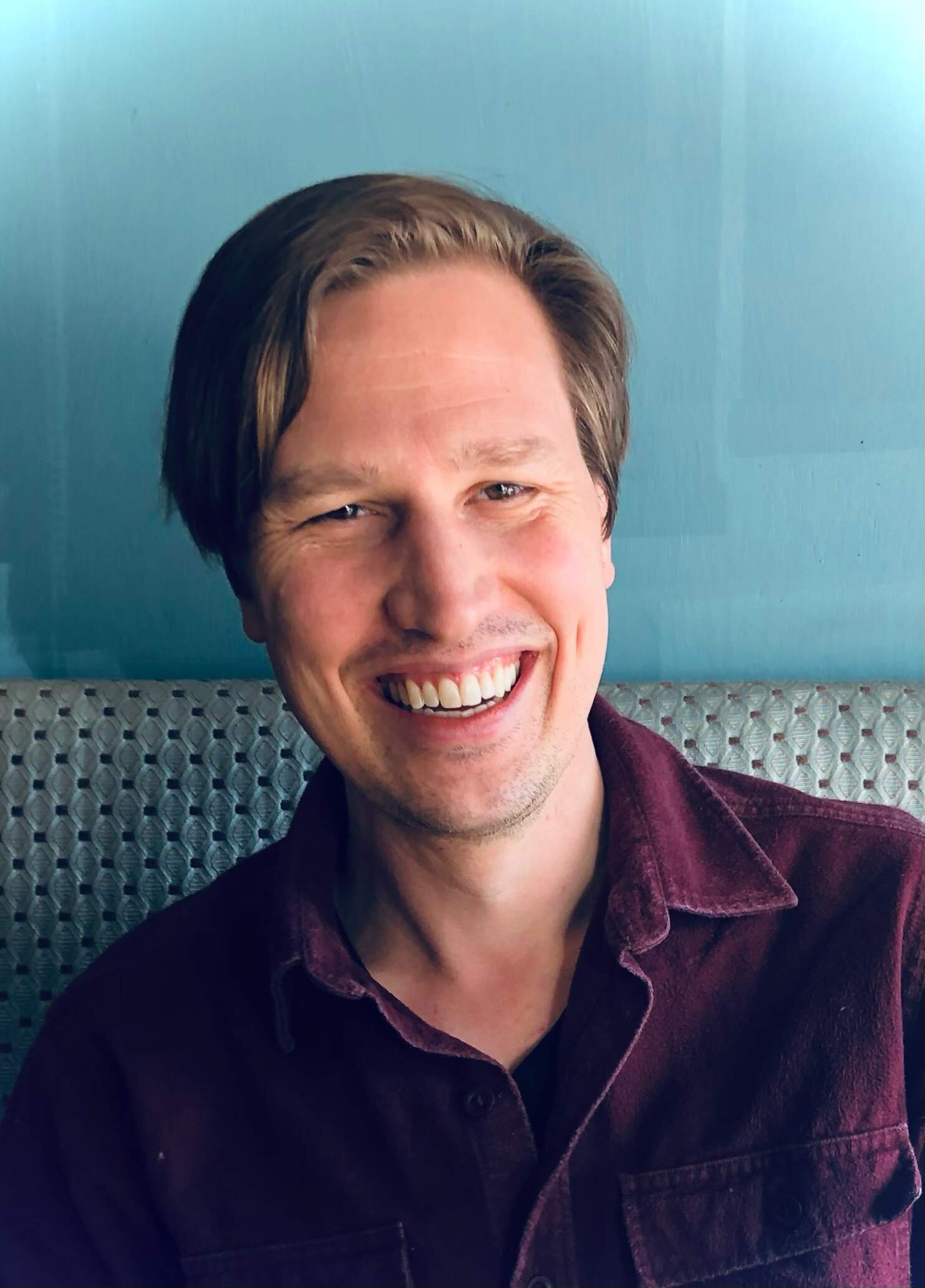
Hrund Gunnsteinsdottir, entrepreneur, filmmaker, and “thought leader.” Author of "InnSaei: Heal, Revive and Reset with the Icelandic Art of Intuition."
Also Featured
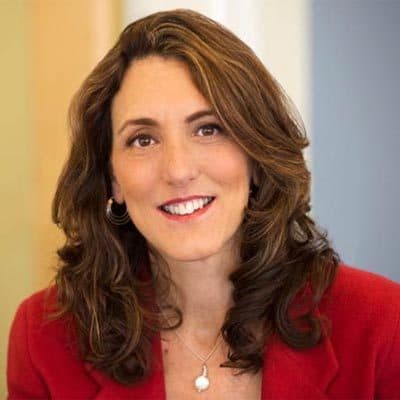
Rebekah Granger-Ellis, chairman of the Executive Board, Institute for Applied Transformative Neuroscience.
Transcript
Part I
DEBORAH BECKER: Listen to your inner voice or trust your gut. Many of us may have heard this advice or done just that when making crucial decisions. On Point listener Vassia Marquitiz recalls a time when she was about 11 years old.
VASSIA MARQUITIZ: I was biking home with a friend in the rain, and she was ahead of me significantly on the sidewalk, and a van pulled up next to me. As I was approaching it, I thought it was someone looking for directions, so I started slowing down and then a really strong feeling inside of me just said, go.
BECKER: And we've been there, all of us, when something didn't feel quite right.
MARQUITIZ: I remember pushing on my bike pedal as hard as possible, and just at that moment I zipped past as this man reached out and tried to grab me. His arm brushed my shoulder as I whizzed past him and I managed to escape by a slim margin.
BECKER: Later, she found out just how close she was to danger.
MARQUITIZ: It turned out he was wanted and being searched for by the police. We found out later when we called the police, very grateful for my intuition. Many times in life, especially in that moment.
BECKER In English, the word for this gut feeling is intuition. Hrund Gunnsteinsdottir, in Icelandic, there is a specific term for intuition. What is it?
HRUND GUNNSTEINSDOTTIR: The Icelandic word for intuition is Innsæi, and the concept that I've been working with is InnSaei, with a capital I and a capital S because of how the word is put together.
BECKER: So tell us how it's put together. Tell us why.
GUNNSTEINSDOTTIR: So there's wisdom in creating words.
In Iceland we still preserve our own language, Icelandic, and there's only less than 400,000 of us. So we need to be very protective of the language. And so anytime there's a new idea, a new invention that is introduced into our culture, we create Icelandic word for it. So with intuition, when it was introduced into our literature, the man who created the word created it from two words, which are Inn and sæi.
Inn means insight or into, and sæi means to see or the sea. And the more that I did research on intuition and how it functions and how we can understand it and hone and harness it, the more I became curious to just look at the word and open it up like, almost like a sculpture. So the concept Innsæi means, has a threefold meaning, it means the sea within, to see within and to see from the inside out.
The sea within refers to our unconscious unconsciousness, the sea within us, which is constantly moving and making new connections. It's the inner world beyond words. It's the world of imagination, connections, and it works super-fast, way faster than our conscious focused mind. And poetically, the sea within cannot be put into boxes because then it ceases to flow.
And that's an important thing to think about when we think about intuition and the state of flow, which we will talk about perhaps later. And then secondly, Innsæi means, to see within. So it's all about self-knowledge and metacognition, seeing inside yourself, knowing yourself well enough to be able to put yourself into other people's shoes and to be able to discern, and this is very important, to be able to discern intuition from our fears and biases and wishful thinking.
And then thirdly, Innsæi means to see from the inside out, and that has everything to do with having a strong alignment within. To have a strong inner compass as we navigate the ocean of life, both personally and professionally.
BECKER: Okay, I'm going to introduce you now, Hrund Gunnsteinsdottir. Her book is InnSaei: Heal, Revive and Reset with the Icelandic Art of Intuition."
It's a book that looks at how to develop intuition and why it's so important. So let's start with a definition of intuition and tell us why it is important. In your opinion.
GUNNSTEINSDOTTIR: So intuition is always important for us, and I think in particular in today's world. And one of the definitions that we have from a scientist called Joel Pearson, is intuition is the effective use of unconscious information to make better decisions and actions.
Intuition is fundamental to our intelligence. And there wouldn't be much innovation if we didn't have intuition. It's really fundamental to our creativity, and it's part of our analytical and rational thinking. And I think many of us have been trained to think that it's separate from that.
And in today's world, where we are really immersed in so much noise and distraction and speed, and for many of us, it's just really hard to listen to our inner voice, to really connect within. But the thing is, intuition is always bringing us hints, signs, helping us think, make sense of, sense make, of the world around us, the place we're in and how we take decisions.
But it's really up to us, to connect with it, to listen to it, to learn how to train it like a muscle, because it's always there doing its job. We all have it, but it's absolutely up to ourselves to hone and harness it. And it both becomes harder in today's noisy world. But it also, I think, is even more important than before. Because a well-honed intuition becomes super important to our intelligence as we try to understand complexity and uncertainty. Which I think most people would agree is something that we have enough of a lot of in today's world.
BECKER: So are there differences, if we all have this intuition? We often hear about women's intuition, mother's intuition. Certainly, that there's some sort of deeper feeling based on the connection to a particular thing or idea. Are there differences among people in terms of their level of intuition or when it might be activated?
GUNNSTEINSDOTTIR: Yeah, I think it varies a lot. And because you mentioned women and mothers. Many researches have been done on, for example, do women have more intuition than men or other, people of other gender? And I think that we have just started to explore that in a more research based and scientific context.
But the research I'm thinking about now is by a German psychologist and his team of coworkers, and they discovered that there's a history of thinking that women have more intuition than men. Culturally, it's less acceptable for men to admit that they use their intuition. But the conclusion is that we all have intuition and sometimes it's culture that blocks our access to it.
There is also Elisa Miller at Columbia University who put it so beautiful. She said, in the world of science, it's not like scientists don't believe in their intuition or even spirituality. But there's been an ice age when it comes to admitting that in public or speaking about it.
And she said, now the ice is thawing, and people have become more open to it. To your question, more, I think that we, ourselves, whoever we are, it's up to us to be open to it. And then there are many reasons why we would not be. And as parents, because you mentioned mothers, as parents or caregivers, as members of families or groups of friends or colleagues, we observe other people.
We are around other people. We emotionally relate to other people. We start to sense who they are and how they go through days, and then we also start to sense when something's off, we start to sense when something's happening. And I think that's when intuition really kicks in.
Because intuition is really so much based on sense and sense making, it's how we pick up signals and information and it's very often things that we really just can't put into words, which maybe, you know, part of the reason why we haven't explored it to the extent that we perhaps should have in the last decades and probably a couple of centuries.
BECKER: Aand you started exploring this really because of some painful experiences in your own life. Do you wanna tell us briefly about that? What led you into this?
GUNNSTEINSDOTTIR: Yeah, so I'm somebody who just always thought that I was connected with my heart intuition, I was aligned with who I am and sense of purpose and stuff like that. So I went the route of studying university. I went on to work as a journalist and then I got my dream job all before I turned 30. I was working with United Nations in Kosovo and then Geneva.
And as the years passed and as I pressured myself to do constantly better at work, I remember moving to Kosovo to work there just after the war. This is at the beginning of this century, and it really just felt like walking into an open wound.
There's so much trauma. You can see the impact of war on everything. People, buildings, dogs, stray dogs, there's an open wound that I walked into and I was really determined to give it all I had, and I just put my own health and wellbeing aside. Because that was just, I just felt that was just really, I shouldn't be thinking about that, which was very naive of me.
I was 26 at the time and I worked hard. I put a lot of pressure on myself, and I didn't really honor my own boundaries. And as the months passed and close to my closing of my period in Kosovo, I remember waking up in the middle of the night just really thinking that there were bugs crawling all over me.
They weren't, but it was like a very vivid dreaming. And I remember traveling from Kosovo to Kazakhstan for work, and I stayed overnight in a hotel in Frankfurt airport, and I wake up just feeling this extreme pain and I'm bleeding and I just take painkillers, and I continue with work, and it was only about two years later that I realized I'd had a miscarriage.
So that's how disconnected I'd become.
BECKER: You just pushed through it. You just pushed.
GUNNSTEINSDOTTIR: I just pushed through it and I really just didn't. I didn't regard my body as something, I don't even know how I regarded my body when I think about it. Just my relationship with my body changed a lot in the coming years.
Part II
BECKER: I'd like you to finish that story and tell us then how you realized that you were disconnected with your intuition, and then how you reconnected.
GUNNSTEINSDOTTIR: Yeah. So after I'd been living and working in Kosovo, I move on to work with United Nations, and I got a permanent position with the UN, which had been my dream job.
My first location is Geneva, and I remember working there. It was exciting times, but gradually I just started to daydream. My mind was wandering, and to cut a long story short, I felt my sense of purpose and agency and energy, and probably my entrepreneurial spirit too, was waning because I just felt like we were very disconnected from the real world. As if we were serving a system instead of being in direct contact with people on the planet.
And this feeling, the engagement with the real world. So that kind of decreased my energy levels. And then in my personal life, my relationship with my fiancé at the time was waning. I got pregnant and I had my first daughter. We had our first daughter, which is, to anyone who has babies.
It's an amazing thing. So that was the beauty and light in my life. But at the same time, our relationship was crumbling. I was heartbroken. And then my back just caved in, and I was diagnosed with three slip discs and my doctor told me that I might not ever be able to work full time again.
BECKER: Oh boy.
GUNNSTEINSDOTTIR: It was a whirlwind, and I had just lost my ability to have a full night's sleep. My mind was just going all over the place, and it just felt like the ground beneath my feet was just crumbling and I had to take some really big decisions. And I, for many reasons, with way too long to talk about here.
I experienced myself as being very isolated and my sense was that my only way out to find my way into the world again, to really find my strength and energy and my sense of direction, was to go inside. To really go deep inside myself. And that's what I did. It felt like I was forced to do it, but that's what I did, and it was one of the biggest gifts in life. And so I started to just do that, heal myself. I went to physiotherapy, and I did stuff like that.
And then gradually I started to get to know people who just came out of the walls and helped me, guided me to, for example, explore this thing, intuition. And this is, I'm in Iceland and it's the Icelandic word. And there was a woman who was my mentor for a while and she taught me how to sleep again. And she was like really holding my hand and saying, you need to trust your intuition more and this is how you do it. And she just, so I went through all these things.
I did lots of deep research. I practiced lots of things and I, during this time, throughout, this is something I've done for many years before that, I was journaling. And journaling was a super important way for me to just stay grounded and connected with myself. And gradually, I found my way back and just this experience shifted the center of gravity in me.
And I just feel like I've lived a life where I become a zombie. I was really, yeah.
BECKER: Here's what I wonder.
Without those painful experiences would you have done this work? Would you be as connected? Do you need the pain to be able to connect?
GUNNSTEINSDOTTIR: I think I needed the pain to be able to connect, and I think that what it taught me. Is that we can, in our logical, rational mind, we can know stuff, we know a lot of stuff because we read stuff, we can find information all over the place. But physically, somatically feeling things, science shows that it has much more effect on us.
So maybe it's a sad thing to say, but negative experiences tend to teach us more and faster. Trauma is too much during too short time, in many ways. So it really hits your heart, and it goes into your whole system and your whole body, and you feel it. In the cells, in the spine, in the muscles, everywhere.
So that's how powerful our bodies are. We are not just, our bodies are not just something to transport our brains between meetings, or places. The pain is for me and for many other people I've met since then. It really just grabs us by the neck and says, Hey. You need to connect with yourself.
BECKER: But there's also, but for many people, the response to that pain is to shut down. So I guess I wonder what you would say to folks who have shut down, who are worried about shutting down or how you got out of that and didn't. And decided to opt for opening up and trying to become more in touch with yourself instead of maybe being bitter or maybe staying in a job that took away your light and your life. What's the difference there? Talk about that.
GUNNSTEINSDOTTIR: Deborah, that's a great question. I think we always have a choice of shutting down or being generous in spirit. When you asked me this question, you know what came to me? It was this feeling I had before all this happened.
Just probably my childhood, my early years in my twenties. Having known the feeling of having a sparkle in my eye and this wonderful drive of being curious about life and the world. I knew what that felt like. I knew what it felt like to really just lie in the snow as a kid. Looking up at the night sky, at the stars, and just feeling like this is a world I belong to.
And that sense of just belonging, I think maybe was something that I really clung to. And I remember just finding my way back to myself and out of this dark place I'd found myself. And there was these moments where I just felt that alignment. Okay. I'm coming back. I can feel it now. There was this burst of energy.
There was a smile that came out of nowhere. I noticed beauty in the world around me. So for people who are stuck in a loop. I think it really depends on how, where you are, if the listener is, if this relates to listeners, this can be hard to hear, and you need to relate to this.
But if you're open to working through some of the things you have stored in your body and system and allowing it to release it out into the world again and grow through it, then I deeply encourage you to. It's important to feel psychologically safe. It's important to believe that it leads you to somewhere. There's many different things that need to happen and don't blame yourself if you're not ready. But there's always a tomorrow and you might be ready tomorrow or after a month, and it'll bring you more home to you. And you have the possibility of becoming stronger and bigger metaphorically. When you feel like you really stand on the ground with both feet, then you can get stuff done and you are your best person.
BECKER: So it's not just decision making we're talking about here.
GUNNSTEINSDOTTIR: No, it's not just decision making.
But interestingly, the intuition that brings us home to us, that links us to our sense of purpose and direction. It's the same intuition that we're talking about when we are taking good business decisions or making our greatest discoveries as Nobel laureates.
BECKER: So I wanna talk about a little bit about the science here, because you've done a lot of research, you've been studying this for decades now.
And we also talked with Rebekah Granger-Ellis about this. She's a neuroscientist and neurobiologist who's also looked at sort of the science of intuition, the mind-body connection. And she told us her story, also a personal story about this. And she experienced this connection firsthand when she became very ill.
REBEKAH GRANGER-ELLIS: I was in the hospital. My organs were shutting down. I had several experimental surgeries. I was just falling apart to the point to where they had given me probably a few years to live. They couldn't figure out what was wrong with me, and I had over 32 different diagnosis, at that point.
BECKER: Granger-Ellis says her background as a scientist and her intuition told her to keep pushing for answers.
GRANGER-ELLIS: It was tests, it was analysis, so it would be things my scientific brain should believe, but something felt that I should know more. That I know more, I just can't put my finger on it, and so ended up going back and trying to get a neurobiology degree and did that as well and went through this process of trying to figure out how to heal myself.
BECKER: She realized that it was unprocessed trauma that was affecting her physically.
GRANGER-ELLIS: So I'd spent my life always being the healer and being amazing for everyone, but had never dealt with all of the trauma, all of the stress, all of the situations that had caused me great sort of cognitive scars, as we would call it.
My body was internalizing the stress that my brain was going through.
BECKER: Granger-Ellis says after eliminating toxins from both her physical and mental worlds, and what she calls clean living, she started to heal and now is able to manage her two autoimmune disorders.
GRANGER-ELLIS: It was this feeling of relief, finally being able to breathe. And so some people wouldn't say that's intuition, but knowing how the brain processes its world, being able to go against what you think others are saying for you and saying, hold on a minute, there's more information out there for me. I think I know how to do this differently.
And then using the conscious data to help. And so it was a deep dive into trusting my own wisdom.
BECKER: And she's been studying intuition ever since. Granger-Ellis says what we call intuition is a process that's hardwired in our brains and involves the synthesis of conscious and unconscious information that includes sensory, emotional, and experiential data.
GRANGER-ELLIS: Technically, the more exposure you've had to certain things over the course of your life, the stronger that neural network is developed. The brain is synthesizing an enormous amount of information, all from prior experiences, in order to generate quick judgements or what we would call an insight or an 'A-ha!' in your brain, it's a new little neuron, often without conscious reasoning.
So your brain at every second is making thousands of predictions about its world and its body in order to become smarter, to survive, to live, to balance its body budget. So it takes things like pattern recognition and emotional tagging and habits, and it puts them into sort of this efficient task making understanding of the world.
BECKER: Granger-Ellis says, our brains are pulling in a trillion bits of data per second, but we only consciously process 10 bits per second. The data bits are processed by a specific part of the brain to try to get us to react appropriately.
GRANGER-ELLIS: It's this vibe. People will say and tells you to do something, I don't know, slow down, move out of the way, and suddenly there's a car crash that you avoided.
What happened was subconsciously, your brain had taken in data of the world around you. Even if you were in your own thoughts when you were driving, and it knew that cars were driving erratically around you, even though you never consciously made the thought or understood that you had the data, it sensed it.
And needed you to respond without taking time to think about it. That's that prefrontal cortex, takes a long time to think about things. And so it will instinctively give you signals that you should listen to your subconscious data.
BECKER: That's neuroscientist and neurobiologist Rebekah Granger-Ellis. I wanna ask Hrund Gunnsteinsdottir.
So when you hear this scientific explanation of how our brains are processing information and how we're making decisions and that is the scientific basis, if you will, for intuition. I wonder how much of this do you think is almost evolutionary, right? We needed to process these things in a way that might be faster than our brains can think in order to keep us from danger.
Is that what's going on here?
GUNNSTEINSDOTTIR: So that's a great question. One thing, so first of all, I'm a big, I have so much respect for Dr. Rebekah Granger-Ellis. I interview her for my book and she taught me so much when I just went meeting her, getting to know her really gave me a lot of confidence to delve into the body's knowledge.
One thing that comes to mind is that I think as we're talking about this in general, today. I just wanna say that there is so much that we don't know about intuition, brain and consciousness, and I think that's part of the logic behind intuition, is be curious, ask questions and just to have the humility to understand that we as humans don't have all the answers to everything.
What Rebekah Granger-Ellis is describing there is like super interesting discoveries that science has made recently and just to pick on what Joel Pearson, just to build on what Rebekah was saying, Joel Pearson is an Australian neuroscientist, as well.
And he's done some interesting research around intuition and the way that he and many others, and I tend to fall on that approach to intuition. To say that there is a slight distinction between intuition and instinct, and it's helped me to think about these things, in the last many years. And so instinct is something that is wired into our DNA. And it's the reason why our face deforms when we bite into a lemon, because it used to be a fatal taste.
And then intuition is something that is developed over time and that also means that it can change over time. And that's also something that Rebekah Granger-Ellis has helped me think through some years ago, and I think that's an interesting distinction for us. Because it makes it more understandable what it is that we can work with and what it is that we are still trying to discover through genetic sciences and stuff like that.
BECKER: It's almost like parenting in a way, right? After we can keep going back to the parenting model. At first you may not be able to recognize when a pediatrician should be called. But eventually you get the hang of it. And you realize, oh, this isn't so serious.
Or maybe it is. And some of that is experience. It's what we've learned from our experiences. So that's not intuition. That's not what we're talking about here.
GUNNSTEINSDOTTIR: Yeah, so in a well-honed and harnessed intuition is something that we emphasize, and I do in my book, and that is exactly the intuition that's built on experience, knowledge, and expertise.
And so when, for example, we talk about mastery of intuition, when you have people who have decades of experience or many years of experience, and they know their domain, they're experts in a certain domain or they have a lot of experience. It can be mountain climbing or it can be business or whatever mastering intuition is, shows up, for example, when somebody looks at a very complex situation.
A novice would try to analyze the data around it, but they don't have time. The one who has master of intuition is able to prioritize what are we focusing on now and how do we take the next step. So it's super important.
Part III
BECKER: We've heard some stories so far about losing touch with yourself, losing touch with your intuition, and often the signal for that was some sort of health issue. Something that said, my body's breaking down. There's a misalignment here, but that's not always the way I think it happens. So how do you think, or what advice would you give people in terms of telling them that their intuition is out of alignment, and they might want to consider ways to make sure that things are better aligned?
GUNNSTEINSDOTTIR: Yeah, that's another great question. So one of the things that we are noticing today is that a lot of people, no matter what age, profession, student, experience.
No matter where we come from, a lot of people are experiencing this feeling that they don't trust their judgment enough. They feel very dispersed and fragmented and just not knowing what to rely on when they take decisions and stuff like that. And I think it's interesting to address that a little bit, and just to get people to think about, do you trust your own judgment?
And it's not, I don't think that we can trust our judgment every minute of every day. We need to ask people, we need our community to help us think and do research and all that. But I think that's a fundamental question. So for very basic things in life, do you trust your judgment?
And the question I often ask people is, when was the last time you didn't listen to your intuition? Where did you feel it in your body and what happened as a result? And then the other question is, do you remember the last time when you did listen to your intuition? Where did you feel it in your body and what happened as a result? If you sit down with yourself and really think about these questions and write down what comes up for you, it can already give you a very valuable insight into your relationship with your intuition.
Can I add one more thing, Deborah?
BECKER: Sure.
GUNNSTEINSDOTTIR: That comes to mind as well. So one of the things that took me a while to just find the research and put words around it, but I think it's so important, and no matter if you are making discoveries, innovating, investing, running a home or studying. One of the important things that are very much close to our hearts is when we often experience putting our own experience and feelings aside, it could be because we don't want to stir the boat.
We don't want to make a fuss, Or it's not important in the big context. We are having fun here, whatever it is in your relationship or at work, but you keep putting your own experiences and feelings and sense of things aside. What can happen gradually over time is that you lose confidence in your own experiences of things.
And this can have really detrimental effects to your reliability and your ability to relate, connect with and rely on your intuition. And I think that's something that every single human being can think about for themselves.
BECKER: So you said it's like a muscle, right?
And you're talking about how people can lose it or not have confidence. So give us some, and you mentioned a few things, about thinking regarding intuition, to see where exactly you stand and how you might consider your own personal situation. But what tips do you give people to try to develop it, right, and make it stronger?
So they can rely on it, so they will have confidence in it.
GUNNSTEINSDOTTIR: Yeah. So the most important thing is self-awareness, to get to know yourself better and to be able to look at yourself from a little bit of a distance. How you go through the days and how you react to things and how things affect you.
So again, one of the most important tools that I know of is journaling. So one is, let me talk about two types of journaling, if people want to start with that. And before I do that, maybe just to mention, of course, if people like to meditate, exercise, run, go for a walk, be with yourself while you wash the dishes, cook a meal, whatever.
Just in that zone where you are connecting with yourself, where you're free from the noise around you. But journaling is super important. One of the ways we can journal that I think is very effective is the stream of consciousness journaling that Julia Cameron, the queen of journaling taught me and many others.
Wake up in the morning and first thing in the morning, if you can, take, even if it's just two or five minutes to journal. And just journal in a stream of consciousness. And this means allow whatever is swirling around in your mind to go on a piece of paper. If you don't know what to write, then write, I don't know what to write.
I don't know what to write. Until you start writing something. It could be fractions from your dreams or something happened yesterday. Like it really doesn't matter what it is, and just don't judge it. Just allow it to go on a piece of paper. What you're doing is you're creating a little bit of a space in your mind and you're putting it on the piece of paper and trusting your journal with what's in your mind and actually writing it.
With a pen or pencil, it has more impact on you neurologically and physically than it is to use a keyboard. There's, we know from research, so that's something I advise people to do every day. If you can't do it in the morning, then do it in the evening. If you can't do it in the evening, do it whenever time of day you can.
And if you skip a day, start the day after, just practice doing that and see how it clears up space in your mind. And then the other journaling that I trained people to do, and I've done this with hundreds of people, and it's just so powerful and it's going to sound very simple, but trust me, try it.
It's the following. Attention is our key to intuition, our attention is a super scarce resource in today's world, and it's highly sought after. We all know this. The key that I want to give to the listener is pay attention to what it is that you pay attention to and document it in your journal.
So you go through the day and you pay attention to things like yellow color. There's a yellow and blue color in front of me now, so that's why I write that down. Microphone, studio, red light, tree outside moving, then I go to the grocery store, and I notice that there's a strange energy in the folks there.
Or there's a beautiful smile. Somebody pays another person. Stuff like that. Just jot down what your attention picks up for you. Write it in your journal. Don't judge it. It's not yours to judge. You're just shedding light on what it is that your attention is picking up. And do it with all your body, not just your eyes and ears, so you get goosebumps.
Why? Write down, I got goosebumps when this happened. Or fractions like that. So what you will learn after one week and as the weeks pass you will learn to read yourself how you go through days. For example, if you've had a bad day, how does that affect your outlook on life and communications with other people?
How does it affect how you interact and engage with others? So you learn to understand your ups and downs, and you learn to understand when to rely on your intuition. Because there are certain circumstances that are really beneficial for intuition and others are not. For example --
BECKER: I'm glad you said that because there must be times when we need our analytical reasoning.
Let's say we go back to parenting, okay? I might be able to say, oh, I will use my intuition for certain things, to judge when a child might be upset and when I might intervene, but that's very different from, say, evaluating where they should go to college. So I need different skills for different times.
So it's not as if you're saying rely on intuition all the time.
GUNNSTEINSDOTTIR: No, exactly, Deborah. Yeah, yeah. exactly. So that's another great context for this. So even when you're deciding which college your kids to go to. Be aware that it's okay that your intuition is guiding you because intuition is complimentary to analysis and we need good intuition to reason well, so it's also about not compartmentalizing it, but allowing.
Sometimes, so in my book I talk about the two rhythms. So think about it. You exist in two rhythms, and you need to balance the two. One is the intuitive, the other one is the analytical. The one is the being. The other one is doing, one is breathing in, the other one is breathing out. So it's that balance that we need in order to bring out the best in us and to hone in, harness our full potential, intellectually.
So it's about giving space to intuition. It's not so much either or, but the more you give space to it you begin to understand how all of this works together. We call it mental agility as well. When people make actually in decision making and discoveries by Nobel laureates, the findings are that when we are able to switch fluidly between intuition and analysis, and we know when to give things a rest and allow our unconsciousness to work, when we know when to deep dive and be super focused on something, that's a real skill to have and we need to be in relationship with both our intuition and our analytical mind to know when to do what.
BECKER: Because we can justify, right? I can tell you, yes, I can justify decisions that aren't really that great. I might need those new expensive shoes because I just might need them.
GUNNSTEINSDOTTIR: Absolutely.
BECKER: So in a TED Talk speaker and leadership coach, Tracy Spears said that people should have some skepticism about their intuition, particularly because of confirmation bias.
TRACY SPEARS: Confirmation bias is when we believe only the things that support what we already believe to be true. In other words, we can't even see the information that's right in front of us because we're operating with our gut feelings. Compound that with our tendency to give gut feelings more value than we should, and this diminishes our agency and contribution.
BECKER: So Hrund Gunnsteinsdottir is with us, she's written about intuition. So what do you say about that? What do you say about our ability to trick ourselves? And to use this confirmation bias.
GUNNSTEINSDOTTIR: So yeah. That's so important. So one of the things that I always emphasize when I say a well-honed or harnessed intuition is exactly to know intuition from biases, fears, and wishful thinking.
So to know the different biases, we can have the confirmation bias, which is such, it's so common with us. We have so many biases. I think they count in hundreds. So to some extent, just to put it simply, honing your intuition and practicing the muscle. To some extent has to do with some critical thinking, to be critical in understanding how you can trick yourself.
So for example, when not to listen to your intuition is, has to do with biases. And we've had an introduction on that. It also has to do with when we are super stressed and anxious, it's not the best time to consult with our intuition. Don't confuse intuition with addiction. That's another thing that's very important.
And also, what I really always smile about is that when you are in love, then that is maybe not the time to follow your intuition entirely. You might want to sleep on it, stuff like that. So in short, when you are emotionally imbalanced, somehow, it's your cue to understand, okay, I'm getting these intuitive hits.
Let me just write them down and sleep on it and see when I feel a little bit more grounded or balanced, what I think about it then. And sometimes we, and very often we go, and we do a little bit of research. We converse with other people; we explore a little bit around these hints that we are getting.
This is how we train our intuition, and this is how intuition works with analysis and reason. It's not so much either/or.
BECKER: And also, I wonder what we say if we go back to the science of all of this, and a little bit of the parenting as well. If we've survived parenting teenagers and we have the scars to, some scars to prove it. We may have heard that the prefrontal cortex in a teenager is not sufficiently developed, and so this is why you may want to think twice about letting them drive a car right away, right? Or until they're a little bit older. Until this is developed better. So they're not making impulsive decisions.
They're not being as reckless, because we're told that this part of the brain really doesn't develop until they're in their mid-twenties. Until someone is in their twenties. So what does that say about relying on our innate decision-making ability? If we think that perhaps people need to be a little bit older before that innate decision making can be relied upon.
GUNNSTEINSDOTTIR: So I think, there's researchers who say that intuition is developed with age and stuff like that, but I don't know if we know that for sure. So I wanna be a little bit skeptical about that. Because I do think that kids and teenagers can have really strong intuitions, but they can also confuse it with lots of irrational impulses as well.
But what I do think that we can take with us is when we speak with and listen to our kids and teenagers, I think it's good for us to remember to have patience to allow them to finish their sentences. So I've had many occasions where I'm like okay. Are you trying to say this or that?
Because I'm in a hurry as a mom and working blah, blah, blah. So we all have that. So just think about giving them space to put things into words. Ask them questions that help them explore their own sense of judgment. How they make decisions, how they think about things. Is it good to see it from different perspectives?
What did the other say about this. Why do you feel like this? How do you feel when you say, when you feel like, just we can help them, we can bring out their intuition and help them hone and harness it. So it's like a cultural upbringing to do that.
And I think, I hope more and more people will do that. And for all of you listening who already do that, well done. You're doing great at parenting, help your kids to follow and balance their intuition with all the talk, technology and other intellectual faculties that we have, and we have access to in the world today.
BECKER: So we are talking about your book, about there's a documentary about this. You've done a university course dealing with this subject. What's next in terms of your research about intuition?
GUNNSTEINSDOTTIR: Oh, that's a great question.
So I'm still just following my book and having conversations, like wonderful conversations like I'm having with you today.
I am, will be launching online courses to help people align with and train their intuition. I'll be launching that in the fall. I'm working with different people, coaching them and training them to work with their intuition. Another book is definitely in the pipelines, and it goes deeper into very cutting-edge knowledge about our consciousness and way of navigating the world, combining, as I say, cutting-edge science, but also very ancient wisdom. So I'm excited to understand what that's trying to tell me today.
The first draft of this transcript was created by Descript, an AI transcription tool. An On Point producer then thoroughly reviewed, corrected, and reformatted the transcript before publication. The use of this AI tool creates the capacity to provide these transcripts.
This program aired on July 3, 2025.