Support WBUR
The state of America's judiciary with Judge J. Michael Luttig
The retired conservative federal judge says a war against the judiciary in America has been waged by "a tyrannical wannabe king."
Guest
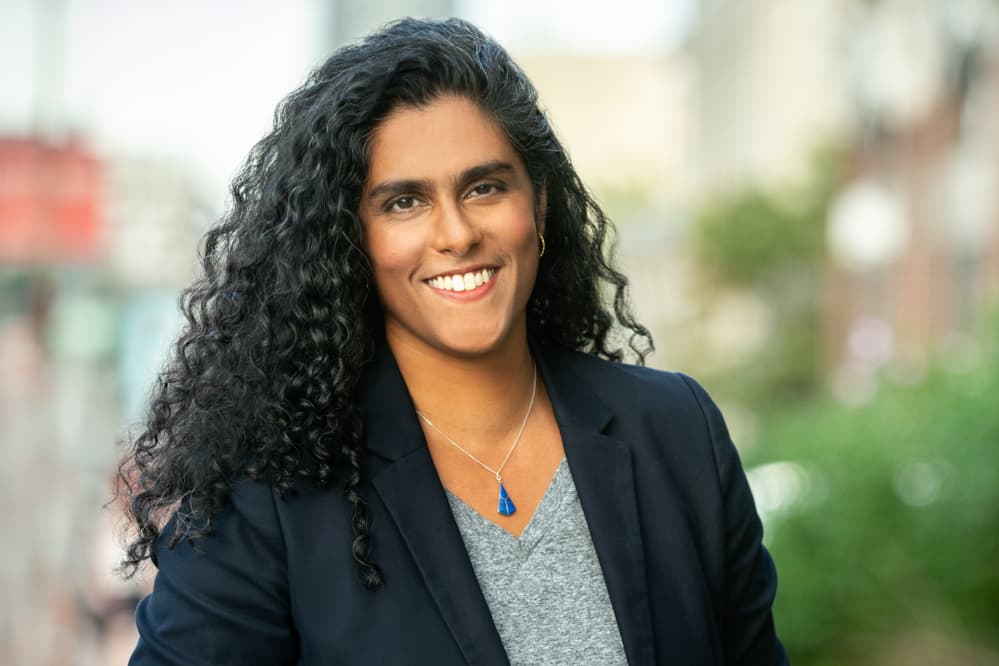
J. Michael Luttig, served as a judge on the Fourth U.S. Circuit Court of Appeals from 1991 to 2006. He was appointed by President George H. W. Bush. Author of the Atlantic op-ed "The End of Rule of Law."
Transcript
Part I
MEGHNA CHAKRABARTI: Today we're sitting down with retired federal Judge J. Michael Luttig. He served as a judge on the fourth U.S. Circuit Court of Appeals from 1991 to 2006. He was appointed by President George H.W. Bush, and prior to that, Luttig served as assistant counsel to President Ronald Reagan.
He clerked for then Judge Antonin Scalia and clerked as well at the Supreme Court for Justice Warren Burger. He was also Assistant Attorney General under President George H.W. Bush. Judge Luttig, welcome back to On Point.
J. MICHAEL LUTTIG: Thank you, Meghna. It's a pleasure to be here, as always.
CHAKRABARTI: Now, you have been called one of the Trump administration's most vocal and perhaps persuasive conservative legal critics.
And then in recent op-ed in the Atlantic that was headlined The End of the Rule of Law. I just want to read how you ended that piece. You ended it with a quotation from Frederick Douglass, which is this, quote: "The limits of tyrants are prescribed by the endurance of those whom they oppress."
Now, what is it about that quotation that speaks to you?
LUTTIG: Thank you for asking that particular question, Meghna. That was a very important way for me to end that important piece that I had the privilege to write. Frederick Douglass was saying in that quote that tyrants will prevail so long as they are tolerated by the people. In both cases, actually, in the case that Frederick Douglass was talking about, and in the case that I was talking about, namely president Donald Trump today in America, that's the question.
Is, how long will the American people tolerate the conduct of this particular president?
How long will the American people tolerate the conduct of this particular president?
CHAKRABARTI: I have to say, Judge Luttig, in that question, I find reason for optimism there. But before we dig into your analysis of why, behind why you say that the United States is in crisis and is in constitutional crisis and that the Trump administration is undergoing this attack on the rule of law.
I actually just want to step back for one second, if I may, because we've often referred to you, and you are referred across the media as a conservative jurist. That word conservative can take on many meanings in this day and age. And so I'm wondering. In your opinion, what, how would you describe your approach to to the law?
Do you consider yourself a conservative jurist? And if so, what does that mean?
LUTTIG: Meghna, that too is a fascinating question. And I would answer it this way, conservatism, legal conservatism and jurisprudential conservatism and even political conservatism has not changed in the past half century.
What's changed is Donald Trump and the MAGA movement, they are not conservative in the way that America has understood conservatism for the past 50, if not 200 years. And the Republican party is not. As to the legal movement, the conservative legal movement really began under President Ronald Reagan and his attorney General Edwin Meese, that movement still exists in America today.
But it has been overtaken by the MAGA conservative movement. But as it pains to say at the outset, that is not a conservative movement in any sense.
CHAKRABARTI: And how would you define what that conservative legal movement was? Or is?
LUTTIG: The MAGA movement is a radical movement, and I would not even apply the label conservative to it. It is anti-constitutional. It is anti-law of the United States and anti-rule of law in the United States, for the reasons I explained in The Atlantic article, which I titled The End of the Rule of Law in America.
The MAGA movement is a radical movement, and I would not even apply the label conservative to it. It is anti-constitutional.
CHAKRABARTI: I keep, Judge Luttig, forgive me for pressing on this point, but I keep hearing you say what the MAGA movement is, and you haven't given me an affirmative definition of what conservative, a conservative jurist is or what the conservative legal movement is.
LUTTIG: Oh, that's very simple. I'm sorry, Meghna.
CHAKRABARTI: It's okay.
LUTTIG: The traditional conservative legal movement means and has always meant faithful obedience to the Constitution of the United States and the laws of the United States as enacted by the Congress and signed into law by the president.
That's exactly what Donald Trump waged war on, beginning with his first day in the Oval Office in January, he waged war on the federal judiciary. And the rule of law.
CHAKRABARTI: Okay. Thank you for that. And the reason why I was pressing you on that, Judge Luttig, if I may, is because, again, I just look across how media speaks of conservatism these days and we just apply this label almost thoughtlessly. And to your point, the MAGA movement is something quite different. And I wanted to go to pains to separate the two so that we can understand where your analysis is coming from. Now you say America is in crisis and specifically a constitutional crisis. Why?
LUTTIG: There are various definitions of constitutional crisis over the many years. Every constitutional scholar that I'm familiar with would say that when the President of the United States defies an order of the Supreme Court of the United States, America's in a constitutional crisis.
Now this president has already done that. But before he had done that, I had said that actually America is in a constitutional crisis whenever the president of the United States, himself and his government, the United States government, is at war with the federal courts and the rule of law. And that's why in that Atlantic article I said that Donald Trump was at war with the federal judiciary and the rule of law.
And by the way, Meghna, I could never have foreseen when I wrote that article, only, you know, a few months ago, that war would've become what it has become today, which is an all-out confrontation between the president of the United States and the federal judiciary, including the Supreme Court of the United States. We always have to remind our audiences that this is the president of the United States of America, Meghna.
Never before in the almost 250 years of American history has a president of the United States done or said even one single thing that this president has done and said hundreds of times over. About the courts, the individual judges, the Constitution of the United States and the rule of law. Americans have become numbed to this president.
And as long as they remain numbed to all of this, then America will continue in dramatic decline.
CHAKRABARTI: Now when you say that things have occurred since you wrote that Atlantic article and now that you would've never expected, that in your mind prove an all-out war against the judiciary that the Trump administration is waging, are you specifically referring to the attorney general's investigation of U.S. District Judge James Boasberg?
LUTTIG: Not specifically to that, but including that, but 10 or 12 other things that we'll discuss. The overarching point that I'm making is that eight months into this presidency his war on the federal courts and the rule of law has now blossomed into a open civil war.
So let's begin actually with Judge Boasberg.
But not this latest episode spectacle by the Attorney General of the United States, Pam Bondi. Let's start at the beginning with Judge Boasberg. Judge Boasberg was essentially the first federal judge to prevent Donald Trump from deporting persons from the United States without due process of law.
The first time that Judge Boasberg entered an order to that effect, Donald Trump himself called for Judge Boasberg's impeachment, Meghna.
Impeachment. And dutifully, the Republican Congress began to initiate articles of impeachment. That's where this started, effectively. It has gone from there to Donald Trump's refusal to obey many orders of the federal courts.
Below the Supreme Court of the United States, many orders. The president of the United States just doesn't care what the federal courts say. Okay? And all the while, while he is refusing to abide by the law, he is viciously attacking not just the federal courts as a whole, but every individual federal judge who rules against him.
The president of the United States just doesn't care what the federal courts say. ... He is viciously attacking not just the federal courts as a whole, but every individual federal judge who rules against him.
CHAKRABARTI: Yes. And that exactly. And just for people who don't know, as Judge Luttig was saying, this was the origin of the campaign against Judge Boasberg. That he has ruled against the Trump administration and even gone so far as to hold members of the administration in contempt for not complying with court orders.
Part II
CHAKRABARTI: U.S. District Judge John McConnell Jr. of the District of Rhode Island recently shared threats that he's been receiving after he made a ruling against the Trump administration. He said he's received six credible death threats. More than 400 angry voicemails including the one we are about to play.
It is full of expletives, which we have bleeped out. But we still felt it's worth listening to in terms of hearing the kinds of vitriol that's being poured into the offices of federal judges across this country. So here it is.
(VOICEMAIL PLAYS)
CHAKRABARTI: Judge McConnell shared that voicemail at a webinar that was held just last week entitled Judges Break Their Silence: Attacks, Intimidation and Threats to Democracy. And here's what Judge McConnell Jr. himself said in terms of how he felt when he received that voicemail.
McCONNELL JR.: It's daunting. It was frightening. I've never had anyone threaten to put me in prison, threaten to bodily injury, threaten, wishing that I was assassinated. It went beyond just me, the court staff had to listen to this, and our court received over 400 vile, threatening, horrible voicemails.
Not all as bad as that one, but many of them equally as personally attacking. And I've been on the bench almost 15 years and I must say it's the one time that actually shook my faith in the judicial system and the rule of law and the work we do with our Constitution and whatnot.
CHAKRABARTI: Judge Luttig, in your 15 years on the bench, did you ever receive any calls like that?
LUTTIG: No. Of course, not Meghna. And thank you for playing that audio from Judge McConnell. America is weeping right this moment as it hears that tape, I wish you could send it directly to the Supreme Court of the United States, Meghna, because the Supreme Court has no higher obligation than to defend the federal judiciary against this kind of threat and against the threats that are being made today and every day by the president of the United States and his Attorney General.
CHAKRABARTI: And you believe the court has failed in that duty?
LUTTIG: I certainly do.
CHAKRABARTI: Why?
LUTTIG: Because it's done nothing.
CHAKRABARTI: But what is the court to do to defend the judiciary in this manner?
Do you, would you wish the Chief Justice to stand up publicly and give a public address not disavowing, but condemning these actions, what would he do?
LUTTIG: The Chief Justice and the entire Supreme Court of the United States have no higher responsibility than to denounce the threats by the President of the United States and the Attorney General of the United States on the federal courts of the United States and the rule of law in America.
The Chief Justice and the entire Supreme Court of the United States have no higher responsibility than to denounce the threats by the President of the United States.
CHAKRABARTI: I wonder, so let's talk about the high court then, more specifically, because many people listening right now, Judge Luttig would say it doesn't matter what the Chief Justice might say publicly or any of the justices for that matter, what really matters is how they ruled. And you know where I'm going to, with Trump v. United States.
Essentially, the Court has said, a slim majority of the justices have said that a president, specifically this one when acting as President of the United States, can basically do anything he wants, and he would be immune from prosecution.
Is that not a signal enough that they are not necessarily interested in standing up to attacks on the judicial branch of government?
LUTTIG: Meghna, first, if I may, I know of no one in America who believes that it would be irrelevant for the Chief Justice of the United States to condemn Donald Trump and the Attorney General's threats on the federal judiciary and the rule of law.
It would be a big deal, Meghna. And he has a responsibility. Now turning to the court's rulings, if you will. The Supreme Court created this president when it ruled a year ago that this president would be absolutely immune from any and all criminal prosecution, for any act that he took even arguably as president of the United States.
That decision was the worst decision in the Supreme Court's history. It was an abomination. It was far worse than Dred Scott, for instance, because it worked what we call in constitutional law a structural, a radical structural change in our constitution, and therefore in the government of the United States.
Essentially giving the president of the United States unchecked and absolute power. And the Supreme Court not only will rue the day it is today ruing the day that it ever decided that case, and frankly, Meghna, it doesn't know what to do with Donald Trump, but it created Donald Trump.
CHAKRABARI: Oh, Judge Luttig. So many questions based on what you just said.
First of all, do you know Chief Justice Roberts? I think you do, have you, do you know him personally?
LUTTIG: I do, and John and I have been close friends since, for 40, over 40 years.
CHAKRABARTI: Have you spoken with, how often do you speak with him?
LUTTIG: Not often. We've both gone our separate ways, we get together, maybe once a year with a group of former friends.
CHAKRABARTI: Okay. Here is a little bit of at least some of his public comments. This is some time ago. It's actually, no, it's just this past June, sorry, just a couple months ago this summer. And Chief Justice Roberts spoke at the judicial conference of the Fourth Circuit Court of Appeals. One you know very well actually, Judge Luttig. And he was in Charlotte, North Carolina, and he addressed some of the current criticism is against the Supreme Court.
And here's a little bit of what the chief said.
And it's surprising how many people don't understand how the role of the courts is different from the role of the other branches. The whole point is we don't have control over what the laws are going to be. We're not responsible that the other political branches have decided we need to do something about this issue or the other issue. We have a very direct and simple obligation, which is to interpret the law to the best of our ability. And the idea that we're responsible for whatever somebody is angry about. It just doesn't make any sense.
And it's very dangerous to a system where you have the courts responsible for determining what the law is.
CHAKRABARTI: Now, Judge Luttig, first of all, just give me your response to that.
LUTTIG: Meghna, that's really just utterly irrelevant to the questions and to the times. That was nothing more than a civics tutorial on the rule of the court.
Everyone knows what the Chief Justice just said. What America wants to know is what is the Supreme Court going to do about this president and his open warfare on the federal courts and the rule of law? And until, or unless the Chief Justice and the Supreme Court speak to that, then the court and the Chief Justice are saying little or nothing.
In fact, they would be better saying nothing than what they're saying now.
What America wants to know is what is the Supreme Court going to do about this president and his open warfare on the federal courts and the rule of law?
CHAKRABARTI: Is it possible Judge Luttig, that one of the reasons why the chief Justice of the United States as the leader of the Supreme Court isn't saying more is that, again, I look to Trump v. USA. and I think maybe there is a now dominant view of the three branches of government on the Supreme Court that says the judiciary should be a weakened branch.
And that the way they ruled actually does say a lot about what they believe as the limits of the rule of law, and that an executive, particularly this one, should be able to supersede that. And that's why they're not necessarily standing up, because what's happening, they're giving their tacit approval to.
LUTTIG: We, of course, we just don't know.
In my most recent writing about the court I said that whether out of fear or out of favor, the Supreme Court is acquiescing in, if not expressly approving the lawless activities of the president of the United States. That brings me, if I may, to really one of the most unforgivable things about today's Supreme Court.
And that is that it is not ruling on the law, it's doing anything but that through what has come to be known as the shadow docket of the Supreme Court. The Supreme Court is tentatively deciding, without argument, briefing, or one single word of explanation, Meghna, some of the most fundamental questions of constitutional law in our republic.
All in an effort to enable Donald Trump. To continue his savagery of the federal courts and the rule of law in America.
CHAKRABARTI: Judge Luttig, just for people who don't know, the shadow docket is essentially an emergency docket that the Supreme Court can take cases through. And as you said, they don't necessarily have to go through, in fact, they do not go through the regular deliberative process.
That court cases go through, when argued before the Supreme Court, and rulings are issued with just the decision and no accompanying legal reasoning. Correct me if I'm wrong, but the court has a choice as to whether or not to actually look at cases that are put on the shadow docket or even to place them on that emergency docket.
Is that correct?
LUTTIG: Not technically, again, it is formally called the emergency docket.
So the Supreme Court has a responsibility to act on an emergency case.
So the nefariousness of the shadow docket is that the Supreme Court is, quote, acting but on the most fundamental issues under the Constitution, and it's doing so without one single word of explanation.
And by the way, Meghna, in my view, very few, if any of these shadow docket cases that we're talking about constituted an emergency, by and large, it was Donald Trump who claimed it was an emergency, because the lower federal courts had ruled against him. Never before in American history or the history of the Supreme Court has that been the standard for the Supreme Court to apply, but that's evidently what it's applying today.
CHAKRABARTI: So let me press on that a little bit because, as you said, many of these cases are essentially brought to the Supreme Court under the emergency docket. Because they are national injunctions that have been ruled on by lower court judges, national injunctions on executive orders from this White House.
The Trump administration, President Trump's argument for them being an emergency is that he and his council have frequently said these national injunctions prevent the executive branch, prevent the White House from doing the job of the president, which then places American national security at risk.
We've heard that argument several times regarding, for example, rulings on immigration. You don't buy that.
LUTTIG: No, because it's wrong. I've spent my whole life in all of this, and here's what's going on with that juxtaposition of the national injunction issue and the typical standard emergency issue.
The emergency, the nationwide injunction issue was recently decided by the Supreme Court ... in favor of the president and against nationwide injunctions by the federal courts.
Now, in my view and in the view of many judges and other lawyers, the Supreme Court pulled the rug out from under the lower federal courts. Essentially saying, and agreeing with the claim by Donald Trump and others before him, that the individual federal judges apply the law the way they want to, i.e., liberals apply it liberally, conservatives conservatively. That's always been an argument.
It should never, ever have been an argument that was embraced by the Supreme Court of the United States, because that is, for the Supreme Court to agree, that the entire federal judiciary is in fact politicized. Now, that's the injunction issue, but what I'm talking about is not the injunction issue. It's those cases that Donald Trump has brought to the Supreme Court, when there was no emergency whatsoever. It's just that the lower courts had ruled against them.
Part III
LUTTIG: What I was about to say is this, that the Supreme Court finally decided the nationwide injunction case in the context of Donald Trump's claim that the 14th Amendment's birthright citizenship does not exist in America anymore. But now listen to this, in that case, the Supreme Court decided only the nationwide injunction issue.
It refused to decide the birthright citizenship case, which is, many would believe is the biggest case. One of the biggest cases in American history. So by not deciding that case, the Supreme Court allowed Donald Trump to proceed at pace with deporting those persons, who in his view do not have birthright citizenship in America.
That was irresponsible by the Supreme Court of the United States.
CHAKRABARTI: Do you mind if we just do a little sidebar here, if I could use that phrase, and can you help us understand the mechanics of the Supreme Court? Because we speak of it as an individual entity. 'The Supreme Court has decided.'
Can you just briefly describe to us what is the process that the justices go through in order to choose what cases to hear, what to put on the emergency docket, et cetera. Because I think a lot of people, including me, don't actually fully understand that.
LUTTIG: Yeah. And there's no reason why you or anyone else would or should understand it, Meghna, but it's actually very simple. Cases come to the Supreme Court.
By way of what's called a writ of certiorari, which is simply a request to the Supreme Court that it hear the case that was decided by the lower court. The Supreme Court then takes up the question of whether to hear that case in private. And it votes, all nine justices vote on whether to hear that case.
Now under the protocol, for a long time of the Supreme Court, if four of the nine justices want to hear that case, then the case is heard.
So if four or more justices want to hear that case, then the case is set for argument, then extensive briefing by both sides and amici takes place.
Then argument is set. Long after that briefing. And then there comes a day eventually when that case is argued in the Supreme Court of the United States by the two parties. Typically for an hour, to an hour and a half only. And the case is then decided by full opinion. Every justice has to vote, and their vote is shown in the public record.
And then if any of them want to write separately or in dissent, then they do so. Contrast that with this shadow docket and I don't think of it anymore as an emergency document for the reasons I said. The Supreme Court is deciding cases that are not even arguably an emergency.
So I've adopted the shadow docket formulation. And in the shadow docket, the case comes up on an emergency basis, typically Donald Trump claiming an emergency. That, in my view, doesn't even arguably exist. The Supreme Court very quickly thereafter, matter of days, will issue what I want your listeners to understand is a one sentence order.
That says the lower court action is either reversed or affirmed. Period. Everything else is just the packaging of the opinion, Meghna. The point is, there's only one sentence. The court doesn't explain, not one word of explanation. Now, what your listeners should know, and I think they do.
Is the only power of the Supreme Court of the United States is in what the Constitution of the United States calls the Supreme Court's judgments. That is, its opinions. If the court is not explaining its opinions, as it is not doing today, at the most important moment in American history, for the court to explain itself. Then the court, by definition, has no power whatsoever or no legitimate power.
CHAKRABARTI: Yeah, no, Judge Luttig.
LUTTIG: Its legitimacy comes only from its explanation of its opinions.
CHAKRABARTI: Without a doubt, right? Because it's those opinions and the language and the reasoning and the arguments in those opinions that then flow through the circulatory system of the entire judicial branch of the United States.
And inform, ideally, inform all sorts of opinions that happen in lower courts that shape the laws and the abiding of laws in this country, point very well taken. And so not having that legal reasoning stated by the court is truly troubling. And in fact, it troubles some of the justices, so much that Justice Elena Kagan, she was at the 2025 Ninth Judicial Conference in Monterey, California, and here is what she said about the shadow docket.
ELENA KAGAN: Courts are supposed to explain things. That's what courts do. They're supposed to explain things to litigants. They're supposed to explain things to the public.
Generally, as we have done more and more on this emergency docket, there becomes a real responsibility that I think we didn't recognize when we first started down this road, to explain things better. And I don't mean like we should write 50-page magnum opuses. I think, you know, one or two or three pages would do. To just say, here's the basic issue, the basic problem that we see, go fix it.
I don't think it takes all that long. So I think that we should hold ourselves on both sides to a standard of explaining why we're doing what we're doing.
CHAKRABARTI: That was Justice Elena Kagan just last month, late last month, July 24th. Judge Luttig, if I may, I'd like to turn our attention just away from the shadow docket for a moment.
Because I'm mindful of the time that we have left. Still ringing through my mind is that quotation from Frederick Douglass. And I'll just read it again here, that: "The limits of tyrants are prescribed by the endurance of those whom they oppress." And at the beginning of this conversation, we talked about how 'those' in this case is the people of the United States.
But I'm also wondering if we should look at it in terms of those who represent the people of the United States. Because if there has been any sort of willful genuflection to the executive, it has come from the Congress of the United States. None of these things that you object, that the President of the United States has done, I would argue, could have happened without the tacit or actually explicit support of the ruling party right now of the United States, which is the Republican Party.
There's no separation of powers there anymore, between Congress and the president. Is that, before we look to the American people, should we not, shouldn't we look to their representatives?
LUTTIG: Of course, the Republican party and the Republican elected officials have betrayed their oath to the American people time and time again since January 6th, 2021, Meghna.
I can't remember one single time that the Republicans or even one Republican official, except those who were purged from the party by Donald Trump ever stood up against what has become the corruption of America's democracy and now its rule of law in America over the past five years.
The Republican party and the Republican elected officials have betrayed their oath to the American people time and time again since Jan. 6th.
CHAKRABARTI: To be clear, in that second impeachment of President Trump following the attacks of January 6th we had very powerful members of the Republican Party. I'm thinking of Senator Mitch McConnell specifically standing up during the Senate trial and saying, absolutely, he believed that President Trump was, incited that mob into attacking the Congress.
But that he would not vote guilty in the Senate trial because he believed that was the role of the judiciary, that any prosecution, criminal prosecution of the president should happen in the judicial branch. What do you think about that?
LUTTIG: That is of course, factually correct, Meghna, and I never comment on politics.
But thank you.
CHAKRABARTI: You are commenting on politics though, sir. If I may by, by having this discussion. Politics is infused through all of this because it's politics that's driving both parties, but we're focusing on the Republican party, towards the decision they're making and they're unquestioning support of these violations of the rule of law that you say President Trump is undertaking.
LUTTIG: I'm not talking about politics. Of course, politics is infused with all of this, Meghna. I confine myself to the constitution and laws of the United States.
CHAKRABARTI: Then perhaps are we seeing the limits of the Constitution itself? Because the president, the process of impeachment is the one place in which Congress can say, no.
A president has defied the rule of law. And has actually defied his duty, his both moral and legal duties as president of the United States, and therefore should be tried and either convicted or not. And if we have a system in which even a bald faith violation of the law, of the duties of the president can result in a not guilty verdict in the Senate, then perhaps it's the Constitution that's not adequate for these times.
LUTTIG: I don't want to be coy with you, Meghna. And I won't, but I will be very direct. Impeachment is a political process only. Okay. Period. It has nothing to do with the law and the Congress of the United States has abused that political process in recent years. Now, does the politician's abuse of the political process of impeachment mean that the Constitution is inadequate?
No, not at all. But Meghna, the Constitution has proved inadequate for all of the other reasons that you and I have been discussing during this hour.
CHAKRABARTI: And the Constitution has proven inadequate because it was never designed for an executive that would so brazenly challenge the fundamental rule of law in this country, Judge Luttig.
But we have just a couple of minutes left and I do want to say that I think that perhaps in your full throated defense of the judiciary, you're also pointing to the fact that the judiciary may be the last branch standing in terms of defending the rule of law, and it has been doing so valiantly.
I think according to one analysis I've seen that some 70% of cases that involve the Trump administration, thus far the administration has lost, and in fact, in the rulings of various judges, be they appointed by Democrats or Republicans, we've seen explicit reference to their horror at the violations of the rule of law.
I'm looking, there were some quotations that were compiled by the New York Times, for example one from Patrick Schiltz in the District of Minnesota, who was appointed by President George W. Bush. He wrote: "The court cannot imagine how the public interest might be served by permitting federal officials to flaunt the very laws they have sworn to enforce."
And here's another one. This is from Judge Land in the middle district of Georgia. He was appointed also by President George W. Bush. And it was about a case that attempted to designated someone as an alien enemy without due process. And Judge Land wrote: "Allowing constitutional rights to be dependent upon the grace of the executive branch would be a dereliction of duty by this third and independent branch of government and would be against the public interest."
That's just a few. And so perhaps the way that the judiciary is standing up for the rule of law could that be enough to protect the rule of law overall in our democracy right now? Judge Luttig?
LUTTIG: No. For this reason, as we've been discussing, the federal district courts and the United States courts of appeals have been nothing less than heroic, Meghna. They have honored their oath to the Constitution of the United States. The blame at the moment lies on the doorstep of the Supreme Court of the United States.
So the federal judiciary writ large is sufficient, more than sufficient. But we do not have the entire federal judiciary at this point acting in the way that it ought, specifically the Supreme Court of the United States has failed to act.
And until, or unless the Supreme Court acts, then America is on its way to absolute power resident in this president of the United States.
The first draft of this transcript was created by Descript, an AI transcription tool. An On Point producer then thoroughly reviewed, corrected, and reformatted the transcript before publication. The use of this AI tool creates the capacity to provide these transcripts.
This program aired on August 5, 2025.