Support WBUR
What are 'cool roofs,' and how do they work?
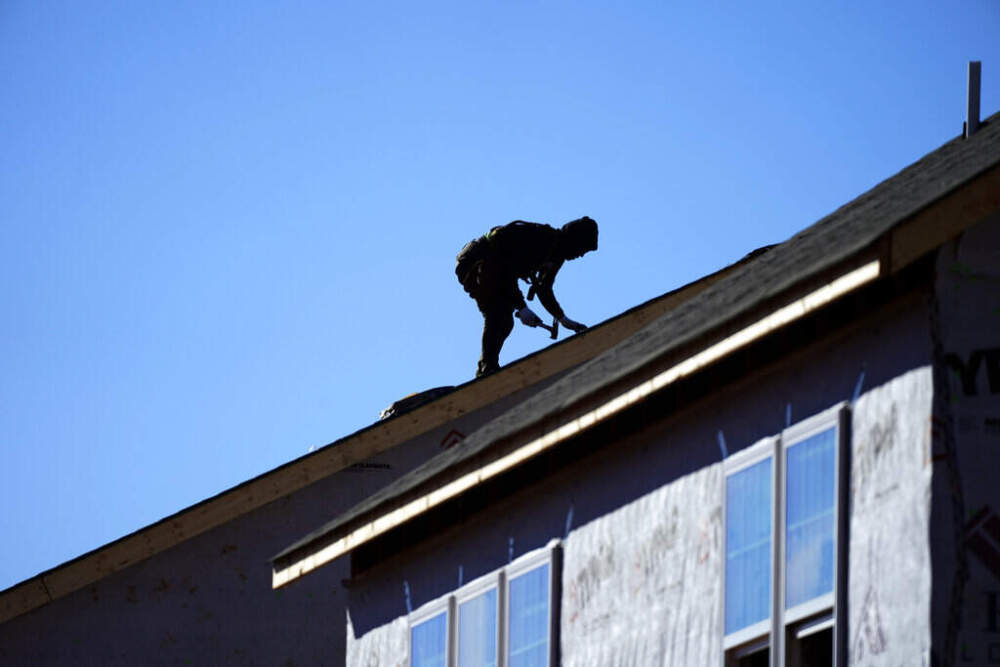
Summers are getting hotter every year. When it comes to adapting to a hotter planet, in the United States, it's cities that are taking the lead. In Atlanta, they've passed a nation-leading "cool roof ordinance."
Guest
Brian Stone, director of the Urban Climate Lab and a professor in the School of City and Regional Planning at the Georgia Institute of Technology.
Liliana Bakhtiari, Atlanta City Councilwoman and a proponent of City of Atlanta Ordinance 25-O-1310.
Also Featured
Daniel J. Metzger, senior fellow at Columbia Law School’s Sabin Center for Climate Change Law.
Transcript
Part I
MEGHNA CHAKRABARTI: Atlanta, we really wanted to start the show today with a quip about how hot, how really hot it is in Georgia right now. That typical hot, that humid, steamy Southern summer. But today, as far as I can see, it's nice in Atlanta, temperate. In the eighties, maybe some rain in the forecast for the weekend as far as we can see, and I hope that doesn't mean flooding.
Definitely hope that does not mean flooding. But overall, it seems it's out of the ordinary for sure, because August 6th of last year in Atlanta, there was a high temperature of 93 degrees. In 2023, it was 96. Let's take it back a little further. 10 years ago in 2015, Atlanta spiked on this day. At 95 degrees.
So let's just say that usually August in Atlanta, Georgia can get very hot. Hot enough to inspire a wide range of online commentary. For example, there are the expected comparisons.
It feels like I'm in an oven, just breathing hot air.
CHAKRABARTI: There are the internal monologues.
Oh Lord. What the heck? Whoa. Oh my God. Whoa. What is that? Is that the heat? Hold on, bro. Hold on. Oh. Oh no. Oh, no. Mm-hmm. No, forget that I'm out.
CHAKRABARTI: Then there are the folks who seem at their wits end.
Is this what going to hell for all your sins? Feel like I'm going to pray every night for now on, this is hot, hot, hot. This is, this is Cheetos. Fritos, flaming hot, hot. This is the Tabasco sauce hot.
CHAKRABARTI: That was Faylonta High, Otis Morrison Jr. and Leon Batts via social media. Even last week, people were trying to figure out how to cope or just describe the Atlanta heat. CNN Meteorologist Dereck Van Dam took to the roof of CNN's Atlanta headquarters.
You've heard the phrase, it's so hot, you can fry an egg on the pavement, but did you know that it's so hot outside that you can melt crayons too?
CHAKRABARTI: The roof at the time registered 116 degrees, so Van Dam lined up some crayons, taped down on a piece of black paperboard, and then he put that black paperboard on the roof and the crayons bask.
They bask in the Atlanta sunlight, and it doesn't take long before they turn into a messy rainbow ooze.
In just over an hour, our experiment turned into crayon soup.
CHAKRABARTI: Now if you're able to watch this video, you will see that beneath that black paperboard where they taped on the crayons, the top of CNN HQ is actually white, and it's painted white to help reduce the heat.
Now that is a measure that will soon be the standard for all new roofs in Atlanta. Because last month Atlanta passed a nation leading ordinance that will require all new construction to include cool roofs. Now these are roofs manufactured with measures to reduce how much heat they absorb. The ordinance is going to go into effect a year from now, and it's yet another example of how cities are leading the way when it comes to making real livable adaptations to the changing climate.
So we're going to talk about cool roofs today, and Brian Stone joins us to do that. He's the director of the Urban Climate Lab at Georgia Tech, and he's a professor there as well. Professor Stone, welcome to On Point.
BRIAN STONE: Lovely to be here, Meghna. Sorry, we could not deliver on the hot weather.
CHAKRABARTI: I'm relieved for Atlantans, honestly.
You guys deserve a break. But tell me, typically how hot do roofs get in Atlanta in the summer? And I presume there's a range, right? Because there's different kinds of roofing material.
STONE: Yeah, roofs can get incredibly hot. If we measure the actual surface temperature of rooftops, they can be more than 150 degrees.
And that's not typically the environment where we're spending our time, but that heat migrates down from the rooftop to the pedestrian level and really contributes to the intensity of heat around the city.
The actual surface temperature of rooftops, they can be more than 150 degrees. ... That heat migrates down from the rooftop to the pedestrian level, and really contributes to the intensity of heat around the city.
Brian Stone
CHAKRABARTI: Okay. Wait, so tell me more. That 150 degrees, and that's on average between, I don't know, like asphalt, shingles, tin roofs, I don't know what the, kind of, dominant roofing material is in Atlanta.
STONE: Yeah. It depends on the building and so for a residential structure, it's going to be a pitched roof with asphalt shingle, and it still remains in Atlanta, as in most cities around the U.S., that is a pretty dark asphalt shingle. Close to black, doesn't really need to be that color for the engineering of the roof shingle, it's just the lowest cost material and it's what we're used to.
And so those temperatures are going to be very hot. Other roof materials for a flat roof building will be a membrane. A rubber-based membrane. It can be any color, but anything that's on the darker side can be very hot.
CHAKRABARTI: Okay, now we're going to talk about the citywide effect here in just a second.
Because you had said that earlier. But just staying at the level of the individual home, does it matter what color the roof is? Regarding heat absorption that goes into a home?
STONE: Yeah, sure does. And so there are two properties of roofing materials that are most related to the temperature of the roof, the amount of heat that goes into the building, and then the amount of heat that just goes into the ambient air.
And so the first of those two principles is just, or physical properties, is the reflectance. How reflective is the rooftop. That's largely associated with color. The closer you are to white, the more reflective it is. It will reflect away that incoming solar radiation. The closer it is to black, the more of that radiation will be absorbed.
And then the second property is called emissivity, and that's just measuring how efficient the material is at radiating away any heat that enters the material. So if it does heat up, how quickly can it dissipate that heat? That's what we call emissivity.
CHAKRABARTI: Okay, so the darker the roof color, just simply on color, the more heat's going to be absorbed into the house, essentially.
STONE: Absolutely. And the more heat that will be emitted into the air around the building.
CHAKRABARTI: Okay. So then let's talk about the really fascinating thing, how much is coming into the house is obvious, but the fascinating thing you said earlier is that when you have a lot of darker roofs, that actually heats up the surrounding neighborhood.
STONE: It sure does. Yeah. It's a major driver of what we call the urban heat island effect and the amount of buildings we have, in combination with the amount of paved surfaces, roads, and parking lots, and then just the reduction in tree canopy or whatever the natural vegetation is, raises the temperature of the city.
And on a summer afternoon in Atlanta in particular ... that can result in 15 degrees Fahrenheit, additional heat in the city — compared to what we see outside of the city.
On a summer afternoon in Atlanta in particular ... that can result in 15 degrees Fahrenheit, additional heat in the city — compared to what we see outside of the city.
Brian Stone
CHAKRABARTI: You're kidding. 15?
STONE: Yeah, it's a tremendous amount of heat and so it can be as high as 20 degrees. Typically, in a large U.S. city in the summer, it's going to range from maybe eight to 12 degrees in the late afternoon.
But that's what a heat island does, and it's a tremendous amount of heat.
CHAKRABARTI: So you're saying that in Atlanta, like the center of Atlanta, it could be 95 degrees, but then further out, where it's far less urban and there's less, like you said, asphalt paving, more trees. It could be 80.
STONE: Sure, but it typically would be even higher. One of the key kind of missing forms of information we have is how hot is it in downtown Atlanta at any time during the day? If we're using a weather app on our phone, for example, in any city, that typically is reporting the temperature at the airport is not the same as downtown, the most built up district of a city. And so we often don't know exactly how hot it is, but on a really hot day, if the airport says it's 95 degrees, it might be 100, 102 on some of the city blocks in downtown Atlanta. So it may be the difference between 102 and 82.
But we really see a lot, a wide range of temperatures around the city.
CHAKRABARTI: Professor Stone, I've been told there's some really smart people at Georgia Tech. I'm thinking that you guys could put a weather station on some building in downtown Atlanta.
STONE: It's tremendous. We have, on pretty much every intersection in a major city, we have traffic surveillance cameras, that are giving us real time data all around the city.
We have only a handful of thermometers, and in defense of Georgia Tech, we do have a weather station on campus. But we're not right downtown. We're on a nice green leafy campus and so those temperatures are not the same as we see in other parts of the city that have lots of buildings or lots of industrial uses.
So we don't have good information on heat around the city.
CHAKRABARTI: I'm going to try to not get distracted about why we don't have basic temperature information in a major American city. And I'm presuming Atlanta's not the only one, by the way. Okay. So I don't know if we can discern this, but getting back to roofs, in terms of all the drivers of urban heat that go into creating these urban heat islands or even heat dome bubbles. Do we know what percentage is coming from the reflectance and emissivity, as you said, of rooftops?
STONE: We know the ranking of contributors. And so again, we call it the urban heat island effect.
It's nothing new. We've had the urban heat island effect as long as we've had cities. And so there are four basic drivers. One is the loss of natural vegetation. So in Atlanta, that's going to be natural tree canopy. We cut down trees, it gets hotter. Then if we just cut down the trees and left it as a big grassy field, it would be warmer.
We've had the urban heat island effect as long as we've had cities.
Brian Stone
But it wouldn't be really intense heat island, we come in then, we bring in streets and buildings, these kind of built materials that absorb a lot of heat and that includes the rooftops that drives the heat island. Then we have, as the third driver, just waste heat. So all those vehicles are emitting heat.
All those air conditioning systems are pulling heat out of buildings and venting that to the air. And then lastly, it's just the kind of the design of the city itself, where we have tall buildings that creates canyons, that trap heat. And so we've got these four drivers. The major driver typically is the loss of vegetation, but number two is the built environment, the rooftops and the parking lots.
So it tends to be the second most important driver. Cool roofs work against that.
CHAKRABARTI: Okay. So I haven't even asked you what a cool roof is yet, but getting that climate background on Atlanta I think was really important. Because I think it brings home how urgent the need is to make some kind of meaningful change to make year-round, specifically, but also like in the summer, more livable for Atlantans.
Part II
CHAKRABARTI: I guess I should finally ask you what exactly is a cool roof?
STONE: Okay so cool roofs are one of several strategies that are really as old as the city itself to address heat, and so when we're massing people in buildings, we have higher temperatures. This was observed by the ancient Romans and the ancient Greeks.
Cool roofs are one of several strategies that are really as old as the city itself to address heat.
Brian Stone
It's long been a problem. It's really, it's the original form of human driven climate change. And so some of these strategies to cool down cities focus on shading the city. That's what trees do. Some of these strategies focus on promoting more air movement within cities to cool things down. And then some of these strategies focus on increasing the reflectivity of the city.
And so if we can reflect away incoming sunlight, we can prevent the city from heating up in the first place. And so that's what a cool roof does. And there are very kind of low-tech approaches and high-tech approaches, but it's been around a long time.
CHAKRABARTI: Okay. So I can't believe I'm actually suddenly confused, but I'm going to admit to you I am.
Because I thought we said that reflectance was, oh wait, black is to absorb the heat and that. Okay, I got you. So you want to really reflect it away out of the city. Does this mean just painting the roof white?
STONE: It really does, in some cases, just painting the roof white will create a cool roof for sure.
We have contemporary reflective materials are trying to increase both reflectivity and that other property, emissivity. So increase the ability of the roof to transmit away any heat it absorbs. But just painting the roof white, and if you have a flat industrial roof, you can literally apply a coating.
Just white paint. It's engineered for this purpose and that will become a cool roof.
CHAKRABARTI: Okay. So it's not just any old white paint, it's a specific kind of paint.
STONE: It's not any old white paint, but if you were to use any old white paint and paint your roof, your neighbors might not like it. It would cool down your roof.
It would work.
CHAKRABARTI: Well, so actually, in terms of the downsides to it, we'll talk about that in a second, but are there other, also like other materials as well that are coming online. You said like higher reflectivity materials for roofing?
STONE: Yeah, and I should really, I should note here that color is the principle characteristic.
We can manipulate, but we can manipulate it in different ways and so it's actually possible to engineer an asphalt shingle that we typically have on a residential pitched roof to be a full range of colors and be more reflective, so we don't need to literally have a white roof on our home. Few people would find that aesthetically pleasing, but it depends on where you are.
But we can have light grays, light greens that are really, have a high reflectance value. And so we can really engineer these materials today across a range of colors to be highly reflective.
CHAKRABARTI: This is one of those moments, Professor Stone, where I'm thinking, is the solution so simple?
There's got to be a catch. What's the catch?
STONE: I don't know that there's a catch. The catch is that we're used to doing things the way we do things. So there's both on the kind of building side and the consumer preference side some obstacles here. So on the consumer preference side. In the U.S., you're in Boston.
The northeast of the U.S., originally settled at least in the European settlement by a lot of immigrants from Northern Europe and Northern Europe, having dark absorbent materials on buildings made a lot of sense. And so we've brought that over with us over the many years.
And so if you're aware, I am in Atlanta, having a black asphalt shingle makes no sense at all. As far as the climate and your energy bills. But we, it feels normal to us. And there's a bit of a challenge in going to lighter materials, lighter grays, just because people expect it to be black.
And then we're not manufacturing cool materials yet at the same volumes that we're manufacturing just a black asphalt shingle. So it's a little bit more costly on the building side, but of course that pays for itself relatively quickly in terms of saved energy costs. So it makes a lot of sense.
It's basically a low-tech solution. We should be doing it everywhere.
CHAKRABARTI: Are you pinning this on the Mayflower, really? Professor Stone?
STONE: I don't really wanna invoke the Mayflower or anything around European migration. That's not where I'm trying to go but we do have a legacy.
CHAKRABARTI: I couldn't resist. I couldn't resist.
STONE: But we do have a legacy, I know, we do have a legacy of these design preferences. That we have inherited from the places that we've migrated from.
CHAKRABARTI: Yeah. So that's actually important to think about, right? Because once a culture gets into the habit of something, breaking that habit is hard.
And it takes leadership. So on that point, I'd like to bring in Liliana Bakhtiari. She's an Atlanta Cindy Council member, and the sponsor of the City of Atlanta, ordinance 25-0-1310 and she joins us from WABE in Atlanta, the station that carries On Point. Council member Bakhtiari.
Welcome to On Point.
LILIANA BAKHTIARI: Thank you so much for having me.
CHAKRABARTI: Okay. So from what I understand, I said a little earlier that this is a first in the nation kind of ordinance. And listeners in Chicago or LA or New York might be like no, that's not true. We have cool roof ordinances, but there's a big difference.
Because as far as I can see, in those cities the ordinances only cover flat roofs and on say commercial buildings. So what is different about Atlanta's new rule?
BAKHTIARI: Yeah, so the cities that you're talking about, what their ordinances do is apply to flat roofs. So we're talking about commercial, we're talking about manufacturing.
Our ordinance includes steep slope roofs, so that applies to all new construction and full roof replacements in all zoning categories. So we really took it the extra mile.
CHAKRABARTI: Okay, so residential and commercial, the whole gamut.
BAKHTIARI: Correct. So this is everything across the board. Rather than piecemeal it.
CHAKRABARTI: Okay. So then, so this is for new construction. We'll come back to that in a second. But does it grandfather in all existing buildings in Atlanta right now, or do those folks when they have to replace their roofs, need to go to a new cool roof?
BAKHTIARI: Those folks, obviously we aren't going to make anybody take apart their roof when this goes into effect, but no.
When it is time, when their roof reaches its full capacity, its lifespan and hits that and they have to do a new roof, they're going to be required to put in a cool roof.
CHAKRABARTI: So tell me a little bit more about how you came about wanting to champion this idea for Atlanta.
BAKHTIARI: Yeah.
Living, being a lifelong Atlantan and seeing heat change and seeing hotter and hotter days. Seeing an increase in this over many years and knowing that we have one of the hottest cities in the country. I started working with the Urban Climate Lab and we did a block-by-block assessment of a heat vulnerability and stormwater assessment to find out what the actual data was behind this, rather than blindly throwing dollars at a problem.
And what it showed us was that reflectivity can be a huge tool with combating the heat island effect. And I want to say that's not the only tool. There should be a diversity of tactic. Because Atlanta does have a healthy canopy, but we also know that canopies age and things change.
And so we want to have more than one solution to tackle such a massive issue as this one.
CHAKRABARTI: Can you tell me more about what you found with that block-by-block analysis?
BAKHTIARI: The block-by-block analysis told us that there's a reason that life expectancy drops 20 years from when you move to North Atlanta to South Atlanta.
It showed us that we have tremendous heat islands in downtown area, in areas of Atlanta, where it is still a minority majority community. Because looking at Atlanta, our most vulnerable populations are Black residents and seniors. And so this really showed us that if God forbid there was a climate disaster tomorrow, that 2% to 3% of our population would need to go to the hospital.
And we only have about 2,000 beds in the city because of hospital shutdowns. So this would really overwhelm our medical system. So it's an all-encompassing issue, but all of that combined really led me to want to look at other innovative solutions. And we have so many subject matter experts in the city that quite frankly, we just have not deferred to.
CHAKRABARTI: Oh, this is so interesting. Okay, so the interconnectedness of the heat and health people have long known about that. But you're saying that this analysis has shown that you can put a correlate on heat and even life expectancy in Atlanta, or even short-term sort of health emergencies.
That's really fascinating. Okay. So then when you, fascinating slash disturbing, I should say, but when you first proposed the ordinance, what was the response from your fellow council members, from the community at large?
BAKHTIARI: They're actually, because I think that nobody actually understood, this wasn't a widely talked about thing, when we did the block-by-block assessment, it wasn't widely discussed, even though it has informed our tree planting plans over the next five years.
Even though it's informing, having, really talking about environmental preparedness and resiliency and the instances of flooding, et cetera. It was more curiosity. There wasn't pushback. There were just a lot of questions. The desire to understand, because when you were talking to Brian earlier, you were like, there has to be a catch, this has to be more difficult.
It isn't, it's collaboration. It's just having conversations. It just simply was a door that hadn't been knocked on.
CHAKRABARTI: Wow.
BAKHTIARI: And that's really it.
CHAKRABARTI: So specifically, the ordinance requires, we were talking about just painting roofs earlier with Professor Stone and Professor, I'll come back to you in just a second, but that's not what the standard that the ordinance sets.
Can you tell us what the ordinance actually is requiring?
BAKHTIARI: Yeah. Contrary to popular belief, cool roofs are not just painting roofs white. It's not just that, dark roofs absorb heat. They pass it on to interior and surrounding areas. It creates urban heat island effect, which you heard.
But this also, what we are discussing is also applicable to tile roofs, to asphalt roofs, to all of these things. And so we have thousands of colors that are applicable. There's a wide variety of choices, thousands of compliant options, and a range of colors all across materials. And those costs are the same.
The only outright band that we have is on jet black. And those colors, there are very dark browns and very dark grays that are available that are comparable to this. And it actually isn't more expensive on the building side. So this isn't, and it's no cost to cities to introduce legislation like this.
CHAKRABARTI: Okay. And then, and so it basically, but these roofs have to, these materials have to reach a certain reflectivity standard. Is that right?
BAKHTIARI: Correct.
CHAKRABARTI: Okay. Professor Stone, sorry, let me bring you back in here. First of all, can you explain a little bit more about what that reflectivity standard sort of means?
STONE: So we typically measure reflectivity. The technical term is albedo, and we measure that on a scale from zero to one. And so one is perfect reflectivity. We don't have any materials that will do that on our rooftop, at least not yet. And then, zero is basically that jet black. It's just marginally above zero for albedo.
And so this is a standard that's setting the reflectivity for commercial roofs at 0.7. So that's very reflective. And, but there are many things about this ordinance that are well designed. You mentioned Liliana's leadership on this, and I just have to emphasize that. We've been studying this in Atlanta specifically for a long time, and we've had very little movement on this until Liliana got involved in a very dedicated way.
So this is a standard that's measuring, not at that point of installation of the roof, but I think it's an average of three years of aging because these roofs do weather and they'll darken a little bit. So it's a very well-designed standard. Point 0.74 on the commercial side, and then 0.21 on the pitched roof.
Liliana, correct me if I'm wrong, I think those are the two reflectivity values.
CHAKRABARTI: Is that right?
BAKHTIARI: Yes.
CHAKRABARTI: Okay.
BAKHTIARI: Not that I should be the one to try.
STONE: You should. You designed it.
CHAKRABARTI: Okay, Professor Stone. One more thing, many more things about what the ordinance hopes to achieve.
The Smart Surfaces Coalition, which I'm sure both of you know about, has put out an estimate that says this new ordinance, essentially this change to the building code could cool the city of Atlanta by almost two and a half degrees Fahrenheit in summer and by almost by about 6.3 degrees in the city's hottest neighborhoods.
And I presume that's not an instantaneous cooling because you have to have a certain percentage of roofs that are this new reflectivity standard. But Professor Stone, considering what you said earlier about the 15 degree, sometimes, delta between downtown Atlanta and more rural areas, does a six degree cut, like actually seem, is that a reasonable estimate you think?
STONE: It is a reasonable estimate. Yeah. For some areas of the city. And that is a big reduction. So that's a really significant reduction in temperature. And we're measuring, if we see 15 degrees, that's just like at one point where we put a thermometer. But the statistic that they're citing is really at the more neighborhood scale.
So if we're seeing a six-degree reduction of the neighborhood scale or block by block, that's a really significant reduction. It's meaningful.
CHAKRABARTI: But I presume this is going to take decades, right? Because you have to have a certain percentage of roofs that are meeting this new ordinance standard in order to achieve those cooling temperatures.
STONE: Yeah. All of our strategies are going to take many years to deploy. And this is part of the challenge for us. Because we've really waited quite a long time, especially in the United States, to start adapting to climate change, to accept that this is happening and we have to take action.
And so we really need to physically redesign our cities and that's going to be a multi-decade process, but it has benefits to us every year that we engage in this and we start deploying these cool materials.
We really need to physically redesign our cities, and that's going to be a multi-decade process.
Brian Stone
CHAKRABARTI: And council member Bakhtiari. I'm also seeing, again from the Smart Surfaces Coalition that they claim that over a 35 year period, the ordinance could result in a $300 million energy, in energy savings, because people will just have to run their ACs maybe a little bit less.
BAKHTIARI: That's correct. Yeah. And real quick, just the piece on, if I can, the degrees that you were talking about. 50% coverage shows will show a 1.4-degree reduction citywide. 80% compliance shows us a 2.4 reduction citywide in degrees, and that is quite frankly the difference between life and death.
So I do wanna note that important piece. And then, I'm sorry, would you please ask me your question?
CHAKRABARTI: Oh, it's just about the energy, the energy savings.
BAKHTIARI: Yeah. So we, temperature reduction citywide, as I said, because of that solid reduction, we know that there's going to be lower HVAC costs.
You heard Brian mention that moving hot air out into the environment, this would actually reduce the usage of HVAC altogether. So we're looking at a cool roof saving a homeowner 4% to 5% in costs every year. And that is huge, because we just saw a 30.8% rate hike by Georgia Power in 2023 and between 2023 and '24.
So that's quite the jump. And so this is incredibly timely. So while we may not hit that coverage for a number of years, the folks that do get these roofs will see an immediate change in their life quality.
Part III
CHAKRABARTI: Daniel Metzger is a senior fellow at Columbia Law School's Sabin Center for Climate Change Law. And for him, finding ways to adapt to climate change appeals to him because of the immediate improvements that can be made in people's lives. But he also says, of course, there are still some hurdles and one of the largest is information.
Simply getting the right information into the hands of local lawmakers and showing them how making local changes can happen.
DANIEL METZGER: Atlanta did this as a building code amendment. And that's something that works in that context and isn't available in every state or city around the U.S. Because cities operate under different legal regimes in every state, there's a lot of uncertainty in a lot of places about what can cities do about it, even when they want to do more with smart surfaces.
CHAKRABARTI: Metzger also says there's the issue of consumer choice, and that for some cool roofs can have an image problem, because many people assume that adopting a cool roof just means painting it white, as we discussed earlier.
But there is of course more to the story.
METZGER: There are products out there that are visually darker looking. Not Jet black, but gray, brown products. That achieve their reflectivity outside of the visual spectrum. So to look at it, it doesn't look like a pure white shingle, but it is much more reflective than you might expect from something that's not engineered to be a cool roof.
So I think the perception that this is forcing consumers to make a certain aesthetic choice for their home is a misconception, but it's a persistent one that takes them overcoming.
CHAKRABARTI: Access is another challenge because, of course, not every hardware or roofing supplier store, excuse me, roofing supplier carries these products because absent regulation, the demand just isn't there yet.
METZGER: Denver isn't necessarily stocking products that aren't required by code, and it's not going to be feasible for a one-off homeowner to special order shingles to be delivered from California for their house. That's going to completely blow up the economics of it. But across scale, manufacturers have the resources to bring it to market everywhere.
And that's something that I think is only going to happen when there's more requirements like Atlanta's in place.
CHAKRABARTI: But Metzger says each one of these challenges can be overcome because of one simple fact, that cool roofs work. And as more people see and feel that, he thinks the technologies will spread to more cities.
METZGER: There's no magic number where it goes from being not helpful to helpful.
Every incremental step towards having more cool roofs across the city will see some benefit, especially for the buildings where those cooler roofs are located. But for the city at large, as more and more are deployed, those benefits will reach there. Each of these cool roofs is helping as soon as it's installed.
CHAKRABARTI: That's Daniel Metzger, senior fellow at Columbia Law School's Sabin Center for Climate Change Law. Liliana Bakhtiari. Let me ask you, did you receive any pushback from roofing manufacturers at all during the process of proposing and passing this ordinance?
BAKHTIARI: Actually, there were quite a few roofing companies that reached out and said, thank you.
Now there wasn't actually pushback, as I said before, with the building community. It was just met with a lot of questions. You heard Daniel say about the supply piece and how that can blow up the economy. That's why we built in a year of lead up time into this legislation, because I will be working with suppliers.
And builders over the next year to ensure that we have that supply and to meet the demand that will occur in a year. So that when we introduce it, it will be of less cost. Because you aren't, it's not that there's not going to be a supply in the southeast region. We will have built it because these materials are available, they're just not being asked for.
So if they see the demand being formed in our city, we can work with suppliers over the next year to meet that demand and actually plan for it so that when it is introduced in the midst of what is a housing shortage, we won't add additional burden onto homeowners and home builders.
CHAKRABARTI: Yeah. I do wonder if the lack of pushback comes from the fact that this is Atlanta that we're talking about. So I mean like the heat problem is very well established, because I'm seeing here that a couple of years ago, for example, Baltimore was debating a cool roof ordinance. This is back in 2022, and the Asphalt Roofing Manufacturers Association lobbied really hard against it, saying that it actually could lead to higher winter heating bills because of the cool roof. Professor Stone, do you wanna comment on that?
STONE: There's some truth to that in the sense that the further north we go the more we are investing more energy in heating than cooling. And so if your primary requirement during the year is to put energy into heating rather than cooling, then a white roof may be less helpful.
But it's easy to quantify the mix of needed benefits and the design of a roof and that's not true in Baltimore. In Baltimore, the net benefits are definitely in having cool roofs. This is really only true in the United States in the most northern latitude to the country up into Minnesota.
And so this is well mapped for the U.S. and cool roofs make a lot of sense for the majority of the country.
CHAKRABARTI: Oh, okay. Because I was gonna ask you, how far do you have to go before it does, it becomes moot, but I should say that Baltimore did actually end up passing a city ordinance of some kind in 2023.
But we've seen the lobbying, the roofing manufacturers lobbying. Pretty active elsewhere. In Tennessee, lawmakers there voted to eliminate a cool roof, statewide cool roof rule that would've applied to commercial buildings, and it was due to, again, lobbying from, of manufacturers, of dark roofing materials.
But councilmember Bakhtiari, with that in mind, that depending on where you are, you may get pushback if you're a lawmaker. How would you advise city officials elsewhere on how to take up this issue?
BAKHTIARI: I think that there's always going to be pushback for anything. As lawmakers, as legislators, we have the privilege of sitting at the table, of being paid to think about solutions to these issues.
I have the privilege of sitting at the table and making decisions that are going to impact my constituents for decades, if not centuries, to come. I think that's a weight and a responsibility that should be taken more seriously by lawmakers. Because it is our job to come up with solutions. It is our job to become innovative, and there are a million reasons why not to do something.
Change is hard. I hear that. I would say the state of climate change right now is a matter of urgency, and as we're seeing rollbacks on a national level, as we're seeing FEMA dollars repurposed for illegal immigration policy, as we're seeing those changes occur, it is more imperative now than ever for lawmakers to stand up, quite frankly.
The state of climate change right now is a matter of urgency. And as we're seeing rollbacks on a national level ... it is more imperative now than ever for lawmakers to stand up.
Liliana Bakhtiari
And I'm sorry that I'm getting, going in hard on this, but build a backbone, have one, push back, good lord. Like how much more evidence do we need that people are dying from heat related deaths? We're seeing these temperatures go up, there should not be an excuse on why, on pushing on this.
If our world was based on logic, we'd be living in a very different. A very different world and we, but there is no, you're always gonna get pushback. I'm sorry, that's just not an excuse. It's not an excuse why not to do things. Things are hard. It's difficult. It's difficult to swim.
It's difficult to swim against the market. But it's doable. And the whole supply chain piece, there are ways around that. We can come up with a million excuses why this is difficult. I didn't get into this job for things to be easy. I got into this job because things are hard for the everyday person because we don't have so many privileges and because the stakes are so much higher now.
So to lawmakers, I'm throwing down the gauntlet. City of Atlanta has the highest reflectivity standards in the country right now. And guess what? We were not on the national stage when it came to sustainability and resiliency. And now we are, and I don't think there's any reason for other cities to not adopt this model because it's doable.
City of Atlanta has the highest reflectivity standards in the country right now ... I don't think there's any reason for other cities to not adopt this model, because it's doable.
Liliana Bakhtiari
And if you get pushback, it can always be met with education. It can always be met with solutions. That's why I worked with, like you said, the Cool Roofs Coalition or the Smart Services Coalition over a year to prep this legislation, to put the thought and to prepare for questions people had and to educate myself.
So that's what I would say to those other legislators.
CHAKRABARTI: Let it be known that this is one show in which you never have to apologize for telling people to grow a spine. I absolutely hear you on that. And this, so this education part, I think is very significant. Because we've done shows in the past where depending on where you are in the country, like making an argument to change laws based on climate change, saying we have to do this for the climate, we have to do this for the climate.
It just doesn't work. We did a fascinating show about why Texas is the leading green energy producer in this country. And all the guests that came on there said it's because they don't talk about the climate. They literally talk about money. They talk about the economy, and I'm wondering if this is also, and Professor Stone, I'll turn this to you, if this is also a potentially fruitful tactic when it comes to cool roofs.
Because I'm looking at a study from, this is a while ago, but it's from the Lawrence Berkeley National Lab, from the U.S. Department of Energy, and they found that a cool roof on a home in central California, so a very hot part of the state, a cool roof could actually save that homeowner 20% in annual energy costs.
So we don't just have to talk about this in terms of Hey, this could help climate change, it could help the whole city. Like you can actually reduce it down to the level of individual homeowners and say, here is how you benefit.
STONE: Yeah, I agree. We should be doing both. The impacts of climate change at this point are unfolding in most people's lives in the form of economic impacts. We saw in 2024 the average increase in auto insurance policy was 20%.
That's the average across the United States. If that happens year over year, at what point will driving become unaffordable? Will owning a car become unaffordable? And the economic arguments are key. But we can't push this forward in place of understanding basic climate science.
We are getting close in some U.S. cities to accommodations of heat and humidity, that will induce a fever in a young person from one hour of exposure. We're not there yet, but we're getting close. And so the climate aspect of this is key. And so Liliana is showing great leadership in voicing that concern in a southern city.
And but also making the economic arguments which are fundamental. And they're, frankly, easy to make.
CHAKRABARTI: And by the way, that Berkeley National Lab also released a study back in 2009. So it's pretty old. I imagine that the findings, if it were repeated again, would be even larger.
But they found that if 80% of just commercial roofs in the United States were retrofitted with cool roofs, it would actually reduce the need for air conditioning and it would also reduce carbon dioxide emissions by more than 6 million tons, which is the annual equivalent of 1.2 million cars. There's a huge net positive effect here.
But Councilwoman Bakhtiari, actually want to ask a question about other things that are on people's roofs. Because I think we're getting some questions like how the cool roofs, both of you can answer this, but how they interact with solar efforts, solar panels, is it better to just tell people, have more solar panels on your roof and you can accomplish two things at once.
BAKHTIARI: I've said it before. I'll say it again. Diversity of tactic. So if this is something that people want to both do, I say go for it. It doesn't stop. This doesn't, like I said before, this does not preempt any additional thing or anything else outside of a jet black shingle. So if people want to do solar on top of their cool roof, that is totally fine. We can't, there's no preemption to that. And if they, it wouldn't, I think it would only assist. So if people have the privilege and the ability to do both, by all means, do both.
CHAKRABARTI: And Professor Stone does a cool roof or a higher reflectivity roof change the functioning of a solar panel in a meaningful way.
STONE: It can in a positive way. Okay. And so if you just do solar panels with add a cool roof, you actually get cooling benefits. You're shading the roof. And so there are benefits to just doing PV doing the solar panels. But integrating them with a cool roof, it is not impeding the efficiency of the solar panels at all.
We actually have a new generation of solar panels that can absorb energy from both the top and the bottom. And so you could actually be reflecting sunlight from the cool roof into the bottom of the panel and then converting that into electricity. So these are really compatible strategies.
CHAKRABARTI: Are these materials higher cost than current roofing materials? Or non-high reflectivity materials. Professor Stone?
STONE: I'll defer to Liliana, because she is more in the realm, the policy realm than I am. For a long time, just because of the supply chain. It was, there was a premium to fa pay for these materials, I imagine as the supply chain is opening up, that's less and less true. Probably parts of the country where they are absolutely in cost parity. But Lilana, I want you to comment on that. Because I think you have better information than I do.
BAKHTIARI: Thanks, Brian. We found through research that these tiles or smart roof tiles are actually just as comparable to regular in terms of cost.
They're the same thing. As Brian said, it comes down to supply chain. If there is no supply, but there is the demand, of course the cost is going to be higher. But if there is enough supply to meet that demand, then we have exactly what we're experiencing in the market right now, which is the same cost.
So that's why, again, that year lead up time and working with suppliers and those people in the building market, we will be able to achieve introducing this at a lower cost because we have done the work to ensure that the market is prepared.
CHAKRABARTI: Is it also possible that if you have significant adoption over time, that I'm just, this may be fanciful, that even just energy costs could go down, not just energy consumption, but energy costs?
BAKHTIARI: I would say yes, because as we're saying, if there's going to be less usage of HVACs and other things for cooling, then yes, you will see that go down.
The first draft of this transcript was created by Descript, an AI transcription tool. An On Point producer then thoroughly reviewed, corrected, and reformatted the transcript before publication. The use of this AI tool creates the capacity to provide these transcripts.
This program aired on August 6, 2025.