Support WBUR
Can public media survive?
Editor's note: WBUR, which produces On Point, will lose at least $1.6 million in annual federal funding, approximately 3% of WBUR's annual budget, as a result of the public media funding cuts.
The U.S. Congress cut federal funding for public media, shuttering the Corporation for Public Broadcasting. What does that mean for the future of local news across the country?
Guests
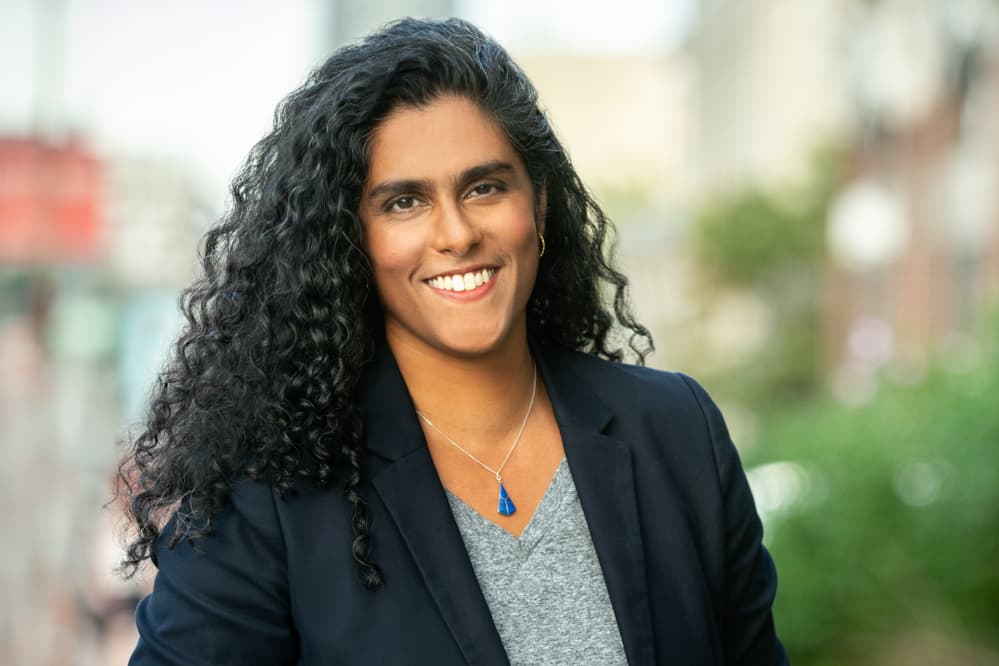
Josh Shepperd, associate professor of Media Studies at the University of Colorado - Boulder. Continuing Sound Fellow at the Library of Congress, where he builds, designs and administers national preservation projects.
Also Featured
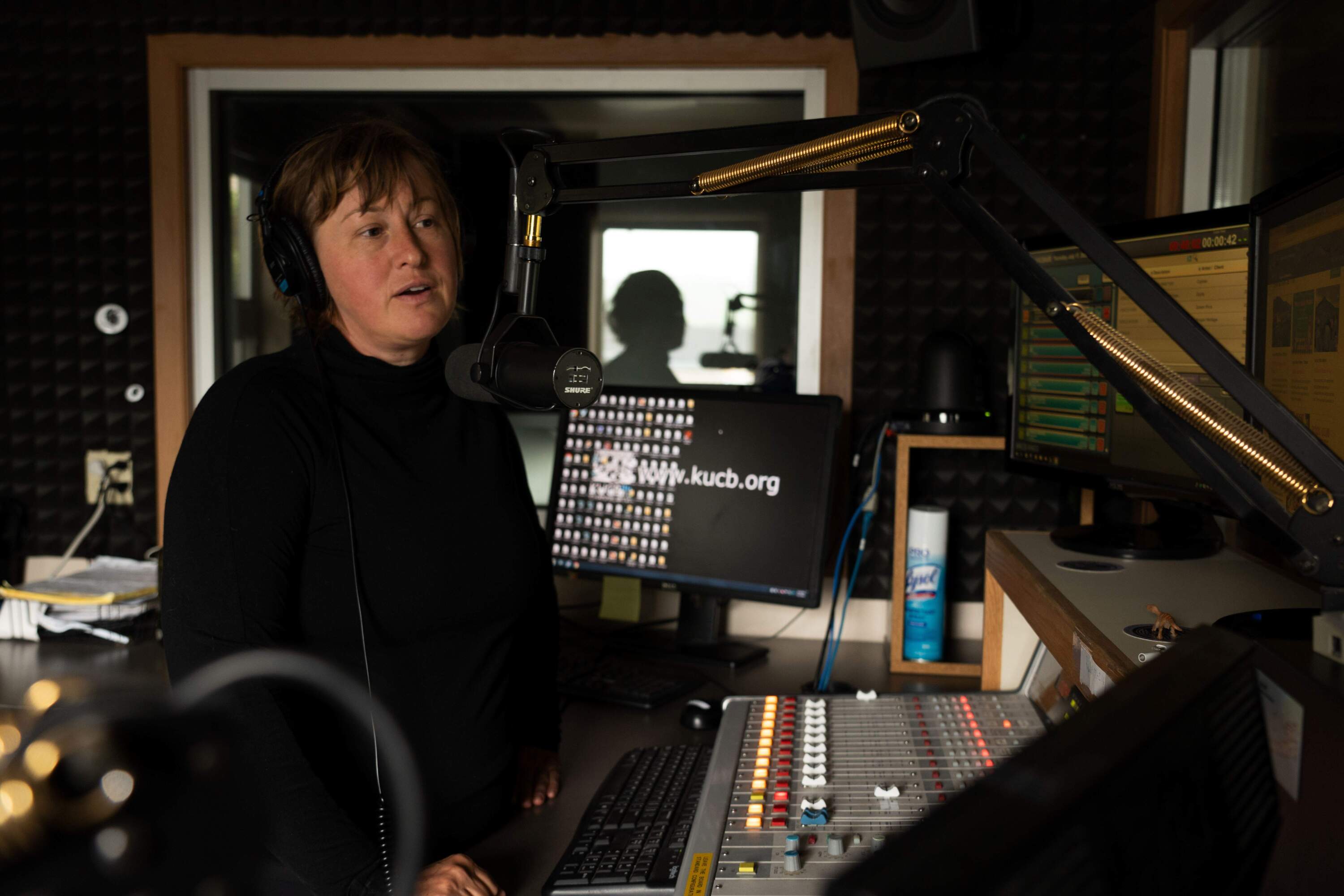
Lauren Adams, general manager at the public radio station KUCB in Unalaska, Alaska.
Jack Jones, acting station manager at KGVA, a public radio station on the Fort Belknap Indian Reservation in Montana.
Stephen Yasko, general manager of WFIT, a public radio station in Melbourne, Florida.
Transcript
Part I
CHAKRABARTI: This is On Point. I’m Meghna Chakrabarti.
Last month, Wednesday, July 16, a 7.2 magnitude earthquake struck near Sand Point, on the Alaskan peninsula. More than two hundred miles further out on the peninsula,in the remote city of Unalaska...
LAUREN ADAMS: We felt the earthquake. Immediately all of us ran back down to the station, which it's funny, it's at sea level.
(SIREN SOUND) (VOICE OVER LOUDSPEAKER) Attention. A tsunami warning has been issued for this area.
ADAMS: My name is Lauren Adams. I manage a little radio station in remote rural Alaska in the Aleutian Islands called KUCB.
You know, having a tsunami advisory or warning is not uncommon for us. We're on a volcanic island. It's, you know, part of our operations. The siren has a tone, and then it has spoken word message that says, tune into your local radio station.
(VOICE OVER LOUDSPEAKER) Move to high ground, immediately tune to your local radio station for details.
ADAMS: One of us is on the phone with public safety. One of us is on the air. I went on the air.
ADAMS (ON AIR): You're listening to KUCB. This is live coverage from KUCB.
ADAMS: I had another employee who was furiously typing. I'm talking, they're giving me the information. They're also writing the story, getting it on the web, getting it on Facebook.
ADAMS (ON AIR): Residents should move to high ground, at least 50 feet above sea level or one mile in land. As our community responds to a tsunami warning, which is in effect for Unalaska.
ADAMS: We stayed at our office until we knew that it was time to go to high ground. I left a recorded loop of that information playing, ran up to high ground, set up my laptop, log in remotely, have my all clear message in the queue.
And it was perfect. It went off without a hitch. I was so proud of the work we did, and it was just a really touching moment, looking at the community, watching the trucks full of, um, of personnel going to high ground.
At that moment, in Washington D.C., the debate was taking place.
(AUDIO FROM SENATE FLOOR): The Senate will resume consideration of HR four, which the clerk will report calendar number 114, HR 4, an act to resend certain budget authority and so forth.
CHAKRABARTI: The Senate was considering a Trump administration proposal to rescind – or claw back — $9 billion in funds previously approved by Congress. That included 7 billion in foreign aid, and $1.1 billion for the Corporation for Public Broadcasting.
The plan would cut all federal support for public media, including stations like KUCB.
ADAMS: That night, late at night, we tuned in and we heard Lisa Murkowski read an email that I'd sent her saying, “Hey, I know you understand the value of the work we do in Alaska. I'd love for you to share with your colleagues.” And she did.
SEN. LISA MURKOWSKI: I'm looking at a text that I received from the station manager there at KUCB. They say, “This is the work that we do to keep Unalaska safe, and it's only possible with federal funding.” Mr. President, I have an amendment.
ADAMS: Unfortunately, I don't think the message was heard. The vote went through that night.
(AUDIO FROM SENATE FLOOR): Senators voting in the affirmative: Banks, Barrasso, Blackburn, Bozeman, Brit, Budd… The yays are 51, the nays are 48. And on this vote, the bill as amended is passed.
CHAKRABARTI: Senator Lisa Murkowski of Alaska and Senator Susan Collins of Maine were the only Republicans who voted against the clawback. President Donald Trump signed it into law on July 24.
ADAMS: You know, getting up and trying to go to work the next day, I think all of us were just like, defeated, you know? We are all of a sudden having to react after the fiscal year started and it's really hard. I was expecting about $290,000.
CHAKRABARTI: Lauren was counting on funding from the Corporation for Public Broadcasting to cover roughly half of her station’s annual operating costs.
ADAMS: We pay a dollar a year to be in a World War II chapel, and that's where our studio is and that's where it has been since 1974. We pay some utilities. We pay for programming. That I can cut. If it's from outside, it can go.
But that personnel line is just huge. It's expensive to have personnel. It's expensive to provide health insurance and pay a living wage in one of the most expensive communities you could live in the United States.
It's a community of 4,000 people and our broadcast signal literally just reaches those 4,000 people. We are off the road system, so there's only one way in and out. Well, I mean, you could take a boat, but we get one ferry a month in the summer only. Like, right now I'm looking out my window and there's fog covering the landing strip. So what that means is planes aren't gonna land.
We don't, you know, we don't have a coffee shop. We don't have places where you could sit down and come together, and I think we've filled that role really well. Our morning DJ starts at, so he does one hour of hosted Morning Edition.
KUCB MORNING HOST (Tape): Good Wednesday morning to you, Unalaska. You’re listening to KUCB AT 89.7 FM in Unalaska.
ADAMS: And on the breaks he talks about the school lunch menu, local forecast, current conditions.
KUCB MORNING HOST (Tape): It’s possible you may have frost on your windshield this morning. I had to get out my credit card because I didn’t have an ice scraper. Still get 10 hours and 23 minutes of daylight today. And your moon, well it’s almost a full moon.
ADAMS: We're the ones that provide all the election coverage. We do a voter guide, translate that into Spanish and Tagalog. No one else doing that work. And then we have daily newscasts still. We're covering just a lot.
(MONTAGE)
REPORTER 1: The Aleutian Village of Nikolsky has a new community center.
REPORTER 2: Unalaska is deep into another winter storm.
REPORTER 3: Unalaska’s city manager fired the islands director of ports and harbors Wednesday.
REPORTER 4: Unalaska is approaching the peak of the sockeye salmon season.
ADAMS: Today is our Morning Edition host’s last day. I'm not replacing that position. We have two news reporters and at the beginning of the fiscal year, we had three. I am looking at like, cutting my own position.
Even with the staff cuts, I am well above where I would need to be. I would have to still cut a hundred thousand dollars to actually balance my budget this year. And I don't see anyone who's gonna come in and wanna cover our market. You know, it's not like we have commercial broadcasters lined up to take this spot.
There is not a funding source that's going to fill this hole.
So we're gonna operate on reserves this year. I think that at this current level of operations, we really could just do one year.
I mean, sure we can have a signal, because we have local funding and so the transmitter can stay on the air. But like, what is that really? What does that bring to the table if you don't have a person at the mic?
CHAKRABARTI: Lauren Adams is the general manager of public radio station KUCB in Unalaska, Alaska.
Two weeks after Congress rescinded the previously approved $1.1 billion for the Corporation for Public Broadcasting, the Senate Appropriations Committee submitted its markup of the 2026 Labor and Health and Human Services appropriations bill. There is no funding in that bill for CPB in 2026.
The Corporation for Public Broadcasting issued a statement saying the decision "will cause irreparable harm, especially to small and rural public media stations." And that it would be impossible to fulfill its statutory mission.
The next day, the Corporation for Public Broadcasting announced that it had no choice but to shut down. In a note to public media colleagues, CPB President Pat Harrison wrote:
"Through leadership, resilience, and unwavering dedication, you have built one of the most trusted institutions in American life, one that is essential to our civil society, reflective of the ideals expressed in the Constitution, core to our commitment to children's education and how we define ourselves as a nation."
End quote.
The Corporation for Public Broadcasting was first authorized by Congress in 1967. In January of 2026, it will cease operations. The CPB was also controversial virtually from its inception, and a frequent target of intense political criticism and scrutiny. Behind it was the idea that all Americans, no matter how remote their location deserved trustworthy information.
And in the almost 60 years since CPB's founding, politics have become more divided, and extreme technology has evolved exponentially. Those are the facts as they must be faced. From shows like Molly of Denali to the tsunami warnings from KUCB in Unalaska, what is the future for publicly funded media in this country?
Now this, of course, is a question of interest to us here at On Point. WBUR, which produces On Point will lose at least $1.6 million in annual federal funding. That is approximately 3% of WBUR's annual budget as a result of the public media funding cuts. Now, that is a bite. But it is a small one in comparison to the hundreds of rural stations whose existence relies on CPB funding. For example, 50% of CPB's funding in Alaska came from the Corporation for Public Broadcasting.
So we are going to focus on rural Americans today. How will the closure of the Corporation for Public Broadcasting change what news you receive and how you get access to it?
Josh Shepperd joins us now. He's an associate professor of media Studies at the University of Colorado — Boulder. He's also a continuing sound fellow at the Library of Congress, and he joins us from Boulder, Colorado.
Professor Shepperd, welcome to On Point.
JOSH SHEPPERD: Hello. Thank you for having me.
CHAKRABARTI: I actually want to spend quite a bit of time with you learning about the history of the idea of publicly funded media in this country.
How far back should we go? Should we go before even 1967?
SHEPPERD: So public media in its original form, educational media can be traced back to roughly 1920, 1921 or so. And the idea for public media, which I would argue is based in education originally, could be traced back even to like the 1860s.
CHAKRABARTI: The 1860s. Why?
SHEPPERD: So you get these early laws at a state level that they just simply called compulsory education. You have to go to school, and these are on a state by state basis. And then the idea for equal access to education becomes prescient. And then all the methods and facilities and strategies to reach every possible student become a part of state bureaucracy and different modes of curriculum and message delivery.
CHAKRABARTI: And so then what form of technology comes into play?
SHEPPERD: Yeah. Over about 50, 60 years each state begins to pass its own education laws. We begin to see the emergence of land-grant universities, which are explicitly given the mandate to reach everyone in the state.
And by about 1920, they realized that radio could actually serve this purpose specifically by reaching rural communities, especially agrarian communities.
Part II
CHAKRABARTI: Professor Shepperd, you were describing how this idea of using radio to bring, what, educational curricula to even rural schools, what, in the early 1900s was maybe the first stab at publicly funded media? Tell me more about that.
SHEPPERD: Yeah around 1920 or so, you get the broadcasting model, the one-to-many model. Before that it was more like walkie talkies where people would communicate on an open bandwidth.
Once they move broadcasting to one talking to as many listeners as are possible, they realized at universities, specifically, that they could reach a farmer who lived about 20 miles away. And maybe that farmer's working eight to 12 hours in the field. The only way to get to like a night class would be horse and buggy or a horse, and you're looking at another hour and a half of commute.
So radio becomes part of these early experiments in distance learning with like correspondence classes and what they called adult learning, which really was just over the age of 16. Because not every state at the time required that someone over 16 had to go to high school, for example. So the idea of public media became this technical strategy, the use of technology to reach all of the different populations who would otherwise not receive the same kind of education as people in college towns or urban centers. And it really becomes based in this participatory mode of agrarian culture, meeting research at universities.
Public media became this technical strategy, the use of technology to reach all of the different populations who would otherwise not receive the same kind of education as people in college towns or urban centers.
CHAKRABARTI: Reaching rural communities was at the heart of the endeavor from the start. Mostly because we're focused on funding for this hour.
Who was paying for even that sort of adult education radio to be broadcast at the time?
SHEPPERD: Yeah, it was pretty messy. It was usually free, but usually, the broadcasts weren't very good. And it was what we'd call instructional. It wasn't quite as conversational. It wasn't very entertaining. It was typically someone like me talking into a mic and maybe not even directly into the mic at different times of the week.
And it wasn't really like the strongest approach to the aesthetics of the use of technology, which commercial broadcasting simultaneously was mastering pretty quickly.
CHAKRABARTI: But were universities paying for that person to sit and broadcast that educational content?
SHEPPERD: Yeah. It was usually funded through the state. That's right.
CHAKRABARTI: Funded through the state. Okay. Okay. So then that's about 1920ish. What happens between then and the founding for the Corporation for Public Broadcasting in the sort of late-ish 1960s, that led to this idea in Congress that we needed something like the CPB.
SHEPPERD: Early instructional broadcasting would be something like home economics, due to the gender dynamics of the time, which became later genres like cooking shows and these types of genres we associate with public broadcasting now. And so there's two things that happen. One is an evolution of how the broadcasts looked, so that it becomes something recognizable to what we associate with NPR and PBS now.
But it was always based in education until 1967. It was called Educational Radio and Television, NET or National Educational Television and Radio. And the second is that they had to figure out at the national level how to provide opportunities to get on the air when there was only AM radio, especially in the early days.
So you have this regulatory discourse that begins to emerge in the late 1920s. Let's say there's three stations in what they called frequency scarcity for a rural area.
And so they weren't sure who to give the signals to. And what happens is by 1934, at the end of a kind of a Hooverist free market approach to government, they end up giving almost all the signals to commercial broadcasters, and hundreds of educational stations initially lose access to the audiences completely.
And so what happens is there's this kind of moment between '35 and the '50s in which there's an exploration of what non-commercial media might be in the U.S.
And what it begins to settle on is something more like news and educational entertainment for PBS, and a kind of an advocacy that is derived from those original practices and ideas of compulsory education, which is equal access to education, equal access to information. And a kind of philosophy and a mission statement began to emerge and crystallize between the '30s and the '50s, especially. And this is a part of the regulatory discourse that you see up to the famous Mr. Rogers moment, is that it's important, not just that there is this channel available, but it actually contributes to a public good or a public service of some time.
So when you get to 1967 and the Corporation for Public Broadcasting's founding, there's already been like almost a 50 year experimentation and advocacy for equal access to education. And along the way, there's a few regulations that we don't have to discuss in depth, but they build infrastructure.
When you get to 1967 and the Corporation for Public Broadcasting's founding, there's already been like almost a 50 year experimentation and advocacy for equal access to education.
And the infrastructure is like transmitters, it's using the boards. It's essentially the technics and the logistics of what it means to reach the audiences that shows up in the legislations themselves. When you get to 1967, in the Public Broadcasting Act, it's actually a renewal of an infrastructure bill they called the Educational Television Facilities Act of 1962.
It was a five year renewal and they decided to permanently ratify it during the Great Society, which gave way to the Corporation for Public Broadcasting.
CHAKRABARTI: Okay, so let me just go back here for one second. Essentially, there was also a several decade, or at least a several yearlong period where that educational radio, as you were talking about, went away for these very rural communities. Because as you said, those places on the radio band were sold to commercial broadcasters.
Is that right?
SHEPPERD: Yeah, so initially that's true. Of course the frequency capacities begin to expand in the '30s, and then FM appears in the mid-'40s, right? And so by the early fifties with the television regulations that happened in the early 1950s, there's enough channels for radio for sure, but then it happens all again for television in the early 1950s. But this time the advocacy is much cleaner and they have a better sense at the educational level for what to do. And they actually win some early channels with the first television regulation bill in '52.
CHAKRABARTI: Okay. I see. You know what's interesting though? Why was it, why do you think there was this sort of growth of the idea that there should be some kind of publicly funded information on radio and television that's separate from commercial radio and television?
Why didn't we also have the idea that if you're going to be granted a commercial license by the federal government, I don't know, a certain percentage of your content or your shows would have to be educational.
Why cleave off the idea of purely educational content out of the commercial space?
SHEPPERD: Yeah, so this is a great question. Initially when they lost all the stations, no one was happy. Because commercial broadcasters then had to do this public service broadcasting that wasn't profitable.
And that's why everything ended up on Sunday mornings, all of the farm reports and public affairs shows is that was the least profitable time to produce broadcasting for sponsors. So they just pushed all of what they called sustaining broadcasting which was a mandate that came from the government for commercial stations to the most unprofitable times.
And so commercial broadcasters wanted the stations for obvious reasons, for profit, for production, but they didn't necessarily want to house that broadcasting. And there were a couple broad social issues at the time. Cold War, mitigation of fascism, and the idea of having a non-commercial vehicle that was based at universities was attractive politically to some extent in the 1930s to 1960s.
Wait why? Explain that.
SHEPPERD: Yeah. So if you have an informed public that's helpful, but even more trade preparation, so a lot of kinds of early programming was focused on learning language, learning skills, learning literacy.
This was seen as a way to incorporate different immigrant groups and rural communities into a sense of like national community. And there was also, just the mandates given to universities that their job was to educate everyone in the state. No matter how large or small the audience, in this case students, listenership or correspondence class might be.
Early programming was focused on learning language, learning skills, learning literacy. This was seen as a way to incorporate different immigrant groups and rural communities into a sense of national community.
The whole purpose of education is that every student should receive the same education but also that the education needs to be catered to the needs of the specific states and regions. So I think like these kinds of philosophies all gelled together into a pastiche by which there's multiple interests that want something that isn't merely sponsor based alone, because that's based in third party interests.
It's based in profitability models. And certain kinds of programming can't be produced within those models in a sustainable way that is like social[ly remediated], something that is simply for a public good without an ulterior motive. So it took a long time, but there's this kind of buildup in energy that public good is important.
And that there's an experiment in Democratic participation that includes public forums and that's really what your show does and many other great shows do still to this day, that public media was able to fulfill.
CHAKRABARTI: Obviously public media has had its critics from the start.
We're going to talk about some of those criticisms a little bit later, but let me just focus on the television side for a second. I understand that something called National Educational Television began in the early 1950s, but that was not publicly funded at the beginning, right?
SHEPPERD: Yeah, so NET is up and running by '53, '52, '53 and it's funded largely by the Ford Foundation in the equivalent with inflation amounts of low billions of dollars of development from then on, and that's after they set aside a few hundred stations for educational television with the second run through the bills, after the 1930s, which was for television and not for radio, the second time.
So what they did was they said how do we produce something that is high quality like the BBC or something like that, and produces at the time what they would've called cultural uplift.
And of course, I think it needs to be problematized, whose cultural uplift and for what purpose? But they end up settling on these different genres like Shakespeare or the Boston Pops or types of programming that weren't just informative. But also emulated a kind of national voice that they thought was desirable at the Ford Foundation and at universities and on the East Coast at the time.
And they pull in talent from the BBC. Alistair Cooke is brought over for something called Playhouse. He ends up going on to Masterpiece Theater and a lot of the programs were produced through the Ford Foundation funding, sometimes through universities as well, and something called the National Association of Educational Broadcasters, or the NAEB, which goes back to 1926 and eventually staffed all of NPR and PBS after the corporation for Public Broadcast was instilled.
And so they begin to produce a kind of a programming that they think is indicative of what the U.S. means, whatever that means, and it experiments for about 20 years until we get PBS.
CHAKRABARTI: Okay. So PBS essentially is what emerges from NET. Got it. Okay. So now back to the official creation of the Corporation for Public Broadcasting.
As you said, it was founded in the Public Broadcasting Act of 1967 in the Johnson administration. Since then, we've heard immediate criticism of CPB as being like government media, state media, things like that. What is actually in its statutory mandate? What is the corporation of Public for Public Broadcasting?
What was it supposed to be?
SHEPPERD: Yeah, this is a difficult and great question, of course. Because most people think of NPR and PBS when they think of public media. Of course, there's close to 1,500 affiliates, and then there's the funding mechanism for it. So the question was how do you create a system of informational distribution or an infrastructure or ecosystem of information, without it simply being the voice box of a single political party or a single government. And the Corporation for Public Broadcasting was built to give one degree of separation from politics, even though it has a politically appointed board.
And then it's supposed to give money to nonprofits and each station is its own nonprofit, and it does so through what they call community grants or block grants. A lot of the grants then go to the affiliates, in particular, and they fund exactly what that opening feature was talking about, which I thought was very excellent, by the way.
A description of what service it provides for Alaska. So the CPB is something that was supposed to mitigate what we call state-based media, which is just another word for propaganda media, by putting in degrees of separation and then funding without creating content itself.
CHAKRABARTI: Okay. So then that funding goes to, like you said, the 1,500 affiliates or stations across the country. I guess that means that public media, whether it's radio or television, reaches almost the entirety of the United States. Is that accurate?
SHEPPERD: Yeah, I think it's over 98% of possible U.S. listeners have some public broadcast to access.
CHAKRABARTI: Okay. But so the key thing though is again, we'll talk about this a little later, that the most recent criticisms were like CPB is directly funding NPR. That is not necessarily true. It's funding those the local affiliates.
SHEPPERD: I believe NPR only receives something like 1% of funding from the CPB.
So it can't be destroyed by the elimination of the CPB, although ideologically or politically, it's like the face of what the right claims that it's trying to stop from distributing information.
[NPR] can't be destroyed by the elimination of the CPB. Although ideologically or politically, it's like the face of what the right claims that it's trying to stop from distributing information.
CHAKRABARTI: The CPB also was doing something else important. Again, thinking of the stations, these rural stations, especially, because again, this like century long concept that you've just been describing of equal access to information in rural America. In order to keep those stations going, they have to stay in compliance, right? With the FCC, another government agency, and that can be quite spendy. And the CPB was helping local stations do that.
SHEPPERD: Yeah, absolutely. So the FCC was founded in '34 with the first policy I mentioned briefly before, and they're the ones who stripped the stations initially from educators, because of the senate's rules that were given to them. But they've actually largely supported public media through its history.
Really after that first year or so of early legislation, the FCC has had a number of periods where it's created possibilities for educational and non-commercial stations to enter into the media ecosystem. So they have to fall into non-commercial media policy line, which is a little bit different than the sponsorship broadcasting, and they call that compliance.
There's a compliance that has to be met. And then the compliance consists of similar rules to the Public Broadcasting Act in which you have to demonstrate public service commitments. And you have to have localism, is the word that they use. Is supposed to serve local communities and speak to local purpose.
And it can't conduct calls for action. It can't tell people to purchase certain things or do certain things.
CHAKRABARTI: Now, folks, I know this sounds like a broadcasting Insider Baseball, but it's important background to understand what could happen to these same rural stations that we've been talking about that relied on CPB funding for so long to stay on the air and serve their local communities.
So we're going to talk a lot more about next steps for those stations when we come back.
Part III
CHAKRABARTI: Today we're taking a look at what the future holds for the hundreds of public media stations, radio and television that serve rural Americans.
And this is after, of course, last month, Congress cut all funding for the Corporation for Public Broadcasting. And I like to do comparisons like state to state, but in this case, country to country comparisons, Josh, a little bit.
So for example, on average, the United States spends about $3 per person a year on public broadcasting. That's radio and television. $3.16 according to the Neiman Lab out of Harvard University. Compare that to Germany. The Germans spend $142 per person per year on its public media. Norway, $110. In the UK, $81. Australia, $35. Let me see here. Japan, $53 per person per year.
So we're an outlier in terms of the just tiny per capita amount that we spend on public broadcasting every year. But even that $3 per person per year goes a long way, and its absence is going to have an impact on stations from Alaska all the way to Florida and even Montana.
RADIO ANNOUNCER: KGVA, the voice of the Aaniiih and Nakoda Nations.
JACK JONES: My name is Jack Jones. I'm the acting station manager for KGVA 88.1. We broadcast out of the Aaniiih and Nakoda College on the Fort Belknap Indian Reservation.
RADIO ANNOUNCER: This is WFIT Melbourne.
STEPHEN YASKO: This is Stephen Yasko. I'm the general manager of WFIT in Melbourne, Florida. We are just a mile from the beach and 30 miles south of Cape Canaveral.
JONES: KGVA focuses on traditional and cultural aspects of the community around here. We have our word of the day, which is the Aaniiih and Nakoda word of the day that plays at the bottom of the hour.
KGVA BROADCAST: (SPEAKING NAKODA) Try to talk Nakoda. The word for today is (SPEAKING NAKODA,) which is the Nakoda word for “Tuesday.”
YASKO: Brevard County is home to a lot of space industry corporations that create the new rockets that are going up from the Cape.
WFIT NEWSCASTER: Well, the fifth try was the charm for SpaceX this morning. After four scrubs due mostly to weather, a Falcon 9 sent internet satellites to orbit for Amazon.
YASKO: It's like a solar eclipse. Everybody just stops what they're doing, turns and looks to the sky and watches the rocket until it goes outta sight.
JONES (ON AIR): You are listening to KGVA 88.1. The time now is 3:06, currently 78 degrees outside of the studio. And I have some public service announcements for you.
JONES: On the reservation, there's still like, no cell phone signal or anything like that. So a lot of people do rely on the radio to get the news in the community. You know, it's like, “Oh, hey, yeah, there is a community feed going on. I should go get a plate.”
Wildfire season last year there was a wildfire that broke out and it was like in an area that had like no cell phone signal. So we're the first call to get the word out.
YASKO: We do a lot of hurricane coverage.
WFIT REPORTER: Tell us the latest of what we’re to expect today.
FORECASTER: The forecast is sort of on track for tropical storm conditions at times at Florida Tech.
YASKO: We are the only game in town for Brevard-specific emergency response broadcasting. We're the only ones who are going to tell you if a major causeway is closed between the mainland and the barrier islands.
JONES: We've always been kind of on the small side — basically me and a DJ. I would say about 80 to 85% of the budget was from Corporation to Public Broadcasting.
YASKO: We lost 40% of our budget, $240,000.
JONES: I'd say, like $100,000 from CBP, and that's just, you know, to keep the lights on, to keep at least two people employed here.
YASKO: Just yesterday we eliminated three staff positions. We have six people and we laid off three. So I think we've cut it to the bone right now.
JONES: That would probably be what we would cut is salaries. That's our biggest cost right there. It'll be a challenge to see where we're gonna get the money from.
YASKO: We did a one-day fund drive when rescission happened. We raised about $15,000. In a normal 10-day fund drive, we raise about $50,000.
JONES: We've had a lot of people wanting to donate to the station. I guess, you know, I mean, donations, won't keep us afloat. You know what I mean? We still gotta sit down with the president of the college and the board to see what viable options we have.
YASKO: I'm now in charge of raising a lot of money by myself.
So we have a condo crisis here in Florida with property insurance that has made Florida ripe for property donations to nonprofit organizations. So that's one twisted thing that we're looking at. (LAUGHS)
JONES: We could change our license, be a commercial radio station. But being so rural, there's not a lot of businesses here to, you know, advertise with. You know, we're like 50 miles away from any other town. You know, our closest Walmart's like 50 miles down the road.
Hopefully it doesn't come to it that we'll have to close doors, but we'll have to see.
YASKO: I don't think we're going to go away. I think that we will maintain, with the university's help. The only thing that could make WFIT go off the air, and that would only be temporarily, would be a Cat-5 hurricane that hit us right over the head.
CHAKRABARTI: ... Stephen Yasko, general manager of public radio station WFIT in Melbourne, Florida. And Jack Jones, acting station manager for KGVA, a public radio station on the Fort Belknap Indian Reservation in Montana.
CHAKRABARTI: Josh Shepperd. You know what's so interesting to me is that for all of the rural stations that we spoke with, the vast majority of the programming that's on their air is either local news and public service announcements, local reporting or music. And yet the rescission for the money for the Corporation of Public Broadcasting was really focused on national politics and national news.
Particularly coming out of NPR, I just want to play an example here. Here's Republican Senator Eric Schmitt of Missouri. He was in favor of cutting funding for CPB and he's, and he spoke during the Senate's vote on the rescissions package on July 16th.
ERIC SCHMITT: We don't have to sit by anymore and continue to send the hard earned tax dollars that are sent here by the guys that swing the hammer and the gals who drive the trucks back in Missouri. Who should be mortified that they're spending money for the head of NPR to call the president a bigot, a racist, to look over the vast continent of our country and where I come from, fly over country. And look down on him, and actually use our money for programming to tell him that every single hour of every single day. Enough is enough.
CHAKRABARTI: Now, NPR's CEO Katherine Maher has expressed regret for the Tweets that were referenced there, which she posted before she was CEO of NPR.
And NPR spokesperson told the New York Times that quote, since stepping into the role, Maher has held up and is fully committed to NPR's Code of Ethics, end quote. But Josh, I wonder if you could talk about this, because this criticism about a presumed political leaning of public broadcasters has been targeted at CPB virtually since the start. I know that like even Richard Nixon famously decried public media.
SHEPPERD: Yeah. Public media represents a check in a balance in the government that doesn't have to be there, according to the Constitution. It's part of the First Amendment to some extent, but it's a challenge to any kind of maneuver.
In which there's an observation from within the government or funded by the government that is tracking what the government is doing. And so you have these other non-commercial functions like Voice of America, Radio Free Europe and they all have the same purpose as NPR in different ways, which is to provide equal access to information, but also to gauge and describe and analyze.
And bring people in and talk to them about what's actually happening. So I think the Nixon-Trump correlations are pretty, they're similar and different. But in the end, it's a threat to specific political maneuvering to have these stations extinct.
CHAKRABARTI: But as you said, cutting CPB funding though, will ostensibly have very minimal impact on NPR. The big impact is on these local stations who the most of what's going out on their air is very locally focused stuff. That's the irony that I think is somewhat tragic here. And a lot of the criticisms of NPR, I actually personally think are valid, I think about them a lot, but to think about the future of these rural stations, which is really where my mind is.
I'm wondering if there are just now alternative funding methods that they have to think about. Because this purely CPB oriented pot of money that went out to 1,500 stations. Maybe it's time to adopt some models from elsewhere around the world.
Is there somewhere you would point to that's more durable?
SHEPPERD: Yeah, so I'll say a couple things here about what I think the process is. So the FCC is also inspecting public media for what they're saying breaks the non-commercial model. By taking a kind of advertising through podcasting, you have pressures from the senate, the removal of money, but then the infrastructure is largely paid for by public media.
If it's not going to personnel, it has to go to the boards, or it has to go to the transmitters and the towers. That's the one thing that can't be removed. So when you have the funding cut, you're essentially putting stations out of compliance with another government body that's been mobilized to also attack public media, which means that the stations can be taken away.
It's hard to say how many, I've been reading some things last couple days, some internal to public media, but 10% to 25% of stations may not be able to keep up with FCC compliance within the period of time by which the funding would have to be made up. That's been cut, and then the stations can be sold to private interests like a Sinclair. It can also be sold to religious groups. But once you lose the license, you lose the license. And then that part of public media and its mandate for equal access is pretty much broken. Which then violates parts of the Public Broadcasting Act.
It violates its own policy in this way. And that does the second thing, which is that it nationalizes local content. So the stations that do exist outside of urban centers are buying then NPR programming alone, if they can't do local journalism, or perhaps worse, there's no local coverage at all since most commercial media has pulled out of unprofitable regions.
Panhandle Nebraska by where I live. So you essentially have an ideological invasion by which there's only one or two content points for areas and certain kinds of messaging, and then the local is lost to the local. People no longer understand their own communities outside of national ideologies.
So I think, how do you make up for that? Like how do you then readdress funding so that they can survive? And so I actually don't think there's enough time for a lot of local stations in rural areas to make that money back. Unless a philanthropist steps in and puts in tens of billions of dollars, like right away, into some kind of trust or something, or endowment or something like that, which could happen.
I actually don't think there's enough time for a lot of local stations in rural areas to make that money back. Unless a philanthropist steps in and puts in tens of billions of dollars, like right away.
But I don't see it happening yet. And you look to other sectors, right? You look at emergency money like FEMA, you look to the education sector. And originally public media largely got its money as educational media from states through educational funds. And then after, in 1958, Eisenhower passed something called the National Defensive Education Act, which then funded the beginnings of the National Service Infrastructure.
But the cutting off of CPB money is the elimination of the possibility for the infrastructure that stations could broadcast any content. And so ... NPR is, I think, just a front for actual privatization of public media and then also to nationalize consciousness in rural areas towards one or two messaging points.
CHAKRABARTI: And that loss of local news, by the way, local news is still amongst the most trusted sources of news across the United States, that would be the continuing tragedy here. But, okay. So you said maybe states could step up. That would produce 50 different outcomes, but maybe that's an option.
I'm thinking about going back to the original sort of purely educational mission of the idea of public media, maybe universities in each of the 50 states could step up. It seems like realistically any option that includes the federal government right now is just out of commission. But I'm also wondering the fact is that technology is so wildly different.
You know, better, right, than anyone that people have access to satellite, they have access to, obviously, social media streaming this, that and the other. Is this just one of those sort of disruption moments where any kind of in the United States, given the politics of the moment, any kind of public funding for media is just not gonna work because there's been a such an atomizing of sources of information anyway.
SHEPPERD: So if you look internationally, radio is still the most used medium, like in the world, in terms of actual utilization.
So I think that the idea that there is the digital does not solve the equal access principle that makes public media possible, or part of some kind of broader social goal from which it emerged. So I think yeah, it's going to have to innovate. Public media is not going to go away.
I think we're going to lose a huge number of stations in rural areas. City centers, I think, will get lots of donations. They'll continue to produce content and they'll have to do things like what they call carve outs. Where they'll like, maybe WGBH, which produces amazing programming in the same town.
[Public media's] going to have to innovate.
They'll produce Nova, but it'll go right to Netflix or Amazon or something like that, but it won't necessarily be through the ecosystem of public media anymore. And then that opens up the possibility of private investment beyond what they call underwriting, which is to say a sponsorship without calls to action, which is what a lot of local, public media calls upon.
So I think like we're gonna see a moment of innovation. Public media is gonna continue to thrive in terms of the quality and the content, but the original principles that come from education and the mission statement for public media is probably gonna change. And we'll see more public-private partnerships.
We'll see more aggregation of public media to city centers and less blanket coverage. And we'll see less local news, and that is the goal of the rescission bill. That is the ideological project here is to weaken and privatize it.
The first draft of this transcript was created by Descript, an AI transcription tool. An On Point producer then thoroughly reviewed, corrected, and reformatted the transcript before publication. The use of this AI tool creates the capacity to provide these transcripts.
This program aired on August 13, 2025.