Support WBUR
Should SNAP pay for junk food?
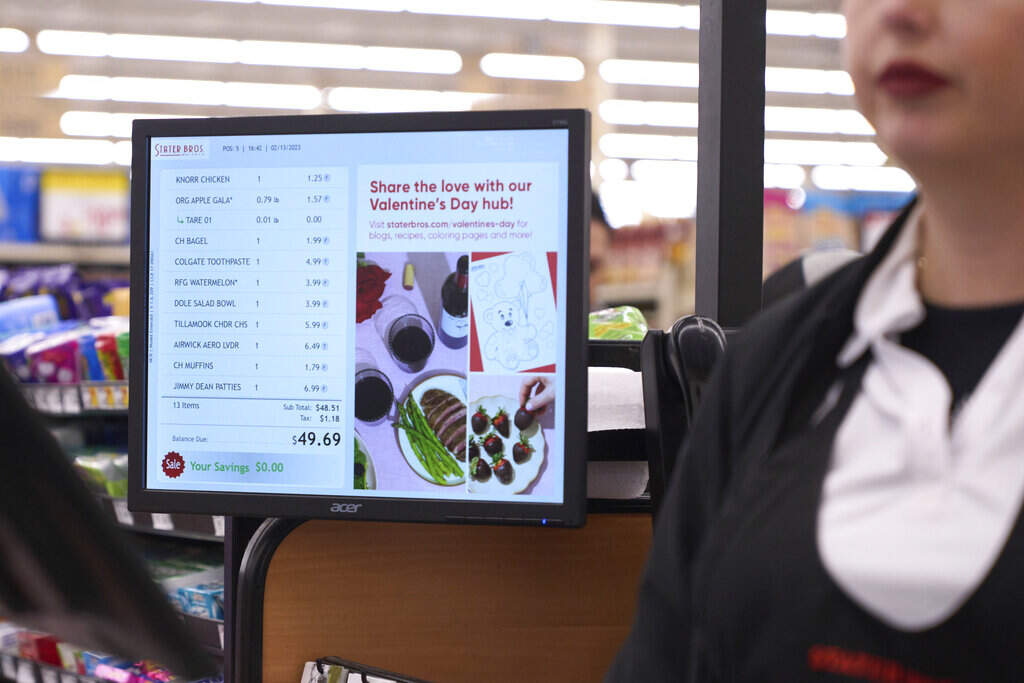
A dozen states are banning people from buying sodas and some sugary snacks using federal food assistance. The effort is part of the “Make America Healthy Again” campaign led by Secretary Robert F. Kennedy Jr. Will the restrictions convince people on SNAP to eat less junk food?
Guests
Dariush Mozaffarian, cardiologist and the director of the Food Is Medicine Institute at Tufts University
Kate Bauer, associate professor of nutritional sciences at the University of Michigan School of Public Health.
Also Featured
Anne Discher, recipient of SNAP in the past.
Merideth Potter, Senior Vice President of Public Affairs for the American Beverage Association.
Tiffany Welch, a volunteer advocate with Save the Children Action Network from Clive, Iowa.
Transcript
Part I
CHAKRABARTI: One in every eight Americans relies on the federal Supplemental Nutrition Assistance Program, also known as SNAP. According to the U.S. Department of Agriculture, the $100 billion program served more than 41 million low-income Americans every month in 2024. Benefits averaged about $187 per person per month to put food on the table.
On Monday of this week, the Congressional Budget Office released an analysis that estimates 2.4 million Americans, including families with children, will lose SNAP assistance due to President Donald Trump's One Big Beautiful Bill Act. Other recipients are expected to see their benefits shrink.
That's not the only change in the works for the SNAP program. Already, recipients cannot buy alcohol or tobacco, hot food or non-food items using their SNAP benefits. And this year some states are adding something else to that list of banned items.
PATRICK MORRISEY: We're going to put the 'n' back in nutrition and so does certainly does not have any nutrition.
CHAKRABARTI: West Virginia Governor Patrick Morrisey on News Nation earlier this month. The USDA has granted a waiver to West Virginia and 11 other states, allowing them to add soda to their list of items people cannot purchase with SNAP. That waiver will go into effect in 2026. Governor Morrisey says the changes are desperately needed.
MORRISEY: We're trying to move the needle on health care outcomes in West Virginia. We're unfortunately near the bottom of the pack in terms of diabetes and obesity, congestive heart failure, and we want to change that.
CHAKRABARTI: Soda is the most popular item purchased with SNAP benefits according to the USDA's own data. In total, sugary drinks, candies, packaged desserts, and salty snacks make up about 23% of the items purchased on SNAP every month. So in addition to soda, several other states, Arkansas, Idaho, Indiana, Louisiana, Oklahoma, and Texas are adding candy to the list of restricted items. Florida and Iowa are banning an even larger range, like packaged desserts or marshmallows and even some dried fruits.
Tennessee and South Carolina's Governors have also said they are interested in a ban and will send a waiver request to the USDA. Health and Human Services Secretary Robert F. Kennedy, Jr. Spoke at a White House press conference on this issue on August 4th.
RFK JR.: U.S. taxpayer should not be paying to feed kids foods, the poorest kids in our country, with foods that are going to give them diabetes.
And then my agency ends up through Medicaid and Medicare, paying for those injuries. So we're going to put an end to that and we're doing it step by step. State by state.
CHAKRABARTI: Kennedy says this is a massive win for his Make America Healthy again movement. And although Colorado is the only currently Democratically led state to sign on to these bans, Kennedy hopes a larger spectrum of states will catch on.
RFK JR. There's been more enthusiasm today from Republicans, you're right. Traditionally it was a Democratic issue and I'm very hopeful that more and more Democrats will continue to be in their party, but sign up to protect their children.
CHAKRABARTI: So today we're going to take a look into the push to ban sugary and junk foods from SNAP.
Is there actual evidence that it would improve the health of Americans who are SNAP recipients? Dariush Mozaffarian joins us. He's a cardiologist and the director of the Food Is Medicine Institute at Tufts University. Dr. Mozaffarian welcome to On Point.
DARIUSH MOZAFFARIAN: Thank you, Meghna. Nice to be here with you.
CHAKRABARTI: Okay, so first of all, let's get some background on what we know regarding the health effects of soda, candy, et cetera.
Can you say there's a direct correlation or even causation between the consumption of sugary soda and obesity in childhood or adulthood in this country?
MOZAFFARIAN: I think everyone has an uneasy, basic knowledge that our food system is making us sick. But I don't think most Americans realize how dire the situation is or how devastating the conditions are.
And so we have done careful estimates. Others have done careful estimates about almost half of all cardiovascular events in this country are directly caused by poor nutrition and about 70% of diabetes is directly caused by poor nutrition, and from our estimates, poor nutrition is killing 10,000 Americans every single week and causing 16,000 new cases of diabetes every single week among Americans.
From our estimates, poor nutrition is killing 10,000 Americans every single week and causing 16,000 new cases of diabetes every single week among Americans.
Dariush Mozaffarian
And within the world of poor nutrition, soda, and candy and junk food is certainly part of that and an important part of that, and that's particularly for soda and other sugary beverages. This has been seen not only in very well done observational studies, but also randomized controlled trials.
So I think there's no doubt that those foods are causing enormous disease burdens and suffering across the country in every, age group, education group and income group, but particularly among low income Americans who have less access to healthy food. Generally, tend to have worse diets and higher rates of all of these conditions.
CHAKRABARTI: I'm seeing here that there could be more than 200 grams of sugar in a two-liter bottle, say, of Coca Cola. Put that into perspective for us. How do we like really fathom how much that is?
MOZAFFARIAN: I have three children age 12, 15, and 16. And my wife is also in the field of studying nutrition health among children.
So we try to translate for them and make it very easy for them to understand. And one simple approach to this is every four grams of sugar is a sugar packet. One of those little packets you put in. And sure, our kids or others might put a teaspoon of sugar into a drink once in a while, but when you have 100 grams of sugar in a drink, that's 25 sugar packets.
So we try to translate the grams into sugar packets and or teaspoons, and that really, it's shocking, right? It's shocking how much sugar is in American food.
CHAKRABARTI: Okay. We've been focusing on soda, but would you, I'm not sure SNAP is doing this, but would you as a physician also include fruit juice?
MOZAFFARIAN: There's been more mixed evidence on 100% fruit juice. Generally, it's not linked to the same health harms, weight gain, diabetes, as sugar sweetened beverages. Juice drinks, which can be 10%, 20% fruit juice, and all the rest sugar. I would put those in the same category of harms as soda.
We should also include energy drinks and sports drinks. Lots of sugar and energy drinks and sports drinks, and also, enormous amounts of sugar in iced teas and other kinds of beverages. So it's not just soda. There's a lot of drinks. 100% fruit juice, whether it's because it's drank at smaller servings, it's just not usually guzzled by itself in 20 ounces while you're walking around or sitting in the car for whatever reason.
Some fiber, some nutrients, I would not put it in the same category. And I think 100% fruit juice is, I'd prefer people to get whole fruit as a physician, but if they have a glass of 100% fruit juice a today, I think that's fine.
CHAKRABARTI: Okay. We're going to spend a few minutes in just a second, Dr. Mozaffarian, talking about what evidence is there that bans change American eating habits. But I'm just thinking about all the people out there listening who are looking for some sort of help or guide when they're shopping and they're standing in front of the drinks aisle in a store.
What would you say is, I'm not even sure this is the right question, but what would you say, if they're looking at a bottle saying, should I buy this juice, or should I buy this drink, or should I buy this pop? Is there a safe cutoff in terms of the amount of sugar per serving?
MOZAFFARIAN: I see patients at Tufts Medical Center in Chinatown, in downtown Boston.
And every clinic there's questions about food and nutrition; it's on the top of everyone's mind. And so I think of it as depends. It depends on where you're starting. It's a step program. If you're drinking multiple servings of sugary soda or other drinks to start.
And you can't just quit cold Turkey. I recommend people go to diet. I don't think diet soda is innocuous. It also has some harms. But when you're talking about multiple servings, I recommend, switch for now as a bridge to diet. And then I recommend for people to really try to switch to sparkling water, seltzer waters that have some flavor and no sugar at all.
I think that's ultimately if you want to have some fizz and you want to have some flavor. To switch to sparkling waters. And as I mentioned, 100% fruit juice is okay. So if you're getting something that's 100% fruit juice, that's probably okay.
CHAKRABARTI: Okay now the question is that you heard earlier that Secretary Kennedy and Secretary Rollins both said by virtue of this ban, the idea is that Americans who are recipients of SNAP benefits would move to consuming healthier drinks and that would ideally help them get healthier overall.
The question is there evidence for that? I heard you say earlier that yes, there's evidence that these high sugar content drinks and snacks do contribute to the diabetes and obesity epidemics in this country, but is there evidence anywhere that banning those same foods is actually substantially changing how Americans eat?
MOZAFFARIAN: Yeah, it's an excellent question, Meghna. And we should go into it. If you don't mind, could we start for a few minutes on the history of the program? I think it's really important, to think about why we're here in the first place.
CHAKRABARTI: Yeah, sure. ... Yeah. We've got a minute before our first break, but go ahead and start with the important part of the history that you think, and then we'll pick it up on the other side of the break.
MOZAFFARIAN: Sure. So I think that to start, this program originally called food stamps was started in the Great Depression to help struggling families put food on the table.
And importantly, an explicit goal was to boost sales for American farmers and food industry. And so this program has always had these dual goals of helping low-income Americans get food on the table and helping the U.S. food sector. In 2008, decades after the Great Depression, Congress recognized that there's a lot of related disease and they need to change the programs.
[SNAP], originally called food stamps, was started in the Great Depression to help struggling families put food on the table. And importantly, an explicit goal was to boost sales for American farmers and food industry.
Dariush Mozaffarian
The program's name was changed from food stamps to the Supplemental Nutrition Assistance Program. And that 'n,' SNAP, that 'n' is quite important because Congress wanted the program to focus more on nutrition, but that goal to support the U.S. food sector has always been part of the program and kind of a conflict for USDA because they don't want to restrict anything. Because this is a lot of money, over $120 billion going to the food sector. So I think it's understanding that tension and that history is important and where we need to go today, which we can talk about in a minute.
Part II
CHAKRABARTI: Let's listen to a little bit more of what Agriculture Secretary Brooke Rollis said about these waivers. Here she is on August 4th talking about how banning sugary drinks from SNAP is just one part of the overall Make America Healthy Again movement.
BROOKE ROLLINS: We work so closely together to encourage voluntary commitments to remove artificial food dyes, among other things from our food supply.
And together we are crafting sensical dietary guidelines for Americans that prioritize whole, healthy and nutritious foods.
CHAKRABARTI: That's Agriculture Secretary Brooke Rollins a little earlier this month. Dr. Mozaffarian, and you were talking about the history of SNAP and the tension within it that it's supposed to both be a way to support nutritious eating in this country for low-income Americans and also boost sales in the food sector.
Is there more about sort of the evolution of the SNAP program that you think is important for us to know in terms of this conversation regarding soda and sugary snacks?
MOZAFFARIAN: First of all, for meeting its goals of reducing food insecurity, which is a really a measure of financial strain of, again, not being able to put food on the table.
The program works. It's a terrific program, an important program for struggling Americans. For meeting its goals of improving nutrition, I think the program does not have an A Grade. And there's lots of evidence to support that. I'll just give you a couple. One, about 54% of SNAP recipients have poor diet quality overall, if you do that based on validated diet scores, and if you can compare that 54% to Americans who are income eligible but for whatever reason are not on SNAP, only 38% of income eligible nonparticipants have poor quality diets. And among higher income Americans, as you'd expect, only about 29% have poor quality diets.
So SNAP recipients, even compared to folks with similar incomes who are not on SNAP, have the worst diets in the country. And that in outcomes, we've looked at this and published on this. SNAP recipients have double the chance of dying from any cause from higher income Americans, but also 50% higher risk of dying than income eligible people not on SNAP.
SNAP recipients have double the chance of dying from any cause from higher income Americans, but also 50% higher risk of dying than income eligible people not on SNAP.
Dariush Mozaffarian
And that's mostly due to heart disease, stroke, and diabetes. So while it's a terrific program for improving food security, a crucial safety net program, it should not be reduced or cut in terms of its dollars. It's not doing a great job at improving nutrition.
CHAKRABARTI: Okay. Hang on for just a second doctor.
MOZAFFARIAN: Sure.
CHAKRABARTI: Why the difference in terms of quality of nutrition between SNAP recipients and income eligible Americans?
MOZAFFARIAN: We don't have a randomized control trial, long-term trial to test that question. This is based on what we see in the country. My hypothesis is not that SNAP necessarily is directly cause and effect making people's diets worse when they go on it, but that people with similar incomes, those that choose to go or need to go on SNAP and those who don't may have other social stressors.
May have other challenges that worsens their diets and their health and individuals who have low incomes that don't go on SNAP, maybe have other social support, have other ways of dealing with it. That's my hypothesis. But regardless, even if it's not SNAP causally worsening the diets, SNAP's not doing enough to boost people up to where they need to be.
CHAKRABARTI: Okay. Okay. So then back to my question about, do bans meaningfully change the consumption habits of any Americans. Regarding sugary drinks, is there an area that we can look for data on that?
MOZAFFARIAN: A critical part of all of these waivers is usually four years has been the most common, but there are shorter ones as well.
There are waivers, temporary trials, and they need to be tested and evaluated. So actually, these waivers will provide us data on what's going to happen in SNAP and then the States and USDA have to decide if they're going to make these changes permanent. We've done modeling analyses and estimated what might happen.
You can do that based on several lines of evidence. For example, this is a supplemental program. It's not supposed to replace all the dollars for food in a person's budget. And on average, it's estimated maybe about 30% of food spending for the average family is from their own dollars, and 70% is from the SNAP program.
You could estimate that the SNAP program again is about 70% of a food budget. We've done modeling to say, look, what if banning soda, which is 70% of a person's average budget, only reduced soda intake by a third. What if they shifted some of those dollars to their own spending and so on?
I do think it's pretty obvious to me just from human behavior, if you know something you have that's for buying food isn't allowed anymore. Just the message and the notion and the education from that alone is actually powerful, that the government doesn't think that I should be buying this.
And so I do think it's pretty overwhelmingly likely that there will be some significant reduction in soda intake. It won't disappear. It won't go to zero, but again, our estimate was it might go down by at least a third. And if it goes down by just a third, we've looked at this and estimated that this would over 10 years save over 100,000 cardiovascular deaths among individuals on SNAP and save $7 billion in health care spending just over a decade.
I do think it's pretty overwhelmingly likely that there will be some significant reduction in soda intake. ... It won't go to zero, but again, our estimate was it might go down by at least a third.
Dariush Mozaffarian
CHAKRABARTI: Okay, so there's no like extant data set that can tell us clearly what would happen with a sugary drink ban. But SNAP recipients cannot buy alcohol or tobacco. We know that, with their SNAP benefits. Has anyone done an analysis that says, has that reduced alcohol or tobacco consumption for SNAP recipients? Versus say, as you said, income qualified Americans who are not on SNAP.
MOZAFFARIAN: I'm not familiar with that evidence, but of course this program has been around for, as we talked about, 85 years. And so I don't think that's the right question, because really the question is once you have a program that's been paying for food. If the programs had been paying for alcohol for 85 years and then you took it away, what would happen?
So I think that's really the question that needs to be answered. And to me that's critical, that these waivers have to be accompanied by very robust evaluation and reporting. Not only on what happens to a person's nutrition and health, but what happens to their confusion, their stigma, their happiness with the program, their feelings about the program.
We want to be sure that all of those things are assessed.
CHAKRABARTI: Okay. So let's listen to what Merideth Potter, who's a spokesperson for the American Beverage Association, says about this this ban in 12 states. Obviously they represent major drink makers in this country. Potter says the bans are unfair.
And according to the American Beverage Association, they do not solve problems like diabetes or obesity.
MERIDETH POTTER: We think these restrictions and these proposals to restrict our products from within the SNAP program are misguided, because you're focusing on ... one category, a single product that represents in total 6% of the calories in the American diet, and that's USDA data.
So if we want to have a conversation about transforming SNAP into a nutrition program, we are open to that conversation, but these bans don't do that.
CHAKRABARTI: Dr. Mozaffarian, do you wanna respond to that?
MOZAFFARIAN: The vast, most of the bans aren't just on soda. They're also on soda and candy or other items. And so I think that is one important point.
This isn't just focusing on one problem. No single solution across the whole food system is going to solve everything. But that doesn't mean you don't do something, right? So lowering sodium through reformulations, putting calorie menu labeling, having nutrition facts panel or front to back labels, having food as medicine and health care, all of these things together need to be done.
This is truly an urgent crisis. And so I think trying new things is important. I will say that when SNAP recipients themselves have been asked. And the Bipartisan Policy Center in Washington, D.C. did a poll on this a couple of years ago. One in four SNAP recipients support removing sugary beverages, candy or junk food, and less than half strongly oppose that.
So even among SNAP recipients, there's mixed feelings about this. And I think importantly, if such restrictions were combined with more incentives for healthier food, that would actually give us more bang for our buck. And then when you ask SNAP recipients, more than half of SNAP recipients would support a restriction on buying soda or candy or junk food if it's combined with benefits, and the strong opposition goes down to only 20.
CHAKRABARTI: Dr. Mozaffarian? Okay, we'll see if we can get him back. And we will shortly. But this was actually a time that I wanted to bring in the voice of someone who has been on SNAP for their take on what this ban on sugary drinks and snacks, the impact that it could have. Anne Discher is from Iowa and she has told us that this conversation for her is personal because 15 years ago she went on SNAP after a messy divorce.
ANNE DISCHER: I ended up back in Des Moines where I grew up, to be closer to family. And I had stayed, I had three little kids at the time and I had stayed home with them.
So I had been at home. So I came down here. I did not have a job, had been out of the job market a little bit. My kids were a little traumatized by everything that had happened. And I was getting, had a little, very little money coming in, a lot of support from family, and I was able to qualify for SNAP.
CHAKRABARTI: Anne stayed on SNAP for about a year until she was able to get back on her feet.
DISCHER: The thing about it was not only helpful in that covered food, but because I had that support helping cover our food bill, it meant I knew I could pay our utility bill. It meant I knew I could buy diapers and it meant I knew I could buy school supplies for my oldest kid that was just about to start kindergarten.
CHAKRABARTI: Anne bought everything a typical mom would buy using her EBT card.
That's the card that you use at the grocery store when you're on SNAP. Cereal, fruits, vegetables, chicken, rice, milk, but also treats like popsicles and on occasion Coca Cola.
DISCHER: I will say like on Friday nights, like we didn't, that was a period of time where we didn't go out to dinner very much, but like our local grocery store did a deal on pizzas.
Now they were hot food. We could not use them with SNAP, but they were cheap so we could get them and then like maybe a two liter bottle of soda. That was our, like, Friday night splurge. Again, the pizza, obviously SNAP didn't cover, but the soda was covered by SNAP. And we didn't drink, we didn't, we still don't drink soda every night.
We don't have it, mostly don't have it in the house. Mostly didn't have it in the house, but it to me fell under the category of, what's a treat? What's a Friday night treat? We'll get a two liter.
CHAKRABARTI: Iowa is one of the states now banning soda. It's also banning candies and other sugary snacks from the SNAP program.
Anne says to her, that feels a little paternalistic.
DISCHER: It just sends a message that we know better ... clearly you make bad choices of parents, so now we're going to come in and make you make good choices, and no one feels good about that.
CHAKRABARTI: Anne says sometimes she actually felt stigmatized when she was on SNAP.
A friend of hers was ridiculed in line for buying birthday cake for her son using an EBT card, and adding more rules and confusion about what qualifies under the program could make people feel even worse when they're in the grocery store, and ultimately less likely to use SNAP.
DISCHER: It comes on an EBT card.
It looks like a credit card, but it looks like a SNAP card. And every time I took it out of my wallet, I was very aware of that and feeling is someone going to judge me for what is in my cart? I think that's a pretty common story, right? People who are buying with SNAP are very aware that people feel like they can have a lot of judgment on what you buy.
And there's always this chance, like there's something in my cart that actually isn't going to qualify here, that I think will. And so when I think about those soda and candy bans, I think it just ratchets up that sort of stigma. It ratchets up pressure, it ratchets up opportunities to make a mistake.
And your kid threw something in the cart. You thought it would qualify. It doesn't qualify. And then you're at the checkout going, oh yeah, can you take that out of my cart? I guess that's not gonna work today.
CHAKRABARTI: Anne Discher, a former SNAP recipient in Des Moines, Iowa. And by the way, she thinks the federal government's focus should be not necessarily on banning foods from SNAP, but on the reason why people have to go on SNAP in the first place, that the government ought to work harder to reduce poverty in America.
We have Dr. Dariush Mozaffarian back. Dr. Dariush Mozaffarian, hang on here for just a second. Because I also now want to introduce Kate Bauer into the conversation. She's an associate professor of Nutritional Sciences at the University of Michigan School of Public Health. Professor Bauer, welcome to On Point.
KATE BAUER: Thank you so much. I'm glad to be here.
CHAKRABARTI: So you've been listening to the reasons why Dr. Mozaffarian has laid out that he is in support of these bans in a dozen states so far. Your opinion differs. Can you tell us why?
BAUER: Sure. I wanna start with saying I am fundamentally on the same page, right?
We all want our children and our families to have more access to healthy food. We want them to be able to,eat foods that help them thrive. I agree that soda and other sweetened drinks don't offer nutritional value, but fundamentally based on, I would say the prior research, on the potential effects of soda bans, as well as my and others' research on the experience of using SNAP, I feel really strongly that these bans will do more harm than good.
CHAKRABARTI: Why?
BAUER: First of all, I totally agree that we have not yet had perfect science around the effects of these bans. I do think, though, that there have been a small number of randomized clinical trials where people were given benefits like SNAP, that either restricted soda access, that gave them more incentive to buy fruits and vegetables or were dollars as usual.
And the evidence from those trials suggests that when soda is banned. Yes, people do not buy sodas often with their benefits, right? You're not allowed. But ultimately it did not change dietary intake and intake of soda. So people are shifting their dollars and still choosing to buy soda. So I would say that's the strongest evidence we have thus far, and it does not suggest there's going to be long-term changes in diet.
CHAKRABARTI: Wait, can you tell me once again? I just, I missed when and where was this study done?
BAUER: Yep. So this, there were two clinical trials out of the University of Minnesota over the past decade or so. That took, because at the time we were not allowed to modify SNAP benefits. The USDA was not approving waivers, so we couldn't directly test this, but the group at Minnesota provided lookalike fake benefit cards to lower income families that either had restrictions, or incentives or were combinations of those or were benefits as usual.
So I feel like the fact, and they used very high quality dietary intake measures, and as I said, those families that were banned from using their soda benefits with these additional dollars did not ultimately change their intake of the banned foods.
Part III
CHAKRABARTI: Dr. Mozaffarian, I wanted to give you a chance to respond to what Professor Bauer was saying there, about that behavior wouldn't meaningfully change. And let me add actually something else. Now, this is somewhat dated. I will grant you, but back in 2015, USDA itself, interestingly enough, this is 10 years ago, published a study that's actually still available called restricting Sugar Sweetened Beverages from SNAP Purchases: Not Likely to Lower Consumption.
And this study was commissioned because there was a call even back then to see if banning sugar sweetened beverages from SNAP would actually lower consumption. The study found out, concluded that it would probably not do that, and it was interesting because they had done the comparison I asked you about earlier, which was about alcohol. Because you've never, as you accurately pointed out, you've never been able to buy alcohol or tobacco with SNAP benefits.
And this USDA study found that the share of SNAP participants that consume alcoholic beverages was similar to the share of non participants that consumed alcoholic beverages, showing that being on SNAP didn't do anything to actually reduce alcohol consumption, the implication being that banning things didn't change behavior.
And that's essentially also what Professor Bauer was saying. And so Dr. Mozaffarian, your take on that.
MOZAFFARIAN: Yeah. So first, sorry to cut out. I think Coca-Cola was outside the building and cut the hard line.
CHAKRABARTI: (LAUGHS)
MOZAFFARIAN: And I would like to get back if we can, to at some point, to the perspectives of Anne and other recipients on SNAP that I was talking about.
I think that's really important. Yeah, sure. To get to your question. I fully agree with Dr. Bauer. About the need for any waivers any modifications to the program to carefully understand, assess, do everything possible to minimize confusion, minimize stigma, minimize these challenges.
Low income Americans are already struggling in so many ways with housing, with utilities, with jobs, with schools, with transportation, with health care. And so we want to make sure that whatever happens over time, it's as seamless as possible, as frictionless as possible.
That's absolutely true. But there's just no comparison between the mental challenges and stigma of checkout in the grocery store, versus the devastation that diet related diseases are causing in our country, including among low income Americans. When you have a 35-year-old who has a below the knee amputation, someone going blind, people going on dialysis, 45-year-old breadwinners, dropping dead and leaving their family with no one to put wages on the table.
I see these patients, we are so sick as a nation and low income Americans particularly are suffering from diet related disease disproportionately. That burden of mental suffering, health suffering, economic suffering is the biggest issue, actually the single biggest issue I think facing our country and the top cause of bankruptcy, individual bankruptcy in the United States is unpaid medical debt, due to largely diet related diseases.
We are so sick as a nation, and low-income Americans particularly are suffering from diet related disease disproportionately.
Dariush Mozaffarian
So the scale of the problem is so vast. We have to try something. And I will point out --
CHAKRABARTI: Just to be clear, you're saying that it doesn't make any sense at all for any taxpayer dollars to go towards, continue to fuel this crisis, this health crisis.
MOZAFFARIAN: So I was going to earlier say, you said earlier that I support these waivers, and now you're asking me that question. I have not said, actually, I support the waivers. You didn't ask me that question. You know, what I support is trying new things to improve the SNAP program, letting states innovate as is allowed by law.
Trying different approaches and really carefully evaluating them, seeing what are the effects on stigma? How does SNAP recipients feel about it? What are the effects on consumption? What are the effects on health? I think the status quo is untenable. If you asked me what I would do with waivers, we've proposed this and we would do a program called SNAP Plus.
SNAP Plus is a program where you don't have any restrictions, but you have incentives and disincentives. And so if you buy soda or other junk food or candy, you get a kind of a equivalent of 30% less benefits. But if you buy fruits, not only fruits and vegetables, but a range of healthy foods, nuts, seeds, beans, whole grains, fish, yogurt, other healthy foods, you get a 30% bonus.
And so everybody can still buy what they want. You can help nudge people towards healthier choices. I do think that something is needed to be done. States are choosing to work here. I've urged all those states to add incentives to the restrictions. If you're going to restrict, to add incentives for healthy food.
I think that's also equally important.
CHAKRABARTI: Okay. I'll get to you Professor Bauer in just a second. But Dr. Mozaffarian, to allow you to then state clearly. The waivers as they stand, and they are different a little bit from state to state across these dozen states. Do you support them or not?
MOZAFFARIAN: I think they're not perfect.
I think that I would prefer other waivers, but I think we need to do something and try something. And I think as long as the waivers are carefully evaluated and transparently reported, this is the kind of thing we need to do, is to try new things because what we're doing now isn't working.
CHAKRABARTI: Okay. So Professor Bauer, to Dr. Mozaffarian's previous point about that it just doesn't make any sense policy wise and health wise for the government to spend a single dollar that would go to continuing to fuel the health epidemic that we've been talking about. What's your response to that?
BAUER: Yeah. I absolutely understand that point.
I also think lots of my tax dollars go to things that I don't think are healthy for other people. So it's not the fundamental driver of public policy. I do think that we have many other policy levers that we actually know improve diet. So incentives. That was just mentioned. That's a fantastic program.
Our Double Up Food Bucks programs. Our SNAP-Ed program, which provides nutrition education for SNAP users. We actually have policies and programs that are much more grounded in evidence, that they will improve diet than these waivers. And yet actually what's happening right now federally is that we are cutting those programs.
The Big Beautiful Bill completely eliminated the SNAP-Ed program, which would do and does do exactly what we're saying in educating and assisting low income consumers. Directing them towards healthier options, helping them with cooking, et cetera. So I hear the message of we have to do something.
I really feel like the evidence that stands around these waivers that specifically restrict soda, candy, unhealthy food, however that's defined. Either my read of the evidence is that they're not going to have any effect, or I truly believe they will actually have a harmful effect. And we are using them in place of other strategies where our taxpayers could go, that we know would be much more positive.
CHAKRABARTI: Okay, let me ask you this. If they're not going to have any effect, again, we still don't fully know because the data hasn't yet been collected, but if they're not going to have any effect, at the very least, again, getting to how the government should spend its taxpayer dollars. I get it. Like not every dollar spent by the federal government I agree with either.
But in this case, as Dr. Mozaffarian is saying, at least it's not going to something that we know, we literally know is fueling a significant part of the obesity and diabetes crisis in here. Is that not like at least a smart way to not contribute to a problem through federal spending.
BAUER: I agree. I think the other piece, the corollary side of this that was so wonderfully articulated by Anne is, what are the potential harms of putting in place this ban and does that cause unintended negative outcomes? Dr. Mozaffarian mentioned, okay, so the stigma and the stress of the shopping experience is nothing compared to diet related chronic disease.
I don't know if we have the evidence for that. We know that poverty-based stigma is a huge stressor which gets under the skin and causes chronic health problems. And we know that as was mentioned, SNAP users already experience incredibly stigmatizing experiences, harassment when they go grocery shopping, when it becomes known they're using SNAP.
And I really believe that these waivers, these restrictions, they're going to complicate the shopping experience. They're going to increase the public perception that we are allowed to control poor people, right? That my tax dollars, because I pay taxes, I get to say what you eat. And I think that does cause harm to people.
These restrictions, they're going to complicate the shopping experience. They're going to increase the public perception that we are allowed to control poor people.
Kate Bauer
So I think it's not, yes. Again, in an ideal world, if we were redesigning these programs and starting from scratch, I would love to start a program where, like the WIC program, which is an amazing program, which only fund healthy food that is customized to what families need. That's not where we are right now in the reality of our country, is that our SNAP users are having horrible experiences when they're shopping, and this could only increase that.
CHAKRABARTI: Okay. So Dr. Mozaffarian and Professor Bauer brought up WIC, which is the Women Infants and Children Program. And as she just said, that actually does have some nutrition standards or restrictions on what WIC funds.
In a sense, as far as I can see, and correct me if I'm wrong, but the government is saying what people can and can't eat when they're on WIC.
MOZAFFARIAN: There are many federal nutrition programs. SNAP is the biggest one, but school meals and WIC are the next largest ones. And we have clear standards in school meals that have improved over time and are continuing to improve.
We don't allow soda in school meals and school meals are actually now, on average, the healthiest place that kids get their food in the country, healthier than the average food at home or in restaurants. And so school meals have improved quite a bit from when we were kids. And that's a positive.
WIC has tremendously positive evidence for not only improving food security, but improving the health of the mother, improving the health of the baby, improving even learning outcomes in young children. WIC is a terrific program and as was noted by Dr. Bauer, very clear standards on buying healthy foods.
So SNAP is the outlier, SNAP is the program that doesn't have this. And the interest in trying new things goes back 20 years, Minnesota in 2004 proposed a waiver. It was rejected. New York State in 2010, Maine in 2015 and 2017. So states have proposed waivers. Those have been rejected by prior USDAs due to those conflicts.
I think that I mentioned before. In 2013, the 18 largest cities in the country, the mayors, including Chicago, Los Angeles, New York said that we should eliminate soda from SNAP. And in 2015, the reason USDA did that report, was Congress put together a National Commission on Hunger, bringing together experts on hunger, and among their recommendations to address hunger, one of their 20 recommendations was to drop soda in SNAP. So this has been discussed for 20 years and it's just never been tried before. I think WIC is a terrific program. School meals is a terrific program. SNAP is a terrific program for food security, but it's not a terrific program for nutrition.
CHAKRABARTI: Okay. Let me give a voice to some of our listeners who had some thoughts about SNAP. This is George from Sturgeon Bay, Wisconsin, and he's against the soda and candy bans in SNAP. Because he's, as we've discussed, he's not convinced that they will improve nutrition
GEORGE: And if someone really was interested, like legislators, they would find ways to make fruits and vegetables with high value calories instead of empty calories available for people within the SNAP program at some sort of discounted rate. It makes it impossible to convince a family to buy a bag of apples when they can buy several bags of candy bars.
It makes it impossible to convince a family to buy a bag of apples when they can buy several bags of candy bars.
George, On Point listener
CHAKRABARTI: So this is an interesting point about what is available to people.
Listener Howard Turner from Elkhart, Indiana. His family was on SNAP. He has personal experience in this. He said oftentimes he simply bought what was on sale.
HOWARD TURNER: When you don't have a lot of money to buy food with, what you're doing is buying the most or the least amount. So if I can buy a two-liter bottle of Diet Mountain Dew for $1, or I can buy a 64-ounce bottle of Juicy Juice, a 100% juice, no sugar, and that cost $2, the $1 two liter is more liquid for less cost. Which one would you buy?
CHAKRABARTI: Kate Bauer, was wondering if you wanted to respond to that.
BAUER: Yeah. I love those quotes. We recently completed a study of 1,300 Michiganders who are experiencing food insecurity. The majority of them, vast majority, have been on SNAP.
And they share the same stories. People understand what is the healthier choice. They want that for their children, but it's unattainable given the high grocery costs and the limited amount of SNAP support. Yes, SNAP is supposed to be supplemental, but most families, that is all the money they have for food and by middle of the month, it runs out.
So families are constantly making choices and sometimes soda is part of that choice. It may be, Hey, I can get my kids calories. It may be, Hey, my kid, I can't buy them the sneakers they want or the video games they want, but I can get them a Coke. We know that lower income families are constantly making decisions and trade-offs and doing what's best for their family.
We know that lower income families are constantly making decisions and trade-offs and doing what's best for their family.
Kate Bauer
And they have told us, the majority of them have told us, that if you restrict what I can buy, it makes me feel worse. It is not gonna help me. And it's like we saw with the data, it's not going to change ultimately my shopping decisions.
CHAKRABARTI: Yeah.
Dr. Mozaffarian, and we've got about 30 seconds left and I'll give you the last word.
My mind keeps going back to what you talked as about the fundamental tension in SNAP. That it's not just a nutrition program; it's also a subsidy program for American agriculture and food sellers here. With that being the case, is this ever, can we make this the program that we want it to be?
MOZAFFARIAN: I think we have to, it's part of the solution. It's not the only solution. And I fully agree with using all available levers, and that's why we're really excited about food as medicine. SNAP is $120 billion; health care is $5 trillion. And so if we can start to use health care dollars and Medicare and Medicaid and commercial plans to pay for healthy food, help people buy fruits and vegetables to supplement SNAP and these other issues, that's win-win for everybody.
The first draft of this transcript was created by Descript, an AI transcription tool. An On Point producer then thoroughly reviewed, corrected, and reformatted the transcript before publication. The use of this AI tool creates the capacity to provide these transcripts.
This program aired on August 14, 2025.