Support WBUR
How 'Blessings and Disasters' shape Alabama
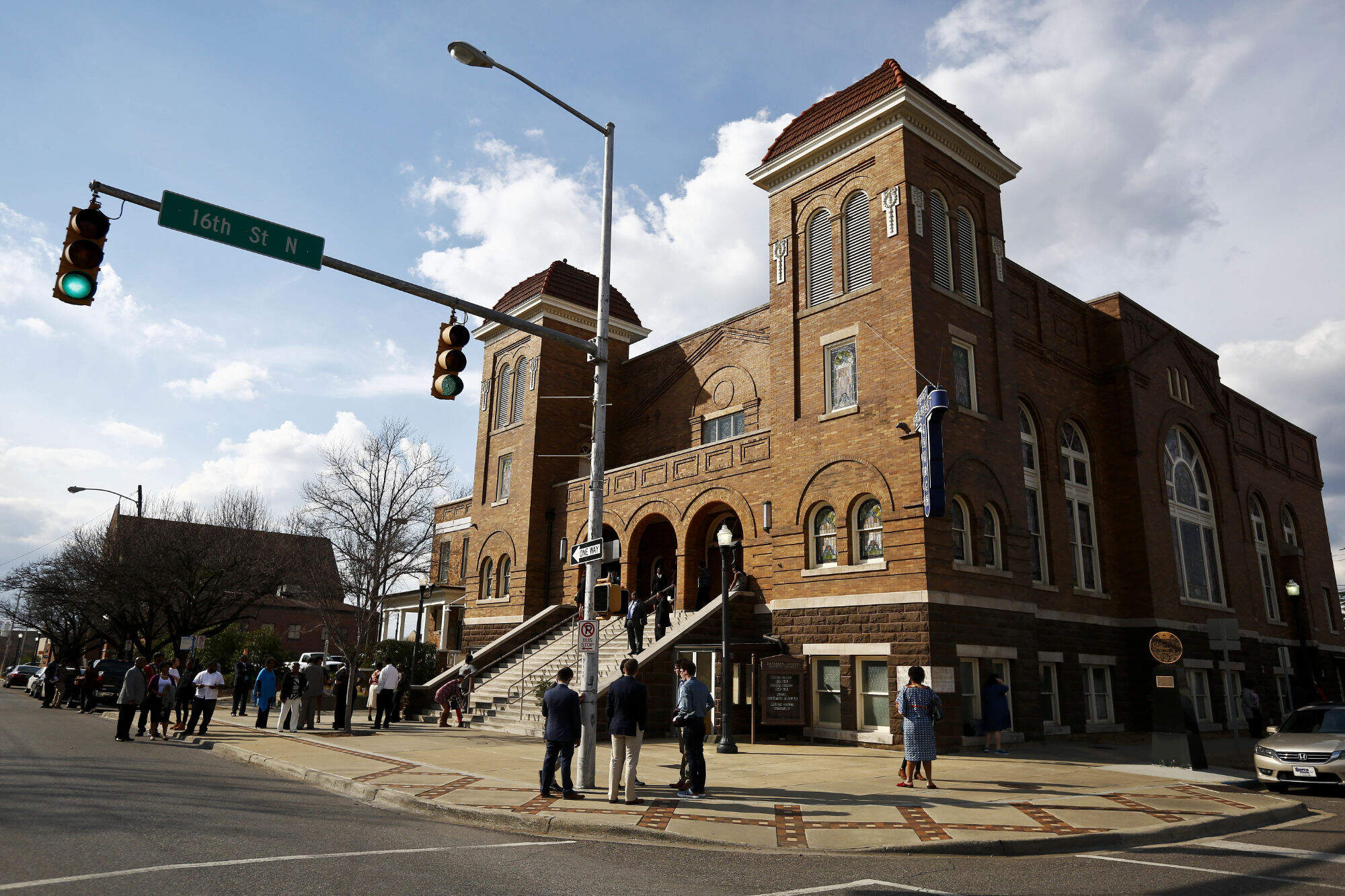
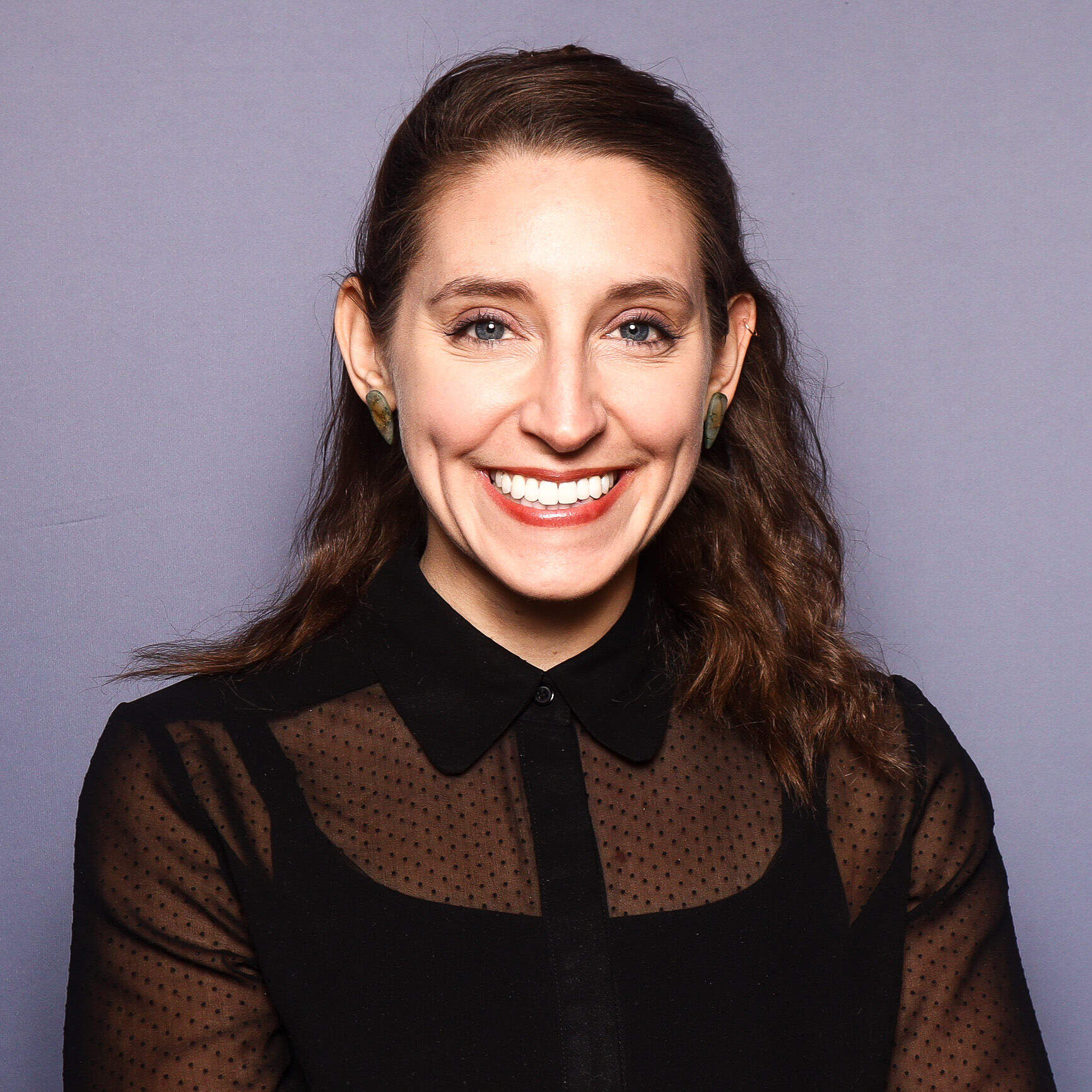
Alexis Okeowo says Alabama, where she grew up, shows the best and worst of the American experiment. In her new book, "Blessings and Disasters," she wrestles with the state’s complicated past.
Guests
Alexis Okeowo, staff writer at The New Yorker. Author of the new book “Blessings and Disasters: A Story of Alabama.”
Transcript
Part I
AMORY SIVERTSON: It depends on who is doing the looking. That's how journalist Alexis Okeowo opens her new book, Blessings and Disasters. Alexis herself has done a lot of looking and telling. She's a staff writer at The New Yorker. She won the 2018 PEN Open book award for her debut, a Moonless, Starless Sky, which tells the stories of people standing up to extremism in Africa.
She's worked as a foreign correspondent reporting from Mexico, Cuba, South Africa. She's covered gay rights in Uganda, religious violence and terrorism in Nigeria, slavery in Mauritania now in Blessings and Disasters, Alexis Okeowo is looking at what's possibly the most complicated, definitely the most personal place for her yet. The place she grew up, Alabama.
Alexis Okeowo, welcome to On Point.
ALEXIS OKEOWO: Thank you so much for having me.
SIVERTSON: Thank you so much for being here. And I guess I want to start with that opening line of the book. It depends on who is doing the looking. Because that's a throughline throughout the book. This idea of who gets to tell the story of a place.
So where did that idea come from for you?
OKEOWO: Yeah, so I had the experience of being from a place that I felt like I was not seen as part of its story. And so because Alabama is a place that is defined by a certain telling of its history, by its extremes, and by what I see is a oversimplified telling of what's happened there.
And so I was interested in telling a different story, that included my experience, that included others' experiences that I feel have been left out of the story of Alabama and really of the larger South.
I was interested in telling a different story, that included my experience, that included others' experiences, that I feel have been left out of the story of Alabama.
SIVERTSON: So we're going to be talking about some of those experiences, but I was interested in this idea that you bring up, that you wanted to tell the story of Alabama as if it were another foreign country that you were reporting on.
So why take that approach?
OKEOWO: Exactly. So spending so much time in Africa, I was familiar with the practice of showing up in a place that I felt like had either been stereotyped or just simply ignored, and trying to tell nuanced stories from that place. And spending time back in the U.S. after so much time abroad, I realized there was a similar thing happening to Alabama, especially after the 2016 presidential election.
There was a sense of blaming a lot of the country's woes on the South, on Alabama, and of seeing it in this very reductive way. And despite all the state's faults, I didn't recognize that version of it, that version that was being held up as the butt of the joke or the source of the country's ills.
There was a sense of blaming a lot of the country's woes on the South, on Alabama. ... And despite all the state's faults, I didn't recognize that version of it.
And so I got a little defensive and I thought, I want to do something about this.
CHAKRABARTI: So you grew up in Montgomery, Alabama, but your parents are both from Nigeria. How did they end up in Alabama?
OKEOWO: So my parents almost ended up there by accident. They each are from separate parts of Nigeria.
My mom's older sister was already attending college in Alabama and so when she got the opportunity to attend, she thought, let me go and didn't even realize that she was signing up to study at a historically Black university. And ended up having a unique experience there. And my dad had showed up to the United States a few years prior.
He was studying in California and then needed to switch to a more affordable school. He opened a directory of state colleges and Alabama was one of the first on the list. And he thought, let me go there. And he knew Alabama had a reputation for sort of racial strife at the time. This was in the 1970s.
But he saw a chance to get a good education relatively cheaply. So he went and then they met on the campus of this historically Black university, Alabama state.
SIVERTSON: Yeah. There's so much history sprinkled throughout this book, including the origins of the school that would become ASU. Can you tell us a little bit about that?
OKEOWO: Yeah, it's interesting because my parents, when they arrived there, I don't even think they knew the history of this place. ASU was a center of the Civil Rights Movement down South. It produced so many luminaries, activists who would later participate in the Montgomery Bus boycotts, who participated in the march from Montgomery to Selma.
Lawyers who would defend those activists once they got arrested. Activists who supported Rosa Parks. Again, during the bus boycott, it was such a hub of Black resistance, and that's something that it always isn't, it doesn't always get credit for. And even after the Civil rights movement, ASU continued to champion for the higher education of Black students in the state, which hasn't always been easy.
SIVERTSON: So your parents start to make a life there, but they did move around a bit to Tennessee and Texas, where you were born, what brings them back to Alabama?
OKEOWO: Yeah, it's funny. Alabama has a way of pulling you back even when you don't expect it, because my parents each showed up thinking, we're going to go to college here, and then probably eventually make our way back to Nigeria.
And they met while an undergrad. They left to each do graduate degrees in Tennessee and Texas, and then a job at Alabama State pulled them back. A job for my dad, and they missed it a little bit. Because while they were in college, they had formed the small community of other West African students who had come to study, and those people had stuck around, had gotten married, had kids, got apartments, and my parents did the same too.
And a lot of its values also appealed to them. The idea of family, a strong family unit, church community. And so they came back and made a life.
CHAKRABARTI: So tell me a little bit about your childhood in Montgomery. What was your neighborhood like, your community, your schools?
OKEOWO: Yeah, so I often say I was bridging two worlds in a sense, because on the one hand it was a very deeply southern upbringing.
I, for the first several years of my life, I lived in a majority Black neighborhood in Montgomery. I went to public school, but I was bused, or I was part of a busing program, and so I went to public school that was majority white on the other side of town, because the academics there were better.
And my parents wanted me to get a better education. And so my parents didn't actually allowed me to bus. My parents drove me there, which was very kind and overprotective of them. And yeah, I was a product of public school. I lived in that neighborhood for several years. But at the same time, I also had this rich Nigerian world of my aunties and my uncles.
And their kids who I saw as cousins. And these were my parents' friends from as back, as far back as their time at Alabama State, who also lived in Montgomery. And on the weekends we would have parties or get togethers in the park where they played Nigerian music and they ate, and they hung out. And so I felt like I was experiencing these two worlds, Southern and African.
I was experiencing these two worlds, Southern and African.
SIVERTSON: Okay. So speaking of these two worlds, in thinking about Montgomery itself and downtown Montgomery, you write that you think downtown Montgomery seems to be having a bit of an identity crisis. Can you say more about what you mean by that?
OKEOWO: Yes, so Montgomery, Alabama in general, the South at large, I believe, is a place that's obsessed with its past. I write that Alabama loves nothing more than looking back, and you can see it everywhere in Montgomery, the capitol. Its downtown, it's almost over cluttered with history. It feels present when you're there.
You have everything from the first house of the Confederacy, where Jefferson Davis once resided, to museums on civil rights. Now you have the lynching memorial. You have markers about slavery, because it was literally the place where enslaved people got off the dock there and were marched too slave markets, and it's all commemorated in a very visceral way.
And there's something really, and what I'm interested in about that is I'm interested in the way Alabama tells the story of itself. Because for a long time it started with perhaps slavery and the Civil War, and then had a sort of a neat tidy ending with the Civil Rights movement.
And of course, there's so much left out. And that's what I was interested in.
SIVERTSON: So it's interesting, you have confederate flags in downtown Montgomery, but you have Civil Rights history. You have a majority Black neighborhood, but you're also being bused to a school where that might not be the case.
You have Black Americans, you have Nigerian Americans. I'm curious, when you were, say, 18-year-old Alexis, newly minted high school graduate, did you have a sense back then of what it meant to be Alabamian? Based on all of these different experiences and realities that you were seeing just in Montgomery alone?
OKEOWO: It's interesting. I don't think at that time I did. It wasn't really until I left that A) I was able to, I had to confront others' perceptions of what Alabama was, and then also, I think in writing this book, exploring what about being there shaped me. Because back then, all of that seemed normal.
The contradictions didn't become apparent until much later, that not every state capitol is full of contradictions like mine was, yeah, I thought, yeah. What's unusual about having a Confederate flag floating in the distance beyond a monument to civil rights. And then it was later on I realized, okay, that's actually not normal at all.
Part II
SIVERTSON: Alexis, we've gotten to the point where you leave Alabama for the first time in a significant way, when you went to Princeton in 2002.
But not before contacting the admissions office, I should say, like the journalist you would end up becoming, to ask what percentage of their student body was Black. What did you learn and why did you end up going?
OKEOWO: (LAUGHS) It's funny to think about that, and I guess that just shows you my mindset. Because, again, maybe some stereotypes or perceptions of Alabama would not see the state as actually being quite Black, quite diverse. But that was my experience growing up. And to me, Princeton seemed like a place that would be not diverse at all, and perhaps not comfortable or welcoming. And they responded immediately, and told me they had 9%. And I didn't really know what that would mean on the ground, but that would have to do. And yeah. And so I went.
SIVERTSON: So then when you get there and people find out that you're from Alabama, the question you usually get is, what was that like?
So how would you answer them back then?
OKEOWO: Yeah, and the way it was delivered, it was so loaded that there was clearly only one kind of answer expected, which was horrible. And I felt I could understand where they were coming from, because there are ugly parts of Alabama's history and there's no denying that.
But it also felt like there was no room to talk about the nuances of what it was like, about the fact that I had an interesting childhood. I had gained a lot by being there. But then that would push me to being a booster or defending a history that I couldn't defend. I felt like I didn't have a good answer, or at least a truthful answer.
SIVERTSON: Sure. So these kinds of questions come back in a new way, you said, around the 2016 election.
What kinds of things were you hearing then? What was the same about the kinds of questions people were asking, and the things you were hearing about a place like Alabama and the South in general, and what felt different to you?
OKEOWO: Yeah, so what I was hearing was the 2016 election was understandably upsetting for a lot of people. And there was a sense that the blame for it could be attributed to places like the deep South. That it was, I was hearing the same things again. It was too, it was racist, it was backwards, it was too religious, that kept coming up over.
And again, this sense I was getting from other people of how could you be from there? How could you still have family who live there? And so again, it was being put into the position of trying to explain why people still call this place home.
SIVERTSON: So would you say that the 2016 presidential election was the real impetus for writing this book?
For taking a more critical but also expansive look at Alabama.
OKEOWO: Absolutely. Absolutely. And I think also, oh, sorry. I also think this book, I've now realized, I think it's something I wish I could have handed people in college who wondered what it was like.
SIVERTSON: Just read this book. Here you go.
OKEOWO: Exactly. Exactly.
SIVERTSON: So pretty early, what seems like pretty early into your reporting for this book. You go to a rally in Alabama in 2017 for unknown Confederate soldiers, which is telling in its own way. And I was really struck by the inclusion that you say that you felt more uncomfortable on the country road going to that event than you did reporting in African war zones.
OKEOWO: Yeah. That was really my first, one of my first reporting experiences back in Alabama after being away for so long, and I had started to believe the stereotypes fully again, I think there was so much on the media and the news from conversations in person, of people painting this place as extremely hostile, especially to people like myself.
That I began to forget. Some of what it was like to be there and to grow up there and that I shouldn't have been worried, but I was on that country road driving to the Confederate rally, a bit paranoid, and then I get there, and even though I didn't agree with anything they were doing, they welcomed me in.
People came up to talk to me. And I began to remember, all the contradictions of being in this place.
SIVERTSON: Yeah. So you spend some time with a guy named Calvin, who's a Civil War reenactor. A Confederate reenactor, and who takes great pride in that. So what is a conversation with someone like Calvin like for you, what approach are you taking?
What approach is Calvin taking, talking to you? Do you get the sense that he's maybe answering things differently than he would if you were a white person interviewing him?
OKEOWO: It's interesting. The reason I chose Calvin is because even though, again, we don't agree on a lot of things as it pertains to the Confederacy, I felt like he was open. We could talk, which is also, in a way, our relationship signifies a lot about southern convention and politeness. Because we can talk, we're not necessarily agreeing, but we're hearing each other.
And so my task was to put him at ease so that he could talk. But I also felt there was a certain barrier I was never going to get past, by virtue of the different, the extreme differences in our identity and beliefs about this part of history.
But I did think it was interesting that he was open. He talked about going to the lynching memorial. He talked about the way we tell the story of Alabama, about history, and I was interested in the way he told the story of his family. And so that was useful to me, even though, as I said, there were many things we didn't agree about.
SIVERTSON: So I want to talk a little bit about the first Alabamians. This is a native tribe that's known today as the Poarch Creek Indians. When did you first learn about them?
OKEOWO: I honestly learned about them in depth only when I was working on this book. I was aware, of course, that Alabama was Indian territory before it became part of the American Union, but I wasn't aware that a small group of Creek Indians had been able to hang on past the Creek War, past Indian removal.
Become federally recognized, and then become incredibly prosperous within the state. And not only that, but that they consider themselves as fiercely Alabamian as they do native.
SIVERTSON: Yeah. Recognized by the state, but to what extent embraced, what is incredible that it is, this tribe that manages to not be sent on the Trail of Tears in the 1830s and '40s.
They've stayed there, but what is their relationship like with the government, with the business community?
OKEOWO: Yeah. So they were a great example that will become, that becomes apparent over and over again in the book. Of a people that claim Alabama as their home and Alabama doesn't always claim them, let's say.
There's this tension of, they have the right to be sovereign. They have the right to run their gaming and entertainment businesses, but they're constantly being challenged on both of those rights by the state. There is, there's just constant battle between the tribe and the state.
And the tribe is, says, their position is, they don't understand why can't we be friendly neighbors who work together and get along? And it's clear that the state of Alabama feels threatened by their activities and so is constantly challenging them. And so yeah, the tribe has long been in this uneasy position.
Of claiming Alabama as its home. Even though Alabama doesn't always claim them back.
SIVERTSON: You spent a lot of time with the tribe's leader, this woman named Stephanie, and I'm curious what the sense that you got from her of what being Alabamian means. Not just that you live on the land that is now Alabama, but what does being Alabamian mean to someone like Stephanie?
OKEOWO: So it comes back to those Alabama values I mentioned earlier, which kept, again, coming up and up again, this idea of the strong family unit. Of church being an integral part of their lives, of community, of a neighborliness, of, yeah, of a sense of sticking around and looking out for each other.
And that is what their forefathers did to be able to get to where the tribe is now, is literally by sticking around and looking out for each other. And it struck me as she talked, because she just, yeah, she sounded like so many mothers of the kids I grew up with. This vision of Southern womanhood.
But she's also right, the chief of this tribe that has a contested presence in the state. And so, yeah, I was fascinated by this duality, which kept coming up and up again, coming up and up again with other groups who claim the state and have this experience of the state not often treating them well.
SIVERTSON: Yeah. To this idea of Southern womanhood, there are these two other women that you profile in the book. One is a Black woman named Mary McDonald and a white woman named Tina Johnson. Can you tell me a little bit about these two women and maybe how their stories cross each other and diverge.
OKEOWO: Yes. So Mary is the daughter of Civil Rights activists, grew up in the Black belt, which itself was a hub of local Civil Rights movements in the South. And she grew up watching her mom do everything. She supported the men in her life who were also activists. She was an activist, and she also held the family together, cooking, cleaning, keeping the home, hosting activists when they were visiting, like Stokely Carmichael.
And yeah. And then Tina Johnson is a white woman who grew up in northern Alabama and they grew up poor with a single mother, who really, according to Tina, couldn't really even read or write, but who always knew how to make money to keep them going, and who relied on men.
Also, her relationships with men to protect and advance the family. And so both of these women, born in the '60s and seeing how the strong women in their life did a lot for them, but also suffered a lot. Trying to keep their families together without really the help of anyone, even the men they were with at the time.
And Mary responded to that by choosing to stay single most of her life. She didn't marry, she didn't have kids. Because as she told me, I saw my mom and the other women in my life do everything, especially during that time, during the Civil Rights movement. And I didn't want that for myself.
I wanted my own way. Whereas Tina did the opposite. She was a beautiful girl growing up, and she was told that was the basis of her value. And she tolerated all the worst men as partners, she also suffered abuse from men and her family. And it wasn't until the #MeToo Movement that she finally resisted that and spoke out about some of that abuse from a prominent politician at the time.
SIVERTSON: Yeah. Tell, walk us through that a little bit. Tina ends up in the office of then just a lawyer named Roy Moore, a prominent lawyer. Who, of course, goes on to become the chief justice of the Alabama Supreme Court before he's removed.
He runs for the Senate twice. What happens between Tina and Roy Moore?
OKEOWO: So Tina's going in there for a custody matter with her mom. During the whole meeting, Tina's married at the time and so is Roy Moore, but he's flirting with her. He is asking her out on a date. She declines, and then as they're leaving, he grabs her.
He grabs her private parts, gropes her forcibly, and Tina doesn't react. She just keeps moving, gets out of the office. She later tells people in her life, but never, she doesn't even tell her mother. Because she just didn't feel like her mother would understand or support her. But when she saw on the news in 2017 that another woman had come out against Roy Moore for molesting her while she was very young. 14 years old.
I believe Tina decided she was going to come out too and support that other woman. And finally speak out about some of, this is only some of the abuses that have happened to her in her life.
SIVERTSON: Tina's story and Mary's story, they're obviously very different, but there are these, these threads of Southern womanhood.
These ideas of being caretakers, of being women of faith, of occupying male spaces. Does anything about this idea of Southern womanhood resonate with you or feel like it connects to your upbringing in Alabama in any way? Do you see yourself in either of these women?
OKEOWO: I do. It's powerful.
I think of myself as still unlearning some of it actually. Because there was a lot of pressure to be put together. To be seen as perfect and to defer, at certain moments.
To know when to speak up and to know when to defer. And I think, yeah, a lot of that is harmful to women because it doesn't allow for a full expression of one's identity. And it's so pervasive. And so I do see it, I do see this idea of being seen as put together, feeling like you have to do everything.
And it feeling pretty thankless. And so I think that's also a place that Tina has gotten to now as well, realizing that a lot of what she has been taught about being a woman has not really served her and she's now rejecting that.
Part III
SIVERTSON: Alexis, I'm wondering if you could read a little from the book for us. This is from a chapter called Alabama Neighbors.
OKEOWO: Sure.
Part of Alabama's story is that after all the awful things we've come through, are still going through, is residents are now good neighbors to a fault. Trying to show that we're the opposite of our ugly stereotypes.
We'll greet you on the street, welcome you inside, offer you something to drink. If I don't wave and say hello back to my parents' neighbors, including the ones with Trump signs on their front lawns, I feel like a bad neighbor. Not long ago, I was with my parents at a casual steakhouse in Montgomery and a group of young white men came in wearing camouflage print pants.
As they walked past us, they made sure to greet my dad, who happened not to be wearing his own camouflage print pants that day. While I was getting a COVID-19 test in a clinic outside my hometown back in 2020, I was struck by how the young, white nurse ended every one of her answers to me with a deferential, gentle ma'am.
But for a long time in Alabama, being a good neighbor has meant going along to get along, prioritizing relationships over political differences, wanting to be thought of as kind when the system we inhabit is fundamentally unkind.
SIVERTSON: So you chose this passage as the one to read.
Why this one?
OKEOWO: Because we talk a lot about, and it's true, this idea of southern politeness. Which is actually a key feature of the place. And in so many instances, can be really nice, but for a long time it's been untenable. Because the idea that your neighbor will be friendly and have you over, or do a favor for you is not enough when they don't go to vote the next day in your interests, or they advocate for something that's harmful to your existence or to the existence of the group of people to which you belong.
I'm thinking about one of my subjects, Brandon, who's a young, undocumented Mexican immigrant, who is the vision of a perfect neighbor in Alabama. And people are kind to him, but then so many of his neighbors in Alabama want him and his family to be deported.
And so this idea of southern politeness only works to an extent.
SIVERTSON: Yeah, I feel, I don't know. I grew up in Ohio. I've lived in Boston now for half my life, and I feel like the way that it's talked about up here, between a place like Ohio versus Massachusetts is this nice, not kind, versus the kind, not nice paradigm.
In that passage that you just read, this idea of prioritizing relationships over political differences, these things feel at odds to each other for me. I don't know. It makes me wonder what is the value of a relationship? No matter how polite or pleasant it is. If the other person is going to, as you say, turn around and vote for things that are harmful to you.
OKEOWO: Exactly. Exactly. And at least I'm seeing it for the first time in my lifetime, the complete impossibility of it, because we are literally at a matter of life and death in our political situation in terms of how it affects people, how it harms people. I don't think any relationship can really be authentic or sustainable if there's not an authentic care for each other and that's what we have to get back to.
Because it's interesting. I think that growing up around so many people who I didn't agree with, but was able to talk to or stay in relationship with, has been really important for me as a person, as a journalist. But I'm seeing the limits of that kind of arrangement more than ever.
SIVERTSON: And yet I imagine there are probably some people who look at this southern politeness and say, Yeah, it matters. It's better than not being polite. It's better than having it all out with it, in terms of all of our beliefs and ideals.
So how do you think about that? Is there a value to the niceness, to the politeness? Or are you at a point where you're feeling like in order for Alabama to change in some ways that you think it should, that we actually need to just do away with some of that?
OKEOWO: I do think there's value in it. Again, going back to, for example, Calvin. The Confederate reenactor, that allowed us to be able to talk to each other despite our differences. But what's missing, not just in Alabama, but the country at large, is that ability to really hear each other and perhaps be moved by it.
And I think part of the problem is the extremeness to which our politics have gotten. It hasn't always been this way. Even within Alabama, we've had more progressive and unliberal leaders, not so long ago. So I do think there's value in it. We still have to be able to talk to each other.
And want to talk to each other.
SIVERTSON: So I'm sure many people, in thinking about Alabama, it feels like there's Black, there's white, and then we've obviously also talked about the Poarch Creek Indians, which is a story that you didn't even know about before working on this book. And then you mentioned Brandon, who came here from Mexico.
He was brought here very young, as a baby, and has been living here with his family undocumented ever since. And Alabama has changed a lot in that time, and I'm wondering how does Brandon think about being Alabamian and the precarity of his family's situation? Even more so as the Trump administration has come in for a second term and things are looking more uncertain than ever.
OKEOWO: Brandon is also part of the changing face of the state. Because we think of Alabama agriculture, but a lot of the people doing the farm work are of course immigrants, Latino immigrants. And when Brandon came over with his parents, he started field work, farm work very young, and has now through the benefits of the Dream Act, been able to go to school and work and do all of that.
And he is very grateful to be here, as many immigrants are. Even though there was a period in 2010 when Alabama passed a bill, HB 56, there were similar versions all over the country where they were trying to get immigrants to self deport.
And it became very untenable for immigrants, especially undocumented ones.
Children stayed home from school, people stayed home from work, because the state was hunting for them, a similar situation as to what is happening now. And Brandon became an accidental activist. Was protesting, spoke at the Capitol. The bill was largely dropped. He and his family stuck around, and they still claim Alabama home, even though it's becoming untenable again.
There have been ICE raids in the state. He told me recently they're laying low. They don't feel much freedom in their movement, but again, he's also probably one of the most southern gentlemanly men I've ever met, young men I've ever met, and this tension and this duality of your home trying to push you out, but you feeling a strong claim to it and staying anyway.
It's fascinating to me. I kept seeing it over and over again.
SIVERTSON: Yeah, he seems to embody both this changing, evolving definition of what it means to be Alabamian, and also inhabiting that space like Mary McDonald, who makes a choice to stay and take care of her parents. His family decides to stay.
He decides that he wants to take care of his parents as well. So it's just, it's interesting.
OKEOWO: Yes. And that value of family again, yeah. That responsibility to who came before you is uniform among everyone I spent time with in the state.
SIVERTSON: This book was written before Donald Trump was elected to a second term.
Has your thinking on Alabama or its place in the country shifted since then?
OKEOWO: Yeah, I was in Alabama for an event last week and someone said in their opinion what was happening now was the rest of the country getting to see what it feels like to be from Alabama, to be from a place that has had very distinct political and moral failures, but a place that's still your home.
And so how do you reckon with it? How do you think about it going forward, if maybe you're disappointed, you're frustrated, embarrassed. How do you reckon with this place? I think it's a wider dilemma we're all facing now.
SIVERTSON: There's also, you talk about this kind of push and pull of political ideology in Alabama. And that it hasn't been just a straight line towards progressivism or towards conservatism, that it's actually like vacillated between these two.
And there have been different state constitutions that have looked different from generation to generation. So is there, do you look back to that in terms of thinking about Alabama moving forward, if that's how you think of what you want to see for Alabama? Are you, in thinking forward, are you also thinking back to other iterations of Alabama?
OKEOWO: Absolutely. And that was one of the most fascinating things while researching this book. Is that A) first of all, you can get whiplash just reading about how quickly it has lurched forward and then how quickly it's been pulled back. But that's what's made it the stage for, as I write, some of the extreme results of the American experiment.
And I think it is, whether it wants to or not, it is moving forward. The problem is that it's not linear. It can be circular. It can be, and I think all of that is due to the people in the state. It's this push-pull among competing visions of what Alabama is or what it could be, and those visions are of the people who stay and who lay claim to it.
And those people have shifted over the years, again from Native Americans to European settlers to enslaved Africans to recent immigrants. It goes on and on, to women who have played such a key role, no matter race, in shaping what the state is.
But I think that's what makes it so interesting, and I think that is, to a large extent the story of the country, and what it can look to in these uncertain political times. Is what is possible, by the people who stick around and are invested and making the country what they think it could be.
SIVERTSON: So you didn't know when your book was going to be coming out in 2025 who would be sitting in the White House and what kinds of issues would feel the most urgent. And yet, I wonder if you feel, like this book is actually coming out at an urgent time. This attempt to confront Alabama's whole history and present at a time when we're seeing, what some would say is an attempted erasure of some of that history at the federal level.
I'm thinking of President Trump's executive order earlier this year to eliminate what he was calling improper or anti-American ideology from the Smithsonian. So do you feel like this book can make a statement at an urgent time?
OKEOWO: I do. You know, I was describing this book sometimes when I was working on it as a quote-unquote alternate history. Because the idea was I'm pulling in parts that I felt had been left out that I hadn't learned about.
And so it's so disheartening to see that there's now actually a federal effort to pull even more parts out of that, what I think is an already limited history. It's disturbing. It's frightening that kids who have a public education or who go to our public museums will learn even less of this story.
And I think it is urgent that we talk about who gets to tell the story and the power of it, because they have the power to include or exclude what is vital to this country's history. I think this is the moment we need to be talking about this.
SIVERTSON: You mentioned earlier that your parents, when they came here from Nigeria, intended to go back to Nigeria.
But they stayed, they're still in Alabama, right? And that's another question in the book is why people stay. Why people stay when they might be in a place that doesn't feel like it loves them back all the time. Why have your parents stayed, and do you think you might go back?
OKEOWO: My parents have stayed because it did end up becoming a home that felt comfortable. They had each other, they had friends that felt like family when their actual family is so far away. Jobs, community, church, all of these things that make a home and that probably a lot of people can relate to no matter where you are.
And yeah, I also think about going back, I think about being on that land. It's beautiful. I think about the peace and the warmth. I think it would be lovely.
The first draft of this transcript was created by Descript, an AI transcription tool. An On Point producer then thoroughly reviewed, corrected, and reformatted the transcript before publication. The use of this AI tool creates the capacity to provide these transcripts.
This program aired on August 18, 2025.