Support WBUR
What Charlie Kirk's assassination reveals about political violence in America
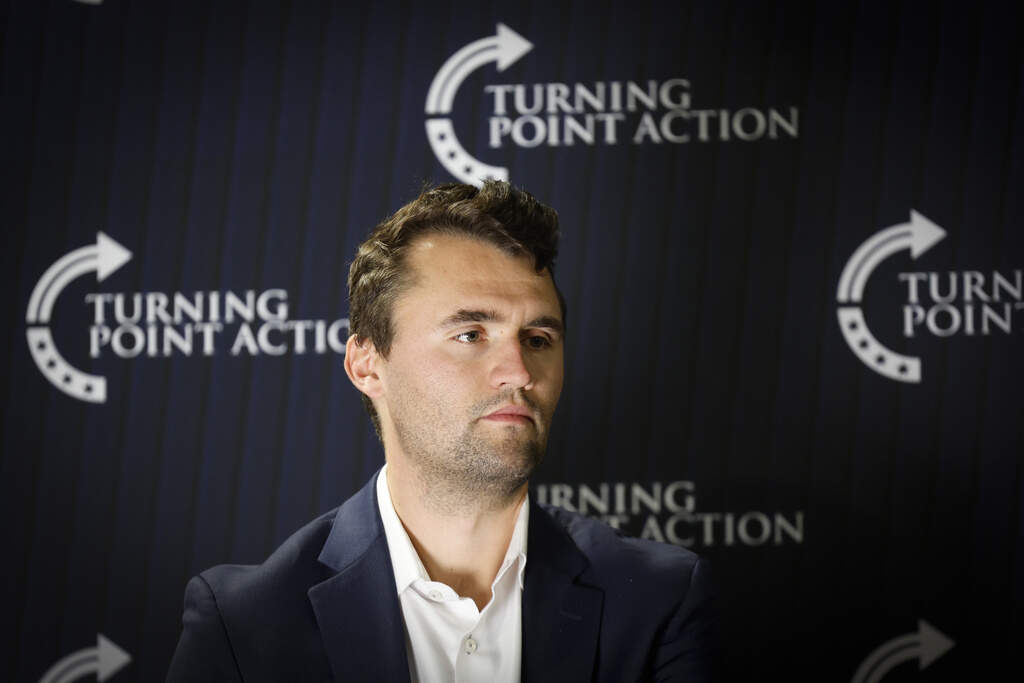
Charlie Kirk helped shape conservative politics over the last decade. His assassination raises a question for all Americans: Can anything turn back the rising tide of political violence in America?
Guests
Emily Anderson Stern, a Salt Lake Tribune Statewatch reporter. She was at Charlie Kirk’s speaking event at Utah Valley University, and has been reporting on the assassination.
Kyle Spencer, journalist and former New York Times contributor. Author of "Raising Them Right: The untold story of America’s ultraconservative youth movement – and its plot for power."
Andrew Egger, White House correspondent at The Bulwark.
Also Featured
Nick Adams, president of the College Republicans chapter at Truman State University.
Transcript
Part I
ANTHONY BROOKS: Law enforcement officials are still trying to figure out what led a young man to murder Charlie Kirk. Less than a week ago, the husband, father, political activist, and founder of the conservative youth organization Turning Point USA was shot dead at Utah Valley University last Wednesday.
Kirk's assassination is part of a rising tide of political violence in America. That includes a violent insurrection at the U.S. Capitol in 2021, two assassination attempts against Donald Trump, an arson attack against Pennsylvania Governor Josh Shapiro, and the murders last June of Minnesota State Representative Melissa Hortman and her husband Mark. And the list goes on. Forcing Americans to ask themselves, can we resist and push back against the rising tide of political violence?
Let's start this hour in Utah with Emily Anderson Stern. She's a reporter for the Salt Lake Tribune. She was at Utah Valley University when Charlie Kirk was killed and has been reporting on the story in the days since she joins us from On Point Station KUER in Salt Lake City and Emily, thanks for being with us.
EMILY ANDERSON STERN: Thanks Anthony.
BROOKS: So bring us up with the latest, the suspected Gutman. Tyler Robinson, 22 years old. What do we know about him?
STERN: He's from the southern part of the state city called Washington and Washington County, which is generally one of the most conservative parts of the state. They typically vote at the highest rates for President Donald Trump when he's run for president.
But what Governor Spencer Cox, who's been keeping an eye on the investigation throughout, because the State's Department of Safety is handling it. He said that although Tyler Robinson's parents are registered Republicans and conservative, that Tyler Robinson, the 22-year-old, has political viewpoints that are quite different from his parents.
We haven't gotten a lot of information from law enforcement what those are, and we don't have any sort of definitive information as to what his motive was. Governor Spencer Cox did say yesterday that he was in a romantic relationship with a transgender woman which has, among the LGBTQ community here, stoked a lot of fear about retaliation and their safety.
But again, I do want to emphasize we don't know much about the motive. And Utah Governor Spencer Cox also emphasized that in media interviews yesterday, that he wanted to make sure that people knew that Tyler's Robinson's romantic partner is cooperating with investigators and that really, he said that investigators don't entirely know the motive yet, or at least have not disclosed that.
BROOKS: Well, let's hear from Utah. Governor Spencer Cox, he spoke at a press conference announcing that law enforcement had the suspect in Kirk's killing in custody. And he made an impassioned plea for citizens to recommit themselves to not engage in political violence.
So here's Governor Cox.
GOV. COX: And that's the problem with political violence. Is it metastasizes. Because we can always point the finger at the other side. And at some point, we have to find an off ramp or it's going to get much worse.
BROOKS: Emily, a lot of people were struck by Governor Cox's approach and what he said in the wake of this terrible assassination of Charlie Kirk. Can you tell those of us who aren't completely familiar with Governor Cox, something about him. He seemed to be making an appeal to both sides of the political spectrum here to refrain from violence, talking about we need to find an off ramp. Is this consistent with the message that Governor Cox has offered over the time that you followed him?
STERN: This is something he's tried to make part of his identity. When he first ran for election for governor, he and the Democratic candidate for governor made an ad together saying that, essentially, we don't need to attack each other, we just need to get our policy perspectives out to the public and then you decide.
When he was chair of the National Governor's Association last year, he ran a campaign called Disagree Better, trying to bring down the temperature in political conversations. But I will say there are a number of folks who are on the other side of the political spectrum here who have, on multiple occasions, said that he has these messages.
But sometimes, the things he says, the policies he supports, from their perspective, also stoke political division to some extent.
BROOKS: I see. Let's get back to the suspect, 22-year-old Tyler Robinson. He was arrested Thursday night. I understand he's going to be formally charged tomorrow. Do I have that right?
STERN: That's what we're expecting. He will make his first appearance in court tomorrow and he will be remote, but that will be in Provo, which is just near Orem where Utah Valley University is.
BROOKS: And I want to take to heart what you said at the top of the show that there's a lot we don't know. There's so much more we don't know than we do know in terms of his motivation.
But Governor Cox described messages that he said had been found engraved on unfired cartridges left at the scene.
What do we know about those messages and what might they indicate about Tyler Robinson's political positions?
STERN: A lot of them are tied to internet culture, memes, video games, and things generally more familiar to folks, individuals who spend a lot of time on certain online platforms, chat rooms.
And some people may read them and take some certain political meanings from them. But again, with those inscriptions, they also have, there's also not a lot of clarity still as to why he inscribed those particular messages. And what they tell us.
There are questions about whether he's someone who is identifies as being on the left or if he's someone who identifies as being on the right. Among people on the right, conservatives, there are some divisions about different messages and things that have been said among political influencers about each other. And so there are a lot of questions still as to what his political views are and what his motives are.
BROOKS: Right. And we expect that those will emerge as time moves forward. Any information from neighbors, from classmates, from people who knew Mr. Robinson about what might have motivated him or offer more insight into who he was.
Who he is, excuse me.
STERN: He did grow up in a family that are members of the Church of Jesus Christ of Latter-Day Saints. A lot of his neighbors said that they didn't see him going to church often or didn't have the impression that he was a believer in the faith. And as I mentioned earlier, Governor Spencer Cox has told us that he was in a relationship with a transgender woman.
So a lot of people said he wasn't incredibly social, they didn't know him particularly well, but they saw him around town. And there's still a lot to learn about who Tyler Robinson is. And why he did this.
BROOKS: Emily, let's go back to the day of the shooting last Wednesday.
I understand you were there at Utah Valley University. Can you bring us back to that moment and how it unfolded for you?
STERN: Yeah. So I was there, I'm a government and politics reporter here in the state, and I was there essentially, seeing what Charlie Kirk was telling the crowd, how people were reacting, wanting to write about the movement of some young people in the state to the right and relationships between state elected officials and Charlie Kirk. I was standing in the crowd at the time of the shooting, mostly among college students. But also there were folks from other parts of the state who don't go to Utah Valley University who were there just because they liked Charlie Kirk and wanted to see him.
But among the college students, there was a range of political perspectives. There were some who were not familiar with Charlie Kirk and were just there because they were curious. There were fans of Charlie Kirk who told me they listened to all of his podcasts. And then there were also college students who disagreed with Charlie Kirk and wanted to provide some sort of counter messaging and protest what he was saying.
As I typically do when I'm at events with political figures, I was watching the crowd's reactions to his comments. And it was during the second series of questions that this happened. A series of questions about mass shootings, transgender mass shooters, specifically. And then one shot rang out and before I even realized what had happened, I looked back at the table and Charlie Kirk was gone.
He'd been carried away. People had dropped to the ground. They were screaming, and it was a pretty chaotic scene.
One shot rang out. And before I even realized what had happened, I looked back at the table and Charlie Kirk was gone. He'd been carried away. People had dropped to the ground. They were screaming.
Emily Anderson Stern
BROOKS: Yeah. I can imagine. What was the immediate reaction of the crowd? How quickly did they realize just what had happened? Were you able to pick that up?
STERN: I think, honestly, it was immediate.
For me, because I hadn't seen it, I wasn't sure, and this was true for a few people that I talked to, I wasn't sure if it was a prank or if it was real. There were questions about mass shootings and Charlie Kirk has said quite a bit about defending gun rights, the second Amendment. And those comments haven't always been popular.
He's also said a number of anti-transgender things that have stoked prejudice toward transgender people. And so I wasn't sure if this was some sort of demonstration, if someone had shot a blank. But then I started speaking to eyewitnesses who had seen him be hit and said they'd seen a lot of blood and realized, this is real. He was hit.
BROOKS: Emily, before we let you go very quickly what are the big questions that remain unanswered that you are looking to follow in the days and weeks ahead?
STERN: I think as we've touched on a lot, who is Tyler Robinson? Why did he do this? But also, what are the impacts of this?
How is this changing how people look at politics, how they feel about politics? And I think, we're starting to see some of that, but also how is this going to change elected officials' policy perspectives, Utah's U.S. Senator Mike Lee has already started, he's been incensed over this, and he has started talking about bills that he plans to introduce.
Part II
BROOKS: Nick Adams is a 21-year-old student at Truman State University in Missouri, and the chapter president of his school's College Republicans Club. Nick told us he was at the gym last Wednesday when he got a text that Charlie Kirk had been shot.
NICK ADAMS: I just felt my stomach just sink to the floor. I immediately went straight onto social media to see what was happening.
The first place I went to was X, where immediately the first thing popped up was one of the videos that was being shown around. Right when I saw that video, I knew it was really bad, and I wasn't able to finish my workout for the day. I had to end up just going back to my dorm. Because I could not focus whatsoever on what happened.
BROOKS: Nick says he spent the next few hours reaching out to friends and other college Republicans trying to find out exactly what happened. Then he learned Kirk was dead.
ADAMS: My stomach just sank to even deeper than what I thought it could have. ... Immediately just felt this sadness anxiety of what might end up happening in the future. And then immediately thought too, he's 31 years old. He's married for, I think, about four or five years and two children. Once that came out that he had passed, one of the first social media posts I saw was the video of him with his daughter running to him into his arms. That really broke me down.
BROOKS: Nick says he admired Kirk because of his role in the conservative campus youth movement. Although he'd never met Kirk, Nick says Charlie Kirk's presence on social media, his approach to engaging students on campuses and his values spoke to him and his generation of conservative leaning young people.
ADAMS: I'd say Charlie Kirk is definitely one of the big reasons we saw a huge push with Gen Z for the '24 election. Just completely underestimated Gen Z vote, and it just completely turned out and voted for the Republican Party. For our group individually, I would say he gave us a sense of we can actually do something with our club.
We can actually be a forum for whether people want to come and disagree with us or just come and hear our points of view.
Charlie Kirk is definitely one of the big reasons we saw a huge push with Gen Z for the '24 election.
Nick Adams
BROOKS: To millions of young conservatives like Nick Adams, Kirk was a bold leader who brought his ideas and convictions into the public square. Kirk was also a divisive figure on college campuses, where progressives rejected his brand of politics, and some have responded to his murder in troubling ways. Nick, the young Republican from Missouri says he's been unsettled by some of the reaction he's seen online, including on apps like Yik Yak.
ADAMS: I have seen some comments on there that have been very spine chilling, very negative, saying that they're happy that Charlie Kirk was shot and then killed, that they were happy with the consequences that have came out from the shooting.
So while in public, there hasn't been as much negative push towards this. However, on the social media aspect, especially when it's anonymous, there has been a lot of negative push on this event.
BROOKS: After the arrest of Tyler Robinson, the man suspected of shooting Kirk, Utah governor Spencer Cox condemned social media for helping fuel the current mood of extreme political divisiveness and made an impassioned plea to reject political violence.
He was joined by politicians from both sides of the aisle. Nick Adams is also concerned about what he's seeing on campus.
ADAMS: I think when it comes to politicians or political figures of high significance, there's always been a chance of violence. However, when it comes to more small people, small groups, like ours here on campus where we've had tablings, where people have come up, taken stuff, ripped stuff in front of us, and then thrown stuff at us.
I believe there's certainly more incentive to not be overly violent, but there's no incentive to prevent people from being just on the borderline of where you can get them in trouble for causing some form of harm. I would say there's definitely a rise in that.
BROOKS: All right. That was Nick Adams, chapter President of College Republicans at Truman State University in Missouri. We're going to spend the next few minutes talking a lot about Charlie Kirk and who exactly he was, and to help us do that, we're joined by Kyle Spencer. She's a journalist and former New York Times contributor, author of "Raising Them Right: The untold story of America’s ultraconservative youth movement – and its plot for power."
Kyle Spencer, good to have you. Thanks for being with us.
KYLE SPENCER: Thank you so much. I'm happy to be here.
BROOKS: Let me just start with a really basic question. As someone who has studied Charlie Kirk and the rise of this ultra conservative youth movement, what was your reaction, first of all, to what happened, what unfolded on last Wednesday?
SPENCER: I have followed Turning Point USA's development and growth online and on campuses. And I have followed Charlie Kirk's growth as well. And it was very upsetting to see, and it was so tragic. And when I flashed back to the amount of pro-gun rhetoric that came out of Turning Point USA, visually online, with the posters and blitzing that Turning Point USA does so well.
It just made me so sad. Because the gun promotion was a really integral part of Turning Point USA and to see its leader die at the hands of a gun was just, it was horrible.
Gun promotion was a really integral part of Turning Point USA and to see its leader die at the hands of a gun ... was horrible.
Kyle Spencer
BROOKS: Horrible and shocking. And it's interesting that you brought that up. I was struck last week in doing some reading that Charlie Kirk had talked about the cost of gun violence in America, and actually said that the price of, I'm not going to get these words exactly right, but he said words to the effect that the price of many deaths a year is a price worth paying to support the Second Amendment and the other rights that the Second Amendment supports. As you said, it's a tragic irony that he dies at the hands of gun violence in America.
SPENCER: Yeah, one of the things that I remember when I was reporting on my book was attending a university in Florida.
And going over and talking to a bunch of tablers on that campus who were promoting Turning Point USA. And I always found if you were in collegial talking points, those folks were generally very amicable, as long as you didn't verge into anything controversial. And there was a huge sign that they had propped up against their table, which said something to the effect of we are pro-choice.
And there was three very large military grade weapons on the poster. And then the poster said, choose one. And a young woman walked over to the table and she was very thoughtful but very upset. And she said this is really intimidating. Do you really have to have this here for us to walk by every time that we go to class?
And the young men at the table were very unsympathetic to her and were adamant that this was their right to speak out and to support guns on campus as they wished, and that she was, it was unfortunate that it upset her, but that was the way it was. And I never forgot that.
BROOKS: Interesting. Let's get a sense, and I wanna bring Charlie Kirk's voice into this conversation and give listeners a sense of how he operated on campus.
Charlie Kirk was known for debating college students and other youth on campuses across the country. And in one example, which was posted online, he debated a student about whether democracy was an American value.
STUDENT: Do you view democracy as an American value, as something that's very important to the fabric of this country?
CHARLIE KIRK: No. Where is democracy in the U.S. Constitution?
STUDENT: Oh, okay. So are you --
KIRK: No, hold on. Where is the word democracy?
STUDENT: I don't think the word democracy is in the constitution.
KIRK: It's not. So where is the word democracy in any of the founding fathers.
STUDENT: A lot of the founding fathers had extremely elitist viewpoints around who should --
KIRK: No, hold on.
I just want, you said the word democracy, so I wanna get back to our roots.
STUDENT: Yes.
KIRK: Where is democracy mentioned?
STUDENT: I don't --
KIRK: In the Federalist Papers, the Constitution or the Declaration.
STUDENT: I think it's good that this country has moved away from things that were explicitly believed by the founding fathers.
KIRK: Got it. So it is mentioned in the Federalist Papers.
And it's mentioned negatively as a problem. So you asked me, is democracy a fundamental American value? I say no.
STUDENT: Okay.
KIRK: Because I go back to our roots.
STUDENT: Do you —
KIRK: And Hamilton, Madison, and Jay.
STUDENT: Oh, I know that Hamilton was anti-democracy. People thought that people should be owned as property.
KIRK: No. Hold on, let finish.
I wanna be clear. I am pro representative government.
STUDENT: Okay.
KIRK: But I'm not pro-democracy. That's a big difference. And that distinction's important. But you ask very specifically about democracy, which is not an American value. It never has been and never should be. Because what is democracy? Democracy is majority rule no matter what, that there's no provisions of checks and balances.
No inalienable, no separation of powers, pure, if the majority gets it, the majority wants it as quickly as possible.
STUDENT: I don't advocate pure democracy. I do understand that we live in a representative, we live in a republic, and I understand.
BROOKS: All right, there's Charlie Kirk debating a woman on a campus some time ago.
Kyle Spencer, what do you hear in that back and forth? Because I think it is important to talk about the fact that Charlie Kirk did bring his views into the public marketplace where he could be debated and pushed back against. On the other hand, he was a very accomplished debater, often taking on students who might not be up to that level of debate.
I don't know, what do you think?
SPENCER: First of all, Charlie frequently began to talk about his belief that we were not and did not need to be a democracy by often referring to the constitutional republic that the founding father spoke about. That was their way to describe democracy and his insistence that they didn't believe in democracy is extremely, it's just disingenuous.
But what Charlie Kirk, who was 10 years older, I'm sure, or more than that woman had done before this debate, was to prepare. For years, and he was a huge reader of original documents that he then interpreted and figured out how to interpret in the ways that he felt were appropriate for his vision.
And he used those debates in which he was much better prepared than the students that he debated. To then videotape them, edited them quickly, his team edited them quickly and slapped them up on social media in order to depict liberal students as not very bright, confused, enraged, whatnot. So this young woman may have thought that what she was doing was engaging in an honest, open debate with Charlie Kirk.
But what she was really doing was being a tool for the Turning Point USA social media machine to push out a message that liberals are idiots.
BROOKS: I see. Interesting. Listen, we were talking, Kyle, about what Charlie Kirk said about gun deaths and gun rights. So we've got the quote in front of me right now.
So just for the record, I want to get this right. So in 2023, he said:
I think it's worth, to have a cost of, unfortunately, some gun deaths every single year so that we can have the second amendment to protect our other God-given rights.
Unquote. So I just wanted to put that out there. Since I had made reference to that quote, I wanted to be absolutely accurate about that, Kyle.
Tell us how Kirk started Turning Point USA. Because it turned into quite an operation.
SPENCER: Yeah, so Turning Point USA was started in 2012. Charlie Kirk was just out of high school and he was mostly a fiscal conservative. The idea is that he talked a lot about, and the reason he'd gotten driven into the conservative movement were issues around budget deficits, bloated government.
What he believed was bloated government. Fears about China's dominance in the world market. Over taxation. That was his original. Those were his, mostly his original concerns and the concerns of the young people who followed him. As he grew the movement and as he upgraded a connection with President Trump.
He grew to endorse more culture war issues and became more concerned about issues around gender, race, those types of issues, and issues around campuses, which he believed to be overly woke. It's important to note that Charlie Kirk was always religious. He did belong to an evangelical church very early on and had started to develop relationships with far-right Christian leaders, but he became, early on, he was, you could talk to him, and he was able to understand how you might have a different view. He was a little more moderate.
And Hasan Piker recently said that in his discussion about what he knew about Charlie Kirk earlier on, and I saw that too. As Charlie got more and more famous and more entrenched into the MAGA machine, he became less and less tolerant of other views and much more rigid about what he thought was something he could support.
BROOKS: Interesting. Now, did that pivot to culture wars affect his appeal with youth? Did it accelerate that appeal with conservative youth on college campuses? Because it became quite a thing.
SPENCER: Yeah, absolutely. I think that Charlie Kirk was always a really genius at feeling, testing the waters and seeing where the mood was, particularly among young people and college campuses, when his sort of arrival on them and growth on them were in a bit of a battle over this idea of whether focuses on equity and diversity were positive for a campus or not. And Charlie Kirk and his team really stood in a camp of believing that those types of pushes were really bad for white students. And that racism was very real and very prevalent on college campuses and in America. And that racism was largely against white people. So he tapped into that.
BROOKS: And how did this connection with the White House, with the MAGA movement, form so tightly, can you go into that a little bit?
SPENCER: Yeah, absolutely. Charlie Kirk got to know John Jr. during Trump's first campaign and actually was --
BROOKS: John Jr. You mean Don Jr. Yeah.
SPENCER: Don Jr. Yes.
BROOKS: Yeah, go ahead.
SPENCER: Yeah, and actually was Don Jr's bag boy, during the election going around and garnering favor and also fundraising for Donald Trump. Don Jr. was the one who introduced President Trump to Charlie Kirk, and it was a very immediate connection. Charlie Kirk and Donald Trump have a lot of things in common. They're really brilliant messengers. They have a real good sense of where the mood is in the country, and they're both extremely charismatic and have a certain kind of pull on people.
And I think that Donald Trump really saw that in Charlie and his thoughts and vocalization about Charlie Kirk were very real.
Part III
BROOKS: President Trump released a video following Kirk's assassination. Kirk worked to elect Trump to the presidency and met regularly with him. In the video, Trump spoke against political violence, but lay the blame at the feet of what he called the radical left.
DONALD TRUMP: It's a long past time for all Americans and the media to confront the fact that violence and murder are the tragic consequence of demonizing those with whom you disagree. Day after day, year after year, in the most hateful and despicable way possible for years, those on the radical left have compared wonderful Americans like Charlie to Nazis and the world's worst mass murderers and criminals. This kind of rhetoric is directly responsible for the terrorism that we're seeing in our country today.
And it must stop right now.
BROOKS: President Trump's talking there following the assassination of political activist Charlie Kirk. I'm joined by Kyle Spencer, journalist, former New York Times contributor. She's author of "Raising Them Right: The untold story of America’s ultraconservative youth movement – and its plot for power."
And Kyle, say a little more about his connection with Donald Trump because Trump actually gave Charlie Kirk a lot of credit for his last victory regaining the White House, right?
SPENCER: Yeah. So Charlie Kirk was really unique in the sense that he was an incredibly charismatic personality who was also able to raise lots and lots of money.
And to rally people around his organization, Turning Point USA. So Turning Point USA was then able to spawn off into various different entities, including a political entity, turning Point Action, which was largely responsible for building out, starting to imagine building out a vote, get out the vote effort for this most recent election. And Turning Point. USA's various outlets have a huge staffing. The staffing is very; there's a lot of folks that work for them. And so Charlie Kirk was able to envision things and then had the ability to see them to fruition.
So I think really what we see with Charlie Kirk was his ability to sell the MAGA movement to the masses, and in some cases, to sell harsher more somewhat controversial, disturbing to some elements of the MAGA movement to young people in ways that made them seem more palatable.
And for some people, that was Charlie's brilliance. And then for other people, it was what made Charlie so dangerous.
Interesting. Let's bring in another voice into the conversation. Andrew Egger, White House correspondent at the Bulwark. His post, the Sickness Unto Death was included in The Bulwark newsletter, published Thursday morning following Kirk's assassination and titled Is This Who We Are?
And Andrew, it's good to have you. Thanks for joining us.
ANDREW EGGER: Hey, thank you for having me on.
BROOKS: So that piece is ... very powerful. Thank you for that. And you write, political violence has always been a dark part of America. And you ask, can we move past it again? So start there.
It's a big question. Can we move past it or what will stop us from moving past it? What's your thought on that?
EGGER: Yeah, it's a big question. It's also an open question, right? I think that we're at a very dangerous moment right here in America right now where we're in the wake of this assassination on a very prominent young Republican activist.
Everyone is looking around trying to find ways to lower the temperature, doing better or worse jobs of doing that. Of course, not everybody even is interested in trying to lower the temperature. And you have to also filter all of this through sort of the fact that more and more of us are processing these sorts of stories through the sort of algorithmic world of social media that is designed from the ground up to amplify the most explosive, the most emotionally charged messages.
More of us are processing these sorts of stories through ... social media that is designed from the ground up to amplify ... the most emotionally charged messages.
Andrew Egger
And that is, we have seen time and time again, provides a real barrier in the wake of jarring national tragic stories like this, any sort of like transcending of political barriers to come together to heal. And we've seen a lot of that here. So I think it's a dangerous moment.
It's a difficult moment. It's a very fraught moment. A lot of people are feeling a lot of promotions all over the place, particularly, of course, on the political right where Charlie Kirk was seen as such a hero. And yeah, it's just, it's very fraught for all those reasons.
BROOKS: Andrew, in that piece you make the point that by the time the summer of 2025 had really heated up, we'd already, it had already been a season of alarming political violence. You talk about the killing of two young employees at Israel's D.C. Embassy, the June shooting of two Minnesota lawmakers and their families, the August shooting at the Centers for Disease Control in Atlanta.
But you write that Kirk's killing was an act of a different order. How can you explain that?
EGGER: Yeah, the obvious basic thing, not to diminish the tragedy of any of these stories. All of those people who were affected before ... just as much had a right to go on with lives untouched by violence as much as Charlie Kirk did.
But we all had to learn their names in the midst of the stories of the horrible attacks on them. Charlie Kirk has been such a fixture of Republican politics in America for a decade and particularly, again, online. He has been such a central part of the conversation, and I think that is something that maybe some older commentators and just people paying attention to politics didn't really have a full grasp on, just how omnipresent he was for online Republicans and campus Republicans. He was like the guy in a lot of ways. And so that combined with the fact that he was not actually in politics, right? He was not a politician. He was not an elected official.
The fact that, which I think magnified just the shock value that he would be targeted like this, I think is a big part of why this particular attack has gone off like such a bomb just in terms of the discourse and the emotions that everyone is feeling about it.
BROOKS: Kyle, bring you back into this conversation. Respond to what you're hearing Andrew say. Do you agree with that idea that Kirk's killing was an act of really a different order, notwithstanding the fact that there has been an awful lot of violence lately?
SPENCER: Yes, absolutely. And I think this idea is really well said.
That I just don't think the establishment understood the extent to which Charlie Kirk resonated for young people and the level and how integral he was to the modern youth conservative movement. So I think that his death is gonna have some very severe repercussions and perhaps even corral more followers to the hard right.
His death is going to have some very severe repercussions and perhaps even corral more followers to the hard right.
Kyle Spencer
BROOKS: That's interesting. Your point was well taken. What kind of a hole does he leave behind? And I'm intrigued by this idea that his death might excite essentially the kind of issues that he was seeking to bring to the forefront. But he will leave a hole among the conservatives on college campuses.
Are there other people ready to take his place? What kind of a hole does he leave behind? I'll ask that to both of you. You go first, Kyle.
SPENCER: I think that like many of these incredibly charismatic figures, there is nobody to step in right now. It is true that Charlie Kirk's wife, Erica Frantzve, has been growing her public persona quite a bit.
She is a right-wing Christian influencer, and I'm going to watch her to see how much influence she starts to have and whether she grows her following and her involvement. But in terms of types of characters who had the impact, particularly on young men on college campuses. I see a lot of figures who have some influence, but I don't see anybody who has the kind of impact that Charlie had.
BROOKS: Andrew, what do you think?
EGGER: Yeah, I agree with that. And I think in one sense, this is always the way of things, right? You have a titan of his field who dies, even if it's in far less tragic circumstances, I'm thinking of, say Rush Limbaugh who was not killed.
He just died. And there were a lot of similar questions of, wow, that leaves such a hole in kind of the right wing political conversation space, and how could anybody ever fill that? And to a certain extent, there has never been, since then, like an equivalent of Rush Limbaugh.
But when you looked at somebody like Charlie Kirk, they were like the next generation like response to that. Charlie Kirk famously grew up idolizing Rush Limbaugh, right? And he, in terms of the conversation, had filled out in a different and new way, a lot of that same space for a lot of the same audience, but also for new audiences.
And I think that's likely to be what we see here. Obviously, he was sui generics in a lot of ways for all the reasons that we have talked about. There will be other people, maybe people we don't know yet at all, who will step up to fill that void, but obviously it's going to look different.
It's not going to be the same sort of combination of just dramatic conversational influence, but also political influence that worked, combined in the person of Charlie Kirk with his very large national megaphone and his very influential political group in Turning Point USA.
BROOKS: Andrew, in your piece, Is This Who We Are? And raising this difficult question about what we can do, any of us can do about this rising tide of violence that we're witnessing at this moment.
You write that you don't know for sure what to do, and then you say, all I know is what I can do. Can you explain that a little bit?
EGGER: Yeah. I think one of the unfortunate realities of moments like this, and again, particularly at a time of really high polarization, and particularly at a time when one person just was assassinated, who is obviously of one political side, there is an understandable, but I think really harmful tendency to say, as soon as the other side lays down their arms in this all out political war, that's when I will tend to my own house. And whereas in reality, at a time of such deep polarization, and not that all the polarization is not understandable, it's a time of deep division.
But all that you can do as one person is tend to the way that you yourself choose to respond to these moments. And obviously that takes, I would say, more charity for people who are on the political right, right now, who just lost one of their own, again, to this shocking act of violence.
There is, you can certainly see why so many people on that side are championing at the bit to retaliate in one way or another. But the hard reality of the case is that until there is like a mutual understanding that all you can do is lay down your own arms.
You can't make the other person lay down their arms. It's going to be hard to disentangle any of this stuff.
BROOKS: And of course, political violence, not a new thing sadly when it comes to the history of America. So let's go back to April 4th, 1968. Following the assassination of civil rights leader Martin Luther King, Jr.
Robert F. Kennedy announced the tragic news to a crowd in Indianapolis. He then spoke off the cuff for several minutes and talked about the need for compassion and understanding, advocating for love and justice rather than division and hatred. Here's a bit of what he said.
ROBERT F. KENNEDY: In this difficult day, in this difficult time for the United States, it's perhaps well to ask what kind of a nation we are and what direction we want to move in.
For those of you who are Black, considering the evidence, evidently is, and there were white people who were responsible. You can be filled with bitterness. And with hatred and a desire for revenge, we can move in that direction as a country and greater polarization. Black people amongst Blacks and white amongst whites, filled with hatred toward one another.
BROOKS: And Kennedy continued talking about how to stop the cycle of violence.
KENNEDY: What we need in the United States is not division. What we need in the United States is not hatred. What we need in the United States is not violence and lawlessness, but is love and wisdom and compassion toward one another.
BROOKS: That was Robert F. Kennedy speaking in April of 1968 after the assassination of Martin Luther King, Jr. And Andrew, just to come back to you, we heard President Trump talking about this was the fault of the political left. So is there a Kennedy like person out there who's delivering that message now?
EGGER: Yeah, this is such a difficult thing, right?
Because again, I don't want to discount that this is a very hard thing to do when you feel like you have just lost one of your own, at the hands of one of the other, right? That is not by any stretch, an easy thing to do. We have seen some Republican leaders, Utah Governor Spencer Cox, certainly foremost among them.
You talked a little bit about him earlier on the program, who are trying to do that. Really making what I thought was a heartfelt and really just important set of statements to that effect particularly on Friday, we have not unfortunately seen the same messaging out of the White House.
And you mentioned Donald Trump, but I think the most kind of shocking stuff in this department has come from Deputy Chief of Staff, Stephen Miller, who has been really just advancing some kind of shocking statements about all of this. That essentially amount to, this killer did not act alone.
This killer is essentially, the primary guilt for this assassination should not fall on him, but should fall cumulatively on the institutions of the political left who have an ideology that he said, in a post on Friday, there's a quote, has an insatiable thirst for destruction.
That always leads inevitably and willfully to violence. And he pledged in a appearance also on Friday on Fox News that the policy of the Trump administration is going to be to look for sort of any pretext to come down with criminal retaliation against, again, these sort of institutions of the left that they are laying the blame for this assassination. And for the response and for what they characterize as a callous left-wing response to the assassination. And so there that's all kind of a moving target. And it's, again, like I keep saying, it's a very dangerous moment for a lot of these reasons.
BROOKS: And a long way from the words of Bobby Kennedy there.
Kyle Spencer, final thought from you in the 10 seconds that remain, about where we go from here, what are you thinking about?
SPENCER: I think it's really alarming that in the White House there is this effort to stoke fear and intimidation in the face of this. And you gotta wonder what the end game is here.
And I think a lot of us journalists and others are very worried.
The first draft of this transcript was created by Descript, an AI transcription tool. An On Point producer then thoroughly reviewed, corrected, and reformatted the transcript before publication. The use of this AI tool creates the capacity to provide these transcripts.
This program aired on September 15, 2025.