Support WBUR
How presidents use the U.S. military in the war on drugs
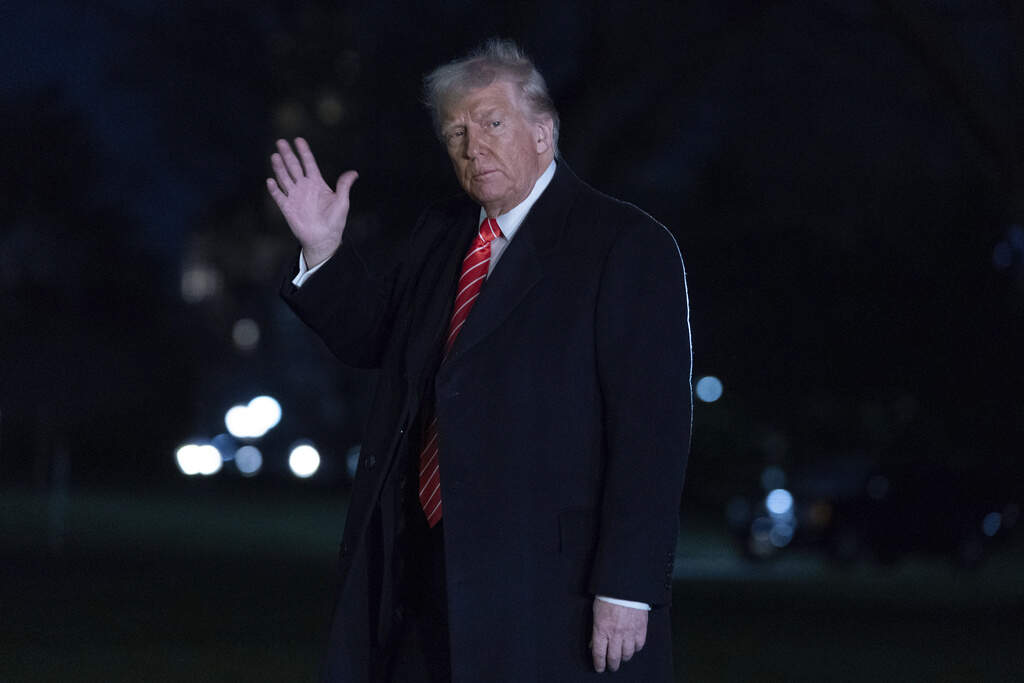
President Trump's order to attack a Venezuelan boat on drug smuggling suspicions has alarmed some Republican lawmakers.
Guests
Vera Bergengruen, national security reporter at The Wall Street Journal based in Washington, D.C.
Lt. Gen. Mark Hertling, retired United States Army Lieutenant General who served in the military from 1975 to 2013. Author of The Bulwark article "Bombs Won’t Win the War on Drugs."
Mary Ellen O’Connell, law professor at the University of Notre Dame. Author of The Conversation article "US obliteration of Caribbean boat was a clear violation of international ‘right to life’ laws – no matter who was on board."
Also Featured
Geoff Ramsey, senior fellow at the Atlantic Council’s Adrienne Arsht Latin America Center.
Transcript
Part I
MEGHNA CHAKRABARTI: Earlier this month at the White House, President Trump announced an unprecedented military move. The U.S had launched a coordinated military strike against suspected drug trafficking operations in Venezuela. The missile killed 11 people in a small boat, a new flashpoint in the decades long war on drugs.
DONALD TRUMP: And there's more where that came from. We have a lot of drugs pouring into our country, coming in for a long time, and we just, these came out of Venezuela and coming out very heavily from Venezuela. A lot of things are coming out of Venezuela. We took it out.
CHAKRABARTI: I have to correct myself. The strike wasn't in Venezuela, as the president said.
The boat was coming out of Venezuela. It was in waters. And yesterday, Trump delivered on the promise of the phrase 'more where that came from.' The president posted on his social media site Truth Social, that he had ordered a second strike on a boat allegedly carrying drugs from Venezuela. That strike killed three people.
He added to the post in all caps: Be warned, if you are transporting drugs that can kill Americans, we are hunting you. End quote. Venezuelan President Nicolás Maduro has called the strikes acts of aggression and says communications with the Trump administration have broken down.
Here in the United States, it's reported that Pentagon officials briefing members of Congress after the first strike did not present conclusive evidence that the targets of the attacks were members of the Venezuelan gang Tren de Aragua.
CNN also reports that Pentagon officials acknowledge they did not know exactly where the boats were headed. Secretary of State Marco Rubio offered only vague assurance saying, quote: These particular drugs were probably headed to Trinidad or some other country In the Caribbean. End quote.
Rand Paul, Republican senator from Kentucky, also questioned the White House, saying the strikes violated due process.
He spoke to CBS news outside Capitol Hill last week.
PAUL: I was disappointed that the leaders of a country like ours, that is famous for having due process, for trying to make sure that the innocents aren't harmed in any way. Would glorify the idea of killing people without any sort of evidence presented as who they are.
There is a really practical question that rises from this. So every day the Coast Guard interdicts dozens of boats. So today probably the Coast Guard interdicted half dozen boats off the coast of Miami. Are we just going to blow them up?
CHAKRABARTI: The senator there at the end saying: Every day the Coast Guard interdicts dozens of boats off the coast of Miami. Are we just going to blow them up? But of course, previous presidents have used the military to fight the war on drugs. So today we're going to take a close look at that history and explore this new chapter in that story, what President Trump is doing differently and why that matters for the future of U.S. policy in Latin America.
So let's start with Vera Bergengruen. Vera is a national security reporter for the Wall Street Journal based in Washington. Vera, welcome to On Point.
VERA BERGENGRUEN: Thank you.
CHAKRABARTI: So first of all, can you tell me what we know regarding this second strike this month? What's the latest.
BERGENGRUEN: So they had been indicating for a long time that there was likely going to be many more strikes.
That first strike, even though it was quite jarring for the region, was only meant to be the beginning of this new front they were opening using military force. And so all we know so far about the second strike is that three people on board were killed. That they were identified as, positively identified, as the president puts it, as narco traffickers. We don't know where the strike happened. They did release an unclassified video that shows just a fireball coming out when they strike the boat.
But similar to the first strike, there's still a lot of questions that they're not really, that the administration's not providing much evidence for, whether they were carrying drugs, what kind of drugs, who the men were, even where exactly they were coming from.
Lawmakers and legal experts say that this only raises more questions.
CHAKRABARTI: So we're going to go into those questions a little later in this hour, but let's get to more of those details, that there's still a miasma of confusion around, Vera. Regarding that first strike. Help us understand exactly where was the boat when it happened?
BERGENGRUEN: We don't know. They say it was in the Caribbean, they say within the southern command area of responsibility. We do know that it was, obviously, we know where, that it left from a coastal part of Venezuela, and it was headed towards Trinidad. So you know, somewhere in between there.
But they have not released the location. And as we said, I mean it was 11 people who were killed on board. And in those towns where they were from, we've seen family members and friends post remembrances and so we have an idea of a little bit who they were. President Maduro has said, alleged, that they were fishermen.
But in terms of actually where it happened, again, we don't really have much of an idea. We've got these grainy black and white videos that have been released, and that's about it.
CHAKRABARTI: So this really matters though, because would guess that the U.S. military has a different set of rules when in U.S. waters versus international waters.
What else do we not know? Reading conflicting reports about the kind of information that the Pentagon is even willing to release to members of Congress. What's the response been from Congress?
BERGENGRUEN: Congress seems to have most of the same questions, and on both sides of the aisle, they want more information.
The briefing that was given to some staff last week just left most people dissatisfied from what I've been told, because they're not willing to release all that much information about it. They've designated these groups as foreign terrorist organizations. So they're saying that the men on board were members of Tren de Aragua, this crime syndicate from Venezuela, and they're not releasing much evidence about how they identified them, again, who the men were, even their nationalities.
And that's a basic starting point. So in terms of actually providing evidence that they were also carrying drugs, what kind of drugs and where they were heading, we still don't have all of those answers. And lawmakers would really like to get more information.
CHAKRABARTI: And so then what legal justification is the Pentagon, and more broadly, the Trump administration offering, because again, just using you to help check the disparate reporting, Vera, that we've seen in the two weeks, since that first strike. Because there was a moment where there was some reporting that was saying that the Pentagon was still searching for a legal justification after the fact of the first strike.
BERGENGRUEN: So Trump officials tell us that it's pretty simple. In their view, they've designated these groups of foreign terrorists, and they present an imminent threat, they say, to the United States, the drugs that they are carrying present an imminent threat to Americans. That basically enables Trump as the commander in chief to take any action necessary to stop this imminent threat to the homeland.
That's what they say. Then of course, I'm sure you'll speak about this a bit later on, there's a lot of disagreement about whether that's actually true, and it hasn't really been used in this context, in our hemisphere, in this region.
They're basically importing the language and the tactics of the war on terror after 9/11 that they used in the Middle East and elsewhere, into this hemisphere and treating these alleged drug traffickers the same as you would a foreign terrorist who's about to attack the United States.
[The Trump administration's] basically importing the language and the tactics of the war on terror ... treating these alleged drug traffickers the same as you would a foreign terrorist who's about to attack the U.S.
Vera Bergengruen
CHAKRABARTI: So tell me a little bit more then about how much this differentiates from, and we will speak about this in detail, but from previous uses of the U.S. military in the war on drugs.
BERGENGRUEN: So far it's been about, I think this is the first use of this kind of strike in the hemisphere since there were strikes in Panama in the '80s.
So it's very unusual to see this amount of military buildup in the region. We're seeing all these destroyers, we're seeing F-35s in Puerto Rico, there seems to be this big buildup that is really indicating that they intend to do a big show of force, and it hasn't really been, the U.S. military hasn't been used in this way, to just take out, for example, drug boats.
That, again, we don't quite know yet, the Trump administration says that they have evidence, but we don't quite know yet how they identified them, how they knew that the people on board were members of these drug smuggling syndicates. And what was on board. And so identifying these people and just taking them out is incredibly different from what has been done in the past.
Usually, the U.S. is definitely in those waters, in those international waters, and what they usually do is that the military has a secondary role to the Coast Guard and the Coast Guard is trying to indite them. They identify them, they give them a chance to stop, they search the boat for drugs, and they usually don't just fire on them without any of that.
So that is the part that is quite different, using the military, not as the last resort, but as the first resort. And also, not really asking any questions, not giving them a chance to again, to identify themselves or speak to them, but just striking them based on what they say is good intelligence.
CHAKRABARTI: Okay. So those are really critical differences, and I appreciate how you're drawing the distinction then between typical Coast Guard interdiction processes and what we just saw with these two strikes. Let's listen to a little bit more of the president. Yesterday he was in the Oval Office, and he told reporters that he has proof that the strike this week was against a boat coming from Venezuela and on board were, quote, narco terrorists.
TRUMP: We have proof. All you have to do is look at the cargo that was ... spattered all over the ocean. Big bags of cocaine and Fentanyl, all over the place. And it was, plus we have recorded evidence that they were leaving.
We've recorded them. Very careful because we know you people would be after us. We're very careful. The military's been amazing.
CHAKRABARTI: Vera, is the evidence that the president claims to have there, is that the same thing that the Pentagon is saying? Because it does seem like he's claiming there's some detailed evidence.
BERGENGRUEN: So far the Pentagon actually has not given much information. That's been another kind of point of contention with lawmakers. They have not really provided a public briefing. They have not presented this evidence. And again, the president, for example, saying that he was shown evidence.
That there was drugs floating in the water, that it was cocaine and fentanyl, which experts tell us doesn't make much sense, because fentanyl is not produced or trafficked really through Venezuela. So far, it does seem like it's differing accounts, but more than that, just there isn't a lot of information.
So it's hard to tell if it's different accounts or whether the Pentagon and the State Department and others really are not presenting much at all. And the main information we have is coming through the president recounting what he has been shown.
CHAKRABARTI: Say one more thing again.
Just, I want to be sure I heard you correctly, you said Fentanyl isn't really trafficked through Venezuela.
BERGENGRUEN: Yes. According to experts who talked to us, that's not really the route, there isn't much coming through there. It's cocaine and it's some other things. So we've heard the president and some lawmakers speak a lot about fentanyl.
It's a bit unclear if they're just speaking imprecisely or whether they have evidence that there is fentanyl coming through there. But I wouldn't, yeah.
CHAKRABARTI: Okay. So today we are talking about now two strikes that the White House has authorized the U.S. military to engage in regarding suspected drug boats coming out of Venezuela and what this represents regarding the use of the U.S. military in the war on drugs.
Part II
CHAKRABARTI: Let's listen to what Defense Secretary Pete Hegseth has said about this. He was on Fox and Friends earlier this month to discuss that first drug boat strike. He spoke the day after that strike killed 11 people.
PETE HEGSETH: President Trump is willing to go on offense in ways that others have not been, and to send that clear signal to Tren de Aragua, Cartel de los Soles and others emanating from Venezuela.
We're not going to allow this kind of activity. You're poisoning our people. We've got incredible assets, and they are gathering in the region. And so you want to try to traffic drugs. It's a new day, it's a different day. And so those 11 drug traffickers are no longer with us, sending a very clear signal that this is an activity the United States is not going to tolerate in our hemisphere.
CHAKRABARTI: Defense Secretary Pete Hegseth there on Fox earlier this month. Secretary of State Marco Rubio was also on Fox News just yesterday. He was asked about the optics of conducting a military strike against a boat that had reportedly, according to some reports, turned around and was on its way back to Venezuela.
MARCO RUBIO: Interdiction alone is not going to stop these drug traffickers. They don't mind losing 2% or 3% of their shipments. They've already baked that into their economic plan. What needs to start happening is some of these boats need to get blown up. Some of these boats need to be not just intercepted, but stopped.
No matter what direction they plan to head in. We can't live in a world where all of a sudden they do a U-turn and so we can't touch them anymore. And I'll tell you something, since we did that, the number of boats heading towards the United States suddenly dropped dramatically. Now, maybe that won't be sustained or continued, but we're not, and the president's made clear.
We're not going to continue to allow these cartels to flood the United States with drugs, be it through the water or through land.
CHAKRABARTI: Secretary of State Marco Rubio, just yesterday on Fox. Now of course, these strikes have really caused a great deal of anger out of Venezuela. Venezuela's President Nicolás Maduro held a press conference in Caracas, also yesterday. He told reporters that Venezuela will exercise its, quote, legitimate right to defend itself.
(TRANSLATION)
"This isn't tension," Maduro said. "It's an all-out aggression. It's judicial aggression. When they criminalize us, it's political aggression with their daily threatening statements. It's diplomatic aggression and it's ongoing military aggression. And Venezuela is empowered by international law to comprehensively confront this aggression." End quote.
That's again Venezuela's President Nicolás Maduro. Lieutenant General Mark Hertling joins us now. He's a retired U.S. Army Lieutenant General. He served in the military from 1975 to 2013, and he is with us from Orlando, Florida. Lieutenant General Hertling. Welcome to On Point.
HERTLING: Hey, thank you, Meghna. It's great to be with you today.
CHAKRABARTI: So first of all, I'd really like to just lean on your experience as a high-ranking member of the military and your Pentagon experience. Can you tell me just your first response to the sort of lack of clarity or obfuscation that seems to be coming out of the Pentagon about exactly what happened, exactly how the military carried out the strike and what the Pentagon is or isn't saying about the justifications for that strike. Is that usual?
HERTLING: No, it's not at all. And in fact, there's a mantra that's sometimes used in the military that words are important, so we must be very precise because it creates action, and that's what we're seeing happening right now. There's also the challenges with legality as well. Now I'm not a lawyer. But I have had, I've been asked to follow orders and what I tell you is every time I've been given questionable orders, I always pull my staff judge advocate in to give me a legal readout.
This seems to be creating some things that have at least some illegal tendencies surrounding them. And we can talk about that more, again, not from the standpoint of a lawyer, but from the standpoint of a soldier who has to obey these kinds of orders.
CHAKRABARTI: We will bring in a lawyer in a few minutes, Mark, to discuss those legal aspects, but go ahead and give me your point of view as a soldier, the concerns you have.
HERTLING: Okay first thing is, I'd say military operations are primarily bound by the laws of armed conflict. That requires proportionality in our strikes, distinction between combatants and civilians, and the accountability for the use of force every time we use it. In this kind of case with a drug runner, if you want to call them that, even though that's not been proven, a lot of people might ask what rights does a drug smuggler have when he is facing the wrong end of a 50-caliber machine gun or a missile strike?
And the fact of the matter is, from a commander's perspective, he has rights as a criminal under the rule of law. The second thing is that having been involved a little bit back in the '80s and '90s with narcotics operations.
The military is less effective at fighting irregular groups of non-state combatants, especially when asked to do it with insufficient diplomatic, economic and intelligence support. If you're going to declare a war on another country, and make no mistake about it, firing on a boat at sea, even though you're parsing the term imminent threat, it is a casus belli.
It is an act of war and. In this case, if you're doing it against a criminal organization, those criminals constrain the military operationally, doctrinally, and morally even more than what we've seen over the last two decades, Islamic terrorist groups did. A cartel operator, just like a terrorist, may be a shooter one day or a smuggler one day and a civilian the next.
So when you're using extra judicial punishment, that is striking a boat with 11 people or three people on board, it really gives some moral dilemmas to the individual literally pulling the trigger to destroy that boat.
CHAKRABARTI: Tell me more also about the rules of engagement, again, in a formally declared war, which this is not. But the rules of engagement as you see, as they apply to the striking of a boat in uncertain waters.
Again, we don't know exactly where it was, but what are your questions or thoughts about that?
HERTLING: Listening to your clip of Secretary Rubio talking about what they're doing, it appears to me it's not only the destruction of carriers and the ones supplying the drugs, but it's also an attempt at deterrence.
That's understandable. That's certainly understandable. But there's more to deterrence than just, Hey, we're going to kill somebody immediately, so you don't do this anymore. The Secretary of Defense, Mr. Hegseth, has said we've reduced the number of boats that are coming, and we've put these people at the bottom of the sea.
That's interesting, but we don't know who those people are. So that violates two rules of military operations, and that is proportionality, using the correct amount of force to destroy something, and the distinction between combatants and civilians. So when you're talking about, just, okay. You may have the intelligence, that there may be drugs on this boat, but you don't know who those 11 people or three people are.
Are they drug runners? Are they just passengers? Do they know what's going on? And you've just killed all of them. Now, I can harken back to the war on terror when there actually was an authorization for use of military force against civilians. Where the U.S. military made quite a few mistakes.
The most famous one was the wedding party strike where military forces were going after a terrorist with an overhead platform, in that case, a drone, and they struck the terrorists, but they also killed a lot of members of a wedding party. Now, is that proportional and is it distinguishing between combatants and civilians?
I know we in the military had quite a few questions about that, and it was debated by professionals in the force saying, how can we avoid this kind of extremist use of weaponry against a large body of people?
CHAKRABARTI: Yeah. Bringing up things like Afghanistan and Iraq also raised the question, quite frankly, of how much the American people can believe what they're being told right by the White House and the Pentagon. Because the entire justification for Iraq specifically was those weapons of mass destruction was proven to not be true. But Lieutenant General Hertling, let me just take a quick step back here.
The U.S. military, in different ways has been involved for decades now in the war on drugs in particular, I mean everything from what planned Columbia in terms of the support that U.S. Special Ops, for example, gave in training the Columbian military to fight the drug war there.
Overall, is that a good use of what the U.S. military is built for?
HERTLING: It can be, and I would say there's the potential of it being a force that would be in coordination with other elements of national power, both in the United States and in foreign countries. It can create a reduction in the kinds of drugs that are flowing from other countries.
You mentioned the Columbia fight, and that was a very long fight, and that was one I was involved with, but even earlier in the 1980s, there was something called Operation Blast Furnace in Bolivia, and that saw U.S. forces help destroy cocaine labs with intelligence. So in other words, the force, the U.S. would provide the intelligence to the Bolivian forces.
They would see where the drug labs were, and then it was up to them to take action on their own sovereign territory. And for months, the cocaine industry was essentially paralyzed. But here's the problem, after it was paralyzed for months, the cartels adapted, they shifted production and the flows resumed.
So if you are only striking targets, without determining the pass and the different inflection points within a campaign, you're basically taking a tactical action against a strategic opportunity. So really what you need, if you're going to declare a drug war, and even that declaration has problems associated with it.
You have to look at not only the supply side and the transport side, which is what we seem to be focused on right now, but also the demand side. Is the destruction of a cocaine boat coming out of Venezuela going to stop the flow of drugs in the United States? Not as long as people are willing to pay for cocaine.
You have to look at not only the supply side and the transport side, which is what we seem to be focused on right now, but also the demand side.
Mark Hertling
Not as long as people are willing to use it. So when you're looking at a strategic operation, a way to get at these kinds of scourges to the American society, it has to be supply, demand, and transport. It can't just be picking off a couple of boats in the ocean and doing illegal things when you're going in.
CHAKRABARTI: Okay. We're going to bring in a law voice here in just a second, but Mark, tell me a little bit more. You said you were involved with the sort of the military's approach, let me say, the White House through the military's approach to the drug fight in Columbia. Tell me more about that.
HERTLING: I can't go into too much of that truthfully, and I'm sorry for doing that, but I will share an anecdote with you. I had an opportunity to go with a Coast Guard cutter out of Key West to intercept some drug boats. And it was fascinating the way the Coast Guard had adapted, and this was in the late 1990s.
But these high-speed go-fast boats are what the Coast Guard calls cigarette boats. The Coast Guard cruisers are not able to keep up with them, so it's very difficult to interdict. So what I watched the Coast Guard do is they mounted a sniper inside of a small helicopter that was launched off of the Coast Guard Cruiser.
Went out and shot out the engine of the boat, so it would be floundering in the water. Then the cruiser could go out, pick up the drug smugglers, interdict them, take them to trial in Miami. That's the kind of tactics you're looking at for one element of these kinds of things. I can give you some information about the narco terrorism fight in Columbia, because it was more than just running drugs, it was also influencing, negatively influenced the government of Columbia.
And they were having an extremely difficult fight with the cartels and some of the runners. So what the U.S. military provided basically was Special Forces troops, the Green Berets.
It would help the Colombian military and the Colombian police force go after not only the cartels, but their production facilities and some of the others. But still, that was in fact a very long fight.
And the thing that turned the table truthfully, in my view, was the fact that the Colombian government and their president gained a whole lot of spine and began to stand up against the cartel leaders who were murdering judges, murdering presidential candidates inside of Columbia. So that's why I am saying this is more a strategic action that requires a bunch of lines of efforts, not just blowing up an individual drug boat, which is a small, very small part of the drug smuggling operations.
CHAKRABARTI: I do have to say though that the Columbia example, Mark, also shows us the limits, as you talked about, regarding using the military and the war on drugs, because just today we have news, right? That the White House, that the president has sent a memorandum to Congress that's saying the U.S. is de certifying Columbia as a drug control partner from the first time since 1997, essentially saying that Columbia's falling short in the war on drug.
And it's still the world's largest cocaine producer. They've had a record breaking year for the global cocaine market. So all those efforts that you were talking about for decades regarding the special operations training, et cetera, it's led to this. A decertification of Columbia as a partner in the war on drug, because it's done nothing or little in the long run to curb the amount of cocaine being produced there.
There's a lesson there, but I did promise that we're going to bring in a law voice, and it's high time that we did that. So Mary Ellen O'Connell joins us. She's a law professor at the University of Notre Dame with us from South Bend, Indiana. Professor O'Connell, welcome to On Point.
MARY ELLEN O'CONNELL: It's good to be with you.
CHAKRABARTI: Okay, so there's a lot of legal questions to dig in with you, but first of all, I'm just wondering if you could respond to what you heard from Lieutenant General Hertling there about just even the military legal questions around involvement of the Army or the Pentagon in the war on drugs.
O'CONNELL: I'd be happy to, and I really appreciate the General's comments, but I hope your listeners will be clear that he was talking about the rules governing the use of force once an armed conflict has begun. He's talking about, he used that correct term, law of armed conflict within armed conflict.
One of the really serious problems that we're facing right now with these boat attacks is there is no armed conflict, so we should definitely be under peace time, human rights-based law enforcement rules and what he described in terms of the Coast Guard working with the military to interdict and so forth.
These killings are outside international law.
Mary Ellen O'Connell
That's the proper, lawful way to go about this. I can just make clear for your listeners what an armed conflict is under international law, it is the intense exchange of actual armed fighting by organized armed groups lasting at least 24 hours. We have nothing like that in the Caribbean. There's not that situation between Venezuela and the United States.
These killings are outside international law, and no one should be resorting to force of this kind, intentional killing without an attempt to arrest at all.
CHAKRABARTI: It is that strictly defined, professor.
O'CONNELL: It is, it's unfortunate. One of the problems with the war on terror, which I was happy to hear the exchange on, is it's brought confusion into what an armed conflict is. And one of the things I hope international lawyers around the world see is that the expansion of using military force to the war on terror has, it's been too hard to limit it, and it has led to these extensions and expansions that are costing human rights. President Obama realized that extension was highly problematic, and he stopped using force in 2013 to prevent exactly what we are seeing in these incidents.
Part III
CHAKRABARTI: This is defense secretary Pete Hegseth. He spoke to reporters earlier this month and had a response to the many questions that are being asked about what authority, under what authority did the military carry out these strikes on the boats?
HEGSETH: We have the absolute and complete authority to conduct that.
First of all, just the defense of the American people alone, 100,000 Americans were killed each year under the previous administration because of an open border and open drug traffic flow. That is an assault on the American people. Every boatload of any form of drug that poisons the American people is a eminent threat.
And at the DOD, our job is to defeat eminent threats. A foreign terrorist organization poisoning your people with drugs. Coming from a drug cartel is no different than Al-Qaeda.
CHAKRABARTI: Now the secretary did not clarify what he was referencing in that 100,000 number, but the number is close to the number of overdose deaths in the United States per year under the Biden administration, and those are some numbers according to the CDC.
Mary Ellen O'Connell is with us. She's a law professor at the University of Notre Dame and Professor O'Connell, right there in that cut is exactly what you were talking about regarding the lack of clarity that a quarter century in the War on Terror has produced around what are actually strictly legal justifications for the use of the military in a non-active theater of war.
I have got to ask you. The law may say something, but it has proven completely toothless. The war on terror has been going on for a quarter century. We had president Trump in his first administration authorize a strike of Qasem Soleimani in Iraq. That was not, there was no repercussions for that.
It was actually largely celebrated in a lot of circles. So the law may say something, but what's the point if there's no accountability for breaking the rule of law around using the military?
O'CONNELL: You've made a lot of important points there. Let me unpack them and try to take them systematically.
Let's be clear that the problem here is with people engaged in criminality, and that is a serious problem, and it has to be addressed. But the one thing that we have as a nation, as a world, always understood that there's a distinction between those who abide by the law and the criminals, and if you violate the law and trying to get after the criminals, what you've made yourself into a criminal.
So it's important if we're going to make this distinction, we want law compliance. We want an end to drug dealing, which is against the law or terrorism, or other serious societal problems, that those who uphold the law, who are committed to a world under law and the tranquility and order that law brings.
They have to strictly comply with the law, and that means not taking shortcuts, not believing some policymaker who says if you blow up a boat, it will deter others. You have to be in compliance with the law to set that model, to model law compliance. That's how you win. Maybe it takes a long time, but over time you have much better results when you model strict law compliance and you build up resources so that you can deal with people and show them that they've got human rights.
Yes. The attempts over time against terrorist groups, against drug trade, but using military force, I would say, has diverted attention from what really works, and that's the slow, careful use of building economies, building good governance, and first and foremost, building law enforcement resources.
Let's also talk about this imminent threat business. Of course, what do we do in the moment? You can talk about this long, slow use of the right way to actually mitigate huge social problems like drug trafficking. But what if you're being attacked now, and that's what Secretary Hegseth seems to be speaking to. When Russia invaded Ukraine.
Of course, Ukraine could act in that moment. It may have failed in the long, slow diplomatic work to build a better relationship with Russia. That has to come at some point, but in the moment, when they're attacked, of course you can respond, but let's compare what Ukraine did lawfully, to what the U.S. is doing in the Caribbean, the United Nations Charter, which sets the first basis of when a state can resort to force, when it has the right to engage first in military force.
That may eventually lead to an armed conflict exchange, as is happening in Ukraine. And then Lieutenant General Hertling's rules come in of necessity, proportionality, and so forth. But let's get back to that initial imminent threat that Secretary Hegseth is referring to. It's absolutely clear, and even those who support the War on Terror make this case as well against these boat attacks.
9/11 was such an armed attack. We exaggerated and went too far, but the UN Charter says absolutely, without doubt, you can use military force, use your militaries in self-defense if an armed attack occurs. You have to have evidence that it's a significant and serious armed attack, for which your national armed forces are intended to respond.
What is it, with a low level, three people in a small boat with some drugs? How does that compare to Russia invading Ukraine? Or to the 9/11 attacks in this country? It doesn't.
CHAKRABARTI: So here's the argument that I can glean that the administration is making. And first of all, I'm glad that you brought up 9/11 because that absolutely is the globally accepted justification for the U.S. and the coalition's response in Afghanistan.
But to your point about international law, when it comes to Iraq, as we mentioned earlier. That was a completely different story, but at least the Bush administration went through the motions of trying to convince the international community in the UN. Again, we now know that it was all based on lies regarding weapons of mass destruction, but it's so vitally important to understand ... where we are now.
Because the administration right now, the Trump administration is saying with total clarity and the support of millions of Americans that a threat to national security does not only come at the tip of a spear, or the tip of a missile, a threat to national security can come at the tip of a needle, right?
And that so many people are dying from drug overdoses and addiction disorders in this country, that it indeed is a threat to the American people. Tell me why that is not an analogous justification for some kind of military action.
O'CONNELL: I'll just go back to what General Hertling said. You cannot respond to the problem of illegal drugs with military force.
You cannot respond to the problem of illegal drugs with military force.
Mary Ellen O'Connell
Our military is designed force counterforce. We are designed to defend this country against an armed, foreign nation, we can support law enforcement efforts. Our troops are well trained for that, but that is not how we're going to respond to this terrible problem of the needle in the arm and the overdose.
We have plenty of good policy, plenty of good information about what works, and it is not this unlawful demonstration of the fact the U.S. is willing to kill without legal right. Deny people's basic human rights. We are concerned about the human rights of Americans and their right to life. We need to have and demonstrate that there's no divisibility. Human beings are equal. They all have a human right to life.
In an armed conflict situation, enemy fighters who have chosen to take up weapons and engage in armed conflict, they also have a right to life. But it is more limited in that actual chaotic setting of organized armed groups engaged in intense fighting.
That's why I've been a critic of the war on terror. Because it went from Afghanistan, where there was already questionable connections to the Taliban government. But plainly when we started carrying out killings in Somalia, Pakistan, India, we really, not India, Pakistan, Somalia, other places, Iraq, we sent the wrong message, and we've been building back since then.
The results of the unlawful invasion of Iraq, the destabilization of the Middle East, ongoing problems for the U.S., creating security should have taught the lesson that complying strictly with the law gets this country so much further. I like to remind people that the one clear victory in using military force that this country has had since the second World War was the liberation of Kuwait.
And that conflict, 1991, this country strictly followed the UN charter. We had every country in the world with us. We made money on that conflict. So that's the model we should be aiming for and we should be using. All the measures General Hertling talked about, economic, diplomatic, law enforcement to rid this country of the scourge of drugs. That's what works.
CHAKRABARTI: Okay. So there's one thing that I want to go back to, just so that we're like completely crystal clear. You cannot see anything in international maritime law, let alone the international rules around military engagement, that would provide a justification for military strike on drug boats, anywhere in the Caribbean.
O'CONNELL: No, I do not. But I would add one point. You had your clip from President Maduro saying that these unlawful attacks on small boats is an act of aggression. He's wrong about that. These low-level attacks, these violations of the human rights of the people on the boats is not an attack on Venezuela.
It doesn't rise to the level of a significant armed attack on Venezuela. So he is wrong. It's not aggression, it's a violation of the human right to life.
CHAKRABARTI: There's an aspect of this, these two strikes, that seem to contain a hallmark of specifically President Trump's leadership style.
That it might be this spasm of action without a plan necessarily behind it. On September 10th, I was reading a report from the Associated Press that came out on September 10th, that said that within a week of President Trump's most recent election, Senator Lindsey Graham was advising then president elect Trump to send a message to drug cartels.
And he's quoted as saying, Graham is quoted as saying to Trump, blow up something. And that now here we have perhaps a realization of that suggestion, but the question is, of course, as we've been trying to figure out, does this mean that the president is going to authorize the military to continue to do these sort of strike first, justify later attacks?
You heard Rand Paul, the senator there earlier, saying are we going to just tell the Coast Guard to not just legally interdict, but as he said, quote, blow up boats off the coast of Miami. This is all in the backdrop of the U.S.' relationship with not just Venezuela, but Latin America more broadly, which has always been informed.
Or influenced by the drug trade. So to that point, let's listen to Geoff Ramsey. He's a senior fellow at the Atlantic Council and an expert on U.S.-Venezuela relations. He sees the Maduro regime using this moment to flex Maduro's power and mobilize perhaps the Venezuelan military. And Ramsey says there's a chance that this could lead to an internal power struggle in Venezuela that could have ripple effects for the United States.
RAMSEY: I think it's worth taking that threat seriously. I do think that depending on how this goes, if we don't see a clearer set, or a clear definition of U.S. objectives in Venezuela. There's a real risk of things devolving into a protracted internal armed conflict in Venezuela. And that could be a risk to stability across the region, and it could also drive larger waves of migrants and refugees to flee the country.
CHAKRABARTI: Professor O'Connell, who would like to respond to that?
O'CONNELL: I think the comment is right. We don't know the implications over time of lawlessness by the United States. The use of this kind of high-level violence, military force, it already is being used by Maduro. Somebody who is a human rights violator himself of a serious nature.
We should be using the tools of law to support pro-democratic forces in Venezuela, not giving people greater reason to adhere to Maduro because the U.S. is violating their basic human rights. This is really going to impact U.S. standing, all of the bilateral agreements on criminal cooperation and drug interdiction, everyone has to consider: Does the U.S. really follow international law? Is it committed to its treaties that it's made under international law? So many trade treaties have been violated, and now this blithe, careless use of force to send a message, to do something dramatic as opposed to following what the U.S. has a legal right to do.
It really causes distrust and serious concern. Can people have good relationships, constructive relationships with the United States?
CHAKRABARTI: Professor O'Connell, we have less than a minute to go, and I must close by asking you. What do you think could be done in response to this? Because Okay, we see members of Congress asking for more briefings, for greater justification.
Congress trying to exercise its oversight of powers, but this is not an administration that listens to Congress. It just does what it wants. Can anything be done, do you think, to reign in the Trump administration's increasing use of the military and the war on drugs?
O'CONNELL: I've been encouraged by the level of criticism; it takes real courage to speak out and to support the law in this instance with this administration. But we are beginning to see that in Congress, these conversations, the ones that you're having, Meghna, and others, international lawyers are uniquely united in criticizing this action.
We need to teach, speak and support the rule of law and we hope President Trump has prided himself in the past on being someone who doesn't start wars and doesn't cause this kind of chaos. Let's hope he gets back to that sentiment very soon.
The first draft of this transcript was created by Descript, an AI transcription tool. An On Point producer then thoroughly reviewed, corrected, and reformatted the transcript before publication. The use of this AI tool creates the capacity to provide these transcripts.
This program aired on September 16, 2025.