Support WBUR
Is Elon Musk’s supercomputer polluting Memphis?
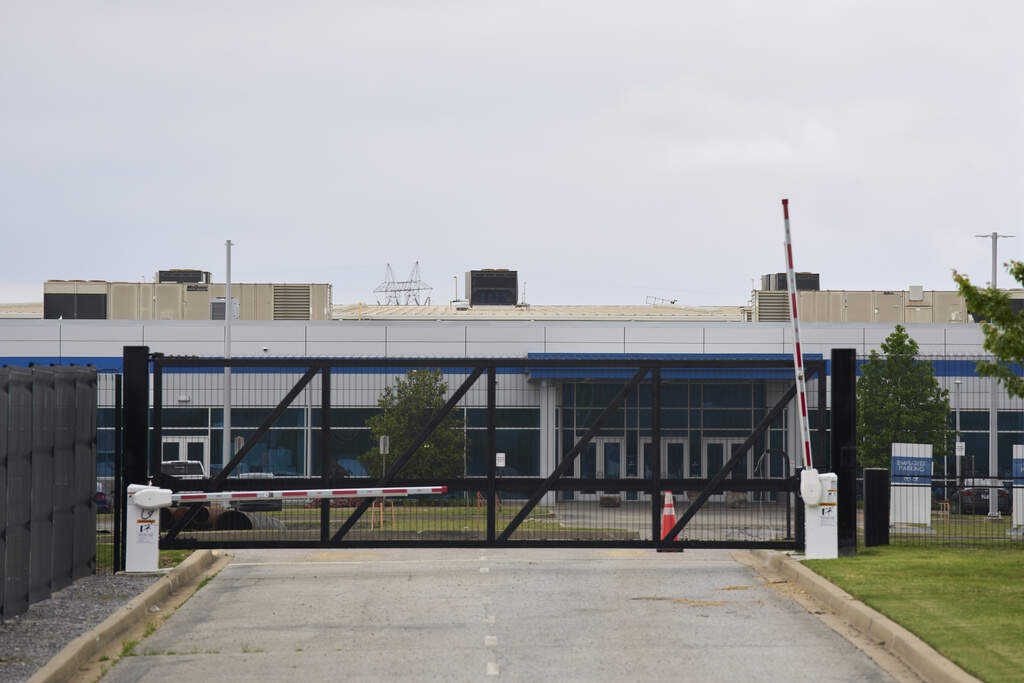
Elon Musk says xAI has one of the most powerful supercomputers in the world. It’s located in Memphis, Tennessee and it’s called Colossus. But neighborhood residents say Colossus belches colossal pollution.
Guests
KeShaun Pearson, executive director of Memphis Community Against Pollution.
Sam Hardiman, enterprise reporter at The Daily Memphian, where he focuses on xAI, energy needs and how local governments spend money.
Vijay Gadepally, senior scientist at MIT Lincoln Laboratory. Chief technology officer of Radium, a cloud computing company. Co-founder of Bay Compute, a company primarily focused on data center energy reduction.
Transcript
Part I
MEGHNA CHAKRABARTI: Elon Musk says he’s built the world’s largest AI supercomputer facility.
ELON MUSK: I think we have the most powerful training cluster in the world right now, which is over 200,000 GPUs training coherently.
The facility is called Colossus. It started operating roughly a year ago…and powers Musk’s company xAI and its chatbot, Grok. It’s located in Memphis, Tennessee.
APRIL THOMPSON: A breaking news update on a major announcement earlier today as xAI announces it will make the Bluff City home with the world's largest supercomputer.
ALEX COLEMAN: The company owned by Elon Musk will be the largest capital investment by a new-to-market company in the city's history.
SHAY ARTHUR: This is a multi-billion dollar investment.
JOE BIRCH: Bringing jobs and major money to our Bluff City.
TARVARIOUS HAYWOOD: And will be located in the old Electrolux building.
SHAY ARTHUR: In southwest Memphis. That facility closed in 2022. And city and county leaders hope this investment inspires other businesses to invest here, too.
TED TOWNSEND: If you take the two largest supercomputers in the world and you combine them and you multiply that by four, that's what we're building here. The computational power necessary to place humans on the surface of Mars. That is going to happen here in Memphis.
CHAKRABARTI: That last voice you heard was Ted Townsend, president and CEO of the Greater Memphis Chamber of Commerce. Memphis Mayor Paul Young agrees that xAI’s Colossus brings significant opportunity to Memphis.
MAYOR PAUL YOUNG: We're looking at a project that was in a vacant building, that sat vacant for many years after Electrolux left in an industrial area that's two and a half miles from any home.
And it’s in a community where 75 of the properties on the list for condemnation are located in that community, the second highest in our city. One grocery store. So there are some conditions in that community that require investment.
CHAKRABARTI: But other Memphis residents say Colossus is appropriately named … because of the massive amounts of pollution they say its spewing into their neighborhood.
KeShaun Pearson joins us now. He’s co-founder and executive director of the organization Memphis Community Against Pollution.
KeShaun, welcome to On Point.
KeSHAUN PEARSON: Thank you for having me, Meghna.
CHAKRABARTI: Can you first start by describing the neighborhoods that are near and around the Colossus facility? Because we heard the mayor there saying it's 2.5 miles from any home, and the community that's nearest is pretty rundown.
Is that how you see it?
PEARSON: No, I vehemently disagree with that description of where I live, where my family lives. Boxtown in and of itself was built by freed slaves using the box car pieces that were left over, and this community has been resilient since then. And before and has continued to have to fight, to build a community while not being given things like clean water or for sewage or city lights.
Once they were annexed, they had to actually sue the city for these things, right? And so history of disinvestment is the reason why. And I think it's a cruel description to elevate the ills that a place is suffering, that they've been fighting to have rectified in a moment like this.
And it's inaccurate to say that the closest home is two miles away because truthfully it is a little bit over a mile, but it is not two miles away. And as it pertains to air pollution, the air travels, right? And this pollution, the tons of formaldehyde and tons of nitrogen oxide as being spewed into the air, is reaching far beyond two miles.
And so while we are being impacted in Boxtown and Westwood, first and worse, with the concentration of these chemicals, it is affecting our entire city and our region.
CHAKRABARTI: I'd like to hear a little bit more about that history that you talked about with South, this is Southwest Memphis, right?
PEARSON: Yes.
CHAKRABARTI: Boxtown and Westwood, yes. Majority Black, as you said, deep history the Electrolux facility that used to be where Colossus is now. Is there also a history of environmental pollution there, KeShaun?
PEARSON: Yeah. Honestly, it is a history of environmental exploitation. It is a history of allowing corporations to come into our community without our consent, without our engagement, and then doing everything in your power to provide them tax breaks, to provide them the opportunity to continue to use us.
Electrolux signed deals that demanded that they create jobs, they have a certain financial and economic impact, and they didn't. They got tax breaks and then they left. We know this scam. We've seen it before, and the irony isn't lost on us, that it's in the same building. It's the exact same building and it's the exact same story. And, you know, the name attached to the organization and the business. It doesn't fool us. We know exploitation because in this same exact area, there are 17 toxic release facilities. Over 90% of the particular matter in the air in all of our county is in southwest Memphis.
CHAKRABARTI: Oh, wow. Oh wow. Okay.
PEARSON: And guess where there isn't a air monitor for pollution?
CHAKRABARTI: In Southwest Memphis.
PEARSON: Exactly. These are intentional decisions that we suffer the consequences of. And Elon Musk and xAI are just the most recent and most egregious examples.
These are intentional decisions that we suffer the consequences of. And Elon Musk and xAI are just the most recent and most egregious examples.
KeShaun Pearson
CHAKRABARTI: Can you tell me a little bit more about again, the health impacts on residents in Westwood and Boxtown that have already been going on even before, Colossus came in.
PEARSON: Yeah. The real history starts like I said, with the freedmen community creating their own community, but they were approximate to railroad ways.
And then the Tennessee Valley Authority established a coal plant right next door. And so from the coal plant they recruited oil refinery and they recruited sterilization services of Tennessee that was emitting. Ethylene oxide into the atmosphere for almost 50 years. Ethylene oxide by the EPA had been categorized as a carcinogen, so we know it causes cancer, and it was allowed to be put in this cesspool, this toxic soup of chemicals in our air.
Next door to us and our community. And so this majority Black community has been suffering that environmental burden from these environmentally racist projects for decades. And here, the cancer rate we have is four times the national average. Our children are in the hospital because of asthma related or respiratory related issues more often than anybody else in our state.
This majority Black community has been suffering that environmental burden from these environmentally racist projects for decades.
KeShaun Pearson
And Shelby County is the highest right for those issues. And 38109, which is Southwest Memphis, is where most of those kids come from. And it's not just asthma emergencies; we are talking about deaths. Our children are dying; our elders are dying.
This is equivalent, and I've said it before about different organizations, but this is a slow lynching of a community that has been fighting to survive on its own. Stand on its own. And these intentional decisions that degradate our environment and decimate our lives are irresponsible, to say the least. But truthfully, it's just cruel. When I had to bury both of my grandmothers in their early sixties.
When folks 10 miles away, seven miles away, live 10 to 15 years longer. That's ridiculous.
When I had to bury both of my grandmothers in their early sixties, when folks 10 miles away, seven miles away, live 10 to 15 years longer. That's ridiculous.
KeShaun Pearson
CHAKRABARTI: KeShaun, you're not the only member of the community there in Westwood and Boxtown, Southwest Memphis, that have been speaking up about this latest chapter in the long story as you're telling of environmental pollution there.
And, just to be clear, the issue with the Colossus facility for xAI is that it's powered by a bunch of methane gas turbines. So let's listen to some of the other members of the community who've spoken out. This is Memphis Resident and activist Oceana, who spoke about the air pollution she's experiencing from those gas turbines, and she spoke at the Shelby County Health Department hearing in April.
OCEANA: We deserve better. It stinks so bad, y'all that it wakes me up out of my sleep. 38109 is not the trashcan of Shelby County. We are not! Stop dumping your pollution here!
CHAKRABARTI: And this is another resident, a resident named Earl, who spoke at that same department hearing in April. Earl says he grew up in Memphis' Boxtown, neighborhood, and that the air has always been bad.
EARL: I have a family history that died from cancer. My mother, my brother, two of my sisters died from cancer. In this 38109 zip code. This is a bad area for breathing air.
CHAKRABARTI: Earl there saying his father, his mother, his brother, two of his sisters all died from cancer growing up in Boxtown. And here's one more. This is Stephanie. She was talking again about those methane gas turbines at that same hearing in April.
STEPHANIE: People in Shelby County are breathing in more polluted air than anywhere else in Tennessee.
The state of the air report was released, and according to the American Lung Association, Shelby County received an F for high ozone gas. We don't need gas turbines ... to put our air quality more at risk. The health department should be safeguarding our neighborhoods!
CHAKRABARTI: So that's Memphis resident Stephanie there saying that the American Lung Association gave Shelby County an F for high ozone gas measurements in the air there. KeShaun, we only have about 30 seconds before our first break. Those are a couple of very persuasive voices. And you as well. How united is the community in their opposition to the Colossus facility?
We continue to see what the outcomes of this chronic health stress does.
KeShaun Pearson
PEARSON: The community is extremely united about breathing cleaner air. We are continuously building a coalition for clean air because we continue to see what the outcomes of this chronic health stress does and what that cost is.
Part II
KeShaun Pearson joins us. He's executive director of Memphis Community Against Pollution. Let's listen to a little about of what the mayor of Memphis, Paul Young, said back in June of 2025 announcing a community benefit ordinance that he says would invest 25% of xAI's property tax revenue, or the revenue generated by xAI's property holdings into nearby communities.
And here's young on Memphis TV station, WREG.
PAUL YOUNG: We can do both things. We can make sure that we are protecting our people, we're protecting the environment, and that we're bringing historic investment to our neighborhoods and communities.
CHAKRABARTI: By the way, Memphis Mayor Paul Young's office did not respond to our request for an interview.
We also, of course, reached out to xAI, requested interviews from Elon Musk or anyone from xAI who could join us. They did not respond either. So I'd like to bring Sam Hardiman into the conversation. He's an enterprise reporter for the Daily Memphian, where he focuses on xAI energy needs and how local governments are spending money in Memphis.
Sam, welcome to On Point.
SAM HARDIMAN: Hi, Meghna.
CHAKRABARTI: So first of all, you heard how KeShaun described of Westwood in Boxtown, these historic neighborhoods in Southwest Memphis. Tell us why Musk and xAI chose that location for the Colossus facility.
HARDIMAN: Yeah, Musk in comments, I think in, I think what are X Live, I think Grok reveals has made it pretty clear that xAI was casting about for a site. In terms of speed, everything about the AI race in this country right now is speed. They didn't have time or felt they didn't have time to build a new building. And so the Electrolux plant, because Electrolux left, as KeShaun pointed out, was available and the greater Memphis chamber and local site selectors had been marketing this site for a long time.
Everything about the AI race in this country right now is speed.
Sam Hardiman
And so this ready-made oven, former oven factory, as Musk said, was a perfect option.
CHAKRABARTI: So it's already there, essentially, but they had to get, I presume, get permits for building it up to whatever the supercomputing facility needed or needs. Regarding those 30 plus temporary methane gas turbines, did they receive permits to install those?
HARDIMAN: They never received an air emissions permit for those methane gas turbines and so this has been really the big point of contention about those turbines long term, is the Shelby County Health Department said very little about why these turbines were allowed to exist without an air emissions permit throughout the first year of their operation.
Since then, xAI has now received an air emissions permit for the existing natural gas turbines. That are still on the site today, but essentially xAI operated under what they argue, and others argue, is a loophole in national pollution standards. That because they were temporary, because these things were mounted on trailers, that they were a temporary source of pollution.
And KeShaun, the Southern Environmental Law Center, the NAACP would argue just because you're on a trailer, doesn't mean you're a temporary source of pollution and you should have an air emissions permit. This persisted throughout the past year and now is almost moot.
But it definitely, the company operating with this speed and without these air emissions permits, which would've required a long and lengthy public process, just emphasizes again, how quickly they were trying to move. The reason they needed these turbines in the first place is the Memphis Light, Gas and Water, which is local utility, doesn't generate any electricity, receives all this power from the Tennessee Valley Authority, a federal agency that's essentially the power provider for all of Tennessee, parts of six other states.
Okay. There wasn't enough room or infrastructure really on the grid to get xAI on the grid quickly. They have a small amount of power coming from Memphis Light, Gas and Water at this point and TVA, probably about 200 megawatts. And when they first started up, it was less than, it was about 50.
Okay. And I think they had contracts up to 60 megawatts, but they needed a lot more power because supercomputers, Grok, AI in general, ChatGPT, Grok, whatever AI you're using, needs a ton of power. So that's why these turbines were so essential for them, and without it, they wouldn't have been able to scale this property so quickly.
CHAKRABARTI: Okay. KeShaun, I've gotta go back to you on this. As you heard Sam describe the logic from the health department, saying these were temporary, they could be moved away. So even though they weren't permitted for that first year, the turbines it's like a moot point now. What's your response to that?
PEARSON: So I think it's about the precedent, honestly. And the statute that they are referring to, the non-road exemption. It applies for specific devices of a certain size. And what we know is these devices are outside that size, and based on the specs from the companies that provide them and the aerial shots that we were able to capture.
So the non-road exemption doesn't apply, but even more, it is the precedent that folks can't come into your community and build a power plant without a permit. Without public engagement, meaningful public engagement of any sort. And it is still very contentious. And the NAACP, alongside our coalition partners, Young, Gifted & Green, and our community members in Westwood, in Boxtown, actually have filed an appeal for that permit.
And from our understanding that permit doesn't stand.
CHAKRABARTI: So I'm seeing here that the University of Tennessee in Knoxville did at least some of some analysis of the air quality in South Memphis over the last couple of years.
They used actually satellite data to help do this, and they found that average concentrations of nitrogen dioxide increased by 3% when comparing the sort of pre xAI Colossus period, and now peak nitrogen dioxide concentration levels increased by almost 80% in the areas immediately surrounding the data center and almost by 10% in nearby Boxtown, KeShaun.
This is a question that has maybe an obvious answer, but can you imagine that trailers with 30 plus methane gas turbines would be brought into any other neighborhood in Memphis, parked there for a year, allowed to emit their air pollutants, and the health department would be, would say, they're just temporary. No problem.
PEARSON: No, this would not happen in a wealthy white neighborhood. This neighborhood, Southwest Memphis, has been treated as a sacrifice zone where folks lives don't matter as much as the people seven miles away in Cordova or Lakeland.
Listen around the country, these, even in rural areas, these facilities are popping up in poor communities where they feel like there is a huge amount of political abdication, right? Where there is a lot of disinvestment, and that's where they're placing these facilities. None of these are in wealthy white neighborhoods.
And there's a reason for that. We are being targeted.
CHAKRABARTI: I'm sorry. Did not mean to interrupt you, KeShaun. Finish your sentence. Go ahead.
PEARSON: ... I was just saying, we are being targeted for these environmentally racist projects. It is no real reason that 75% of Black and indigenous and Native folks are breathing the worst air in the country.
We are being targeted for these environmentally racist projects.
KeShaun Pearson
This is a continued exploitation.
CHAKRABARTI: Yeah. Let's listen to a little bit more from Memphis Mayor Paul Young. He obviously supports the Colossus facility, and he told WREG again back in just June of this summer, that his understanding is that the company's permanent natural gas turbines, not speaking about the temporary ones now, but the permanent ones, will have lower emissions.
YOUNG: We're certainly concerned about the environmental challenges that the community experiences. We know that the turbines that will be the permanent turbines will have what they call selective catalytic reduction technology. And those are big words to say that it minimizes the emissions.
CHAKRABARTI: Sam Hardiman, is that what you were talking about when you were saying that the issue with the temporary turbines is moot now?
HARDIMAN: Yeah. To an extent, yes. The idea of this is that these permanent turbines, which are, there are less of, are supposed to under the conditions of their air permit, xAI. xAI is gonna be self-reporting these things. It's supposed to have lower emissions, and it's supposed to have less nitrogen dioxides in the air.
Absolutely. That doesn't change. As you mentioned, Meghna, what UT Knoxville was able to estimate with its analysis, which is essentially xAI took was already in a very polluted place and it added more pollution to that pollution pot. Absolutely.
CHAKRABARTI: So I presume that xAI offered the city of Memphis, some sort of benefit, jobs.
You heard about some of the property tax revenue maybe being sent directly into nearby communities. What does the city of Memphis say that it stands to gain from having this massive facility in Southwest Memphis?
HARDIMAN: There are two arguments that are made. I think the first is the Chamber of Commerce argument, which is the economic impact of this.
The amount of jobs that either short term through construction or maybe potentially long-term jobs in the hundreds, at these data centers. Which is not nothing, Memphis has a lot of jobs already. It has a lot of working-class manufacturing, warehousing jobs.
These maybe profile as higher paying jobs, but the real benefit to a city that has had a real stagnant tax base over the past 20 years is the property tax revenue. xAI, unlike many of the other polluters around them, and heavy in industry around them, is not receiving a property tax break. They're paying full freight in property taxes.
Their property tax bill at Memphis for the city of Memphis this year is $12.5 million. Their property tax bill for Shelby County, which is a separate taxing entity, is also $12.5 million, and that's really the value of the NVIDIA microchips that are inside this facility.
And they'll depreciate over time. Because these things burn out pretty quick. But that's the benefit. And keep in mind, again, this is a city that has not seen real population growth at all. It's seen population decline. You could, some measurements are a third of the land in the city, which is a 300 square mile place is blighted and so is really not generating any revenue. And so that's the argument that is made for the benefit of xAI.
CHAKRABARTI: Okay. So KeShaun, again noting what the mayor said in that clip we played a little bit earlier, that Memphis would invest 25% of the property tax revenue generated by the Colossus facility, that 25% would go into nearby communities.
Have you seen any evidence that's happening?
PEARSON: So once I think we have to get a little bit of clarity around a couple things. The jobs that xAI claims to actually produce, like that's a myth the construction workers that they have hired, the majority of those folks have been brought here from Texas, right?
The long-term jobs for people who live in Memphis are janitorial or security jobs. That's facts. These are facts. And so that tax revenue that we're going to get is based off of only a portion of the assets that they actually hold. So they were supposed to be taxed on about $12 billion in assets, they're only being taxed on $2 billion.
And so when I think about tax incentives, that's incentive enough, right? To avoid having to pay on $10 billion worth of assets. So just wanted to put that out there.
CHAKRABARTI: Can you tell me why that's happening, KeShaun? Because that's a dramatic reduction in the possible revenue for the city.
PEARSON: It is a very dramatic reduction, but it is what the Shelby County Assessor's office provided to xAI doing business as CTC as for how to lower their assets that were going to be taking into account.
And so this is information that our government gave them on how to reduce other taxable assets.
CHAKRABARTI: KeShaun, hang on for a second. I'm gonna come back to you but Sam, can you, do you have any more information on that?
HARDIMAN: Yeah, actually the reason the public knows about this is we, the Daily Memphian, reported it, personnel with the Shelby County Assessor's office explained to us, because for a long time I was essentially after them show me the personal property tax schedule for xAI, because this is, as KeShaun said, $12 billion worth of investment.
Any way you ask Grok or ChatGPT how much any of these Nvidia chips that are inside cost, it's gonna come up with in the servers that they're inside. It's gonna come up with an estimate well north of $10 billion, even maybe as high as $16 billion.
And essentially what personnel at the Shelby County Assessor's office told the Daily Memphian is they informed xAI during the process of this, that if the microchips were, the semiconductors were not on site and they came in as used, as if they had been previously been used, they would only be taxed on about $2.5, $3 billion worth of personal property. And so that effectively lowered the tax bill quite a bit.
And while I will say that's absolutely right, what KeShaun is saying, over time, presumably some of these microchips in year two, year three are not going to be, quote, used. And there's going to be more microchips and more microchips at Colossus 2 that should be bringing in property tax revenue.
But absolutely xAI, there was potential for xAI to pay even more than the $25 million in combined property taxes that they're paying right now.
CHAKRABARTI: KeShaun, we've got to let you go in just a couple of minutes here. And I just wonder what do. The residents in Westwood and Boxtown want to have happen now because it doesn't seem as if Colossus is leaving.
It's there, there's permanent turbines operating in the facility now. What do you want and need?
PEARSON: Yeah, we need meaningful dialogue that allows the community to craft what that looks like. One person doesn't have the answers, right? But the community, their collective voice, their collective needs have to be met.
We see the challenges economically. We see the challenges with our health. And so there has to be a meaningful conversation that addresses what the community is dealing with. And the solutions are with the community. They are most proximate. And so without the perspective of the community, every solution is going to fall short.
And Mayor Paul Young did a disservice with this community benefits ordinance, without including the community. And we recently had to file for an amendment in order to get the community to help as a part of a community advisory board, right? Community shouldn't be fighting to make decisions about what happens to them.
They should be included. And that has to change, and that has to be the way we move forward. That's what we want.
Part III
CHAKRABARTI: Sam, I do want to zoom out here for a second and talk about the nation as a whole. But before that you had mentioned another facility, Colossus 2.
Tell us what that is and you said that's going to get its power from a different source. I didn't actually catch all that so can you repeat that?
HARDIMAN: Yeah, absolutely. So what's happened is there's also Colossus 2 in Memphis, and that's about eight, eight and a half miles away as the crow flies from Colossus 1.
It's in a majority Black community in Memphis known as Whitehaven. It's actually not very too far from Graceland where Elvis lived. And xAI this February closed on a property in Whitehaven, which is a few hundred yards from the Mississippi border, and it's an even bigger former warehouse.
This was a spec warehouse that never actually became a distribution center, which is what we have a lot of here in Memphis, Tennessee. And so again, it was an existing building, an opportunity for xAI, didn't have to build a building. This is going to have even more microchips in it and more Nvidia chips, more computing power.
Musk has been tweeting quite a bit about this property recently, but also the really interesting power situation here is. Both Colossus 1 and 2 have Tesla mega packs on site, massive batteries that store energy. That connect with these turbines. Those mega packs are on the Tennessee side of the border.
In terms of Colossus 2, they're situated all around this facility. I've watched them be trucked into the site multiple times. The interesting thing is the natural gas turbines that it's gonna rely on are not in Memphis, Tennessee. They're in Southhaven, Mississippi. Which is just a couple hundred yards away in this case.
And in the case of where these turbines actually are, about a mile away. And what xAI has done through the easements, which we can see in property records, et cetera ... and plans that they've submitted to the Mississippi Department of Environmental Quality, which because you cross the state border, you have a different environmental regulator here.
xAI is essentially planning what could be about a gigawatt worth of a permanent, natural gas plant. Essentially. It's going to have a lot of natural gas turbines, a plant is a loose term here. It's like a science experiment plant. That's what I call my way.
But they're also going to rely on a lot of the same temporary natural gas turbines. Okay. And they have received essentially the same okay from the Mississippi Department of Environmental Quality that they received from the Shelby County Health Department in Tennessee.
And through public records request, through Mississippi Public Records Request Act at the Daily Memphian received a letter that MDEQ, Mississippi Department of Environmental Quality wrote to Brent Mayo of xAI that essentially said, yes, we're going to allow this non road exemption for you.
For these temporary turbines, they're not going to be required to have an air emissions permit. However, please, if you can, and he was imploring them in this letter, and you can read it on our website. Because we uploaded all these documents there. Please use as much emissions controlled technologies as you can to essentially help protect the air quality around this area.
And this is a much more populated area. In Southhaven, Mississippi, and Whitehaven, Memphis, Tennessee, which are right next to each other in really interconnected communities than we're talking about in Boxtown, Westwood. So more people are going to feel the effects of xAI powering this facility, Colossus 2.
CHAKRABARTI: Okay. The lengths that AI companies are going to stand up these facilities as fast as possible seem amazing because, check me on this, Sam. Because I'm also reading that there was word that on the Mississippi side, someone had said that xAI bought a power plant from overseas and were bringing it to Mississippi.
Is that right at all?
HARDIMAN: Yeah, so I want to kind of fact check that a little bit. Brent Mayo in comments to a bunch of media, not just me. I believe it was in late July, maybe early August, said he knew nothing about a natural gas plant coming from overseas and being reassembled. The plans that we've seen, which are air modeling, which is this is stuff for the permanent natural gas facility there in South Haven, which is a former Duke Energy plant, by the way, that they just bought. It was vacant, and now they're moving natural gas machinery back onto it.
Those plants essentially showed dozens of turbines. Okay. And I don't know exactly where those have been shipped from. Some may have come from overseas, but the idea that like, this has been a plant that existed and then reassembled, that's not really true. What we're talking about is really a natural gas plant being built with natural gas turbines.
It's not necessarily being shipped from overseas. And I think Musk tweeted true to a tweet that included claims about that and many other things. And that's where most people are getting that. Brent Mayo of xAI has said to all local reporters here, he knows nothing about a natural gas plant from overseas.
CHAKRABARTI: Okay. But that doesn't negate everything else that you said about the power demands and pollution generation that's happening at Colossus 2. Okay. Sam, hang on here for. Second, because now as promised, there's a lot of lessons for the rest of the country to learn from what's happening in Memphis and to talk about that.
We're joined now by Vijay Gadepally and Vijay is a senior scientist at the Lincoln Laboratory at MIT, and also Chief Technology Officer at Radium, that's a cloud computing company and co-founder of Bay Compute, a company that's focused on data center energy reduction. So Vijay, welcome to On Point.
VIJAY GADEPALLY: Thanks for having me on.
CHAKRABARTI: Okay. So first and foremost, tell me a little bit more about in how many places in the country, how rapidly these supercomputing facilities are going up. How indicative of what's happening in Memphis, how indicative is it of what could happen in other communities?
GADEPALLY: This is really happening across the country.
We're tracking over 5,400 data centers in this past year, and that's more than doubled the count in 2018. And it looks like this trend is going to continue as we see lots of new projects coming up. I'll add that one of the challenges that we have is getting an accurate number. Because there's not a lot of transparency in how these developments are coming up.
They're not publicly disclosed necessarily, and we're often inferring this information by even things like satellite imagery or air quality permits, which is obviously far from ideal in getting an accurate count.
CHAKRABARTI: Okay. But even in this best estimate possible right now, 5,400 is a huge number. And as you heard Sam say earlier, one of the goals is to stand up these facilities as fast as possible.
Given that, is there any way to build one of these AI data centers at speed with the sort of extant power availability and grid that surrounds these sites.
GADEPALLY: That's going to be a huge challenge, is data centers have become major consumers of electricity. In 2023, data centers consumed something like 180 terawatt hours of energy, and that was about 4.5% of total U.S. power and the estimates are over the next few years, for that to double or possibly even triple.
And so it's certainly a challenge of whether the grid can keep up with the rapid pace at which these projects are coming up and the demands that are being driven by these projects.
CHAKRABARTI: Do you know what's so ironic to me?
We did a show several months ago about clean energy, specifically, things like wind. And that right now in this country, there's a major bottleneck that's being caused by transmission infrastructure not being sufficient to actually pull power that's being generated by wind turbine into the grid.
And so do we have a larger problem here that's just being further exacerbated by these rapid and intense power demands that the AI facilities are adding onto the grid?
GADEPALLY: Absolutely. I think one of the challenges is, say, bringing a new project onto the grid.
There's often a pretty long time span that it takes. And you look at a project like Colossus 1, that was brought up in months, and those two things don't necessarily align with each other. So there are certainly pockets across the country where there is power available. But that doesn't necessarily line up with either one, where the data center wants to be.
Or two, the speed at which we want to bring the data center up. These interconnections can often take years for them to occur. And so that's why we're seeing a lot more of these especially larger projects like the one here in Memphis in Louisiana and Abilene, Texas, that are relying largely on what we call behind the meter energy generation.
And so what that really is bringing on energy generation that's private or for that data center development, and that gives a lot of advantages. One of the largest being speed to power, I think, as Sam mentioned earlier, which is critical for bringing these systems online.
CHAKRABARTI: Yeah. Sam, let me go turn back to you.
Okay. So we talked about speed, we talked about the energy intensity of the demands of Colossus and Colossus 2. I'd like to hear you more from you on just the permitting process. Because I wanna go back to that. Because maybe a lot of the issues, perhaps all of the issues that the residents of Westwood and Boxtown are currently dealing with would have been sort of alleviated if clean air and the requisite permits to achieve that clean air were demanded by the city of Memphis from the beginning.
HARDIMAN: Yeah. I wanna be clear here. The city of Memphis certainly had a bully pulpit in this situation. Mayor Paul Young certainly had influence in that way, but he doesn't control the Shelby County Health Department, that's a separate governmental entity.
Which is the environmental regulator here. And yeah, I think the key fact in terms of the pollution that Memphis in Shelby County and now DeSoto County and Mississippi are facing, is regulators have said this is okay. And you heard KeShaun talk about the precedent that's been set. Because now the real question is if you're another hyperscaler, right?
And you see what's happened with xAI and Memphis and in Mississippi. Why aren't you using these same turbines without an air emissions permit for up to 364 days? If they can do it, why can't I do it? And so that's the real precedent. And it really is an interesting question. Because for months, the Shelby County Health Department dealing with these original unpermitted turbines really said very little.
When I filed a records request for their communications with the greater Memphis Chamber and xAI, it took seven months to come back. So I filed this, I think in mid July of last year, maybe late July. And I got it in late January of this year. Okay. And when I got it back it essentially was, it was a joke of a FOIA request.
Essentially. There was giant swaths of it blacked out for attorney-client privilege. So we really had no idea how this had been signed off on.
And so finally when xAI received its full permit, its air emissions permit permanently, then the health department weighed in the comments back to people making public comment on this thing.
So this is why we allowed the non-road exemption for the temporary turbines. Okay? And so it took a really long time for the health department to even explain itself as to why these turbines were permitted. And yeah, I think tougher regulation, but to me it's a really interesting question of legally, somehow regulators have gotten here where they have to allow these turbines.
And that's a really interesting question. And what does it mean for the rest of the country? Because we've seen it happen in two states, Tennessee and Mississippi now.
CHAKRABARTI: Yeah. Vijay, let me ask you, why not just slow down? I know this seems insane to ask these AI companies, but why not just slow down?
Why try to stand up a super computing facility like Colossus in such a short period of time? Beause if they did slow down, perhaps alternative solutions could come up that would mitigate the concerns of the communities that all of these facilities are going up in.
GADEPALLY: Yeah, I like to think of this as almost an arms race that's occurring between different companies to build bigger, better, faster models. And one thing that I want to make sure that we mention is, while you see a lot of news about projects like that in Richland, Parish, Louisiana, or Memphis, Tennessee, these data centers are largely there to power AI training.
I like to think of this as almost an arms race that's occurring between different companies to build bigger, better, faster models.
Vijay Gadepally
These are training models like GPT or Grok, or Llama, depending on which company. But it's important to distinguish that there is multiple phases to an AI model. And actually a vast majority of the power energy is actually going towards making the model available for people, right? So that's called AI inference.
And if you actually look at the lifecycle of certain models, especially the energy costs. 70% of that energy cost is actually on the inference side. So yes, the training is obviously using a lot of energy, has a lot of impact. They have these huge facilities. But those tend to be used for a shorter amount of time and tend to be relatively fixed.
It's the inference, which is growing, and it's difficult these days to not use AI in something you're doing. Call transcripts, call recordings, your search results. Everything is AI. And so it's not just that companies can stop, but it's consumers were also using this far more than we used to before.
CHAKRABARTI: Yeah. But then there's also the issue of electricity costs are going up for everybody. There's a lot of an analyst who said that the utilities now are having to build billions of dollars of infrastructure to support the additional power demands of AI facilities. Also, energy markets are trying to adjust where utility or they're adjusting to where and how utilities are buying their power.
All this is leading to more expensive power for rate payers everywhere. It seems like an old story to me, Vijay, of the public's either directly or indirectly subsidizing a small number of very rich companies, essentially. Can't we come up with a way for more of the benefit beyond, like you can just ask ChatGPT a question for more of the benefit to come back to the very communities where these changes are happening.
GADEPALLY: Yeah, and I think that's the reason that we're seeing more of these natural gas generators. So people are trying to say, skip the line to get power, and that's to do the behind the meter. And unfortunately, those tend to be very fossil fuel based. And so you see a lot of these downstream effects because of that.
One interesting thing, and this is something that we've spent a lot of energy, both as a researcher and now as a company focusing on, is that a lot of the energy is not being utilized efficiently, and there's some huge opportunities to improve with what we already have and just use it far more efficiently.
The first draft of this transcript was created by Descript, an AI transcription tool. An On Point producer then thoroughly reviewed, corrected, and reformatted the transcript before publication. The use of this AI tool creates the capacity to provide these transcripts.
This program aired on September 24, 2025.