Support WBUR
Are robo-referees making sports more fair or less fun?
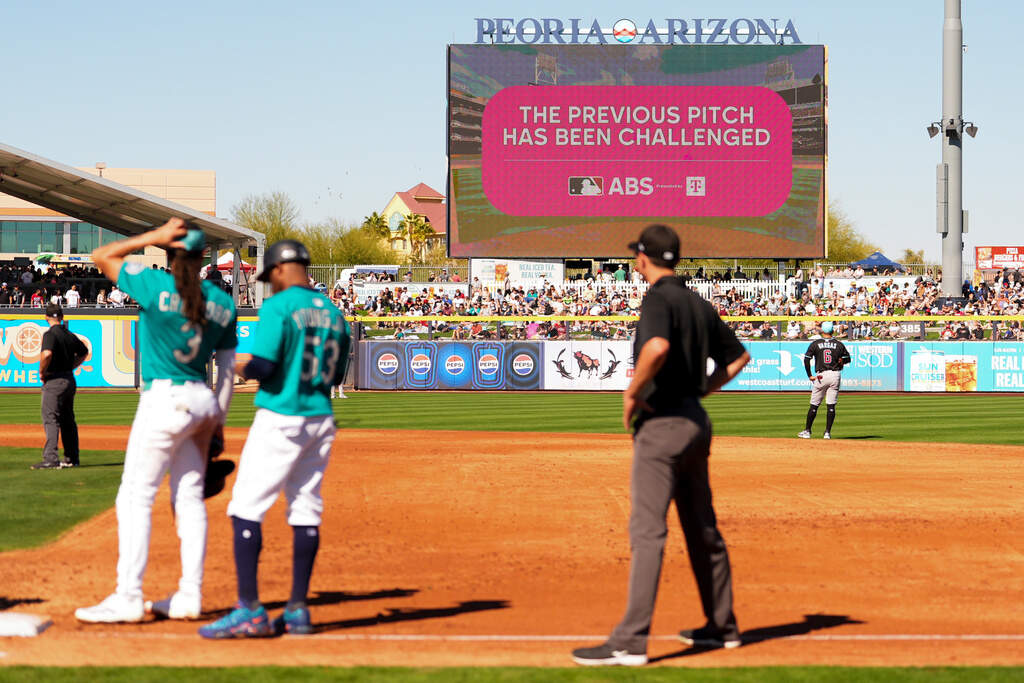
Major League Baseball will add an automated ball-strike system next season. How human judgement is giving way to technology across the sports world, and what that means for players, umpires and fans.
Guests
Joe Lemire, senior writer at Sports Business Journal who covers the intersection of sports and technology.
Pauline Eyre, a line judge for 20 years at Wimbledon and other tennis tournaments around the world. Now a stand-up comedian.
The version of our broadcast available at the top of this page and via podcast apps is a condensed version of the full show. You can listen to the full, unedited broadcast here:
Transcript
Part I
MEGHNA CHAKRABARTI:
Every baseball fan has been there before. It’s a pivotal moment in the game. The score is deadlocked. Maybe your favorite player is at the plate, or your favorite pitcher is on the mound. What happens at bat could determine the outcome of the game. There’s the windup, and the pitch and:
GAME 1: And Ward takes strike three on a pitch that looked low. That's not even close to a strike. That's not even close to a strike. Not even close.
GAME 2: Oh, a center cut right down the middle. You call that a ball? You can’t miss that one.
GAME 3: Can't miss calls like that. I mean, that's not even close. Oh boy, that's bad. That’ the difference in the game right now.
CHAKRABARTI: That’s from a YouTube compilation of umpires – and in these specific cases — blatantly missing the call.
Accurately calling balls and strikes every single time is hard. Just think about it — tracking a small red and white ball that can be going at 90 miles per hour — moving from the pitcher's hand to the plate often in less than half a second.
And by the way, that strike zone that determines whether a pitch is a ball or strike, well that can change significantly depending on the size of the person at bat.
So, it’s pretty impressive that more than 90 percent of the time, umps get it right. But 10, 15 pitches a game? They get it wrong.
Some baseball lovers believe that the sport is perfect because of its imperfection. It is a test of the limits of human reaction time – for batters, no other sport in the world would have such a low bar for success.
Think about it – the Yankee’s Aaron Judge had the best batting average of the regular season this year. 0.331.
Meaning, he was the best hitter in baseball, and he was successful barely one third of the time.
So perhaps we might give equivalent grace to umpires. Let’s say there are, roughly, an average of 290 pitches per game. And if an umpire gives a bad call for 15 of them, his success rate is 95.8%. Literally three times better than Aaron Judge.
Still. For a long time now, folks have been asking, is there a way to make the act of calling balls and strikes even more accurate?
ERIC BYRNES: I’m not trying to get rid of umpires' jobs, Ken. Actually, I want to add a job to umpires. I’ll put another guy sitting there with the full cresthead pitch FX system right there with a computer. Are you following me? With the computer. Calling balls and strikes from a booth from behind. You still have a homeplate umpire there doing everything else. All the other responsibilities. But you know what? Balls and strikes will be called based on, it is right here.
CHAKRABARTI: That’s Eric Byrnes, a former Major League Baseball outfielder and MLB Network analyst, in 2015. Back then, there were already systems on television using high-definition cameras and tracking how good umpires were, but it wasn’t clear if balls and strikes really could be automated. Still, Byrnes argued, there has to be a better way than relying on human error.
BYRNES: I don’t know why for years. We put a man on the moon, 46 years ago today. It says right here in this packet. 1969. We’ve had this technology, yet we sit here and routinely night in and night out we’re getting these horrific calls.
CHAKRABARTI: In 2019, baseball did try something new. The minor Atlantic League set up a high-speed camera with radar behind home plate. Gave the umpire an earpiece, and with every pitch, the system relayed a simple “ball” or “strike” call to the ump. The ump still made the gesture to indicate what happened. If you’ve watched baseball, you’ve seen it. That classic, 'Strike!' 'Ball-down low,' or 'you’re out.' But essentially, it was a display of the machine’s decision. The umpire was calling what the automated system told him to.
MLB Commissioner Rob Manfred immediately began praising the technology. He spoke with ESPN in 2019.
MANFRED: The experiment that we’ve run in the Atlantic League has been successful. There’s little quirks around the edges that we have to work our way out, but they are not technology quirks. They are about how you take the technology, give it to the human being and let the human being make a decision.
CHAKRABARTI: At first, the new system had glitches like they all do, but eventually it improved. And expanded across the minor leagues. It became known as the “Automated Ball-Strike" system, or ABS. But colloquially, there’s another term. Robo-umps.
Baseball had already added instant replay for close plays at the plate or odd home run calls. But balls and strikes? That was the most dramatic change America’s pastime has seen in decades. Over the years, ABS evolved trying to find the balance between allowing humans to maintain their role in the game, and getting more calls correct. Here’s a sample of how it works now.
(CROWD) Looks over at first. Payoff pitch. Fastball. Inside ball four. (CROWD)
CHAKRABARTI: Okay. Here’s what happened there. This was a game in minor league baseball’s Triple-A league in 2023. It’s a full count. Two outs. Bases loaded in the fifth inning. It's a big moment. Jacksonville Jumbo Shrimp pitcher Robert Garcia deals to Norfolk Tides hitter Colton Cowser. The ump calls it a ball. Cowser walks. Norfolk gets a run. But to the catcher, that was a good-looking pitch. So, he tapped his helmet.
(CROWD) Bases loaded walk. And it’s 7-4 and Jacksonville will challenge. Here in the fifth inning. They throw it on the video board and it’s a strike! (TALKING)
CHAKRABARTI: The video display flashed a rendering of the pitch using now-improved camera technology. And it showed the ball nicking that rectangular strike zone extending across home plate and from the player’s knees to his chest. The call was reversed in a few seconds, again, relayed through an earpiece to the umpire. So the run was taken off the board. A now relieved pitcher jogged to the dugout.
This system has now been tested in thousands of minor league games. It’s worked so well that this year, Major League Baseball tested robo-umps during spring training and its All-Star Game. Here’s commissioner Rob Manfred in July on the Pat McAfee show.
MANFRED: Technology. Off the charts good. 10 years ago, you know, two inches was the margin of error. Now it’s like a hundredth of an inch.
CHAKRABARTI: And this month, the MLB made a huge announcement: ABS is coming to the big leagues next season. The system will work a bit differently in the majors. Players only get two challenges a game. If they’re right, they don’t lose that challenge. But the fact is, robo-umps are here. And not everyone is happy about it, like Toronto Blue Jays starting pitcher Max Scherzer.
MAX SCHERZER: I think Major League umpires are really good. They’re really good. You know, what are we actually changing here? You know, there’s gonna be strikes that are changed balls and balls that are changed strikes. So we’re gonna basically be even. Are the umpires really that bad? I don’t think so.
CHAKRABARTI: Robo-umps in baseball are new – but different forms of automated referring in sports are not new. How are they changing the game, the experience of sports? Are they making them more accurate and fair? Or diminishing that core thing that’s always made sports always so powerful in our lives – that raw, perfect imperfection of human drama on the field and court.
Joe Lemire is here to help us talk about that today.
He's senior writer with Sports Business Journal. Joe, welcome to On Point.
JOE LEMIRE: Thanks, Meghna, for having me.
CHAKRABARTI: I would love to go back to the beginning of the automated ball and strike system. Why, who came up with the idea to even first try it in the minors?
LEMIRE: It's been a project for a while. Even back to 1997, there was a system that some older baseball fans might remember, called Quest Tech.
And the umpires in Major League baseball have used technology to evaluate the umpires after each game, to help them do better. And the commentary we've heard is true, that the umpires are really good. But as you point out with the math, that even really good, 95% success rate, can mean quite a number of pitches over the course of the game that are called incorrectly.
And Commissioner Manfred's point to me when I spoke to him earlier this year was they wanted a mechanism to overturn the really bad call. They don't need to call everything. But in that Atlantic League trial, the very first public demonstration was at the Atlantic League's All-Star Game, and I had a chance to attend that one, and it was remarkably unremarkable.
The umpire visibly was just calling balls and strikes, and for the most part, every pitch was called the way that people would expect it to. There was admittedly, at least one visibly jarring call, a pitch that seemed low, that was called Strike three. The hitter turned toward the umpire in order to complain, but then the umpire just took a finger and pointed to his earpiece and said, Hey, it wasn't me, it was the robot.
And it just deflated his budding fury. And he just walked away calmly.
CHAKRABARTI: Okay. Wait. Hang on for just a second. So to be clear, for people who don't follow minor league baseball, my understanding was that when the ABS system was being tested there, was it every single call the umpire was relaying what the system told him to say?
LEMIRE: In the earliest tests it was, and when it reached the affiliated minor leagues, which is a sort of a step higher than what that Atlantic League is, Major League Baseball did very rigorous testing. Sometimes within the same league, in the same season, they would try the challenge system. That Major League baseball is going to have where you get a few challenges per game, and they would test every single pitch called.
And routinely, the players and fans who were surveyed about this all said they preferred the challenge system. So that's where we've ended up with today. But they have tested all manner of implementations.
CHAKRABARTI: I got it. Okay, so we've got about 30 seconds before we go into the break, Joe, and I just got to ask you, as a baseball fan, do you love, hate, the new ABS system, where do you fall on that line?
LEMIRE: I love that we have an ability for fans not to feel like they lost a game because of a bad call. I think that's the most succinct way I can put it.
Part II
CHAKRABARTI: We're talking about Major League Baseball's decision to introduce next season an automated balls and strikes system. This is an automated technology that if a batter wants to challenge an umpire's call, they can, and the ABS system will say whether the ball, the pitch was a ball or a strike.
It's a major change in Major League Baseball and MLB Commissioner Rob Manfred joined the Dan Patrick Show last month to talk about it.
ROB MANFRED: The system was designed in order to preserve the management role of the home plate umpire. It's completely invisible to the fan, right? I mean in terms of there's no device or anything on the field that they can see.
And all of the calls, including correcting an erroneous ball strike call, made by a human being.
CHAKRABARTI: Manfred also went on to say why he does not want to see the ABS used on every pitch yet.
MANFRED: I think what made us take the intermediate step is we got a lot of input from players, particularly players who had used it in the minor league, that they preferred the challenge system.
That it preserved a human element in the game. At the major league level, we also got a lot of input about the significance of framing catchers and individual players who had a skillset that could be really impacted by this. We took that input to heart and landed where we did.
I think that we will see after the 26 season whether there's a push to go the whole way.
CHAKRABARTI: All right, so that was MLB Commissioner Rob Manfred, but the love for robo-umps is not universal. Here's New York Yankees manager Aaron Boone. He's been critical of the system. He talked about it on the podcast, Talkin' Yanks in March.
AARON BOONE: I just honestly hated it. ... Inevitably, you're going to have the last play of the game, a big win overturned on a ball, an inch, one way or the other, and it changes. I'm the guy that gets kicked out and argues the strike zone and everything. I really think our umpires are as good as they've ever been. They keep getting better. We just know when they miss by an inch, I'm all over you by when you're missing by an inch. But the reality is they're getting better and better all the time, and I don't think I want it.
CHAKRABARTI: So that's New York Yankees manager, Aaron Boone.
Joe, for a second, let's just pick up on what Boone is saying there. Help me translate it. Was he saying that the use of the ABS system could interrupt the flow of the game? Or sort of introduce a new strategy to baseball? What's the core of his criticism there?
LEMIRE: I believe he's willing to let the human experts do their best, and there is something that could be jarring if the final pitch of a game gets overturned and you might have one team start to celebrate and then they all of a sudden are deflated when they realize that's not actually how the game's going to end.
But we've gotten used to this with instant replay, particularly since baseball has expanded it since 2014. Calls do get overturned. It's something that I feel like most fans, and I would imagine a number of players, have grown accustomed to. The fact that there will be a challenge system does introduce quite a bit of strategy, of when to use the challenges.
And his comment about a frivolous call in the second inning probably won't happen. Because each team only has two challenges to use throughout the game and the reviews thus far, Major League Baseball has told me, only average about 14 seconds. And so it's not a major interruption to the flow of the game, and that's something baseball's very cognizant of after introducing the pitch clock, which has been seen as a major success.
CHAKRABARTI: You can only imagine that this is another, it's gonna be another data set for baseball number crunchers to really pour over, in terms of statistically speaking, when is it best to start deploying those challenges? Who knows? It could bring a brand-new sort of layer to baseball. But before we talk more about the pros and cons, Joe, I would love it if you could as much as possible, walk me through how this thing works.
There's gotta be a camera somewhere or technology. What is the system we're talking about?
LEMIRE: Yeah, absolutely. ABS consists of 12 cameras, high-definition tracking cameras, and they're made by Hawk-Eye. So anyone who follows tennis is familiar with the Hawk-Eye system. It's the same company that, quite frankly, is the provider of most automated officiating systems right now.
And this circle of a dozen cameras aiming at home plate is said to track the ball within about a fifth of an inch. And that decision is made close to automatically, almost instantaneously, I should say. And as it was described earlier in the show, a pitcher, a batter, and a hitter are the only three who are allowed to challenge a call by tapping their head, and they're not allowed to look toward the dugout for any input.
[A] pitcher, a batter, and a hitter are the only three who are allowed to challenge a call by tapping their head, and they're not allowed to look toward the dugout for any input.
Joe Lemire
They want it to be their own experience, their own eyes informing that decision. And then within the 10 to 15 seconds, a rendering will show on the video scoreboard and on the broadcast at home. And one of the magic things that tennis and now baseball have done is it's an animation.
It's not showing the video because video can be challenging. And the reason they use 12 cameras is because it's not always one clear angle that's going to give you the best view. And as Paul Hawkins, the founder of Hawk-Eye told me recently, really, you're just, the computer's just trying to sell the call it's already made. And it actually provides a little bit of an entertainment value as it gets shown up on the board and people are waiting in suspense, will it be overturned or not? That in tennis quite a bit where fans start, clapping in unison, ready for that moment.
There's an element of entertainment to it as well.
CHAKRABARTI: Okay. Again, just so that I understand as clearly as possible, when the challenge is made and if the system actually disagrees with the call that the ump made, is it an automatic decision that the system is the call that they're gonna go with?
Or is there actually some discussion?
LEMIRE: In this case, it's instantaneous. That the machine makes the call.
CHAKRABARTI: Got it. Joe, how do umpires feel about this?
LEMIRE: Yeah, it's a good question. They have not commented a ton publicly, but the collective bargain agreement that the Umpires Union has with Major League Baseball as of about a year ago, it codified the use of ABS.
So they came to an agreement that the umpires were willing to put it in. And I think there's something to be said that as much of scrutiny as umpires go through these days, having the ability to take their worst error of the day, that moment that may make them live in infamy, suddenly get overturned. I think there's a little bit of a peace of mind that they have a fallback, that they can have a do over every so often.
I also know that the umpires get into sports because they're competitive people and they don't want necessarily to have this crutch. And so I think it's a mix. I haven't spoken with very many myself. So a lot of this is speculation and based on outside commentary.
CHAKRABARTI: Okay. Our producer Will, who worked on this hour, he turned over every rock, he went around every possible corner. He climbed all the walls that he could climb to get anybody, either from a retired umpire or a current umpire in the majors or the miners to even get on the phone with him for five minutes to talk about this. Poor Will, he's bruised from all the 'no's' that got slapped back at him.
The best that we got was from a union representative for Major League Baseball Umpires Association, and they said the MLB has had several requests for interviews on the ABS system and their focus right now is on the postseason. And will be open to comment thereafter. End quote. And another person who runs an umpiring school somewhere did tell Will that no minor league umpire past or present will speak with you. He was sure of that. The problem with recently retired umpires is that many of them continue to work for Major League Baseball in some meaningful off field capacity. So no one is gonna speak with you on the air. It was the kind of institutional block that we haven't run into in a long time.
How do you parse that, Joe?
LEMIRE: I think what ... left unsaid is probably speaking volumes of the opinion. But all I can really point to is that collective bargaining agreement, that they made a decision that it was in their best interest to continue working with Major League Baseball to include this.
So it couldn't have been entirely an issue, that they would not continue with it.
CHAKRABARTI: Okay. We did find some interviews of umpires. That were given earlier this season, and we should say it was before MLB made its announcement. So this is Jim Reynolds. He was an umpire in the major leagues for 24 years and he now supervises umpires in Major League Baseball.
And earlier this year he told NPR that there's more pressure on umpires than ever. And it's been a challenge managing that.
JIM REYNOLDS: When you walk out of big league field, I don't care if you're a player, an umpire or coach, confidence is the most important thing. And I think one of the things that we're gonna have to monitor with our guys, and one of the things that they're gonna have to overcome is this eroding of confidence in real time.
CHAKRABARTI: Now, this is also Cris Jones. He supervises umpires in Triple-A baseball, and he talked about the ABS system again, with NPR much earlier this season.
CRIS JONES: If they have a overturn early in the game, sometimes it snowballs and it's the mental part is what I'm afraid of, with some of these umpires that get overturned.
And the frequency that they get overturned or the frequency that they get challenged, sometimes even the challenge in themselves gives them a little anxiety.
CHAKRABARTI: Joe, what do you think about that?
LEMIRE: It feels like a natural human instinct. But I also think that they're going to adapt, in many ways. Though balls and strikes are called more regularly, and as you said at the outset, is a fundamental core part of the game.
Instant replay has been challenging their safe out calls pretty rigorously for the last, 10 or 12 years. And I think that has been, most people would say, a real asset to the game. As long as it's done quickly. Rufus Hack, he's the CEO of Sony Sports Businesses, which includes Hawk-Eye.
He summed it up. When it comes to all of these decisions of introducing automated officiating, or in this case, ABS, you're trying to trade off speed versus accuracy versus entertainment. So you want the calls to be quick, you want them to be accurate. You want the whole process to be entertaining, and depending on the sport and the stakes involved, you may weigh one of those three a little more than the other.
But I think generally this has been, instant replay, has been a net positive and I'd be hard pressed to think that ABS would not be as well.
CHAKRABARTI: Joe, though, every time a technology, new technology comes in and now it's happening more often than ever, that replaces something or correct something that we relied on humans to do before.
You've got to wonder whether this is the first step in what will be an eventual just replacement of the person, right? If we're already conceding that the ABS system is more accurate than human umpires, it's not unreasonable to wonder like how long we'll have a human umpire behind the plate.
LEMIRE: It's true that more of their authority could be taken away over time. There's still some very important human elements to umpiring. Managing the game, getting, in case there is an argument, even if it's about some other reason. Being there to mediate on the field and it also, it's a great technological challenge to determine safe and out.
I remember Major League Baseball held a media briefing when it expanded replay, and they talked about how the high-definition cameras meant they also had to define a catch in a way they never had to before. We used to think oh, he's got the ball in his glove. He's caught it. But in high frame rate, slow motion cameras, is it when the ball enters the glove? Is it when it hits the back of the glove? Is it when you close around the glove.
Suddenly you have to legislate these new decisions and at the same time compare it to when the runner's foot is hitting the base. And so these are difficult calls to automate. And so I think there will still be places for umpires and human umpires for quite a long time, even if balls and strikes maybe get taken away.
There will still be places for umpires and human umpires for quite a long time, even if balls and strikes maybe get taken away.
Joe Lemire
CHAKRABARTI: Maybe, but I'm looking to some other sports to see that there is evidence that people are getting replaced. So let's talk about tennis for a second. Because Joe, as you mentioned, in tennis, they have used Hawk-Eye technology for years to see whether a ball is in or out or on the line.
And here's an example of it. During the Wimbledon Men's final in 2019.
Has he made it? No. Nadal's challenging. Huge, he's challenging. Everybody's having a look at this one. Did it find the line? Did it touch the line? Oh yes it did, it's in. Nadal is looking down. He cannot believe it.
CHAKRABARTI: Alright, this year. Wimbledon made an announcement that it will no longer use line judges. Only the French Open still has them at this point in major tennis tournaments.
So joining us now is Pauline Eyre. She was a line judge for 20 years at Wimbledon and other tennis tournaments around the world, and she's with us from London, England. Pauline, welcome to On Point.
PAULINE EYRE: Hello, Meghna. I love that producer Will has absolutely had to scrape the barrel because he couldn't speak to a baseball umpire. Here I am!
CHAKRABARTI: (LAUGHS) You're not at the bottom of the barrel. We could have gone lower and just pulled clips from other interviews that you gave that were on the internet. But no, we insist on having you here live, Pauline. And I should say that you're also now a standup comedian, which I'll talk to you about in a second.
EYRE: I am.
CHAKRABARTI: But I'd like to actually start with you. On what it's like being a line judge. And then we'll get to the controversies that happened around the electronic system this year at Wimbledon. What first got you into being a line judge for tennis?
EYRE: Oh gosh, being a bad player. Being absolutely in love with the game of tennis and wanting to be a tennis player and not being good enough.
And so as a junior player, I would play tournaments. I'd lose in the first round or the second round, and I'd go back for the rest of the week and umpire other kids' matches. The kids who were good enough. And a carrot for doing that was that maybe one day you get to call lines and be a chair ... at Wimbledon.
And so I did. And yeah, no regrets for that.
CHAKRABARTI: Okay. And then describe to me the pressure that's on line judges. When you're standing there looking straight down the line, the ball, tennis balls are moving, what, a hundred miles an hour, maybe even more?
EYRE: In the serves.
CHAKRABARTI: In the serves.
Yeah. How is it, or what kind of training did you need to do to be able to accurately make those calls as often as possible?
EYRE: So the training was in the technique. So if you get the technique, it's actually not that difficult. It's everything else going on that makes it more difficult.
So the technique is that you watch the ball while the ball is in play, and as soon as the ball is going to threaten the line, you'd get your eyes to the line, and your eyes are there, maybe half a second before the ball lands. And then your focus is there. You can absolutely see the trajectory of the ball.
Often a ball will leave the court out, but arrive at the court in. Do you see what I mean? So it'll bounce in and then the ball can gets smaller and it contracts and it goes along the line and it comes up. And it leaves the court. So that's why the ball often looks out when it was in, because if you track the ball, it looks out when it's in.
CHAKRABARTI: Oh, I see. So we just applied for the lines inside in time. Did you ever get it wrong?
EYRE: Yes, of course I did. I was quite surprised your number, 10 to 15 calls per game in baseball is a lot. There would be one or two mistakes potentially in a whole five set match from line umpires.
10 to 15 calls per game in baseball is a lot. There would be one or two mistakes potentially in a whole five set match from line umpires.
Pauline Eyre
Personally, I remember, probably, I don't know, over the course of 20 years, 10 or 20, maybe, probably more. But in terms of ones that made any difference, not many.
Part III
CHAKRABARTI: Pauline, can you tell me a little bit about how over the time that you were actively a line judge at Wimbledon, but then also later on as you continue to observe the job or the career. How did you see technology creeping into the game of tennis?
EYRE: I left in 2003, so a very long time ago now. And we had Cyclops, which was a machine that judged the service line only in those days.
And that was something that was operated by the service line judge. You press the button just before the serve hit and then released it and then called and the machine called as well. So Hawk-Eye came in later after I left. And we had the challenge system that you are now talking about bringing in for baseball.
And that challenge system meant that you had three sets of eyes on every single call, you had the line judge and then the umpire who could overrule that call if they saw fit. And then both, everybody, could go to the Hawk-Eye challenge if they needed to. So we had a good sort of reassurance that between those three, everybody was going to get it right.
And then you had human beings and conflict and fun in the game as well. What happened then in tennis is that this year, in fact, most tournaments in the world, certainly all the other grand slams apart from the French, have got rid of line judges altogether way before this. And so at the U.S. Open and the other big events, Indian Wells and Cincinnati, et cetera, those line judges had gone for a few years anyway.
It's meant that the players can't challenge, but they can ask to see the call. And the reason they ask to see the call, I was watching Amanda's match this morning in UK time. And she was playing Jasmine Paolini and the British commentator noted that the players were asking to see the calls quite a lot.
And he said, and that's because the tech has made so many mistakes over the past year. There's been so much controversy amongst players with those calls. So actually, all the argument about players absolutely knowing that the call is right and having good confidence in the machines, et cetera, just isn't there.
And I would also argue that players need that conflict. Like you were saying earlier, it's about how the human being deals with adversity. That's what sport is about. And that might be calls that they might consider a bad, and if it's not the calls, then they'll find something else. I don't think John McEnroe would've been John McEnroe.
CHAKRABATI: I was just gonna say that.
EYRE: If he'd had automation then. ... And he admittedly had a very good point in the seventies because, things weren't as professional as they became as a result of his, how shall I say, personality?
CHAKRABARTI: You took the words right outta my mouth. Because I can't imagine McEnroe arguing with a computer, but maybe he would have, who knows? But Joe, I think Pauline brings up a really important point here because there also has to be a level of trust right in the system that is replacing some of the human calls that are being made here.
And do you, in your conversations with people in Major League Baseball, do you think that the trust is there?
LEMIRE: I do, I think the league feels confident that they tested this very rigorously. And the reason why you know, to Pauline's point about why there's so many more missed pitches is umpires don't have the benefit of a line to compare it to, based on the hitter's stance.
And even the strike zone itself is defined in the rule book as a 3D shape over the five-sided Pentagon of home plate. And it's supposed to be from the bottom of the kneecap to the midpoint of the chest, essentially. And that's somewhat of a moving target. And as you said at the outset about how fast these pitches are traveling and how much they're moving.
So I think Major League baseball feels like in the last six years of rigorous testing, they've come to a point where they feel confident that the machine is calling, tracking the ball exactly where it is. Or is within a fifth of an inch or so. And then it's just a matter, their biggest challenge, actually, to this point has been applying it and understanding that what an umpire typically calls as a strike zone is not the rectangle facing the picture. It's defined, as I said, as a rectangle, but they call more of an oval, like those top corners and bottom corners aren't necessarily called quite as rigorously.
And so that's why there's been a lot of commentary and back and forth and why it's taken six years. But I do believe Major League baseball officials think that the system is going to tell everyone where the ball was and then it's up to the other side of things to determine if that's a ball or strike.
CHAKRABARTI: Now, Pauline in tennis, first of all, I just wanna underscore what you said earlier that, yes, absolutely. The U.S. Open and the Australian Open did away with human line judges. Already prior to Wimbledon, and it's the French Open, as you said, which is probably the last remaining one here. But even at Wimbledon and other tournaments, we've seen some, let's say, need for improvement in the Hawk-Eye system, right?
Like I've heard players complaining that the voice, the automated voice that's making the call isn't either loud enough or sometimes it sounds unsure of itself. Pauline?
EYRE: (LAUGHS) Yes, I believe they used at Wimbledon this year. I believe they used members, beloved members of staff of the All England Club to record those line calls.
I've seen it in other countries where I watch a lot of tennis on television where the calls are very calm. And quite quiet as a result. And that seems odd. Nobody's replaced with sort of whistles or bells or anything. Instead of simulated voices yet. But sometimes if we weren't always sure or people weren't always sure if it was a line judge who'd called or somebody in the crowd who'd called.
And then you had that visual backup of the umpire, the line judge, sticking their arm up. And that helped. And we've lost that at Wimbledon. At some of the other tournaments, and I think including the U.S. Open, you might have moving billboards at the back of the court where it will say out or fault or something.
But at Wimbledon we can't have that, because they don't have any sponsorship at the back and they don't have moving images at the back of the court. And those moving images come with issues of their own, because those distract players as well.
CHAKRABARTI: And again, correct me if I'm wrong, Pauline, but I also, if I understood, if I remember, there was some additional controversy at this year's Wimbledon.
Even some players saying maybe the automated system either got it wrong or cost them a match.
EYRE: Yes, there was a big incident or a couple of incidents where the machine, because the machines are still operated by people. One of them was switched on in the middle of a point when it shouldn't have been.
One was turned off in the middle of the point where it shouldn't have been. And I just wanna point out that when I was a line judge, I never got randomly turned on in the middle of the point. Thank you.
CHAKRABARTI: ... Okay, let's hear from some of our On Point listeners here.
Let's see. We got a lot of them who talk to us. I'm going to go to number nine, folks just talking to my control room here. We are all still humans at On Point, no automated systems here yet, but this is Janna Holcomb from Blair, Nebraska who says she's actually happy to see technology implemented across all her favorite sports.
HOLCOMB: I enjoy in football games now where they can review and see if someone stepped outta bounds or if they got two feet in, in the end zone or whatever. I think that it has increased fairness and probably less anger in fans for missed calls and everything else. So overall, I think that it's a good thing.
I think that it has increased fairness and probably less anger in fans for missed calls.
Janna Holcomb, On Point listener
CHAKRABARTI: So that's Janna Holcomb in Blair, Nebraska. Here's George Shank from Casco, Maine. He is not in favor of adding an automated ball strike system to baseball because he says pretty much the opposite of Jamna. He thinks it strips some of the fun outta the game.
GEORGE SHANK: Now I know depending on what team you're rooting for, you might get frustrated with a bad ref call or a bad umpire call.
I get it. But you have to admit, there's been some incredible instances where a bad call worked in your favor, and that made the game more fun. It made it more enjoyable. If we don't have umpires making bad calls, what reason are the coaches going to have to come out and start kicking dirt on each other's shoes?
This is a crucial part of baseball. It's a crucial part of sport and just fun and interacting with humans.
If we don't have umpires making bad calls, what reason are the coaches going to have to come out and start kicking dirt on each other's shoes? This is a crucial part of baseball.
George Shank, On Point listener
CHAKRABARTI: Joe, what do you think about that? Because I deliberately, at the top of the show use the sort of perfect imperfection phrase when it comes to describing why so many people love baseball. And I think George is really getting right to that, that if everything's so clean, so precise, so technical, just like part of the human fun of it is gone.
LEMIRE: I agree that there have certainly been any number of memorable on field arguments. And certainly, those become part of baseball lore. I think at the end of the day, more people would rather have confidence in a system that's going to get the call, right? And to use an example from another sport, a lot of hockey fans used to watch because there'd be quite a bit of fighting going on.
But as data has improved. And more front offices used objective measures to analyze their team's play. They realized that all these guys they employed in order to be the bruiser, the enforcer on the ice, usually weren't actually contributing to the success of the team.
And that's why in the last five, 10 years, fighting has almost been eliminated from hockey and hockey's audience and its TV ratings, and its attendance have all been very strong. I believe they've actually been improving. I think the NHL had its highest revenue last year. So in other words, a similar kind of concept, an entertaining sidelight to the sport was eliminated and people kept watching. I think something similar is going to happen in baseball.
It's probably not going to be something people are really going to miss once they get used to it. And I'd say the elimination of all the fighting in hockey also probably saved a lot of guys from traumatic brain injury as well.
CHAKRABARTI: Absolutely. But Pauline, you are not only a former line judge at the highest levels at Wimbledon, but as you said to us earlier, you are a profound fan of tennis. So speak to me from that point of view about being a tennis fan. I was reading that a lot of people were lamenting not having those very beautifully dressed line judges on the court at Wimbledon anymore. So do you think some sort of aspect of the fundamental enjoyment of the game has changed?
EYRE: I think it was a great shame at Wimbledon. Wimbledon has its own personality and it's very much that traditional old fashioned the sort of international idea of the quaint to English, countryside, et cetera about it. And it lost a lot of that, without a doubt. I think almost on a more serious level, I think what you lose as a tennis fan and as somebody who plays tennis several times a week, the game I'm playing isn't the same game as they're playing at that level. I have to deal with my opponents making incorrect calls sometimes, or calls that I don't agree with.
I have to deal with what's happening that's outside of my control and that makes a difference as to how good my tennis is. But when you start to try and eliminate anything but, you know, the hitting of the ball, you take all that away. So players not having to deal with that kind of adversity just means they're playing a different game than I am.
I have to deal with that, whether it's deliberate or accidental from the other side of the court. Yeah, I think that's a real shame. And I think it'll also affect the quality of officials for the future. Because people, far fewer people will want to umpire local, junior tournaments and give that service to junior tennis.
If there is merit at the end of maybe one day you might be calling one to the U.S. Open. And I think that's a shame. I do think it'll affect long term the quality of our officiating.
LEMIRE: Pauline, if I may.
CHAKRABARTI: Oh yeah, go ahead Joe.
LEMIRE: There was a university professor who has studied officiating pipelines, and he does agree, and it raises that same concern, that you may, without that incentive, you may not attract as many.
And the National Federation of High Schools in the U.S. has already talked about the referee shortage being a crisis in part because of the behavior directed toward officials. So it's certainly not a clear, one way, one size fits all. But at the same time, the USTA, someone from the USTA told me that cheating in junior's tennis, the players making deliberately bad line calls, is actually the number one reason players stop playing the sport.
And so if you're able to introduce some ability to have more objective calls, that might actually help the player pipeline, and there's some good iPhone apps. There's actually one called Swing Vision that's makes calls, and their CEO told me that at a recent junior tennis tournament with the technology making calls, one of the parents of a player came up to him and said, this was the first time he'd ever seen his son play a tournament.
And he was able to speak to the opponent's parents in a civil way and not worried about, Hey, are they trying to make bad calls deliberately or not?
CHAKRABARTI: I think this brings up an excellent point in the last 30 seconds that we have. There's any number of sports where obviously the refereeing is the fulcrum of how a match, or a game might go.
But the basis of the judging can be so subjective that here is a case where technology could remove a lot of the controversy. That's not like a fun part of the game. It could actually improve overall everyone's experience. So that's really fascinating.
The first draft of this transcript was created by Descript, an AI transcription tool. An On Point producer then thoroughly reviewed, corrected, and reformatted the transcript before publication. The use of this AI tool creates the capacity to provide these transcripts.
This program aired on October 2, 2025.