Support WBUR
How Trump's tariffs are squeezing small businesses
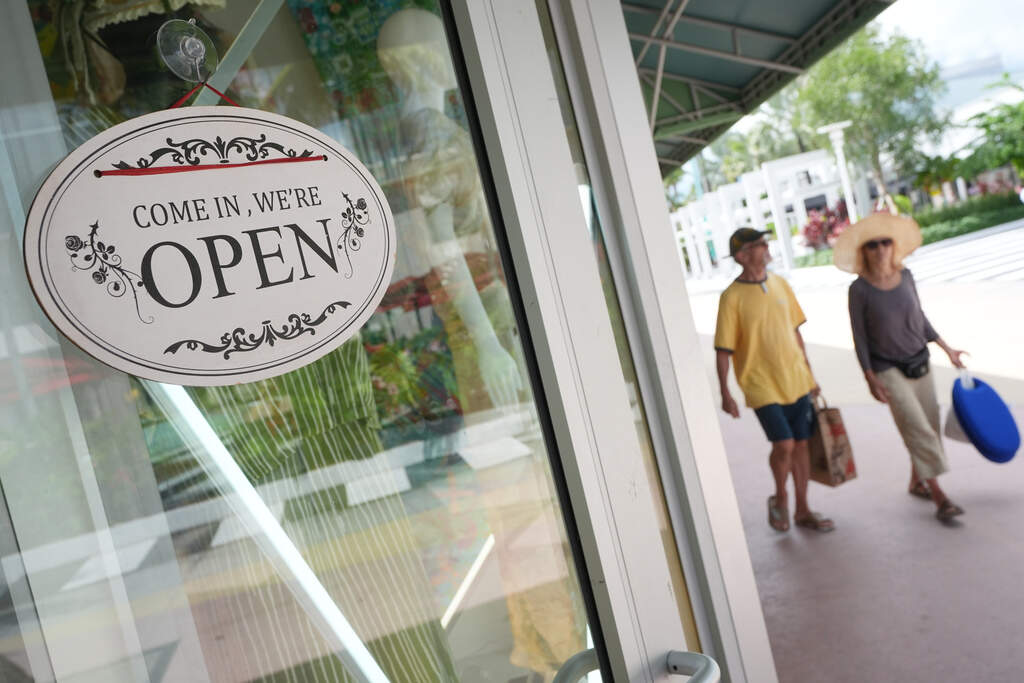
President Donald Trump’s on-again, off-again tariff strategy has created uncertainty around the world. Can America’s 35 million small businesses stay afloat?
Guests
Katrina Golden, founder and CEO of Lil Mama’s Sweets and Treats, a bakery and coffee shop in Augusta, Georgia.
Dilawar Syed, former Deputy Administrator of the U.S. Small Business Administration. Professor of instruction at the LBJ School of Public Affairs and McCombs School of Business at the University of Texas at Austin.
Also Featured
Gabe Modert, owner of Industrial Service and Design, a custom tooling manufacturer in Williamston, Michigan.
The version of our broadcast available at the top of this page and via podcast apps is a condensed version of the full show. You can listen to the full, unedited broadcast here:
Transcript
Part I
MEGHNA CHAKRABARTI: How are the Trump administration's tariffs affecting America's small businesses?
ALEX: Tariffs this year have us in a pretty weird spot.
VISHNU: These tariffs have been, they've been a problem for sure.
MIKE: It's very bad out there.
PATRICIA: All of the prices, my ingredients, my packaging has gone way up.
VISHNU: Astronomical prices.
MARTY: It's really affected our ability to get inventory without taking a hit.
BRANDY: Our suppliers have told us that they are eating the tariff costs, and I'm extremely worried that this is not a sustainable business model for them.
PATRICIA: I want to keep my products affordable for people. However, I've had to raise my prices.
CHAKRABARTI: Those were small business owners – and On Point listeners – Alex in New Orleans, Louisiana; Vishnu in Washington, DC; Mike in Great Neck, New York; Patricia in Grand Junction, Colorado; Marty in Ventura, California; and Brandy in Santa Fe, New Mexico.
And joining us now is another small business owner, Katrina Golden. She's founder and CEO of Lil Mama's Sweets and Treats, a bakery and coffee shop in Augusta, Georgia.
Katrina, welcome to On Point.
KATRINA GOLDEN: Thank you for having me.
CHAKRABARTI: Let's start by hearing a little bit of the story of how you founded and why and when you founded Little Mama's.
GOLDEN: We started in 2019 after I retired from the federal government, I decided that I wanted to bake cakes and share my love of baking with everybody else.
Had a couple of good girlfriends that said, you really need to sell these things. And I said, okay, we'll try it. And six years later, here we are.
CHAKRABARTI: Wow. So it's like a second career, a second life for you.
GOLDEN: Exactly. I tell people all the time, I didn't retire to start another job, but this has been a little bit more fulfilling, I think.
CHAKRABARTI: It sounds like a passion project that also happens to be a challenging to run small business. Where's your storefront located?
GOLDEN: At the VA hospital, downtown Augusta.
CHAKRABARTI: Okay. And was there a reason why you chose that spot, or tell me more?
GOLDEN: Actually, they asked us to come. They had a coffee shop there previously, and were having trouble staffing it.
Due to the cafeteria, also staffed the particular coffee shop. So they contacted us a year ago, actually I think August. June or July or August of last year and asked us would we be interested in taking over that coffee shop? And I said, sure.
CHAKRABARTI: Got it.
GOLDEN: That sounds like a win-win for me.
CHAKRABARTI: Yeah, absolutely.
Absolutely. And it's lovely to be able to serve people who need the VA services. So let me ask you, you have the storefront, but you also have a commercial business for larger orders. Can you tell me a little bit about the difference between those two?
GOLDEN: The difference between the two is that the storefront serves the hospital community.
Because it's not just the VA hospital, it's also, we have a few hospitals that are in the area. There's WellStar Augusta University Hospital along with Children's Hospital of Augusta and Piedmont Hospital, which are all within literally blocks of each other. We get them from not just the VA, but from the other hospitals as well.
CHAKRABARTI: I got it. Okay. So we will get to the tariffs question in a second, Katrina, but I'd love to learn, I love to learn about what people are pouring their blood, sweat, and tears into, so that we can really understand then the impacts of the policies we're talking about. What kind of stuff do you sell in the storefront or even on the commercial side?
What are your big sellers?
GOLDEN: We have three main big sellers. One of is our ... banana pudding cake and our level 21 cakes, which our big seller for that is our Hennessy pineapple upside down cake. It's soaked in cognac. We also have the big seller right now as far as our nostalgic line is the grandma's tea cakes.
It's a thing that if you're here in the south, I tell people as if a sugar cookie and a snickerdoodle got together, it would be a tea cake. So that's what they like. And we, on our commercial side, we do catering, dessert catering. We do dessert tables and people that want large numbers of desserts for their parties or gatherings or things of that nature. So that's what we do in our commercial bakery. That's also in Augusta.
CHAKRABARTI: Katrina, you're making me regret doing this show on an empty stomach. (LAUGHS)
GOLDEN: I am so sorry. We tell people all the time, your waistline is not my problem. I am so sorry.
However ... if you're on a diet you might not want to listen to this part.
CHAKRABARTI: Okay. So thank you for that. Because as I said, like when we talk about what the impacts are, it's nice to have a very concrete sense as to what your business actually is. So have you seen some impacts from these sort of across-the-board global tariffs?
GOLDEN: Yes, ma'am. We have. Our prices have gone up. A lot. Every time I head to one of our, we get a lot of our supplies and things from Amazon and Chef Store and from Sam's Club. And every time I go, it's did the price go up again? Wasn't I paying less for this the last time I came? So we're seeing price increases.
We're seeing the effects of these tariffs, just basically across the board.
We're seeing price increases. We're seeing the effects of these tariffs, just basically across the board.
Katrina Golden
CHAKRABARTI: Okay. So specifically, things like, I guess in the coffee shop you have a lot of, I don't know, disposable supplies for coffee and plates and things like that.
GOLDEN: Certainly we obviously coffee cups because our coffee shop is not one where you come in and sit. Because it's located inside the hospital.
So it's more of a, come by, you see it and grab something to go wherever else you're going, whether back to your office or to an appointment or to visit someone that's in the hospital. So we use obviously a lot of almost exclusively disposable cups, and we've seen the price going go up on that tremendously.
CHAKRABARTI: Do you know by about how much?
GOLDEN: A case of cups at one point, in I'd say January when we were loading up for the first quarter of this year. We buy cases. We buy at least three to four cases every time we load up. I like to say load up, but when we order and a case would cost me easily $100.
Maybe depending on where we were getting them from. And most of them were from overseas. And we started out using branded cups, with cups that were printed with our logos on them. We've gone to no branded cups at this point because we just can't afford them. It's not in our budget to afford those now.
But those branded cups were costing us about $100 to $150 a case. Now they're at least $200 to $250 a case.
Branded cups were costing us about $100 to $150 a case. Now they're at least $200 to $250 a case.
Katrina Golden
CHAKRABARTI: Wow.
GOLDEN: And it's even coming from overseas now. The non-branded cups were, of course, a lot cheaper. We had to add in the cost of printing and things like that.
Non-branded cups would run us anywhere from $50 to $60 a case, give or take, which is fairly affordable depending on the size of course. And that was, of course, coming from overseas. Now those same cups are running us $80 to $90 a case.
CHAKRABARTI: So you're talking about for the reason why you couldn't afford the branded cup size. Because as my quick math is, it's like a 50% to almost 100% a increase in just that one thing, which is huge.
Now, the other thing that we've been hearing from businesses, large and small is that obviously because the president had been talking for a long time about tariffs, the period of uncertainty almost started before the tariffs went into effect. And I'm wondering if, for you, as a small business owner, did you reach out to suppliers or did suppliers reach out to you even before the tariffs went into effect, saying, Hey, maybe we can do something about this now, before?
GOLDEN: Certainly, yes. I had my cup supplier reach out to me. She inboxed me. I'm saying she, I'm assuming. They inboxed me stating that, Hey, we hear that tariffs may be going to affect soon. Do you want to lock in some pricing? If you can order, within the next week or so, we can lock in the same price that you have been paying.
And there was no way at that time, because this was January, February, there's no way at that time that I could use, I didn't have the disposable income or the extra income even to buy a year's worth of cups and tops and lids and things that I order from the supplier. Now I wish I could have, because it would've saved me some money.
However, they did contact me and say, the price is, you know, what I quoted you before, about $50 to $60 a case. We expect that prices will go up. Do you wanna lock in a price? And if you order now, we can lock in that price for you. If you order certain amount of cases. It wasn't in our budget to do so at that time.
CHAKRABARTI: Okay. Wow. So there's the direct tariffs we talked about. Then the Trump administration also eliminated that de minimis rule which makes it such that tariffs are applying to no matter how small the import is. And has that had an impact on you?
GOLDEN: Certainly. We order, like I said, things from Amazon, we order things from other different places that we were able to maximize the de minimus rule at the time. Coffee stirrers for example. Yes, I can get them at Sam's Club, but if I'm already ordering cups that have them with them, just go ahead and order everything together. But yeah, now that's in there, everything, the price of everything. I can just tell you across the board has gone up.
CHAKRABARTI: Okay. Okay. A couple more questions. You have the storefront, but then do you also do larger orders for people who say have an event or something and they want some of your baked goods?
GOLDEN: Certainly. We also have a what we call our mobile coffee and dessert bar, which is a full-service coffee bar on wheels, our food trailer.
But we also do catering where we bring the coffee and the desserts or light muffins or light breakfast cafe items to them. And that's fun to do. I like doing those. (LAUGHS)
CHAKRABARTI: And how has business been on that side of things?
GOLDEN: It's decreased.
CHAKRABARTI: By how much?
GOLDEN: We have ... I tell people there's this golf thing that happens in Augusta every year.
It's pretty big. They call it, I don't know, when I first moved here to Augusta, it was funny. I had never followed, because I don't follow golf. So I had never heard of it. So I wasn't big into it. And they said, yeah, the Masters tournament. I said, what's that?
People that are from here looked at me like I had two heads, like obviously you're not from here.
CHAKRABARTI: (LAUGHS)
GOLDEN: No, I'm not. I have no clue what you're talking about. But Masters tournament, especially since we've got this dessert and coffee bar, is a big deal for us. And we expected, we usually met around $7,000 to $8,000 just for that week, which sets us up really well for going into the summer and coming out of first quarter.
Because first quarter generally is slow. People generally have ... they've been eating crazy since Halloween. So January, they want to get their life back together and start going to the gym and they don't, they're not worried about so much desserts at that time.
So having this big surge of income the first week of April is extremely helpful to get us back on track for the rest of the year. However, this year our sales were down. Normally we have, because the caterers come in town and they deal with the CEOs and C-level executives and everybody else that comes to town for Masters.
Generally, the caterers come, and they don't like to bake, so they contact people like me. Yeah, in doing so, we normally have, like last, not this past Masters, but 2023, we had easily 10, 15 orders from caterers and they were large orders. We're not talking like a cake or two cakes. We're talking 10 and 15 cakes.
CHAKRABARTI: Katrina, can you hang on just one second? I have to take a quick break because you're setting this up for wanting to know exactly what's happened to all those orders from that little golf tournament down in Augusta, so we'll be right back.
Part II
CHAKRABARTI: How much did those orders go down at the Masters this year?
GOLDEN: We only saw three orders this year.
CHAKRABARTI: Is that, what, a 50% cut? Even more?
GLDEN: We went from having 10, at least, to having, to seeing three. After Liberation Day, our costs, our sales even went down further.
CHAKRABARTI: Okay. So we're seeing quote-unquote Liberation Day, the day the tariffs went, right?
GOLDEN: Yes. We saw even our sales going down even further where we started out last year.
This time last year, we're making $600 a day at the coffee shop. Now we're struggling to make $350.
CHAKRABARTI: Wow. Okay. let me ask you, margins in small businesses are always narrow. It's part of the grind of being a small business owner. How much longer can you absorb this cost hit before you have to make some kind of major change in how you run your business?
GOLDEN: We're looking at first quarter 2026. We're either going to have to raise our prices or close.
We're either going to have to raise our prices or close.
Katrina Golden
CHAKRABARTI: Raise our prices or close. Has that happened to other similar bakeries and businesses in your space in Augusta?
GOLDEN: Yes. There's been three bakeries that have closed this year.
CHAKRABARTI: Wow. And I'm presuming you don't want to have to raise prices though?
GOLDEN: Right.
We don't wanna have to because the space that we're in, as far as our storefront is located, it would be detrimental to especially the veterans that come through and some of the other hospital workers. We're trying to hold onto our little coins as much as we can. But still needing coffee and sweets. (LAUGHS)
CHAKRABARTI: Yeah. I appreciate the joy that you're trying to bring even to this tough conversation. I have to say, it's something that is very common with all the small business owners we talk to over the past week. Because like I feel like it's a special kind of person that goes, becomes a small business owner, right?
Because you're like, you're literally putting like the entirety of yourself into the business. Independence is important, but also personal responsibility. At the same time this has got to be tough, Katrina.
GOLDEN: It is.
CHAKRABARTI: How are you coping with or dealing with coming up against having to make this really hard decision?
GOLDEN: One day at a time. We just take it one day at a time. That's all we can do. It's hard for us to plan because it's been crazy and unpredictable, so we just take it one day at a time.
CHAKRABARTI: Yeah. And I should say that Lil Mama's Sweets and Treats is you and your husband and how many employees?
GOLDEN: Two part-time employees.
CHAKRABARTI: Two part-time employees. Okay. So you definitely put, highlight the word small in small business there.
GOLDEN (LAUGHS) Yes.
CHAKRABARTI: If you could talk to anyone in the Trump administration what would you tell them about the tariffs and your business? What would you want them to know?
GOLDEN: Ooh.
I would tell them that small business need predictable trade policies that allow us to plan and invest in growth. Not tariffs that change constantly and hit us the hardest.
small business need predictable trade policies that allow us to plan and invest in growth. Not tariffs that change constantly and hit us the hardest.
It's hard to plan if we don't know what we're planning for. We need stable government operations. Right now we're in the middle of a government shutdown and those create uncertainty that forced us to delay growth plans and brace for revenue drops.
I'm in a VA hospital. We serve federal employees. They don't know if they're going to get paid. The ones that are working, and the Congress should pass the Small Business Relief Act. Bottom line, that would exempt small businesses from the tariffs that are definitely hurting me and other small businesses and refund what we've already paid.
I don't expect to get rich off of that Relief Act, but it would help. (LAUGHS)
CHAKRABARTI: Yeah. Sounds like it would help you stay open as well.
GOLDEN: Yes, most definitely. Most definitely. It would help. It would help.
CHAKRABARTI: Katrina Golden. Founder and CEO of Lil Mama's Sweets and Treats, a bakery and coffee shop in Augusta, Georgia.
Thank you so much for joining us and for sharing your story, Katrina.
GOLDEN: Thank you so much for having me. I have enjoyed it.
CHAKRABARTI: Same here. Okay, so let's listen to what the Trump administration itself says about the impact of tariffs on small businesses in this country. Kelly Loeffler is the head of the U.S. Small Business Administration, or SBA, currently in the Trump administration.
During the U.S. Senate Small Business Committee hearing in May, democratic Senator Ed Markey of Massachusetts ... asked Loeffler how the SBA is helping small businesses who are, quote, getting crushed by the Trump tariffs, and here is Loeffler's response.
KELLY LOEFFLER: This president is making sure that small businesses are never again put in the position of relying on the Chinese Communist Party to manufacture their goods and services.
We saw during 2020, during COVID, the excessive reliance we have on the Chinese Communist Party. I suspect manufacturers at home are delighted to hear that this president is fighting for them. I've certainly heard that with the hundreds of manufacturers I've walked on the floors with since I've been in this job.
They are thrilled this president is fighting for them.
CHAKRABARTI: So that's Kelly Loeffler, the current U.S. Small Business Administration head in the Trump administration. Joining us now is Dilawar Syed, former Deputy Administrator of the U.S. SBA, held that position from 2023 to 2025, and is now a professor of instruction at the LBJ School of Public Affairs and McCombs School of Business at the University of Texas in Austin. Professor Syed, welcome to On Point.
DILAWAR SYED: Thanks so much for having me, Meghna.
CHAKRABARTI: You heard Kelly Loeffler there saying that she believes small businesses are delighted that the president is fighting for them. I think opinion across small businesses probably varies.
Some agree, some would disagree. But let's get down to some like factual numbers. Who are the importers in the United States?
SYED: So you heard from Katrina, and by the way, that story is heartbreaking. I spent time in the south. I've actually been to Augusta right after Helene and Milton's devastation last year, just around this time.
And businesses were impacted by hurricanes, but this is a manmade disaster. So clearly they're not thrilled. And to hear the stories that they are going to be forced to shut down or lay off people is just frankly very upsetting. 97% of importers in the United States are small businesses. Overwhelming majority of exporters are small businesses. Tariff is a small business problem. And I'm so glad you're putting some sunshine on this topic, because we don't hear enough about small business and impact. You've had larger companies that have had, that have gone to the Oval Office.
They've sat down with the president, negotiate one-off deals, small businesses don't get that opportunity, but the breadth of small businesses, whether they're importing, in this case, you heard about disposable cups or they're using an ingredient, or they're importing and reselling, they're relying on imports.
CHAKRABARTI: Right.
Having a market cap of a trillion dollars does give you the opportunity to step in the Oval Office and offer the president a gold plated tchotchke. But if you're selling coffee to federal employees at the VA, it's a different story. But let me scrutinize that 97% number.
Is it 97% simply because of the fact that the number of small businesses in the United States vastly outnumbers that of larger businesses or corporations. Should we actually not be surprised by 97%?
SYED: We should not be surprised because small businesses are the engine of the U.S. economy.
About half the employment is by small business here, 35 million small businesses across the United States, and the value of imports when you look at that small business also has a majority share. So absolutely, there are 224,000 small businesses that import because of the sheer number of small business that we have in the country.
That figure of 97% would be higher. But the value is also pretty significant. The point that I'm making earlier, broader point I'm making is, yes, there are one-off stories that most people may not think about, whether it's in Georgia or elsewhere in the country. But in aggregate, these businesses are community builders. They are job creators. And if you see these stories again and again, and I hear them all the time, since I'm in the space still speaking to small businesses and as an advocate. And I recently met a woman who imports goods from Latin America for ethnic food store.
She said she had just received a bill for $19,500 dollars from CBP. She said, I don't have $19,000 to pay to CBP. I don't even know how to connect with CBP. It's another bureaucratic hurdle they have to do. So these are small businesses that are just getting new duties, new taxes, and just don't have the means to frankly stay afloat as we just heard.
CHAKRABARTI: Can you just clarify why that bill for $19,500 came from CBP? She is the importer. Is that what you're saying?
SYED: She runs an ethnic food store. A lot of her ingredients, goods, parts that she sells, they're imported from Central America, and she must be buying inventory, right, over that may cover six months to a year.
And that's the bill that she got. CBP is Custom Bonus Protection Agency, and I had to go look it up to see how that even works. It's a complicated process that most small businesses have never had to deal with.
CHAKRABARTI: This is actually, I thought I understood, so I will be perfectly honest, I'm a little bit confused. Because, okay, so if she's the one directly buying the items from Latin America, it makes sense that she would have to pay the tariff as they come in.
SYED: Correct.
CHAKRABARTI: Okay. And then why were you confused about CBP, Customs and Border Protection being the one that issued the bill to her?
SYED: Because we haven't had this before at the scale, we haven't had a small business store owner having to engage with agencies within DHS to pay custom duties.
Thousands of dollars. This is a new hurdle, a new red tape. A new agency you have to get to know to basically pay tax. And when you look at aggregate terms and numbers that I'm seeing used, is that about $55 to $63 billion year to date, that's the overall duties that have been levied, if you will, on small businesses via tariffs.
This year, and this is for now, and we've never seen that number before. So it's again, for a small business owner, we talk about the higher cost of operation. We just heard the story. They have very small margins. We looked at the uncertainty, but there's also paperwork.
Many of these business owners are, they're running the store. They're also the chief operating officer. They are the customer service people. And then to figure out how to manage all this can be pretty overwhelming.
CHAKRABARTI: Okay, we actually did hear from many more small business owners in the United States, so I do want to give them a chance to have their say.
This is Mike. He listens to On Point in Great Neck, New York, and he runs a small business that happens to be a customs brokerage firm at JFK International Airport. And here's what Mike told us.
MIKE: My workload has gone from a five-minute entry to a 35, 40-minute entry. Because of the additional tariffs. We could have one product, and it could have five tariff numbers, as opposed to before, where it was one item, it was one tariff number.
At some points, we have to lay out more money than we have in our bank account. It becomes very challenging. And we need to get that money from the importer before we can pay customs, because it comes out of our bank account.
CHAKRABARTI: This is so fascinating to me, Dilawar, because the tariffs are also shining a light on so many small businesses that worked in areas that we would never even have thought of.
SYED: Correct, correct. And the fact that they have to be, if you will, a front for small businesses, carry that load before they can collect those duties. In a couple of weeks, we are hosting, UT launched an effort, and we are hosting the Mayor of Brownsville.
Which is a border town and the mayor used to be, actually also runs a custom broker firm as well. Because he's a part-time mayor and he's telling me similar stories. So in certain parts of the country, the pain is even higher when communities that are relying on cross border trade or there is a lot more goods coming in for local businesses and so forth.
In certain parts of the country, the pain is even higher when communities that are relying on cross border trade.
Dilawar Syed
CHAKRABARTI: Okay. This is Shane who listens to On Point in Harrisburg, Kentucky and he's in the business of construction estimation. He also does woodworking too.
SHANE: The price of lumber has gone up dramatically, at least 25% in the last couple of months. And the funny thing is it's labeled as American Lumber.
So when they impose these huge tariffs on the foreign countries, the American producers of those same products look at the price and they say heck, if the Chinese steel has doubled, then we can double our pricing to match that. It's not doing anybody any favors except for those large corporations.
CHAKRABARTI: Once again, that's Shane who listens to On Point in Harrisburg, Kentucky. Now Dilawar, you know that the Trump administration is insisting that the tariffs are not actually raising prices on small businesses. So let's listen to another moment from this May hearing before the Senate Small Business Committee, and this was when Kelly Loeffler, the current head of the SBA, was questioned by Senator Ed Markey, Democrat of Massachusetts.
SEN. ED MARKEY: Do you acknowledge that Trump's tariffs raise costs for small businesses that are jeopardizing their livelihoods and their employees?
KELLY LOEFFLER: This president is fighting for the American worker and American industry. And what we're seeing is that President Trump's entire economic agenda is counter inflationary. And tariffs have been imposed against our small business unfairly, tariff and non-tariff trade barriers, disadvantaging not only our small businesses –
(CROSSTALK)
MARKEY: In the short, in the short term, in the short term have the tariffs increased costs for small businesses in the United States?
LOEFFLER: Uh, no ranking member Markey. They have not.
MARKET: They have not?
LOEFFLER: No. Core inflation for two months in a row, have fallen to four year lows. And under President Trump first administration --
(CROSSTALK)
MARKEY: I'm talking about small business. Have they increased it for small businesses? The cost?
LOEFFLER: No, that's not what we're seeing at all in the field.
MARKEY: Okay.
LOEFFLER: In fact, what we're seeing is that small businesses are investing as evidenced by the 80% increase in loan volume compared to the prior administration.
CHAKRABARTI: That's U.S. small business administrator Kelly Loeffler.
Professor Syed, does that math compute for you?
SYED: No, it doesn't. According to U.S. Chamber of Commerce Q3 survey, 60% of small businesses, and this is U.S. Chamber of Commerce. We are not talking about one-off stories, obviously, right? 60% of small businesses have raised prices. Recently, 70% of small businesses have reported paying higher prices for goods and services they use.
Much of them imported goods, and we heard the story of Katrina. In her case, she hasn't raised the price, but she's considering raising the prices come January or shut down. So the idea that there is no impact, I'm not sure where the administrator is getting her numbers, but the data at large is not, doesn't comport with that. And you're seeing this like in the figures of inflation. You're seeing this which is persisting. You're seeing this with unemployment. Recently, the rate cut, which you look at the Fed's commentary after the rate cut, it focused on unemployment.
Because we are seeing these job losses that are stemming from small businesses having to lay people off. And as I mentioned earlier, they are a huge engine of job growth and sustaining jobs in this country. So we are already seeing some of the results of these price increases, or in some cases, businesses unfortunately having to shut down.
We are seeing these job losses that are stemming from small businesses having to lay people off.
Dilawar Syed
Part III
CHAKRABARTI: Now, professor Syed, I'm actually gonna do something that we almost never do.
I'm going to replay a bit of tape because there's something very peculiar that the current SBA head, Kelly Loeffler, does in that exchange that we played that she had with Senator Ed Markey, a Democrat of Massachusetts. So here is that exchange once again.
SEN. ED MARKEY: Do you acknowledge that Trump's tariffs raise costs for small businesses that are jeopardizing their livelihoods and their employees?
KELLY LOEFFLER: This president is fighting for the American worker and American industry. And what we're seeing is that President Trump's entire economic agenda is counter inflationary. And tariffs have been imposed against our small business unfairly, tariff and non-tariff trade barriers, disadvantaging not only our small businesses –
(CROSSTALK)
MARKEY: In the short, in the short term, in the short term have the tariffs increased costs for small businesses in the United States?
LOEFFLER: Uh, no ranking member Markey. They have not.
MARKET: They have not?
LOEFFLER: No. Core inflation for two months in a row, have fallen to four year lows. And under President Trump first administration --
(CROSSTALK)
MARKEY: I'm talking about small business. Have they increased it for small businesses? The cost?
LOEFFLER: No, that's not what we're seeing at all in the field.
MARKEY: Okay.
LOEFFLER: In fact, what we're seeing is that small businesses are investing as evidenced by the 80% increase in loan volume compared to the prior administration.
CHAKRABARTI: Okay. So Professor Syed, the reason why I wanted to replay that is SBA administrator Loeffler, in attempting to navigate the senator's question actually brings up three different talking points from the Trump administration.
One is that while the tariffs are good because small businesses who are exporters have had to deal with tariffs that have been, you know, long implemented by other countries. So our retaliatory tariffs are good for those exporters. Whether or not that's true. Then she points to core inflation saying there's no way to prove that prices have gone up for small businesses, because nationally core inflation, she says, has gone down.
And then she pivots to, well, small businesses are actually doing great right now because there's an 80% increase in loan volume compared to the Biden administration. Although she doesn't offer evidence there that 80% increase is due to businesses investing in growth versus other things they may need to take a loan for.
Are these three issues that she brought up, are they actually connected? Is she providing a strong counter argument there, or are they disconnected features that are designed to not answer the question.
SYED: I'm not sure where to begin, but what I'll say is they're not answering the question with respect to the impact of tariffs on small businesses.
I've sat on those hearing rooms. And I understand wanting to navigate sometimes, but this is a pretty big problem, as you just heard from stories around the country. So let me address those three things one by one, and I'll start with the last one first. Which also goes into solution. What do we actually do for, when it comes to the impact of small businesses. SBA loan volume may be up.
I'm not sure, I haven't looked at the data, but what's very clear is that because of the changes to, changes SBA has made to which its loan, which ... those loans are given by the banks. SBA backs them. SBA backed lenders are now giving larger loans.
They have been encouraged to offer those loans to larger end of the small businesses, not the Katrinas of the world that we just spoke to, right? And a bank can just make a million-dollar loan to one company or a small business or a medium sized manufacturer and be done with this, versus let's try to make smaller loans available for 20K, 50K.
We were very focused on democratizing assets to capital. We made reforms to loan process that made the process of applying for a smaller loan much easier. So that smaller end of the small business, the micro business, those small coffee shop, little mamas, these folks who don't have anywhere else to go to, they're the ones they need to go after, to make sure that they get the support they need to have, if they have a short term cash crunch or so forth.
Unfortunately, that support has been taken out under this administration's SBA. Not to speak of the fact, 43% of SBA was let go after DOGE cuts. Early this year, 43%, already an agency that was very stretched after COVID. Major offices, including Atlanta, New Orleans, Chicago, San Francisco, New York, shut down.
And so you don't even have places to go to get support. The second point around inflation, we talked about that, the data is suggesting that 70% of small businesses have had to pay more to buy goods and services that are imported and 60% have raised prices. And finally, when it comes to, this would, these are retaliatory tariffs and it may be helping us with folks who are not able to export.
The stories are pretty painful on that end too, actually, I was just watching a story of farmers in Iowa. The soybean farmers that China has now basically banned soybean exports from U.S. And I think we did, what, more than $20 billion worth of exports, primarily from small to medium sized farmers.
Much of the Midwest, that is going to come down to pretty much zero and because China's going to Brazil for that. So when we say that it's helping our exporters? No. China in this particular case is going to substitute American exporters with Brazilian exporters, and that's happening industry after industry.
In fact, we heard from the president he wants to provide some financial relief and take some of the money that they have collected from duties and do a one-off payment to farmers, but that's not scalable.
CHAKRABARTI: And by the way, that's the exact same thing he did in his first administration as well, in terms of having to relieve farmers because of Trump administration policies from the first administration.
I did note that you said you weren't quite sure how to an answer where to start and how to answer my question. I appreciate that honesty. I asked it because you can imagine in the minds of most Americans, when they hear clips like that on the radio or on TV or on social media, it's even harder for them, for us to even process, how to judge the veracity of ... claims. Such as we heard from SBA administrator Loeffler. So I appreciate you taking it bit by bit with me, Professor Syed. Let's listen to another small business owner. They were really generous with our time when our producer Claire was reaching out to folks.
This is Gabe Modert. He runs a small business in Williamston, Michigan. It's called Industrial Service and Design, and Gabe builds custom tools to help automakers assembled their cars. He's been in the specialty tooling industry since 2001, and he struck out on his own, founding his business in 2016.
GABE MODERT: When I started back then, I was solely doing contract mechanical engineering out of our upstairs, our upstairs closet, basically.
CHAKRABARTI: Industrial Service and Design works with many automakers, including the big three. General Motors, Stellantis, and Ford.
MODERT: We are four people full-time and that's including me, the owner.
Actually, while I'm talking with you, I'm doing a little bit of a tooling design for another long-term customer of ours in the plastics industry. And currently my older brother who is employee number one, is out there running one of the mills and doing some packaging out on the shop floor. Here probably in a couple hours.
My wife, who is also our office administrator, she's gonna come in so she can do, run payroll and all of that ... that I don't have to do any longer. It's never been my intention to be a real big company. I was just looking for something relatively low key and sustainable to support our family.
We're commonly here pretty late in the evening and a lot of times over the weekends. And it's not that I want to do that, it's just that's what we have to do to get by right now.
CHAKRABARTI: And right now, for Gabe, getting by also means figuring out how to navigate his business through the uncertainties created by President Donald Trump's tariffs.
MODERT: So I don't want to mention the manufacturers by name, but there's two of them that build smaller. Imagine something like a Penske truck, those kind of semi vehicles. And historically, those two customers have been 80% of our business. One of these manufacturers actually have severely cut their planned production over the next couple years.
By 50%. A lot of that was directly from import, duties, tariffs on parts, but then just general uncertainty.
They were planning on building 20 trucks a day. They were planning on building 10 trucks a day now. So what that means for us as machine builders is that it's been a big reduction in the work that we would've normally obtained or at least had an opportunity to bid on.
Easily to the tune of a million dollars in lost opportunities. And it's not just those guys. We still do a lot of work for the other automotive guys, the big three, albeit through distributors or other tier suppliers. But the reduction from those guys has been drastic.
(NEWS MONTAGE)
NEWS BRIEF 1: GM says its second quarter profits fell by a billion dollars.
NEWS BRIEF 2: Ford Motor Company is posting second quarter losses of $36 million.
NEWS BRIEF 3: Stellantis, the automaker, announcing a surprise net loss.
NEWS BRIEF 4: Which is known for brands like Jeep, Dodge, Chrysler, and Fiat.
NEWS BRIEF 5: Stellantis says it lost $2.7 billion in the first half of the year, partially due to tariffs.
MODERT: In fact, like Ford seems to be the only company that has anything planned and normally end of the year is kind of crunch time. Lots of things are happening. It's been a ghost town for us. We've had to make the decision to venture into some other things to pivot to help support us as we wait this out, but we've branched into doing some contract machining, some other assembly stuff and we're looking for other opportunities as well.
Because I just have no idea how long this is going to last. It is the wishy washiness, right? There is no defined plan. Anything that's said has like literally changed the next day. So if it was a one shot guaranteed, hey, this is what the tariff is, then okay, fine, we can plan and work around that.
But when it's a constant moving target, how do you deal with that? It's impossible without any sort of steady policy making, and that's not what we're getting from this administration.
Can we hold out for a little while? Oh, absolutely. We're pretty scrappy. We can do a lot of different things and there are still some opportunities that I haven't chased down yet that I'm pretty confident we can get into, but like long term, I mean if it keeps like this, over the next three, four years, I couldn't tell you with any sort of real confidence what things look like.
CHAKRABARTI: That's Gabe Modert. He runs a small business called Industrial Service and Design in Williamston, Michigan. Professor Syed, across the board, this is what we've heard. From Gabe, from Katrina, from all the other small business owners we talked to. Tariffs or no tariffs what they need more than anything, as Katrina said, is predictability so that they can plan and invest in growth.
Same thing for large businesses. It's like almost like gospel, that uncertainty is not great for business. But large businesses, especially publicly traded ones, they can signal that through things like the stock market. I'm not sure if the signals are as crystal clear that small businesses can give about the impact of all the uncertainty around tariffs.
SYED: So first, Gabe's story is just heartwarming, to see his family, his brother, his wife, and these are the businesses that I saw, and they warm my heart when I travel the country. And to hear, again, the optimism in him, even as he's dealing with this, is just pretty inspiring to say the least.
Look, when he says, I have no idea what to plan. We hear this again and again. What we've seen is tariffs. Look, it's a tool you can certainly use as economic policy tool. Almost every administration, going back to President Obama's second term has used tariffs to be able to get a better deal for American workers, and that is fair, but it's the manner in which we do, it's the approach that we've taken under this president.
And in his second term especially that has been so difficult for folks to navigate. We have November 10th deadline coming up with the China deal. The last time there was a deal done, that took a long time. There is so much we trade between our two countries. I hope that works out. So we do need some finalities, some clarity. The USMCA, I'm right now in Austin. The United States, Mexico, Canada trade agreement that President Trump negotiated after throwing out NAFTA is being renegotiated now as a bilateral U.S. and Mexico, and it's affecting Texas.
It's affecting border communities. This is like Houston, Dallas, in all sorts of ways. This story was also of a story of a small machine builder, right? It's also the manufacturing sector. One of the things we've heard is that is to help manufacturers reshore, and we are not quite sure if that's necessarily happening.
It's causing concerns within that sector as well. So clearly as you move forward, we need more stability, we need to strike these deals. And move forward because I am concerned for so many of these businesses for them to, unfortunately, not be able to sustain themselves. And that would be such a loss to our economy after post pandemic recovery and record growth.
We saw in our jobs in the previous administration, and I certainly hope we can maintain that if not build upon it.
The first draft of this transcript was created by Descript, an AI transcription tool. An On Point producer then thoroughly reviewed, corrected, and reformatted the transcript before publication. The use of this AI tool creates the capacity to provide these transcripts.
This program aired on October 7, 2025.