Support WBUR
No one wants their MTV
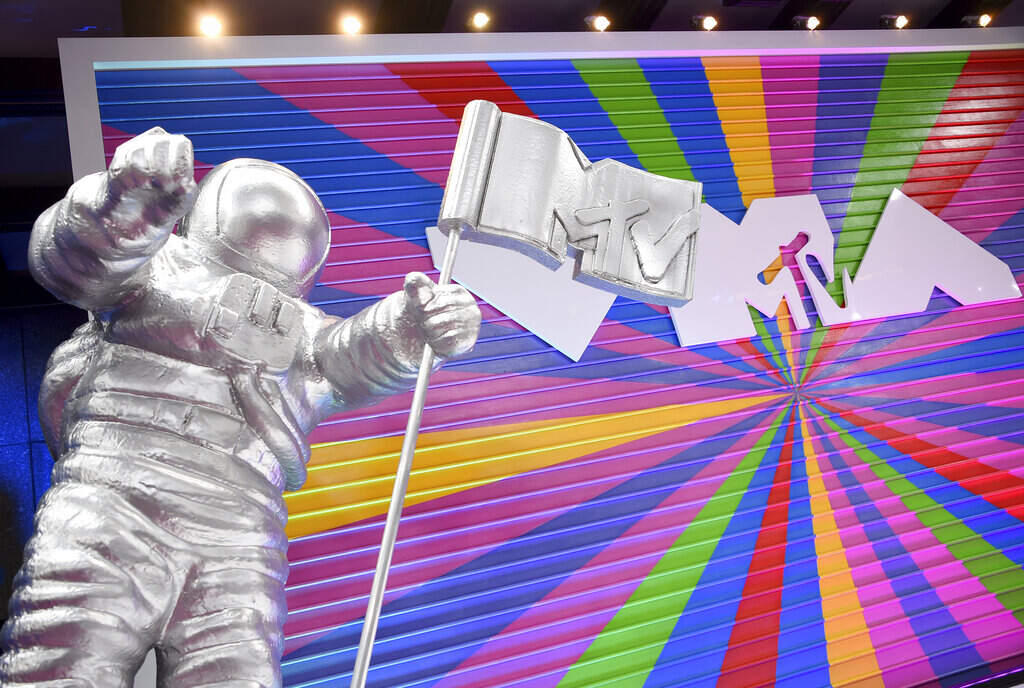
On August 1st, 1981, MTV was born. The 24-hour music video channel transformed the music industry and pop culture. Now, MTV is now shutting down many of its international music channels.
Guests
Craig Marks, co-author of “I Want My MTV: The Uncensored Story of the Music Video Revolution.”
Maura Johnston, music critic and journalist.
Ryan Zickgraf, columnist at UnHerd and author of the article “Goodnight, MTV.”
The version of our broadcast available at the top of this page and via podcast apps is a condensed version of the full show. You can listen to the full, unedited broadcast here:
Transcript
Part I
MEGHNA CHAKRABARTI: At midnight on August 1st, 1981, cable viewers across the country watched an epic launch.
Okay. To be honest, it was not a NASA rocket firing its engines, nothing so grand as an exploration into the deep unknown. But for an entire generation of young people, the launch was indeed epic, because it brought something else into their homes, more specifically onto their TV screens around the clock.
(MTV CLIP PLAYS) 'Ladies and gentlemen, rock and roll.'
CHAKRABARTI: I'm already nodding my head because August 1st, 1981 was the birth of MTV. Directly after the rocket launch video, the first minutes of this new cable channel aired a video that declared MTV's reason for being.
(SONG PLAYS) 'Video killed the radio star.'
CHAKRABARTI: MTV got right down to business of introducing itself, and its five original VJs or video jockeys to viewers across the country.
(CLIP PLAYS) 'Hi, I'm Alan Hunter. I'm Martha Quinn. I'm JJ Jackson. Hi, I am Nina Blackwood. I'm Mark Goodman.'
CHAKRABARTI: The hosts tried to help viewers understand just what they were watching.
(CLIP PLAYS) 'We all are so excited about this new concept in TV. We'll be doing for TV what FM did for radio, and let's get into it right now at MTV.'
CHAKRABARTI: Armed that day with 250 music videos, five hosts, and a 24-hour format. The station set about changing youth culture and popular culture for years to come. Soon, MTV was airing thousands of music videos, some of which became truly iconic themselves.
Two of my faves, Thriller. Of course. And a-ha's hand animated Take on Me video. The channel then rapidly evolved, bringing underground genres of music to broader audiences, developing animated programs aimed at adults and not kids, and pioneering the reality TV format. Now it has been years since MTV has had that kind of culture shaping power.
The channel has slid into irrelevance within the very television landscape it helped to create, but then why was there such a spasm of nostalgia, even shock and grief when executives at Paramount, MTV's parent company, announced that on December 31st of this year, it will take five of its music channels permanently off the air internationally.
MTV Music, MTV 80s, MTV 90s, Club MTV, and MTV Live all gone outside the United States. This is a story about how mega mergers, about technology and about founders, in this case, the founder being a cable channel, that are so successful, they render themselves obsolete. But it's also a story about that increasingly rare thing these days, a place available to almost everyone, where millions of people can have a unifying experience through the power of pop culture.
So we're going to talk about MTV. Its past, its diminishing present, and whether it has a future. Joining me now is Craig Marks. He's co-author of the book. I want my MTV: The Uncensored Story of the Music Video Revolution, which he wrote with music journalist Todd Rob Tannenbaum. Marks is also the former music editor for the Los Angeles Times, and he joins us from Studio City, California.
Craig Marks, welcome to On Point.
CRAIG MARKS: Thank you for having me, Meghna.
CHAKRABARTI: So before we get into the nitty gritty about like literally the first night of MTV being on the air, I just, first I have to ask you, I am not terribly prone to nostalgia, Craig. But as a younger member of Gen X, I was really just seized with a, Oh, why? When I heard about this announcement from Paramount.
And why do you think that is? Why do you think so many people reacted so strongly?
MARKS: For 10 to 20 years minimum, MTV was the monoculture for youth culture. It's where everyone went to celebrate music. It created an art form, music video, that hadn't existed before. And it was so significant in not just music culture, but fashion, culture, film, television.
MTV was the monoculture for youth culture.
Craig Marks
It changed the language of how we express ourselves through music.
CHAKRABARTI: Yeah. To this day. I can remember when I first saw Thriller, it actually scared me because I was a kid. But it was like one of those defining moments of my childhood. But, okay. So analyzing nostalgia and then maybe being skeptical of it will be a through line in this conversation, but let's go into that, the backstory of what happened on that night that MTV first launched.
I understand that behind the scenes it was pretty chaotic.
MARKS: They had to go, the staff had to go to Fort Lee, New Jersey in order to see it, because New York City did not carry MTV. Neither did Los Angeles for the first year and a half or so of the network's existence. So they all got in limos.
Some said it was the first time they'd ever been in a limo and drove to Fort Lee to see the launch of their network. The voice you heard on the intro, the "Ladies and gentlemen, rock and roll," that was the voice of John Lack, who was essentially the founder of MTV. He wasn't on air, but he had a radio background, and it was all hands-on-deck and his was the voice that used for that voiceover.
CHAKRABARTI: You use what you've got, right?
MARKS: And yeah, it was total mess. It was the video, the VJs who introduced the videos were introducing the wrong videos. Bob Pittman, who was, became the kind of the face of MTV and really established the identity of the network. He was on the phone with the tech guys back in New York trying to figure out what was going wrong, which was everything. But yet it was exhilarating for everyone who was involved. They said it was, people said it was the greatest night of their lives. Because they were part of something that up till then hadn't existed. And they created it, they created this network out of thin air.
CHAKRABARTI: So tell me how that creation came about, because now we're living in a world where short form video, I mean it is the norm. Long form video is what's the exception. But I mean in 1980, '81, Lack, how is he like, let's just create a cable channel where all people watch is music videos that are two and a half minutes long?
MARKS: It was an act of faith and insanity for MTV to start.
CHAKRABARTI: (LAUGHS)
MARKS: There were, music videos weren't even called music videos when MTV went on the air. They were clips. They were short form films. They were a little bit popular in Europe. There were shows there that aired these.
It was an act of faith and insanity for MTV to start.
Craig Marks
We'll just call 'em music videos for expediency, music videos. Most of them were performance clips with bands playing live or pretending to play live. Queen's Bohemian Rhapsody was a famous first music video. People might have that image in their head of the black background on the heads singing.
Lack saw these shows in Europe. He was working for a company called WASEC, which was a joint venture between Warner Communications and American Express of all people. American Express thought that they would be able to sell their financial services through the box, the cable box that sat on your console like a two-way, QVC operation almost.
And Warner Communications was a company that owned the satellite. That shot up into the sky. And they had, this was a dawn of cable television. ESPN was on the air; HBO was on the air. CNN was on the air, maybe in from 1970, 1980, those networks launched.
CHAKRABARTI: But that was also just about it for cable television at the time.
MARKS: So WASEC had two channels. They had a movie channel called TMC, The Movie Channel, and they had Nickelodeon. And on Nickelodeon there was a show called PopClips that aired music videos. Mike Nesmith of the Monkeys was the host of the show. And he was an early adapter of music videos, so Lack went to Europe, saw these clips, met with Mike Nesmith, saw what he was doing, and thought that there was a chance for WASEC to launch this channel.
Now the hard part about it was there were only, when MTV did go on the air, there were maybe 200 or so music videos. When he came up with the idea, there were maybe 80 music videos in the world that existed, and that's really not enough programming for a 24-hour channel that's gonna play music videos.
So the two things he had to do was convince record companies to make these videos, he had to convince these companies to give them the videos for free. And then he had to convince his company WASEC actually finance the network. And he and Bob Pittman and a couple other people who were the early executives at the network, they managed to do all three things, and the network launched on August 1st.
CHAKRABARTI: Craig, you just described the birth of user generated content.
MARKS: It was in fact that. The record labels, in the music business, radio was the model for this kind of experiment. Because radio didn't pay for the records they played, but they provided so much promotional support for these artists and their labels that it was worth it for the record companies to send the radio stations their music for free, so that the people could hear it and then go out to the stores and buy it. And that's the premise that they operated on at MTV to get the record companies to not just fund the videos, which they had to do, where essentially the artists end up paying for them.
But they had to get the labels to make these videos, and they had to get them to supply them with the videos. And when they launched, there were so many jokes that Rod Stewart was very popular back then, and he was an early adapter of music videos. They were all uniformly terrible, but he did make them.
And maybe of the 200 videos that existed, 30 were Rod Stewart videos. And if you look at the log, essentially of the first two hours or three hours of MTV that day, there might've been eight Rod Stewart videos in the first 50 videos they played. And the rest were pretty bad too.
CHAKRABARTI: (LAUGHS) You're explaining Rod Stewart's inexplicable popularity in the early eighties unlike I've ever heard it before, Greg, continue.
MARKS: So it was, like I said, it was a real leap of faith, but the record companies reasonably quickly saw that this was quite the opportunity. There was a wave of the English. Because these videos had, music videos had a bit of a base in Europe and England, and because the New Wave, literally and figuratively of musicians who were coming out of England were a bit more performative and theatrical than their American brethren.
Bands like the Culture Club and Duran. They were, those groups were very interested in making music videos. They enjoy the art form. A lot of American artists did not enjoy the art form. They found it unbecoming to have to act and pretend and lip sync and dress up. It just didn't suit them, but it suited these new wave bands and these new wave bands had no avenue in America to be heard, because radio wasn't gonna play them.
So they made these videos and the next thing you knew these were all rock stars in America. And it was all because of MTV.
New wave bands had no avenue in America to be heard. ... So they made these videos. And the next thing you knew, these were all rock stars in America.
Craig Marks
Part II
CHAKRABARTI: Here's On Point listener Jason Thomas from St. Thomas in the Virgin Islands. He remembers being part of the youth demographic MTV aimed to capture.
THOMAS: That was part of my life growing up. I loved MTV. And it forever changed how I look at music. Because now we don't look at music without having something visually to connect to, a video or some kind of a, of course, social media these days. Still, that started all the way back then with MTV back in the '80s. And is there still a role for MTV? Absolutely.
I loved MTV. And it forever changed how I look at music.
Jason Thomas
CHAKRABARTI: That's On Point Listener Jason Thomas. I'm going to bring in Maura Johnston ... into the conversation now. She's a music critic and a journalist, and her work has appeared in Rolling Stone, Pitchfork, the Boston Globe, the New York Times, and The Guardian.
She's also an adjunct instructor in the journalism department at Boston College. Maura, welcome to On Point.
MAURA JOHNSTON: Thanks for having me. It's delightful to be here.
CHAKRABARTI: Okay. So I've been just off the cuff saying culture shaping power of MTV. When would you say it became evident that this newish channel was really starting to have an impact on, as you heard Jason there saying, how young people even thought of music.
JOHNSTON: Yeah. I would say pretty early on, probably after it started playing R&B artists like Michael Jackson, particularly, the premiere of Thriller. Like I remember I like battened myself down in my parents' bedroom. Because I didn't want to be bothered by anybody. That was like a big cultural event.
And the thing too is that at the time, there was also this big movement in pop music in general, which was spearheaded in part by radio stations like Z100 in New York, which was taken over by an upstart program director named Scott Shannon, who really turbocharged the format with just all of this new exciting pop music that was definitely informed by New Wave.
Certainly, Duran was a central member of that cohort, and but it also had R&B and people like Madonna and Cyndi Lauper, like all of these outsized personalities, right? And so you have this kind of snowball rolling down the hill effect. Certainly, with MTV, I had cable.
I think my parents got, I lived on Long Island in New York, so I think we got MTV in '82. And I remember it was the only place that I could just mainline music. And they took it seriously. They weren't serious. Like certainly the contests that they offered, which Craig can probably speak to better than me, show that they were like definitely taking, having a fun, having fun with things. But I think that they took music seriously enough that you learn stuff from the VJs. And the first VMAs had the cinematography and editing categories too. They took music videos seriously as a medium. So I think probably it was somewhere in '82, '83.
And certainly, Michael Jackson was somebody who was very serious about the power of music video and took the genre to heights, out of the gate in America.
CHAKRABARTI: That have basically almost never been met, I would say, until recently. Thriller to me was the first long form like musical album almost, even though it was just one song.
JOHNSTON: Yeah, no, absolutely. It told a story, it had a plot, and it even had the stinger at the end where you're like, is there going to be a part two with just werewolf Michael Jackson running around? I don't know, but yeah, I think, it was definitely something that was very like insinuating its hooks in the culture over time. And obviously at the time also, there were only, what, 36 channels? On a normal cable box. So it was one of not many offerings TV wise, and it was the only one that was offering music.
CHAKRABARTI: As you said, it was one of the few places where you could mainline not just music, but also as they introduced to pop culture more genres that maybe had a smaller market beforehand.
JOHNSTON: Absolutely.
CHAKRABARTI: It was the place where you could get all of that.
JOHNSTON: Yes.
CHAKRABARTI: You said there are 30 plus channels. I know that there are some young people out there now going, how did you even survive that town yet?
JOHNSTON: Oh, yeah.
CHAKRABARTI: But Craig, honestly when every time both you and Maura have mentioned Duran. I'm thinking of the poster of Simon Le Bon in my friend's bedroom that I used to stare at and just admire his purpley lipsticked lips. But tell me more about the, as Maura pointed out, that it was a serious endeavor, but it didn't necessarily have this, a serious tone on the air.
Is that partially, was that the plan from the start or was it was it an effect of building the plane as they were flying it?
MARKS: I think it it was like radio. The people who started MTV were all from radio, they were, Bob Pittman was a radio program director, a rock radio program director.
And if you think of the way an FM station would communicate its message where, you know, they would play Led Zeppelin or Foghat or whatever. And then, but the DJs would have personalities too. And the VJs had some personality. It was very reigned in, the network did not want them getting bigger than the network itself.
In 1987 or so, they basically fired the first wave of VJs. And replaced them with new ones to show that they were all, exactly that, replaceable. I think that the music was the message and the music videos were the message, and the music videos themselves, some were serious and very artful, and some were ridiculous and over the top and now seem incredibly sexist.
The music videos themselves, some were serious and very artful, and some were ridiculous and over the top and now seem incredibly sexist.
Craig Marks
If you think of all the hair metal videos that were the dominant form of MTV for a number of years. And so it was really the superstars, the Michael Jacksons, the Madonna's, those were the flag carriers for the network, and they set the tone. And if Madonna made a serious video, then MTV was serious right then.
And if Madonna made a silly video, then they were silly right then.
CHAKRABARTI: Got it.
MARKS: That's what their MO was.
CHAKRABARTI: And at the same time, they, at least in those early years, they showed a very deliberate and actually oftentimes brilliant ability to commercialize MTV or to spread MTV through advertising campaigns. The title of your book. 'I want my MTV.' For many millions of people, that's just like a phrase that we, it felt like we almost grew up knowing.
MARKS: And Dire Straits used --
CHAKRABARTI: That song.
MARKS: Right. As part of their own.
CHAKRABARTI: Which, I think, we were pop culture quizzing each other the other day in our editorial meeting and our executive producer reminded me, check him right now.
Craig, does Sting sing that, I want my MTV?
MARKS: Yes. Indeed. He does.
CHAKRABARTI: Okay. He does. Good. Good job, Jonathan.
MARKS: There were two turning points for MTV, to survive because its survival was not guaranteed when it launched. One was this 'I want my MTV' campaign, because they needed to get more advertisers, needed audience. And in order to get audience, MTV needed to convince what were the cable operators, the pole climbers, as they were known back then, to carry the network.
And so they, ingeniously, MTV came up with this campaign called, 'I want my MTV.' Where they got Mick Jagger and David Bowie and Pat Benatar and Billy Idol and all these rock stars to do commercials for the network for free and say, call your cable operators, Pete Townsend famously, call your cable operators.
Demand your MTV. These were aired not on MTV, but on local television, and in fact, it worked. Kids would call their cable operators and demand ... carry MTV. And this is what spread MTV throughout the country.
CHAKRABARTI: Here it is.
BILLY IDOL: I want my MTV. Alright.
CYNDI LAUPER: I want my MTV.
DAVID BOWIE: I want my MTV.
CHAKRABARTI: Billy Idol, Cyndi Lauper and David Bowie there. Maura, we've been hinting at this, but let's expand a little bit further because it began with rock and then as Craig and you both have said, it brought in a lot of British new wave music. Billy Idol and David Bowie, in that little ad campaign right there.
I just called it little, it wasn't little. But then, when and how, if you know the story, did MTV decide there's hip hop, there's R&B, even they put on a Headbangers Ball.
JOHNSTON: I think Craig can speak more to the specific programming dates, but I do know that over time, similar to how radio would test out different songs and also maybe have the Sunday night shows where they would play, they would have an hour of local music on a local radio station or something. They started airing these specialty programs that would go deeper into genres. So there was The Cutting Edge, which was sponsored by the I.R.S. records.
And then there was, and that was what was called modern rock then, and then shapeshift into Alternative. And then there was Headbangers Ball, which aired on Saturday nights. And then there was also 120 Minutes, which aired on Sundays. And so Headbangers Ball was obviously metal, but metal in all of its form.
Not all of its forms, but many of its forms. So you had the glam stuff like Poison and Motley Crew, but then you also had harder stuff. And not Metallica at first. Because Metallica very famously did not make music videos. They were very much holdouts until they made the video for One from ... And Justice for All.
But thrashy stuff, maybe more kind of punky stuff. And then 120 Minutes was an alternative rock show. And those shows, especially the last half hour, which was always my favorite to watch, and on my VCR in the morning after they aired, because I couldn't stay up till three. But they would take flyers on songs a lot of the times.
And I think that for people who might not have had access to a cool record store or maybe a college radio station that was playing this stuff often, it really opened a lot of doors for people. And similarly, and Yo! MTV Raps as well certainly was a big platform for hip hop as well.
CHAKRABARTI: Oh, it's like you are you're reading my mind. Because right here in front of me, I have a note about Yo! MTV Raps. Initially hosted by Fab Five Freddy.
Iconic artist and musician who rose to prominence in New York's hip hop community. And it makes music videos and interviews also. And so we have a clip here from 1994 where Fab Five Freddy is interviewing Ali from A Tribe Called Quest while actually the group is playing basketball.
(CLIP PLAYS)
CHAKRABARTI: That is actually incredibly cool. Craig, let's take this conversation and broaden it even further because we've been pretty U.S. based in our focus so far, but the channels that are shutting down, that Paramount is shutting down, are MTV's international music channels.
And so we'll talk about the business side in a second, but tell me what your view is about how MTV, what role it played in further expanding sort of the soft power of American pop culture into the televisions of homes of people around the world.
MARKS: Sure. Again, this was really led by the art form of a music video, which, Miami Vice for instance, wouldn't exist without MTV and the quick cut music video kind of language became part of the visual language of popular culture in the 1980s. So that was a big part of it. Also, some very famous film directors started by making music videos. David Fincher first made music videos. Michael Bay first made music videos. They were once partners at a music video company in the late 1980s.
CHAKRABARTI: You're kidding.
MARKS: No, absolutely here in LA. And a lot of music videos were like the indie film of the visual language back then, because you could make videos for cheap. You can essentially learn how to make films by making these 3 minute commercials for your favorite bands.
CHAKRABARTI: Interesting. What do you think about MTV globally? Maura?
JOHNSTON: I think that it was definitely very important in exporting American pop culture to the world, but also it was really helpful bringing other countries' pop culture here. Because, at the time, gosh, I spent so much money on like import CDs. Because I saw things on MTV, whether it was like British bands, who had albums on British labels. Or Japanese versions of bands that I really liked, that they had this bonus track on a Japanese version and I'd buy that.
[MTV] was definitely very important in exporting American pop culture to the world.
Maura Johnston
And I think that it was definitely, it became a cross-cultural exchange. It had to become a cross-cultural exchange at the beginning, right? As Craig said, because the UK artists were the ones pioneering music video.
But I think that it definitely, as it became more specialized, that became less. Because I remember I went to Ireland like in 2008 and I holed up in a hotel room and watched one of the MTV music channels and just took notes on all the songs that were playing. Because I had, most of them had not really made it in America yet. And then I went home and downloaded them because it was 2008.
So I think that it definitely expanded the horizon of both music listeners around the world and here.
MARKS: And to your point, Meghna, would Michael Jackson and Madonna have become global super duper stars if not for MTV? Probably not, probably not. Or at least not at the level they were.
Would Cyndi Lauper be inducted into the Rock and Roll Hall of Fame this week if not for the power of MTV? I would argue, as great as she is, probably not. She, certain artists came along at the right time and exploded because of this new medium that MTV had helped create.
Certain artists came along at the right time and exploded because of this new medium that MTV had helped create.
Craig Marks
CHAKRABARTI: Okay, so speaking of new media, we've talked about different music genres, et cetera, but MTV also did a lot of other things.
And Maura, I'm gonna turn this one to you. Reality TV didn't really exist before MTV decided to put Real World on the air.
JOHNSTON: Yeah. There was An American family, the PBS docuseries, not much else. And The Real World.
CHAKRABARTI: I don't even remember that ever.
JOHNSTON: Yeah, that was, I think it was in the seventies.
Yeah. Okay. But The Real World, seven strangers picked to live in a house where people stopped being polite and start getting real. That was the blueprint for a lot of different shows from Big Brother to Survivor to I'm a Celebrity ... Get Me Out of Here!
And I feel like it definitely, it's one of those things where with a lot, similar to most reality shows, people got more into the shtick as it went along, but those first couple of seasons, there are some moments where it's just really like explosive TV.
CHAKRABARTI: Yeah, because, and so the one that I keep thinking of is, I think it's in season two, where Pedro was on the show.
JOHNSTON: That was season, that was the San Francisco season. So that was two, I think.
CHAKRABARTI: And he was HIV positive. And at that time, I don't think I'd seen anyone else on TV be openly HIV positive. That was a bold choice.
JOHNSTON: Yeah, very bold choice. That was the thing. And they were bringing social issues into living rooms with the news programming. In a way they had the 'Choose or lose' campaign, where the boxers or briefs question to Bill Clinton, that was asked on an MTV show. And I feel like, you know, that also really brought in these new elements that went beyond music and into culture as a whole.
[MTV] brought in these new elements that went beyond music and into culture as a whole.
Maura Johnston
Part III
CHAKRABARTI: MTV News first launched in 1987. In 1992, Mike Mills and Peter Buck of R.E.M. were featured in a spot discussing that year's presidential election. And Peter Buck even took a particular jab at independent candidate Ross Perot before Mike Mills commented on the entire field.
(CLIP PLAYS)
CHAKRABARTI: So strange, so little has changed, and that was 1992. Okay. Same year, 1992. Here's Tupac talking about inequality and social stratification as he saw it in American culture.
TUPAC: Everybody's smart enough to know that we've been slighted and we want ours, and I don't mean by like ours, 40 acres and the mule, 'cause we're past that. But we need help. For us to be on our own two feet, us meaning youth or us meaning Black people, whatever you want to take it from. For us to be on our own two feet, we do need help because we have been here, we have been a good friend.
If you wanna make it a relationship type thing, we have been there and now we deserve our payback. It's like you got a friend that you don't never look out for. You dressed up in jewels. Now America's got jewels and they got, they paid and everything and they lending money to everybody except us.
And it's everybody need a little help on they way to being self-reliant.
CHAKRABARTI: Tupac on MTV in 1992. I wanna bring Ryan Zickgraf into the conversation now. He's a columnist for UnHerd and he recently wrote a column titled Goodnight, MTV. Ryan, welcome to On Point.
RYAN ZICKGRAF: Thanks for having me.
CHAKRABARTI: Okay. I really wanted you on the show today because of one particular part of your article. I'm going to put two sentences together here, you said, as quietly as it arrived, MTV ceases to matter in the aughts. And then you say the adults of Gen X have followed the same lonely trajectory into obscurity.
Ouch. Ryan.
ZICKGRAF: (LAUGHS) Yeah.
CHAKRABARTI: Why do you think that MTV tells the sort of generational story of Gen X as well?
ZICKGRAF: Yeah, I think that myself, I'm 48 and I grew up in Gen X and there's a way in which MTV was so important there for this 10-to-20-year period. And it defined, people forget now that Gen X used to also be called the MTV Generation.
CHAKRABARTI: Oh yeah. Yeah.
ZICKGRAF: And, but now, we have, even in 2025, people are still talking about, when they're talking about generational battles, they're talking about the boomers v. the millennials. And now Gen Z. Gen X is just quietly sliding into obscurity. Which is painful to say.
CHAKRABARTI: Yeah. When I look, when I pitched this show, I told the On Point staff, I was like, this may be the only show ever where we actually get to talk about Gen X.
But you do make actually an elegant point here, right? Because you say Gen X lived in the phosphorescent half-light destined to be viewed as a transitional generation between the old world and the new, and you make that same argument about MTV, that it is totally transitional between how people used to consume television now, and then the digital age, which in a sense, with music and pop culture, MTV helped create. And in the middle, there's this channel that now is sliding into obscurity.
ZICKGRAF: In a way, it's like the medium is the message. MTV was a product of its time. You mentioned earlier in the show that there are only like 30 channels and there was only one that was devoted towards like youth and teen culture. And a lot of us teens were consuming it all of the time.
Now you have TikTok and some of these video apps, which are like MTV on steroids. You can get music, but you can get all sorts of content. And the cuts come even faster than MTV ever dreamed of. And there is an endless supply of content now, and you can still watch some of those MTV videos on, say, TikTok.
TikTok and some of these video apps, which are like MTV on steroids. You can get music, but you can get all sorts of content. And the cuts come even faster than MTV ever dreamed of.
Ryan Zickgraf
But then you can consume anything else that's ever been broadcast. So a lot of that content from the '80s and '90s, just more content.
CHAKRABARTI: Yeah. Speaking of how Gen Xers were called the MTV Generation, this is Michael. He's listens to on Point in Georgia, and he said MTV became a part of his life, a major part when he was just a freshman in college.
He would stand in the dorm lobby and watch MTV.
MICHAEL: It gave me the opportunity to watch music videos, watch my favorite music stars, or some of them anyway, on TV. Music had been a big part of my life up to then, so it was pretty amazing to be able to watch them on TV and their music videos. It got to be a bit of a habit, I would watch a few videos on my way to class. Just take some time and watch some videos and then head off to class. In fact, it got to a point where people started calling it Mike TV. Because I would be there and they would stop and ask me if they should stay and watch this video, if it was any good.
And I would say, yeah, stay and watch this one. Or no, it's not worth your time. Go on to class.
CHAKRABARTI: That's Michael who listens to On Point in Georgia. And then here's another one. This one I find particularly poignant. This is on Point listener Susan Ross in Colorado, and she watched MTV as a young mom.
SUSAN ROSS: I was stuck in the house. It was wintertime with a newborn and a 2-year-old, and I immediately had it on all day long. I didn't necessarily watch the videos all day long, but I had it, it took the place of a radio.
CHAKRABARTI: Ryan, let me ask you, you write also something else about pop culture and the way places or things like MTV could actually bring people together.
And here's what you say. You said, the rest of culture caught up to MTV. Jump cuts. Ironic style, default language. It works well in the digital age. Commercials began to look like music videos, politics started to sound like them. And you say TikTok is MTV's logical endpoint. Infinite channels, no continuity, no water cooler conversation.
So that kind of sense of togetherness is gone. Is that really something that you miss?
ZICKGRAF: Oh, 100% MTV is the last part of the youth monoculture before the internet fragmented so many of us into these different subcultures. And there was a communal experience. Because a lot of us back in the eighties and nineties maybe had a TV in the living room.
And you had your friends all sitting around the TV, all consuming the same thing together. And now what we have is a bunch of people with screens that are individually have their head down looking at videos. Part of the reason I'm nostalgic for that MTV was having that experience with friends and family.
CHAKRABARTI: Ryan Zickgraf, columnist for UnHerd. His recent column is headlined Goodnight, MTV. Ryan, thank you for joining us and thank you for allowing me to talk about Gen X for a hot five minutes.
ZICKGRAF: Thanks for having me. I appreciate it.
CHAKRABARTI: It's great to have you. Okay, Craig and Maura, we do need to just at least for a couple of minutes get down to the business nitty gritty. Because as actually Ryan pointed out, I'm not sure many people have actively thought about MTV for at least a good decade, if not more.
Now Paramount is its parent company. And is part of this move, just like MTV isn't making Paramount any money, Craig, or what is the overall business aim of cutting off all the international music channels?
MARKS: It seems like just the beginning of the end or the beginning of the middle of the end for MTV.
MTV faces two enormous, almost insurmountable, challenges. One is that it's a cable network and cord cutters have made cable networks less and less valuable. The second is that it always was aimed at essentially either 12- to 34-year-olds or 18- to 34-year-olds from the very get go. And those are early adapters to new technology.
And as soon as social media became part of our culture, and then TikTok followed, that's where the kids went. Once the kids went there, then MTV essentially ceased to exist as we knew it. They still have their annual video music awards program, which is really the last kind of musical remnant of what MTV was.
But it essentially became a repository for a clip show called Ridiculousness, which aired sometimes it seemingly 24 hours a day on MTV, and they just canceled that. So its future remains highly in doubt. Especially with the new ownership of Paramount.
CHAKRABARTI: Okay. Tell me more about that, Craig, and then I'll get to you, Maura.
MARKS: Sure. David Ellison now owns Paramount. And again, I think whoever owned Paramount, MTV would, in the popular imagination, I don't think MTV exists anymore as a brand. It may be there very deep in your cable box or when you're on your JetBlue flight and you're scrolling through the channels and MTV2 or something, but it doesn't have an impact anymore except for the Video Music Awards. So I think it would've gotten unplugged to steal an MTV phrase. Anyway, this probably just hasten the process.
CHAKRABARTI: Maura, go ahead.
JOHNSTON: Yeah, I would agree with Craig on that. I think that there was a story, I think last week that a million people have cut the cord in Massachusetts in the last year. And that's huge. Cable obviously is a model that is waning away. And I feel like that is also maybe what Ryan was talking about with the demise of Gen X. I also think that the cancellation of Ridiculousness. Interesting because I did see rumblings in some trade publications about how the new owners wanna bring MTV back to its former glory.
Now what that means, I don't know. MTV has still has a bunch of channels on the fast band, the free ad supported TV, where you can just watch marathons of Top Chef or whatever. And they have these music themed channels that still show very genre striated versions of just music programming.
CHAKRABARTI: Where do you watch that other than in a hotel room?
JOHNSTON: Oh like on your Roku, like Pluto TB. Pluto TV is, which has become a very popular streamer over the last couple of years. And I think, I believe that's the one that's owned by Paramount as well.
And I feel if they want, David Ellison also really wants to shape culture in his image. So if he was going to remake MTV as maybe not a youth culture brand, but certainly a former youth culture brand for people who will see the MTV shirts at Target and maybe pick one up.
I think that is something that might not be out of the realm of possibility, given that they still do have all this cable real estate that they haven't known what to do yet. And it is still on YouTube TV and Hulu Plus.
MARKS: But it's a nostalgia channel now. I think that's a difficult sell for a music channel or a music focused channel.
CHAKRABARTI: And David Ellison being the son of Oracle's Larry Ellison. So he's got the money to do it. Did you wanna say more, Maura?
JOHNSTON: I think that nostalgia is actually really powerful for Gen X and for millennials certainly, even, TRL, which was the sort of flagship countdown. The latest iteration of the flagship countdown show, MTV brought that back, a couple of years ago to promote an Ariana Grande record.
They did an Ariana Grande TRL or something. Where they had, it was focused on her and that was very powerful. And I feel like millennials now are having this moment where they're getting super nostalgic for the TRL or Hillary Duff just put out a new single. AJ McLean of the Backstreet Boys is putting out a solo record. Like it's just, I think that might be powerful. And who knows, I don't know if it'll be enough to get people to subscribe to Cable. But it might be enough to get people to subscribe to Paramount Plus.
CHAKRABARTI: Yeah. I'm gonna one more point on the sort of business end of this. I'm glad you mentioned David Ellison, right? Because his company, Skydance Media, had this giant merger with Paramount. Last year, I believe it's $8 billion merger which is how MTV came under his control, also that includes, that merger got, also got David Ellison's CBS news.
So you can see how he's expanding his holdings in culture and in news generating. So that was a really interesting point. Craig, if you see this as the beginning of the end, I have to ask you. Perhaps what has replaced MTV, a.k.a. the internet, the number one place now that people go to watch content and now music content especially, is YouTube.
I think even more than TikTok. And in a sense, that's not a terrible thing, because you have to curate your own channel in terms of what you want to watch and maybe that's worse, because MTV was introducing people to music. And it's a little harder in the digital age, but it did set the stage for this openness that we have to short form music video content, which is actually exciting. Craig?
MARKS: I think as far as musical relevance goes, TikTok is the place right now. All the juice is there. That's where new stars are made. And then they become popular on streaming platforms like Spotify and Apple.
But TikTok has the ability and the users of TikTok have the ability to actually create pop stars. YouTube is wildly popular, but I think the three minute music video seems a Fellini film compared to what people are watching on TikTok.
CHAKRABARTI: (LAUGHS)
MARKS: People now use, especially young people, to consuming 30 second clips and making their own 30 second clips. And if you want to be relevant, popular music is still youth culture driven. And if you want to be relevant to youth culture, TikTok is the medium that you go through.
CHAKRABARTI: This really does sound like an elegy more than anything, Craig. Okay, so we have about 30 seconds left.
I'm going to ask both of you a final question. Maura, one of your favorite MTV moments.
JOHNSTON: Oh, Axl Rose coming out to Sing Free Falling with Tom Petty during the VMAs. That was like, I went over the moon. It was amazing.
CHAKRABARTI: You look like you're transcending even now.
JOHNSTON: I know. (LAUGHS)
CHAKRABARTI: Okay, Craig, marks one of your favorite MTV moments.
MARKS: Oh, my favorite video is Bonnie Tyler's Total Eclipse of the Heart, which is a complete lunacy. And I think my favorite, one of my favorite moments is Courtney Love Throwing Her Compact at Madonna on a video music award show.
The first draft of this transcript was created by Descript, an AI transcription tool. An On Point producer then thoroughly reviewed, corrected, and reformatted the transcript before publication. The use of this AI tool creates the capacity to provide these transcripts.
This program aired on November 11, 2025.