Support WBUR
The Iranian women defying their country’s strict laws
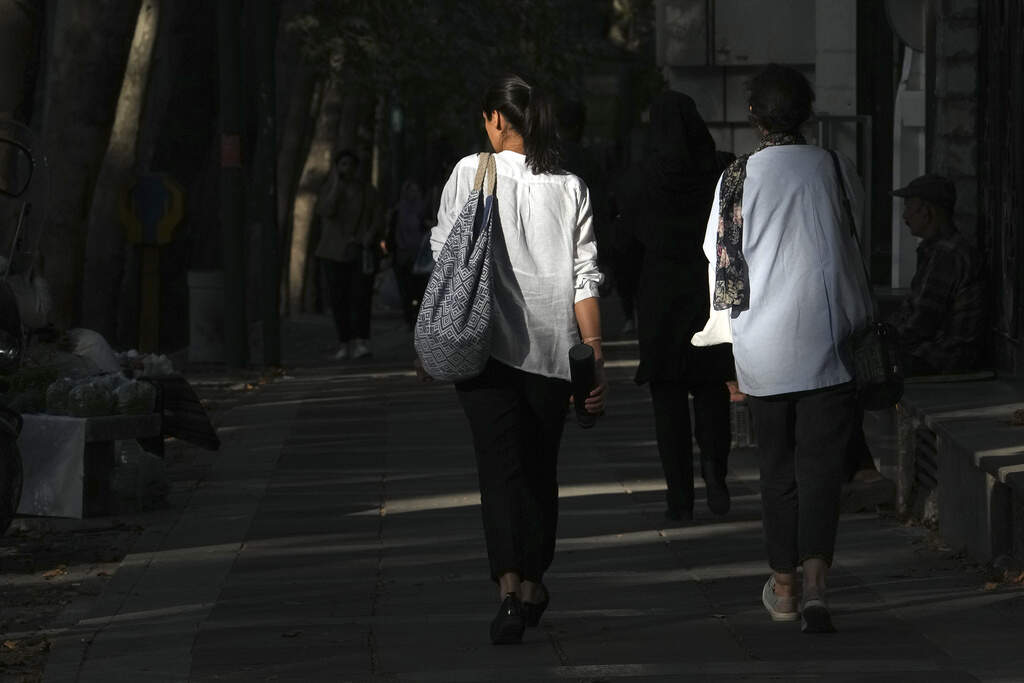
Iranian law controls how women dress, what they drive and what they do in public. But now, more women across Iran are rebelling — risking severe fines or up to 10 years in prison.
Guests
Fatemeh Jamalpour, Iranian journalist in exile. She was banned from working in Iran by the Ministry of Intelligence. Co-author of “For The Sun After Long Nights,” which she wrote with fellow journalist Nilo Tabrizy.
Book Excerpt
Excerpted from "For the Sun after Long Nights" by Fatemeh Jamalpour and Nilo Tabrizy. Reprinted by permission of Pantheon Books, an imprint of the Knopf Doubleday Publishing Group, a division of Penguin Random House LLC. Copyright © 2025 by Fatemeh Jamalpour and Nilo Tabrizy.
The version of our broadcast available at the top of this page and via podcast apps is a condensed version of the full show. You can listen to the full, unedited broadcast here:
Transcript
Part I
MEGHNA CHAKRABARTI: Mahsa Amini was born in Northwestern Iran on September 21st, 1999. Her family is Kurdish, a minority in Iran. Her Kurdish name was Jina, which means life. Mahsa was her Persian name. On September 13th, 2022, Mahsa visited her brother in Tehran. There, she was arrested by Iran's guidance patrol, the regime's morality police. Her crime, not wearing a head covering appropriately in public.
Since the Iranian revolution in 1979, Iranian women have been required to wear the hijab in public. Supreme Leader Khomeini declared that women would be quote: "Naked without it." But Iran and especially Tehran has always been a cosmopolitan place. Women did resist the requirement in one way or another, and the regime always pushed back. In 1983, mandatory hijab in public became part of the Iranian penal code, which stated that quote, women who appear in public without religious hijab will be sentenced to whipping up to 74 lashes. End quote.
Still in the 2010s and 2020s, young Iranian women became ever more resistant to wearing the hijab in public. That prompted the morality police to launch campaigns, where they arrested and reeducated women who were defying the law. Mahsa Amini died as a result of her arrest and reeducation. She was beaten by police inside a police van, and two hours after her arrest, she was taken to the hospital, though it took more than an hour and a half for the ambulance to get there.
Mahsa was in a coma, and she died on September 16th, 2022, five days shy of her 23rd birthday. Records show that she was already brain dead when she arrived at the hospital.
Mahsa's death sparked a wave of protest among young Iranians around the country, and three years later, they have not given up, though at great risk to themselves and their families.
Being without hijab in public remains an act of civil disobedience in Iran.
But the young women have the regime rattled. Iranian President Masoud Pezeshkian said in September of this year that human beings have a right to choose. But he also accused the global community for, quote, "Blowing things out of proportion."
Meanwhile, a top Iranian conservative Mohammad-Reza Bahonar declared that there's, quote, no enforceable law on wearing the hijab that triggered sharp backlash from fellow conservatives.
And just this month, Iranian Judiciary Chief Gholam-Hossein Mohseni-Eje'i called for much stricter methods to curtail what he called social anomalies. He said that support for women who do not wear hijab is the result of foreign interference. He said "one manifestation of the enemy's efforts lies in the issue of nudity and not observing hijab." End quote. Now this is the backdrop against which Iranian journalist and author Fatemeh Jamalpour co-wrote the new book "For the Sun After Long Nights."
She co-wrote it with fellow journalist, Nilo Tabrizy. The book is long listed for the National Book Award. Now the Iranian Ministry of Intelligence has banned Fatemeh from working in Iran, and she currently lives in Washington, D.C. and she joins us now.
Fatemeh, welcome to On Point.
FATEMEH JAMALPOUR: Hi, Meghna. Thank you so much for having me and for your support for my people and my sisters.
CHAKRABARTI: When were you forced to leave Iran?
JAMALPOUR: It was anniversary of the movement, a month before September 2023.
CHAKRABARTI: A month before September 2023. Okay. So you were there in Iran when the Iranian people found out that Mahsa had been killed or died in custody. Can you tell us what those first days and weeks were like after that.
JAMALPOUR: Sure. So the day that they took Mahsa's body, we know that she already dead. And they tried ... to keep her body, in hospital to just cover her death. So by accident, some reporter were there and they realized that molarity police beaten a young woman. Then other journalists did follow up.
Niloofar Hamedi, a journalist at the Shargh newspaper, published a photo of her father and her grandmother embracing each other in grief and published the news about Mahsa's death. She said, we are mourning forever. Then many women gather in front of Kasra Hospital and protesting her death while being beaten [by] regime and arrested. While regime said that, yeah, she died because of natural disease, and we didn't beat her. They beat people in front of hospital.
Then it was her funeral. We know that one of the reason that regime could not cover her death was her family. Her family were Kurdish. Kurdish people has a long time fighting with Islamic Republic. Since 1979, many of them got executed. So her family refused to be silent, and thousands people attended her funeral. And another journalist inside Iran covered her funeral.
And the whole Kurdistan were under a strike. Then it spread to Tehran and other cities, so people, especially generation Z and women were in the street and protesting for six months.
While being, the regime killed 500 people, according to even their statistics. But the number is definitely, is high. They killed many teenager girl during this time, and at that time, every time I walk out in the street, I saw graffiti, you know, and a slogan on the wall that the official tried to kill him, but they couldn't.
We were in the street. I covered every day of the protest and were there, and I saw the contagious bravery. I saw the young people who just walk in front of plastic there, bullet, who walk among the huge amount of the tear gas, but they said we don't retreat. And the other things that the old people and even religious people was saying, I remember that I was waiting for a taxi.
It was four days after Jina's death. And old man came toward me and I wasn't afraid, I thought he gonna mention something about my hijab, because I didn't wear hijab as well. And he brought his mobile, his cell phone, shows Jina's picture to me in hospital and said she could be my daughter.
And it happened for many people, especially religious people, they feel that Jina could be their daughter, could be their sister.
For many people, especially religious people, they feel that Jina could be their daughter, could be their sister.
CHAKRABARTI: So Fatima, you just said something that caught my attention. At that time where you were covering the protest following Mahsa's death. You weren't wearing hijab in public.
JAMALPOUR: No, I didn't.
CHAKRABARTI: But before that, you grew up under the regime, correct? Was this a change for you? Did you wear hijab beforehand?
JAMALPOUR: Yeah. So let me tell you, I grew up in really religious family. My father was teaching religious at a school, and I was serious devout. I had to wear a veil until high school, and I fight back to just remove veil, and wearing headscarf. But after 2018, I stopped wearing hijab, but because another protest happened at that time. And the women started to, stood on the platform across the city and wave their hijab.
The regime arrested those women, beaten them and accuse them to being mentally ill, but from that time we stopped wearing hijab on public, but we still carried around our shoulder. If we see molarity police, we put it in our heads. It was a game in Tehran state. But after Jina's death, we never carry hijab. Not only me, many other, I remember in one of the first days, I still have my hijab across my, and I reach out to the checkpoint of the security officer. I wanted to put it in my head, but I saw all of 15, 16 years old teenage girl walk in front of them without Hijab and I got a shame and I put my scarf on my back and I never carried again. It was exactly contagious courages.
This young generation made us a braver and better version of ourselves.
This young generation made us a braver and better version of ourselves.
CHAKRABARTI: But they, and you, when you, even when you stop deciding to even carry the hijab with you, just in case. As far as I can understand, technically that's still a crime in Iran.
JAMALPOUR: Yes. It's still [a crime].
CHAKRABARTI: Yes. Yes. So that was, that is a continuous risk that they are taking and that you took as well.
Did that make you feel just that the act of going outside to walk around the streets of your city, did it make you feel a little nervous about that or were you getting courage from all of these other young people?
JAMALPOUR: I get courage. I never get afraid. Even during the protest, I got shot by a plastic bullet, and then I was like, Where is my bullet? And I continue reporting and being in the street. Because I feel that people were there fighting for a good thing. It was a revolution for gender equality, for freedom, for normal life. And it was just being one of them and being among them, was really unique experience. Once in a lifetime.
I got shot by a plastic bullet, and then I was like, 'Where is my bullet?' And I continue reporting and being in the street. Because I feel that people were there fighting for a good thing.
CHAKRABARTI: So what is it, I know you cannot be in Iran working there right now. And we're going to spend a lot of the rest of the show talking about what it's like being a young woman, but a young person in Iran at the moment. But can you take a second to tell me when you think, you mentioned 2018, there is some point in the past 10 years that attitudes have significantly shifted, especially amongst the younger generation about complying with these sort of religious edicts from the regime.
Yes?
JAMALPOUR: Yes.
CHAKRABARTI: Tell me, just tell me a little bit about that.
JAMALPOUR: Yeah, so I think what we are observing in Iran is really intergeneration and intersexual changes that happening from the ground. Like my generation, millennial, we try to do reform, try to change this discriminatory law, trying to attending protest and shouting, where is my vote?
But these generations, they realize that they grew up with internet. Their English is good. They realize that they want to live like other generation across the globe. They want to live to whatever they want.
These generations, they realize that they grew up with internet. Their English is good. They realize that they want to live like other generation across the globe.
Part II
CHAKRABARTI: I want to return to what you were talking about regarding attitudes of young people in just one second, because it suddenly occurred to me that I want to make something clear. That it's not necessarily I'm not coming at this conversation from the point of view of decrying hijab. Because many millions of Muslim women around the world, in their relationship to Islam, they choose to wear hijab. Here in the United States. The difference is though, that is an act of their choice, of their personal faith. In Iran, it's a requirement.
And I was fascinated to hear that you grew up in a very religious household. Can you just first tell me a little bit about what it's like to have this directive over how you should look in public, be a requirement of your religion. Did that change your own relationship with Islam?
JAMALPOUR: My mom is hijabi still, and I respected that. And it didn't change my view to Islam because Islamic Republic is not representing real Islam. And the other point that I can mention is that even religious people less they believe in this regime, like my parents and many other. My friend's mom stopped praying after the regime executed one young ... protestors, and I see it a lot in Iran.
But I want to mention that majority of Iranian people are moving towards secularism, and it's something that we can realize from how they come to the public or even in their private life, and I think the future could be religious and non-religious people living beside each other. And no one forced us, each other.
I saw many young women in black veil come to protest with their friends without a hijab, and hand in hand they attend the protest. And it shows that the people want to have choice.
And it's things that I heard it from the people a lot. And during the protest, I saw many young women in black veil come to protest with their friends without a hijab, and hand in hand they attend the protest. And it shows that the people want to have choice.
And also, what Iranian women said, that it's that the one who going to ask how to cover and dress is the one who tell us how to think, it's about our agency. And these women are taking back their agency. The other things that the women protest against hijab is not even new, the founder of Islamic Republic in 1979 said that women are nude, naked and should wear hijab.
A hundred thousand of women across Iran protested for six days and each delayed the mandatory hijab law for three years. But during this time, they were alone. Iranian men were afraid of modern Iranian women and stand beside the regime. And but during that time, Iranian men realized that they should choose between regime and women.
And they choose women these times.
CHAKRABARTI: This is a really important point because the Islamic Revolution was only in 1979. That's not even 50 years ago. And prior, I mean Iran has this multi-thousand-year history as being like the crossroads of civilizations, right? And just even before 1979, there was the Shah, with the help of the United States.
But before that, there was the cosmopolitan democracy that Iran was. So there are still many people in Iran who remember the time before the Ayatollah. And I just wonder, so the young women, young men and women particularly protesting today, they are in line with Iran's longer history, are they not?
JAMALPOUR: I think they are, but we know that the reason that Islamic Republic happened, there were some cause. And also there were some international intervention. Now we know that CIA was talking to the founder of Islamic Republic over the price. It was the reason that they forced the king to leave the country.
Because of the advantage over the oil price. People, the majority of people knows that. And also, we always remember 1953 coup that CIA and MI6 did in Iran. It was when we had the fair, secular Democrat government and Prime Minister who wants to nationalize all price.
And then they did a coup against him and that coup lead to Islamic Republic.
CHAKRABARTI: That was my awkward way when I was saying with the help of the United States.
JAMALPOUR: Yes. Yes.
CHAKRABARTI: The return of the Shah. But I guess what I'm saying is what the young women are demanding now is actually more in line with what Iran was until 1953.
JAMALPOUR: So --
CHAKRABARTI: No? Okay.
JAMALPOUR: No, it's complicated. We want democracy. We don't want Monarch. ... And now many human right activities, public figure in Iran releasing a statement and asking for referendum, though, we don't want another monarch for sure.
And it's the young people is a secure and democratic country.
CHAKRABARTI: So let's get back to the young people that you write about in the book For the Sun After Long Nights, because you tell many stories about what their lives are like now, and for obvious reasons, we're not going to use any of their names, their real names, because they are in such danger in Iran.
But for example, you have a story about, this is a tragic one, about a 16-year-old who was a protester. And then something happened. Can you tell that story?
JAMALPOUR: Yeah. Nika was 16 years old and protestor, she was so brave. She working as a barista at cafe, many of these young generation starting working in high school because they want independence.
And Nica attended the first days of protest. She shouted this to dictator, then she got targeted. And set her a scarf in fire. She was so brave. Then the regime target, the regime official security targeted her, and they arrested her and they raped her. And they killed her by baton.
And they put her body through a high building to pretend that she committed suicide.
CHAKRABARTI: Oh, to fake that she jumped off the building.
JAMALPOUR: Yeah. And then they arrested her family. They stolen her body, they borrowed her body in a cemetery far from her homeland to prevent people gathering like what happened at Jina's funeral.
And I wasn't able to interview her family, but I really want to write about her. So I follow her family social media, and I want to say that the family of victims like Nika using social media as a tool to fight, and to just seeking justice for their lost loved ones.
And I try to bring Nika to the life, like I realized and wrote that she liked chocolate ice cream. Or she wanted to taste Mochi, and she had always the real beautiful eyeliners, like many of Gen Z are obsessed with, and she using a spider web to design her room and all of these that represent how they live, their values, and when she killed, many people brought flower to the place that she used to work in memory of her. And then the regime shut down that cafe.
Then people brought flowers to the platform of the woman who has started to protesting hijab in 2018.
In memory of Nika and other brave women. And what I saw that the generation, all of them has tattoo, had many piercing, has a really stylish outfit and they really modern and hardworking and most of them are educated and they really deserve better life. And they demanded only a normal life.
CHAKRABARTI: So she was killed by the regime. You also write that for protestors who get injured, many of them are, they just don't even go to the hospital because that's a risk for them.
JAMALPOUR: Yeah. Also, many hospital refuse to treat them. The regime, security officer has started to shoot at the people eyes, targeting people eyes.
CHAKRABARTI: Ah. That's why there's all those pictures of, I think the protesters themselves are putting it up, of a picture of their face before they were shot and then after with a patch over there.
JAMALPOUR: Exactly. Yeah. At least 500. And then the hospital refused to treat them and for a long, for a month they stayed without any treatment. And then one, just a doctor at one of those hospital persisted that we should treat them. And but what I saw after that, they published their photos of before and after, but they said we are not regrets. If we return back, we go to the street again.
Doesn't matter if we lost our eyes.
CHAKRABARTI: I don't know if you can answer this question, but do you have a sense as to why the regime was saying to police, shoot them in the eye specifically? Obviously, it's horrifically damaging but I don't know if there was any sort of symbolic, a reason as well, or no?
JAMALPOUR: They also shoot at the women vagina. It's just being brutal to suppress the protest, because they couldn't suppress the protest there these times for months. And one of the reasons, as I wrote in the book, and I talked to many lawyer about it in Iran, was that many of these generation are gamers.
30 million gamers live in Iran. And they, according to the regime statistics, they used to play a strategy game. Because of that, they know how to fight with the regime officials in the street. And when the regime realized they can't handle this they brought one of this arrested young 23-year-old gamers, that was barista, to the national tv to confess that he got corrupted by playing online game.
And then they executed him. And those execution really affected the protest, in suppressing the protest as the way that it used to be. And I really wish that when Western countries negotiating with the regime, they put execution and human right on the table. Not only nuclear program.
I really wish that when Western countries negotiating with the regime, they put execution and human right on the table. Not only nuclear program.
CHAKRABARTI: So just to emphasize what you're saying, you see the international community as being only focused on the nuclear program, but you want them to put like a treatment of human beings and human rights also on the table in any Iranian negotiations.
JAMALPOUR: Exactly.
CHAKRABARTI: Yeah. Okay. Can I just ask you, you relatively recently were forced to leave Iran, which means for several years you were there while you were reporting on these protests. I understand that the regime in fact interrogated you several times about that.
What was that experience like?
JAMALPOUR: ... Oh, I should say that the first time that I got arrested where I went to in front of the stadium, because women used to be banned from watching the matches in a stadium after the revolution. And women fight a lot to get that right. And nowadays they can't go to the stadium, it's just about each fight for each single right.
So at that time it was banned and it was protest in front of the stadium. I went there to cover it for a newspaper with a mission, then the police arrest me while slapping me, kicking me, and beating me that much heavily that my dress and bag turn apart. And I was not alone.
It was 18 young women beaten in that way. Then another time that I cover January 2018 protests, it was another economic protest. I got arrested and the reason that I saved myself when they interrogated me at that time. And asked me, what do you do?
I respond that I'm a marriage ceremony videographer, and they didn't check my background and I released. But then I went to BBC to work, as the censorship was high, and I felt that I wasn't able to do journalism inside.
So I went to BBC in London, and I covered Iran for a year. I did a story about women fight with mandatory hijab in the street about IRGC corruption about the malnourishment in the Iran prison, all of this regime red flag. Then six months before movement, I received a call from my family. They told me and my father got cancer and it's the most aggressive one and he's in ICU.
So I know if I return back, I may be arrested, but I want to be there, so I return back to Iran. It was six months before movement and upon arriving, I got arrested.
CHAKRABARTI: Right when you got off the airplane?
JAMALPOUR: Yes. In the airport. And I just heard, then someone called me, Miss Jamalpour, and I turned, and two group of security forces waiting for me.
One from Ministry of Intelligence, one from IRGC, Iranian Revolutionary Guard Corps, and they had camera, they film me, they had guns, and I couldn't believe that they take me that much serious danger, it's like living in the dark comedy. Then they took me to the hotel. They interrogated me for eight hours.
After eight hours, they said, we are going to send you to prison because don't cooperate with us. And I said, if you send me to prison, I committed suicide and no one believe that I did, I'll say you killed me. They're scared. They released me, but in the condition that I had to attend whenever they summon me. For six months, I was beside my father.
But in hospital or I was in interrogation sessions, and they asked me about everything, about my childhood. It was really weird. They offered me to work with them in many way that I refused. The last one was three days after Jina's death, and I was shocked because I didn't know in that chaos that someone like me, and I didn't do journalism for the last six months. Then they said that they will sending me to prison.
CHAKRABARTI: Fatemeh.
JAMALPOUR: Yep.
CHAKRABARTI: These are terrible experiences, but also it shows the power of your pen. Okay, so when we come back, I wanna talk with you about what you think we should understand regarding the different things that we're hearing from different parts of the regime in the wake of this continuing protest from young Iranian women.
Part III
CHAKRABARTI: Fatemeh, I would love for your help to decipher the kinds of things that the international community has been hearing from various parts of Iranian leadership. Because there's no doubt in my mind that the ongoing protests, and as you've said, the sort of unbreakable courage of young people right now really does have, I don't know if the Iranian regime can be rattled, as I said earlier, but they feel compelled to say things that are sometimes in opposition to each other. So let me just first start with an interview that that Iran's President Masoud Pezeshkian just gave a couple of months ago to NBC News here in the United States.
And there's some quotes I have here from his interview. He says that human beings have a right to choose, indicating his own personal take on whether or not hijabs should be mandated in public. But then he also says that he accuses the international community of being hypocritical.
He told NBC news that on a daily basis, hundreds of people are being killed in Lebanon, Gaza, all over Palestine, Yemen and Syria. Yet no one bats an eye. Why are these less than human beings? And then he adds that he thinks the international community is blowing what's happening in Iran out of proportion. And he says: "We didn't have appropriate management of our internal issues and implementation regarding enforcement of hijab wearing."
When you hear those things, help us understand what Iran's president is actually trying to say about his leadership right now.
JAMALPOUR: Honestly, from many of Iranian people, he's just a puppet of the Supreme leader. He's not a real politician. And we know that the people turn out in the election is getting less and less.
The regime has no more legitimacy. And also he's lying. (LAUGHS) If I want to be honest. I remember in the last interrogation session with the Ministry of Intelligence, that part of his cabinet, the female interrogator told me, first you ask for optional coverage, then you want to be naked in the street.
Then you asking for sexual revolution.
CHAKRABARTI: By not wearing hijab. You were asking essentially to be punished. That's what she was saying. Yeah.
JAMALPOUR: She said this was, you're demanding optional hijab first, then being naked, then you're demanding sexual revolution. And I told her that, no, we only want to have, we can't, we want to choose our dress, and optional coverage. That's it. And it's the basic human right. And she said, who said it's a basic human right? So they don't believe in the human rights. If they do, they didn't kill and arrested people. Now, last week in University of Tehran, there was design week event.
And many people were there without a hijab for sure. The regime shut down the event. They shut down the restaurant. They seized the cars. If he's saying that we are not ... according to hijab, so what's his response toward all of this incident? And we know that the one who say the last word in Iran is the supreme leader.
It's not the president.
CHAKRABARTI: We'll get to the Supreme leader in just a moment. But much of our conversation right now, Fatemeh, has been about what's happening in Tehran. Is there a similar discontent or protest outside of Iran's biggest city in more rural areas?
JAMALPOUR: So I'm from a really a small city called Masjed Soleyman in southwest of Iran.
And yes, it's just not just only Tehran, it's all over Iran, like during the protest time, I saw the protest happen in really a small village in Kerman Province, in the center of Iran. Or there were another party, mixed party in Kish in the south of Iran that they shot down the cafe in the response, and it's all over the country, or even in Mashhad, religious city in the east, my friends send me video of the running in the street in a sport bra and shorts.
CHAKRABARTI: Wow.
JAMALPOUR: Yes. So people just changing this barrier by their courage, and during the summer it was so common in Iran that women's wearing a sport bra and crop. It's trend and it's how they are fighting with this regime's code. They just pushing the boundaries further and further.
CHAKRABARTI: Okay. So whenever a regime is backed into a corner, essentially. Given, especially in this case, given that these young people are showing no fear in the face of considerable threats, oftentimes those regimes react even more extremely. Do you think that's happening in Iran now?
We've been reading about increased raids of government facilities to check if women are wearing hijab or an increase in the number of threats or redoubling the efforts to make sure that everybody knows if they're caught without hijab, they face at least, I don't know, a decade in prison, if not more.
Is there more forceful reaction now happening from the regime?
JAMALPOUR: I think regime don't know what to do. So let me tell you, in the anniversary of the movement, this conservative parliament passed a new hijab law that was increasing the fines for women a lot. The access to the police to take their fine from the women bank accounts or banning them from leaving the country, or social security, everything.
But then the National Security Council stop the rule to be implement, because ... asked the Supreme leader, as they said, but I think they knew they cannot arrest millions of women and they don't know what to do. They even don't have the infrastructure to do that. During the protest, their jail and detention center was almost collapsing.
And then they had to release many people in the name of supreme leader pardon. And they have many economic crisis and corruption. We don't have electricity daily. People don't have drinking water daily, so they are failure of state and they don't have power to implement hijab rule anymore.
CHAKRABARTI: So can I just add to that, because I understand that from some polling from Iran International, that they have found that more than 90% of Iranians right now, regardless of age, more than 90% are very dissatisfied with the regime.
Does that track for you?
JAMALPOUR: A statistic from inside Iran said 80% are against regime.
CHAKRABARTI: That still seems like a lot.
JAMALPOUR: It's a lot. Yes. And it's the reason of all of this, wrong policy inside and outside, just trying to aspirate Shia Islam in the region instead of thinking about their cities and the country's benefit and future.
CHAKRABARTI: So the reason why I'm asking sort of these questions is to get a sense as to there's the direct sort of use of force that the regime is using against protestors. But I was very fascinated by this quote from, I think just a few days ago, from the head of Iran's judiciary where he is directly claiming that if you support not having to wear hijab in public, then that's just, as he said, a manifestation of the enemy's efforts. That's how they're talking about it. Now that this is a foreign interference in Iran. I'm wondering what you think about that.
JAMALPOUR: They always addressing this issue as a enemy did that, U.S. did that, Israel did that, and they just want to not facing the reality.
If I want to say an example, the regime appointed as really a scary head to the police about two, three years ago, and he said, from this Saturday, we are going to arrest women without hijab. On that Saturday, thousands of women were in the hijab, without hijab in the street. Took photo of themself, published on social media with the hashtag of #Radan Saturday.
Radan is the name of that head of the police.
CHAKRABARTI: They made a hashtag out of him.
JAMALPOUR: Yeah. They took photo in really beautiful dress and skirt without hijab, posing in the street with hashtag #Radan Saturday. And yeah, it shows that they regime cannot, women say that we will not return back, we don't retreat.
CHAKRABARTI: It makes me wonder why the regime hasn't just shut down the internet in Iran yet. Because you've said this a couple of times, that the younger people in Iran are, through social media, through the internet, they have access to the whole world.
And they want what they see on their phones. I'm not saying that the regime should shut down the internet. Absolutely not saying that, but it makes me wonder why they haven't taken like that kind of step yet.
JAMALPOUR: They did it before, actually.
CHAKRABARTI: Ah, okay.
JAMALPOUR: When another bloody protest happened in November 2019 that they increased the fuel price without passing the law.
It was given not according to the law. And the people starting to protest. They shut down the internet for three days and we couldn't have access to anything, and then they killed 1,500 protestors. Then they open the internet, or during the Women, Life, Freedom movement, they out to nationalize the internet again.
And it has huge fine when you shut down the internet, daily costs for the country, and another time during Israel-Iran War, they shut down the internet to their own people who don't have access to Siri, who don't have access to the shelters. And the only way that they knew they are going to be bomb was internet.
CHAKRABARTI: Oh, wow. And they shut that down.
JAMALPOUR: They shut down during the war. To just stop people, for their fault and their responsibility that for happened. So they doing it regularly where they can and they also, they are investing a lot to do the internet nationalized. And I'm not sure if they will be able to do that in the future or not to nationalize the internet, but I don't think that they can.
CHAKRABARTI: In a sense, not in a sense, directly thanks to the internet and the courage with these young people are actually putting their stories out there for the world to see. It's one of the reasons why there has been some journalism coverage from international organizations on this issue.
But do you think in terms of the world, as in world leadership, that enough attention is being paid to what's happening right now in Iran?
JAMALPOUR: I don't think so. So what I want to say as Iranian journalist during all of these years, I was really suffering from how Western media cover Iran.
We don't see in fully picture. And now I know the reason, the only way that the regime give Visa and credential to the western media is covering press regime release.
CHAKRABARTI: ... Oh, so only if you're going to do a good story about the regime that you get the journalist visa. Okay.
JAMALPOUR: And they accept it. They do it to have access, like during the Israel-Iran war New York Times published a story that when I look at the photo, there were all religious people, and it was like Iranian society in '98 not nowadays. And I see it a lot that all of this effort, this society movement towards secularism, none of them has place in the international media.
CHAKRABARTI: Yeah. Okay. We only have a couple of minutes left, Fatemeh, and if with your permission, I'd actually like to return to what covering all of this and reporting on this and co-writing the book has cost you. Again, I just want to emphasize you cannot be in Iran right now. I feel like your choices are either, if you go back, you're probably going to end up in prison or you're exiled from your home country.
There's those two bad choices. Do you still want to return?
JAMALPOUR: Yes. I wish it would be Evin prison because Evin prison is a good prison. My fear is that --
CHAKRABARTI: Evin prison is a good prison?
JAMALPOUR: Yeah. My fear is that they send me to Qarchak prison. That's the awful prison. And they send a rebellion female, political imprisonment to Qarchak. Or one of my fear is that they send me to my hometown Masjed Soleyman prison. (LAUGHS)
It would be, I'm thinking about all of that. When we signed a contract for the book, I went and meet my lawyer and I read some part of the book and he said, you should leave immediately.
Because they're going to say, you are making corruption on the airs and blasphemy by writing this book, I knew that if I wrote about my interaction and protest, I should leave and cannot come back. And living in exile is so painful. It's like living in constant grief. Each time that I have video call with my nephew and niece, people playing high and seek in video, and it's painful and joyful, but I definitely want to return soon or late. I will not wait for the regime change. I know that.
Living in exile is so painful.
CHAKRABARTI: Is this a price worth paying for you?
JAMALPOUR: Yes. I think every of us should pay the price. The change wouldn't happen without paying for that. And we know that the future don't belong to the fear and scared people. Yeah. I think it's about each of us responsibility.
CHAKRABARTI: We have about 30 seconds left, Fatemeh. What do you want the people listening to you right now, what do you want them to know?
JAMALPOUR: I want them to know that the majority of my people are normal human being, like them drinking coffee, dancing, drinking alcohol, having the similar value and belief also, and they deserve a better life.
I hope that this book raise awareness and bring empathy.
CHAKRABARTI: There's also a sense that you don't want Iran to be isolated from the world.
JAMALPOUR: Exactly. It's what the regime has to do all of these years, trying to build a wall, but we are here to make the bridges and destroy those walls.
The first draft of this transcript was created by Descript, an AI transcription tool. An On Point producer then thoroughly reviewed, corrected, and reformatted the transcript before publication. The use of this AI tool creates the capacity to provide these transcripts.
This program aired on November 17, 2025.