Support WBUR
The power of gratitude
Listen to our 2018 show featuring David DeSteno here.
Studies show that feeling grateful can make you more patient, honest, generous and even help with your sleep and immune system. Psychologist David DeSteno on how to practice gratitude daily.
Guest
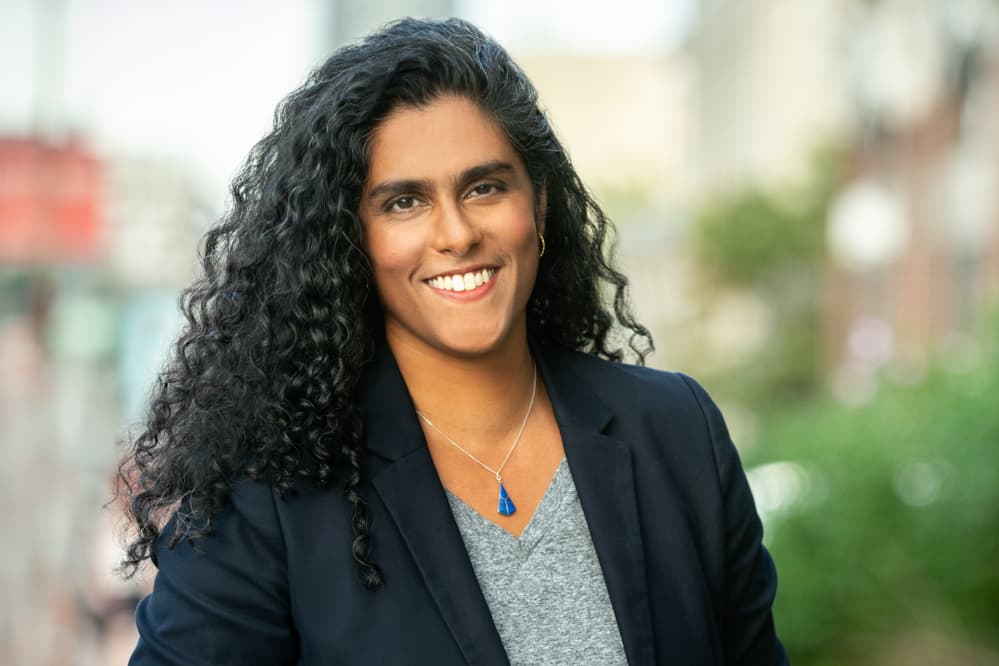
David DeSteno, professor of psychology at Northeastern University. Author of "Emotional Success: The Power of Gratitude, Compassion, and Pride." Host of the PRX podcast How God Works: The Science Behind Spirituality.
The version of our broadcast available at the top of this page and via podcast apps is a condensed version of the full show. You can listen to the full, unedited broadcast here:
Transcript
Transcript
Part I
MEGHNA CHAKRABARTI: For many Americans, tomorrow is a day of giving thanks. Expressing gratitude feels really good and it does good both for you and the community you live in. But to truly reap the benefits of gratitude, our guest says it must be a conscious and active daily practice, not just something we set aside for the fourth Thursday in November, once a year.
David DeSteno joins us. He's a professor of psychology at Northeastern University and his research focuses on something called moral emotions. He’s also the author of Emotional Success: The Power of Gratitude, Compassion, and Pride.
He is also host of the PRX Podcast How God Works: The Science Behind Spirituality.
Professor DeSteno, it's good to see you. Welcome back.
DAVID DeSTENO: Good to see you again, Meghna. Thanks for having me.
CHAKRABARTI: You know, I think just about everyone has an intrinsic sense of what gratitude feels like, but how would we define actually what it is?
DeSTENO: So gratitude is the emotion we feel when we recognize there's goodness in our life, but that it didn't come from us. It's because someone else did something for us. It's from fate, from seeing something wonderful in nature. If you're a person of faith, from God.
And that's what makes it different from happiness. Because you can be happy all by yourself. You can be happy that you won the lottery, that you earned a promotion at work. If you're a student, that you got a good grade. That you're watching a great comedy on TV. It doesn't matter if anyone else is there. But gratitude is all about interconnection. It binds us together, and that's what makes it a really essential part of human life.
CHAKRABARTI: Oh, that's interesting. So I am just thinking on a daily basis, for me, I can give you lots of examples of gratitude that I feel. But the first thing that comes to mind, though, is the happiness that my children give me. Is that both happiness and gratitude? Because I'm also grateful that they're in my life. Or is it just sort of mostly happiness? Because I think there's a lot of examples where it can feel sort of going on either side of that happiness-gratitude line.
DeSTENO: Yeah, it can. And it really depends upon how you think about it, right? You can enjoy someone else's company. But if you think about how wonderful it is that they agreed to spend this time with you, or that your child curled up in your lap, or that your child said, "You know, Mom, you did this for me a while ago and I didn't really understand it then, but now I really am grateful that you did that."
CHAKRABARTI: Mm-hmm.
DeSTENO: You know, if you can attribute to it that someone else cared for you. The essence really of gratitude is that if you feel grateful, it's showing that you matter to someone else. And if they let you know that you matter to them. And that they're grateful for something that you did — time, effort, support. That's what makes it gratitude.
And you feel this warm impulse that not only do you want to pay them back or care about them more, what we're finding is it also makes you want to pay it forward to other people. And that's a game changer.
CHAKRABARTI: Okay. It sounds like an another important distinction is, as you said earlier, this is an emotion that's triggered by other people. So, like, I am also, I think I'm feeling gratitude when I'm like out in nature and I'm just feeling grateful for the beauty surrounding me. But that's not the same thing?
DeSTENO: No, it kind of is. And here's the reason why. We humans tend to ascribe cause and anthropomorphize things in the world. And so if we see a beautiful scene, we kind of feel that not only are we fortunate to see it, but by some force of fate, we were here at the right time and something is sharing it with us.
So you know, you can deconstruct that feeling if you really wanna work really hard to say, oh, well, it's just totally random and X, Y, and Z, and maybe the gratitude will go away. But we, by dint of the way our mind works, feel that things happen for a reason. And I'm not here to say that they always do, but if you can ascribe it that way, that you're fortunate something worked out that you can see this and you might not have had that opportunity in other ways, it can make you feel grateful.
CHAKRABARTI: Okay. So that's the what of what gratitude is. Why do we feel it?
DeSTENO: Gratitude, like all emotions, the reason we have that capability is they help us solve problems and challenges we face in life. You can think of them as mental shortcuts.
And for humans, a lot of the problems and challenges we face in life involve other people. My friend who I think you know, the neuroscientist Lisa Feldman Barrett, likes to say, the best thing in life for any human is another human. The worst thing in life for any human is another human. It depends upon the nature of the interaction.
And what gratitude does is it greases the wheels of social interaction. It helps us. It points us to the good. You know, the sociologist Georg Simmel described it as the moral memory of humankind. It's what doesn't let me forget that I owe you something. But what he didn't know at the time, and what we're seeing now in the science, is that not only does it make you want to pay favors back, it makes you want to pay them forward. And it also is really good for your health and wellbeing.
CHAKRABARTI: Yeah. So we're gonna talk about that in a minute. But this actually leads me down two different lines of thinking. First of all about, you know, it being a way to connect and as you said, like sort of lubricate the sometimes highly frictional — I'm making that up — the friction-full interactions between human beings. That also makes me wonder, is gratitude, because we're all capable of feeling it, right? Gratitude almost seems sort of like evolutionarily advantageous, right? For a prosocial species like human beings?
DeSTENO: Yeah. Yeah. So let me put on my evolutionary biologist's hat. So exactly right. So we humans thrive through cooperation. And whenever you're gonna cooperate with someone, somebody's gotta be the first to kind of reach out their hand and say, "I'm gonna help you." And so gratitude is the emotion we feel that pushes us to pay that favor back.
Now, I think all of your listeners are gonna have had this experience. Sometimes somebody does something for you and you're like, "Oh, great. Now, now I gotta get you something," right? But then there are other times when somebody does something for you and it just warms your heart and you feel really valued.
So what we know is the first is kind of indebtedness, and what you'll do is, you know, you'll kind of grudgingly try and equal the scales. With gratitude, not only does it make you want to pay back, but even more so. And even pay it forward to other people. So if you've done something nice for me, Meghna, while I'm feeling grateful, if someone else asks me for help, I'm gonna help them.
CHAKRABARTI: Mm.
DeSTENO: It's gonna spill over. And in an evolutionary biological sense, that spillover increases the rate of cooperation and prosociality in the group because it's just causing other people to be the first to reach their hand forward. And so there are evolutionary models that shows gratitude actually just increases the level of cooperation and care within groups.
CHAKRABARTI: Yeah, that's so interesting. And in fact, if I can just sort of push the analysis a little bit more, is it the same sort of unconscious and automatic expectation at work when you know someone does something for you and you feel like, "Oh God, now I gotta pay them back," definitely indebtedness is the sense.But what's interesting to me is like most people, the first thing they think is, "Ugh, now I need to pay them back," like, it's almost like a gratitude response even in a sort of a negative interaction?
DeSTENO: Yeah, that's true. But gratitude, the way we typically define it, is a very positive feeling state.
CHAKRABARTI: Yeah. Okay.
DeSTENO: Which is why when you, which, and again, it's also like people will oftentimes say thank you, right? In a very rote sense.
CHAKRABARTI: Yeah.
DeSTENO: That does nothing for you. What you have to basically do is take the moment, allow yourself to feel that good feeling and to realize that this person didn't have to do X, Y, or Z for you. You know, gratitude isn't about how much someone gives you. It's about the thought, the care, the effort that they put into.
I mean, some of my favorite gifts are like little art sculptures that my kids made for me when they were small, you know? And I could have a beautiful painting on the wall that someone gave me. But that little thing is gonna mean much more to me. Because it's a show that they value me, that I matter to them.
And so that's how you can really see, it's not about the objective amount of resources you're getting. It's about the strength of the connection and care you're building with someone.
CHAKRABARTI: How did you get into this line of research?
DeSTENO: I got into this because I, I had a student, her name was Monica Bartlett, she's now a professor at Gonzaga. And at the time we were studying, like most psychologists, the negative stuff of life. You know, what makes people prejudiced, you know, anger, what does anger do to you?
And she said, "Dave, there's more to life than this. There's good things." And so we started, she's like, "I wanna study gratitude." And so we started down that track. And for us it wasn't about, you know, one thing, the science, it's tricky because if you ask people, if someone did something nice for you, would you be grateful? What are they gonna say? "No?"
CHAKRABARTI: (LAUGHS) Some might!
DeSTENO: (LAUGHS) Well, some might. They're gonna say yes, but, uh, you know, "Would you help them?" "Yes." But when push comes to shove, we know that people can be rather selfish. And so she and I together and with many students since then, started developing different ways to, you know, put people to the test.
And so we use actors where, you know, actors come and put people in weird situations and they help them out or they don't. And instead of saying, "Would you help someone?" We basically give them the opportunity to help someone that's gonna cost them time, money, or effort, and see if they do it.
CHAKRABARTI: Wait, tell me more that, so you actually brought in actors for some of your research?
DeSTENO: We train — yeah. We train students as actors in the lab. So, you know, like we have one situation that. It's kind of the bread and butter of what we often do. We sit people down, we have them doing this godawful task on the computer. It's designed to be godawful and annoying. And then the computer looks like it crashes. And the experimenter comes back in and says, "Oh, you gotta do this all over again." People are like ready to pull their hair out.
And another person in the lab who they think is just another participant, is actually an actor, and they'll go, "You know, I'm pretty good with computers. Let's see if I can help you." And they futz around with it and lo and behold, the computer comes back on and the person doesn't have to do the task. And then later in the day, right, you have this person confront them and ask them for help on campus with something else. And we see how much effort they'll go to help this person.
CHAKRABARTI: Oh, so later in the day, outside of the lab?
DeSTENO: So they think the experiment's over, right? And what we can tell is the amount of gratitude they felt when that person helped them predicts how much effort they'll go to to help this person.
And you might say, "Well, Dave, that's not interesting. They feel like they owe them something." And so what we'll do other times is after they leave the lab and they're still feeling grateful, we'll have a complete stranger approach them and ask them for help and they'll still help that person.
CHAKRABARTI: Oh, interesting.
DeSTENO: Because gratitude's kind of this. It's like, it's like when you're home and you're watching a scary movie and you hear a noise outside. You're more likely to think that it's someone trying to break in your house than raccoons rummaging in your garbage. Because you have this, you're afraid already from the movie and it kind of sets your expectations.
And so when you're feeling grateful, it's kind of a dumb system. Not only will you help the person to whom you're feeling grateful, but you'll pay it forward. And that actually has a real big evolutionary benefit.
CHAKRABARTI: Right. How long of a tail does that feeling of gratitude have?
DeSTENO: It only works while you feel it. And that's like all emotions, right? It's only while you're feeling it. And this is why — we can talk about this now or later — one of the big things people are into these days is gratitude journaling, you've probably heard about this.
CHAKRABARTI: Mm-hmm.
DeSTENO: People normally do that right before they go to bed, and the effects that they get from that on their behavior and wellbeing, they're there, but they're tiny, really tiny compared to what we have in the lab. And so one thing we're interested in is how do we help people feel it more?
Part II
CHAKRABARTI: Professor DeSteno, we got some feedback from listeners about the role that gratitude plays in their lives or recent important times they felt it. So this is from On Point listener Jo G., who's in Sacramento, California. And she says her most recent moment of gratitude came from her friends.
JO G.: I have one set of friends who constantly organize things for getting together, and every time they do, it's like a tsunami of gratitude over my heart. It. It makes me happy. It blows stressors away. I feel more energetic. I sleep better. I am just so, so grateful that they're willing not just to see me, but to put that mental and emotional work into making it happen.
CHAKRABARTI: We're gonna hear more listeners throughout this show today, professor, but let me just ask you, Jo talks about how gratitude makes her feel in her body. Can you talk about that?
DeSTENO: Yeah. There are a lot of benefits. I mean, one thing that that she pointed out that I thought was really important, was she's saying how that sense of social connection exists. And one thing we know is that really gratitude really comes a lot from experiences with other people, more so than if someone gives you a present, a physical present.
But in terms of what it does for your body, there's a lot of work showing that gratitude has health benefits. It lowers your blood pressure and reduces stress. And so as she was saying there, you just feel more calm. And if you're in the presence of others, that lowering of blood pressure, it also increases something called vagal tone, which is the timing between the beats of your heart, which is tied to kind of feeling positive and wanting to socially interact with other people and feeling safe.
It actually gives a boost to your immune system, too. And so what it's really doing is just putting you in a state where you feel calm, loved, and that you matter to other people, and that reduction in stress is just gonna make you feel really good.
CHAKRABARTI: Oh, that's so interesting because I mean, she's very explicit, Jo says she gets more energy, she sleeps better. So here's another one. This is from listener Gloriany Rivas in Lancaster, Pennsylvania. And she says her most recent experience of gratitude was at a grocery store.
GLORIANY RIVAS: I was at Costco putting away my groceries in my car. It's very windy and raining. And a Good Samaritan got out of their car to take my cart and put it away, and this was just very tiny, but it made me feel seen and it made me feel like not all empathy is lost.
CHAKRABARTI: Talk about this professor, because this is one of the things I think everyone can relate to, when someone you don't know does something that's even just small, but it has this outsized impact on the recipient of that small act of kindness, essentially.
DeSTENO: Yeah. It has the effect on the recipient. And what we're learning is on the giver, too. So a friend of mine, psychologist Nicholas Epley at University of Chicago, has this wonderful data where he asks people, "If you were just gonna go help a stranger, how happy do you think it would make them? And how happy do you think it would make you?" And then he tells them, "Okay, now I want you to go do it."
And what he finds is that they consistently under predict how welcome, how open the other person is gonna be to it and how happy it's gonna make them, and how happy it's gonna make the person who's actually helping. And this is just a great example of it.
Because what it is is it shows that. Someone cares about you, right? That you matter, that they see your humanity, that you have that shared connection. And gratitude is what binds that together. And it's almost like a marker. When she felt that gratitude, not only did she feel valued, but the expression of that that she showed to the other person is a marker to them that the effort they went through really made a difference in someone's life, even though it was small.
And that's the important thing, right? The question is how do we cultivate gratitude? If I asked you, Meghna, what are you grateful for? You know, there's probably three or four big things in your life that you can think about. Your health, your kids, your parents. But the problem is if we always think about those same things over and over again, we're gonna have an adaptation problem. That is, we're gonna get used to them and saying them, and it's gonna become rote and it's, they're gonna lose their power.
And so what really matters is noticing and training yourself to notice these little things like your caller just said. So I run this podcast, as you said, called How God Works, where we don't debate whether or not God exists — not a question for science. But we look at the benefits of religious practices for people. And when it comes to gratitude, as I said before, the only benefit, the only time it benefits you is while you're feeling it. What they figured out a long time ago is that to get those benefits, you have to microdose it throughout the day.
CHAKRABARTI: Throughout the day.
DeSTENO: Throughout the day. So that you feel it. And this is why the effects of gratitude journaling are so small. You're filling it at night and then you go to bed and there's nobody you're interacting with.
And so they have wonderful practices on this. My favorite comes from Judaism. You know the first thing, if you're a Jew, you do in the morning when you wake up and say the Modeh Ani prayer, which is basically thanking God for giving you another day. And then there's a bunch of prayers you say, thanking God for your clothes, you know, for your health, that you're free.
But the really interesting part is there's a tradition that it's called the hundred blessings a day. Through the day, you're supposed to find prayers of gratitude, opportunities for them, 100 times. And so they have prayers for everything. They have prayers for seeing a rainbow. They have prayers for sharing a good meal. They have prayers for hearing a lecture that you enjoy. They even have a prayer for using the bathroom successfully. Right?
And so the idea is that if you train your mind. To notice the things that people are doing for you or the good things that are in your life, it gives you opportunities to experience gratitude. And you don't say them rotely. You pause for those 30 seconds each time to feel them. And if you do, then you're microdosing it throughout the day and it's gonna infect — it's gonna affect you in all those good ways.
CHAKRABARTI: Yeah. Do you mind if I nitpick a little bit?
DeSTENO: Yeah.
CHAKRABARTI: Um, so just using the, the examples of a hundred blessings a day, it's quite moving and I can see how the intentionality of that really reinforces the positive impacts of feeling authentic gratitude. But I thought you said earlier in the previous segment that, you know, feeling grateful for something other than an act that a person has done for you is different?
DeSTENO: No, it can be, it can be from nature, it can be from God. The idea is that there is some intentionality behind it, however you define that.
CHAKRABARTI: Okay, got it. So in that case, let me also then stand up for everyone who does do gratitude journals, because even that, even if it's just five minutes before you go to sleep, I would say that's way more, you know, active and daily practice than most people do. Right? Like, and, and maybe I'm misinterpreting what gratitude is, but I kind of see it as another one of those emotional muscles that if you work it frequently, maybe you don't have to do it a hundred times a day, but even just like once or twice a day in a journal should be, should make a difference, right?
DeSTENO: Oh, yeah. No, I'm not saying it doesn't have an effect. It does.
CHAKRABARTI: Okay.
DeSTENO: It certainly does. I'm just saying the effect is much smaller than if you cultivate it throughout the day. Now, if you're doing it long enough that it becomes a habit of mind for you, so that you kind of do it reflexively throughout the day. Do you feel yourself noticing things more because of that journaling?
CHAKRABARTI: (LAUGHS) I'm not standing up for myself. Don't tell — don't tell anyone. I'm not — I haven't yet become emotionally sophisticated enough to do a gratitude journal.
DeSTENO: (LAUGHS) Okay. Okay.
CHAKRABARTI: I'm just channeling all of those listeners out there who are like "what?"
DeSTENO: No, no. It's good. But it raises an interesting point, too, that's a related one and it's some people don't feel they have anything in their life that they can be grateful for, right? And that, and that's a tricky thing, too. And so what I wanna say to that is our, your reality to some extent, we each construct it ourselves. And by that I don't mean people aren't in terrible situations. Lord knows people are in horrible situations. But how you think about it can really matter.
And so the way I like to think about this is there's a famous parable that the Buddha said, which is, it's called the parable of the second arrow. And so Buddha was with his students and he said to them, "If a man gets shot with an arrow. Will it hurt?" And they said, "Well, yeah, of course it'll hurt." And he said, "If he gets shot by second arrow, will it hurt more?" And they said, "Well, yeah, two arrows are gonna hurt more than one."
And he said, "In life, the first arrow is out of our control. There are gonna be things that happen to us that are gonna cause us pain. The second arrow is our response to it. The second arrow is optional." And what he means by that is how we conceive of things. So when I started this interview with you, I said, gratitude is the emotion we feel when we recognize goodness in our life. That's very different than saying gratitude is the emotion we feel when our life is good. Right?
So even when we're facing very difficult and trying situations, the trick is to look for the things in life that we can feel grateful for. In that way, gratitude can be an act of resistance, right? It is a way to claim your power and to say, "There is some good. I do matter." And to reap those benefits that we were talking about before that come with it. Doesn't mean it's easy, but I think it's worthwhile.
CHAKRABARTI: Yeah, it strengthens the soul in a sense. And that, I can see that as being an act of resistance against whatever kind of badness one is unfortunately experiencing. That's really, really interesting. Do you mind if I just take a slight tangent?
DeSTENO: Sure.
CHAKRABARTI: Professor DeSteno, because you had talked about earlier, sort of the bodily changes that happen when people are feeling authentic, gratitude, and I keep using that word authentic. I'll come back to why.
But over recent years, it seems like there's been this explosion of research that brings together these psychological studies about various emotions and neuroscience. Do you know of any, or have you done any research that that tries to, uh, unlock what's happening in the brain as a person feels gratitude?
DeSTENO: So I'm not a neuroscientist. There is some work on what it does in the brain, but from what I know about it, it's kind of, I mean, it's interesting in one sense. It's like, look, here's what's happening in your brain. But, um, I think the corpus of the work on gratitude that really shows its matters is its kind of health and social outcome.
So yeah, there is some work suggesting what centers in the brain are becoming more active, but as of yet, I don't think they illuminate anything about the experience.
CHAKRABARTI: Okay. So then let's go back to some of the research that you've done in your lab with the students, for example. I would love to hear more about how you're measuring the amount of gratitude they feel, 'cause you said that that's kind of, that's correlated with then how much they will pay that sense forward.
DeSTENO: Yeah. So with emotions, because they're kind of an internal state and there's no, there's no physi — Like I can't put electrodes on your body and know that you're feeling gratitude. Most emotions do not have distinct physiological signatures. So we have to ask people. And so a typical study goes like this, you know, we're doing a study on honesty.
We'll bring people in and I told you the ruse we used before about somebody helping them. But sometimes we simply ask them, I want you to take five minutes and I want you to basically count your blessings, right? Think of things in life that you feel grateful for. And then after that, we'll leave them alone and we'll give them, at the computer there'll be a, a program where they can flip a coin.
And the coin is, of course, virtual because we need to control it. (LAUGHS)
CHAKRABARTI: (LAUGHS)
DeSTENO: And we tell them, you know, "If it comes up heads, you get $10. If it comes up tails, you get $1. After you're done with it, because we're gonna give you privacy, come out and tell us what you got and we'll pay you." It always comes up tails so we know what it's gonna be. (LAUGHS)
CHAKRABARTI: (LAUGHS)
DeSTENO: And we've done this online where we send them to different websites that actually look like they're real coin flipping sites that we created. And they're not. They're fixed. But anyway, you know, a good percentage of people, depending upon how we set things up, you know, anywhere between 30 and 70% of people will lie. Because they feel like it's a faceless crime, right? Nothing really bad is gonna happen. If we have them count their blessings beforehand, it cuts it anywhere from 30 to 50%.
CHAKRABARTI: Wow.
DeSTENO: Right? Just that feeling of gratitude. And so we'll ask them how grateful did you feel from counting your blessings? And we move them to this other experiment and then we can see the odds of their lying to us, basically to get more money based on how grateful they felt. And in some situations, if they're feeling really, really grateful, it drops cheating down to like 2%, right? From something that was like 50 or 70%. And again, what it is is it's an emotion that is pushing you to be willing to sacrifice your own resources for others.
CHAKRABARTI: Right, right. 2%. I'm just stopped in my tracks there because that's such a simple thing to do, right? To just count your blessings. Like you said, it doesn't even have to be a thousand of them. Just a few, right? And that one thing kind of like re-centers a person's whole sort of moral behavior.
DeSTENO: Yeah, I mean, we tend to think that moral character is this fixed thing, that you know, you grow up and you're listening. There's a devil on one shoulder, an angel on the other, and you decide who you're gonna listen to and that's what you are. But it's not. People's moral behavior — and I don't mean that there aren't some differences between people, there are — but the latitude around your moral behavior is a lot more variable than what you might think.
And a lot of it is based on what's going on under your conscious radar. And so there's two ways that you can have someone basically be willing to be more honest, be more patient, help others. You can tell them, "You should do this." Or you can change the computations of the brain from the bottom up by changing the emotion that they're feeling.
And you know, I'm sure when, when you felt gratitude at some point, it made you really, you felt this need to kind of want to repay that person, to show them some kindness back. And so if you're feeling that and you have the opportunity to be selfish, it's gonna push against that.
CHAKRABARTI: Mm. You know what's remarkable to me is that the example you just gave is you, or in the context of the experiment, you asked someone like, "Think about what you're grateful for for a little bit," and it produces huge change.
It makes me wonder that, like broadly speaking, in the world in general, I can think of certain places where that is a practice, like, houses of worship. Most, if not all prayers or whatever have something to do with a moment of feeling gratitude. So that for people of faith that's like woven into their daily or at least weekly practice. Do you think we've lost similar sort of cultural touch points that regularly asked everyone to do something similar outside of when they're going to church or synagogue or whatnot?
DeSTENO: I think we have, and I mean, you know, the point you're hitting on is, is related to what I was saying before, these traditions, putting the theology aside, have within them kind of social technologies that help make people feel closer and more bound together, which makes them feel less lonely and happier. And I do think we've lost that.
You know, it's interesting. There's survey data, which shows that everybody thinks that they're still as grateful as they should be, but that the world around them isn't. There's no objective data I can find, but I think there is this focus, whether it's social media driven or other on me, me, me. And I think we have lost sight of the fact that we are interconnected beings.
And feeling grateful can make you feel vulnerable, and a lot of people don't like that. But in that vulnerability comes strength because we find that we can rely on others and they can rely on us.
Part III
CHAKRABARTI: Professor DeSteno, let's listen to another on Point listener. This is Barb Thomas. She told us that the things she's most grateful for these days. Is her freedom.
BARB THOMAS: I wake up every day and I'm so grateful for my freedom from false imprisonment, which I have experienced here in the U.S. Food that I can afford and cook for myself, sunshine on my balcony in an apartment I can afford daily emails from people who care about me and check in on me, a government I can resist and maybe not get arrested. And a retirement savings I have that I, that I accumulated from hard work and a lot of luck. Every day these thoughts come to me as I sit on my balcony.
CHAKRABARTI: Hmm. Dave DeSteno, what do you think about that?
DeSTENO: I think she's hitting all the right points there. I mean, you know, it sounds like she came from a situation that was not an ideal one, and she's recognizing that through the acts of other people and creating policies and creating freedom. The acts of if she's a person of faith, you know, God creating beauty or if not just nature, she's appreciating what she has. And that's gonna make you feel grateful.
CHAKRABARTI: Yeah. I'm gonna shift gears a little. Because I wanna talk about — well, I'll tell you in the form of a story. Because a lot of how I view the world these days comes in self-analysis of what kind of parent I am. And you know, like a lot of parents, I want to raise children who intrinsically can recognize and be grateful for their place in the world and the people who make it better for them.
And so sometimes in my less honorable parenting moments, I have definitely said the words like, "Look around you. Look at all you have. Look at all you've been given. You should be feeling grateful for this." Now, I know it's like a terrible way to communicate to kids, but it's really like it comes from a place where like, "I want you to feel grateful. You should feel it." I'm gonna guess that you're gonna say that is really not the right way to cultivate gratitude in children.
DeSTENO: It can be. It depends on the intention you have behind it. So, you know, you are expressing a good intention. You're trying to raise kids that have good character. And modeling it may be better than ordering it, but some type of instruction like that can be okay. Where it comes into problem though — and you know, I don't at all mean that you're being authoritarian by this, Meghna, in any way --
CHAKRABARTI: (LAUGHS) My kids would probably say I am, but go on. Go on.
DeSTENO: But one, you know, one place where we see gratitude being problematic is if you look at authoritarian leaders throughout the world, one thing they typically do is demand gratitude from people.
You know, even our current president, who I think most of us would agree, has some authoritarian tendencies. You've seen him time and again, demand gratitude from people there is that, that infamous Oval Office meeting with President Zelenskyy from Ukraine where he is like, "Just say thank you. Just say you're grateful." And he's done it with other people as well.
And what it really is, you know, in that moment, those people probably aren't going to be feeling grateful. They're probably gonna feel frustrated and angry, but he wants them to say it because what it does is it creates a power differential. And it puts you in a state where you are lower power to someone publicly.
And so when there's a power dynamic, if someone is forcing gratitude on you, that can be where it can cause a problem. Either it puts you in a lower position where you can't fight for your rights, or if you actually begin to accept it, it makes you open to exploitation.
CHAKRABARTI: Well, we actually have a little bit of that moment from the infamous Oval Office meeting. Vice President JD Vance was also there, but here's a tiny clip of when Trump was demanding gratitude from President Zelenskyy.
PRESIDENT DONALD TRUMP: You gotta be more thankful because let me tell you, you don't have the cards. With us, you have the cards, but without us you don't have any cards.
CHAKRABARTI: You know what's really interesting is not only is he demanding gratitude, but he is insisting that without the United States, Ukraine in this case is utterly powerless, has nothing. I mean, maybe do you even need to go that far in demanding gratitude from someone to create that power differential?
DeSTENO: You don't. You don't have to be so explicit about it, just even suggesting that someone should thank you creates that power dynamic. I mean, gratitude really only comes when things are freely given and at some cost to someone else to give it to you. And it really is only authentic when it makes you feel valued, not when it makes you feel exploited. But it's still a tool that people will use.
CHAKRABARTI: Yeah. And it's one that then that can also, the inverse of that can turn into manipulation. I'm thinking, this is why I kept using the word authentic gratitude. Because I think we can probably all think of examples of people we know, whether at work or some somewhere else, who are constantly expressing gratitude. But it's not authentic. It's used as a tool of manipulation.
Have you — Well, I was gonna ask if you encountered that. I don't want you to shame anybody, but you see where I'm going.
DeSTENO: Yeah, no, you can. I mean, in some senses it is social posturing. And there is data from our lab that show when we see somebody express gratitude, we ascribe a whole host of good traits to them, as long as it seems authentic. But any emotion when it's expressed in the wrong context or to the wrong degree can start to seem inauthentic and there things typically fall apart.
You know, there's this whole thing on the internet right now on Instagram where people feel that they have to posture and show gratitude and who can show the most gratefulness and it becomes this competition thing. And that's not, that's not what it's about.
CHAKRABARTI: Well, it's violating the first premise of what gratitude is, according to what you said. It's actually about that person's own self, rather than feeling truly grateful for something someone else has done.
DeSTENO: Yeah.
CHAKRABARTI: Oh, that's really interesting. Okay. I'm now curious about if our capacity or the ease with which we feel gratitude changes as we get older.
DeSTENO: So we don't know the answer for sure if it becomes easier, but we do know that as people age, they do report experiencing gratitude more.
There's a few reasons for that. One is there's just some evidence in general that as people age, they become more focused on positive experiences than negative experiences. They also come to value spending time with other people more than they value, like, you know, buying the new iPhone or getting ahead at work. And so to the extent that you are prioritizing good interactions and spending time with people, it's going to give you more opportunities to feel grateful.
One of the things that gets in the way of feeling grateful is something called the negativity bias. So our minds are built to notice negative things more than positive things because it has a survival value. Better to, you know, see this and focus on the negative, than be dead because you missed it. But that can get in the way.
And as people age, that negativity bias reduces. But that's why all the things we were talking about before about ways to cultivate it are ways to make yourself notice it as a habit of mind so that you can overcome that negativity bias.
CHAKRABARTI: Yeah. You know, I guess in my case, I definitely feel that in the past, you know, 15, 20 years, I've been more, I've been capable more of feeling gratitude without having to be like, "Oh, I should be grateful for that."
Like, it's become just kind of more like I notice my world more. I definitely, definitely think about the people around me more. It's not something that was innate enough, you know, when I was younger, and I just wonder if that's, if there could partially be like a developmental neuroscience explanation for that.
Because when kids, like little, like little kids, right? They just, their brain just isn't developed enough for some of that stuff. That by default they're very much about themselves and their own development. And I don't know what it says about teenagers or people in their twenties and thirties, but for me personally, I was just really focused on like my track, my path in life. And I really wanted to do anything to further myself down that path.
And I wonder if there just came a time where I was like, "Okay, I've gotten far enough down the path. Maybe I should just open my eyes and look around at all the people who helped me get there." But and I'm not sure I could have gotten that without being older.
DeSTENO: Yeah, it, I mean, there is a natural pivot point that happens kind of in your late forties or fifties where you begin to focus on what other people mean to you more than, as you said, "I'm just gonna drive my career ahead and do whatever I need to do that." And so that's part of it. Part of it is you also begin to realize that the success you've had in life, what role other people have played.
CHAKRABARTI: Mm-hmm.
DeSTENO: And what role, even luck came into it. And as you realize that if it weren't for somebody else opening this door or giving you a shoulder to cry on or lifting you up when they have the opportunity, you might not be where you are. And that comes with age and experience. But there definitely is a developmental turning point in, in what you value that happens in midlife that focuses you more on other people.
CHAKRABARTI: Yeah. Well, professor DeSteno, as you know, we're having this conversation today because tomorrow, many people take that day aside and use it as a way to express gratitude about what they have and who they know. So in a sense, by doing this today, we're kind of falling into that trap of like, "Oh, there's one day we should all be grateful," whereas the core of your message is it's something we should do actively and intentionally every day. So tell me what your sort of daily practice of gratitude is for you.
DeSTENO: So for me it is about training myself to notice.
So at a certain point every day, well, at multiple points every day, I kind of just stop and think about who was the person who held the door for me today? Who was the person on the T who gave me a smile? Who was the person — did my student show appreciation today for something that I did for them? And I allow myself to dwell on that. And in some senses, I'm doing that practice we talked about earlier, which is the a hundred blessings a day, right? You're microdosing it.
But there are lots of practices people can do. One is called the gratitude jar, right? And this is for people who actually feel like, I can't think of things easily. So every time something happens to you, write it down, put it in the jar. And then during the day, a couple times a day, if there isn't anything you can think about, pull something out of that jar. And read it and focus on it.
Another thing you can do is every day write a thank you note to someone. Because it makes you think about what you're grateful for. And if you actually send it to that person, they're gonna appreciate that more than you know. And so it strengthens that relationship. And so that's another way you can do it. It's really just about habits of mind. But the trick is do it rotely. You've gotta let yourself have those 30 seconds of feeling it, like, you know, sit with it.
CHAKRABARTI: How long have you been doing this on a daily basis?
DeSTENO: Probably a couple years now because, I mean, I'm not claiming any holier than thou sense of it. Like what got me to do it is like I sit and I look at the data we get from the lab, right? And I'm like, "Okay, if I'm gonna be a better person, I should do this." And so I'm kind of following my own medicine.
But part of it is, and you know why I love and thank you for the opportunity to come on and talk about it, is how do we take that knowledge and make it accessible to people? And the message I want to, I wanna tell people is that, as you said, if you think about gratitude as a virtue, it's not a virtue you have or you don't. It's a virtue that comes from practice. And if you practice it, you, yourself and everyone around you will be the better for it.
CHAKRABARTI: Right. And it has this profound ripple effect. I mean, it makes you community better, right?
DeSTENO: Yeah. You help someone else. They'll feel grateful to you. They'll also pay it forward to someone else who will then feel grateful to them. And there's all kinds of sophisticated evolutionary models that show how that grows in a community. But I think most people can just feel that themselves.
CHAKRABARTI: I mean, I think we need it now more than ever when there's so many other forces that are at play in terms of separating people from each other?
DeSTENO: Yeah. I mean, we are, loneliness seems higher than ever and disconnection seems higher than ever. And I think it's because part of it is we've lost those opportunities that come from third spaces, where we can just interact with each other and share. That's where the emotions come from.
I mean, you know, we can have an asynchronous chat on email where I can say, "thank you, Meghna, for this." That's really different. When two people are standing close to each other and talking, so much of the emotional information is exchanged non-verbally, and that's what gives us this rich emotional feeling. You know, I can see it in your face. I can hear it in your voice. We need those opportunities just to commune with each other and we're not gonna get them on X.
CHAKRABARTI: (LAUGHS) No, we're not.
DeSTENO: If only the algorithms like upgraded, uh, gratitude instead of strife.
CHAKRABARTI: You know, they can, they absolutely can. They can. But there are, let's say financial and selfish disincentives for that. You've been doing this for a couple of years. and it was, you started doing your daily practice after you were doing the research, have you felt it change you?
DeSTENO: Oh, yeah. I felt it change me.
CHAKRABARTI: How?
DeSTENO: It's made it easier and more automatic for me to be kind of less self-focused and less self-interested. I notice it also makes me just feel happier. I really enjoy sharing what I have more than I enjoy kind of accruing resources or accolades for myself. And so it's kind of changed my outlook, I would say.
I mean, I wouldn't say I was an overly selfish person before, but it clearly has helped me become a better person and a person who's more willing to reach out to anybody who I see needing help than I would've been before.
CHAKRABARTI: Wow. I'm not surprised by that. But the people can't see you here. I'm just watching you across the table. Your whole demeanor changed when I asked you that. Like I could really feel you thinking about your life in a different way.
DeSTENO: Yeah, I mean, I grew up as an only child and, you know, by dint of that, my childhood is all about me. (LAUGHS)
And I didn't have siblings. I didn't learn the importance of sharing and being kind. And I wasn't a bad person by any means, but I will certainly admit to being more self-focused than now in reflection I would've liked. And, you know, I knew that wasn't great.
But one thing you have to learn as a behavioral scientist is that we all have goals in life. Most goals we don't reach. Most New Year's resolutions fail. Only about 9% make it to the end of the year. What you need is strategies. And cultivating gratitude is an easy strategy because it doesn't require you to think, it doesn't require willpower. It just changes your outlook from the bottom up and makes it easier.
CHAKRABARTI: Well, David DeSteno is a professor of psychology at Northeastern University. David DeSteno, I genuinely mean this, thank you so much for coming in.
DeSTENO: Thank you for having me.
CHAKRABARTI: And before I wrap up today, I also wanna just thank you, everyone who listens to On Point. This is also genuine because all of us here at On Point know that without you on the other end of the podcast or the radio, there is no us. So thank you so much for being a listener of this program, and a very happy Thanksgiving to you.
The first draft of this transcript was created by Descript, an AI transcription tool. An On Point producer then thoroughly reviewed, corrected, and reformatted the transcript before publication. The use of this AI tool creates the capacity to provide these transcripts.
This program aired on November 26, 2025.