Support WBUR
A family secret like no other
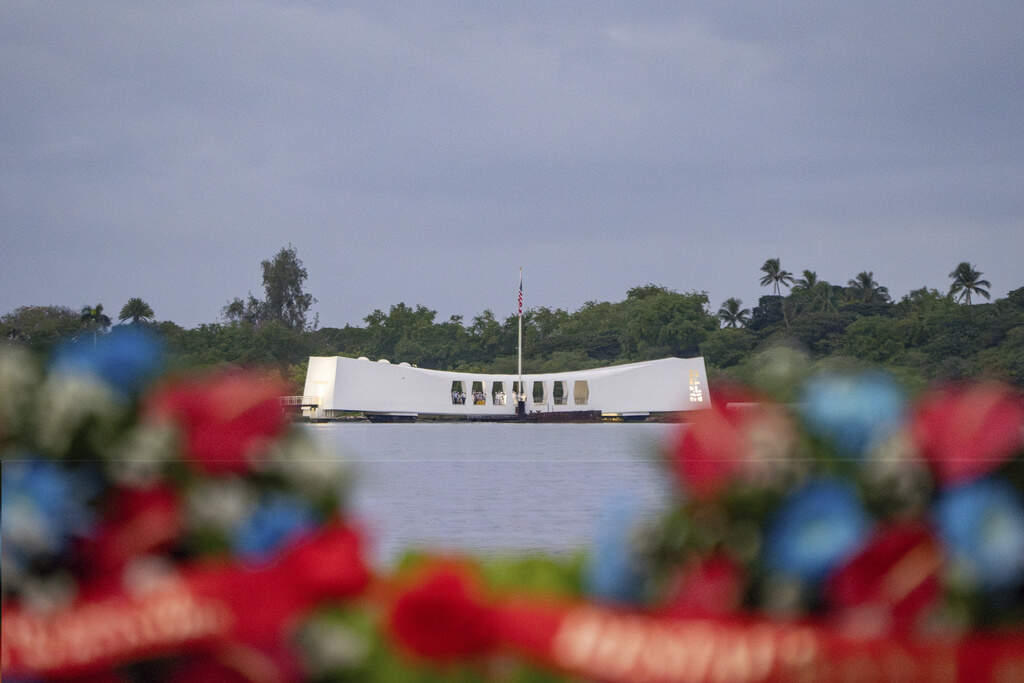
Christine Kuehn knew hardly anything about her father’s family. But when a mysterious letter reaches her doorstep in 1994, it kicks off a 30-year journey uncovering her family's Nazi history, and their role in the attack on Pearl Harbor.
Guests
Christine Kuehn, author of the new book: “Family of Spies: A World War II story of Nazi Espionage, Betrayal, and the Secret History Behind Pearl Harbor."
Mark Schiponi, Christine’s husband, who went on this 30-year journey with her to uncover the Kuehn family history and helped with a lot of the research.
Book Excerpt
From Family of Spies: A World War II Story of Nazi Espionage, Betrayal, and the Secret History Behind Pearl Harbor by Christine Kuehn. Copyright (c) 2025 by the author and reprinted with permission of Celadon Books, a division of Macmillan Publishing Group, LLC.
The version of our broadcast available at the top of this page and via podcast apps is a condensed version of the full show. You can listen to the full, unedited broadcast here:
Transcript
Part I
MEGHNA CHAKRABARTI: On December 7th, 1941, Imperial Japan attacked the United States at Pearl Harbor. 2,400 Americans were killed that day, and 1,100 wounded. For much of her life, Christine Kuehn did not know that she had a direct connection to Pearl Harbor. Not because she lost family that day, but because her family had helped Imperial Japan carry out the attack that thrust the United States into the Second World War.
That terrible revelation is in her new book, “Family of Spies: A World War II story of Nazi Espionage, Betrayal, and the Secret History Behind Pearl Harbor." And Christine joins us now along with her husband, Mark Schiponi, who helped research and write the book. Christine, first to you. Welcome to On Point.
CHRISTINE KUEHN: Thank you for having me.
CHAKRABARTI: And I should say that Christine is joining us today from WLRN in Miami. It's an On Point member station. And Mark, welcome to you as well.
MARK SCHIPONI: Thanks for having us, Meghna. Appreciate it.
CHAKRABARTI: So Christine, let me start first with kind of a fateful day for you in 1987 when you went to visit your Aunt Ruth, who I understand you had never met prior to that day.
KUEHN: Yeah. My dad never spoke much about his family growing up. I knew some basics. He had grown up in Hawaii. His Aunt Ruth lived in New York, and his parents had passed. So when he called me and said Aunt Ruth wants to meet you, do you want to go meet her? I was like, so excited. This was like finally a step into my father's past. And Mark and I were dating at the time, so I asked him to come with me, and we drove to Charleston and went and met my Aunt Ruth and we walked in and she was just this sweet little old lady.
We sat and had a great conversation. I was really enjoying getting to know her. And on the coffee table next to where she was sitting, I noticed this wedding picture, and I looked at it. And I'm like, Oh, are those my grandparents? And she nodded, Yes. And I was like, Can you tell me something about them?
My father never speaks of them. And she just sat there and didn't respond. And I'm like, she nodded her head and I'm like, Can you tell me anything? How did they meet, when did they get married? And she cut me off and she said, You have a good life. Don't ruin it with the past.
Don't ask me any more questions about your grandparents, the past --
CHAKRABARTI: Or Pearl Harbor.
KUEHN: Or Pearl Harbor. It was a slip, but I had no idea what she was talking about. I called my dad and told him about the meeting and about what she had said, and he goes, Oh she was there and it's just a really upsetting time.
It was a terrible day and so I let it go. Like I did most things when my father vaguely answered my questions.
CHAKRABARTI: Yeah. Christine, hang on for just a second, because I don't know, just hearing you recount the tale in person, which is exactly how you tell it in the book. It still doesn't lose any of its shock. Because here you have, you're meeting your aunt for the first time, she throws in Pearl Harbor in the middle of the conversation. Mark, as Christine said, you were there, not yet married. What was that exchange like from your point of view?
SCHIPONI: You just sit there and you say, What? That really was the reaction. We just looked at each other and Chrissy pushed on a little bit more, trying to get more info out of her about it, and she just wouldn't give up anything.
She just nodded her head the rest of the time. So you thought something was there, but what are you going to do with that information? I think Chrissy, we got home and you called your dad to try and figure it out, right?
KUEHN: Yeah, I did. So it was just one of those things where you just scratch your head. It's what's going on here?
CHAKRABARTI: And what did your dad say? You were about to tell me that earlier, Christine. What did he say?
KUEHN: Yeah. He basically just said, Pearl Harbor was a terrible day. She was there. It was an awful experience to be on the island of Oahu when they were attacked and so she just doesn't like to talk about it.
And he changed the subject and started talking about something else. So like I always have done, I just let it go.
CHAKRABARTI: Wow. Okay. So several years go by, what, six, seven years? And even you had thought you had let it go, but then something happened that sort of reopened all of this in your life.
KUEHN: Yeah. Mark and I are married now. I have two young boys, and I come home from work and there's this letter from someone I didn't know, and I opened it and it was from a screenwriter who was asking me questions about my grandfather, his involvement with the Nazi party and spying for the Japanese.
And once again, I was just floored. I had no idea what he was talking about. So I called my dad. I read the letter to him and he went on to deflect. No, that's not us. They must have the wrong Kuehns. It wouldn't be my dad. And I pushed it a little bit more and I said, Dad, I'm going to do some research.
And he goes, that's great. Let me know what you find out. And he hung up. And sat there for a minute. And he called me back about 10 or 15 minutes later and he was sobbing. Just uncontrollable sobbing. And he could barely catch his breath. And he would say, I remember the first thing he said is, I just wanted to shield you from all that.
And I just looked very stunned. I wasn't sure. And eventually over the conversation, he told me his story and what had happened in Hawaii when he was a child.
CHAKRABARTI: So we will get into that story quite deeply. But Mark, once again, I would love your perspective on this, as you know now, being the loving husband of Christine and father as well.
This is the kind of news that threatens to upend a family. How are you processing all of this?
SCHIPONI: I think the thing that struck us the most was you've got a picture of Chrissy's dad ... he's six foot three, spoke with a thick German accent, just a World War II veteran.
So he's the kind of guy that you just didn't see cry. So the fact that her questions elicited this response from him was, again, one of these little nuggets that we're thinking something more is going on here. And at this point, Chrissy thought to herself, I need to find this out. So that's when he started telling the story.
But there were a lot of gaps in the story, a lot of holes, a lot of unanswered questions. So Chrissy, at that point decided, I'm going to start doing a lot of research on this and try and track this down. Because something's up.
CHAKRABARTI: He just said that, just so that we keep the generations clear here, Mark, that Christine's father was also a World War II veteran?
SCHIPONI: Correct. Okay.
KUEHN: He was.
CHAKRABARTI: Yeah. Alright. For the United States?
SCHIPONI: Correct.
KUEHN: Yeah.
SCHIPONI: On the right side.
KUEHN: Yeah. He fought in Okinawa. Yeah. Yeah.
CHAKRABARTI: Okay, so we'll get back to that because this story really originates with your grandfather Christine?
KUEHN: Yes it does.
CHAKRABARTI: Okay, so let's talk about him because right now we have just teased listeners with a mysterious meeting with an aunt you had previously never met.
Obviously your father's just heartbreaking response. And then all this news dropped in your lap that your family, a couple of generations before you were German spies in Hawaii working for the Japanese. It's hard to process even now. Is it still hard to process for you?
KUEHN: It really is.
It's gotten easier. It's been 30 years. The first time I found out and we did research I would put it away. Because I was learning facts and stories that were just too hard to really accept and process. And so the research process started and stopped so many times.
It was a long journey. Immediately after getting this call, Mark and I decided to go to a local bookstore and do some research in the World War II section, and I was looking through about four or five books. I wasn't finding anything and starting to think maybe it wasn't as bad as Dad said, maybe he had some information messed up.
And then I looked over and I saw Mark's face and I could tell he had found something and my heart just sank at that moment.
CHAKRABARTI: Mark, what had you found?
SCHIPONI: So it was a well-known history book At Dawn We Slept. And I was just peeling through the index and there was Kuehn, Bernard Julius Otto.
So we flipped over to the pages, and it detailed their involvement in Pearl Harbor, and we found other books. And the crazy thing was the stories were insane. Some of the books painted the attack on Pearl Harbors being run by her grandfather Otto and her Aunt Ruth from the attic of their home overlooking Pearl Harbor, signaling the Japanese in real time with light flashes through their dormer window in their attic.
So you read that and your jaw drops. And there were five or six or seven books that we found that night that all told, basically, that same kind of story.
CHAKRABARTI: We'll talk later about what was actually true and what was not true, right? In terms of how the books portrayed your family, Christine. But we've just got a couple minutes before our first break and I'm still very much thinking about how you weren't told anything about this, Christine, until, what? You were in your mid-thirties. And you were forced to find out about it because of other people. I actually have, and I know you do too, but a great deal of compassion for your father who didn't want to talk about it for all those years
Because who would want to share with their daughter that your family was, were active participants in not only just a human rights catastrophe, but the largest war in human history in the 20th century. That's not something that you want to just talk about.
So I really feel for him. And is that how you initially responded?
KUEHN: I think, honestly, I think I was a little aggravated, maybe a little angry that he had kept this from me for my entire life. And so it did take time to move through this understanding. After time, I really did realize he had to compartmentalize that part of his life.
He spent my whole childhood telling fantastical stories about meeting Shirley Temple and playing with Shirley Temple or finding a lost little boy along the highway. They were the same stories that he told. And when you were little, you believed them. And as I got older, I realized he was making those up.
After I found out about what had really happened in his past, I realized telling us our family these non-true stories about his childhood and about things that had happened in his life really were so much easier than telling me the truth about his family. And over time you do, I do have a lot of compassion for my father and I think about having to keep that secret from my mother, my family, me, my sisters. So yeah, it was a long time to get there.
Part II
CHAKRABARTI: Okay, so let's go way back in time. And Christine, let me start with you. As you and Mark started digging into your family history, eventually you discovered how it is that your grandfather, Otto actually became a member of the Nazi party in Germany before he, and we'll talk about how this happened, before he came to the United States.
So how did that happen, Christine?
KUEHN: That goes back to basically thinking around the time of when the stock market crashed in 1929. The whole U.S., most of Europe, were in a depression and Germany just spiraled downward, unemployment, poverty rates soared. People were living in the streets.
And the Nazis took advantage. Hitler was a powerful, persuasive speaker, and he held rallies around the country talking about how he was going to lift us out of this depression and remove Germany from the shackles of the treaties of Versailles. And Otto and Leopold, which was my father's half-brother. It was a child from a previous relationship with my grandmother, that my grandmother had, went to hear him speak in Kiel. And they were there with a thousand other people around. And Hitler was doing his regular speech, and the crowd was going crazy.
And Otto was immediately mesmerized and ended up joining the party the very next day.
CHAKRABARTI: Wow. And what ambitions did he have in the Nazi party?
KUEHN: I think my grandfather Otto was very ambitious. I don't think he, I don't know if he knew what he wanted or where he was going to go at that point.
He just know he wanted to be a part of this movement at that point.
CHAKRABARTI: Eventually Mark in the book, you and Christine talk about how Otto even eventually applied for a top job in the Gestapo.
SCHIPONI: Yeah, and I'll jump in real quick before that. Because the most amazing thing we found was stock market crashes in 1929.
Before that, the Nazi party was just some floundering also-ran. They had about 2% of the national vote in most of the early elections in the 20s. And then once 1929 stock market crashed in 1930, when Hitler started running around doing these speeches, that's when they really caught fire.
And it was amazing to me that they went from 2% of the vote to 35% of the vote in the next election. But yeah, so his interview with the Gestapo, so he had some experience in the Naval Secret Police. He was now a member of the party, so he got tapped on the shoulder to go meet with Heinrich Himmler.
To interview for a job that would become head of the Gestapo. It wasn't called that at that point. He is riding on the train with a man named Reinhard Heydrich, who for history buffs out there, he was the architect of the Holocaust. He was also interviewing for this job. He couldn't actually afford to take the trip to Munich with Otto.
So Otto loaned him a hundred marks so he could actually go interview in competition for this job with Himler.
CHAKRABARTI: Wow.
SCHIPONI: So long story short ... Heydrich gets the job. Otto does not, and he gets assigned another job ferreting out communists in another part of Germany.
But he was up for the role of head of the Gestapo. And the guy that beat him out for it is the guy who, it was the architect behind the Holocaust. It was frightening.
CHAKRABARTI: One of the main architects behind the final solution. Wow. And your grandfather Christine, gave him the train fare, essentially.
KUEHN: Yeah. History is, few missed moments or made moments can change history. So that was interesting. And I'm glad he didn't get that job. I'll be honest, I don't know that I could have handled that. I think that would've been, to learn that would've been devastating for me.
Few missed moments or made moments can change history.
Christine Kuehn
But yeah, it was a crazy discovery.
CHAKRABARTI: Yeah. This is all theory now, but I'm just trying to think through, again, the sort of the way history, the ripple effects of history continue to roll through families. First of all, no one should have ever had that job.
Because being the primary architect of the Holocaust is just pure evil. But theoretically, like if your grandfather had, there might've been, and presuming everything else stayed the same in history, there might've been a kind of, more satisfying justice, right?
Because Heydrich eventually, obviously, the end of the Nazi regime in Germany brought a kind of justice. And Germany itself has still been dealing with that ever since. But you didn't get that, right, because your grandfather ended up in Hawaii instead. So how did that happen though?
KUEHN: You mean how did he get to Hawaii?
CHAKRABARTI: Yeah. How did he end up in Hawaii? Yeah. Okay.
KUEHN: So Leopold actually joined the Nazi party as well as a storm trooper, and he eventually went to work for Joseph Goebbels in the Office of Propaganda. And so the family was tied to that faction. Goebbels' faction of the Nazi party. And so my Aunt Ruth, who was only 19 at the time, went to a party, met Goebbels and they ended up having an affair.
And at that point it was the Nuremberg Laws were getting ready to go into effect, and Ruth had a secret, so she was half Jewish.
CHAKRABARTI: Oh my goodness.
KUEHN: Friedel had a relationship with another different man than Leopold's dad prior to marrying Otto. And he was a Jewish architect.
And so when Goebbels found this out, he had to hide his misdeed because the Nuremberg laws were going to eliminate and make it illegal for Germans to have relationships with people of German, of, I'm sorry, Jewish descent. Goebbels knew the Japanese were looking for Caucasians to go to Hawaii and act as sleeper spies.
And so he tapped Otto on the shoulder to go to Hawaii knowing he would take the family and he would take Ruth with him and get Ruth out of Germany. So that's how they got there.
CHAKRABARTI: Again, this is so continuously jaw dropping. Christine, I'm just going to reprocess this to be sure that we're all keeping track of the details of this story.
So this is the same Aunt Ruth that you met in 1987?
KUEHN: Correct.
CHAKRABARTI: Thinking back on that and Mark, feel free to jump in here. It's just like, Oh, this is my Aunt Ruth, who I hadn't really known before, 1987, and I now find out that she was having an affair with Hitler's chief propagandist, Joseph Goebbels, and had to leave Germany because Goebbels needed to take care of the problem that she was half Jewish.
It defies belief.
SCHIPONI: Yeah, it was confusing. The more we dug into it, the more, kind of, we just had more questions. Ruth is having an affair with Goebbels. They go to Hawaii and she ends up doing a good amount of spying, gathering of information by dating naval officers, she was very attractive and sought after, and they'd take her out on boat trips and galas, et cetera.
And so she would glean little pieces of information as she's talking to her dates, number of men, where are you going next weekend on maneuvers, what's happening? And she would report all of that back to Otto. So much so that she ended up being in a book. The world's 30 greatest women spies that we'd stumbled upon.
And right there next to Mata Hari is sweet, little old Aunt Ruth. So Chrissy jump in, but it was hard to process this femme fatale, super spy with this little old lady at 72 that we met back in 1987.
KUEHN: Yeah, it was crazy to think that this woman who had sat in front of us and served us tea, had actually spied for the Japanese and had gotten involved with what had happened in Japan.
It was crazy to think that this woman [Aunt Ruth] who had sat in front of us and served us tea, had actually spied for the Japanese.
Christine Kuehn
I'm sorry, in Hawaii on the island before December 7th. She was just, but she was very much a closed book. I asked her multiple times to tell me about living in Hawaii or asking her. And even once we started the research and knew the family's involvement, if I asked her a question she would shut down and ghost me for months and not speak to me because she was very compartmentalized. She kept that story in a box and she actually took it to her grave. And I think it was a whole family decision to keep what happened in Hawaii from the next generation of Kuehns.
CHAKRABARTI: Yeah. Maybe you already just answered the next question I was going to ask, which is, did you ever have the opportunity to ask, or did she ever answer a question about whether she felt regret or shame for being a believing member of the Nazi party, to the point where she had an affair with Joseph Goebbels?
KUEHN: And she was half Jewish. Yeah. That boggles my mind constantly, thinking, how could she do this, knowing who she was? It's interesting when I think about what Aunt Ruth did, right? When my grandmother died in 1964, a year after I was born, she went back to Germany for the funeral and the first thing she did was go to my grandmother's apartment, pull all the documents, all the photos, the letters from different family members that she had collected over the years and put 'em in boxes.
And her and Hans actually went out to a field. And burned them. They put lighter fluid all over it and they burned it and I think she was trying to hide the past. She was trying to cleanse herself of her past, is the only thing that I can imagine she was thinking when her and Hans did that, and I think there was so much information, and that's been the hardest part of this whole journey.
Is trying to piece together a puzzle with so many missing pieces. It's one of those times where you just can't pull it all together. And I've, over the years, meeting some of the family from Germany and those I've been able to extract additional information, and really make sense of the things that we were researching and uncovered in the 800-page file in the national archives.
But it was very challenging.
CHAKRABARTI: Before we talk about that file, Christine, just quickly, we've been focusing on your grandfather, obviously, and your Aunt Ruth. How old was your father when the family came to Hawaii?
KUEHN: He was nine in 1935.
CHAKRABARTI: Nine. Okay.
KUEHN: Yeah, they moved to Hawaii.
CHAKRABARTI: So I wanted to position that just so people realize that he was still a very young boy when all of this was happening. Okay. So on that point, Mark, Christine had mentioned this file, 800 pages long, an FBI file if I recall from the book correctly. How did you two find it?
SCHIPONI: We had been reached out to by several historians over the years who either wanted to write a book or were just looking for information about the family.
And so one of them had a turned us onto a file, the FBI files that were online. So we went through 'em online, but a lot of those pages were heavily redacted. And these are memos from J. Edgar Hoover calling for a dive into the family because they were just this mysterious German family in Hawaii and memos from or to President Roosevelt about the family and what was going on.
So we realized that the redacted part was very important. So we went down to the national archives. And it took about a year and we filed a Freedom of Information Act. We got down there, the files had been classified since or until 1986 and went through page by page. There were pictures in there that the FBI had taken, surveillance, memos, as I mentioned, to and from the president, and it was just a lot of information that we had to sift through and find out what was important and what wasn't. And that took some time.
KUEHN: And there was also contradictory information there.
CHAKRABARTI: Yeah, go ahead.
KUEHN: So that took a lot of time to look at what one report would say A, and a second report would say B. So then we'd have to, look at that and talk to family members or talk to my dad, look into books to try and determine which one was most accurate. So it wasn't just like reading the file and taking notes. It was a lot of going back in and trying to decipher what all this information meant.
CHAKRABARTI: The interesting thing though is the Pearl Harbor connection comes because your grandfather and your aunt at least ended up spying for the Japanese, without Germany knowing. This is the part I couldn't quite get my head around. And Mark, let me give you that one and then I'll hear from Christine again.
SCHIPONI: Yeah. That's a great, it's a great question. Germany had to know what was going on. Because Goebbels sent the family to Hawaii after they had cut a deal with the Japanese attaché who was in Berlin at the time. And they were being paid the equivalent of about $1.5 million to spy over there.
So their main role was initially just to go over as sleeper spies, ingratiate themselves into the community. And this is 1935, beginning in 1936, because the Japanese were already planning ahead, so they wanted feet on the ground for when an inevitable attack came. It wouldn't, these Caucasian families lived there for then, at that point, five or six years, wouldn't be outta place.
They could get information from them as to what was going on in the island. So it was a long-term plan that the Japanese really had cooked up back in the thirties.
CHAKRABARTI: Cooked up with Germany.
SCHIPONI: Correct. Yes. So to your point of how did they, your question was, did Germany know?
Germany knew. Because it was their guy over there. Although he was being paid by, this is Otto I'm talking about. Although he was being paid by the Japanese. And then secondly, which we can talk about later or now, that they also sent over a double agent named Duško Popov, who was, who Germany thought was spying for them, but he was actually a double agent spying for Britain's MI6.
And Duško Popov went over, sent by the Germans to set up a spy ring in the United States in 1941, and then he was to move, to go on to Hawaii and actually replace Otto at that point. And Duško Popov is the inspiration behind Ian Fleming's James Bond. So there's a lot going on with that guy, too.
But that's the long and short of Germany. Yes, Germany knew what was going on because the microdots, which was new technology that Germany had invented that Duško Popov was carrying, and he turned over to the FBI. Half of the questions in these microdots were questions about what's going on in Hawaii, depth of Pearl Harbor, are there submarine nets?
Are there artillery, batteries in Diamond Head? Those kinds of questions, all about Pearl Harbor. So why else would Germany want to have those questions answered unless they wanted, they had a big part of it.
Part III
CHAKRABARTI: Now I just want to, again, clarify a little bit of this complex history. Because so much is happening once in your family's story between, what, 1939-ish and 1941 especially.
As far as I can understand, historians are pretty agreed upon, or they agreed with each other that Hitler himself did not know the specifics about Japan's plan to bomb Pearl Harbor. Obviously as we talked about before, the Nazi party and Germany more broadly knew that Japan was going to do something.
But from my understanding, Imperial Japan was very tight or closely held their specific plans quite closely and didn't tell Germany, well, we're going to attack Pearl Harbor. On this day in December, et cetera, et cetera. Which is interesting, but for a separate conversation.
But Christine and Mark, and either of you take this one, we had talked earlier about how some history books pinned all of Pearl Harbor on your grandfather and your aunt, but that doesn't really jive with what you found. Let me just boil it down to this. Were they good spies or not?
SCHIPONI: Christine, you got that one.
KUEHN: You got that one Mark.
SCHIPONI: Okay. I'll take that one.
(CROSSTALK)
SCHIPONI: Were they good spies? They kept getting paid and the FBI couldn't seem to pin anything definitive on them to arrest them. So with that metric, whatever they were sending to the Japanese was information that was wanted, needed.
The FBI had seen them going into the Japanese consulate, which was their contact several times. Chrissy, you can talk to the point of the main thing that the FBI caught 'em on is the signaling system, which the Japanese had him design for the weeks leading up to Pearl Harbor to talk about ship movements.
KUEHN: Yeah, that happened about six, seven weeks prior to December 7th. Takeo Yoshikawa had gone to the family home to ask to speak to Otto, and they had a meeting there in the shed. My father actually told me about that, but he doesn't remember what they spoke about.
SCHIPONI: ... Really quick, Takeo Yoshikawa is the Japanese super spy who showed up on the island in early 1941.
Go ahead.
KUEHN: Yeah, I'm sorry. And they had wanted him to come into the consulate because they wanted them to design, wanted Otto to design a signaling system that could communicate ship movements to a submarine off the coast of Hawaii. For example, if they put a lantern in the dormer window from the house between 9 and 10, that would mean that aircraft carriers had left the harbor.
Or if they hung a bed sheet on the clothesline outside, that would mean that the battle cruisers had returned. So they had created the signaling system in case prior to December 7th, communication got shut down, if anyone were reading it and reading some of the codes and intercepting some of these codes that were being sent back and forth from Hawaii.
The Japanese consulate in Hawaii to Tokyo. But it was also supposed to be in place after the bombing in case they needed another wave of attacks. And Otto actually created the signaling system. The first one was way too complicated, so they told him to scale it down. So he scaled down a smaller version that actually was sent to, was taken to the Japanese consulate and sent to Tokyo.
CHAKRABARTI: Did they know that all of this was in planning for an attack on Pearl Harbor?
KUEHN: I've had that question before. And I assumed they had to know, my dad knew nothing, so he couldn't provide that information, and Ruth never spoke to me about anything. And I even spoke to some of my cousins and my uncle Hans, who was young at the age, didn't know either.
I think they had to know there was something afoot. But I never really got that complete confirmation from anyone. Sorry. I'm sorry, Chris. I jumped in. Go ahead.
Go ahead. You can go.
SCHIPONI: I was just going to say the signaling system that he came up with, all of the dates on it were the first week of December.
As Chrissy said, a light in a dormer window, that meant December 1st through 3rd battleships were in port or had gone away. Another one meant they were in port the 3rd through the 6th. There was nothing that detailed any date after the 7th. So if you look at that, you can pretty much surmise that something's going to happen on December 7th.
CHAKRABARTI: Okay. So Mark, earlier you had said that initially, in fact now we're at the point where it's years earlier when you and Christine were first looking through some history books, you saw all sorts of wild claims about how, in fact, how intimately involved Otto and Ruth were in the planning of the attack on Pearl Harbor. This actually does, what you actually found in reality makes it sound that they were intimately involved. But you said the history books took it to an extreme. Help me understand that. Yeah, go ahead.
SCHIPONI: Yeah. The first one that we saw, or one of the first ones that talked about them leading the attack from the dormer window in their attic overlooking Pearl Harbor.
I lived in Hawaii as a kid, and so when I saw that, Chrissy and I looked at it and I said, there's no way that's possible because their house is on the windward side of the island, which is the eastern side. No dormer, separate. It had a dormer, but it's not, it's nowhere near Pearl Harbor and it's separated by 3,000-foot-high mountains.
So they didn't overlook Pearl Harbor, so then, Chrissy and I thought, there's something fishy about some of these earlier super crazy stories. Yeah. And that panned out that some of that just wasn't true. Yeah.
KUEHN: And there was even a story about Hans, who was only nine at the time, that they would dress him up in a little sailor suit and take him to the docks on Pearl Harbor and they would invite him on the ships and he would tour around and memorize information about the ships that he would then report back to his father.
And so those were just very fantastical stories that I think were sensationalized to make it a good read in the news. Honestly.
SCHIPONI: We found that in 1974, as late as 1974, there was a story about Hans, and he was called the only bonafide child spy in history. And this is 1974, 40, 30 years later.
Yeah, the stories just kept multiplying.
CHAKRABARTI: Getting wilder and wilder as if the truth needed any embellishment.
SCHIPONI: It's the crazy part. Yeah.
CHAKRABARTI: Okay, so this actually leads us to talk a little bit more about your father Christine, because, so the attack happens, and we already know, based on what you told us, that the U.S. government had been watching your grandfather and aunt already for years.
Basically, ever since they had arrived in Hawaii had been watching them through their buying of businesses, if I recall from the book correctly. And their throwing of lavish parties, et cetera. So they weren't trying to hide their presence.
KUEHN: Not at all
CHAKRABARTI: In Hawaii. But as you said, your father was still quite young.
Pearl Harbor gets attacked and ... Otto and Ruth, they got arrested the next day.
KUEHN: Actually, so Otto, Ruth and even my grandmother Friedel were actually put on the Nazi watch list to be arrested in the event we went to war with Germany.
Otto, Ruth and even my grandmother Friedel were actually put on the Nazi watch list to be arrested in the event we went to war with Germany.
Christine Kuehn
CHAKRABARTI: Which we did.
KUEHN: Yes. And which we did.
Yeah. And so the day after, like in the wee hours, my father told me a story about he woke up to his mother screaming and pounding on the door, and he went running out and there was two men there with guns. And they arrested the entire family, including my father, who was only 15 at the time.
They did leave Hans, who was only nine. He didn't go. But they arrested the entire family. They took 'em down. They actually put 'em into an internment camp on Sand Island, which was a small island in the harbor where they lived for the next few months with other Japanese, German and Italian citizens who had been arrested after the bombing.
CHAKRABARTI: The United States does, did declare war on Germany December 11th. Which was just immediately in response to Germany declaring war on the United States, which happened first earlier in that day. Now, about your father, you had, both of you had told us that earlier, he was a World War II veteran having fought for the United States. Can you both tell us how that happened.
KUEHN: Yeah. When the family was interned and they were in the internment camps, my dad was there for about four or five months. And Ruth, they were trying to get a case against Otto, the FBI.
So they had the files, they had the signaling system, and he was actually tried and convicted and sentenced to death for the bombing of Pearl Harbor. So he was in jail. Ruth, Hans, and Friedel ended up going back to Germany in the last prisoner exchange of the war. And she wanted my dad to go and he refused.
And he was like, I'm not going back to Germany. It is not my home. I was raised in the United States. I love America. I'm going to stay here. And Friedel was just devastated, she wanted her family together, they told him he didn't have to go. He was old enough to make that decision. And so he finished high school.
He actually denounced his German citizenship. And he joined the U.S. Army and actually fought in Okinawa and then again in the Korean conflict. It was one of those things that he walked away from his family. Knowing he would never see them again. Yeah. I think that's, I don't know that I could have made that decision at that young age, but he's made that decision and honestly, I don't think he's ever looked back.
CHAKRABARTI: Yeah. Mark, you and Christine in the book actually put some of the letters that Christine's father wrote to his family. They're incredibly moving. I just want to read a little excerpt of one of them that echoes what Christine said. So here it is. And he's writing to, I guess, to Otto and the rest of his family.
You ... Hans and Papa can and probably will go back to Germany. I can't, my education was in America, and my formative years have been in this country. You and Hans will always be German. I, never again. I believe the Nazis to be in the wrong and the Japanese imperialists are just as bad, if not worse. I know that America has its fault, but nothing that can't be cured.
Mark, tell me how finding these letters, did it change your thinking about who Christine's father was, the kind of person he was?
SCHIPONI: Yeah. That was a letter from him to Ruth. Because they were still in the internment camps. He was let out, Christine's dad.
Eberhard was, so they were still trying to get him to come to the internment camp and live with them. Yeah, his arc there over those couple of two, three years is pretty incredible. He's in an internment camp. There's a memo, FBI memo, that calls her dad as dangerous to the security of the United States as his parents.
So they thought he was involved. He's in the internment camp for four or five months. And then you flash forward to him explaining to his family, I'm not going back. I'm not German. And he spent the next two years in foster homes while his dad was in prison and the family was back in Germany, sent back in the last prisoner exchange.
And then as soon as he could do it, he graduates high school. And as Chrissy said, he joined the army. So that his mindset was never a Nazi bent. I think he saw too much as a kid and didn't understand the violence that he saw outside his apartment window in Berlin.
And it just, it scarred him, for sure.
CHAKRABARTI: We only have a couple minutes left and Christine, if you don't mind, I'd love to spend them with you because this is the story of your own blood relations. I can understand how if even today you still feel the darkness of history's shadow on you, but that's also, that's very different from feeling any lingering guilt for what your family members did. I hope you don't feel any guilt at all now, do [you]?
KUEHN: I did for a long time. Going through and knowing what my family had done, because that's not who I am, it's not what I believe.
So it was really hard, and I didn't tell people this story for years. Because I was embarrassed. I felt bad about what my family had done. It's interesting. I would've thought that writing the book would have really healed some of those wounds and helped me carry the burden and come to terms with the burden, which it did.
But as I tell the story and talk to, I'm speaking to a lot of Jewish community centers around the country and being able to tell that story and have their response. And their understanding about how you do not carry the transgressions of past generations. And I think I'm finally getting to the point where I understand that and I'm accepting it.
It's still hard, when you think about the impact, something that someone from your bloodline made on not only Germany, but on the United States. And the lives that were affected because of what they believed. Yeah. It's hard, but I don't know that I feel guilty.
It's still hard, when you think about the impact, something that someone from your bloodline made on not only Germany, but on the United States.
Christine Kuehn
I don't blame myself anymore, but it's still a bit of a burden that I think about, and I carry with me.
CHAKRABARTI: In the last couple seconds, we have, you write in the book that you felt kind of the pain of having the genes that your grandfather had, but I would say you're focusing on the wrong Kuehn.
It's your father's genes that are much more profoundly expressed in you. And none of us are doomed to act out our genetic legacy at all. But in your case, your father is the hero of this book, is this kind of like a love letter to him?
KUEHN: Yeah, I think so.
I think that I do look at the decision my father made and walking away from his family to give himself a different life. In the end, he gave me a different life. He gave me the opportunity to be who I wanted to be, instead of being caught up and destined to follow in the family's footsteps.
So I am very, I'm grateful right to him for that.
The first draft of this transcript was created by Descript, an AI transcription tool. An On Point producer then thoroughly reviewed, corrected, and reformatted the transcript before publication. The use of this AI tool creates the capacity to provide these transcripts.
This program aired on December 3, 2025.