Support WBUR
Why a former federal judge calls Trump ‘uniquely dangerous’
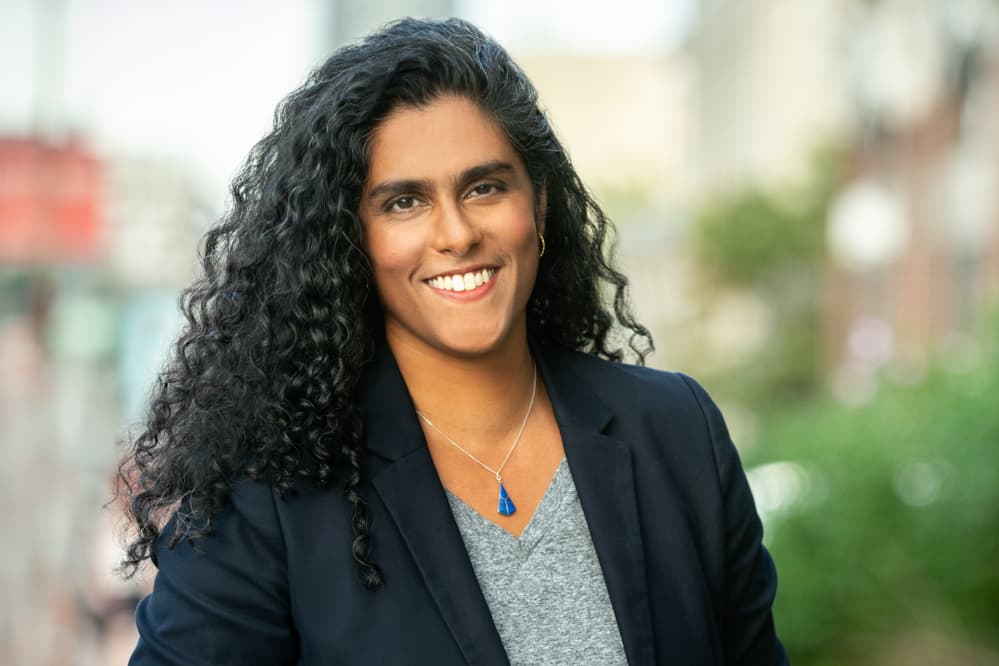
Mark Wolf spent four decades as a judge on the federal bench after being appointed by President Ronald Reagan. But Wolf recently resigned, citing the Trump administration’s “deeply disturbing assault" on the rule of law.
Guest
Judge (Ret.) Mark Wolf, former U.S. district judge of the United States District Court for the District of Massachusetts. Senior counsel at the Boston law firm Todd & Weld.
The version of our broadcast available at the top of this page and via podcast apps is a condensed version of the full show. You can listen to the full, unedited broadcast here:
Transcript
Part I
MEGHNA CHAKRABARTI: Judge Mark Wolf spent 40 years on the federal bench. He was appointed by former President Ronald Reagan in 1985 as a U.S. district judge for the U.S. District Court of Massachusetts. Before that, Wolf spent some 10 years in the Justice Department, including as deputy U.S. attorney and chief of the Public Corruption Unit in Massachusetts.
Now, Judge Wolf has resigned. Last month he explained his decision in a piece in The Atlantic. Judge Wolf wrote, quote:
The White House's assault on the rule of law is so deeply disturbing to me that I feel compelled to speak out.
End quote. And Judge Mark Wolf joins us now. Judge Wolf, welcome to On Point.
MARK WOLF: Thank you, Meghna. I appreciate this opportunity to speak to you and to some of the American people.
CHAKRABARTI: So tell us, first of all, in more detail, why did you resign?
WOLF: I resigned because throughout my career as an assistant to the Attorney General of the United States, after Watergate, as a prosecutor of corrupt public officials in the Reagan administration, I've been dedicated to striving to give integrity to our nation's ideal of equal justice under law.
And what's happening now is utterly inconsistent with that. The president has been using the Department of Justice to pursue his perceived political enemies. And at the same time, assuring that people close to him, and people who donate money and help him and his family profit are not pursued when ordinarily they would be.
The president has been using the Department of Justice to pursue his perceived political enemies.
Mark Wolf
And this is utterly inconsistent with the rule of law, which is fundamental to democracy. So in my view right now, there's an existential threat to the future of American democracy. And a number of people, including former federal judges, former American ambassadors, urged me to resign. Because they thought I would have the potential to have more influence as a private citizen than I could if I remained on the bench.
And ultimately as the abuses cascaded almost day by day. I was persuaded that although I'm skeptical about whether I or any other individual can make a difference, I felt compelled to try.
CHAKRABARTI: So to be clear, did you just say that other people had reached out to you?
WOLF: Oh, yes. Former federal judges among them.
Former U.S. ambassadors, members, I consulted distinguished members of the media, law school deans and others. And not only did they encourage me to resign, but they pledged to work with me. Because I think it's very important that people who deeply share the concerns that I have, coalesce and work together. Because hopefully the sum will be more than the individual parts.
CHAKRABARTI: So again, just for clarity's sake, because we are in such a unique moment in U.S. history, absent President Trump and his administration's actions, you weren't seeking to leave the bench.
WOLF: I was not seeking to leave the bench. I was entitled 14 years ago to resign and get my salary for life. I've been working, was working without pay for the last 14 years because I found the opportunity to be a judge so meaningful, the opportunity to give integrity every day to this ideal of equal justice under law, that I was willing to work without pay and I thought I would never retire. But this is a unique, I'd say unprecedented time in American history, and I surprise myself eventually by resigning.
CHAKRABARTI: So Judge Wolf, we have had on this program many conversations with various distinguished legal scholars, judges, et cetera, who have all expressed the same deep concern that you are. It's your background in anti-corruption that I find particularly interesting in this context.
So can you point to some of the more concerning actions by this president that you think have put us in this unprecedented moment?
WOLF: There are almost too many to catalog. But for example, I didn't write about it in my Atlantic article, but the pardons, there's so many people who have done something to benefit President Trump or his family commercially, monetarily, who get pardons.
And then of course, there are people being pardoned, members, politicians who've been convicted. When Congressman Santos was pardoned after serving just a brief part of his seven year, I believe, sentence, the president said he always voted Republican. It was a main motive for pardoning somebody who had admitted to egregious violations of the law.
And I did mention in my Atlantic article the border czar Tom Homan. So it's been reported and not denied that in September 2024, before the last presidential election, the FBI had an undercover operation. And a purported member of a fictitious company gave Homan a bag of $50,000 of cash. And reportedly in return for using his perspective influence to profit this country, if he became a member of an elected Trump administration.
When the president took office, the Department of Justice immediately closed that investigation. The White House said there was no credible, that is no believable evidence that a crime had been committed. Initially Holman said, I did nothing criminal. And then about a week later, he said, I never took the $50,000.
Ordinarily and I used to direct some undercover operations when I was a prosecutor. These are structured to have conversations that will provide the person being addressed is inclined compelling evidence of bribery, something that would be persuasive in court. And ordinarily that investigation would continue if, in this circumstance, Mr. Homan did become a member of the Trump administration.
But that investigation was closed and while I understand for principled and political reasons why there's so much interest in the Jeffrey Epstein tapes. I believe that Congress should demand the Homan tape because the Department of Justice over time regularly refuses to provide evidence to Congress in an ongoing criminal investigation, but it also frequently will provide evidence to Congress when an investigation is closed.
And I think it would be in Mr. Homan's interest if there's nothing incriminating there, but certainly in the public interest, if there is for those types to be made public through Congress.
CHAKRABARTI: So would Congress have to subpoena this information or could it just ask the DOJ?
WOLF: It could ask and if necessary, subpoena the information.
CHAKRABARTI: Okay. So I'm approaching this conversation both to learn from you and also to reflect back some of the the reactions that people who support the president might have. For example, regarding pardons, he has definitely been using his pardon power in ways that, to put it lightly, stretch norms, right? But this is also not entirely unusual. I think starting back in the Clinton administration, we began to see this with presidents. And also, strictly speaking, pardon power is essentially a blank check for the president. So what exactly is he doing wrong in the eyes of the law or in the eyes of the norms of how presidential pardons are supposed to be processed and work?
WOLF: So when you mention the Clinton administration, I expect you're referring to the Pardon of Marc Rich.
CHAKRABARTI: Yes.
WOLF: Who was a fugitive, never convicted of anything. Right before Clinton left office, after Marc Rich's wife made major contribution, I think, to the Clinton Library and to Hillary Clinton.
Two wrongs don't make a right. And you can cite that example in the Clinton administration. People cite the example of President Biden pardoning his son. Which personally, I, as a father understand and as a citizen and former prosecutor, I think was wrong. But those are relatively isolated instances.
There are legions of examples already of President Trump pardoning people who are well connected, and the most baffling, perhaps of those pardons is his recent pardon of the President of Honduras. Who's been convicted before a federal jury of getting tons of drugs into the country, at the same time were bombing boats coming from Venezuela because allegedly, that they're bringing drugs to the United States.
CHAKRABARTI: So let me ask you and please correct me if I'm wrong, because my understanding was historically, and again regarding what we once accepted as political norms, that there actually was a process, perhaps in the Justice Department, for putting a pardon in front of a president.
WOLF: When I was an assistant to Attorney General Edward Levi, there was a pardon attorney in the Department of Justice who would make a investigation in a written recommendation, a report to the Attorney General.
Those reports with one except came to me. The pardon of President Ford, of President Nixon by President Ford didn't come to Attorney General Levi or his assistant, Mark Wolf. But then the Attorney General would get that report and he would make a recommendation to the president. And for example, frequently judges would be consulted on whether they thought a pardon was appropriate.
I've had cases like that, but that's not being done evidently now, in many of these high profile cases at least.
CHAKRABARTI: So the reason why I ask that is because, again, I want to get beyond the Trump abuses his pardon power, to what specifically is the administration doing that's breaking from a couple of centuries now of normative operation in the federal government?
So Judge Wolf, hang on here for a second. When we come back, I want to talk more about the complaint or the deep concern from many people in the legal field about how the Trump administration may be defying its own courts, et cetera.
Part II
CHAKRABARTI: So Judge Wolf, I'd actually like to go back in time. Because again, it's your history in the Justice Department in itself that I think is a very powerful lens for us to view the present. And in your Atlantic piece, you write that you started your public service in 1974, right? Just near the end of Richard Nixon's presidency. And you said, in your piece, it was a time of dishonor for the Department of Justice. So tell me what the DOJ was like then?
WOLF: The Department of Justice, this was the midst of Watergate. Congress was investigating whether President Nixon should be impeached and removed.
And one Attorney General John Mitchell, who had been Nixon's campaign manager in the presidential election as well, ultimately was convicted and went to prison for his role in the Watergate break-in of the Democratic headquarters and lying about it. And his successor, Richard Kleindienst was convicted but not imprisoned for contempt of Congress and lying about whether President Nixon instructed him to end a major antitrust case after the company involved made a substantial contribution, hundreds of thousands of dollars to the Republican National Convention.
So this was the atmosphere. Gerald Ford, after Nixon resigned, appointed Edward Levi, the president of the University of Chicago, as Attorney General.
And Edward Levi had a well-deserved reputation for intelligence, impartiality, and integrity, and the president told him that I want you to protect the rights of the American people, not the interests of the president. And I was there, I organized the attorney general's swearing in when I was working for the Deputy Attorney General. And heard him say that nothing could more be injurious to everything we hold dear than failing to show by word and deed, that the administration of justice, the enforcement of the law is not an instrument for partisan purposes.
And that's what I was educated to understand is the role of a prosecutor and ultimately the role of a judge.
CHAKRABARTI: Watergate signals a significant moment in American history, not just for the collapse of the Nixon administration, but for the impact it had on American trust in the federal government writ large.
Given the sort of disarray that you described the Justice Department being in, in the last month, year and months of the Nixon administration, how do you compare that to the actions that you see in the DOJ, in the Trump DOJ now?
WOLF: There's a quantitative, and in my view, therefore a qualitative difference.
What President Nixon did periodically and secretly because he knew what he was doing was illegal or improper, President Trump does almost daily and overtly. And that is deeply destructive to the integrity of the process, to the concept of equal justice under law, as I said, to the rule of law, and ultimately to American democracy. And I believe it's also deepening confidence in the administration of justice. And particularly concerning to me is the courts.
What President Nixon did periodically and secretly because he knew what he was doing was illegal or improper, President Trump does almost daily and overtly.
Mark Wolf
Back in 1974, the Supreme Court, June 1974, ordered President Nixon to turn over to the Watergate Special prosecutor the tapes that he secretly made in the Oval Office, that had incriminating information, of evidence concerning him and his close colleagues. President could have refused to obey, president could have destroyed the tapes.
However, he knew at that time that the American people would not tolerate disobedience of Supreme Court or any court order really, by the president of the United States. So he turned over the tapes and he resigned. My concern now is that the American people wouldn't respond the same way. And in part because the way that President Trump is improperly demonizing judges rule against him.
And he says, these are crooked judges, they're left-wing crooked judges and they should be impeached, and judges don't have the capacity to speak for themselves outside of hearings in their courtrooms and in their decisions. The president has this bully pulpit. He has social media, and I'm concerned that too many of the American people may believe the judges are crooked. They're just politicians in robes, enforcing their personal preferences. And that the president, although he says he's obeying all court orders, is not reportedly. And that when the time comes and maybe the time has come, the American people won't insist that the president obey court orders.
CHAKRABARTI: We'll come to the question of whether or not the administration is already defying, let's say, appellate court rulings. But you mentioned the Supreme Court's role in Watergate. To modern ears, it sounds remarkable that the court requested anything of the president at the time, because you look at this court currently, this Supreme Court. And in Trump v. United States, they essentially made a declaration that nothing the president does would ever be considered or almost nothing that a president does, could be considered even illegal at all.
So it's the highest court in the land that has set the bar in terms of what is allowable by a president of the United States.
WOLF: That case, Trump v. United States in which the Supreme Court held that the president has immunity from criminal prosecution, is based on a legal reasoning that's utterly inconsistent with the theory it uses in almost all other cases now.
The justices claim, the majority of them claim to be originalists, meaning that you look at what the founders expected, intended in 1789. In 1789, the founders did not intend that the president would have immunity from prosecution for criminal conduct. We had just separated from an unelected King of England. When they wanted to grant immunity, they put it in the constitution. In Article I, there's limited immunity for members of Congress. In the speech and debate clause, anything they say or do in Congress they can't be prosecuted for.
There's nothing similar to that in the Constitution. And in fact, the Constitution says the President can be impeached, if he commits high crimes and misdemeanors. And they mentioned two, treason and bribery, and I think it's an intriguing issue. Now how the Supreme Court would decide whether the president can be prosecuted for bribery while he is in office or after he is out of office.
CHAKRABARTI: Okay, so let's look at the potential after he's out of office, period, right? Because I mean the while in office part, we'll put aside for the moment, but do you think that there are any specific actions that have been taken by President Trump that should be prosecuted after he is out of office?
WOLF: I would say there are specific actions that should be investigated. And a major part of my concern, excuse me if I sound too much like a judge, but I'd like to hear all the evidence. And there's not even any effort now to look at the evidence. But in this crypto area, there are people, and I wrote about this, who were subject to investigation by the SEC for fraud.
Now they invest a large amount with Trump's company. They buy $10 million or more of the crypto commerce of Trump's. And if in return, if that explains why the investigations of them are being shut down or paused even, or why some are getting pardons that could be quid pro quo bribery, as the Supreme Court has defined and narrowed the definition of bribery or on a services fraud. Those are examples. And I think it would also be worthwhile investigating whether some of the people, wealthy people who are being pardoned, have made payments to or for the benefit of the president, because that's Hobbes act extortion.
If you take money in return for performing an official act.
CHAKRABARTI: Okay. But let's go back to the Supreme Court for a moment here, because in the judiciary, it's the last stop, right? And Trump v. United States is just one case of several in which legal experts have looked at and said, this is a court that inevitably rules favorably for the administration, whether the legal reasoning or precedents exist for such a ruling. I was just looking at an article from the Brennan Center for Justice, and the Brennan Center says the court needs to actually explain why it keeps ruling in President Trump's favor, because many of the explanations we would normally see in a thoroughly written public decision are simply non-existent.
Because so many of these cases are going through the shadow docket, for example.
WOLF: The shadow docket is the emergency docket and many --
CHAKRABARTI: Which the justices can put cases onto.
WOLF: And there's an unprecedented number of them now. And lower courts, particularly district courts, like the court I served on, are temporarily enjoining certain unprecedented actions by the president, for example, ending USAID, U.S. aid, in effect. And then it goes on the shadow docket and without extensive briefing, with no argument and with no explanation the Supreme Court is setting aside those injunctions, purportedly, that's temporary. Ultimately, theoretically, they could decide USAID was improperly ended, but you're not going to be able to put Humpty Dumpty back together again.
And the lack of reasoning and the lack of what I would say is really candid or compelling balancing of the equities. They say there'll be great harm to the president if he can't do this. But there's great harm to people around the world if they don't get the health care that was being provided, and they don't get the vaccinations that were being provided.
But that's as a practical matter, I think the real consequence of these decisions.
CHAKRABARTI: So let me be blunt if I may. The Supreme Court to me right now seems deliberately cloistered to the point of blindness, self-imposed blindness, because here I am sitting across the table from you Judge Wolf, talking to a highly respected veteran of the bench, who has chosen to step down so that you could speak. Now, do I expect the chief justice right now to have this kind of interview? Not necessarily, but he keeps talking about his concern for America's trust in the courts, but I don't know why the justices don't seem to understand that some of the actions they have been taking are directly inflating the lack of trust in the courts right now. Or let alone, I wonder if he's thinking about the Supreme Court's role in the very democracy that you are here to protect.
WOLF: I've disagreed with Chief Justice Roberts, for example, on televising Supreme Court arguments in real time, thinking that it would promote trust in the courts if people could see it, if they understood things better.
And I do think that the failure to make reasoned decisions and consequential cases, because they could take more time on these matters in the emergency docket, and they could publish explanations. And they could publish the votes. I am very curious to know whether Justice Clarence Thomas, for example, or Justice Alito, have ever voted against president Trump in one of these shadow docket cases.
But unless there's, in which he's prevailed, and he's prevailed. The statistics I had in my Atlantic article at that time was 17 out of 20. Great batting average. And I don't know, unless there's a descent, then you may know how somebody voted, but you don't know who voted in favor and you don't know what the vote was necessarily.
CHAKRABARTI: The reason why I'm asking is because when I look at the three co-equal branches of the federal government, obviously the executive, it is President Trump's fiefdom, the Congress, which should be ideally playing a much more active role in providing a check to executive power is not right now. And so that leaves the judiciary.
And so I wanted to talk with you about the Supreme Court for a little bit. But more than ever, I think, people have been looking to district and federal judges, the appellate courts, et cetera, as perhaps the one place in which normative checks on executive power can still play out.
WOLF: It's very important to understand the role in this respect of the federal courts. It goes back to the Declaration of Independence. We say all people, all men have inalienable rights to life, liberty, and the pursuit of happiness. And that governments are established by the people who delegate some of their power to elected officials.
Significantly, it's the first words of the Constitution, 'We the people of the United States.' In the Constitution, the founders were saying the people give some of their power in Article I to the Congress, in Article II to the President, in Article III to the courts. And one of the roles of the courts is to hold elected officials to the limits of the power given to them by the people.
So certain powers are not given to Congress, to the President, or anybody else under the First Amendment, for example, no matter how popular the president is, he can't restrain the free speech of his adversaries. Some powers given to Congress and the tariffs cases will be illuminating on this, because as I understand it, tariffs have generally been regarded legally as taxes and the power to tax is in the Congress. And the President says, this is an emergency and an emergency can do things to regulate interstate commerce.
But I think there's a prospect, hearing the characterization of the arguments, that the Supreme Court will rule against him on this.
Part III
CHAKRABARTI: Judge Wolf, you obviously until recently when you resigned, were potentially taking cases in this Trump administration, but you also were on the bench during the first four years of Trump 1. I'm wondering what that was like. Because you did actually have cases come to you challenging decisions made by the first Trump administration.
Was it an unusual number of challenges against the president than you had seen before?
WOLF: It was an unusual number but the nature of them, one particularly, made it distinctive. I think you're implicitly referring to a case I had that started in 1918. 1918, 2018. Seemed a long time ago.
CHAKRABARTI: (LAUGHS)
WOLF: Where the Department of Homeland Security decided that it would focus on deporting, removing from the United States, people who had been ordered removed long before, often when they were teenagers or younger here with their parents. They hadn't left. They were now married to American citizens.
Frequently had children who were American citizens.
CHAKRABARTI: This is Calderone v Nielsen.
WOLF: Calderone. Yes, and there was a pathway created by regulations, or laws, regulations or laws that provided a pathway for them to have their orders of removal revoked and to stay in the country with their citizen spouses and often children.
The purpose is to keep families of American citizens intact. And my case, which eventually became a class action, began when people seeking to take advantage of this pathway would go to Citizenship and Immigration Services, an office in the Department of Homeland Security, to demonstrate that their marriages were genuine, not fraudulent, and citizenship and immigration services would tell ICE, Immigration and Customs Enforcement.
Oh, there's somebody who was ordered deported 15, 20 years ago who will be in our office at 10 o'clock next Monday, and then ICE would come and arrest them either before or after they demonstrated their marriage was genuine. I never decided whether that was lawful, but then they were detaining these people, often mothers. One mother who was nursing an infant, for indefinite periods of time.
And I found that those detentions without any bail hearings, without following the requirements of the regulations, were unlawful. And as I said, this eventually became a class action covering new England, and I believe one other state that really was A, what they were doing was unlawful.
And two, it was unnecessary and unnecessarily cruel. Because these people were not gonna be dangerous if they were released and they weren't going to flee. But they were being detained.
CHAKRABARTI: So unlawful basically on two points. Not only in defiance of established procedure, but also constitutionally.
WOLF: At one point it became a constitutional issue as well, because the Supreme Court had decided in another context, if you're going to detain somebody for more than 180 days, there had to be a careful review. Department of Homeland Security Regulations said that if somebody was coming up on 880 days in detention, the case file had to be sent to Washington and among other things it had to be reviewed and decided in those 180 days.
And the person, the alien had to be interviewed. So the documents were not being sent until after 180 days. And I ordered the official, had been the official in the Obama administration doing the same thing. He was in charge of one quarter of the country, as I recall, to come and testify.
And he said, judge, until you ordered me to come here, I didn't realize that the regulations required that the alien be interviewed. There was an indifference going back to the Obama administration, to the legal requirements for detaining these mothers, these fathers of American citizen children, and certainly somebody married to a citizen spouse.
CHAKRABARTI: Yeah. So an indifference to the rule of law.
WOLF: Yes.
CHAKRABARTI: To put it not so mildly.
WOLF: Yes.
CHAKRABARTI: Okay. You have resigned now. Why didn't you resign in the first Trump administration?
WOLF: In the first Trump administration I felt I was making a contribution by making decisions in these cases the way I've made decisions for 40 years. Based on the facts, based on the evidence, based on the laws.
I understood it without fear or favor, without consideration of politics or popularity or whatever I might prefer as an individual. But now I think what's happening is qualitatively different.
CHAKRABARTI: And quantitatively.
WOLF: The quantity of things make it qualitatively different, and I have confidence in my colleagues.
They're capable of making impartial decisions in difficult cases. Necessarily, often quickly, unlimited evidence. And then frequently those decisions are undermined by the Supreme Court. But I didn't think I would fare any better, but because other people ultimately persuaded me, although I was skeptical originally, that I would have some special status or stature to be heard the way you've given me this opportunity that I could make.
I had the potential to make more of a difference as a private individual, and actually despite my skepticism, I really couldn't live with myself if I didn't try to speak out. And speak out in part on behalf of the judges who can't speak for themselves, not because they're telling me anything. I haven't been talking to them about what their complaints are, but some of it's in the media.
Some of it I know is a result of having been a judge for 40 years. And despite my skepticism I really felt compelled to join with others. To try to preserve the rule of law in American democracy.
CHAKRABARTI: Okay. So I would like to take further advantage of that, that you no longer are wearing the robe.
Okay? Because I think oftentimes in conversations like this, out of necessity, a lot of it is quite abstracted, right? Because when you're talking about the rule of law it's a discussion about history, about norms, et cetera. But I'd like to put it in as concrete terms as you might be able to possibly articulate.
What do you think is at stake for the American people if this continuing erosion of the rule of law goes on unabated?
WOLF: What I think is ultimately at stake is the chance for my children, and particularly my grandchildren and everybody's grandchildren in the United States, to have the kind of life I've been able to have.
My grandmother ... is a teenaged orphan in a covered wagon. My father got admitted to Harvard during the Great Depression and couldn't afford to go. Yet this is a country that permitted me to get an exceptional education and to have the most meaningful and fulfilling opportunities for public service. And I would like my grandchildren and everybody's grandchildren in the United States, ideally people throughout the world, but everybody in the United States to have the opportunities for life, liberty, and the pursuit of happiness, as they define it, that I've had.
And that's what a democracy dedicated to equal justice under law, in a democratic process, an electoral process that operates freely and fairly and isn't distorted to favor one party or another party does, and that's what's at stake here.
CHAKRABARTI: Judge Wolf, a second ago, you caught yourself and paused.
What happened there?
WOLF: I find when I talk about my family's history. And how I've benefited from the tremendous hardship that my grandparents endured, hardship that my parents endured during the Great Depression and the fact that this was a country that let them progress, prosper. And when I did, I have to say did, I want to say do, naturalization ceremonies.
I would always end them having a little kid with me lead the pledge of Allegiance. And say, this is a country that promises each of us the opportunity to be all that he or she can be in the hope that our children can be even more. And that's the country I feel I've lived in for the last 79 years.
And I want my children and my grandchildren and everybody's children and grandchildren to have that same opportunity.
CHAKRABARTI: You mentioned naturalization ceremonies. Of course, very recently we've heard the White House and the Trump administration say they're looking into possibly using denaturalization or stripping naturalized citizens of their citizenships as another tool for what ends doesn't, it's not really clear to me, but I just wanted to get your quick thoughts on that.
WOLF: I don't know that you can legally denaturalize anybody unless they made material false statements to demonstrate their eligibility to become a United States citizen. And that's another matter the courts would decide. I think there's a more subtle threat though. I have reason to believe that the number of naturalization interviews, has been sharply cut back. And there is now a new test. There are 10 questions. I graduated with honors from Yale University with a degree in American Studies, and I have to confess, I didn't get all 10 answers right. The test to me seems to be designed to flunk as many people as possible, and that's not what this country should be doing, in my view.
Because it's immigrants and refugees, as I always said in their naturalization ceremonies, who give integrity to our nation's ideals. There are many people in the United States who are apathetic. They just take the liberties that we've had for granted. And a number of them are cynical about whether the promises of the Declaration of Independence or what Abraham Lincoln said in the Gettysburg Address are meaningful.
... But immigrants and refugees frequently take tremendous risks to get to this country, and they've endured great hardship, and they appreciate being part of this country. And they want to contribute to the fulfillment of its promise. And they enrich this country.
CHAKRABARTI: Judge Wolf, prior to you being appointed to the federal bench, would you have considered yourself a Republican? Did you?
WOLF: I was a Republican in the spirit of Republicans who no longer exist. I worked for Governor George Romney. George Romney, when he was the governor of Michigan, when he was vying for the presidential nomination against Richard Nixon.
I worked for Governor Nelson Rockefeller, when I was a young lawyer practicing in Washington, I worked on the side for Senator Ed Brooke. These were humane, progressive Republicans. And in Massachusetts the Republican party in my perception growing up was not, didn't have the kind of corruption that characterize the Democratic party often.
And I used to be more conservative, I would say now, but ever since I became a prosecutor, I don't remember when I switched, but I'm certain I'm not registered as a Republican. I'm not registered as a Democrat. I wouldn't register as either now. Because I don't feel I'd be comfortable in either the Republican or the Democratic Party these days.
And I'm here speaking as a former prosecutor, as a former federal judge, but primarily as an American citizen who's deeply concerned, and I appreciate the opportunity to do that.
CHAKRABARTI: Yeah. Playing off that or building off that point of your view of this moment as a citizen, I think is there not reason to find some hope then that the rule of law in this country will continue to stand?
Because there is some polling evidence that when Americans are asked, for example, that would they support the Trump administration if the administration openly defied court orders, for example, and a Pew poll found that 78% of the American people found that the Trump administration must follow federal court rulings.
And 88% said that if it was a ruling from the Supreme Court, and it was overwhelmingly, almost 100% of Democrats said it, but also almost 70% of Republicans said it. So there's, amongst the people, there is a belief that the rule of law should stand.
WOLF: I wasn't aware of those figures, and I'll be happy to see 'em.
But the problem is the president says I'm obeying all court orders. And my concern is that people are not getting accurate information. And if they don't get accurate information and they believe all judges, for example, are crooked and partisan, that those polling figures won't be enough.
And if I can just figure, if we won't have time to discuss this.
CHAKRABARTI: We only have about 15 seconds.
WOLF: But there is a duty of judges to perform impartially, and I hope and think the judges are doing that at all levels, but it's really crucial that they deserve the trust of the American people.
The first draft of this transcript was created by Descript, an AI transcription tool. An On Point producer then thoroughly reviewed, corrected, and reformatted the transcript before publication. The use of this AI tool creates the capacity to provide these transcripts.
This program aired on December 4, 2025.