Support WBUR
Is hip-hop dying?
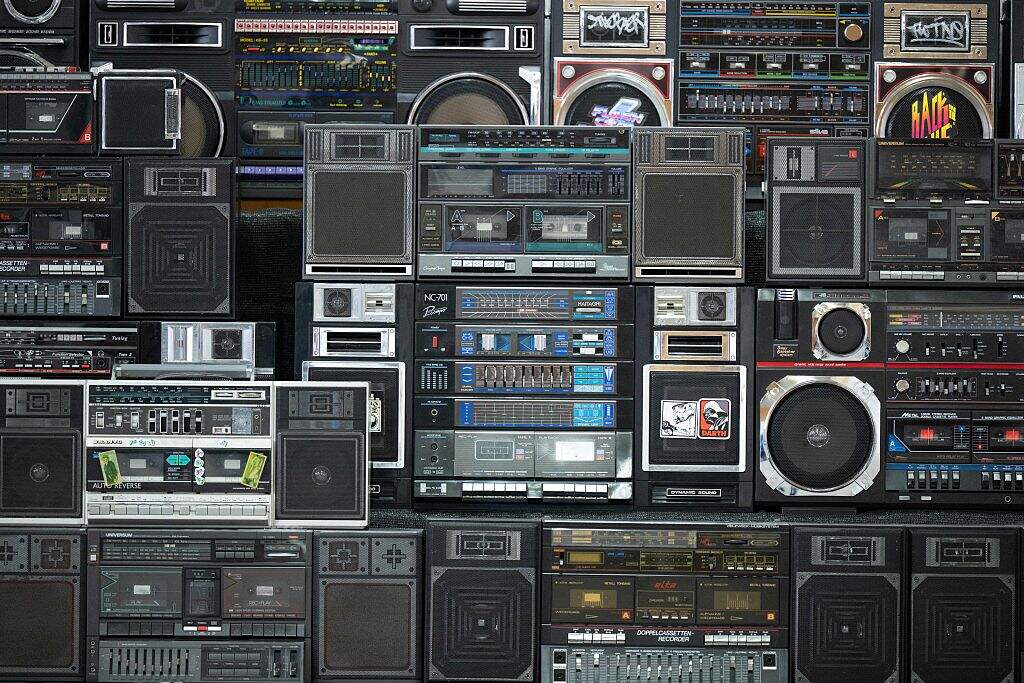
Earlier this fall, there were no rap songs in the Billboard Top 40 for the first time since 1990. Is this just a blip in commercial popularity, or is it a sign that hip hop is losing its grip on mainstream America?
Guest
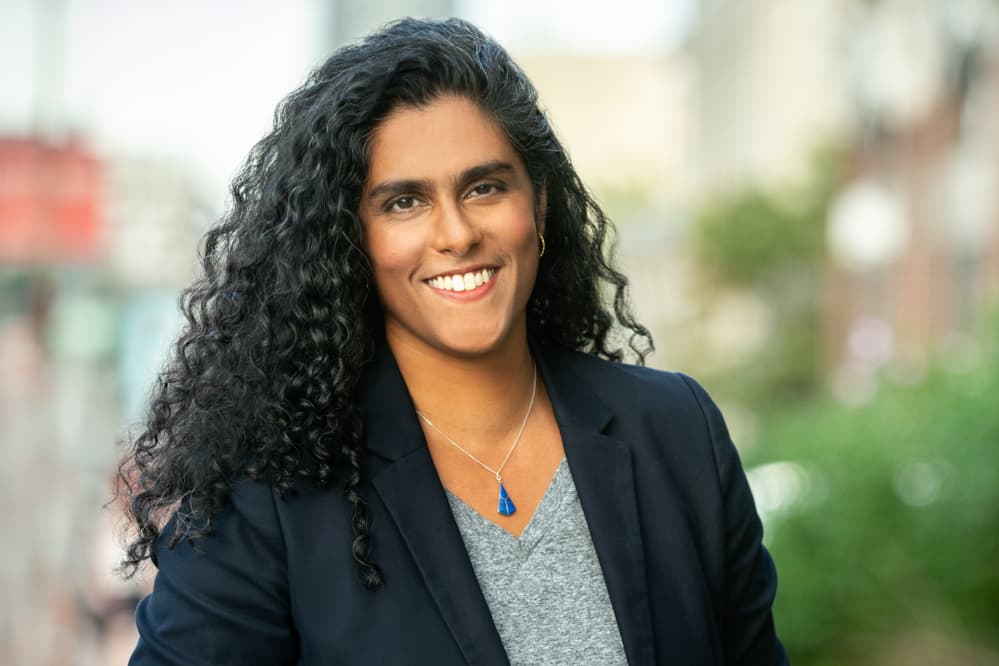
Sowmya Krishnamurthy, music and entertainment journalist. Author of "Fashion Killa: How Hip-Hop Revolutionized High Fashion."
Also Featured
Dan Charnas, Author, professor and producer.
LaRussell Thomas, Independent artist and entrepreneur based in Vallejo, California.
The version of our broadcast available at the top of this page and via podcast apps is a condensed version of the full show. You can listen to the full, unedited broadcast here:
Transcript
Part I
MEGHNA CHAKRABARTI: In 1973, on a hot August night in the Bronx, a teenage disc jockey named Kool Herc plugged two turntables into a sound system and tried something new. He isolated the breakbeat, the moment in a record where everything drops out except the drums.
DJ KOOL HERC: I'm studying the floor. I'm like a shepherd. I'm watching the flock, you know? I got to maintain this crowd going on until about four o'clock. I'm very observant. So what I was noticing people would wait for them particular parts of the record to dance, to do their special little move, so I said listen, I'm going to do a thing. I'm gonna call it a merry-go-round.
CHAKRABARTI: That's Kool Herc on Fresh Air in 2005. He'd play a drumbeat on a loop for the dancers, but then MCs grabbed microphones and took over the beat. They'd hype up the crowd, tell stories and eventually start rhyming.
Kool Herc's innovation is widely considered the birth of hip-hop, now one of the most dominant forces in music anywhere. It evolved quickly, from Run-D.M.C. in the 1980s, to Tupac and Biggie in the nineties, to Eminem and 50 Cent in the 2000's, Kendrick Lamar and Drake in the 2010s and today. There's no denying that hip-hop is a global influence on fashion, business, slang, even politics.
But in the last few years, there have been some indicators that hip-hop may have peaked commercially. The data insights company Luminate found that the genre's share of the American music market dropped from 30% in 2020 to 25% last year. Luminate also found that streaming of new rap has dropped about 9% just this year, more than any other genre.
And earlier this fall, hip-hop completely fell out of Billboard's Top 40 chart for the first time since 1990. That was the moment that got a lot of people talking.
UNIDENTIFIED MAN: Y’all don’t really like rap. Y’all don’t like it. Y’all like Drake. And there’s nothing wrong with that. Or y’all like top 40 hits and there’s nothing wrong with that. Most of y’all are casual fans. You do not like the genre or the culture.
SECOND UNIDENTIFIED MAN: My fear is that gatekeeping entities will see hip-hop coming off the top 40. Or see headlines like that. And say, oh, good, we no longer have to bend over backwards to include hip hop in the different things we have going on. Because clearly people aren’t listening to it the same way.
CHAKRABARTI: Those are clips from an episode of The Breaks from Austin radio station KUTX just last month.
Now, part of this story is about changes at Billboard itself, and we will talk about that later. But overall, these headlines about hip-hop are leading fans to ask, is this dip in commercial success a blip? Or a bigger indicator of future decline of this amazing genre?
So joining us to talk about that today is Sowmya Krishnamurthy. She is a music and entertainment journalist and author of Fashion Killa: How Hip-Hop Revolutionized High Fashion. Sowmya, welcome to On Point.
SOWMYA KRISHNAMURTHY: Thanks for having me.
CHAKRABARTI: Okay, so let me just get your first take about whether this is a tempest in a teacup about hip-hop, or should we actually be paying close attention to, you know, when the series of blips as I've been calling them happen in the world's most popular genre?
KRISHNAMURTHY: You know, like anything, it's art versus commerce. And I think there is something to be said about looking at those things very separately. But hip-hop has been this commercial behemoth since, you know, 1990. And for a genre that just celebrated its 50th birthday not too long ago, the fact that we do see this decline in the charts, in the Billboard Hot 100, I think it's something that absolutely should be discussed by fans and people in the industry.
And I can tell you there's a lot of group chats going on about this because with anything, when art becomes commercialized and money becomes a part of it, a lot of things like investment and resources and even just fan sentiment can be reflected in these metrics.
CHAKRABARTI: So tell me a little bit more, or give us insight into what, you know, in the group chats, what fans are talking about regarding what's happening to hip-hop now.
KRISHNAMURTHY: I think it's this very interesting schism. Because on one hand I think we can all agree hip-hop is the dominant cultural force in America, even globally. You see it on the fashion runways. You see the way that brands, the way they speak to their consumers. It's the lexicon. It's the swagger. All of that still comes from hip-hop.
So to see that the charts are not reflecting that in new music and in fan consumption, it's very strange. Like, how can something be so influential in America and worldwide, but fans aren't listening? Like, what's going on there? So like the saying is, the math ain't mathing. And that's what a lot of people are really confused about right now.
CHAKRABARTI: Okay. So then let's dive into the question about the music industry itself. Are new artists — I mean, there's always gonna be new artists in hip-hop, but are they being signed by record labels in the way that they were? Are the labels really investing in, you know, even established artists the way they used to? I mean, how would you gauge, uh, really the, let's start with the label side of things, of the business of hip-hop?
KRISHNAMURTHY: I think when it comes to the business of hip-hop, unfortunately the label paradigm is so different now because of streaming and also just social media, the internet. I would say it's a much more DIY ethos for most artists, meaning that you already have to be hot, go viral on SoundCloud or YouTube or TikTok, and then you get signed.
You may get your deal, your advance, and the expectation is that the artist and their team are doing a lot of the legwork. Whereas in the past, an artist would be signed, developed, it might take years before the public even hears that first album. So think about that marination process. It was almost like an artistic incubator.
CHAKRABARTI: Mm.
KRISHNAMURTHY: Now, not so much. Things have to be very much like, ready to go for labels to even be interested. And when you look at the charts — and this isn't just hip-hop, this is in many genres — the back catalog, like the older releases, artists who've been around a long time, the Beyoncés, the Taylor Swifts, like they're the ones who are still dominant in their respective genres.
And I always say like they had that time to break in the physical era, then go to digital and now into streaming. So they're really enjoying really that full circle of that music industry and the development and the marketing process. Whereas now artists really are, it's kind of the wild, wild west. Anyone can upload a record, which on one hand is great, you're taking away some of that gatekeeping. The bad side is anyone can upload a record and there's just so much noise to get through for a artist to really push through.
CHAKRABARTI: Yeah. It's actually interesting that you mentioned Beyoncé. I was just listening to Cowboy Carter again this morning. (LAUGHS)
KRISHNAMURTHY: Yeah, there you go. And Beyoncé came out when I was in middle school.
CHAKRABARTI: Yeah. Right.
KRISHNAMURTHY: So that shows you the runway of someone of an iconic status had that time to grow and develop and build a fan base. It doesn't surprise me she's the leader in, you know, in her pack. But think about a new artist. What, you know, magazine are they supposed to speak to? What radio station do they go to? There isn't sort of cultural monolith that we saw in the past, and I think hip-hop, like every genre is kind of suffering because of that.
CHAKRABARTI: So are you saying that new artists today, um, they basically have this very, very compressed timeframe in which to show record labels that the artists themselves have kind of established a fan base, so therefore the labels should invest in them to take them to the next level?
KRISHNAMURTHY: Absolutely. We're in this era of metrics. And you know, social media followers, streaming numbers, which, you know, I think we can all agree sometimes can be a little massaged to say the least. But assuming we take them on face value, that's what labels are looking at.
I've actually been privy to some of these A&R meetings where people are talking about what new artists that we should shine and the first thing that comes out of people's mouths? "Well, here are the numbers." You rarely hear, "Okay, this is the music. I met this person. I love their personality. Their live show is so compelling." The first things that people talk about: Numbers, numbers, numbers.
And to me, if that's the way an industry is going to view art, and that's going to be the main driver, and we understand a business is a business, but to me as a music business, the music should be the first part. That's the first part of the phrase. But if you're only focusing on business and analytics and numbers, I think that's where we are today.
CHAKRABARTI: I mean, if you're a record company, I get it. Like you said, the bottom line ultimately is what matters. But don't they also feel a sense of, and again, specifically with hip-hop, that the record company is actually outsourcing its talent finding to streaming services that are all algorithmically run? I mean, there's a complete lack of the record companies, it sounds like what you're saying, looking beyond a set of numbers that they actually don't have any control over?
KRISHNAMURTHY: I mean, you're absolutely preaching to the choir. And I've said this all the time. At the end of the day, you can't outsource your ears or your gut or your taste. I don't care how good the algorithm is. I don't care how much they say AI is gonna take over human taste and thought, but it's not the same. And when you are around an artist, when you meet them, seeing somebody live, there's a magic there.
And I feel like when we're only looking at numbers, especially when it comes to making signing decisions, also deciding how much financial investment, resource investment an artist gets, you're missing so much. And some of the most iconic rappers in the world -- Jay-Z, Nas — I mean, their first albums commercially were not successes out the gate. These were people who, you know, if you look at their discography, only much later did we see that commercial swell.
But that's where I think it's so important to have people in the industry and in the media who understand the nuance. But that starts with loving hip-hop. You have to love rap music, understand it, know good from bad. And I feel a lot of people now who work in the industry and even fans, they just don't know the difference because that's hasn't been what they've been exposed to in the streaming era.
CHAKRABARTI: Okay. So on the other hand though, it is definitely not unheard of for new musicians, both like in pop music and hip-hop to have really gotten their start proving their popularity on social media and then being picked up by record labels. I mean, I'm probably out of date now, but I'm thinking the one that pops to mind soonest for me is like, Lil Nas X. Are there others in hip-hop or is it more sort of a pop music phenomenon?
KRISHNAMURTHY: I mean, there was a whole genre called SoundCloud rap. And these were artists that literally came up from that platform. And then later it expanded to moreso a sound and aesthetic. And some would point out that things like that genre did affect, you know, kind of what people would say the commercial downfall.
Because what ended up happening, a few artists were the originators and then what ends up happening? Everyone sounds the same, looks the same, acts the same, and then we come to this sort of homogeneity. And all of a sudden you're not seeing those new superstars and those distinct voices and talent that you would like to see.
Part II
CHAKRABARTI: Sowmya, I just wanna share with you and our listeners some thoughts, or a thought from Dan Charnas who's an author, professor, and producer. He is been writing about hip-hop for decades, and he says this conversation around the state of rap is simply not new.
DAN CHARNAS: Since the beginning of hip-hop, people have been asking when it's going to die. And so there's a part of me that really rejects the premise of the analysis, because hip-hop's been around for over 50 years now. It's not going anywhere. It's gonna change, it's gonna fluctuate like any genre, but you know, I don't see the comparative questions for country. Is country going to die? Is rock dying?
CHAKRABARTI: Sowmya, what do you think?
KRISHNAMURTHY: Yeah. I think culture is something that's constantly there. And I would agree with Dan that hip-hop culture is going nowhere because it really is steeped in Black culture, youth culture, and that, you know, rebellion and that feeling of self-expression. These are all things that will never go away and thankfully so.
But I do think the difference is we see hip-hop as such a cultural influence really globally now. And the fact that the music appears to be trailing behind, it almost leads one to wonder, what about rap music? Because it's so encapsulated in this notion of hip-hop culture. And are we going to see this distinction where there are people who are fans of, let's say, hip-hop fashion and know nothing about the music? And that to me is very strange.
And I think unlike let's say country or rock or other genres like that, you don't see this cultural influence in the same way that you see in hip-hop. And interestingly enough, country and pop now are absolutely influenced by hip-hop. They're doing collaborations with rappers. I mean, every record has, you know, either like a rap sample or, you know, even in the aesthetics and in the slang they're pulling from hip-hop. But from the nomenclature, it looks like country and pop are continuing to be dominant, whereas hip-hop is taking a backseat commercially.
CHAKRABARTI: Hmm. Well, so let's talk about country just a little bit more. Because maybe there's an example of how a musical genre can go from being profoundly culturally influential to maybe having a dip both in commercial and cultural success, but then come back, you know, blazing. Because I, I, I think, uh, you've said before that in fact, when it comes to record label investment, a lot of it is going to country right now. Is that right?
KRISHNAMURTHY: Yeah. Every label seems to now have an office in Nashville. Everybody's like all in on country. And I think especially seeing artists like Shaboozey who are kind of these cross-genre where, you know, he's taking like that JayQuan sample and he's got this sort of pop sensibility. He himself is an immigrant. He has that global appeal. But he's also just very country and also loves that genre. People are getting very excited.
It's also interesting investments you're seeing overseas. Everyone is obsessed with India right now. They see 1 billion people, super mobile society, so they're trying to figure out how to bridge the gap between America and India. Africa, especially with like Afrobeats and things going on there — Burna Boy, Tyla, people like that. So the labels are actually looking outside of America, which, you know, I think is great in that we have a global culture.
But also hip-hop is an American art form. It's something that's so, I think important and I don't want us to lose that in this pursuit of trying to just, you know, get every dollar globally and hit every aspect of the world.
CHAKRABARTI: But I mean, wouldn't hip-hop be the natural, most powerful leverage to break into these huge global markets? Because it's already done that.
Just last year I was in Argentina for a little bit and walking around a neighborhood in Argentina and just there in one of the squares there was a group of young Argentine teenagers hanging out together, I felt like I had been transported back to the late eighties because they were hanging out with a boombox and rap — just like, freestyling in Spanish. That is how pervasive and how deeply impactful hip-hop has already been in all of these countries.
KRISHNAMURTHY: Absolutely. And even you see it in genres that may not be categorized as hip-hop. You look at K-pop, for example, they're so influenced by hip-hop, you know, from the dances, the records, a lot of their artists pride themselves calling themselves rappers. So the influence is undeniable. But I do think what's always important to remember is the source.
CHAKRABARTI: Yeah.
KRISHNAMURTHY: Where's the origin coming from? And making sure those artists, the people who work in that industry, those fans are treated with that respect. And from a business perspective, that they're getting the proper resources and money and attention because it really is the genesis that has so much influence and impact globally.
CHAKRABARTI: Sowmya, at the risk of insulting every teenager and tween on planet Earth, I'm gonna say that K-pop is the perfect example of how something that has adopted a musical genre that began, whose original superpower, you know, hip-hop's original superpower was the authenticity, right, that it brought to people's ears who weren't living those lives and has totally — I don't know, I'm gonna make up a word here — transmogrified that genre into something that is pure corporate commercialism.
KRISHNAMURTHY: For sure. And it also takes a lot of page of like Motown and the boy groups and the girl groups that were successful throughout time. So I think they're very savvy in understanding what young people want, what they gravitate towards. And we're in an era now, especially because of social media, culture is kind of nebulous. And it doesn't matter if you're from Bombay, Kalamazoo, New York, like everyone sounds the same, everyone dresses alike, they're watching the same things, listening to the same artists.
And on one hand there's something very endearing that we don't have these borders. But I think on the flip side, we end up losing the authenticity, that regionalism and just having an identity of your own. And I think that's also where we are in pop culture where, you know, it's kind of, you could put a point anywhere on a map and find someone who looks like you, talks like you, dresses like you, has the same pop culture references, and something about that is a little strange.
CHAKRABARTI: Hmm. Well, there's also the question of, you know, instead of just laying all the blame at the feet of the algos or corporations, I mean, I think some people have for, for a while been talking about the fact that they believe that new hip-hop just isn't good anymore.
I mean, for example, we have a clip here from legendary rapper Nas, who's been a vocal critic of modern hip-hop for going on 20 years now. And back in 2006, he made an entire album called Hip Hop is Dead, criticizing the state of the industry. In 2013, he drove even deeper into his thoughts on the genre, appearing on the show "Talk Stoop."
NAS: Well, I saw it come from on the corner with the guys with the radios and dudes break dancing on the streets everywhere. And today it's kind of lost integrity. It's lost its meaning, it's lost its love, which is why I made a Hip Hop is Dead album.
CHAKRABARTI: Okay, so just to, to update folks, Nas has kind of walked that stance back a little bit more recently, but he's still saying hip-hop is "kind of dead," but it's maybe being kept alive by folks like Kendrick Lamar.
So Sowmya, what do you think?
KRISHNAMURTHY: Yeah, I mean usually you just agree with Nas is kind of a good way to live your life. (LAUGHS)
CHAKRABARTI: (LAUGHS)
KRISHNAMURTHY: But I think before there was more of a diversity. So you had the party records, you had the very lyrical records. There was an underground scene that was also getting some commercial investment. You had the records, you know, for the strip club, the records for the romantic moments. Like, there was just more of a diversity in representation.
And I think as we've talked about between streaming, culture becoming more of this monolith, you just don't see that much of variety. And I think that to me is the biggest issue. There's always gonna be people once you get to a certain age, like, you know, "Back in my day music was so much better," so we understand the generational effect. But to me it's just the lyricism.
CHAKRABARTI: Mm-hmm.
KRISHNAMURTHY: And I've talked to rappers, I've talked to fans who to them lyrics aren't even important. I'm thinking that is the tenet, that is the foundation. If you can't rap and you call yourself a rapper, that to me is a problem. And maybe that's me showing my age or my hip-hop stripes. I don't know what it is, but I don't think that should be acceptable, where you're partaking in hip-hop culture, you're profiting from it, but you're really not contributing anything to it.
And I think that goes back to having a diversity of artists and artists who are really focused on the music, on their talent, on their skills, over being a brand or over, as we say, securing the bag, getting every deal on the table, every endorsement. And so many artists now, I think that's their north star and that's where their compass is pointed to. And because of that, of course, the music is gonna suffer.
CHAKRABARTI: Yeah. I have never been known to tell my children that hip-hop was better in the eighties and nineties. (LAUGHS) Just kidding. I say that all the time, literally, to them.
But in defense of the streaming services, I wonder if we could make an argument that, look, we are living in a world where you have that first hook and that's it. People are just deciding whether they're gonna skip or not, which is challenging. But as genres, all genres have to evolve to that truth. That if hip-hop artists, you know, up and coming or even established ones, cannot find something that keeps people listening to an entire new song, well then the genre does actually have a problem.
KRISHNAMURTHY: Yeah, absolutely. I think what streaming, the benefit of it is really for artists from the past. And it's all about discovery and catalog. So let's say there is a young 17-year-old fan, they can go listen to Illmatic now, Nas' seminal debut. I think it dropped in like 94 and it's still relevant. It sounds fresh. It sounds good. And this is at your fingertips.
So all of this incredible music that before would've required, you know, digging in the crates or getting somebody's old CD or vinyl is now available. So I think for older artists, you know, kind of the what now we would deem old school, streaming has been incredible for music discovery, new fans listening to them. So many artists have had a second and third and fourth life.
I mean, you look at the Clipse, they've been around since I was in high school, and I would argue that their last album, which just came out, is one of the best hip-hop albums of the year. They're nominated for a ton of Grammys. I mean, they performed at the Vatican. They've had an elite run. And so much of that is because fans are now able to follow them over decades. And I think that is something that streaming has enabled us to do.
The hard part is for a new artist, how are you supposed to compete with that? And it's really hard, if not impossible.
CHAKRABARTI: Well, let's talk for a second about Billboard itself, right? Because a lot of, I mean, our current conversation and a lot of conversation in the world of hip-hop fans has came or really peaked when there was that moment where hip-hop fell out of the top 40.
So here's Dan Charnas, author, professor, and producer again. Uh, and he says The billboard charts do not at all reflect the state of the genre.
CHARNAS: You look at the Billboard Hot 100, right now, what's it filled with? Christmas music. It's a different chart. You would never see, you know, the amount of holiday music disrupting the rhythm of the top 40 in the days before streaming in a moment where Taylor Swift is, you know, a blockbuster artist putting out a new album. You know, there's less room for other stuff. That's all.
CHAKRABARTI: Sowmya, your response to that.
KRISHNAMURTHY: Yeah, so the Hot 100, for those that don't know, it's made up of streaming sales and airplay. And one thing that they did recently, the end of October, was changes to the recurrent rule, meaning that if a song had kind of fallen below a certain rung after a while, it was removed. That's how we get to this conversation with Kendrick Lamar's "luther" being removed from the chart.
And I think the thing that Dan was mentioning because of streaming being such a big component of the metrics here, you're gonna see a lot of old records come up or even records that have been around for a while. So then the question becomes, is the Hot 100 a misnomer? Is this really a hot song or are we in the holidays and everyone is just in a holiday spirit? So that's always been something problematic when we are looking at charts because it's not a perfect science.
The problem is this is still a metric that the music industry looks at. And again, men lie, women lie, numbers can sometimes lie. But this is still a very important statistic that people talk about inside the industry, how they contextualize the success of artists and ultimately genres. So it's an imperfect system, but sadly it's the only system we have for now.
CHAKRABARTI: Right. In terms of measuring particular songs popularities, your point is well taken. But I think again, it's just this confluence of different metrics that are making this conversation even more interesting. Because I've also been seeing that, you know, aside from the biggest names in hip-hop, that a lot of artists are even having trouble, you know, selling tickets for concerts. Have you heard that?
KRISHNAMURTHY: Yeah. It's all very connected. And what's interesting, I know of some rappers who had a viral moment on TikTok or SoundCloud, they got pretty substantial record deals. But when they went on tour, they can't sell out a venue of a 100 or 200 people, which is considered a small venue.
Because at the end of the day, it's very easy to click play and listen to a record for free on a streaming service, but to actually connect with a fan, to buy a ticket, go to your show, you know, stand there for two hours, that's a different type of commitment.
And I think that's where you see that 1% of artists — Kendrick Lamar, Taylor Swift, Beyoncé — like, they're selling out stadiums because they started in those small venues and grew over time. But for an artist now to even break in those small venues. It's almost impossible.
CHAKRABARTI: Wow. I mean, and so that goes back to your point about the established artists having had the opportunity to develop the relationship with their fans, right?
KRISHNAMURTHY: Yeah, I mean, I remember seeing Kendrick perform at like, you know, a barbecue restaurant in New York for a small crowd, and seeing him now do stadiums. We're talking over the course of like, you know, 15 years. So imagine having an artist now and the entire marketing plan is "Okay, post it to Instagram." Which does impact to some extent, but that can't be the entire marketing plan. (LAUGHS)
CHAKRABARTI: Sowmya, I'm not gonna ask if you have a bootleg of Kendrick at a barbecue restaurant because I think it would probably be worth a pretty penny. (LAUGHS)
Part III
CHAKRABARTI: Let's listen for a second to West Coast rapper The Game who made a name for himself in the 2000s. He's been another vocal critic of modern hip-hop. And he says most new rap is "trash." And he said that on a podcast last month with Big Boy TV.
THE GAME: Back in the day, Busta Rhymes didn't sound like Method Man. Method Man didn't sound like Dr. Dre. Dr. Dre didn't sound like Nas. Nas didn't sound like Tupac. Tupac didn't sound like Biggie. Everybody was different. So when you heard a voice, you knew who it was. And you got excited 'cause you hadn't heard that voice in a minute.
These days where a lot of young artists get lost at, is they all sound the same. Sometimes I don't know who's who. And I may love the song and I might, you know, I might play it in the gym, play it in the car, but sometimes I don't know who the artist is. And so my advice would be to the younger generation, like, find your thing and do you.
CHAKRABARTI: "Do you," says The Game. Well, we talked to a younger artist and he says that it's not just Gen X fans of old school rappers who complain about the current state of hip-hop. He himself as a newer artist also says that the genre is in a lull.
LARUSSELL THOMAS: We used to be able to turn on the radio and hear OutKast, Lauryn Hill, Jay-Z, Queen Latifah, Public Enemy, J. Cole, a myriad of artists. Now, if you turn on the radio to a hip-hop station, you're not going to hear anything of substance unless they're playing a song in 2025 from the early 2000s.
CHAKRABARTI: Well, that is LaRussell Thomas, an independent artist and entrepreneur from Vallejo, California. He's better known as simply LaRussell. And LaRussell started rapping in second grade, but he didn't get started in music more seriously until 2012 when he left a comfortable job at an aerospace company to pursue his dream.
THOMAS: You know, I decided to take a big leap and bet on myself and go after what I really wanted in this life instead of going into work every day miserable, you know, and complaining about my circumstances, I decided to get up and do something about it.
CHAKRABARTI: He's still on that long journey towards success. LaRussell does not have a record deal with a major label, and he holds most of his concerts at his house in the Bay Area. Because he's independent and raising two kids, LaRussell has to rely on income from fans who stream his music.
THOMAS: You know, I think the best way to support an artist is how people go about it already. You know, they listen to the music and they go to shows when they see 'em and they buy their merch. And usually that's where it stops for most artists. For me, I opened myself up to be booked by the people, for anythingand have gold cards and memberships and mics. You know, like I've, I've allowed more entryways of support into my ecosystem.
CHAKRABARTI: If you go to LaRussell's Instagram right now, you can book him to come to a party, take photos with you, even play pickleball or chess with you. LaRussell says most days are in fact fully booked, so it's a grind. But now he has more than 2 million Instagram followers and several songs with more than a million Spotify streams. He also performed live at the NBA All-Star weekend last year, and he is very grateful for that.
But he says, getting noticed as an independent hip-hop artist is like getting noticed as a basketball player from a junior college as opposed to a big name school like Duke or North Carolina.
THOMAS: You could be as great as Steph Curry, but no one sees you. No one hears you. No one feels you. No one's promoting you, no one's building your brand. So many people don't care. It takes a lot more, you know, the NBA spends hundreds of millions every year to make sure their star players are seen and revered by the world. And the junior college doesn't even have a budget to do that.
CHAKRABARTI: LaRussell spends at least $100,000 per year on personal advertising, but that is a drop in the bucket of course, compared to what major labels spend. And he says the record industry promotes what they know makes money: music that's familiar and unwilling to take risks.
THOMAS: If the most successful and popular person in your neighborhood was a drug dealer, the odds of you wanting to be a drug dealer is higher. If the most successful person that you know that did rap where you're from was like a horrible rapper, the odds of you being a great one is slim to none, right? Because what you know is what you know.
CHAKRABARTI: That's LaRussell Thomas. And by the way, he does feel that the Billboard top 40 has very little impact on hip-hop in general. But he hopes this moment is one where the genre can reflect on the state of the music and find ways to support creativity within hip-hop.
So Sowmya, you're, what's your response to what LaRussell says there?
KRISHNAMURTHY: LaRussell is absolutely right and everything he's doing is so commendable where he's thinking almost like a, a full-fledged corporation. He's a rapper, a performer, a content creator, and very much a multi-hyphenate. And I think whether it's in rap or any type of creative in 2025, we all collectively have to think like that. The unfortunate part is when are you supposed to focus on your craft?
CHAKRABARTI: Yeah.
KRISHNAMURTHY: It's very hard to focus on rhymes, you know, be in the studio, experiment musically, when he also has to perform and sell merch and probably, you know, track the packages and who wants to play pickleball with him. So there's only so much one can do.
And this goes back to my earlier point of putting so much responsibility on the artist's shoulders, and I just don't think that's fair. No matter what. Hip-hop is a multi-billion dollar industry and there has to be, you know, money and individuals and resources that are devoted. Somebody like LaRussell and I don't know, he may want to stay independent, own his masters, have that creative autonomy. Imagine if he did get some influx of cash, having a team behind him who could help him with some of these other aspects, he could really focus on the music, his live show, perfecting that aspect versus having to do all these other things just to pay the bills to fund his passion.
CHAKRABARTI: Yeah, no, I mean, that's a really good point and it suddenly occurs to me that perhaps this is a moment of opportunity for independent labels, right? Like, you don't have to be owned by Sony at the end of the day to find new talent and to, you know, to nurture it for new audiences. Is there, do you have any hope in sort of that part of the business?
KRISHNAMURTHY: I would love to see that. What you are seeing is a rise of distribution. So even something like Jay-Z's Roc Nation, they just, you know, announced like their new revamped distribution network and opportunity tune, core distro kit, like there's a lot of those. But again, this goes back to that kind of DIY ethos. The interesting part is that. After all this time, we don't have really standalone hip-hop labels.
CHAKRABARTI: Mm.
KRISHNAMURTHY: I mean, the last really significant one that had no affiliation, you know, currently with a major label is Quality Control. But they were actually acquired by Hi, which going back is a, is a K-pop like monster machine. So, you know, one thing about artists, it doesn't matter, you know, if you're independent or the biggest artist in the world.
People like to spend other people's money. Like no matter what, even the biggest artists, Taylor Swift, Drake, Kendrick, like they all have deals under the majors because the advances that they're getting, reportedly, we're talking like multi multimillions. And to get that money, to get the resources of the label, the label connections, it's really hard to turn down.
So I would love to see an influx of new hip-hop labels, hip-hop executives, people who really love the music and the culture. I'd love to see new hip-hop media platforms that focus on the music. So I do believe there is opportunity with everything. If the pendulum swings one way too far, it always course corrects. Or let's say I'm cautiously optimistic that it does.
But you know so much now in the music business, like every other industry, it's all consolidation. Three major labels basically control the entire industry. Spotify has the lion's share of streaming. I mean, it is what it is. So I'm always hopeful that the next generation will see it as an opportunity to kind of, you know, rage against the machine and fight the power.
CHAKRABARTI: I wonder if radio play still has a place in this discussion because of course, for decades, stations that were dedicated to hip-hop were the places where, you know, fan bases were formed. New hip-hop discovery happened on those stations. Can they still have a, or do they still have kind of a quieter but profound influence on the genre in terms of how people are discovering new artists worth their attention? Or is it just like streaming is just too dominant?
KRISHNAMURTHY: There was a time radio was king, and unless you broke at radio as an artist, you know, you just hadn't made it. And that came with a lot of its own issues, including payola and other kind of, you know, backdoor situations and politics, which again, favored major labels who had the money to kind of grease those wheels, either financially or otherwise.
Radio has been so consolidated, you don't see as much of local radio. And in fact, I was a guest on a very big radio show, a hip-hop show, not too long ago, and they openly admitted to me like, we don't control the playlist. This is done by like one person in an office somewhere and they're gonna go for the same safe records. The records that they know are gonna have that commercial appeal, and that's the reason why you could be in New York, LA, Atlanta, Miami, you turn to the hip-hop station, everyone's playing the same record.
And I would love to see a return back to more regionalism, letting DJs actually pick records. I mean, these are the individuals who ostensibly, they know their audience. They're playing the clubs. They're playing the parties. We should be looking to these tastemakers to do their job. But instead, if everyone's gonna have the same playlist and everyone's leaning into that 1% established superstar artists, it's going to be a problem. And even with the recurrent rules at Billboard. One of the reasons they changed it recently again is because of radio.
CHAKRABARTI: Mm.
KRISHNAMURTHY: They're like in the era of streaming, even radio is following what those playlists are doing. They're playing the same record. So I'm sure people listening to this record, if you listen to hip-hop radio, you probably heard Kendrick's "luther" a million times. I mean, great song, great record, but you would hear it everywhere. You know, every hour on the hour, and there's a reason for that.
So at a time like that, where we're just not seeing this distinctness, I think that is a problem coming from radio that should be about discovery, connecting with fans and amplifying your local artists.
CHAKRABARTI: Yeah.
KRISHNAMURTHY: So many artists complain, "I'm in this market. I go up to the station and I can't even get a meeting. I can't get my record played because I'm just not one of these big major label artists that they've locked into this playlist."
CHAKRABARTI: Well, as we sort of round the corner towards the, the last several minutes of the show, let's listen to a couple more clips of from folks who have different views here.
This is Dr. Dre — of course, legendary in the hip-hop world. He appeared on Kevin Hart's talk show in 2023 with his point of view about the state of hip-hop.
DR. DRE: Anybody that's talking about the state of hip-hop right now and talking about it from a negative place sounds like somebody's grandfather. Oh, hip-hop is evolving. If you don't like it, don't listen to it. Some of the (BLEEP), most of the (BLEEP) I don't like, but I'm not hating on it. I'm never gonna hate on it. It's evolving.
CHAKRABARTI: That's Dr. Dre from 2023. And here's Dan Charnas again and he said, he told us that the health of the genre is about much, much more than simply it's musical commercial success.
CHARNAS: I'm not so sure that I am invested in it maintaining its dominance. I'm invested in artists being able to express themselves and making a living expressing themselves. And I'm also invested in the idea that artists should feel more free to explore and to do the things that are new and scary to them.
You know, I think there's some higher considerations for me with — and a higher meaning for me when we talk about hip-hop as a genre. And if it's not those things, if it's not daring, if it's not a venue of real expression, then it's just pop. It's just a product.
CHAKRABARTI: And I mean, in fact, Sowmya, what we, you and I have been talking about is that in a lot of ways, hip-hop as a musical genre has become, at least in terms of commercialism, exactly what Dan's talking about, a product.
But my last question for you is. I'm not sure that's such a bad thing. And here's why. I'm looking at the book that you wrote about Fashion Killa: How Hip-Hop Revolutionized High Fashion. I mean, it's been many years now in which we could fairly stop considering hip-hop exclusively a musical genre. And it's simply more a just a cultural force, really, a transformational cultural force.
And I guess what I'm saying is, does it even matter anymore that the musical part of this cultural force, may be at a slight weak point, when the rest of its cultural influence has not waned at all? It's continuing to increase, as you said.
KRISHNAMURTHY: I mean, I'm a hip-hop head at the end of the day, so to me, yes, there has to be good rap out and good production and performance. Like all of that has to be the foundation. If not, we are leaning into, you know, vibes and clout and branding. These are all nice icing on the cake, but the cake itself has to be delicious.
And I think a big part of it is it would be amazing if we can just focus on the art and artistic expression and freedom, but at the end of the day, people gotta pay their bills.
CHAKRABARTI: Yeah.
KRISHNAMURTHY: And we know in an industry when the numbers aren't there, we know what's gonna happen. Fewer rappers are gonna get signed. It's gonna be considered deprioritized on the industry level, and it's gonna also affect radio stations, hip-hop media, journalists, authors.
I mean, it's really hard to, you know, write a hip-hop book if people say, "Well, look, nobody's listening to the music. Why are they gonna read your book?" So it's all interconnected in this ecosystem. But I think the goal is to find that balance, artistic expression and freedom and creativity and rebellion, but also that commercial side as well, for the genre to get the respect that it deserves.
CHAKRABARTI: Well, Sowmya Krishnamurthy is author of Fashion Killa: How Hip-Hop Revolutionized High Fashion. It's been so wonderful to talk with you, Sowmya. Thank you so much.
KRISHNAMURTHY: Thank you.
The first draft of this transcript was created by Descript, an AI transcription tool. An On Point producer then thoroughly reviewed, corrected, and reformatted the transcript before publication. The use of this AI tool creates the capacity to provide these transcripts.
This program aired on December 5, 2025.