Support WBUR
How should American colleges measure merit?
This rebroadcast originally aired August 12, 2025.
The Trump Administration ordered universities to turn over data to prove they're not considering race in admissions. But education expert Richard Kahlenberg argues that for college admissions to look at merit fairly, they need to look at class.
Guests
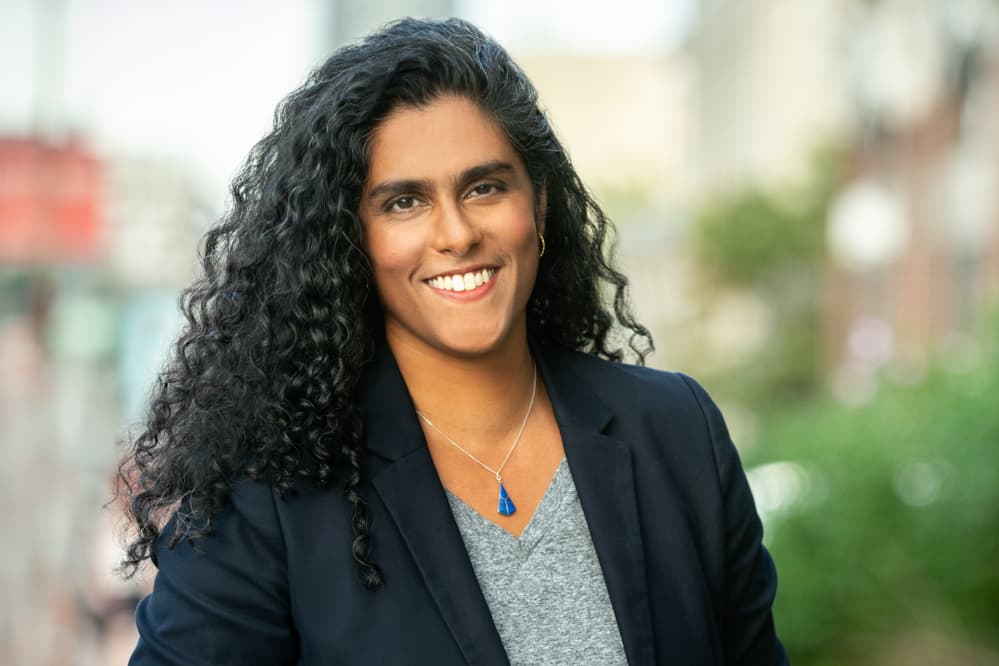
Richard Kahlenberg, director of the American Identity Project at the Progressive Policy Institute, a think tank based in D.C. Author of many books, including “Class Matters: The Fight to get Beyond Race Preferences, Reduce Inequality, and Build Real Diversity at America’s Colleges.”
The version of our broadcast available at the top of this page and via podcast apps is a condensed version of the full show. You can listen to the full, unedited broadcast here:
Transcript
Part I
MEGHNA CHAKRABARTI: Two years ago, the Supreme Court issued a landmark ruling that ended affirmative action in college admissions. Last week, President Trump issued a memorandum that indicates he does not believe colleges and universities are complying with the court ruling. Titled, Ensuring Transparency in Higher Education Admissions. In the memorandum, Trump writes, quote: Greater transparency is essential to exposing unlawful practices and ultimately wring society of shameful dangerous racial hierarchies. End quote.
It goes on. Quote: Race-based admissions practices are not only unfair, but also threaten our national security and wellbeing. End quote.
The memorandum requires colleges to report applicant data to a federal database which would then be made public. The applicant data includes race, test scores and grades. Education Secretary Linda McMahon said the data will help shine a light on whether colleges admit students based on merit or on race.
Quote: We will not allow institutions to blight the dreams of students by presuming that their skin color matters more than their hard work and accomplishments. End quote. She also said, quote: The Trump administration will ensure that meritocracy and excellence once again characterize American higher education. End quote.
Now before we get into the politics of this new requirement, I just want to spend a moment on some simple practicalities. The memorandum states that colleges will report their admissions data to the integrated post-secondary education data system, or IPEDS. That system is managed by the National Center for Education Statistics.
The memo says that IPEDS is in need of technological upgrades and directs the Secretary of Education to quote, revamp the online presentation of IPEDS data. End quote. Okay. So far so good.
But who is going to process that data? There is literally almost no one left at the National Center for Education Statistics.
Since taking office in January, the Trump administration has fired almost everyone who worked there. According to the New York Times, about 100 federal employees worked at the National Center for Education Statistics at the beginning of this year. Now there are just four. The presidential memorandum says nothing about exactly how the administration will make this new requirement a logistical reality.
Nevertheless, the memorandum does get at an issue that's been plaguing higher education for a century. How do schools consider a student's merit and excellence fairly? Is it by race? Is it by test scores? Education expert Richard Kahlenberg argues that it's neither of them. Kahlenberg identifies as a liberal.
He was also one of the key players who argued for the Supreme Court to strike down race-based and affirmative action. He says the best way to provide true diversity on campus isn't race or test scores. It's class. And he argues that in his new book Class Matters: The Fight to Get Beyond Race Preferences, Reduce Inequality, and Build Real Diversity at America's Colleges.
And he joins us now from Washington. Richard Kahlenberg, welcome back to On Point.
RICHARD KAHLENBERG: Great to be with you again, Meghna.
CHAKRABARTI: Just before we get into your argument about class, which we'll spend the majority of the show on, I just wanted to get your thoughts on the presidential memorandum. Given the logistical complications that I just identified there, do you think that it's actually going to shake loose more public data from colleges about who they admit.
KAHLENBERG: I hope it does. There are many contradictions in the Trump administration, and this is one of them. Having fired most of the folks who would administer this new disclosure program. There's a tension there. I think the Trump administration's answer is that they will use private contractors to process the data.
So it's not as if it's impossible. But I do think the firing of folks at NCES, National Center for Education Statistics does complicate his efforts.
CHAKRABARTI: Yeah. Private contractors or AI. Who knows? We can only speculate. Or maybe both. But you said you hope we get more transparency into college admissions.
Tell me more.
KAHLENBERG: Yes. As you mentioned, I was involved in the litigation against Harvard and the University of North Carolina, and what really struck me is that universities tried to hide the ball. They do not want the public to understand the process by which they admit students.
[Universities] do not want the public to understand the process by which they admit students.
And frankly, after the litigation, I can understand why. They've got a lot that goes on in the admissions process that's not particularly favorable to them. So there are a lot of factors that count in the admissions process. Traditionally, race was a big factor, in addition to grades and test scores.
And then there's a whole lot of very sordid practices like legacy preferences that give a leg up to the most privileged applicants. Others that privileged the children of faculty. It's really a system that needs more light shown on it. And that's the part of the initiative that I like. I like that there is transparency, more transparency. I'm nervous about how the Trump administration will use the data.
CHAKRABARTI: Okay. So we will return to that concern later in the show. But in order to better understand your argument for why class is in your view, the most effective way to create diverse campuses in the United States.
I want to just stick for a moment with what we know about what admissions practices were in elite, I should say, elite colleges and universities. Up until the Supreme Court case, because you have an entire chapter in the book about this. It's called Peeking Behind the Admissions Curtain: How Harvard Creates a Multiracial Aristocracy.
Let's use Harvard as an example because it is the marquee university in the country, and the richest one. What did you learn or what did we, remind us? What we learned about how Harvard until 2023 was creating the class of freshmen that it would admit every year.
KAHLENBERG: Yes. Harvard said we have a holistic process where we look at all sorts of different factors and that's true.
But some factors rose to the top in terms of significance and weight provided. So Harvard does consider academic criteria. They want students who are going to be able to perform well at a selective, rigorous college. But on top of that, the biggest preference they provided was to recruited athletes.
So by far the most weight was provided to those students who the athletic coaches wanted on campus. And for many people, intuitively, that would seem to push towards diversity because we think of the basketball team or the football team being racially and likely economically diverse.
But what that misses is that there are a whole host of athletic pursuits that Harvard recruits for that tend to benefit, tend to be played by pretty privileged and mostly white students. So they have the fencing team, they have the squash team, they have the lacrosse team.
There are a whole set of ways in which the athletic preferences tended to benefit wealthy students. Then there are the legacy preferences, which benefit the children of alumni. And further research from Harvard economist Raj Chetty has found that there are legacies and then there are legacies.
The legacies whose parents gave large donations got a much bigger bump up in the process than your run of the mill legacy. But, in any event, these are extremely privileged students, the least deserving in terms of measuring merit of an extra preference.
They had all sorts of advantages.
CHAKRABARTI: Hang on for a second. So the analyses that were done, the baseline was that in terms of academics all was equal, and then these were the differences, were recruited athletes, legacies, race, et cetera, in your book.
The athletes one is really eye popping because it was found that there was an 83% chance of admission at Harvard if you were recruited athletes, versus a 16% chance for non-athletes. Legacies were 55% chance of admission versus 15% for non legacies. How did that play out in terms of race?
KAHLENBERG: Oh they both benefited white students disproportionately.
And then they had, there were some processes that were unique to Harvard. They have something called the Z list where if you're one of the privileged children of a donor and others you get a big admissions boost.
And there, I believe it was 1% of the students were Black. Harvard needed racial preferences because they had already stacked the deck in favor of wealthy white students. And then they to compensate for that, then they applied these very large racial preferences.
CHAKRABARTI: Okay, so there is the heart of the matter.
Is your argument that if they did not have this very strong preference for wealth, that we wouldn't even need race-based preferences?
KAHLENBERG: Not quite. So I do think that because grades and test scores are a reflection of the opportunities that a student has had, eliminating preferences for legacies and athletes and others get you part of the way, but you also need to provide a leg up to economically disadvantaged students in order to get both economic and racial diversity.
CHAKRABARTI: Okay. So we're going to spend more time later in the show talking about that, but we have about 30 seconds before our first break, Richard.
Given the business of higher education, especially in these elite schools. Turning off the tap of wealthy students seems to be quite a big ask for the colleges, don't you think?
KAHLENBERG: Yes. And that's why they wanted racial preferences all along. But my theory of the case has always been that to their credit, universities care about racial diversity.
They recognize that racial integration is good for everyone. And moving forward, they will need to pare back on some of those preferences for the privilege and provide a bigger boost to economically disadvantaged students or they'll end up re-segregating higher education.
[Universities] will need to pare back on some of those preferences for the privilege, and provide a bigger boost to economically disadvantaged students. Or they'll end up re-segregating higher education.
Part II
CHAKRABARTI: Now Richard, we just dug up some numbers on income inequality in America today, and some of them are quite striking.
For example, white families had six times the average wealth of Black families and Hispanic families. Then if you look back to 1963, here's what's interesting. For Americans overall, the wealthiest American families had 36 times more money than families in the middle class. Now it's 71 times as much money than families in the middle class. And that's according to data from the survey of consumer finances. So what do you think income slash class captures that race does not in admissions?
KAHLENBERG: I think the data you're citing underline the point that class inequality has increased in American society. And at the same time, because of the Civil Rights Act, because of progress we've made in terms of our attitudes on race, the salience of racial discrimination has by no means been eliminated, but it's less important.
And so as class became more of an impediment to opportunity in America, the salience of race declined. And yet the public, the policies of these universities was to give very large consideration to race and really give consideration to economic status short shrift. So the universities are always saying follow the science. And I agree with them. It's just in this case, they weren't.
If you're trying to create a fair system where you reward students who've done pretty well, but having overcome obstacles, you'd want to count class quite a bit. And reduce the importance of race in the admissions process. And universities were doing exactly the opposite.
CHAKRABARTI: I want to draw a thread into terms of like how we got here, because a study that shows that low income students now are as severely underrepresented at elite law schools, for example, as Black students were before affirmative action. And you also basically write that class bigotry is one of the few forms of acceptable, excuse me, acceptable bigotry in elite universities in this day and age.
How did we get there? Because people who might recall some of the details of the Civil Rights Movement would know that Dr. King and other civil rights leaders actually were also champions of class equality in this country. So what happened?
KAHLENBERG: I think that the fight for racial equality required less sacrifice on the part of white Americans than the fight for economic equality requires on the part of upper middle class and wealthy Americans. And King recognized this, he said, the first phase of the Civil Rights Movement, striking down racial discrimination, making sure ... trying to reduce segregation in our schools by race, that was relatively inexpensive.
But dealing with class inequality, that is providing people with health care, providing people with housing, with good schools and to provide genuine equal opportunity, that all costs money and someone has to pay for it. And so it's a tougher fight than the fight for racial equality.
CHAKRABARTI: Really? Because it seems like the fight for racial equality has been a pretty tough fight that many would argue we still haven't actually, or this still hasn't actually been completed or won.
KAHLENBERG: And I would agree with that. Race matters in American society. It's just that class matters a lot more and our public policy doesn't reflect that.
CHAKRABARTI: Okay. So tell me what data or what evidence do you point to that leads you to that conclusion that race matters? Oh, sorry. That class matters even more than race.
KAHLENBERG: Yeah. There was one study by an economist at Georgetown University that looked at what predicts SAT scores. And it turns out that there is a racial gap in SAT scores between Black and white students. But most of that has to do with the economic disadvantage faced by African American students. And so if you disentangle the two factors, race and class, the most socioeconomically disadvantaged student on average scores 399 points lower on the SAT.
And when you control for class, the white-Black gap is reduced to 56 points. And so basically, you have the class gap being seven times as large as the race gap in terms of predicted scores on the SAT.
You have the class gap being seven times as large as the race gap in terms of predicted scores on the SAT.
CHAKRABARTI: Wow. Okay. So then, what change would you have elite colleges and universities make in order to achieve this more authentically diverse admissions process as you argue in the book?
Would there be some sort of like point system for students who are on the lower end of the income scale?
KAHLENBERG: In essence, universities are adopting point systems. They will deny it. When you're processing thousands and thousands of applications, they need to come up with a system that factors in various variables.
And I argue in the book, and we ran simulations in the Harvard and UNC cases to see how this would happen, how this would work in practice, consider factors like the neighborhood a student comes from. Do they come from an economically disadvantaged neighborhood or a privileged neighborhood.
Look at the school that the student attended. Is it a school that has a high concentration of poverty, which we know reduces academic achievement on average. Or is it a wealthier school? Does the child or the student come from a family that has two parents or one? Does it come from a family that has high income or low income?
And since you pointed to the factor of wealth, I'll just underline that. Wealth matters a lot according to a number of studies. Wealth matters to opportunities. So coming from a high wealth family gives you all sorts of advantages in life. You can live in a privileged neighborhood where there are strong schools, and where there are high levels of safety.
And you can expect to go on to college because you know your family has those resources. And so counting wealth as another factor is important. And importantly, universities have access to all this information.
Most institutions in America don't, but because of the financial aid forms, colleges know the wealth, the income, the neighborhood, the various factors that we would look to, to design a fair system of admissions.
CHAKRABARTI: If memory serves, back in 2018, 2019, there was a giant tumult over what was then called the SAT Social score, which is the, I guess the SAT's environmental context dashboard. They were also calling it the adversity score. Which would measure some of these exact things that you talked about.
Neighborhoods, school, poverty rates in the neighborhood, and they got a lot of pushback for that. Because it got to, once again, this question of, are kids getting a leg up simply because of who they are and where they come from? And not because of their actual scores on the test or because of their merit?
Do you recall that controversy?
KAHLENBERG: Yes, I recall the controversy and I just, full disclosure, I worked and helped with the College Board try to devise that program, there was controversy among colleges and among wealthy folks who have disproportionate voice in American society.
If you look at the polling though, most Americans strongly support the idea of considering economic disadvantage as a measure of true merit. So most people recognize that if someone scores 1,300 on the SAT and has a 3.8 GPA, that means something very different if a student overcame all sorts of obstacles, was in that single family, single parent home.
Came from a low income background, went to inadequately financed schools, as opposed to someone who has been given everything in life. The boarding school, the private tutors, the environment in which one can be all that one can be.
Yeah. So the polling ... suggests by two to one Americans support the idea of considering economic disadvantage. And just as a footnote, the College Board uses what they call landscape so that universities can type in the address of a student applicant and know a wealth of information about their neighborhood and their school.
It's just they change the name of it. They don't call it an adversity score.
CHAKRABARTI: So it's still there. Okay.
KAHLENBERG: It's still there.
CHAKRABARTI: Just one more point on this because it gets to the bigger issue of creating diverse admissions processes in colleges. We did a show on that SAT adversity score.
Again, this was five or six years ago, and I recall that a lot of the concern at that time was that because race and class actually have a great deal of overlap. If you are Black in America, you are more likely to be living in one of these neighborhoods that you're talking about. That's lower income.
That maybe has a single parent household, whose school overall doesn't perform at the same level as a wealthy white neighborhood school was, you're more likely to be low income. Many people saw that adversity score as a way of colleges saying, or we're admitting based on race, without saying that we're admitting based on race.
That was like a workaround. You know what I mean?
KAHLENBERG: Yeah. I've heard the argument. I think it's wrong in this sense that, at places like Harvard, using racial preferences, 71% of the Black and Hispanic students came from the richest 20% of the Black and Hispanic populations nationally.
So Harvard wasn't admitting the students who'd overcome economic obstacles. So it would be a huge change from the current system or from the then existing system, to provide a benefit to economically disadvantaged students. I think it's a positive thing that Black and Hispanic students would disproportionately benefit from an economic affirmative action program. Because it captures the fact that there is a legacy of slavery and segregation and redlining that is present in America today.
And so it would disproportionately benefit the most deserving Black and Hispanic students who face the brunt of the economic obstacles in America. And at the same time, some of Trump's supporters would benefit as well. So working class white and Asian students would also benefit, as I think they should. So it's this idea that basically class as a proxy for race, I think is wrong in terms of implementation. And it actually changes the existing system dramatically because it was the wealthiest students of color who tended to benefit.
CHAKRABARTI: Yeah. What class-based views of admissions does is it captures, to use your word, the fundamental truth, that poverty or being low income is also an intergenerational yoke on people regardless of race. And you've cited statistic after statistic that shows that in this country, the number one correlate between opportunity and I guess admissions is income.
But I'm not entirely sure. In fact, I'm sure that's not specifically what the Trump administration is getting at. So let's play here a clip from a joint session of Congress. A speech that the president gave on March 4th of this year, 2025, and he talked about his desire to get rid of race or gender preferences in hiring and also college admissions.
DONALD TRUMP: We believe that whether you are a doctor, an accountant, a lawyer, or an air traffic controller. You should be hired and promoted based on skill and competence, not race or gender. Very important. (APPLAUSE)
You should be hired based on merit. And the Supreme Court in a brave and very powerful decision has allowed us to do. Thank you. Thank you very much.
CHAKRABARTI: President Trump on March 4th, 2025. Based on merit, Richard, this is the word that comes up over and over again in almost everything that the Trump administration says about higher education.
Specifically. You heard the quotes that I read from Secretary McMahon earlier. What exactly is merit in admissions and how do you measure it?
KAHLENBERG: Yes. I'll say two things. One is, first of all, that I watched that address before Congress, and it was a good moment for Republicans because Republicans stood up and cheered for merit, which most Americans believe in.
And the Democrats sat there glumly.
That was not, everyone should be for merit. The question is how you define merit, which is what you asked. And there is lots of evidence to suggest that most Americans recognize that merit should be, that a true measure of merit should factor in how far someone has come, as well as their final score, particularly in education.
So in education, we're talking about 17, 18-year-old students were, in essence, trying to shed a light on their potential to contribute to society, and to allocate opportunities accordingly. So research suggests grades and test scores are an important element of merit, but that most Americans also support considering the obstacles, the hurdles that a student had to face in achieving those academic credentials. So it's both things.
Research suggests grades and test scores are an important element of merit. But that most Americans also support considering the obstacles, the hurdles that a student had to face in achieving those academic credentials.
Part III
CHAKRABARTI: Now Richard, you had said that the majority of Americans don't just believe in merit, but they believe that part of the definition of merit is how far a student has come from where they started.
Now I just want to play a moment from 1965, June 4th. This is President Lyndon B. Johnson and he gave a commencement address called To fufill these rights. It was at Howard University, and in that speech, President Johnson stressed the need for affirmative action based on race.
LYNDON B. JOHNSON: You do not take a person who, for years, has been hobbled by chains and liberate him. Bringing up to the starting line of a race and then say, you are free to compete with all the others. And still justly believe that you have been completely fair.
Thus, it is not enough just to open the gates of opportunity, all our citizens must have the ability to walk through those gates, and this is the next and the more profound stage of the battle for civil rights. We seek not just freedom but opportunity. We seek not just legal equity. But human ability, not just equality as a right and a theory, but equality as a fact and equality as a result.
CHAKRABARTI: President Johnson, June 4th, 1965. So Richard, how is that different, if at all, from what you're saying about a current day assessment of how far a student has come based on some of the socioeconomic factors that you talked about. Because I think the pushback to both of them would be, it's just not objective, right?
Because you have to figure out it's still going to be student by student, location by location, school by school.
KAHLENBERG: To be clear, I agree with Johnson and I agree with Martin Luther King, who actually used that metaphor of a race even before Johnson had. But both Johnson and King said that affirmative action policies going forward should be based on economic disadvantage.
So I describe in the book, the way in which Johnson's program was when he actually talked about what does this mean that we have to make up for past discrimination? And he had a set of economic policies, which were essentially, made up the elements of the Great Society.
And King likewise said that we should have a bill of rights for the disadvantaged in order to make up for our history. And so the insight there was these programs would disproportionately benefit Black students and Black people in the job market. But that poor whites deserved a leg up as well.
So I'm for affirmative action, it's just a different kind of affirmative action. In fact, I had a spirited discussion with my publisher. Because they wanted the subtitle to be the Fight to get beyond affirmative action: Reduce inequality and build real diversity. And I said, no, I'm for affirmative action.
What I'm opposed to are race preferences. And that is where the public stands, that they like the idea of diversity. They want institutions to be integrated by race and by class. But they want, they think that in America today, the primary obstacle to opportunity is economic.
That's why Barack Obama said his own daughters did not deserve a preference in college admissions. They were economically and educationally privileged.
CHAKRABARI: I dare Harvard to say they wouldn't admit an Obama daughter, though. (LAUGHS)
KAHLENBERG: That goes into all the other considerations that we talked about, favoring the advantage.
CHAKRABARTI: But so back to this question of merit again and I'm focusing on it because it is the watch word of the Trump administration. Again, how do you measure it? Question taking into account your argument for affirmative action based on class.
Because what are the tools that we have now? The sort of the most common ones are grades and SAT scores. But as you talked about earlier, those are significantly influenced by the very thing that we're trying to overcome. They're influenced by class, right? Because higher income families have higher SAT scores, that's due to a variety of reasons.
So how would you then more robustly measure merit?
KAHLENBERG: Yes. The idea is to identify what one of my colleagues Anthony Carnevale called Strivers. So it's the students who did do well academically. You don't want to admit students who aren't going to perform well at a university, but they did much better than expected, given the circumstances they faced.
And so it's possible to include a number of socioeconomic factors in the admissions process, weight them in order to ensure that a class is representative of people who've excelled despite the obstacles, along with some others who we don't want to quote a system that eliminates the presence of those who are more privileged.
It's just that you'd want a healthy mix of students from different backgrounds, economic and as a result, racial. And the other thing I should mention is that this will also result in greater ideological diversity.
In America, the big predictor of political affiliation or one big predictor is whether someone went to college or not.
And so admitting more students whose parents had not gone to college will not only bring us a set of experiences that are largely lacking on elite campuses, but will also bring some ideological diversity, which I think would be a very good thing for all students.
Admitting more students whose parents had not gone to college will not only bring us a set of experiences that are largely lacking on elite campuses, but will also bring some ideological diversity.
When I was a student at Harvard, I had my liberal views that I spouted and everyone nodded their head and I didn't get any pushback. That's not getting a great education. The few conservatives on campus I thought did get a better education because they were constantly tested. And having that ideological diversity would be good on campus. And frankly, be good for the political prospects of higher education.
Republicans have turned their backs on supporting higher education in large measure and if an institution wants to survive, it needs that breadth of viewpoint diversity.
CHAKRABARTI: Can we talk about this more? Because how is it that you see that colleges, in the process of favoring the wealthy, and when I say colleges, let me rephrase.
The elite colleges of this country in favoring the wealthy. That that was one of the things that helped create these sort of radically progressive cultures on campus. Can tell me more about that? Because in a sense it almost seems counterintuitive.
KAHLENBERG: It does. And listen, I'm not a psychoanalyst, so I don't want to say I have some definitive proof of what's going on.
But there is a plausible theory, in my view, that if you congregate student bodies that are overwhelmingly privileged, where at Harvard at one point, there were 22 times as many rich students as poor students on campus.
There is a level of guilt that may be associated with that.
But rather than actually attacking the root problem, which is that there's this enormous class bias in the system. There was a displacement where the students have become hyper-focused on racial differences. So students who might come into college thinking, I'm going to come and learn about people of all different backgrounds, this will be a great opportunity to expand my horizons.
In fact, they end up being narrowed. They're encouraged to think of themselves in terms of their racial or ethnic group and to study that group intensely. And so I think that the larger picture is that these campuses are places of enormous privilege. And one way to be seen as atoning for that without actually giving anything up, is to adopt very radical politics.
CHAKRABARTI: Yeah. You quote David Brooks in the book and Brooks had written that elite institutions have become so politically progressive, in part, because the people in them want to feel good about themselves as they take part in systems that exclude and reject, end quote.
You also said that when you are on a very highly concentrated campus where the wealthy outnumber low income 22 to one. It's also a distillation of a very narrow stratum of American life, right? And I would say that you said there their inability to focus on class bias.
Of course there's an inability, because there's no reality check on campus about the truths of what it's like to live as a lower income American. They're, in fact, just blinded to the concept of class bias. And go ahead.
KAHLENBERG: I think that's absolutely right.
And to the extent that there is class diversity, not among the students, among the employees. You do have dining hall workers, you have custodians. Even there, there's a fascinating dynamic that goes on where a student was trying to get fellow students interested in helping to organize and improve the conditions of the custodians and the dining hall workers and got no take-up.
But when he said these workers are disproportionately Black, suddenly there was a lot of excitement about getting involved. It's in the self-interest of elites to define inequality in America in very narrow terms, in terms of race. And that's what seems to motivate students.
CHAKRABARTI: And then you also get these theories that may work on college campuses, but they don't necessarily work off campus as well. But that's for another conversation. I want to get back to the influence that the Trump administration may have on this.
Because ideally let's say that we do get more transparency in college admissions data, and then we start seeing that data to affirm what you've been talking about, that low income students are much less likely to get into these schools. There's also the chance that the same, not just Democrats, but Republicans who are calling for the end or who champion the end of affirmative action may not necessarily want to reduce the chances of wealthy students. Because they're disproportionately white to getting into these same universities.
KAHLENBERG: Yeah, this is one of the really nefarious things about where the Trump administration appears to be going.
There's guidance from the Department of Justice and guidance from the Department of Education of the Trump administration, which suggests that not only are they concerned about racial preferences, but that they're going to oppose economic considerations that disproportionately benefit Black and Hispanic students.
Now, the Supreme Court never said that. The Supreme Court, in fact, supported, pointed to economic affirmative action as a legal way of proceeding. And the public supports economic affirmative action. But the Trump administration, as is typical, is taking things too far and appears to be opposed to economic affirmative action and would use the disparities in racial test scores as proof that there's racial discrimination going on. Even if the actual cause of that racial disparity is the fact that Black and Hispanic students are disproportionately poor and disproportionately benefiting from perfectly legal, economic, affirmative action programs.
CHAKRABARTI: I've got a minute left with you, Richard, unfortunately.
Just one minute here. But my final question to you is because of the issue of income and money touches everybody, do you think, let me rephrase it this way. When you aligned yourself with the Supreme Court case to end affirmative action, you were basically labeled a Judas by your fellow liberals.
Do you think that now, given not just the change in politics in terms of the election that's happened, but also the actions taken by the Trump administration, that more of the people who formally condemned you may be coming around to this idea that class-based admissions is a fairer way to actually achieve not just the goals of advancing opportunities for low income Americans, but the advancing opportunities for whomever those low income Americans are, white or non-white.
KAHLENBERG: Yes. I've seen some positive signs here. Ideologies die slowly, and so I think most of my liberal friends continue clinging to the idea that racial preferences are the right way to go. But the pragmatists among the group recognize that class-based affirmative action is the only game in town, and so they need to defend it as a way of producing both economic and racial diversity moving forward.
The first draft of this transcript was created by Descript, an AI transcription tool. An On Point producer then thoroughly reviewed, corrected, and reformatted the transcript before publication. The use of this AI tool creates the capacity to provide these transcripts.
This program aired on December 30, 2025.