Support WBUR
How to prepare financially for 2026
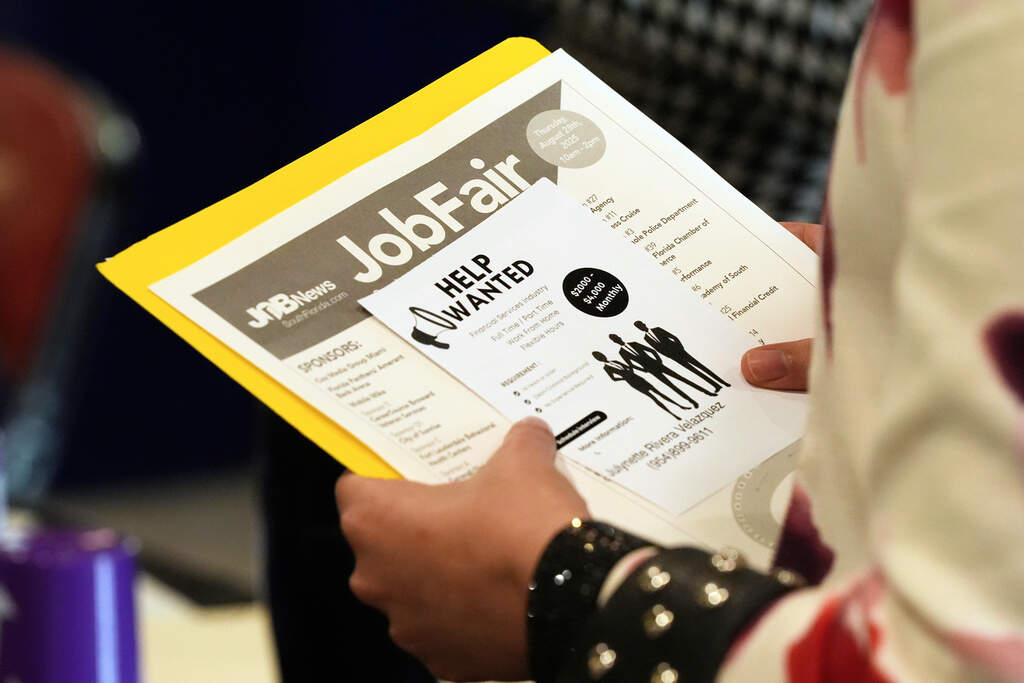
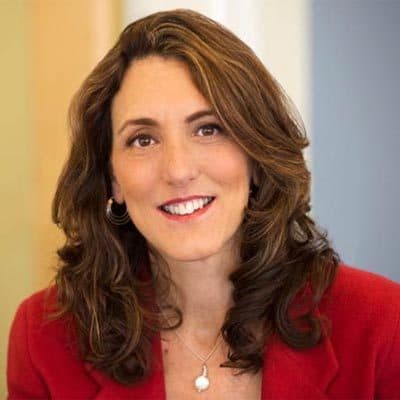
Affordability, inflation, tariffs, jobs — where does the economy stand now that we’re officially in the new year? On Point’s “money ladies,” Rana Foroohar and Michelle Singletary, are back to help us sort it out.
Guests
Rana Foroohar, CNN global economic analyst. Global business columnist and associate editor at the Financial Times. Author of several books, including Homecoming: The Path to Prosperity in a Post-Global World.
Michelle Singletary, Washington Post personal finance columnist. Author of, among other books, The 21-Day Financial Fast: Your Path to Financial Peace and Freedom.
The version of our broadcast available at the top of this page and via podcast apps is a condensed version of the full show. You can listen to the full, unedited broadcast here:
Transcript
Part I
DEBORAH BECKER: We've got a lot to talk about. A lot happened in 2025. And a lot of that will be part of the financial landscape in the coming year. So let's talk about comparing to where we were last year at this time. Stock market strong. Many analysts predict a rally even further this year. GDP growth expected to slow a bit. Inflation's gone down a bit. So how are you both looking at where we are economically right now, compared to last year? Rana, what would you say?
RANA FOROOHAR: Deb, it's a very hard question and it's hard to know where to start with it.
I think we're living in two separate economies. We have the asset economy, the stock market and then we have the real economy. And there are two very different places. I would argue that this kind of K-shaped economy, where you've got people that own assets, stocks and homes doing very well, and those that don't, really starting to fall off a cliff, that's going to continue.
You can see it in spending numbers. The top 10% of the population is doing over 50% of the spending. And the weakening job market and also the effect of AI technology inflation, which is hitting the sort of lower 25% of the population in particular. K-shaped economy, very bifurcated, which is in some ways exactly what we were in last year, five years ago and 10 years ago.
BECKER: So it's not all that different then. Despite all of the stuff that has gone on this year, all of these developments that we've had.
FOROOHAR: In an underlying way. No. The only thing that is shocking is that we haven't seen more market impact yet from it. We can talk more about when that might come later if you'd like.
BECKER: Michelle, what do you say? What are some of the big things that you think might be different or maybe not so different this January compared to last January?
MICHELLE SINGLETARY: I agree with Rana, it's a repeat of 2025. There are two categories of consumers. And listening to this show right now, there are people who are doing okay.
It's a repeat of 2025.
Michelle Singletary
You're in the market, about 50% of consumers have money in like a 401k and last year was pretty strong for that. You saw increases in that area. And then there's part of the economy where people, you lose your job and it's taking you much longer to find a job. Or maybe you bought a house and that interest rate is still ticking hard on your budget.
We've got the health care landscape where right now this amount of people are going to be faced with keeping health insurance or losing it. And if they lose it and have a health crisis, that's going to send their budget spiraling down. And some people might end up finding themselves bankrupt if they have a major crisis ... medical crisis.
And so I'm concerned, I'm starting 2026 off very concerned about the most vulnerable in our country. And it's not going to be a great year for them if things don't change.
I'm starting 2026 off very concerned about the most vulnerable in our country. And it's not going to be a great year for them if things don't change.
Michelle Singletary
BECKER: But we hear about widespread pessimism, right? About this uncertainty and about what happened with tariffs. And one day it was this, and the next day it was this percentage.
There's all kinds of instability being shown here. Did that have any effect or do people say, Hey, the stock market is strong, things are fine, everything's okay. Again, bifurcated. Yes. But for the most part, why are we not seeing more of, as you said, Rana, a market impact here?
FOROOHAR: Because we're in the middle of a major political economy pendulum shift.
And let me deconstruct what I mean. What we're seeing in the market doesn't reflect, I don't think, a kind of a typical cyclical up and down, the kinds of periods that you see every 5, 7, 10 years. We're seeing a, I think, once-in-a-lifetime shift towards a more multipolar world, a more regional world, a world in which states are controlling what's happening in the private sector much more. You can see this in the U.S.; you can see it with what's happening in Venezuela.
We're seeing a ... once-in-a-lifetime shift towards a more multipolar world, a more regional world.
Rana Foroohar
Not only has the president who promised no more hot wars gone in and basically toppled a leader, but he's now telling U.S. oil companies, got to go in and drill and extract in Venezuela, even though they don't necessarily want to.
Because it's hard oil and oil prices are cheap. It's not economical for them. These are things that you don't, you're not going to see it in a kind of a weekly stock price, but it is a drip, drip that I think will eventually continue the trends that we've seen, which sit just below stock prices. And that is a reallocation of money to foreign stocks.
You're seeing movement away from the dollar and into foreign currency. You're seeing a weakening of the dollar. You're seeing gold at record levels. P.S., I predicted that a couple years ago. All of that says, yeah. Okay. The U.S. still has this market lead for a variety of reasons, but the world is changing.
Investors are reallocating, and they're also thinking about ways to hedge risk.
BECKER: Last year on the show, both of you did mention uncertainty, especially we were talking about the Trump administration coming in, right, and what might happen, because there was a great deal of uncertainty and it was the unknown.
And just last month, President Trump did give a national address about the economy, and he touted what he said happened during his administration. So far, we do have a clip from his address, and I'd like you both to listen to this and then react. Let's listen.
DONALD TRUMP: After 11 months, our border is secure. Inflation has stopped, wages are up, prices are down. Our nation is strong, America is respected, and our country is back, stronger than ever before. We're poised for an economic boom, the likes of which the world has never seen.
BECKER: Michelle, are we poised for a boom? What would you say?
SINGLETARY: He's delusional. I don't know what else to say. This is a man who likes gold toilets, so he's not tapped to the real world out there. I don't, I suspect he's never gone and actually had to buy groceries or refinance a mortgage or watch relatives lose their job and not be able to find a job for another six or seven months. There is some truth to what he said.
The economy is stable, but to suggest that it is booming is just ridiculous.
BECKER: Rana, what would you say?
FOROOHAR: ... Historically, booms don't last in any one particular area, be it a country, a stock category, for more than about a decade. For the last two decades, the story in the global markets has been the U.S. and tech.
It is still the U.S. and tech, but if you believe in history, if you're a student of history, if you think that pendulums swing and that things go up and down, you have to look at the fact that we are now 10 years overdue for a correction, and say at some point, we might get a correction. Now, how or when that's going to happen?
Who knows. One thing I will say in terms of mitigating factors, when we think about why hasn't the U.S. market gone down? AI is a big factor in the market and the U.S. is at least perceived to be still in the lead in AI, both in terms of development and also crucially in terms of deployment.
And I would go back in history and compare this period to the 1990s when there was a big software boom, internet boom. Back then, U.S. companies deployed a lot more technology than say European companies did, and at that point, than Chinese did. That is still the case. Even though the market is highly concentrated and these companies are borrowing a lot to build huge farms to power AI models, lot of risk there.
But there's still a perception that the U.S. is ahead here.
BECKER: And let's just talk though, when the tariffs were first being announced and then there was all that back and forth, all the whiplash really from the tariffs, that I would say still continues. What lessons have been learned, Rana, from all of that?
FOROOHAR: Companies, a few lessons. For companies, the lesson has been you've got to deploy technology, and you've got to create resiliency. One of the reasons why you didn't see more inflation than we've had, and by the way, just to go back to the fact check of the president's clip, inflation has not gone down.
It is slightly higher than it was when he took office. That's just an incorrect statement. But one of the reasons it hasn't been higher is that for the last several years, big companies in particular, industry leaders have been deploying a lot of technology to manage their supply chains.
Ever since COVID, ever since the war in the Ukraine, companies have looked at and said, gosh, we need to have more resilience. We need to understand where things are coming from. We need to create multiple nodes of redundancy. And they've done that, and it's paid off. It's not paid off as well for smaller and mid-sized companies.
Many small companies are actually going under right now, in different parts of the country because they can't handle the tariff hit. So again, bifurcation, if you're big, you're fine. If you're rich, you're fine. If you're smaller and poor, not so much.
BECKER: And will that eventually rise up and affect those at the top more?
It can't continue like that.
FOROOHAR: I think it will. Listen, I hate to be a Cassandra, because as Michelle knows, I've been predicting a correction for some time. And I gotta say, I believe in my worldview. My market timing, maybe not as good. I'm the child of immigrants and I tend get out ahead of risk well in advance.
But I will say that just look at the price of gold, record runup. What that tells you is that people are worried that there will be a correction at some point.
Part II
BECKER: A lot of our listeners have questions about the economy, about their own finances, but Lee Martin, who's an On Point listener from Columbus, Ohio, had three questions that many people also want answers to. So we're going to play a little bit of Lee's questions, and I'd like Michelle and Rana to answer those. Let's listen.
LEE MARTIN: Will prices continue to rise as long as Trump's tariffs remain in place? Will the markets continue to do well, even as average Americans struggle to deal with rising costs? How likely are we to have a recession in 2026?
BECKER: Michelle Singletary. I know those are big questions that'll take a while to answer, but let's start, will prices continue to rise? How? What will be the lingering effects of tariffs?
SINGLETARY: I think prices will continue to rise. We saw a lot of retailers, they kind of stockpiled in anticipation of the tariffs, so they had inventory and some of them carried some of that cost, so they didn't directly pass it on to consumers.
They're not going to do that in 2026. So I think you're going to see more prices rise for various goods. As far as the market, if I could tell you where the market was, believe me, I'd be on an island right now somewhere.
BECKER: (LAUGHS)
SINGLETARY: But I think that for 2026, you can be, I just think, just stay the course, and if you are in a 401k and you've been saving for retirement, your kids' college fund, only thing you can do, if you've got some time ahead of you, it's to stay the course. If you are about to go into retirement, you do want to have some cash set aside in case the market does take a steep downline. So you don't want all of your money in the market. You want some that can pay the mortgage or the rent or buy goods and things like that.
In terms of recession, there are some economists saying about 30 some percent chance of recession. There was talk about that in 2025. There was talk about that in 2024. It didn't happen. So I'm not as worried about a recession. But those other two things, rising prices, yes.
And will the market continue to do okay? I think if you're in it for the long haul and you've got an investment plan; you'll be okay for 2026.
BECKER: And when you say cash set aside, how much are we talking about here?
SINGLETARY: I would say at least six months if you can. Many people can't put that kind of money away, but if you're saving for retirement, you're in that part of the U.S. economy of folks who are doing okay, and you've got some retirement money. You want to make sure that you have enough that if there's a market correction, you can wait that out. And some experts say as much as a year, and that's a lot of cash to be sitting in an account.
But I just, I'm like Rana, I like to be risk free. So my husband and I paid off our mortgage. We are keeping a nice little savings account. We are teaching our children to do the same thing, to have a cash cushion. I think 2026 is cash is king. That is the thing. Save and do the best you can to get rid of debt. So if something happens, at least you're not servicing debt at the same time that you got to tap your cash.
Save and do the best you can to get rid of debt.
Michelle Singletary
BECKER: But that sounds like similar advice that we've had in previous years. Is it more, are you saying that more strongly now than you did in the past?
SINGLETARY: I would say I'm always like a no debt person.
I don't, I have not changed that, and I won't change it for 2026, but I would say, and I've been telling this, people, I run a ministry at my church where we help people with their finances, and for the last year in 2025, my big thing was, you all, please get rid of your debt. If you're listening, you've got credit card debt.
Please get rid of it. If your kid is heading on to college, please don't take a lot of student loan debt on. The thing is, when the crisis hits, you want to have this, you want to de-risk your balance, your books, your budget. So if you don't have to service debt and you lose your job.
You can maybe hang on a little bit longer to your savings or do some other things to help get you to a safer place financially. And 2026 for me is still yet another year of be as debt free as possible. And save as much as you can. If you can own, listen, if it's $20, it's $20.
If it's $200, save that. At least enough to get you through if you have a destruction in your income.
BECKER: Rana, what about you? If we go back to Lee's questions here, will prices continue to rise? What do you think, will there be continuing effects from Trump's tariffs? And you did talk a little bit about the markets and what might happen there, even if average Americans continue to struggle if costs do rise. And then, what's the likelihood of a recession? How would you answer those three questions from Lee?
FOROOHAR: I'll start with inflation. I agree with Michelle that I think prices will rise. I don't think we're going to see a double-digit spike or anything like that.
But if you look at the underlying factors, the president is trying to bring a lot of capital back into the country. We're doing rebuilding in various areas, manufacturing, et cetera. War now, or I know you wouldn't call what happened in Venezuela war, but certainly more military intervention, that's expansionary.
You're also going to see possible fiscal stimulus checks going out to different individuals. Tax cuts. Again, these are all things that will stimulate the economy. You also have the appointment of a new Fed chair coming up. The president wants that person to be somebody that will cut interest rates rather than raise them.
Raising interest rates would help dampen inflation, whereas cutting them could be a fuel for that. You're seeing housing prices still going up. We have really structural dysfunctions in the housing market. So none of those things are going away. So yes, more inflation. How will the markets take that?
This is the one that, I tell you, I talk to the smartest people in the world, in the markets, nobody knows how to call it right now. There's just a lot of risk. And let me, rather than try and answer that, let me just lay out some of the ways I think about it. Let's start with AI, because that's such an important part of what's happening in the U.S. market.
I talk to the smartest people in the world, in the markets, nobody knows how to call it right now. There's just a lot of risk.
Rana Foroohar
We have five stocks that are making up the largest chunk of market capitalization. Their story is an AI story. Do I think some of the froth is going to go out of that this year? I do. I do. I think that you're probably going to see something from a new Chinese AI announcement to higher energy costs.
Making people rethink power consumption. There's any number of things that could give a correction shorter term. Do I think that's then going to cascade into a broader, bigger market downturn and recession. I'm not so sure, just because we're still living in a global economy.
People still need a place to put money. We have; you have to think about the fact that in the last half century we have built a market system that is based on passive money. Think about it all. Many of us, I won't say all of us, but over 50% of us have 401(k)s and we're just, it's sitting there. Because it's very hard to, as I well know, to time exits and reentries into the markets.
So people, their money sits there and that actually creates a kind of a tailwind for stock prices to stay where they are, because people aren't necessarily responding to the political and monetary and fiscal cues that you might have in the past. There's been a kind of a dampening of price discovery in the market and that actually oddly, I think, supports the price of U.S. stocks.
You both mentioned health care, right? And it's been a big issue for people, especially right now with the subsidies, expired premiums are skyrocketing. And we heard from Dan, a listener in Pittsburgh, Pennsylvania. He called us back in November to tell us how he thinks the conversation should not only be about the role of government in health care, but also about the role of insurance companies, as well.
Let's listen.
DAN: My subsidy was cut. And I can't afford health care with any sort of coverage that I actually need. So real people are hurting right now. And maybe force them to lower their prices to something reasonable rather than charging $800 for a Q-tip. And stupid charges like that, it's just unbelievable. I can't believe that we're not talking about the insurance company's role in this and the fact that the prices are absurd.
BECKER: Now, aside from the role of insurance companies, this is also, these increases in premiums. This is going to affect everyone. People are foregoing insurance, so that obviously puts providers at putting costs on to other patients to make up the difference.
So that will affect everybody. How soon do you think we're going to really feel the effects of these subsidies ending and some people going without insurance, Rana, what would you say?
FOROOHAR: Oh, I think we're already feeling it. This is something I hear all the time from labor unions, from companies that are worried about how they're going to buffer the premiums and talk to employees about it.
I can already feel it, not just this year, but for the last few years, there've been a lot of readjustments in plans and so people are paying more, getting less. That's gonna be the case this year as well. We're probably looking at high single digits, maybe even to the low double digits, in terms of overall premium inflation.
So I think it's going to be a huge issue. I actually think it's gonna be a huge midterm election issue.
BECKER: What do you say, Michelle?
SINGLETARY: I think so, the biggest point is that those who try to keep a policy, you have a choice. You're going to have to pay this huge premium, which means you're going to spend less than other areas, right?
So that's going to impact our economy, right? And then people are making the choice, okay, I can't afford $800 or $1,000 a month, so I'm going to get a different policy, which means that my copays or the money that I have to put out, deductible before the policy kicks in, is higher. My son is 27 and he has to get money in the market and the policy that he could afford, and he lives at home, mind you.
So that helped. He'd have to spend $10,000 before it kicks in for major, like a hospital visit. He is 27. I mean if he didn't, he has that money. Because he's a saver, he is my child, but he lives at home. But there are a lot of people who don't have that ability.
And I was working with a couple last year who had a high-deductible plan because they were trying to save money. Their kid got sick unexpectedly. Hospital bill through the roof. And I had to work with them for a year to try to figure out how to pay that bill. And so this year, for 2026, they changed their policy to pay more every month so that they could have a policy that wouldn't end up bankrupting them.
They couldn't do a whole lot of stuff last year, because they were trying to pay this hospital bill. You're going to see more of that. And if less people, if more people cancel, that means that system is going to be inundated by the sicker folks, more costs. So it's going to spread to everybody. So if you've got a good policy thinking this doesn't impact me, it will impact you. Because your premiums are going to go up, because fewer people are going to be able to afford insurance, and when fewer people are able to afford it, costs go up.
Because they have to cover more people and pay more for those people who are in the system. And so nobody is going to get out of this. We all are in this together. And if we don't find a solution for this, we don't help people afford health insurance.
And here's the thing, if they can afford to keep a policy and then go to well visits, preventive medicine will help us down the road. If people are not getting their shots for diabetes or my kids have asthma, you can't afford your asthma medicine. So if they can't afford their asthma medicine, because they canceled their policies, they can't get sick. They go to emergency room.
You see what I'm saying? It spirals and then we're all impacted.
BECKER: And then of course we've got housing costs, which have not budged. And the president is promising that this year he's going to announce aggressive housing reforms. I wonder, any ideas what that might mean? I know we've heard about the idea of a potential 50-year mortgage and different things like that.
And with the appointment of a new Fed chair, which I think is expected this month, interest rates may in fact go down. And what might happen in the housing market that might help or harm the economy? Rana, what do you say?
FOROOHAR: If rates are lower, certainly that does make it somewhat easier to afford a mortgage.
Unfortunately, rates also have the effect of pushing up prices, not just housing prices, but stock prices. And so it's a kind of a double-edged sword. I think that if we had higher rates, you'd probably see a housing price correction. The 50-year mortgage. I don't think that's going to help, it will artificially lower the monthly carry for some people.
But what it would do is create more debt over time. It's a short term, a snazzy headline number to fix, but it doesn't really fix the systemic problems in the housing market, which are myriad and they depend on where you are. The housing market in Boston or New York is very different than the housing market in Indiana or South Dakota or Arizona.
Housing is a very local thing. Now, there are some things that we could do, I think at a federal level and at a local level, which is, as the Abundance Democrats would say, go through all the regulations, make sure that you're pulling out things that are not useful. Make sure that you're making it easier for people to build where they need to build.
But there are supply chain issues. And fundamentally and this gets back to something really big that we're talking about in everything here, is the K-shaped economy. If you're not making enough money, you're not going to be able to afford a mortgage. If you don't have a job, you're not going to get a mortgage.
So at the end of the day, we need to think very holistically about all this.
BECKER: And Michelle, what do you say about the housing market? Do you expect that the government's going to be able to do something to help with housing cost reform as the president has promised?
SINGLETARY: Yeah, I think this current administration, absolutely not.
They, this administration, if you think about their background, and we have one of the richest Congresses really ever, probably, so they are not tapped into what regular people have to do to get a house. I am not optimistic about the housing market at all. Especially if you live in a big metropolitan area like I do, my two daughters bought a home, but they bought it together.
Their mom and dad told them how to do it in a way that they could afford it on their salaries once a teacher, once a therapist. But that's an anomaly, and. I have for the longest time been an advocate of multi-generational housing. I told you my 27-year-old is living with us and we have encouraging him to stay here for a very long time because that way he can take money that he would've put in a rent and save.
Eventually he could get a house, he'll have a larger down payment, a smaller mortgage, and then he can afford it on whatever salary he's going to earn. He happens to be in the math area; he's trying to be an accountant. And so those are the kind of strategies that people have to do. We are going to have to look at it, there has to be a different viewpoint of how we're going to house people.
Everyone is not going to be able to buy that picket. That house with a little white picket fence and two stories and a garage, it's going to be multi-generational. It's maybe siblings living together, friends living together.
If we don't change the housing policies, and right now we have an administration that does not have an appetite to help regular people afford housing. They're very great at helping the rich. They are not so good about helping average Americans.
BECKER: And just quickly, yes or no here, still keep housing costs at about 30% of your income?
SINGLETARY: Absolutely.
Part III
BECKER: We're going to hear from On Point listener, Marjorie Houlihan from Oregon, and Greg Miller, who's an On Point listener from South Carolina. So let's listen to what they say about how they're dealing with financial uncertainty with retirement either looming or just happened.
Let's listen.
MARJORIE HOULIHAN: I no longer trust my government as I don't feel like my government trusts me. So as I approach retirement, where I thought I had enough money, I don't think there's enough money to help mitigate or save people because they're going after such vulnerable populations. And if they can go after the people that need these programs and money the most, I don't feel safe either.
GREG MILLER: As a recent military retiree, finances could not be better because I spent 22 years fully investing, saving every penny I could. Now life is fully funded with full medical. And everything else that goes along with that military lifestyle. Life's pretty good.
BECKER: So two very different perspectives about retirement here.
I'm wondering, Michelle, what would you say about that? What would you say to Marjorie Houlihan from Oregon who said she's really concerned as she's looking at retirement? Not too far away. She doesn't think that the current administration is going to be able to really protect, say, social security or other kind of safety nets for folks like her.
And on the other hand, we have folks who just recently retired, like Greg Miller from South Carolina, who says, you know what, I'm a military retiree, and life's pretty good. There are very different things happening there. What do you think?
SINGLETARY: I think there's a perfect example of the K-shape economy right there.
I'd have to look at Marjorie's financial situation. It sounds as if she is still probably okay if she's safe for retirement. I know we sound so doomsday folks, and I want you to know that we're concerned, but I don't want you to be so fearful that you think you're going to not be able to eat.
For some people, they won't be able to eat, but for people who have saved for retirement, and you get rid of debt before you head into retirement, you'll be in a better situation. And I don't have concerns that they won't eventually fix Social Security. Because listen, if they don't fix Social Security and benefits drop, on average, like about 30%, if they don't do the fix.
You thought January 6th was bad. Oh, just let all those seniors in buses head to Washington. So I feel like that they know better than that. And so you'll still have Social Security, really, for the newly retired and those who are heading, it will be younger people who may see a reduction in benefits. Perhaps they'll move the full retirement age a couple of years, where now you max out at 70, maybe you max out at 71 or 72. So younger generations are going to feel that, and they also have more time to prepare for that. So I don't want Marjorie to be too pessimistic if she's saved.
She's not going to have a lot of debt going into retirement. Hopefully she has Medicare or some other kind of insurance like Greg, through the military. I think you'll be okay. The key is to make sure, again, that you've got money set aside for whatever happens to the economy.
Because when there is a downside, when there is a correction, it does end, you all. It does eventually end historically. And even the longest one, the one that those of us are young enough to remember a Great Recession, it did end. And if you held tight, you were okay. But I do think this is a wakeup call for all of us that when we vote, we need to look at those, these people's policies.
How do they view the poor? How do they view the disadvantaged? How do they view people who are different, diversity? My son is on the spectrum. This administration has had an attack on diversity, which includes people who are on the spectrum. And so companies who might have hired my son because they had a commitment to diversity may not, because they are worried about government contracts.
That's the kind of thing that you need to pay attention to when you go to the ballot box. I'm not telling you who to vote for. I'm not even telling you whether it's Democrat or Republican, but you need to pay attention to that. Are they going to stand ground, to Marjorie's point, to help the least of us in our economy?
And to me, that is what you should be concerned about. Because the rich going to take care of themselves. They have always taken care of themselves, but if we don't help those folks who are disadvantaged, it will impact all of us in the middle. Or the upper middle, I should say. I'm in the upper middle now.
And so I'm glad that Greg is very well situated and that his military service, and we're grateful for his service, has taken care of him. I am worried more about the Marjorie's, but I think that in her situation if you do some things heading into retirement you should be okay.
You might, there's going to be a storm coming. But if you take care now, you should be okay. I know I'm going long, but I always use this example. My husband's a golfer. And so he buys these really nice, strong golf umbrellas. You've seen them. They're huge. They're big. They're sturdy. I'm a dollar store umbrella kind of girl.
BECKER: (LAUGHS)
SINGLETARY: But my husband reformed me because that's how you have to treat your money, buy and do your money like a golf umbrella. It's not going to protect you from a monsoon or hurricane, but when the rain is heavy, it'll protect you and that's how you have to look at your finances.
BECKER: Retirement advice from you, Rana Foroohar, what would you say?
FOROOHAR: I was struck by the military person in your soundbite. Military personnel are a small percentage of the U.S. workforce, so that's a very singular experience.
But what's interesting about a military experience is it represents a kind of retirement that many more people used to have, right? More defined benefit. Rather than 401(k)s where, yeah, if you have enough money and you're really good about investing, you can do it, but you're left much more to your own individual devices.
Likewise, military personnel have amazing health care, TRICARE, which is about the best thing you can get in the U.S. So again, you know, that's just something that it's not indicative of how most people live even in the private sector. I have a good paying job, but my health insurance has been getting worse every year because the company can't keep up with inflation.
So I don't look at that example and say, Hey, this is something really replicable as a whole for the rest of the country. I do think that, and we haven't talked about politics yet, but I think the midterm is going to be very illustrative of where the future is going to be for America. One of the reasons that cohabitation is becoming so popular, which it is, as Michelle mentioned, is that you have a group of baby boomers that still control most of the wealth in the country.
Meanwhile, the average age of a home purchase is going up, because young people don't have very much to spend and AI is hitting jobs at the entry level. So you've got this kind of perfect storm of factors that I think is going to bring younger people to the ballot box, that are going to be looking to elect people that are going to redistribute wealth.
And I suspect this is, I'm jumping around, but I think it's important to connect the dots. I think one of the reasons that we just saw this administration take down Maduro in Venezuela. What do administrations that have problems inside the country, in this case, affordability, do? They make trouble outside the country to distract.
You don't see anybody talking about affordability in the last few weeks. They're talking about Venezuela. But affordability is still an issue, and I think that's going to be a big midterm issue.
BECKER: Michelle, you wrote a really interesting column recently about young people and investing, right?
Presumably more and more young people are investing. But you said that many of them are getting their financial advice from social media, which is not entirely reliable. So I wonder, as we're talking about the market and younger investors, and people being able to buy houses and maybe more young voters.
As we head into the midterms, can you tell us what your advice is to young people who may be looking to learn how to properly invest?
SINGLETARY: You know what I tell them, it's just like the economy, right? I have different advice depending on where you are. If you are coming out of college with a lot of debt, please just get rid of the debt.
If you can stay at home and live at home or live in a situation where you are not fully paying for all the rent yourself, do that. Spend those formative years in your new adulthood getting rid of that drag on your income. Which is that debt. If you were coming out and you don't have debt, I would say start investing ASAP.
And it's a hard sell when you're young, because, you know, the salary is a starting salary and you think, oh, I can't afford it. But you can't afford not to do it. The sooner you do it, the less you'll have to save, and you'll have many years to let that money compound for you. But I tell you, my oldest, it took us a year to get her into the market with her job, and she finally did, and I've got a younger one who I'm still fussing at. She's a teacher, she doesn't make a whole lot and I'm hitting her hard again in 2026. She's got a teacher's pension, but she's not going to be able to live off of just a teacher's pension.
And I would say, as parents and grandparents and aunties and uncles, do what you can to just persuade them to start putting money away to save. And I know I sound, I can't say broken record because that ages me and dates me, right?
BECKER: No records anymore. (LAUGHS)
SINGLETARY: (LAUGHS) No records anymore, although there are some retro people going back to turntables.
But listen, the solution to all of this chaos is what you can do in your personal life. You can influence policy by how you vote, but in the meantime, before that next election, before the fall election coming up this year, what you have to do is look at your personal responsibility. What can I do to make my life a little bit easier if things are out of my control?
And that is getting rid of debt, that is saving, that is rethinking some of your situations. Yeah. I know you don't want to live with your parents. You're tired of the jokes about not launching.
FOROOHAR: ... My kids are happy to live with me. They have free. They get their laundry done, free meals.
SINGLETARY: I know, right? My son is living the life and he's a delightful young man. And we love living together. We really do. And so I guess I'm just saying that what used to be, 20 years ago, it's like you graduate from college, go get that house, go get married, do all that. It's a different situation out there, you all.
And we are going to have to look at it really differently. Health care is such a drag on our income, because we have so much consumer debt, that's a drag on your income. Job stability, companies are not loyal to us anymore. Look what happened with the federal government, just period.
Just tossing people out to the side, like they were take out containers.
BECKER: But if we just go back to young investors for one moment, what would you say is the most reliable source of information? I was shocked to see how many young people are really getting investment advice from social media, from, you call them finfluencers.
So what, where would you suggest, give me one website or resource that you would suggest folks go to that is a reliable source of information for investing?
SINGLETARY: This is going to sound self-serving, but I'm going to say it anyway. Legacy publications, like the publications that Rana and I work for.
We are giving you unbiased information. I don't mind people going on social media if it's going to spark their interest, just don't follow the advice. The Washington Post, Wall Street Journal, USA Today, Financial Times, the publications where they are training staff.
We are trained professionals, to look at the information and figure out what's true and what's not true. And I know there is an attack on us right now of fake news, but we keep you safe from the predators online. Because a lot of those influencers are being paid. You don't know what their interests are, and so you must, please, like Consumer Reports.
Consumer Reports is in my bathroom. That's my bathroom reading, y'all. I mean, please, you know, if you see some video that says you need to say okay, say, oh, that's true, and then jump out and go to something legitimate. I love Investipedia.com. I love Bankrate.com. The organizations where they're hiring professionals to vet things to make sure that we are protecting you.
And ftc.gov they have a really strong consumer site, even on sec.gov. Please just please double check and triple check information and don't invest based on things that you see on online. Just too many predators.
BECKER: Okay. Last minute here, and I know that we only have a minute to answer this very big question, but we've mentioned AI and we know it's fueling the stock market in a big way right now, and I'm going to give you the last word here, Rana.
I think both of you have given really good advice during this hour, but are we in a bubble right now? And might that fuel the correction that you say we're overdue for?
FOROOHAR: Yeah, we are in a bubble. That's not to say that AI isn't the real thing, but this is a story that will play out over decades, not just a quarter.
One of the indications that I believe we are in a bubble is that you see the Russell 2000 small cap stocks, the ones with negative earnings are trading higher than those with positive earnings. That's what happened before the dot-com crash. So watch out.
The first draft of this transcript was created by Descript, an AI transcription tool. An On Point producer then thoroughly reviewed, corrected, and reformatted the transcript before publication. The use of this AI tool creates the capacity to provide these transcripts.
This program aired on January 5, 2026.