Support WBUR
A strange turn in the AI chip race with China
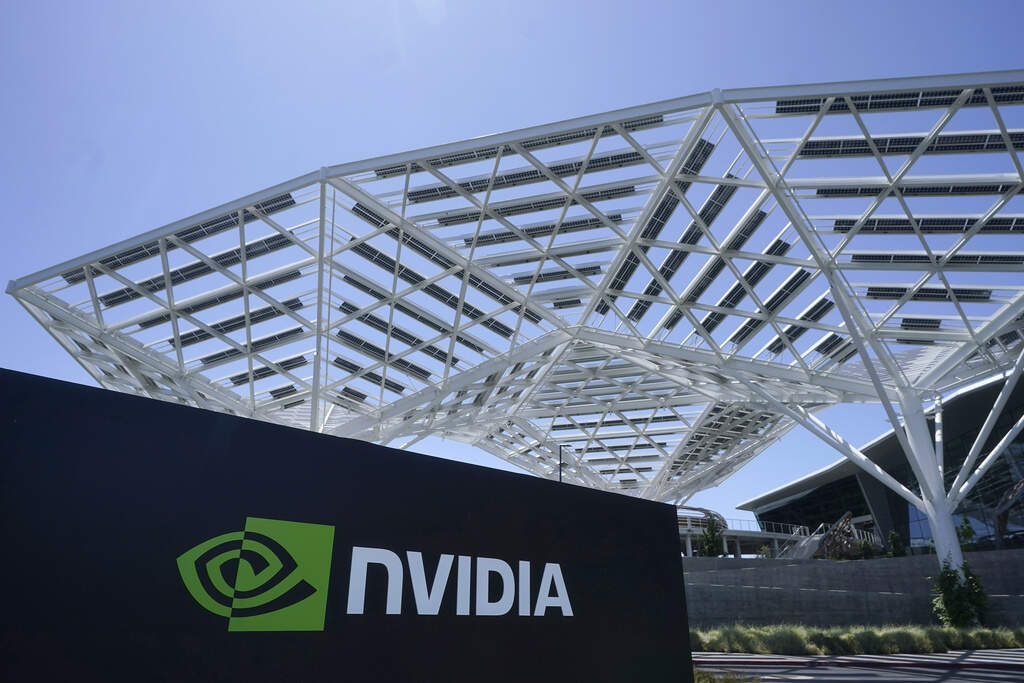
Last month, President Donald Trump approved the sale of one of Nvidia’s most powerful AI chips to China. Why the president may have done that — and what it could mean for national security.
Guests
Paulo Carvão, senior fellow, Mossavar-Rahmani Center for Business and Government at the Harvard Kennedy School.
Matt Sheehan, senior fellow at the Carnegie Endowment for International Peace.
The version of our broadcast available at the top of this page and via podcast apps is a condensed version of the full show. You can listen to the full, unedited broadcast here:
Transcript
Part I
MEGHNA CHAKRABARTI: Last month, President Trump gave the world's most valuable company Nvidia, the green light to sell the H200 of its most powerful chips to China for months. Now, the company that got its start in video game graphics has been making headlines as the Trump administration seeks to build influence across Silicon Valley.
JENSEN HUANG: We're gonna build Nvidia's technology the next generation of that all here in the United States. Without the president's leadership, his policies, his support, and very importantly, his strong encouragement. And his strong encouragement frankly manufacturing United States wouldn't have accelerated through this pace.
CHAKRABARTI: That's Jensen Huang, NVIDIA's CEO and co-founder after a meeting with Trump in April. Huang had been pushing for the government to lift a ban on the sale of his company's powerful H200 chip for some time. Now that the ban has been lifted, here come the critics, including some lawmakers because they are worried that the sales could put national security at risk.
RAJA KRISHNAMOORTHI: What are we gonna do next? Sell aircraft carriers to the Chinese and the government takes a 20% cut? This is horrible.
CHAKRABARTI: That's Democratic Congressman Raja Krishnamoorthi from Illinois in an interview with Bloomberg this past summer. And by the way, he's referring to the fact that the Trump approval came with the requirement that 25% of Nvidia sales go to the U.S. government.
Here's Republican Senator Lindsey Graham in December.
LINDSEY GRAHAM: I don't mind doing normal business with China, but if you can prove to me this will accelerate the military capability, I'll oppose it.
CHAKRABARTI: NVIDIA's chips are essential for many of the major AI models in use today. They are the chips and the hardware that the models actually need to run. Now before giving the green light for sales of the H200 last month, Trump had also been teasing deals with China on previous models like the H-20.
Now, experts believe Chinese tech companies have largely caught up to the capabilities of the H-20. Their domestic chips are that good. The H200, which is thought to be about six times as powerful as the H-20 is not NVIDIA's most powerful chip, but it is for now more powerful than what Chinese competitors have been able to match.
And while the current deal is limited to the H200, Trump has publicly left the door open for another deal, possibly, on NVIDIA's most powerful chip to date.
DONALD TRUMP: The Blackwell. Do you know what the Blackwell is? The Blackwell is super-duper advanced. I wouldn't make a deal with that, although it's possible I'd make a deal, a somewhat enhanced in a negative way. Blackwell. In other words, take 30% to 50% off of it.
CHAKRABARTI: Today we are going to be talking about the hardware side of the U.S.-China AI race, and I'm joined today by Paulo Carvão. He's a senior fellow at the Harvard Kennedy School of Government, where he's focused on the intersection of technology and government.
Paulo, welcome to On Point.
PAULO CARVÃO: Pleasure to be here.
CAKRABARTI: First of all, let's set the stage because when it comes to AI, not only just the software side, but now even the more hardware side, it tends to be difficult for folks outside of the world to understand. So how significant would you say was the Trump announcement last month about the go ahead for the H200?
CARVÃO: It's pretty significant. At the heart of making AI as we know it today possible is the ability to process large quantities of data. And the chips are at the center of making this possible.
CHAKRABARTI: Okay. And so it's big because is Nvidia the only company right now? Not who's making chips, obviously, but that's at the level that it is in terms of the processing power of the chips that it has.
CARVÃO: It is the leading one.
CHAKRABARTI: The leading one. Okay. And so then therefore, why the big push from Nvidia to get some of, to get approvals for its chips to go to China?
CARVÃO: Yeah, I think there is the element of looking at it from NVIDIA's perspective. That also, look at it from our perspective.
And today, AI is being framed as a race for economic and geopolitical power. And if you're thinking about a race, it is important for you to run faster than your opponent. And potentially reduce your opponent's ability to run as fast as you are running. So from our perspective, this is what is at stake. From an Nvidia perspective, it's market taxes. China is a very large market, so that's what is at stake for Nvidia.
AI is being framed as a race for economic and geopolitical power.
Paulo Carvão
CHAKRABARTI: Even with the 25% cut that Trump said that the U.S. government's going to get.
CARVÃO: 75% is better than nothing.
CHAKRABARTI: 75% is better than nothing. Okay. I guess what I'm trying to understand is why there was this immediate, I guess with President Trump or any president, there's always immediate debate over any decision that's been made. So for this one in particular, what are the sort of the broad lines of the agreement or disagreement over the import of the decision to allow Nvidia to sell to China?
CARVÃO: Yeah, it's to excellent, excellent question. Is at the heart of the issue. Because some may say that you're given your opponent the arms in this case, or the ability to catch up with you. On the other hand, if we allow them to have access to our technology, then we're ensuring that they're going to be developing something on a basis that we control.
So that's the debate. So should we try and keep them on our own technology, something that we control, or by not allowing that access, can force their hand so that they develop their own. And with that, catch up using their own abilities.
CHAKRABARTI: Oh, okay. I see. But beforehand, and not just Trump, but there's been this deep animosity across administrations for the U.S. to sell any of its more advanced technology or even allow China to sell some of its stuff here.
This seems to be a bit of a change with Trump's decision, that there was more uniform agreement that the option to not sell. And therefore, maybe it forced China's hand to faster develop its own technology, but this is a change. Can you tell me why the thought had been for previous years to simply not allow the U.S. or Nvidia to sell its chips to China?
CARVÃO: Yeah. The line of thinking back then, and you're right, it cut across both Biden's administration and Trump's administration, Trump 1 and Trump 2 was those of by preventing China to have access to leading edge technology, we would keep them behind.
But at the same time, there are others that say that what is really important in this race is what economists sometimes called diffusion, which is ensuring that everybody has access to your technology.
And through that, then you dominate the landscape, which by the way, is the strategy that China used for telecommunications. If you think about the 5G race of kind of like a decade ago or so.
CHAKRABARTI: Huawei is coming up.
CARVÃO: Yeah, exactly. And so it's to avoid what happened back then. There was this other line of thinking that is, you know, it's better for us to make our technology pervasive so that then the whole world, not only the U.S. and China, are going to be developing on that base. And therefore, then we control it not only economically, but also from a geopolitical perspective. Tell me more about the geopolitical part, because that was exactly the concern that you mentioned with 5G and Huawei that was expressed here.
We don't actually want that stuff because we don't want to be dependent on China or even allow China sort of a secret backdoor, into critical infrastructure in the United States.
CARVÃO: Yeah, exactly. It's influence. If you think about, for example, the global South, right?
All of the global South today uses Chinese or most of the global South uses Chinese technology for their telecommunications. So what kind of dependency are we creating? What kind of a sphere of influence China is creating? So map this forward to the current AI discussion and race. This other camp would say, we'd better off position ourselves to be that dominant technology, as opposed to allow China to occupy that space.
CHAKRABARTI: Okay. I was, discussing this with our producers yesterday. Because I wonder in thinking about geopolitical strategy, if the West has a certain timeframe that it considers, and China has a different one. Because we could say, we could very feasibly, as you're saying now, that okay, giving China some of NVIDIA's lower tier chips is okay because we're creating that dependency, or furthering that dependency.
But isn't it only from the Chinese perspective, just a stopgap measure until they are able to create their own chips that are equally or if not more powerful? Do you see what I'm saying? I feel like China's strategy is always on a longer-term horizon than any one president of the United States.
CARVÃO: You're right, China always plays the longer game than we do. Now, there's a theory behind this, which is this concept of the artificial general intelligence or super intelligence. Some say, and I'm a little skeptical about this, but let's just pursue this line of thinking. That one of the possibilities around AI today is that we would create a super intelligence and whoever gets there first has a sustained advantage.
So differently than the longer game played in other eras, right? From electrical vehicles all the way to telecommunications and other technologies, is in this AI race, if we keep ahead and achieve super intelligence before China or anybody else does, then this is a sustainable and permanent advantage.
So that's why, this time may be different.
CAKRABARTI: So if we create Skynet first and we have the Terminator first, no one else can hold a candle to it. Okay.
CARVÃO: They buy into that.
CHAKRABARTI: I don't know. As I've said millions of times on this show, I feel like science fiction is just one giant genre of warning to humanity.
But let's go back to the Nvidia side of things. I totally get your point that 75% is better than 0%. But do you think from a business standpoint that Nvidia and actually other companies before it, but is just calcifying now this relationship between the private tech sector here and the Trump government in terms of just expect to have to give Trump or give the U.S. government a cut if you want to expand your deals internationally.
CARVÃO: We're getting into a very different style of capitalism. It's a kind of a much more state controlled --
CHAKRABARTI: I was thinking about Chinese style actually.
CARVÃO: Exactly right. I think we're breaking new ground and establishing potentially very dangerous precedents. This is not the only area recently in which this is happening, right?
I think it's a dangerous precedent.
CHAKRABARTI: Dangerous why?
CARVÃO: It changes basically the model of capitalism that we have had so far. And one would say that even the conditions that have been created for enabling Nvidia to achieve what they've achieved in the last 30 years from starting, as you said, in the very beginning, as a video game processing company, all the way to being the colossus that they are today have been based on rule of law.
Fair competition. Freedom to participate and compete without government interference, and we're entering in a very different world.
Part II
CHAKRABARTI: Now what I'd like to discuss for a little bit are what might China use these chips for? Why are they so valuable for China? And as you heard Senator Lindsey Graham say a little bit earlier, he is worried about the military implications.
Just for a moment, let's imagine the computational technology needed for something like a drone strike, you have to confirm the target. You have to calculate the most strategic time to strike. Decide what type of weaponry will cause the most damage or least damage. You have to track the target. You have to find technicians and analysts with the skills to execute all of this very quickly, precisely, and accurately.
A complex logistical challenge to say the least. Now imagine an AI model that could gather all that data, run the calculations and do all of it in a fraction of the time. That's basically what AI is all about, right? Faster, more efficient computing abilities at scale. So here's Nvidia co-founder Jensen Huang, breaking down the company's computing power at an event hosted by the Bipartisan Policy Center in Washington in 2024.
HUANG: The execution of a program's called a thread of execution. And just follow that thread. A CPU can compute one or two threads at one time. We can compute tens of thousands of threads at the same time. And so for work that you can break up into a whole bunch of little threads, we could get it done a lot faster.
CHAKRABARTI: Now imagine that drone strike scenario again, but this time its architect is an AI model, not contractors or military personnel.
JAMES MULVENON: I think that an area where we're specifically looking at concern is things along the lines of what we know from the drone wars and what drone swarm warfare would look like and the level of coordination necessary to be able to carry out those kind of activities.
CHAKRABARTI: That's James Mulvenon, a cyber and intelligence analyst who's worked for several Washington thinktanks. He testified at a Senate hearing on AI and competition with China just last month. So joining us now is Matt Sheehan. He's a senior fellow at the Carnegie Endowment for International Peace. He's focused on AI ecosystems in both the U.S. and China.
Matt, welcome to you.
MATT SHEEHAN: Thanks very much for having me.
CHAKRABARTI: So tell me a little bit more about what you think about the concerns about NVIDIA's chips going to China and enhancing in the near-term China's military capability.
SHEEHAN: They're very real over, I'd say, the medium to long term. I think people who work in defense industry and national security all see AI as a key component of national power, of military power going forward.
People who work in defense industry and national security all see AI as a key component of national power.
Matt Sheehan
So if we look even just at what China is currently trying to use AI for, in the military, it is being used to train models that can execute drone swarm attacks. It is being used to train autonomous vehicles that can be used in military conflict. It's being used to model nuclear explosions and guide missiles and all that.
AI as a technology is a very broad technology, is going to be used in pretty much all of these fields. But I think what's unique about AI is that it's an omni use technology. It can be used for almost anything that has a sort of digital component to it. We're used to the idea of some technologies are civilian technologies, some are military, some technologies are dual use technologies.
They could be used for, say, a missile or an airplane. And what's unique about AI is as it gets more and more general in its capabilities, it can be used for a huge range of things. So Nvidia GPUs that end up in China will be used for scientific research. They will be used for social media.
They will be used for modeling nuclear explosions. And the question is, what do you do with a key component of a technology that has such broad applications that will both enhance China's military and will enhance its economic strength and will enhance scientific research that sort of benefits the whole world.
CHAKRABARTI: Matt, how would you answer the question you just asked?
SHEEHAN: I would limit the sale of advanced GPUs to China. I think China, the Chinese government, essentially has two goals here. They want to have enough chips to meet their current demand, to train AI models and to deploy AI models at scale. And they also want to develop their own chip industry, their own semiconductor manufacturing industry.
And these two things are sometimes in tension. The Chinese semiconductor industry is just historically lagged significantly behind the United States, behind the global chip supply chains that connect the U.S., Taiwan, Europe, and all these places. And historically, the problem for China, say pre 2020 or so, was that they could never really get their own chip industry off the ground, because all of the Chinese companies just wanted to buy the foreign models.
They wanted to buy foreign chips. The manufacturers of chips in China just wanted to buy equipment from foreign companies. And so essentially, they could never create their own sort of self-sustaining ecosystem domestically, and that kept them behind. Now the question is, if you sell them these chips, does that continue to undercut this domestic industry?
Does it meet their current demand but undercut their long-term catch-up abilities? Or does it just help them fill as a stopgap, which I believe you mentioned earlier in the conversation. And my take on this is that China has seen what we're doing in terms of chip controls.
They've already decided to permanently go all in on manufacturing their own domestic chips, and when we're selling them chips, now it's just the stop gap. It's just to fill the gap between what they can produce domestically and what they need right now, and then as soon as what they can produce domestically catches up, they're likely to exclude U.S. chips in the future.
CHAKRABARTI: Paulo, let me bring you back in here. First of all, just your response to what Matt said.
CARVÃO: I tend to agree with Matt, right? We gotta be careful and but also, we need to step back and think that this is an all-in discussion. It's about the design of these chips, it's about the manufacturing of these chips, and then it's the whole stack that is put on top of it.
CHAKRABARTI: But tell me more. Because what Matt was just saying was that yes in the past that China wasn't, because Chinese companies were looking for international sources for the chips, that the manufacturing capacity wasn't there in China. But perhaps that has changed or would change even more.
So your comment on that.
CARVÃO: I think Matt made the right point, which is the Chinese government has made the decision that they cannot depend on international and especially American technology. So they're all in, in terms of investing in building these capabilities across the stack, right? From chip design to chip manufacturing, to all the way to the rest of the stack.
And so it goes back to the discussion we're having in the beginning, which is now that we're the lead, right? What are the mechanisms that we're going to use to be able to, we maintain this lead, both in terms of investments that we're making here and in ourselves to make sure that we continue running faster. But also limiting access by China to technology that would allow them to catch up.
CHAKRABARTI: Limiting access.
Okay. I'm gonna come back to that point because it's really important. Because as both of you're saying, it's not just Donald Trump saying you can sell them. There are subsequent layers of even regulation and manufacturing that go into the N200 just landing in China. So we're going to talk about that more in just a second.
But Matt what I'm curious to hear from you is why for so long has there been this gap in chip development in China? Because for people who don't know much, it feels like such a surprise because publicly we understand China as being, going full speed ahead on software development and even shocking the AI world with the occasional release of things that we didn't even know was possible.
Like they have the data, they have the programmers, et cetera. Why weren't they as aggressive or successful for a long time on the hardware side?
SHEEHAN: There's a few different factors here. Maybe first I'll highlight the unique nature of semiconductor manufacturing of chips themselves. These are probably the most complex engineering process in the world today.
The layers and the specificity and how few companies in the world can actually create the components needed to make this is really extraordinary. To make the most advanced chips today, you need a $100 million machine called an EUV Photolithography device that's only made by one company in the world.
It's made by a company in the Netherlands called ASML. No one else in the world has been able to recreate this machine. And so ASML essentially has a monopoly on this. And it's not like a industry like, say, solar panels or even electric vehicles where China can just throw a ton of resources at it, and it'll probably be pretty wasteful in the short term, but eventually, you throw your engineers at it, you throw money at it, and eventually you will come out on top of this industry.
It's almost trying to squeeze an incredible amount of resources through a very small funnel. And you can throw more at it, but it's not necessarily going to gain the same results. So that's the unique aspect of semiconductors themselves.
CHAKRABARTI: Let me jump in here for a second though.
Could that change given if Taiwan, if China decides, if Beijing decides to change its relationship with Taiwan.
SHEEHAN: Yeah, that is a concern on the horizon. And there are, I'd say opinions on this are divided. And for listeners, the context here is, Taiwan is the place where all of these chips are manufactured.
The machines are made in the Netherlands, and there's other components made in Japan and Korea. A lot of the software comes from the United States, but eventually where the chips are manufactured is in Taiwan at a company called TSMC. And that's another one of these sort of choke points in the supply chain.
And so the question has been, China long has wanted to reclaim or take over Taiwan because it believes Taiwan is a part of China. And the question is, if they were to do that, would they then suddenly have their own choke hold on the supply chain? Would they simply take this key chokehold away from us and into their own hands?
I'd say it's a lot more complicated than that. The prospects of success in Taiwan are very uncertain, and this industry, it's not necessarily something where you can just seize the factory and seize the machine, and suddenly you are at the global frontier. There's another complicating layer of this is that manufacturing chips requires engineers who have been working on this for decades.
It's what's often called process knowledge. It's not the actual sort of recipe, the actual ability to make and tweak these designs and execute on actually manufacturing the chips. It's not something you can just write down on a piece of paper and share with someone else. If you could do that, China would've stolen those designs a long time ago. They probably have stolen those designs.
But they don't have the engineers who have been doing this at the global frontier for decades. And so while I'm sure taking over Taiwan, it would be an enormous disruption to global supply chains and chips, it would probably, potentially, throw the world into a depression because of the lack of access to computing power. But it's not so clear that they would then suddenly just take over the lead in the industry.
CHAKRABARTI: Paulo, jump in here. What do you think about these still extent impediments to China developing domestically its own robust chip manufacturing?
CARVÃO: I agree that this is a process, right? As opposed to a immediate takeover. If we think about how we got to where we are today, we can roll back the clock to maybe the seventies, right? And initial phases of the microprocessor revolution. And so this environment that we live today, with a global economy in which we have from lithography engines being development in the Netherlands, manufacturing production in Taiwan, et cetera, this evolved over decades.
There's a lot of engineering and process engineering behind this. So it's not as simple as stealing one element of intellectual property or taking over the control over a set of factories. So this is --
CHAKRABARTI: Or reverse engineering some chips --
CARVÃO: Or reverse engineering. And so that's why also it is important for us to start to rebuild some of these capabilities locally here in the U.S. so that we are not at the mercy of an event like the one that we're speculating here.
CHAKRABARTI: I'm so glad that you brought that up. Because Matt, as you were talking about the decades of essentially human capital that's gone into designing, creating and advancing these technologies, these chips and that China doesn't have that.
Here in the United States, Paulo used the words reinvesting in that kind of person power, whereas, in the past year we've seen the Trump administration doing quite a lot to not just cut funding, but drive some of the smartest minds out of the United States. Is that a concern for you in terms of the future of chip development here in the United States?
SHEEHAN: That's a huge concern. Essentially this is another industry that used to be based in the U.S. and was essentially moved overseas because companies overseas could do it cheaper and now can do it better. TSMC, the company in Taiwan is just simply far and away the best company in the world at doing this.
Now, during the Biden administration, they passed the CHIPS Act, CHIPS and Science Act, part of which was intended to subsidize semiconductor manufacturing here in the United States. And that has paid off to a certain degree. TSMC, the Taiwanese company, has opened up some factories, what are called fabs in Arizona, and they're getting production up to speed.
But it's really a matter of scale. You don't just need the ability to produce 100 or even 100,000 advanced chips. You're going to need millions to be running the sort of AI models and just the technical infrastructure of the future. And we have a long way to go on that in terms of the flows of talent.
I'm brought glad that you brought that up. This is something I've studied a lot in terms of, where does the top AI talent come from? Where does it end up? And the short version of that story is that the overwhelming majority, or I should say the majority, about 50% of the top AI scientists around the world come from China. They do their undergrad degrees in China. But where the U.S. thrives is in its ability to attract those Chinese scientists and scientists from around the world to the U.S.
Where they come here for graduate school, they stay here, they work here, and they live here long term. Some go back to China, but the large majority of them end up staying here in the United States.
That's really one of our greatest advantages in the AI field as a whole, and it's one that's really under threat. By the way, the Trump administration has been cutting down student visas, has been cutting down work authorizations, has essentially made it so that a Chinese student or a student from India who's thinking about, where do I want to do my PhD?
Where do I want to work at the frontier of science? The United States used to be a really good, secure, long-term bet, and it just no longer is.
CHAKRABARTI: Matt, listen, let me just get a clarification from you because we're talking today about the hardware side of things, right? Semiconductors, chip design, that all the software needs to run on. In terms of that 50% of talent coming from China, does that also apply to chip design or the hardware side?
SHEEHAN: I don't have the numbers on the hardware side, that's focused on primarily the software, although there's always essentially a hardware-software integration component of this. But my understanding from talking to people in the field is that there's a similar sort of reflection in that.
I think you'd have a smaller share coming from China when we're looking specifically at hardware. You actually have a large number coming from Taiwan and other places. This is, permanently, a very international workforce. But it's, again, the United States greatest advantage is the ability to attract these people.
And that's something that we're setting on fire.
Part III
CHAKRABARTI: We were talking about how the U.S. has had the lead on chip design. And I keep raising this concern, maybe warranted or not, that China could eventually catch up.
But just I wanted to get your thoughts on that.
CARVÃO: Yeah. I think this is a very important distinction when we're talking about the semiconductor industry. It has two critical components, which is the chip design and the chip manufacturing, and they're very distinct, right? Chip manufacturing is very capital intensive.
It's highly dependent on volumes. Chip design is very dependent on intellectual property, on your ability to do this. And we're definitely on the lead, on the chip design side. So if you think about not only the Nvidia chips, the Intel chips, the Apple chips, that all of those are designed in the United States, even though the manufacturing is outsourced to other companies.
Even in a previous life at an experience too, I worked many years at IBM. I worked on the hardware division at IBM, where we had our own foundries and we had control of our own chip design.
We went through a process of divesting from these semiconductor factories. But even after doing this, we retained the chip design because that's where the core intellectual property and our ability to differentiate was. So I think this is, as we think about the kind of the long-term game here, yes, it is important to rebuild the manufacturing capability in the U.S., but also exploit this advantage that we have today.
And definitely being far on the lead in terms of chip design.
CHAKRABARTI: Oh, no that's really important historical context, and I appreciate it. And it just brings me back to, okay. Perhaps we continue the momentum on the manufacturing side, but then the concern that you initially raised, about the reinvestment in terms of the intellectual engine, if I can call it that, that designs these chips, is a must for the United States. But I'm just, I'm also thinking that this is the Trump administration we're talking about, and so we can debate on whether President Trump thinks long term or not.
But Matt, I was just looking here again at some of the reporting that went into the announcement of President Trump's lifting of the ban. And what's interesting is that Jensen Huang, CEO of Nvidia, was actually for a long time making the exact argument that all of us have talked through today.
He was saying that export control of chips before December, he called it quote "A failure." And then he said this was in Washington last year, he said, quote: "The American tech stack should be the global standard, just as the American dollar is the standard by which every country builds on."
Now, Matt, that's a very effective analogy because it's hard to imagine the world, maybe in the short term, moving away from the dollar. Is that sort of a convincing way of thinking about it, Matt?
SHEEHAN: I personally don't buy that, in this case. The American tech stack is much more than just chips.
It starts with the semiconductor manufacturing equipment for manufacturing them. Then there's the chip design that Nvidia does. Then there are the training of the AI models that run on top of that. Then there are the specific applications, whether it's in autonomous driving, that's a much bigger thing than just the chips.
And the chips are, in many ways, they're a bit of a choke point. They're a choke point that the United States has the ability to either deny to China or give to China in a very sort of limited way. And I think one of the reasons that so many people in the national security community are baffled by this decision to sell the chips themselves to China, is that we could sell China access to the chips, we could allow them to access Amazon web services or Google Cloud, which in many cases they can already do.
And that would allow China to use the American technology, to build on top of the American technology to stay dependent on the American technology. But wouldn't give them the chips themselves so they can do whatever they want with them.
We would still essentially have some ability to control that access, so they probably would not be using Google Cloud to train for military applications. They would probably keep it to civilian. They wouldn't use it for intelligence purposes, and that would essentially allow us to continue to meter access to this.
But once you sell the chips into China, you have no control over what they go into. They could go into training large language models just for AI companions and chatbots, and they can be used by the People's Liberation Army to train sort of its next generation of autonomous weapons. So it's baffling.
Why would we sell them the actual chips themselves when we could just grant them this kind of provisional access.
CHAKRABARTI: So Paulo, let me ask you this. Because what's also interesting to me is that according to reporting that I've been reading, it's not, this deal wasn't exclusively, maybe on the surface it was about the chips, but it was in concert with other negotiations that the United States is doing with China.
Howard Lutnick, the Commerce Secretary, he told CNBC a while ago that regarding the chips, he says the idea is, quote, that China gets addicted to the American tech stack. Okay? So we just talked about that, but also that the approval is linked to ongoing trade talks with China, that recently agreed to, China recently agreed to supply rare earth magnets to U.S. companies.
Now, I'm wondering if what we're seeing here is the exchange of one kind of leverage for another. Because U.S. company, China's dominance in rare earth is pretty well known. Is this sort of a mutually beneficial deal perhaps?
CARVÃO: It's hard to tell. First because we don't know exactly what and if a deal exists, right?
But let's assume that this was a trade, right? Rare earth for chip access. What is worrisome is that this has being dealt on a transactional basis. While for the rest of kind of the hour here, we've been discussing how this requires planning. We require long-term investments in our own capabilities.
We require a long-term strategy on how we're going to diffuse or contain the technology use. This is being negotiated deal by deal. So it's very concerning that we're taking like a transactional approach to a matter of such importance, right? Strategically.
CHAKRABARTI: We being the Trump administration.
CARVÃO: We the country.
CHAKRABARTI: We the country. Fair point. Okay. Even as we were producing this show over many days, there seems to be actually some form of continued uncertainty about the future of this Nvidia chip deal. And Matt, let me start with you, because just in the past two days I've been seeing reporting that A, Jensen Huang is saying, wow, the purchase orders we've been getting signal high demand for that Nvidia chip in China.
He's also saying that they're going to demand full payment upfront, which is an interesting move. And then basically in the same day, I saw some reporting from the information saying the Chinese government is going to stop purchase orders coming from Chinese company. Instead mandate that they buy domestic chips.
So what's going on here, Matt?
SHEEHAN: This goes back to the sort of two goals that the Chinese government or the Chinese Communist Party has here. They want to meet demand for chips today, and they want to ensure that their domestic chip industry grows and become self-sustaining. So if we just say, hypothetically, China has demand for 5 million chips today, but its domestic industry can only produce, say, 2 million of those chips.
What the Chinese government wants to make sure is that all 2 million of those domestic chips get purchased. They don't just suddenly decide to buy 5 million NVIDIA chips. They want to say, first, we need to buy out all of our domestic production. And then if we're truly at our absolute maximum, it's just a matter of do we have chips at all, or do we just not meet this demand?
They say, you can buy Nvidia chips to kind of backfill that additional 3 million chips that we need, but they're not going to let the purchase of Nvidia chips eat into the purchase of domestic chips, which would then undercut the domestic catch up. They're really, in many ways, revealing their hand here. That the foreign chips are only going to be purchased as long as it doesn't get in the way of China catching up, China breaking that addiction to American technology.
CHAKRABARTI: Do you, I think what's also implied here is that at least in the near term, is the Chinese government signaling that it believes its chips are as good as the H200. And if so, do you buy that?
SHEEHAN: No, I wouldn't. I don't think that they fully believe that, and I don't believe that either. The Chinese chip industry has done an amazing job of catching up.
I think they've probably exceeded most people's expectations in this, but there is eventually a hard limit at what their capabilities are today. The question is, is the government willing to take some tradeoffs? Say that the Chinese chips are 85% as good. Are they willing to say you have to buy these slightly less good chips that are domestic because we want to build up this industry?
The Chinese chip industry has done an amazing job of catching up. ... They've probably exceeded most people's expectations in this. But there is eventually a hard limit at what their capabilities are today.
Matt Sheehan
Or do they just say, Hey, we want you to buy the best chips possible. And what they're signaling with this is that they're willing to pay that, say, 15% cost in performance in order to develop the domestic chip industry. And this makes total sense, because this is, in many ways, like almost an existential question for Chinese tech.
If the U.S. had completely cut off China from all chips, from all manufacturing equipment, as it has threatened to do at certain points in time, that would crumble the Chinese tech industry. So it makes absolute sense that they're willing to take a dent in performance today in order to ensure that they have their own domestic supply long term. Because they just know they cannot be dependent on U.S. technology over the medium term.
CHAKRABARTI: Paulo, go ahead. If you want to add to that.
CARVÃO: Yeah, I just strongly believe that we need to be careful not to get ourselves too much caught up in this discussion and forget about investing in ourselves. I think the developments from this week at the Consumer Electronics Show where Nvidia themselves announced Vera Rubin, which is the next technology after Blackwell, demonstrate the importance of our investing in running as fast as we can ourselves, right?
And with that, continue widening this gap as opposed to only trying to control the usage of this technology by China, right? I think that we cannot afford to get distracted by the transactional nature of the discussions. We cannot afford to get distracted by focusing on what quickly becomes N minus 1, N minus 2 technology.
And we just want to continue accelerating as much as we can on our own investments, our own capabilities, and at the same time trying to control the reality. And Matt is absolutely right that China not even has the manufacturing capability today to supply at scale. So they will have to complement this with our own technology while they're building their own capabilities.
And if we continue investing ourselves to widen the gap while they'll do this, they'll never catch up.
CHAKRABARTI: So this is an excellent place to move towards the close of our conversation here, because you mentioned Vera Rubin, right? And at CEO Jensen Huang showed it off, their latest chip. I'm seeing here that it is available to U.S. companies and Vera Rubin has 22 per times the performance value of the chips that Trump approved that Nvidia could sell to China.
So 22% in the world of AI is monstrous, right? Also, Nvidia, to your point, Matt, earlier. Manufacturers manufactures its chips in Taiwan, and there's like a sort of side issue about whether TSMC can ramp up its manufacturing to meet the China demand. Okay.
But the fact that these chips, as we talked about, which are developed in the United States, still manufactured in Taiwan, would one area of that reinvestment in ourselves, and I'm going to want to hear from both of you on this, but Paulo, I'll start with you, is somehow, do we want to bring more manufacturing here to the United States?
What steps would you take to launch that reinvestment as you've been talking about?
CARVÃO: We do, and we are, we started this in the Biden administration. Even if we sort through all of the rhetoric around the issue, investments by TSMC, what has been done to try and resurrect and save Intel.
The fact that even Nvidia now has an investment on Intel and is committing some capacity to Intel to generate the scale that is needed for Intel to survive.
So we absolutely need to continue to invest in ourselves. And we need to continue to build the capability of manufacturing here in the U.S.
We absolutely need to continue to invest in ourselves. And we need to continue to build the capability of manufacturing here in the U.S.
Paulo Carvão
And this is starting to happen, but again, it's not a transactional discussion and it's a long game that will take several years for us to build not only the capital foundries, the fabs that are part of this process.
But also build some of that process engineering that Matt was talking about a few minutes ago. Today, TSMC engineers are the ones that mastered that process, right? We need to develop that skill now here in the U.S.
CHAKRABARTI: Yeah. Matt, we've just got a minute left to you, and I'll let you have the last word here.
But what I've been hearing you saying throughout this hour is that perhaps these short-term decisions. The one we're talking about specifically, to allow the sale of Nvidia chips to China now, is a short-term decision that's making it harder to win that longer game that Paulo's talking about.
SHEEHAN: Yeah, I think hardware chips is one of the few areas where you could say the United States has a definite advantage. And the short-term thinking is, Hey, we need to maximize profits today. Because we need to drive the stock price up. We need to ensure that these are as profitable as possible of companies.
We need to ensure that maybe in the Trump administration logic, we need to cut deals and we need to get that 25% kickback from Nvidia, but it really seems to be missing the long-term thinking that's needed here. China doing that long-term thinking. Saying, Hey, we're willing to take a cut in performance if it means that we build this domestically in China.
And I think we need a little bit more of that thinking here in the United States.
The first draft of this transcript was created by Descript, an AI transcription tool. An On Point producer then thoroughly reviewed, corrected, and reformatted the transcript before publication. The use of this AI tool creates the capacity to provide these transcripts.
This program aired on January 9, 2026.