Support WBUR
Minnesota’s mining fight has global consequences
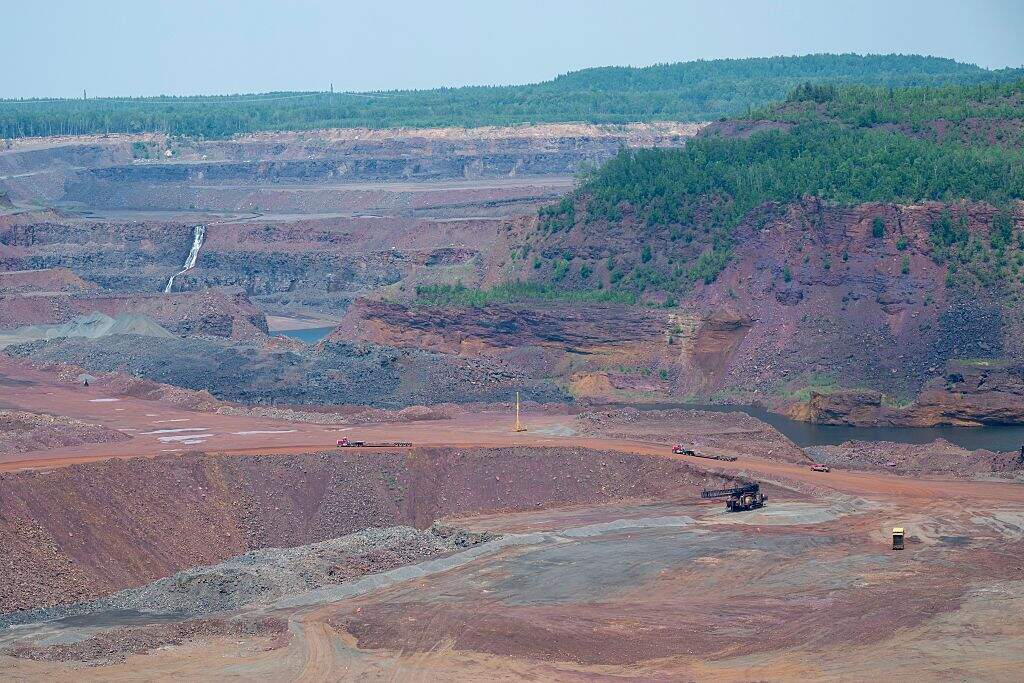
One of America’s largest deposits of copper, nickel and cobalt is deep underground near the Boundary Waters in northeastern Minnesota. It’s never been mined. Now, the Trump administration is pushing to change that.
Guests
Ernest Scheyder, senior correspondent at Reuters, where he covers critical minerals and the global energy transition.
Also Featured
Kathy Graul, director of public affairs for Twin Metals Minnesota.
Ingrid Lyons, executive director of the organization Save the Boundary Waters.
The version of our broadcast available at the top of this page and via podcast apps is a condensed version of the full show. You can listen to the full, unedited broadcast here:
Transcript
Part I
MEGHNA CHAKRABARTI: Deep underground in northeastern Minnesota lies one of North America’s largest deposits of copper, nickel and cobalt. It’s called the Maturi deposit … and it formed some 1.1 billion years ago.
This deposit has never been mined. But that could soon change.
KATHY GRAUL: The Twin Metals mine, once operational, will be transformational for northeastern Minnesota. We would produce about a hundred million pounds of copper per year, 23 million pounds of nickel per year. And about 1.2. million pounds of cobalt.
CHAKRABARTI: Kathy Graul is the director of public affairs for Twin Metals Minnesota. The company first proposed a mine at the Maturi deposit back in 2019. Twin Metals is owned by a Chilean mining company called Antofagasta.
Graul says the Minnesota mine would be all underground.
KATHY GRAUL: We wouldn't start mining until we're at least 400 feet below that surface level, and then the minerals go down to as far as 4,500 feet below ground.
CHAKRABARTI: Mine workers would take buses through one-mile-long tunnels down into the mine, according to the company. Then they’d drill or blast the rock, crush it into smaller pieces, and use a conveyor belt to send it up to the surface for further processing.
KATHY GRAUL: We use a very simple flotation process. So the minerals actually come to the top of the flotation process. We skim those off. And that goes directly into what is called a mineral concentrate product. And that is put into sealed shipping containers and then that is tracked offsite for further processing from there.
CHAKRABARTI: According to Graul, the Twin Metals mine would bring 750 full-time jobs to northeastern Minnesota. And, she says, the company would pay hundreds of millions of dollars in mineral royalties to the state and federal governments.
This part of Minnesota has a rich history of mining. The Iron Range has been mined for iron ore for about 130 years and produces the majority of iron used to make America’s steel.
The reason copper, nickel and cobalt are so desirable is they’re the key to powering our daily lives – and our energy future. They’re essential for cell phones, computers, electric vehicle batteries, among many other things.
But to date, Twin Metals hasn’t made much progress on its proposed mine in Minnesota. That’s because the Maturi deposit is also roughly five miles from the Boundary Waters Canoe Area – more than one million acres of pristine wilderness.
INGRID LYONS: This ecosystem, as it currently stands today within the Superior National Forest, is boreal forest and deeply interconnected freshwater rivers, lakes, streams.
CHAKRABARTI: Ingrid Lyons is executive director of the organization Save the Boundary Waters. She says the Boundary Waters beloved by the more than 150,000 people who visit every year.
INGRID LYONS: Lots of people think about public lands, think about wilderness as a western concept. This is one of the only wilderness areas in the Midwest. This is where a family can pack up in Des Moines, Iowa, hop in the car with the canoe strapped to the top and be in a world-class wilderness within, you know, a day's drive.
CHAKRABARTI: Lyons and Save the Boundary Waters oppose the Twin Metals mine. They worry it would create pollution that could devastate the wilderness.
When minerals like copper are mined from sulfide ore, if the sulfide ore is exposed to water or air, it can create sulfuric acid. Sulfuric acid can contaminate water sources…and cause water to turn a yellow-orange color. This is referred to as “acid rock drainage.”
INGRID LYONS: There are no examples of this type of mining being done without some form of water pollution. And so we think that an environment this wet with as much snow and rain that we get every year is fundamentally one of the worst places you could put this type of industry.
Kathy Graul with Twin Metals says acid rock drainage won’t happen at the Minnesota mine.
KATHY GRAUL: There will be no potential for acid rock drainage on our site. We have a very unique mineral deposit that allows us to surgically extract the minerals and those minerals are bound with the sulfides. Those two elements together are what we are taking out and putting directly into our mineral concentrates. And the leftover material, the tailings, there is no potential for acid rock drainage.
CHAKRABARTI: In part because of pollution concerns, the Biden administration issued a 20-year mining ban for the Boundary Waters in 2023. The ban also included the surrounding watershed – in total, more than 225,000 acres.
Now, President Donald Trump’s administration wants to overturn that mining ban.
PRESIDENT DONALD TRUMP: You know, they did it immediately, imposing a brutal 20-year mining ban on a quarter million acres. But I'll — I will end that mining ban. We'll do it together, Tom. We will end that ban in about, what do you think? About 10 minutes? I would say 10 to 15 minutes. Right, Pete?
CHAKRABARTI: That’s Trump at a rally in St. Cloud, Minnesota in 2024. The “Pete” he’s referring to is Congressman Pete Stauber, Minnesota Republican. And just this week, Congressman Stauber put forth a measure that would overturn the Biden administration’s mining ban near the Boundary Waters. On Point reached out to Stauber’s office. They did not respond.
Kathy Graul with Twin Metals didn’t comment specifically on Stauber’s proposal, but she did say this.
KATHY GRAUL: We are very encouraged that there is renewed interest in domestic mineral production here in the United States. It's very promising for us.
CHAKRABARTI: Graul says while Twin Metals could mine the copper, nickel and cobalt out of the ground in Minnesota, the company hasn’t yet decided where it will send those metals for final processing. China dominates the world’s mineral refining industry.
KATHY GRAUL: There's limited capacity within the United States. All of those details are kind of determined a little bit later on. But we as a mining company really support expanding more of that processing capacity within the United States.
CHAKRABARTI: For Ingrid Lyons with Save the Boundary Waters, mining so close to such a large Minnesota wilderness is not worth it. She says, “not this mine, not this place.”
INGRID LYONS: We're not willing to be the guinea pig. We don't need this resource given the risk of developing it here.
This is a Chilean mining company who in practice they send their minerals to China and then those minerals are sold on the world market where we buy them back. So this sort of “America first” mineral development narrative is so off-base. Sure. It's domestic in that this mine exists here, but does it actually benefit the American people?
CHAKRABARTI: Let's turn now to Ernest Scheyder. He is a senior correspondent at Reuters where he covers critical minerals and the global energy transition.
He's author of the book The War Below: Lithium, Copper, and the Global Battle to Power Our Lives. Ernest, welcome back to On Point.
ERNEST SCHEYDER: Hey, it's great to be with you, Meghna.
CHAKRABARTI: For folks who don't know, I should say that Ernest was one of the anchor sources for a very terrific series we did a couple of years ago called Elements of Energy, where we looked at the U.S.' clean energy future and how that really entangles this country with a lot of things happening in different places around the world.
And Ernest, we talked about this a little bit in that series two years ago, but now the focus on extracting more mineral wealth out of the ground here domestically seems to have been doubled under the Trump administration. So let's start with the story we just told about what's happening in Minnesota.
What is the latest there about the turning of the tide in terms of getting copper, nickel and cobalt out of the ground from there?
SCHEYDER: Yeah, so really what folks are calling an unprecedented move here by some in the Congress and in the administration to try to basically overturn a 20-year mining ban that former President Biden put in office in 2023.
Now, this gets a little bureaucratic, in the weeds, but basically President Biden blocked mining on roughly 225,000 acres in the Superior National Forest for 20 years. Now, a president can ban mining for 20 years, but only Congress can ban it permanently. So President Biden was basically going to the extent of his authority at that time.
So everyone assumed that this Twin Metals project was on ice. Literally like nothing could happen for 20 years. Fast forward to where we are now in 2026, and Congressman Stauber and others in Congress and the administration looked back at a 1976 law known as the Federal Lands Policy and Management Act, or FLPMA, say that 10 times fast.
And basically, that law requires that a president needs to notify Congress if he basically withdraws operations on more than 5,000 acres. Now, a tension point that's come out this week is that President Trump and his administration officials as well as Congressman Stauber are saying, Hey, wait a minute.
President Biden didn't actually notify us the right way. There's a lot of bureaucratic infighting here around whether or not informing people in the Congressional record versus another publication known as the Federal Register was the right way.
And so what Congressman Stauber and the administration are saying is, Hey, we're going to have the administration withdraw that land again, and then we're going to have Congressman Stauber issue a bill or file a bill to basically say, Hey, wait a minute, we don't like this. And so that's where we are right now. It's what folks are saying unprecedented steps here to try to get this mine back up and running, or basically get the land open for mining once again.
CHAKRABARTI: Okay, Ernest, this is why I'm so glad we have you. Because the bureaucracy and being in the weeds is actually where so many important decisions are made, and especially in cases like this. So for clarity's sake, it's not that the Trump administration can't overturn this 20-year ban without Congress.
Do I have that right?
SCHEYDER: So the argument is that, correct, that the Trump administration in order to basically overturn what President Biden put on the ban, that it would basically need to have Congress reject it outright, basically say what President Biden did was not properly inform Congress.
And so therefore we are going to basically swat it down. And they're using the provisions of another law called the 1996 Congressional Review Act which basically means that Congress has a 60-day window to review presidential actions.
In this case, they're saying this land withdrawal was a presidential action, and if Congress bats it down, which Congressman Stauber hopes then that would prevent a future president from replicating President Biden's ban, i.e. mining would be open there in perpetuity.
Part II
CHAKRABARTI: Ernest, we opened with the question of potential pollution coming from the mine in Northern Minnesota, if indeed it gets approved and goes ahead. Give us your take on that. Because pollution has long been one of the things that has almost immediately stymied other mining projects or produced sufficient groundswell of opposition, that it's made the mining projects take a very long time to reach any kind of approval.
So what's the situation in Minnesota?
SCHEYDER: Yeah, definitely pollution and environmental concerns, it's been the mining industry's big Achilles' heel for decades. Centuries, from the beginning of time. This is something that the industry has long had to contend with. And northern Minnesota, you've got this large waterway basically as your previous guests were talking about, and there's just water everywhere there.
And so the big concern, of course, is as Kathy, excuse me, as Ingrid Lyons was saying, is look, if this sulfide ore comes in contact with water, you're going to have this big environmental pollution. That's the tension point. And the question is, can you produce it safely? And I will say Meghna, mining today is vastly safer than it was 50, 60, 70 years ago.
There's a lot more environmental safeguards. But still, you can have large accidents happen that really destroy that reputation. Just a few years ago in Brazil, there was a large Tailings dam that collapsed and killed 300 workers were sitting at a mess hall having lunch. And Tailings dam basically stores a muddy goop from the mining process.
Mining today is vastly safer than it was 50, 60, 70 years ago. There's a lot more environmental safeguards. But still, you can have large accidents happen that really destroy that reputation.
Now there are ways around that. You can have what's called a dry stack tailing, which basically means you dry that muddy goop before you store it. But still, you have piles of waste that are potentially invasive in the environment and can cause pollution. So these are the tension points really that go through the center of that.
And part of the reason that President Biden put this land aside in 2023 was, yes, because of environmental concerns, but also because of the recreational industry. That's really become extremely popular there. This is a huge canoe area. People come from all over the world to go canoeing there.
And then Harvard University did a study a few years ago that found that this recreational economy would do more for Northern Minnesota's economic health than mining would. And so that I think really underscores the imperative that people feel to not have mining in the area. But of course, Minnesota is a huge mining state.
As you said at the top, it produces so much of the iron ore that goes into steel here in the country. And those mines are still active and still very popular. In fact, if you're a politician, a way to lose an election really quickly in Minnesota is to come out against Taconite iron ore mining, ironically.
So the state has a large history of mining. It's just in this northeastern part, in these boundary water areas, it's that concern that mining could really impede that recreational economy. I think that's really at the center here.
CHAKRABARTI: Okay. Before we talk about President Trump's desire to allow mining there let's stick with the Biden administration's view here. Because when we talked to you a couple of years ago, Ernest, it was under the aegis of President Biden having said clean energy future is absolutely essential for the United States. And one of the sort of subheadings that we explored throughout that special week of coverage was, how do we see the role of domestic mining in that?
Because in order to really secure a clean energy future, the United States not only has to be able to have access to and buy minerals on the global market, but potentially increase domestic mining as a backstop against China's control of these same critical minerals.
Now that hasn't fundamentally changed, has it?
SCHEYDER: It hasn't at all. In fact, I would argue with the rise of artificial intelligence and the need for more data centers, certainly with more defense spending globally the demand for these critical minerals is only growing exponentially.
We are going to need millions and millions pounds more of copper produced annually, globally to say just AI and defense needs by 2040. So the demand is only going up.
CHAKRABARTI: And so he, Biden blocked mining on this land for 20 years or the maximum that he could.
Look, you've been covering this for years. How did the past administration try to balance the need for more domestic mining with, as you said, protecting the land that so often these minerals are found in.
SCHEYDER: Yeah, it did seem to be a paradox of the Biden administration's desire to promote clean energy at the same time, not fully thinking through what happens if we withdraw this land from future development.
I put that to members of the Biden administration when this is first announced in 2020, and they said that they did not feel at the time that them halting mining in this region or preventing mining in this region was in conflicts at all with its plans for clean energy.
Really the way that I read that at its core was that there are other places where we could mine, but of course there are controversial mines proposed in Arizona and Nevada and elsewhere.
And at some point you've got to have a discussion about where and how you want to get the building blocks for the electrified future.
CHAKRABARTI: And especially since we said at the beginning that what's there in Northern Minnesota is the largest North American deposit of some of these elements. Yes?
SCHEYDER: Indeed. It's quite large. And what's also interesting about the geology there is you've got three really core critical minerals commingle together. Copper, cobalt and nickel. And yes, sometimes cobalt and copper are found together depending on geological formations across the world.
But to have all three is basically you're getting three at once, right? And so you're not digging just a mine for nickel or copper, et cetera. And so there's a huge appeal there. The United States doesn't have a cobalt mine right now that's active. The only active nickel mine will be depleted by the end of the decade.
And so there are needs for sources of these and China's mining companies that operate across the world have been using their control of a lot of these critical minerals as economic tools, either flooding the market or holding back supply to effect prices. And the only U.S. cobalt mine that was in operation went bankrupt last year because cobalt prices fell, when Chinese mining companies flooded the global markets with cobalt.
So there's a huge economic tension point here as well that the mining industry is facing.
CHAKRABARTI: Yeah. Ernest, you've been there to where this proposed mine might be.
SCHEYDER: Yes.
CHAKRABARTI: Yeah. So tell us, for those of us who are not in Minnesota, tell us what that area is like and what people that you talk to locally have said about the possibility of mining there.
SCHEYDER: I tell you there's two things that I would say that are in intentioned there in the physical landscape. It was a mining area in the middle of the 20th century, and you can still see that in the things like the way that roads are named. There's Miners Road which goes through downtown Ely, Minnesota.
And Ely is the sort of the largest town in this part of the boundary waters in northeastern Minnesota. And you can see a bunch of lakes there that were actually old open pit mines that have since filled in. And so there's a huge history of that. There's a lot of taconite iron ore mines.
... Some people in Ely still work at those mines and commute. But by and large, a lot of young people, if they are raised in the town, they leave and that's caused a huge longing by some of the old timers, if you will, for this old mining industry to come back.
At the same time, if you are going to explore the boundary waters wilderness area, which is massive and gorgeous and beautiful.
You need a canoe. There's no motorized boats or other equipment allowed out there. And so you get a lot of people that will come up to Ely to go camping, to go on weeks long canoe trips. It's a beautiful landscape. There's no other way to describe it. It's just gorgeous. And I was out there for, gosh, a week or two and just the chance to see it was magnificent.
So you can understand how people want to preserve it and say that it should not be spoiled. But there's a lot of tension there as well. So I would just say it's a beautiful town that sort of has a longing for that past and also eyes to a future firmly rooted in tourism.
CHAKRABARTI: Ernest, I keep referencing back to our Elements of Energy series, which by the way, listeners, if you haven't heard it, go to our On Point podcast feed and look for Elements of Energy. Or you can also find it on our website onpointradio.org. Because one of the great things ... I would say most important things that I learned from that series, Ernest, is that to protect America's clean energy future, we can't do it without some increased mining here in the United States.
And yet if memory serves, Ernest, that wasn't the focus of the Biden administration. They were just saying like clean energy future in terms of guaranteeing that I didn't hear as many details from the Biden administration, but the shift in why we need to do more mining here in terms of the philosophy of the Trump administration has been pretty dramatic, right? What is Trump talking about right now? Yes, go ahead.
SCHEYDER: It's all about national defense. It is very stark to notice that the core reason why we need to mine, at least from policymakers' positions, has gone from addressing climate change now to national security.
And I think you see the second Trump administration pivots strongly in the critical mineral thematic in that area. Right after he was inaugurated, of course we focused on Ukraine. There's been talks about certainly Greenland's critical minerals and what else is in Venezuela potentially besides oil.
So internationally, the Trump administration has used critical minerals as a core diplomatic focus. And now here with this Twin Metals project, Northern Minnesota, it is actually roughly a year into the second Trump administration that we're starting to see a really, really deep focus on the permitting side of mining here and saying we need to actually have this mine back open.
Internationally, the Trump administration has used critical minerals as a core diplomatic focus.
Climate is not a topic at all for the second Trump administration, nor was it during the 2024 election between Trump and Vice President Kamala Harris at the time. It really has become a national security issue because control of these critical minerals is really going to define the 21st century economy.
And the Trump administration knows that. Which is part of the reason why they are looking at Greenland or Ukraine and now Northern Minnesota.
CHAKRABARTI: But in the assertion that control of these minerals will be important for success in the 21st century economy. Trump isn't wrong. That's been a truth about these minerals for years, which is one of the reasons why China for quite some time has been so aggressive in expanding its access and control of these same minerals.
SCHEYDER: Yes. Exactly. And the not only on the extraction, but also on the processing side as well. The United States only has two copper smelters right now. And a lot of the copper that is mine in the United States is exported for smelting overseas. We were talking about Chile earlier.
Control of these critical minerals is really going to define the 21st century economy.
Chile is the world's largest copper miner. It exports most of its copper to China for processing. The United States does not have a nickel smelter right now, or a cobalt smelter. So hypothetically, if this Twin Metals project were up and running. There was no place for it to send its nickel or cobalt in the United States.
It would have to be exported. Now, if people don't want a mine in their backyard, Meghna, they definitely don't want a nickel smelter next door. So this is another part of the tension as well.
CHAKRABARTI: Yeah. In fact, we asked Kathy Graul who is with Twin Metals, Minnesota, about whether the company had any interest whatsoever in trying to stand up a processing facility for the elements that it might be extracting from the ground near the boundary waters.
And here's what she told us.
GRAUL: We're not putting forward any kind of plans for a smelter or processing facilities, and we definitely support more of that happening here in the United States. Unfortunately, it's really costly to build a new processing facility and you don't make a lot of profit off of those kinds of facilities.
CHAKRABARTI: So Ernest, she's adding the cost element there that it would just basically make the mining process and the end product just that much more expensive. If we don't send them to places like China for processing.
SCHEYDER: Yeah, it's the industry jargon is core competency, right?
If you are really good at mining, that doesn't necessarily mean that you're good at processing. And a lot of mining companies know this. Some do both. Freeport-McMoRan, a massive copper company based in Arizona. They do both. Rio Tinto, another large mining company does do both.
But by and large, a lot of mining companies prefer to focus on putting a shovel in the dirt and doing what they do best, which is taking that rock out of the ground, lightly processing it, and then sending it on to a smelter or another processing facility. You'd have just different costs, different concerns, different end markets.
When you are in that processing space. But of course, there is the tension that Ingrid Lyons was talking about. Around, okay, are you going to export this overseas to a place where we're going to have to buy it back from us?
And so a part of the conversations that are happening right now in the Trump administration around, can we get that midstream or that processing side back here, what would it look like from a financing perspective, from a permitting perspective?
From encouraging more downstream manufacturers, people that would use that processed metal to make the goods that we buy every day, the electronics, et cetera. That's a really complex web that China has actually been really good at developing.
So you're not only having some maybe mining in mainland China or elsewhere, but you're having all of that processing there and then you're encouraging folks to, Hey, if you want to build a laptop, build it here.
You've got access to a lot of readily available copper or other critical minerals within the mainland's borders. And so that ecosystem has really benefited the entire Chinese focus on critical minerals.
CHAKRABARTI: Okay. So Ernest, I just want to stick with the comparison between Biden and Trump for a second. Because it feels especially in this day and age, in the overlapping area between these two visions, clean energy versus national security, that's where we find mining squarely positioned.
So here's the argument that I'm about to make. That Biden's view of securing a clean energy future, being able to have more batteries, less fossil fuels, being able to have access to the minerals that we would need in order to more cleanly power digital present and future.
That actually has a huge amount that's related to U.S. national security, it would make us more secure. And then Trump's vision of national security being the prime or the unique focus of the Trump administration. Strong national security, again, going the other way, relies on constant and secure sources of the things used to make modern technology.
And batteries are a huge part of that. Just as an example.
I guess what I'm saying is these are two different visions, but essentially achieving this, wanting to achieve the same outcome. Is that a fair way of looking at this?
SCHEYDER: Yeah, I would definitely agree. Both President Biden and President Trump, they want to end up at the same finish line.
How they go about it is wildly different in terms of strategy. And so if climate is the ultimate focus of your strategy, then you want to get minerals out of the ground and into solar panels and wind turbines, wherever those minerals might come from. And so you're trying to encourage the entire supply chain.
But if your focus is national security then you really want to encourage more production within your borders or with allies, and certainly obviously more processing closer to home, maybe within your own hemisphere. But at the end of the day, both strategies results in increased critical minerals production.
It's just where, when, and how that are the difference there. That's how I look at those things.
Part III
CHAKRABARTI: The Minnesota proposed mine that we've been talking about takes on special importance not just because the Trump administration has really shifted to a national security stance or viewpoint regarding minerals, but also because of China and the Trump administration's relationship with China.
So tell me a little bit about that. How has China used its control of these same essential minerals to, I don't know, retaliate against, let's say, tariffs or the trade wars that President Trump has also started in this second administration.
SCHEYDER: Yeah, definitely. China for years has been using the export in its basically trade policy or diplomatic efforts, and that really has ramped up in the past 12 months under the second Trump administration.
You remember that last April, President Trump launched what he called Liberation Day with tariffs on a bunch of countries across the world, including and especially China. And now China had been throttling exports to the U.S. for a while before that of gallium and germanium and antimony. But it really ramped them up even further after those tariffs were put into place, and stopped exporting rare earth and rare-earth magnets. As well as a lot of processing equipment, basically sending a signal to Washington that, hey, like you can put these tariffs up, but we have a card that we can play too in this game.
And I think that really focused the attention in the administration, not only on trying to increase domestic production and processing but also more of that downstream, I mentioned rare-earth magnets. Magnets that basically take power from a battery. And cause motion. So the thing that makes your cell phone vibrate is a rare-earth magnet.
The thing inside an electric vehicle that actually spins the wheel is a rare-earth magnet. It's the actual motor of that. More importantly for the Pentagon, they also use magnets in large submarines and the F-35 fighter jet, in night vision goggles. So you see where this is going.
But the administration has taken steps that would be considered probably even wild, even five or 10 years ago. Last July it became the largest shareholder in a company known as MP Materials, which is the only U.S. rare earth mine. And this company is trying to resume full processing of critical minerals inside the United States, of these critical minerals, these rare earths, inside the United States, as well as to make those magnets.
And so the U.S. government only took the largest equity position in that company, but also guaranteed it a price floor for its products, as well as guaranteed that it would buy those magnets that were out there. And after that deal, then Apple came in and made its own deal with this company. Now that's pretty unprecedented to become the largest shareholder in a company.
You remember, Meghna, back in 2008, 2009, when the U.S. government became the largest shareholder in General Motors, that everyone decried as, Oh, Government Motors. It was a pejorative, but nobody blinked an eye last summer when the U.S. took this big investment in MP Materials, because it was seen as a necessity really to help prop up this industry in the United States.
Because China had been either flooding the market with rare earths or holding them back and having big price gyrations as a result.
So we're seeing this direct investment by the Trump administration into various parts of the economy, including, and especially in critical minerals. There have been a few other deals that they have done in critical minerals companies, but that has been seen as core need.
SCHEYDER: This is so fascinating to me, Ernest.
Because you're exactly right. This sort of partial, I'll call it partial nationalization, right?
SCHEYDER: It's what it is. Yeah.
CHAKRABARTI: Beforehand, as you said, people in the United States, they looked at other countries that do something similar, if not complete nationalization. And they were like, That's the path to lack of efficiency. And preventing these minerals from coming into the global market essentially.
It wasn't just a pejorative; it was just like an anathema to the American concept of how you run major industries. And yet you're saying here that regarding mining, at least there's been this quiet but complete sea change. I want to ask you if you think that's actually not such a bad thing.
Because if we're talking about minerals that are radically important, not just for our clean energy future, but also for our national security, why not, why shouldn't the government have an actual stake in those companies?
SCHEYDER: That's the argument that a lot in the industry and in Washington have been making, basically drawing these closer together.
And I think what's so interesting for me is that the mining industry right now realizes that its success is tied to U.S. government policy. In 50, 60, 70 years ago, the mining industry might have avoided D.C.
Or, held it at arms length. Now, every single mining company that I talk to on the regular, they're always either in D.C. or they've got a full-time lobbyist in D.C. They're spending a lot of money in Washington talking to the administration.
And I think more important than even equity stakes in these mining companies is this concept of a price for what should the price of a critical mineral be. And that's a conversation that we saw earlier in the week with the G-7 finance ministers meeting in Washington to have this discussion.
There's been some talk about can we create a western price for some of these critical minerals? What would that look like to have a price for rare earth, for instance, that is completely divorced from anything that happens in China. I think the mechanisms for how that would work are still very much unclear.
What is clear though is that these Western governments, especially Washington, can't guarantee a certain price for all critical minerals companies. They just don't have the budget for that. So while that price guarantee was extended to MP Materials, can it be extended to every other company out there?
That much is unclear. We mentioned that there's no cobalt mine in the U.S. right now. Because its owner went bankrupt. Can the U.S. government underpin a price for cobalt? These are some of the conversations that are happening right now. But we know that it can't happen for every single company.
So should there be a new exchange in the United States? Should there be a requirement that you can only buy minerals if you are contracting for the U.S. government from a U.S. mine, these are all hypotheticals right now. But they're some of the things that industry is putting forward and some in the administration are considering.
CHAKRABARTI: Okay, Ernest, this gets more and more interesting with every word that you speak. Because okay, the price floors, we see that in other places. I'm thinking agriculture is familiar with the government guaranteeing price floors, but at the same time, that is the opposite of a free market approach.
Just totally the opposite. The government guaranteeing we're going to give you a certain price no matter what. How would that work with things like copper, cobalt, et cetera, where as you pointed out, is the only way to maybe guarantee this theoretically is to create a completely separate market for those things in the west or in the United States.
And as you said, I just can't fathom practically speaking how that might even function.
SCHEYDER: Yes. And I think your questions are spot on. That the questions that a lot of people have, me, myself, like, how would you actually make this work in real time? How would you practically implement this? And I think a lot of the questions are out there, like, how would you actually trade neodymium in New York, hypothetically.
And what would that look like to not even take into consideration any supply from China, which is the world's largest minor and processor of neodymium, which is a type of rare earth. These are some of the practical things that people are thinking through. And some of the normal tools that the administration would use in other industries like tariffs aren't exactly a quick remedy here.
Like for instance, it was just two days ago that President Trump put out an order saying he's not going to put tariffs on critical minerals for now. And it's that for now thing. So he had launched a six-month study last year that commerce Secretary Howard Lutnick was ordered to undertake. Lutnick gave Trump that report in October.
He's been sitting on it since October. And the big question that I had and a lot of other people had was, okay, is President Trump going to see that global markets are being flooded by supplies of critical minerals from various locations. And is he going to take action as such? And what he said two days ago was we're going to hold off on imposing tariffs on rare earths and lithium and other critical minerals, and instead we're going to seek supplies from international trading partners.
Now, if that causes you to scratch your head, like I think a lot of other people are scratching their heads out there right now. There is other supply out there in the world, of course, but the decision, by acknowledging that the U.S. basically is far from being self-reliant for these critical minerals, it's probably going to rankle the domestic U.S. mining sector.
But those tariffs could have, in theory, helped stabilize some of the prices if they were implemented. We obviously just don't know, it's a hypothetical. Others are saying perhaps the administration should try to encourage countries like Indonesia, the world's largest nickel miner to basically stop its rampant output.
And that would have a positive effect on the price. So could that be a step instead of a price floor? A lot of these are theoretical economic questions that I think would need to be tested, certainly. And I think the administration is a batting around a bunch of ideas right now, but getting back to, like, how would a price floor or some kind of western price for these critical minerals be set.
The question is still out there and open and I think we just don't know.
CHAKRABARTI: It's so fascinating. Because let's continue theorizing for just a quick moment here and then we'll return back to the practical world of mining. But let's say that this happened, some kind of price floor was created.
That might be good for mining companies, but for the industries that use, that purchase and use these same minerals, the domestic industries, that can't be good for them.
SCHEYDER: No. No, it cannot. I spoke last year with a purchasing agent at a very large automaker, and I was having this conversation with her, and I said, okay, why don't you guys buy more of these critical minerals domestically?
And the response that I got was, look, like we buy a gazillion products every single year that go into making our cars. At the end of the day, we care about price. Certainly, we care about ESG and social standards, et cetera. But at the end of the day, we care about price. So if you tell an automaker or another manufacturer that happens to contract for the U.S. government in this hypothetical that you've got to pay 2x now for a critical mineral, whereas you paid just X before.
Obviously, that's going to have an effect on their bottom line and they'll react as such. So that's the tension part here too.
Yes, you can get the miners and the processors more of a profit or at least even get to a profit. Whereas before, they might have lost money. But if you're buying that product, you're not happy.
There's an intention there too.
CHAKRABARTI: There's a need for a comprehensive plan of some kind because of the way that these exact minerals are so deeply intertwined in some of the fundamentals of a 21st century economy. We'll talk about that, I'm sure, when we next have you on, Ernest. But give me one minute here, or let me give you a minute here, to bring us back to the practical. Because you mentioned antimony and is that something that we are no longer receiving from China and what's it used for?
SCHEYDER: Yeah, we are no longer receiving a type of antimony known as trisulphide. Now, antimony is used in a lot of different spots of the economy. They're used in like flame retardants. But more, most importantly for the U.S. military and the U.S. Army specifically, antimony trisulphide is used to make bullets.
And so you can imagine if the U.S. Army, you need bullets. And so by realizing a few years ago that it had no longer had access to Chinese antimony trisulphide, that led the Army on a wild path to try to find new supplies, it drew down stockpiles. It was able to get some accessible but expensive supplies out of India.
And now the Army has partnered with a mine in Northern Idaho. From a company known as Perpetual Resources to basically develop what's known as a mini refinery. And so to me this is really intriguing. So we've talked a lot about the broad economic needs for these critical minerals, but the Army only needs about seven to 10 metric tons per year of antimony trisulphide, very small amount.
If you're a large manufacturer, like you're never going to invest the money needed to get something that small. And then you want large volumes of this, but the Army only needs small amounts. So they're investing in these small refineries that will produce those relatively small amounts with this miner in northern Idaho.
Now that miner obviously will try to sell its antimony to other processors in the country or elsewhere when it gets up and running later this decade. But to me it just shows that there are some attempts to think outside the box here on how we process and get these critical minerals for use in various parts of our economy, in this case, in the military.
CHAKRABARTI: But all of these factors do not eliminate the concerns that the Minnesota Mining proposal brings up, right? It's like no matter where you do the mining, there will be impacts locally. And are those impacts worth the cost, right? Or worth the benefit that the United States ostensibly gets from pulling more cobalt out of the ground, on U.S. soil.
That question is going to remain with us for forever, I think. But Ernest, my last question for you, we only have a minute to go here, is when people talk about mineral security here in the United States, like what do some lawmakers have as definitions for winning that race with China?
SCHEYDER: I think at the end of the day, it depends certainly who you talk to, but I think the general consensus is that when we're no longer overly dependent on any one foreign nation for the building blocks of our economy, whether that's national security or the everyday activities of the buying of the laptops or the cell phones, et cetera, not being overly reliant on any one person.
A good analogy might be oil and gas. It was the end of the 20th century that the U.S. thought it was running out of oil and gas. The fracking revolution changed all that. But to me, it starts with a conversation that not enough people understand these supply chains. And so I really hope that the more we see these terms, critical minerals, rare earth, et cetera, in news headlines that people all across the country just have more conversations around, what are the choices we're willing to make if we want this electrified future?
The first draft of this transcript was created by Descript, an AI transcription tool. An On Point producer then thoroughly reviewed, corrected, and reformatted the transcript before publication. The use of this AI tool creates the capacity to provide these transcripts.
This program aired on January 16, 2026.