Support WBUR
How Minneapolis is standing up to ICE
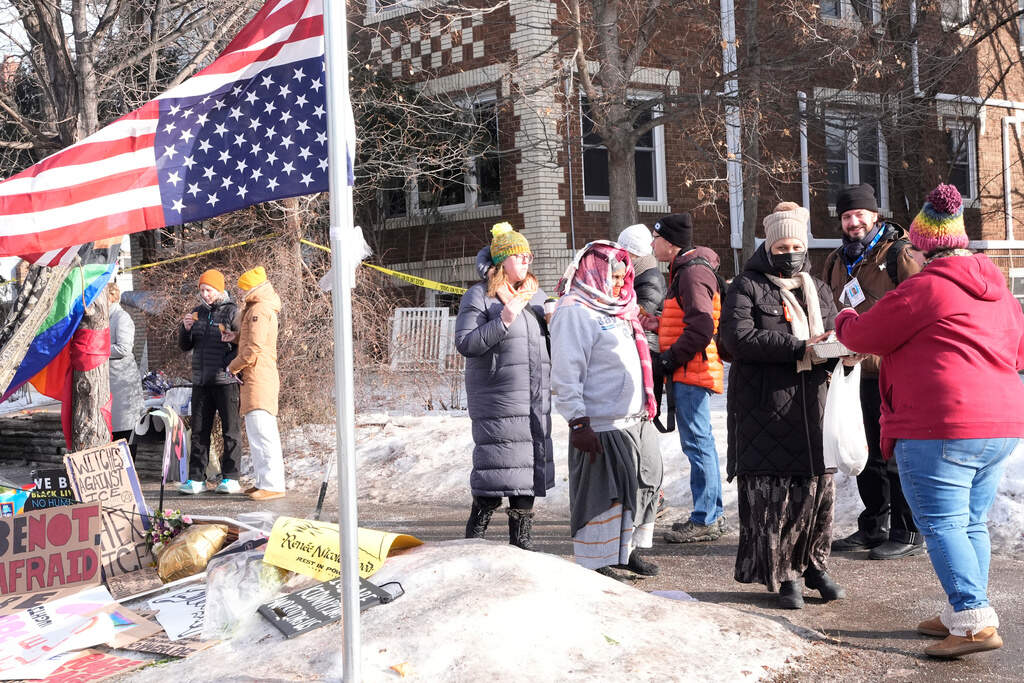
In Minneapolis, grassroots groups have sprung into action against ICE. They’re protesting, running workshops on constitutional rights, and delivering groceries to people afraid of leaving their homes.
Guests
Pastor Sergio Amezcua, pastor at the Spanish-speaking church Dios Habla Hoy in South Minneapolis.
Elizabeth Berget, South Minneapolis resident who’s been volunteering in her community in response to ICE. Writer and author.
Shannon Gibney, parent leader with Minneapolis Families for Public Schools.
The version of our broadcast available at the top of this page and via podcast apps is a condensed version of the full show. You can listen to the full, unedited broadcast here:
Transcript
Part I
MEGHNA CHAKRABARTI: Pastor Sergio Amezcua joins us today. He's a pastor at the Spanish-speaking church Dios Habla Hoy in Minneapolis, Minnesota.
Pastor Amezcua, welcome to On Point.
PASTOR SERGIO AMEZCUA: Thank you. Thank you for having me.
CHAKRABARTI: How are you doing today?
AMEZCUA: A little busy with what we're doing, but just grateful that the community is coming together to help us.
CHAKRABARTI: Mm-hmm. So before we talk about how the community is coming together, tell me a little bit about yourself. How long have you been with the church? What's the congregation like?
AMEZCUA: Well, we started the church in 2015 and this is a bilingual church. Maybe 90% of our members are Latinos, descendants. Half of them born here. The other half come from all over the nations and 10% are people from other ethnicities.
CHAKRABARTI: Okay. When did you — what, just — sorry, sir. What made you go into religious life, join the clergy?
AMEZCUA: Well, I, you know, start going to church in 2008 and I'm a community organizer, community leader. I'm a businessman. So I start going to church and I just, you know, feel the calling to do what I'm doing now as a pastor.
But, I was refusing to do it because I was pretty comfortable with my life. But, after a few months praying, I, you know, I talked to my pastor and then to my spiritual authorities, and then I started the journey of helping people and preaching the gospel.
CHAKRABARTI: Mm. Okay. So when ICE first came into Minneapolis, can you tell me about those first days? I mean, did you immediately detect a change in your congregation? I mean, what was happening in those first days?
AMEZCUA: Well, you know, it was a Monday when we started seeing the videos online of how ICE was acting here. And, originally we thought that they were coming for people with criminal records, you know. And bad people. That I think every parent, it's okay for by the government doing their job to take killers or, you know, pedophiles or things like that — from all ethnicities, they don't have to be immigrants — out of the streets. Right?
But we saw something very different in the streets. So I talked to someone that works here with me at the church and I said, you know what? Let's just throw a link online. People might be afraid of going to grocery shopping. I think we can afford to help ten families or 20 families for a couple weeks. And I'm sure this after two weeks this will be done. So we throw a link online on December 2nd, and in less than 24 hours, we have 2000 families registered. And that's when we noticed that this was bigger than we thought.
CHAKRABARTI: So, wait, can you tell me more? We'll talk about the work that you're doing in terms of delivering food to people. But, I don't know quite how to ask this, but did you, did people in your church, your own congregants, did some of them get arrested? Did they stop coming to church?
AMEZCUA: Well, 80% of all churches, not just mine, they stopped going to church, whether they're Catholics or evangelicals.
CHAKRABARTI: 80%.
AMEZCUA: Yeah, they're 80% down in the Latino community.
CHAKRABARTI: And what, and tell me more about why. Are people just too afraid to, to come to church because ICE might be there or...?
AMEZCUA: Well, ICE is targeting getting churches. ICE, and they're not entering churches, but they're driving around churches during services. When people get out of churches, they're start harassing them.
So even citizens are afraid to come out because they don't want their babies or their kids to be exposed to what we've seen, everybody's seen online, you know?
CHAKRABARTI: Has ICE been in or near your church?
AMEZCUA: Yeah, we've seen them driving around.
CHAKRABARTI: Driving around. Okay.
AMEZCUA: Driving around. Yes.
CHAKRABARTI: Okay. So people are now just afraid even to come to church.
AMEZCUA: They're afraid to go to church. They're afraid to go to work. A lot of parents are not sending their kids to school because they're arresting people out of, kids out of school bus. And I know, I know apparently there's, I know that the federal government is talking to the local officials. I think they're working things out, so we can go back to normal. But there's still a lot of activity going on.
CHAKRABARTI: Do you think it'll ever go back to normal?
AMEZCUA: It will take us some time. I think the trauma is already there. I have four kids. All of them are born here. And I have 12-year-old twins that they're traumatized. Because sometimes we get like an Amazon package and my, and they run to me and like, "Dad! Dad! ICE is here!" And like, I'm like, "what? It's just Amazon." And they're just traumatized, you know.
CHAKRABARTI: Wow. Have they been going to school still during all this?
AMEZCUA: I'll take them personally and I'll pick them up, which is, you know, we're trying to get them back to normal. But obviously, you know, now with social media and all this stuff, information gets out there.
And so our community, you know, I did a wedding a couple weeks ago for the first time in my life. I did a wedding of somebody that has DACA and an American citizen. And, we only had three guests in the wedding in our church. We did, we did the wedding in our church. We only had the witnesses and the sister of the person that I'm marrying. And, it was a very, very sad moment for me, having to do a wedding. And people are just scared.
CHAKRABARTI: Mm. Pastor, do you mind if I ask, are you at the church right now?
AMEZCUA: I am.
CHAKRABARTI: You are. Okay. Can you tell me what it feels like? This is your house of worship.
AMEZCUA: Yes.
CHAKRABARTI: I mean, can you tell me what it feels like to be in there now with knowing that so many fewer, so many fewer of your own congregants are afraid to come in? Like what's the, just the physical feeling of being inside your church?
AMEZCUA: Well, it's sad. It's sad because we're in America, we preach all over the world religion freedom, and knowing that our Latino churches are suffering, and I'm sure other immigrant churches are suffering.
But it just, you know, for example, you know, in Minnesota, activists embedded a worship service three weeks ago. And you saw that all over the new. And I'm against people getting into houses of worship. I think houses of worship should be respected by local citizens and by the federal government, and all types of people who are government. And I'm not okay with people entering into worship house. I don't care whether they're Christians, Jews, Muslims, you know?
But we've been trying to raise our voice as a Latino church, Latino churches, pastors are closing their doors. A lot of churches don't even have services. They do Zoom meetings. Pastors are losing their buildings. They're, they don't have enough money to pay their rent because people are not working. And Latino businesses are suffering — a lot of the stores, Latino stores are, they're gonna go bankrupt if this continues like this. So this is hurting the Latino community here in Minnesota.
CHAKRABARTI: Okay. By the way, so what you had mentioned about activists storming a church, this happened wow, not that long ago, just 10 days ago.
AMEZCUA: Yeah.
CHAKRABARTI: And these were anti-ICE activists that stormed the Cities Church in St. Paul. And they disrupted the service there because a pastor at the church allegedly was working for ICE.
AMEZCUA: Right.
CHAKRABARTI: I'm just catching people up here. Three activists were arrested on federal charges, including conspiracy to deprive rights after shouting down the congregants.
AMEZCUA: Yeah.
CHAKRABARTI: So that's interesting. Because that was anti-ice people actually entering the church. But your congregants are afraid to come because of ICE.
You know what, the thing that that really strikes me here is that in many, if not all religions, but especially in Christianity, church is supposed to be your place of final refuge.
AMEZCUA: Absolutely.
CHAKRABARTI: And your congregants can't even — they can't even come now to this place of final refuge because federal agents are stalking them, essentially.
AMEZCUA: Yeah, You know, we have an average of 500 or 600 people here in a normal weekend. And now we're getting an average of 80 people here on a Sunday.
And sometimes we get more people because we get visitors, neighbors from other cultures that feel probably bad and they just come here to support. But, yeah, I mean, I actually have to minister like, not just for the 80 people that come here, but actually to all these people that are home afraid.
And I canceled my Wednesday service because of that as well. And what we're doing during the week, we do Zoom discipleships with them. But it's painful, painful not to do fellowship with your brothers and sisters in Christ.
CHAKRABARTI: Hmm. And so now these same brothers and sisters of yours are basically afraid even to leave their homes. And this brings us to the work that you and volunteers have been doing to try to support them, you know, in this time.
So tell me a little bit more about that. What was the initial idea? You had mentioned it before.
AMEZCUA: Yes. I truly thought that this was gonna be going on for like two weeks, so we thought we could help 10 to 20 families, not just from the church, maybe from the community.
And, we threw a link online in our social media and we say, if you're a family, you're afraid to go into grocery stores because what's going on right now in the cities, register here and we'll provide food for you for a couple weeks. Meaning our budget, we had enough money to maybe feed like 20 families. That's about it, you know?
We thought we were gonna help 10 families. So in less than 24 hours, that was at 11, at 7:00 PM my coworker and my assistant came to me and said, pastor, we have 2000 families registered. And I'm like, what? And right now we had over 28,000 families registered. And so yeah, it increases by 500 a day and we don't do any publicity about it because people just share the link with other people and then we just try to get to them as soon as possible.
CHAKRABARTI: And how does that work? I mean, how do you do that as the need increases?
AMEZCUA: Well, we organize,, we not only provide food for individuals now, we provide food for other churches and schools and organizations and we have over 4,000 volunteers that signed up to help us. We train our volunteers and we're just doing one day at a time and, praying that this will end soon so we don't have to do this. And people can go grocery shopping like normal people do.
CHAKRABARTI: And who's volunteering to help you?
AMEZCUA: Well, we have over 4,000 American citizens from all backgrounds. 80% or more are Anglo people, our neighbors from all backgrounds. Christians, Muslims, members from the LGBT community, atheists, with just mission: feeding our neighbors and taking care of our neighbors.
Part II
CHAKRABARTI: I'd like to bring Elizabeth Berget into the conversation now. She's also in South Minneapolis. She's been volunteering in her community in response to ICE.
Elizabeth, welcome to On Point.
ELIZABETH BERGET: Hi. Thanks so much for having me.
CHAKRABARTI: So tell me a little bit about yourself before you decided to get involved in the community. How would you have described your life?
BERGET: Yeah, I am, you know, a mom. I've got three kids. I'm connected with a local church. And, you know, connected within my neighborhood. Certainly would not have considered myself an activist. You know, had been to a protest after George Floyd was killed just a few blocks from my home. But, you know, politically involved, but not an activist in any sense of the word.
CHAKRABARTI: Mm-hmm. I understand that you were or are a teacher as well?
BERGET: I was an ESL teacher in Minneapolis. Yes.
CHAKRABARTI: An English as a second language teacher. Okay. So now in your neighborhood there in South Minneapolis, what has it looked like? It being ICE and its presence.
BERGET: Yeah, I mean there's just a palpable tension in the air. I mean, sort of accompanied by helicopters all the time, which I think for so many of us just feels so unsettling, especially after 2020.
But yeah, we're just kind of, especially for those of us who are really plugged into this work, it's a really sad and heavy time. Very intense, very traumatizing in the sense that we are not victims. That the people who are, you know, the generally white people who are trying to help out their Black and brown neighbors are not the victims, but it's very sad because we're just fielding stories all day long, , of people facing the very worst moment of their life. They're in a moment of tragedy.
And it's just relentless. These stories are coming in all day, every day. It's a very exhausting time. You know, as Pastor Sergio mentioned, like there's just, the work is endless and the opportunities and the needs are endless. And so it's, I felt like I've probably spent 85 to 90% of any free time in the past few weeks here trying to be engaged in this work because it feels like a crisis. It feels like there's like almost a, I don't wanna say this in an incendiary way, but it feels like a wartime adrenaline that a lot of us are running on.
CHAKRABARTI: Can you tell me, you said the helicopters overhead. In the videos that have been on, you know, television and social media. Of course, I have not exhaustively watched them all, but the ones I've seen, I didn't actually hear any helicopters. So can you tell me more about that?
BERGET: Yeah, so I just live about eight blocks from where Renee Good was killed. And so in the days following her death, or her killing there's just kind of this drone and there'd be helicopter circling and it's hard to know if they're continuing news coverage or military planes or is is it breaking news? Is something happening, you know?
So there's just kind of that feeling of like, you know, you don't normally have helicopters hovering or circling over your house. So it's not been constant for the last few weeks, certainly. But like after Alex Pretti's murder, after Renee Good. You know, there's just this drone that kind of makes you feel like, "Ooh, something's happening that isn't good."
CHAKRABARTI: But you said it could be news helicopters.
BERGET: It could be, yeah. But I think it's been interesting to talk to friends and neighbors who, you know, after George Floyd was killed, it was just helicopters for like a week. And I think a lot, it's a surprisingly triggering sound for a lot of us.
CHAKRABARTI: Oh, interesting. Okay. Okay. Thank you for explaining that.
BERGET: Yeah, sorry.
CHAKRABARTI: No, no, it's okay. So, then, so now tell me a little bit about sort of the aid efforts or volunteer efforts or community efforts that are going on in your neighborhood. And then we'll talk more about what you are actually doing.
BERGET: Sure. I mean, I think as I feel like was mentioned at the beginning of the show, almost everybody I know is involved in some kind of work in standing against what's happening to our immigrant and refugee population. So within the neighborhood there are patrols on every corner, especially around schools or a hospital, you just drive by and see people with whistles kind of ready, , to warn people or record if ICE comes into the neighborhood.
And then there's kind of this mutual aid side, that Pastor Sergio is kind of involved in that, you know, there's these needs. I'm a part of several — I'm going to try to be vague so I don't give anything away -- but, you know, I'm a part of several care network groups that are meeting needs that are so varied.
It's, you know, local immigrant business needs their shovel, or their sidewalk shoveled and they don't wanna go out of the building unnecessarily. A mother is afraid to go to the hospital and is looking for midwife service. A family needs free legal counsel, you know, grocery runs, food bank runs, grocery deliveries, taking a family's laundry to the laundromat because they don't feel safe to go there, walking vulnerable kids to or from school or giving rides to medical appointments. Those kinds of things are happening all day, every day in my neighborhood.
CHAKRABARTI: You also mentioned to, Claire, our producer, that there are some people who, women who are pregnant, who may be afraid to go to the hospital to give birth.
BERGET: Yes.
CHAKRABARTI: And so what does the community do to help women like that?
BERGET: Yeah. So in these care networks, I've received, not directed to me, but just within these care network groups, you know, I've seen these needs come up and we're just trying to connect these expecting mothers with midwives or doulas that are, you know, potentially open to helping them have a home birth because they don't feel safe to go to the hospital.
So I've found myself in a coordinating role in a lot of ways. Mm-hmm. Just trying to connect the resources and the community members that I know with people who are in need. And it's been really beautiful to just witness everybody's just kind of offering what they have, whether it's a special skill like a midwife or a lawyer, or whether it's just, "Hey, I've got time on Tuesday afternoon from two to five, what can I do?" It's been really beautiful to witness that.
CHAKRABARTI: Pastor, I'm gonna come back to you in just a moment. But Elizabeth, I wanna ask you one more question about these mothers. I mean, especially as, as a mom yourself, so much of what people in Minneapolis have been talking about, those who are able to talk to the media is just like the now how this constant sense of fear, right, is permeating kind of everybody, regardless of who you are.
I cannot imagine what it might be, what it must be like to be so scared to leave your home that you are even afraid to go to the hospital to give birth. I mean, how does that land with you?
BERGET: Yeah, I mean, it's horrifying. It's not a reality I would want anyone to live in. It's certainly not the America I think any of us want either. And many, as Pastor Sergio mentioned, many of these people have, you know, documentation or some sort of legal status, or are citizens. You know, I know of multiple people who have been detained who are have legal standing here or have a pending residency or have documentation.
And so just the idea that any human is afraid to leave their house to go have a baby is — it's just unthinkable and it's just never a place that I thought we would be as a nation.
CHAKRABARTI: Pastor Sergio, let me come back to you then. You know, I heard Elizabeth say that she wanted to be cautious in terms of the details that she talked about in this live radio conversation. And I presume that's from fear that, you know, too much would be given away so that it would make it easier for ICE to track you guys as you're helping people. I mean, how do you handle that concern, Pastor Sergio?
AMEZCUA: Well, first of all, with prayer and ask from help from God. And secondly, training our volunteers to be very cautious. And if they've been followed, we are asking them to come back so we can protect people that are delivering food. Now, not all the people that we are helping, like, like she said, that — I'm sorry, can you remind me her name?
CHAKRABARTI: Elizabeth.
AMEZCUA: Elizabeth. And I wanna thank her. And the thousands of Minnesotans that have been out there for the immigrant community. Thank you very much. We really feel the love of the Minnesota Nice to you guys.
Yeah, like, you know, we are helping people. We told them, you know, to come back. because we need to protect people. And now the silent part is we are actually feeding veterans from the army, we're feeding Native Americans. We're feeding elder people that for some reason, you know, they don't have assistance right now. So we're helping more than immigrants only. You know, we're helping American citizens that are afraid to go there because they have had bad experiences themselves. So we train people and at the same time we're also hoping that this will change soon by faith.
CHAKRABARTI: Mm-hmm. Have you ever, do you think you've ever been followed by ICE or Border Patrol agents as you're doing the food deliveries?
AMEZCUA: Yes. Yes, we have. We have like four experiences where people have mentioned that to us and they come back. And we also have seen them driving around our church and parking across the street. But so far we have not had issues with that. Like they're, they're around. You know, and this, but we're always concerned with that.
CHAKRABARTI: Okay. Well, let me just play some thoughts from Renita Faye. She lives in Minneapolis. She's 52. She has three high-school-aged kids. She runs her own business. And she told us that before the recent ICE presence in Minneapolis, she didn't really act all that much. But ICE has now moved her to action like never before.
RENITA FAYE [Tape]: I used to be, you know, kind of vocal politically, just vocal. But now, I mean, I am spending all of my free time volunteering, as is most of the city right now. Most people in Minneapolis feel the same way. Like, if we're not moving our feet, we're not help — like, we have to do this.
CHAKRABARTI: And by the way, Renita started helping deliver groceries to people who are afraid to leave their homes. And she does it through Pastor Sergio's church, Dios Habla Hoy.
FAYE: We've been trained very carefully on what to do if we see unmarked cars in the area. If we see a locked a lot of activity, just drive by, don't drop off the food, parking away from the church so that they're not taking pictures of your license plate.
CHAKRABARTI: Elizabeth, let me ask you something. You heard Renita there saying she's spending all of her free time volunteering, and then she said, "as is most of the city right now." I mean, Minneapolis is a big place. Do you think that's kind of accurate? Is there a sense that at least in most parts of the city, there's a lot of citizen activity?
BERGET: Certainly. I mean, I can't speak for all the parts of the city, you know, I'm here in South. But almost everyone I know is involved in some way at, you know, varying capacities. But definitely there's a sense that the whole city sees this as an imminent need and is treating it as such.
CHAKRABARTI: Okay. Pastor, there's another question I wanted to ask you and I forgot beforehand, going back to who are the members of your church. You said what? There's 500, 600 regular members?
AMEZCUA: Yes.
CHAKRABARTI: Okay. And you said half of them are U.S. citizens, born in the United States.
AMEZCUA: Yeah.
CHAKRABARTI: Okay. And but 80% of your congregation isn't coming anymore, so you, I mean, I'm just doing the very simple math here. That means many, many, many of your U.S. born congregants, members of the church are also too afraid to come.
AMEZCUA: Yes. That's correct.
CHAKRABARTI: Tell me more.
AMEZCUA: Well, they're traumatized. They have friends that went through similar experience. You know, we have U.S. citizens, we have permanent residents that have been arrested and shipped to Texas within less than 12 hours. And now they're trying to come back here with no phone, with no IDs. I mean, we just, it's traumatizing the way they've been conducting here.
I believe they're gonna change their course. You know, we also, you know, don't, I'm a pastor, so I don't hate them. I don't hate ICE. I just pray that that they treat people with dignity, that they do their job the right way. Because I'm sure their families are traumatized, too. Right? Because I mean, they probably have families. So we just want the federal government and the local government to get together and to find a better way to do their job. And so they can, we can go back to normal.
And, you know, Elizabeth mentioned, and the other person mentioned that most of the city, and that is correct, are active here in our city. Sometimes I deliver food. I changed my car when this started, so I changed it for a pickup truck so I can carry more boxes. And when I show up to places, I'm surrounded by a few observers because they think I'm ICE and I have to say, "Hey, I'm a pastor." They're like, "Oh, okay, Pastor."
But I appreciate their efforts to take care of our community and the whole city is involved in this. Maybe 80, maybe 90%. I'm sure some people are okay with what ICE is doing, but most Minnesotans are not okay with this.
CHAKRABARTI: Hmm. Let me ask you, Pastor, I've seen it reported that you voted for President Trump in this last election. Is that true?
AMEZCUA: Well, you know, I'm not a Democrat. I'm not a Republican. I vote according to my principles, and I totally thought that they were gonna go out after bad people. But after seeing this, it's totally different. And most people that I know that wanted, you know, because the past administration also, we noticed some things that happened.
Like people could still, if you don't steal up to a thousand dollars, you can know, you don't have to go to jail. And so we just, I just want common sense. You know, I just want people to be — I want my kids to be able to go to the park without worrying about somebody doing harm to them. But what they're doing here has nothing to do with it. They're arresting moms, pregnant woman, children, and this needs to stop.
CHAKRABARTI: Mm-hmm. So I hear what you're saying. And I think you described yourself to the New York Times as a conservative. I just wanna be sure that all we've been reading about you and the work you're doing is accurate. Is that true?
AMEZCUA: Yeah. And what I mean, as a conservative because I have, I'm a preacher, you know? I believe my Bible principles. But I also love people. I respect their free will and they can, you know, because they can decide how they want to live life, and I'm nobody to judge them. So I love people.
So I'm just, you know, trying to live my life with common sense with Bible, with Christian principles and not judging other human beings for their options.
CHAKRABARTI: Do you feel betrayed by President Trump?
AMEZCUA: Well, yeah. My community's suffering. You know, it's just, it's sad. It's painful to see what's going on. And yeah, it's heartbreaking. I try not to think too much about it because I have too many people that we need to help, but it is sad. It's sad what it's going through.
And he probably has no idea exactly. He should come and visit Minneapolis and meet with the mayor, and meet with the governor and just do the right thing. You know, Obama is known in our community as the "deporter in chief."
CHAKRABARTI: Yes.
AMEZCUA: He has deported a lot of people. But this never happened. He worked with local governments and they were getting people that they were doing bad things. And I think they should sit down and get a strategy so all Minnesotans, not just immigrants, are safe. You know, we lost Renee Nicole, we lost Alex. And this needs to stop. They became heroes for our community and it saddens our heart that they are 37-year-old people and they're dead. And that shouldn't happen.
CHAKRABARTI: You know, Pastor, you're exactly right about people having called President Obama the "deporter in chief," because deportations did surge in the Obama administration. That's exactly right. But I have to ask you. President Trump during the campaign said he would go after the worst of the worst. That's true.
But people around him, I'm thinking specifically of Stephen Miller, during the campaign, was very open about his intention to deport every single undocumented immigrant, whether or not they had committed any sort of crime. That's part of the reason — they were clear about that then. And now it's happening in your community. And so in a sense, the Trump administration is following through with what it said during the campaign.
AMEZCUA: Well, we believe the United States elected President Trump. He should be the one in charge, not Stephen Miller. And I truly believe Stephen Miller is the root of the problem that we're seeing right now. And he needs to, President Trump needs to put him or fire him and get some common sense good Christian people around him so we can treat people with dignity and we can proclaim in the rest of the world that we actually treat our citizens and residents with dignity and with love, just like Jesus Christ would do it.
Part III
CHAKRABARTI: Pastor Sergio Amezcua, I understand that you are still, as we're talking, receiving a lot of phone calls from people in the community, so we've gotta let you go, but I just wanted to publicly be able to thank you for joining us today. Thank you.
AMEZCUA: No, no. Thank you. Thank you. And, you know, we want this situation to deescalate and we want people to go back to normal. I know our community, it will take many, many years for our people to get rid of this type of trauma. But I think we'll be better than we were before.
And hopefully by faith, people, I want people to know that immigrants come here looking for the American dream, and we wanna keep the American dream alive for the next generations to come. God bless you all, and God bless all your other people that listen to you.
CHAKRABARTI: Thank you, Pastor.
Well, let's listen to Margo. She listens to On Point in Mankato, Minnesota, about 90 miles south of the Twin Cities. She says ICE has a presence there and they've been there for about two weeks and her community has also been responding.
MARGO [Tape]: Organizations like COPAL, they have formed an immigrant defense group. They've trained lots of us to be constitutional observers, and we've done background checks so that we can walk kids to school. But it shouldn't have to be like this. Target needs to step up. Home Depot needs to step up. And they need to stop letting them use their parking lots. Most of all, our Republican Congress members need to step up.
CHAKRABARTI: Here's another Minnesotan. This is Daniel in Minneapolis.
Daniel [Tape:] We're all stressed all the time. We look at our phone first thing in the morning and wonder what new fresh hell has happened overnight. We have to all struggle with our relationship to news and media and social media and signal chats and signal groups because it's constant. And we can be out here delivering groceries for our neighbors who can't leave their homes, and we can be on the front lines between ice and the people that are trying to hurt, and it's just nonstop.
CHAKRABARTI: Before I bring my next guess in, Elizabeth, can you just respond to what Daniel said about the stress and the fatigue that he says just about everybody is feeling?
BERGET: Yeah, a friend and I were sort of wryly joking we all are just walking around looking really haggard. I mean, I think because of the relentlessness of the need, because of the relentlessness of the stress and just kind of that fear in the air, I think, you know, many of us are not sleeping well. I have multiple friends, including myself, who've had really troubling digestive issues.
I myself had a panic attack the other day, which is not something that is normally happening for me or regularly happening for me. And so I think a lot of us are feeling it in our bodies, while acknowledging that while we feel the stress, while we feel the fear, it's our immigrant and refugee populations that are, I mean, they're feeling it to an nth degree.
CHAKRABARTI: Mm. Okay. Well, let's bring in Shannon Gibney now. She's joining us also from Minneapolis. She's a parent leader with Minneapolis Families for Public Schools.
Shannon, welcome to On Point.
SHANNON GIBNEY: Thanks for having me.
CHAKRABARTI: So tell me a little bit about the work or the volunteering that you've been doing in the past couple of weeks.
GIBNEY: Yeah, it's really been amped up and it really got amped up this month of January, with the not just the presence of ICE, but also with the surge of we can't really get a read on if it's 2,000 or 3,000 agents on the ground now. But that really, I think we sort of felt like we were almost meeting the needs that occupation when it was just like, you know, 200 or 300 agents was in December. And then we got this new surge.
And that I think really contributed to what a lot of your, , your speakers are talking about in terms of the anxiety, um, and the, just like the constant threat and the constant, you know, sort of dread. It's this weird. , you know, trying to explain to people what it's like to live here now is very difficult, because it is pretty dystopian and yet there are people who can be relatively shielded from it. But everybody is impacted in some way.
And so, yeah, so in December, my son goes to a high school near here. Again, I'm not gonna do any names because it's not safe now. And my daughter goes to, she's a fifth grader at an elementary school also in South Minneapolis.
And so I had already been active leading with Minneapolis Families for Public Schools and then when this ICE crisis hit, I stepped up to become sanctuary school team lead at my son's high school. And sanctuary schools for listeners who don't know, it's a model out of Chicago, when ICE hit, they implemented both ICE Watch, which is the patrols, like citizen patrols basically, that are sort of run through these rapid response chats, mostly through Signal.
And so you have folks who keep databases of ICE's plates, and then people who are in the area reporting on what they see, report it to them. And if there's like an abduction then people report right away. And then because it's hyperlocal, people can come, they can whistle, they can honk on their horns and make a commotion, which ICE, the ICE agents hate. And the whole point of all of that is to interrupt, , this process of detaining, kidnapping, and deportation.
First usually they take them to the Whipple Federal Building here, and they try to process folks as fast as they can. If you can get a habeas corpus, I'm not a lawyer, but I've, you know, like many folks have been learning on the fly as necessary in this crisis, basically, you know, that is a legal document that you can use to sort of like, you know, identify who the person is and to say, "Hey, you know, this person is a citizen. This person is suspected to be a citizen." Or "This person doesn't have a criminal record," whatever, "don't send them to Texas.:
And because then once they're at Texas, it's really scary because it's like, are they just gonna be deported out of the country? And so, yeah, so we've got the patrols, then the sanctuary school model again out of Chicago is to create this protective layer, the school community, the local community to, sort of insulate the most vulnerable population. So we --
CHAKRABARTI: Yeah. Shannon, do you mind if I step in here? And please forgive me if I do.
GIBNEY: No, that's fine.
CHAKRABARTI: But there's a lot in what you said that I wanna just learn a little bit. more about. First of all — and Elizabeth, I'd like to hear you on this as well — but in terms of how volunteers are communicating. Shannon, you mentioned Signal groups. And I'm sure both of you know that very recently, those specific Signal groups have come under or have drawn the attention of the FBI. And here's why. Because the FBI Director, Kash Patel said that he's opened an investigation.
GIBNEY: (LAUGHS)
CHAKRABARTI: You're laughing.
GIBNEY: It's ridiculous. It's all protected under First Amendment. I mean, this whole administration, like it's like you can do what you want. Right? And, you know, all these ICE agents who are like — and they're doing it, right?-- they're like, well, we're gonna go into this house. They're breaking down doors, you know, they're doing all this stuff. And it's like, well, yeah, you can do it. But eventually, guess what? We're a country that is like actually governed by the Constitution, not just by like random thugs who decide that they wanna do.
CHAKRABARTI: Okay. But what I'd like you to do is I'm gonna play this clip here from Kash Patel, and I'd like you to respond specifically to what he's saying. Okay? Because he's opened an FBI investigation into these very Signal chat groups that are being used in in Minneapolis.
And to note, this came after a right-wing influencer or personality, Cam Higby, claimed that he had infiltrated some of these Signal groups. And Higby alleged that the discussion in the Signal groups was equivalent to obstructing law enforcement.
So here's what FBI, director Kash Patel said about that.
KASH PATEL [Tape]: As soon as Higby put that post up, I opened an investigation on it. Just like any other case, when we say, hey, quote unquote, there was an attack in downtown Seattle. Does the public have information? We, the FBI are looking to the public for information on these events.
We immediately opened up that investigation because that sort of Signal chat being coordinated with individuals, not just locally in Minnesota, but maybe even around the country. If that leads to a break in the federal statute or a violation of some law, then we are going to arrest people. You cannot create a scenario that illegally entraps and puts law enforcement in harm's way.
CHAKRABARTI: I mean, Shannon, some of the things that we've been seeing are in these discussion groups, there are, you know, potential license plates that people believe are associated with ICE vehicles that have been shared. And perhaps it's that kind of thing that Director Patel is saying, "look, you could put ICE agents in danger by doing that."
GIBNEY: Yeah. There's so many things I wanna say about that. I know that we don't have a lot of time, so I'm just gonna sort of go in for the main points. Again, you can't prosecute anybody unless they say something illegal. I'm on probably, I'm on too many chats. Everybody here, the other thing that's happening is that we all have Signal fatigue. Because we're on chats.
BERGET: (LAUGHS)
GIBNEY: I have never on my patrol chats, on my mutual aid chats, on my neighborhood chats, I've never seen anyone say anything illegal on there. Or sort of, you know, say that they're gonna intentionally do anything violent to any ICE agents.
I think it's clear from what we're seeing and experiencing on the ground that the folks that are breaking the law, and they're doing it indiscriminately because, they believe that they don't have to account for anything. And so far we've seen in the murders of — in the killing of Renee Good and the murder of Alex Pretti that that's absolutely true.
CHAKRABARTI: Yeah. So I wanna give Elizabeth a chance to chime in here if you don't mind. Because Elizabeth, I do hear you back there.
BERGET: (LAUGHS) Yeah. Yeah. I think, I wanna just echo — I'm sorry I missed your name — what this woman is saying.
CHAKRABARTI: Shannon.
GIBNEY: Shannon.
BERGET: Shannon, sorry about that. And I just think like, you know, we're being painted out in these Signal chats as being, you know, like a guerrilla. I mean, he didn't use these words, but like as though we're some sort of insidious or nefarious guerrilla warfare tactic.
And it's just like, I would just wanna ask like, how many ICE agents have been hurt versus how many citizens have been teargassed or pepper sprayed? While being detained, have been injured? We've got two killed, one shot. And I just feel like there's this victim mentality that is sort of driving this FBI investigation and there's no evidence that, like, as Shannon was saying, that anyone's intending harm to the ICE agents. But we are very intent on using our First Amendment rights to document, to show up, to be there.
And is blowing whistles and honking horns is that a federal offense? Is that really obstructing justice? It just doesn't like — make it make sense is kind of how I feel.
CHAKRABARTI: Well, let me play something else for both of you because, well, it's another caller, a listener we have from Minnesota. This is Kathy. She's in Marshall, which is in a rural area about three hours from Minneapolis. And Kathy shared this, that ICE has shown up in her community too.
KATHY [Tape:] The white people here really aren't talking about this. But when they do, they're very suspicious of what's happening in Minneapolis. They question how much of the resistance is, quote, local.
And while our non-white neighbors are living in fear, truly in fear, going to work and to the store, just like they are in Minneapolis, because they are being racially profiled, the white population is either unaware, they're ignoring it, or they're in full support of it.
CHAKRABARTI: So Shannon and Elizabeth, I'd like to offer you the opportunity to, you know, address the people who are listening to this show, whether they're in Minnesota or across the country, who stand by the administration's action and stand by what ICE is doing, and do see you know, the work of people in Minneapolis, like the both of you, as obstructing justice.
That's how a lot of people still do see this. I mean, what would you tell them?
And, and, and we only have like two minutes left, so sorry about that. But Shannon, I'm gonna start with you and we'll leave a little bit of time for Elizabeth, but go ahead Shannon.
GIBNEY: Yeah. Just because an organization calls themselves the Department of Justice doesn't mean that they're about justice. Part of this is also drawing a line between what is legal and what is moral. As a Black woman, I'm very clear that those things are not the same and have not been the same in American history.
And so ripping families apart is not justice. Throwing canisters of chemical weapons at legal observers and killing them is not justice. Weaponizing food so that people that you have made not be able to leave their houses for months is not justice.
Unfortunately, I think, you know, it's well-documented in research that in terms of morals, it's very hard for human beings who are not experiencing immorality to understand at a deep level, you know, what's wrong and what's right. And so I think it's very easy for people who are not on the front lines and are in privileged categories, like white folks, white rural folks, to not get that.
CHAKRABARTI: Very briefly, Shannon: Do you feel like you are, you are participating now in a moment that's akin to the Civil Rights Movement?
GIBNEY: Every moment.
CHAKRABARTI: Mm-hmm. Elizabeth, we've got about a minute left. What do you say?
BERGET: Sure. I would just wanna offer that you could want every immigration law on the books enforced to the nth degree, and it still would not have to look like this. It's reckless. It's untargeted. People are being hurt, citizens are being targeted, and I just feel like I can have empathy if from the outside it looks like what is happening here is law enforcement. But it feels like an unfocused, chaotic, violent invasion here on the ground, what we're witnessing.
And I just wanna like offer to listeners, it's okay to change your mind on this. It's okay to say I really, I personally, I support immigration reform and I'm not for open borders, but it doesn't have to look like this. And it's okay to to shift your position on this.
CHAKRABARTI: Well, Elizabeth Berget is in Minneapolis, Minnesota, south Minneapolis, specifically. Elizabeth, thank you so very much for joining us today.
BERGET: Thank you so much for having me.
CHAKRABARTI: And Shannon Gibney also in Minneapolis. She's a parent leader with Minneapolis Families for Public Schools. Shannon, it has been so great to have you.
GIBNEY: Thank you very much. Thanks so much.
The first draft of this transcript was created by Descript, an AI transcription tool. An On Point producer then thoroughly reviewed, corrected, and reformatted the transcript before publication. The use of this AI tool creates the capacity to provide these transcripts.
This program aired on January 28, 2026.