Support WBUR
How America sees itself through film
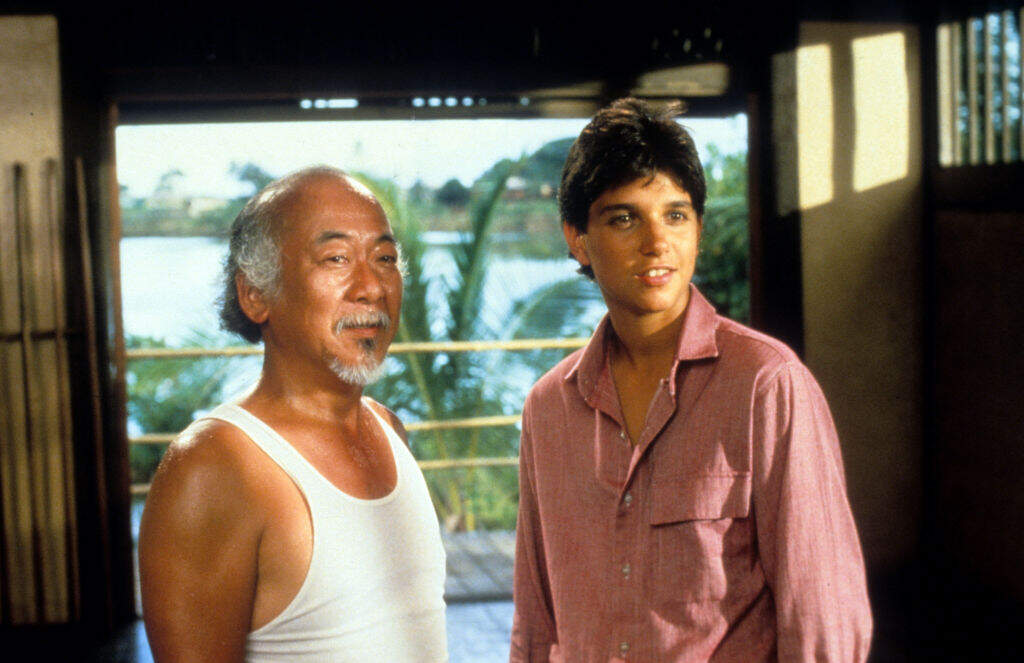
The National Film Registry names 25 movies each year that showcase the range and diversity of American filmmaking. How those movies reflect – and have shaped — America’s history and culture.
Guests
Rachael Stoeltje, chief of the Library’s National Audio-Visual Conservation Center at the National Library of Congress. Her job is to oversee the largest repository of motion picture film, television, and recorded sound in the world, which amounts to about 10.8 million items. That includes the National Film Registry.
Ty Burr, film critic. He was a film critic and cultural columnist at The Boston Globe for 20 years. Prior to that, he reviewed movies and pop culture for Entertainment Weekly. He publishes a movie recommendation newsletter called Ty Burr’s Watch List.
The version of our broadcast available at the top of this page and via podcast apps is a condensed version of the full show. You can listen to the full, unedited broadcast here:
Transcript
Part I
AMORY SIVERTSON: The Library of Congress has just inducted its latest 25 films into the National Film Registry, and the selection is eclectic. The most recent of the films is from 2014. The oldest is from 1896. Here's a taste of what made the cut.
(CLIPS PLAY)
SIVERTSON: Alright, were you keeping a tally of how many of those you recognized? Maybe some, maybe most things in there, like the Grand Budapest Hotel, Clueless, The Thing, the Karate Kid, and of course, White Christmas. But those were just a handful of what was chosen for the 2025 induction year. These films were picked by the Library of Congress for being, quote, culturally, historically or aesthetically significant.
Today the National Film Registry holds 925 films, ones that you'd expect, such as:
[WIZARD OF OZ]: Toto, I have a feeling we're not in Kansas anymore.
SIVERTSON: The Wizard of Oz, but also:
[THE GODFATHER]: I'm going to make him an offer he can't refuse.
SIVERTSON: The Godfather. And then:
[DO THE RIGHT THING]: Let me explain myself. They are not really Black. I mean they are Black, but they are not really Black. They are more than Black. It’s different. To me, it’s different.
SIVERTSON: That was Spike Lee's Do the Right Thing.
[TITANIC]: Jack. There's a boat Jack.
SIVERTSON: Titanic. Ooh. A deep cut from that. And of course:
[CASABLANCA]: Here's looking at you kid.
SIVERTSON: Casablanca. But the registry isn't just Hollywood hits. No. It also includes things like The Story of Menstruation, an Animated Short produced in 1946. By, get this, Walt Disney Productions.
[THE STORY OF MENSTRUATION]: The story of menstruation really begins with one particular gland. It’s located here at the base of the brain, and it’s called the pituitary gland. In our childhood years, this pituitary gland concentrates on producing growth hormones.
SIVERTSON: Then there's the Dickson Experimental Sound Film, which is the first known film with live recorded sound. It was made in the mid 1890s using a proto sound film system developed by William Dickson and Thomas Edison, in which Dickson played the violin into a Kinetophone, which is basically a big horn looking device.
Then the registry also includes silent films like this one from the 1920s called Within Our Gates. You see what we did there, though that really was some of the actual silence from that silent film. Joining me today is the person who oversees the wide-ranging National Film Registry at the Library of Congress, Rachael Stoeltje.
She's the chief of the Library's National Audio-Visual Conservation Center. Rachael, welcome to On Point.
RACHAEL STOELTJE: Thank you so much, Amory. I am so delighted to be here to talk about the most fun thing we do, the National Film Registry.
SIVERTSON: We're already having fun in here. So first, I guess let's start with what the National Film Registry is.
How would you describe this?
STOELTJE: I would describe the National Film Registry as a collective set of memories. So a lot of people create best of film lists, and I would like to strip that out and say what we do by preserving all of these films and making sure they're available is bringing together this sort of cultural history, our memories, our feelings, and I've noticed this, especially when people respond to the list, when it comes out, right?
I would describe the National Film Registry as a collective set of memories.
RACHAEL STOELTJE
People start to get excited or they debate titles or they tell you stories about how they always watch White Christmas with their grandparents every year. So it really is much more expansive of an idea than just the best films that exist in our American culture.
SIVERTSON: There's so much to get into in terms of the significance of these films.
But you mentioned the preservation, and this is not just a list, it is a physical collection as well. So tell us about the archive that is the National Film Registry.
STOELTJE: Yeah. At the Library of Congress and the unit that I oversee, we hold about 10.8 million items that are motion picture, film, television, radio broadcasts, and recorded sound.
What we do there and what the registry helps us promote is an awareness of preservation. So about 80% of our silent film heritage is lost forever, and we're starting to see filmmakers who were very successful in the eighties, who've lost their films. What our entire goal at the Library of Congress is to do is to preserve, so to take care of physical artifacts or digital artifacts. We have cold storage vaults that are specially built to do this. And we also, in fact, store most of the studios early nitrate films at our archive. So part of what the National Film Registry is a raising awareness of preservation for the American public.
Our entire goal at the Library of Congress ... is to preserve, so to take care of physical artifacts or digital artifacts.
RACHAEL STOELTJE
And preserving the actual objects and making them accessible, hopefully for hundreds and hundreds of years to the American public.
SIVERTSON: So whose idea was this to have this registry, to have this physical archive of all these films?
STOELTJE: Great question. This came about in the eighties and actually the history is fascinating to look back on today.
There was, at that time, a really big controversy over the colorization of films. So we're talking like mid-eighties. The people who created the films and the people who own the films who were colorizing them, it turned into a pretty big conflicting topic. And what the National Film Registry and the National Film Preservation Boards was born out of this conversation to really start to think about preserving the original object over time.
So in 1988, that legislation was enacted to create the registry in the boards. And when it was reauthorized in 1992 it was really shifted to start thinking about preservation and also a bigger national effort to explain to our nation what we do and why our heritage is important.
SIVERTSON: Yeah. It seems so obvious in some ways just in saying the word film, but I think we forget that there is literal film involved in making these movies, and that film has to be stored in a particular way. So how are you storing the film? What is the lifespan of the physical object that is film?
STOELTJE: Fantastic question.
Yeah. So motion picture film in the human history, right? The ability that we have to create, what is the moving image? I think most of us take for granted, because five-year-olds are making movies on their phones. But this has only been around since the 1890s and in the early years, it was recorded onto nitrate cellulose film.
So this was a highly flammable film base that still exists today, that we and about four archives in this country can store. We store at 38 degrees, 50% relative humidity. And this will ensure generations, centuries of preservation for years. A motion picture film on film that comes out of a lab on celluloid stored in cold storage will last up to 900 years.
So a core component of what preservation is to us is taking care of that original object, storing it properly, and for us, we're also digitizing it or making even sometimes new motion picture film photochemical prints that are still projected to this day.
SIVERTSON: Okay, so that's a good point because you say that you are digitizing these films, which might lead some to wonder why keep the physical film, why go through the trouble of having these basically refrigerators full of film, and the space that it takes to store the film if you are digitizing the pieces as well?
STOELTJE: Yeah, so I think we got asked this question a lot. So motion picture film, again, the original artifacts are equally as important. I think if we were to think about the Mona Lisa, to say we digitized it. Do we really need it? Film itself is inherently a very stable product when stored.
But we also lend our film prints around the world and they still project 35 millimeter film prints and we do in our theater as well. So we both continue to use it. It's also a very stable preservation format. But digitization can both preserve but also really make our material much more accessible around the world.
SIVERTSON: Okay. So we're going to be getting into some of the reasons that a film might be accepted into the registry.
But very briefly, what are the nuts and bolts? What would make a film qualify for consideration?
STOELTJE: Great question. Yeah, so there's a number of criteria and I think the boards over the years have discussed a lot of this, but it has to be 10 years or older. So really it has given that chance to prove some sort of cultural or significant impact of some way.
It has to be really what film, the word film, right? We can go back and forth and debate this at length these days, but we're talking about feature films, documentaries, avant-garde, experimental works, early student films. We have, we think, one of the earliest student films this year on the registry. So film versus I think what was traditionally considered television, right?
Part II
SIVERTSON: You were just starting to tell me more about what would qualify a film for entrance into the registry. So these films have to be at least 10 years old. What else are you looking for?
STOELTJE: So I think a big part of it is thinking about the cultural impact that it makes, and I think talking to people after this year's registry came out, people will get really excited and emotionally attached or start saying, wax on, wax off.
They start doing the gesture with the hands. Right away.
SIVERTSON: Karate Kid.
STOELTJE: Without even saying a word. Karate Kid. Yep. I think over and over again, people, you can see the results of what this work is by the popular response, which is one of the, I think, most impactful parts of this to me. Is seeing, so the public can nominate films, which they do at a pretty phenomenal rate.
I think this year we had over 47,000 public nominations.
SIVERTSON: That's incredible. And how many different films in those 47,000 nominations. This isn't 47,000 different films, right?
STOELTJE: No, actually it broke down to about 7,500. It's 7,558 titles.
SIVERTSON: Okay. That's still a lot. That's still a lot to go through.
STOELTJE: So many. Yeah, so many. So part of what the librarian does is take our National Film Preservation Board's recommendation and the public nominations into consideration to come up with this final list. But that's, I think that is very telling about what the list is because it is about what our public, we have emotional ties to films.
We have the cultural significance of so many of these titles and even your entire intro of hearing, just hearing some of these films, right? We all have memories, we all have significant parts of our life or relationships with grandparents, right? And that's really what this list represents. It's less of a best of list and it's more of a reflection I think of who we are, right?
SIVERTSON: Okay. So I know that one film that got a lot of nominations from the public was The Thing, the 1982 science fiction horror John Carpenter's movie. What else was the kind of public response after the list came out? I know you were watching the conversation online. There's a National Film Registry subreddit, for example.
How did the public respond to what you ultimately picked?
STOELTJE: That was really one of the more fun things I did, I think that entire weekend after the registry came out, I was scrolling through all of the public responses. I think, yes, The Thing, remarkable, it was the number one voted public nominated film.
It's especially important to me because one of our board members ... he serves on the board, but he was an actor in the film. It was so fascinating to me, like people actually have really resonating feelings right across the board about something like that. And fascinatingly, even the week before, on Stephen Colbert, he referred to this version of The Thing, the 1982 version, as his comfort film, as his go-to comfort film, which again, I think when I hear people's responses, I'm just, I'm more curious and I have so many questions.
SIVERTSON: Yeah, that right there says a lot about our culture, The Thing as comfort. Rachel, stand by. I want to bring another voice into this conversation because we have Ty Burr, who was a film critic and cultural columnist at the Boston Globe for 20 years. He also reviewed movies and pop culture for Entertainment Weekly.
He's a finalist for the Pulitzer Prize for Criticism, and he also publishes a movie recommendation newsletter called Ty Burr's Watch List. Ty, welcome to On Point.
TY BURR: Thanks Amory. Thanks for having me on.
SIVERTSON: It's great to have you. Looking at this list of 25 films that have been selected for 2025, the most recent installment here, were there any sort of it's about time films for you, we'll say.
BURR: It's really nice to see Glory in here, which I think is a great film. It's great to see the Truman Show, which I think is an absolutely hugely entertaining film that says a lot about our lives in the 21st century. Even though it was made in 1998, it was a little prescient.
The Thing just absolutely cracks me up because when that movie came out in 1982, it was just destroyed by critics who compared it badly to the original 1950s version. Thought it was way too gory. And of course, the director's version is even gorier. It was really not a respected film, and it has slowly risen in esteem with critics and with audiences over the decades.
And yeah, I think it absolutely belongs here, but that just tickles me.
SIVERTSON: Okay. We're all friends here. Have you seen all of these films, Ty? On 25 of these, I'm only at six. I'm going to confess first. I've only seen six of the 25.
BURR: I'm gonna say, I haven't counted it up, but I'm gonna say probably about half.
And the ones that have been commercially released in our time, some of them and some of them, like I saw back in the eighties, like the documentary Say Amen, Somebody, which is about gospel singing. Fantastic movie. I believe it won an Oscar. Yeah, I'm great that people are getting attention called to that.
But some of the older ones, for instance The Oath of the Sword, which is the first film made in this country to be produced and performed by Asian Americans. I have not seen that. It's from 1914 but I know I want to. Some of the older films, the Tramp and the Dog, which is an 1896 short crime, comedy film as it's described, likely the first commercial film, narrative film shot in Chicago. These are some of the reasons that films end up in the registry, not because necessarily they're great films, although there are plenty of great films, but because they're first in one area or another.
Or as Rachael said, they are culturally important.
SIVERTSON: Yeah. Rachael, Ty was just mentioning two of the silent films that are on the list for this most recent installment. There are six silent films actually in included in these 25. Why are silent films a priority for the registry?
STOELTJE: That's such a good question.
A big part of what the board and the librarian are doing is also making sure we're aware of films that may be raising awareness of what they are. So I think The Lady is a great example of that. So that stars Norma Talmage, who maybe isn't at the top of everybody's tongue these days, but she was the highest grossing actress of 1923, '24, '25.
Remarkable film. We also have done the restoration of that film here at the Library of Congress. But it's to also just generally raise awareness. Sparrows, which is Mary Pickford. This is also part of our entire history of cinema, right? The Oath of The Sword is at the George Eastman Museum, the Maid of McMillan.
Possibly the first student made film ever from the Washington University made by some law students, which is fascinating, but it's also just to make sure that we're filling in the gaps, right? So when you look collectively at the 925 films and you start thinking about, what isn't there? What are these sort of cultural significant films?
Ken Burns first film, Brooklyn Bridge. So he had not been on the registry previously. You think about people who are impactful on our culture. So the silent films are equally important, right? So I think people know less and less about them, and so many of them are lost to all times. So that has been prioritized.
SIVERTSON: So I want to drill down into this idea of cultural significance. Because as you've said, this is culturally, historically or aesthetically significant films, what specifically are we talking about when we think about a film that has had cultural significance? Ty, I'll throw it to you.
BURR: Okay. I was wondering. ... I think it's a great question and to me the cultural impact is that it broadens our view and our understanding of what it means to be an American, to be a human being.
I totally take Rachael's point about the silent films, because these are films that show us what American society looked like, how we saw ourselves over a hundred years ago. And the famous quote, those who do not remember the past are condemned to repeat it. I think that it's hugely important to understand how our society has evolved and how our image of ourselves has evolved.
And especially with silent film, because it's so rare, those nitrate films are, so many of them are destroyed. There was a famous fire in 1937 at the Fox storage facility that destroyed 75% of all the films made by the Fox Corporation up to then. So that's lost. So anything we can hold onto, I think is absolutely critical to our understanding of ourselves, which trust me, these days, is more important than ever.
SIVERTSON: And Rachael, what about this idea of aesthetic significance? Because there's a sort of life imitates art. Art imitates life. Sometimes a film is reflecting who we are and sometimes it really feels like a film is shaping who we are. It's informing who we are going to be for the next set of years while the film is reverberating through the culture.
STOELTJE: Yeah, exactly. I think that's a great way of looking at it and I think that's why I keep thinking about this as a reflection of who we are. So again, I think follow up conversations for me for this year's list. One of the things that cracked me up the most was all the women I know who said Clueless really impacted their entire fashion statement.
So going back and watching that today or Before Sunrise or some of the films, like it doesn't seem that long ago, to me, to think back about in the eighties and nineties. But it is, I think, reflection of who we are, is the best way to look at it. I think that's a great way to think of it.
SIVERTSON: So maybe a piece of this too is also that these are movies that, in many cases, we want to watch over and over again, and we got your picks in advance of movies that you rewatch over and over. Rachael, here's a little bit of the movie that you watch.
(SINGIN' IN THE RAIN PLAYS)
SIVERTSON: Dead giveaway. Singin' in the Rain there from 1952. Rachael, what do you love about Singin' in the Rain?
STOELTJE: I am just a sucker for the golden age of Hollywood in general. I think the thirties and forties, those classic beautiful musicals or the wacky slapstick comedies with Barbara Stanwyck and Myrna Loy and Catherine Hepburn.
It just, it represents, again, I think it's a window into another era, but also beautiful filmmaking. Howard Hawks and Billy Wilder and Preston Sturgis, they, I think when we talk about like comfort films, when I talk to people about what film they watch the most, maybe not necessarily what their favorite film is, but it's very telling if somebody accidentally is like, oh, except I watch this film twice a year for this reason.
I think it has like an emotional impact on us and thinking about film can be important to document our history. It can be escapism; it can be entertainment. It can be so many things, but it is so tied to who we are. So for me, like a Singin' in the Rain or Bringing Up Baby or Ball of Fire ... it's both joy, but it's also a beautiful art form, a narrative form that isn't always a successful product.
SIVERTSON: Okay. And Ty, we have a pick from you. We're going to see if people listening out there can tell what this is from. Let's listen.
(GROUNDHOG DAY PLAYS)
SIVERTSON: Okay, Ty tell us what that's from.
BURR: It is Groundhog Day. II mentioned that movie when we were talking earlier, just because it is a comfort movie, because it's Bill Murray at his funniest. It's a brilliant script by Harold Ramis.
It is actually a truly existential movie. It actually gets into some incredibly deep philosophy while at the same time being screamingly funny. So it's most meaningful and just stupidly entertaining. And I don't know many movies that can pull off that.
SIVERTSON: A movie that you watch over and over about a guy who lives the same day over and over.
BURR: Yeah, exactly. I can't watch it too often because then my life becomes Groundhog Day.
SIVERTSON: I love it. I love it. Alright, I wanna talk briefly about some of the things that are maybe a little more surprising on the list. Here's a little something. I think we've just gotta hear it.
[LET'S ALL GO TO THE LOBBY PLAYS]
SIVERTSON: Oh, I could just listen to the whole thing. I do probably sing this once a week out loud to myself, because I love this little song so much. This is Let's all go to the Lobby. A 1957 animated musical advertisement that is still shown in some cinemas before every screening.
It is at my local theater. Ty, I know this is a favorite of yours. Tell us more.
BURR: Oh, and I think we go to the same theater that that we're thinking about here. But it's one of those ones that reflects our culture, and it's one of the few that actually addresses the film industry and the exhibition industry, which is a hugely important part of the American film history and really isn't dealt with in this list.
And, for obvious reasons. But then there's this one little short that says, yeah, this is how we went to the movies. This is the experience we had, and it's all about the food, which is really how most theaters make their money. So there's that too.
SIVERTSON: So I want to hear another. Taking a turn here, something a little different.
A clip from a documentary that is in the registry called Let There Be Light. And this is a documentary about PTSD suffered by soldiers returning from World War II. Let's hear a little bit of that.
[LET THERE BE LIGHT]: They were overnight plunged into sudden and terrible situations. Every man has his breaking point, and these in the fulfillment of their duties as soldiers were forced beyond the limit of human endurance.
SIVERTSON: Ty, this was one that you pointed out. Tell us a little bit more about this documentary.
BURR: So this was a movie that was made by the great director John Huston during World War II, while he was serving in the U.S. Army Signal Corps, which is where a lot of filmmakers ended up making films for the war effort.
This one was produced toward the end of the war, and it was about PTSD, which what was then called shellshock. But it was something that people didn't wanna talk about. And in fact, the U.S. government suppressed the film. Basically, banned it, and it wasn't released until the 1980s.
I'm not sure if, I'm pretty sure that Huston lived to see its release, imagine if this, that movie had been released in the forties, how it might've affected how people treated veterans, how veterans saw themselves. So that's a part of the history as well, not just the film, but how it was treated in American society.
Part III
SIVERTSON: I want to talk now both of you about diversity. Diversity has, historically, been an issue at the Academy Awards.
I feel like this comes up every year. Rachael, how does the National Film Preservation Board think about diversity in coming up with the list and what steps do you take to try to ensure that the registry really does reflect American heritage?
STOELTJE: That's a great question. So the National Film Preservation Board is actually made up of 44 individuals that represent so many different components of the film industry, the film scholar world, the film critic world.
We have members from The Academy, archivist scholars, and also from the Guild, so the Cinematographer's Guild, the Director's Guild. So we have so many different voices and experts, and they have absolutely, I think especially over the last decade or decade and a half especially under the leadership of Dr. Jacqueline Stewart, who is our board chair, really opened up the conversation to consider all of our stories. So I think we've seen a little bit of a shift to include some different voices over the last few years, and it's been nice to see that represented for sure, moving forward.
SIVERTSON: And Ty Burr. When you look at the list of the registry what jumps out to you in terms of this idea of diversity, what are the areas that you see the registry really shining on this front?
BURR: I think it's offering a full portrait of America as it saw itself. And that's not just through the predominantly white mainstream film industry from the twenties onward.
I think they early on spot the work of Oscar Micheaux, the pioneering Black filmmaker. I think that the fact that they have this early Asian American film chosen this year is fantastic. I think that there are a number of rich opportunities for discovery. I love the fact that they have home movies from a Japanese internment camp during World War II.
That itself is an absolute lesson for people about a downside, a black era in American history that we need to know about.
SIVERTSON: Yeah, so in thinking about reflecting our culture, we did ask our listeners for their picks, films that have really stayed with them throughout the years, and a lot of these picks happen to already be on the registry.
So On Point listener Heather of Seattle, Washington mentioned the Joy Luck Club. Here's a clip from that.
[JOY LUCK CLUB]: Because every time you hope for something I couldn't deliver, it hurt. It hurt me, mommy. And no matter what you hope for, I'll never be more than what I am. And you never see that, what I really am.
SIVERTSON: That's the 1993 movie about the relationships between Chinese American women and their immigrant mothers. And here's what Heather told us about why this movie means so much to her.
HEATHER: I still can't make it through without just sobbing. It's beautiful. It's just such a good meditation on the mother-daughter relationship.
SIVERTSON: We also heard from Susan of Santa Fe, New Mexico. She said that the movie that's touched her the most is the 1971 film Harold and Maude. Here is a clip from that.
[HAROLD AND MAUDE PLAYS]
License lady?
I don't have one. I don't believe in them.
How long you been driving, lady?
About 45 minutes. Wouldn't you say, Harold?
We were hoping to start sooner, but it's rather hard to find a truck. This your truck?
Oh no, I just took it.
SIVERTSON: Yeah, she just took the truck. And here is Susan telling us why she loves Harold and Maude.
SUSAN: The music by Cat Stevens is unforgettable. The acting by Bud Court and Ruth Gordon is outstanding, but most important is the message.
It's your choice to be happy or sad. You can choose to be living or dying. Life is up to you.
SIVERTSON: And I want to play one more. This is from Christian of Pasadena, California, who pointed out the movie Blazing Saddles, that 1974 satirical western film directed by Mel Brooks. Here's a clip from Blazing Saddles.
[BLAZING SADDLES PLAYS]
SIVERTSON: So that is the moment that they find out that the sheriff of their small western town is Black. And Christian told us more about why Blazing Saddles is his pick. Here's that.
CHRISTIAN: I think the movie, because it's from Mel Brooks, has a sense of humor and it challenges us with a comedic mirror to look at ourselves and actually identify those places where we have biases that might be really uncomfortable to name.
In some ways that a serious conversation is hard. I think that comedic movies and comedic things like Blazing Saddles help us to actually see ourselves sometimes more genuinely and authentically than we can have in serious conversations and dialogue.
SIVERTSON: Ty, what do you make of that? Does that ring true for you?
That movies help us have conversations that we wouldn't necessarily have in real life?
BURR: Absolutely. Absolutely. And they allow us to have conversations with other people and have social discussions, even more so in the social media age, but that's a whole 'nother thing. But when you think of some of the films that have been hits that have broadened the understanding of people about experiences in the United States, I love Blazing Saddles, by the way.
And I think it's a hilarious movie that tells some uncomfortable truths because it was written by, the script was written by Richard Pryor, who was very good at that. And I'll point out that my father-in-law was in his last days, a couple of years ago, and we asked him what films he wanted to see.
That was the movie he wanted to watch. And we had a good solid laugh at it. And his hospice nurse did not know what to make of the movie at all. She had never seen anything like it, because that movie was still so far ahead of its time.
SIVERTSON: So we've been talking about movies that have made it onto this list, but in order to even be considered for the list.
Of course, the movie has to be made first, and people in the film industry, like Kate Hagen say that's no small feat these days.
KATE HAGEN: This great sort of consolidation we've seen over the last couple of years, both in the studio space and the independent space where it's becoming harder and harder to finance a film.
The result of that is that we're just seeing fewer of these movies in the middle. That might not appeal to a more niche audience, but an audience nonetheless. And studios are just trying to make huge films, for the most part, that are gonna have this massive, broad appeal and making huge investments in those.
And then indie filmmakers are fighting tooth and nail to get budgets to get their films made.
SIVERTSON: Kate Hagen is a writer and senior vice president at The Black List, an organization that connects potential screenwriters with filmmakers and studios. And Kate says the loss of the middle movie ecosystem is a shift from how it used to be several decades ago.
And one example that shows this new trend comes from a conversation she said she had recently with a group of screenwriters.
HAGEN: I was at a table with three screenwriters who all had hit films in the nineties. Huge, massive cultural phenom hits, and they were all talking about how unequivocally it is much more difficult to get a film made today than when they were in their twenties.
And one of the writers even said pretty much all of our friends got to make at least one movie, even if it was bad. And now the barriers to entry. Everyone is so much more risk averse. There's a ton of great stuff that's just dying on the vine because people don't wanna take a risk, they don't wanna take a chance.
SIVERTSON: And beside the barriers to what movies are and aren't made, Kate says, even when movies are made, it doesn't mean they're gonna break through the noise of today because there is just so much content out there.
HAGEN: One of my North Stars is something like Clueless. And you think about the cultural conversation around that movie lasted for two or three years, or like Titanic, like things are just not really resonating for that long in the culture anymore.
And I think it's because we're all just completely overstimulated and having our attention and energy pulled in a bunch of new directions that it wasn't pulled in 30 years ago. You can't just make a $1 million movie and put it on a streamer and expect it to get picked up culturally, it could happen.
It's probably not gonna happen. And I worry that movies will not hold the same cultural value for us that they have historically held.
I worry that movies will not hold the same cultural value for us that they have historically held.
Kate Hagen
SIVERTSON: That was Kate Hagen. She's a writer and senior vice president at The Black List. Rachel, I want to turn to you because something that Kate is saying in there that she's worried that movies in the future are not going to hold the same cultural value for us as the movies from the past.
I'm thinking of your pick, Singin' in the Rain. Is this a conversation that's happening among the National Film Preservation Board, are we making things today that are going to stand the test of time?
STOELTJE: Yeah, what a great conversation. There's so much being made by so many people in so many different ways, right, on phones and sometimes still on film.
I think what is really great to look back on these 925 films is there are films that were not popularly well received, right? Or they have slid under the radar. And I think what the board and what the Library of Congress and the public bring to this conversation is, what are those little gems?
And ideally, because what a big part of this work is about making sure they're here for all time, for all generations, is to really consider where those slipped through the cracks. So listening to the National Film Preservation Boards conversations and they spend about a year in different little subgroups talking about it.
They pull up really unique, sometimes very obscure titles, some of which you've already raised, that have in fact made some sort of massive cultural impact, or are a historical record of our time. So I think it's still possible. I hear what Kate is saying that so much is being made and it's not necessarily landing in the same way that it did in the past, but I think there's still the chance for it.
SIVERTSON: Yeah. Ty Burr, what about you? What about this loss of the middle, as Kate says, where we have these big blockbuster big budget movies, and then we have smaller indie movies that are very hard to get made and maybe not as much living in the middle zone. Do you feel that to be true?
BURR: Absolutely true. The last 15 years have seen the disappearance of the mid-range film. Part of where it has gone is to streamers and you will find some good middle range films, romances, comedies, things not involving superheroes, but they're not promoted. They're just thrown onto Netflix or Amazon without any context. A good example is Train Dreams, which is a lovely, delicate little film that Netflix picked up from Sundance, gave a pro forma theatrical release, threw on the service. It's a movie you really need to see in a movie theater. I'm delighted it just got four Oscar nominations.
More people will see it if they do on Netflix. Turn off the lights, stow the phone, give it your attention. But that's the kind of movie that really needs support to work. And I also will just quickly point out that yes, the mainstream film industry does make, rely on franchises, remakes, reboots, but the lesson of last year's Sinners is, which was a huge hit, is that yes, audiences will come out for original stories.
And that's a lesson that Hollywood is very loath to admit.
SIVERTSON: We're also seeing big changes at some of our nation's cultural and historical institutions under the current administration. Leadership changes, the removal of historical information, the loss of funding. Rachel, I know the National Film Registries funding is up for reauthorization this year.
Are you concerned at all about losing funding or someday losing the ability to maintain and continue this archive?
STOELTJE: At this point, I think because the registry and the preservation boards and the preservation acts have been renewed over and over again, we will submit our information so that it will be reauthorized and we're hopeful and excited.
It's one of the programs that the Library of Congress is most committed to, both the Film Preservation Board and we also have a recording preservation registry. Both are equally important to the library and we're committed to that.
SIVERTSON: Okay I'm going to hold out hope that the registry does continue here.
And I want to throw in a nomination of my own that I happen to notice was not on the list, but that I think deserves to be there. And I wanna see if anyone else recognizes this.
[LABRYNTH SCENE PLAYS]
SIVERTSON: Ty, Rachael. Do we know what this is from?
BURR: I am drawing a quick blank.
STOELTJE: I'm stumped. Yeah, me too. You lost me.
SIVERTSON: Oh no. It's just me who wants Labyrinth. The 1980 movie. Come on, Jim Henson, Muppet Goblins.
BURR: You got the Muppet movie already.
SIVERTSON: But not with David Bowie. Sothere are still films that need to be added to the registry. Clearly, very briefly, Rachael, is there a movie that you wanna see?
STOELTJE: Oh my goodness. I will say this year, somehow Raising Arizona stuck on my, in my brain. And it didn't, it wasn't on anybody else's list.
SIVERTSON: Ty, really quickly, what about you?
BURR: Why is Dazed and Confused not on this list? Please.
The first draft of this transcript was created by Descript, an AI transcription tool. An On Point producer then thoroughly reviewed, corrected, and reformatted the transcript before publication. The use of this AI tool creates the capacity to provide these transcripts.
This program aired on February 16, 2026.