Support WBUR
How to change a memory
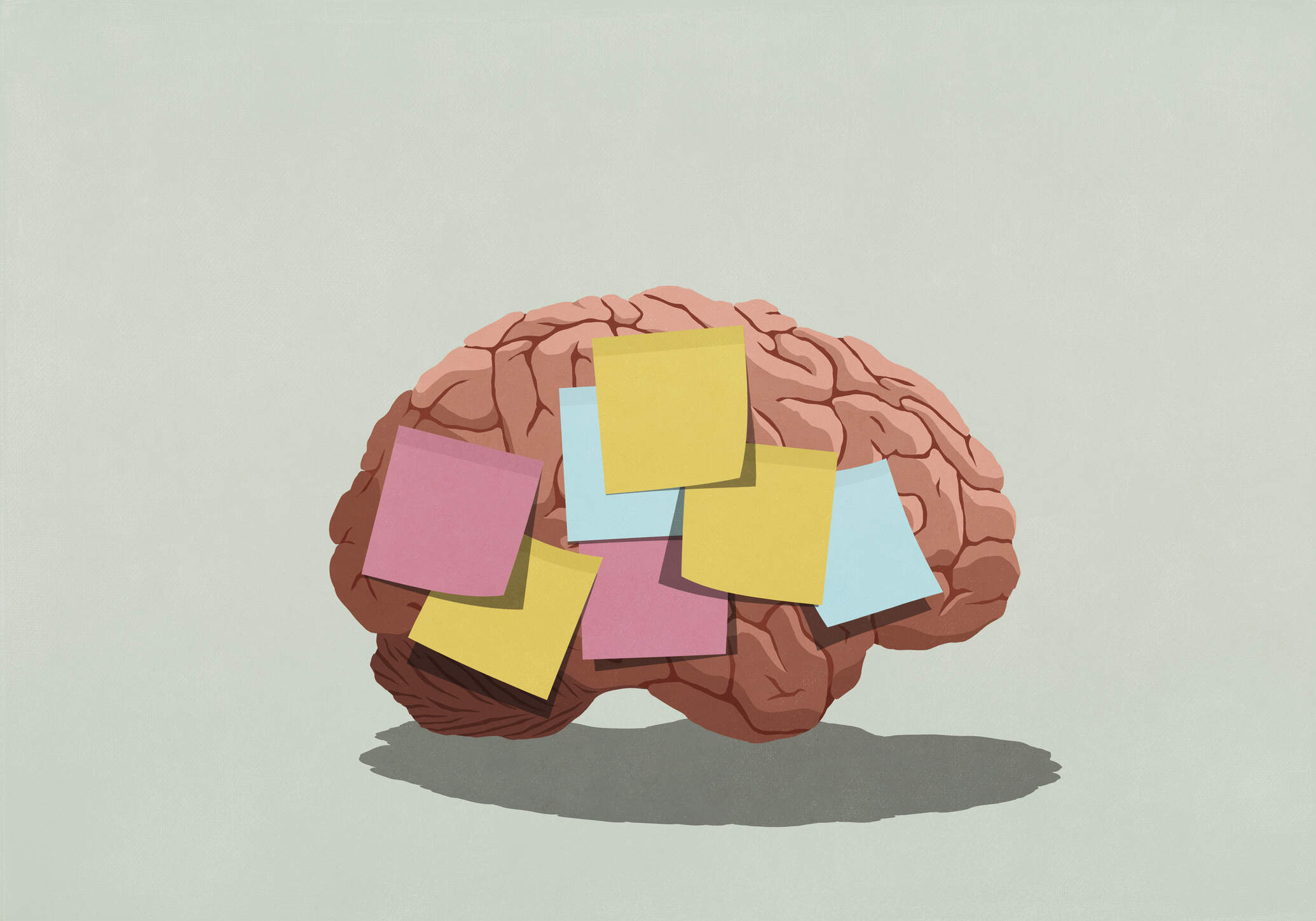
Neuroscientist Steve Ramirez sees memory as a way to time travel. But what if we could edit our memories?
Guests
Steve Ramirez, associate professor, psychological & brain sciences at Boston University. Author of "How to Change a Memory: One Neuroscientist’s Quest to Alter the Past."
The version of our broadcast available at the top of this page and via podcast apps is a condensed version of the full show. You can listen to the full, unedited broadcast here:
Book Excerpt
Excerpt from "How to Change a Memory: One Neuroscientist’s Quest to Alter the Past" by Steve Ramirez. Not to be reprinted or republished without permission from the publisher. All rights reserved.
Transcript
Part I
AMORY SIVERTSON: Have you ever wished that you could just erase a bad memory, a bad breakup, an injury, or perhaps an alien invasion?
This is called a neuralyzer. This red eye here will isolate the electronic impulses in your brains, and more specifically the ones for memory.
SIVERTSON: Or maybe you wanted to add a memory to your brain's catalog, something you used to remember, but forgot, or something you wish you'd experienced.
Then come to Recall, Incorporated where you can buy the memory of your ideal vacation, cheaper, safer, and better than the real thing.
SIVERTSON: Maybe you want to compartmentalize less for the severed parts of your memory to be made whole again.
It is a process called reintegration. It's a way to recouple memories so we can be one person.
SIVERTSON: Or maybe you just wish your memories of past events or certain places weren't so blurry.
This place is like somebody's memory of a town and the memory's fading. Stop saying [expletive] like that. It's unprofessional.
SIVERTSON: Now, of course those were all Hollywood portrayals of memory manipulation. You just heard Men in Black, Total Recall, Severance, True Detective.
And truly, we could have gone on and on. Memory is core to our experience as humans, so it makes sense that we'd want to explore its potential, push its limits and that we'd want to make movies that imagine just how horribly, horribly wrong this could go, but the science of memory manipulation.
That's real. And it may not lead to the dystopian anthology of memory themed stories that film and TV have cooked up for us. It might have the potential to change the way we heal our minds. All last week on the show, we were talking about different functions of the brain in our series Brainwaves. If you missed that, you can find all five parts of it in the On Point Podcast feed.
This conversation right here is a sort of coda to that series. It's an exploration of the memories that make us who we are. I'm Amory Sivertson in for Meghna Chakrabarti. This is On Point. Today, the very real world of memory manipulation, how it's done, where it's going and the ethical questions that go along with that. Joining us is neuroscientist Steve Ramirez. He's an associate professor of psychological and brain sciences at Boston University, and author of the book, "How to Change a Memory: One Neuroscientist’s Quest to Alter the Past." Steve Ramirez, welcome to On Point.
STEVE RAMIREZ: Thank you so much for having me. This is awesome.
SIVERTSON: It's so great to have you. And we just heard this montage of fictional examples of memory manipulation from movies and tv. How fictional are those, Steve? How far off are they really?
Yeah, I guess it depends if you're a human or a mouse, which are the subjects that we work with in the lab. If you're a mouse, everything from Men in Black to Total Recall, to Eternal Sunshine, to Severance has been possible for more than a decade now. If you're a human, the idea of accessing our memories is something that happens every day through regular conversations, simply by asking someone, How was your day yesterday?
Or what did you have for dinner and so on.
SIVERTSON: Mm. Okay. So before we dive into how memory manipulation works, what is memory?
RAMIREZ: Yeah, great question. I mean, if I could answer it in a sentence, I would retire and be done with my job and the field would be over, but memory is our brain's way of absorbing experience and turning it into something that we can access at a later time point.
Memory is our brain's way of absorbing experience and turning it into something that we can access at a later time.
So that's a little bit of a psychological definition. Biologically, we think of memory as how the brain turns experience, how the brain cells that we all have, turn experience into patterns of cellular activity that can be accessed at a later time point to relive that memory. We know that a given memory is going to have different sight and sounds and smells and emotions associated with it, and those different sight and sounds and smells and emotions are going to recruit vastly different corners of the brain that are involved in processing all of those things.
So it's a long-winded way of saying that memory is a three-dimensional phenomenon that exists throughout the entirety of the brain so that the different corners and different brain regions and circuits and systems and so on that are involved in processing everything from our senses to our emotions, to the context where something is happening, is all happening in real time in this three dimensional web of activity of the three pound lump of meatloaf that we have in between our ears.
SIVERTSON: Okay, so why from a biological standpoint then, would we want to relive these moments? Why do we have memories?
RAMIREZ: There's a lot of theories as to why we have memories. There's no one that I think fully captures the why just yet, but I think that if we look across the evolutionary ladder, for example, we see signs of memory everywhere in every biological organism that there is. So we think that one of the reasons why we have memory is because we can learn from our past so that we can make a more efficient or more effective decision that'll guide us into the future.
So for example, one theory out there is that memories can be thought of as sort of internal building blocks that we all have. And each building block contains some aspect of our past that we experienced. Our brain naturally remixes those building blocks to create sometimes fictitious worlds that could never happen.
But that we think is a core of pretty remarkably human phenomenon like imagination. So our ability to imagine ourselves in the future, we think relies on these building blocks of memories that are going to be combined and recombined so that we can mentally simulate something that hasn't happened yet. And that gives us a big advantage, because in a sense we can very, in a very real sense, we can stay a step ahead of the present in anticipation of an uncertain future. And the idea is that we rely on memories to construct that future as well as to learn from our past to guide our day-to-day decisions.
SIVERTSON: Okay. And so why might we want to manipulate memories?
RAMIREZ: Mm-hmm. I think of this like twofold. The first is that we want to understand how the brain works, and to me, memory is the thing that threads and unifies our overall sense of being and our sense of identity. So we want to understand how that works. It's kind of like taking a car and saying, we just want to understand how the car works fully, because if we can understand how the car works, when the carburetor starts doing something weird, or when the muffler sounds off. We can make predictions of, oh, we think we know what's wrong with the car and how to go in and fix it for that matter.
Memory is the thing that threads and unifies our overall sense of being and our sense of identity.
And we think of memory as the same way, that if we can identify memories in the brain and then start tinkering with their activity, that's going to tell us about how the brain is functioning when it's in a healthy state, as well as what happens in the absence of memory where we start seeing some dramatic impairments.
So the idea is to understand how the car works so that we can predict and even go in to fix what happens when it breaks down.
SIVERTSON: Okay. So the car analogy is also interesting, because you know where the parts of a car are, but how do you know where memories are, how do we locate a memory?
RAMIREZ: Yeah. So one of the ways of locating memories is to go into the brain and ask, when a memory is being formed, like a memory of right now, of us chatting. There's a corresponding set of brain cells that are active that in a sense are acting like sponges that are absorbing this information that's happening in real time.
We can go into the brain and in humans we would use tools like functional magnetic resonance imaging. Or in mice, we can use these miniaturized microscopes that weigh less than three grams, but we can implant them and look at the activity of thousands of brain cells in real time as the animal is recalling any given event.
So we can go into the brain and look at the activity of thousands of brain cells as an animal is forming a memory and as it's recalling a memory. And we can identify what are the patterns that are involved in that particular memory. So in a sense, it's like we're taking a very sophisticated ruler to try to measure what the properties of memory truly are in the brain.
SIVERTSON: Hmm. Okay. And a kind of chaotic reality about the brain and memory is that I think that I had just heard that hippocampus, that's where memory lives, and that's not necessarily the case. Right?
RAMIREZ: Right. It's a bit controversial because there's a lot of theoretical dogma almost that can't exist in the field about where memories are or are not located.
So my interpretation of the past few decades of memory research is that memory almost certainly isn't located in one single X, Y, Z coordinate point in the brain. But as I mentioned, it's a distributed phenomenon throughout the brain and that each corner of the brain and each type of cell and each circuit and system that's involved in producing a memory, it's contributing its own unique functionality to making that memory possible.
So I think of it as, it's almost like asking, Where is life located in the body? It's everywhere. It's everywhere you see any given cell doing its thing to make the overall functionality of an organism possible. I think it's the same thing with memory and the brain, that we have 86 billion brain cells and that distributed throughout all of those brain cells is the capacity to both absorb the present and to recall the past so that it can guide us into the future.
SIVERTSON: Hmm. Okay. So what's happening in the brain when a memory is being stored and when it's being recalled?
RAMIREZ: Mm-hmm. I like to think of this almost as like what's not happening in the brain when we form a memory or we recall a memory. Because no matter what level of resolution you use, whether it's looking at the microscopic architecture of a brain cell or zooming in even all the way to its DNA or zooming out to the symphonic activity between millions of brain cells that are firing in rhythms and patterns as an animal is forming and recalling a memory, no matter what level you look at, experience, it's doing its thing and it's leaving an enduring mark in the brain.
DNA is modified. It gets brain cells to do a whole bunch of growing and shrinking and retracting and firing in different patterns in response to experience. There's a saying of brain cells that fire together, wire together. So that's one thing that's happening, that cells that are firing together are linking up and like literally growing more connections with each other.
So that's happening when a memory is being formed. When we recall it, the idea is that we're accessing some of that information, a subset of those brain cells that we're firing together, wiring together, firing in different patterns, undergoing DNA modification, structural modification, the whole nine yards, that some of that is revisited in the brain, and that's what makes the mental reliving of a given experience possible.
Part II
SIVERTSON: Steve, memory manipulation can mean many different things, but your first breakthrough involved artificially activating a memory in the brain.
This was back in 2012. You were in grad school at MIT, and you and your lab partner Xu Liu were using optogenetics or lasers on the brains of mice. So the two of you gave a TED talk about this back in 2013, and we have a clip of that. Let's listen.
XU LIU: We hope to convince you that now, we're actually able to activate a memory in the brain at the speed of light. To do this, there's only two simple steps to follow. First you find and label a memory in the brain, and then you activate it with a switch. As simple as that. (AUDIENCE LAUGHS)
RAMIREZ: Are you convinced? So, turns out finding a memory in the brain isn't all that easy.
LIU: Indeed, this is way more difficult than, let's say, finding a needle in a haystack. (AUDIENCE LAUGHS) Because at least, you know, the needle is still something you can physically put your fingers on.
But memory is not.
SIVERTSON: So Steve, I wanted to play that clip for several reasons that we'll get into. But first this needle in a haystack, this needle in a haystack of needles, actually, as you write in the book, what was the memory that you wanted to activate in the mice brains that you were experimenting on?
RAMIREZ: Yeah, so the goal of our experiments first was, could we literally visualize a memory in the brain? And then second, if we could do that, could we artificially activate just those brain cells to see if the animal behaved as though it was recalling that memory? And we started off with a mildly negative memory because it was a way of modeling disorders such as generalized anxiety and PTSD.
And we could ask, if we have artificial leverage over a negative experience, then maybe could we toggle the volume up or down on that negative experience to see what that tells us about the brain and behavior and potentially even alleviate some of these symptoms associated with anxiety and depression.
So for the first experiment, what we did was we went into the brain and Xu actually had used a handful of tools that had either existed in neuroscience or that he had kind of remixed into our own specialized secret sauce here to get this to work. Where what he did was he developed some tools where we could trick the brain cells that held on to one individual memory to glow green, for example.
And that alone was a big breakthrough, because if you were to take a brain and put it under a microscope, it would just kind of look like pink silly putty. Like you wouldn't really see much. But if we want to go in and visualize the physical basis of memory, we gotta get it to glow some color so that we could go in and start tracking where those cells are.
And I think of this as just, it's really expensive coloring books for adults here where we could go in and trick these brain cells to glow green. And that was our first milestone, that he had developed a way of finding only the cells that were active when the animal is forming a memory to glow green.
And that was great, because I remember going into lab that day, putting the brain under the microscope, seeing a subset of cells in the hippocampus glowing green, and thinking like Xu mentioned in the TED clip, memory doesn't really feel like something you can put your finger on. It's just like ephemeral weird thing that just kind of comes and goes.
But if you have a microscope that's good enough, and I guess the right question, you can go in and start seeing a sort of a crystallized cross-section of that memory in the brain, which is what we saw when we saw these, it's about 6% of the hippocampus that was glowing green. The next step was we had developed a way of installing light sensitive switches only in those cells.
And the reason why that was important was because your brain is a dark place and light isn't naturally in there other than in your retina. So with optogenetics, we could go in and shoot a small pinpoint laser light into the hippocampus to activate only the cells that were tricked to respond to light.
The million-dollar experiment was we give the mice a given experience, and then the following day, when we don't think that they're recalling that memory, that's when we activate those brain cells, and immediately, as soon as we turned on the light, the animals immediately begin behaving as though they're recalling that memory.
And then that was amazing for us, because for all intents and purposes, from the perspective of the brain and from the perspective of the animal's behavior, it looked like they were recalling the memory as soon as we turned the light on. When we turned the light off, the memory went away. When we turned the light on, the memory came back.
So it was a way of having a switch for turning memories on and off in the brain with that kind of pinpoint resolution.
SIVERTSON: So what's the most practical application of activating a memory? Because I'm imagining, you know, for people with neurodegenerative disorders, memory disorders, for example, can you activate, awaken a memory that was thought to be lost in a person who's struggling with memory?
RAMIREZ: Yeah. There's two answers here, and one I think involves everyday life and one involves cases of amnesia, as you mentioned. So I'll go in reverse.
In my opinion, one of the biggest success stories in contemporary neuroscience, like truly in my opinion, breathtakingly, remarkably awesome discoveries that have happened in the past decade are that in every single instance that I can think of, whether it's Alzheimer's disease, Parkinson's disease, sleep deprivation induced amnesia, drug induced amnesia, even the amnesia that we all share, which is infantile amnesia, our inability to remember stuff before we were three, more or less.
In every single one of those cases, as well as traumatic brain injury, the field has been able to successfully identify what we think are physical correlates of memory.
But to bring that memory back, that was thought to be lost to Alzheimer's, to sleep deprivation, to drug addiction, to traumatic brain injury, and so on. So in every instance where we thought memory was abolished, erased, and gone from the brain, in every one of those, the field has been able to successfully artificially bring that memory back.
What that tells me is that memory might actually be notoriously difficult to break, but it might be easy to make inaccessible. So what we're doing here is developing strategies to make the memories that were thought to be inaccessible because of some kind of amnesia, now actually able to be brought back and the field has been able to do that.
When it comes to everyday life, I think of this as, how, in a sense, how our own memories can work for us. So, for example, we're not going into the human brain and putting in lasers and genetically engineered shenanigans or anything like that. I mean, there's --
SIVERTSON: Not yet.
RAMIREZ: Yeah, no, there's, I don't think we ever probably would, for a lot of very good ethical reasons.
But my argument maybe is that we don't have to, because we can artificially activate memories in the rodent brain because we don't speak mouse and mice don't speak humans. But when it comes to humans, I can ask you, like, when's the last time you went to the movie theater and what'd you see?
And how was it, what'd you eat? Just through a verbal prompt, we can reawaken the world of the past that's associated with that memory. What I used to do, for instance, as a little anecdote, in terms of everyday life, I used to hate public speaking more than anything. Like it was a disaster. Like I took classes on it, I practiced and every single time was like, it was like riding a bike, but the opposite, because I was getting worse.
And over time, what one of the things I learned to do was maybe 30 minutes before I had to give some kind of public facing talk, I would try to put myself in a good mood by either calling my parents, texting my friends, listening to one of my favorite soundtracks. Going out for a walk or this is kind of bittersweet to say now, but what I would do is go back and watch clips of the Patriots winning their Super Bowls. Because it would get me amped.
Like it would get me really excited. And that excitement in a sense would help counteract some of that nervousness that led up to giving a public talk. So putting myself in that positive mood through these kinds of positive memories was so powerful, because it really helped. And there's a burgeoning series of literature now coming out showing that when we recall positive experiences, for instance, our heart rate goes back to a healthy baseline faster.
You know, our pupils dilate, sweat a little bit less, engages our brain's reward circuitry. It even increases our cognitive flexibility in a time-limited manner, like shortly after recalling the positive experience. So recalling those positive experiences for me was an example of how memory can work for us and what we can do with it by accessing something that we all have in between our ears, but in a very guided, intentional manner so that we can benefit from it somehow.
SIVERTSON: Yeah, and you're talking, you know, you're talking about sort of like self-memory manipulation that does not involve lasers. And there's, you know, another reason why I wanted to play that clip of you and Xu giving your TED Talk, which is that Xu died suddenly in 2015. And so I wonder what, listening back to his voice, what does that activate for you, what does recalling the memory of Xu do for you?
RAMIREZ: Yeah. It does two things. Like on the one hand, if I close my eyes and try to re-experience that memory, it used to be almost impossible to do because for me it was mentally time traveling back to a moment that I can no longer have.
Right? That's something that I can no longer have with a dear friend that's no longer here. So if I go back, and try to mentally re-experience it. At first, it was either something that I couldn't do or if I did do it, it was kind of like, sort of, it was a very uncomfortable, I need to just distract myself and go somewhere else kind of thing.
Like, something that I would kind of stop at that process of recollection if I try to remember it like right now. When I remember that memory that kind of grief that followed Xu's death has just transformed now into a real deep respect for what life is, as well as for what life is in its absence. Because the realization that I had from just years and years afterwards of really trying to make sense of the impossible was that we're all in the process of turning into memories.
And the irony isn't lost on me, on studying that which we're becoming, that all of us live in each other through our memories, and we're all in the process of becoming memories. And if we can understand how that process of memory works, I really think that we understand something deeper about the human condition and something even more meaningful and purposeful, such as how do we persist when we're physically no longer here. Because we become untethered from our bodies and re-tethered to everyone else in the form of the memories that we've had with them.
So I gain both a deep respect for what memory is, as well as what life is in its absence. As well as like I'm able to kind of close my eyes and relive back moments that are truly, truly bittersweet. And I think that there's some nuggets of wisdom in there, where I learn a little bit more about myself and my life and my relationship with, even now, with my friends and family and loved ones and so on, that I could only really have by growing and really learning from that experience back in 2015.
SIVERTSON: So I want to talk about another aspect of memory manipulation, which is editing. What does it mean to edit a memory?
RAMIREZ: Yeah, so it depends if it's edited intentionally or unintentionally. So for example, every time we recall a memory. We used to think of it as though, as if it was a video of the past that we can hit play, rewind, play, rewind.
There's this aphorism that we can't step in the same river twice. And I think it's the same thing with memory. That we can't recall the exact same memory twice, because it's constantly being edited naturally by the process of recollection. So instead of it being like a video of the past, we think of it more as a reconstruction of the past almost as if you're posting a picture on social media and you're applying different filters, different hues and contours and so on.
Our brain naturally does that every single time we recall a memory, so on the one hand, it's a very neat white lie that we all have of the past, but it's a very useful one. Because by and large the details are, you know, pretty accurate. I remember what I did this morning. I remember where I was last night.
But because we're naturally editing memories by default, because our biology is built that way, bits and pieces of misinformation that weren't actually there can sneak their way into memories all too easily.
SIVERTSON: Yeah. You have a great analogy in the book about the malleability of our volcano of memories, as you call it.
Can you explain that for us?
RAMIREZ: Yeah. That was actually inspired by the first time I went to visit my family in El Salvador with my mom and dad. They were showing me one of the volcanoes that had went off like years and years ago, and we saw all of the, we saw no more lava anymore. It was just kind of this sea of black, of just what used to be molten.
And I remember when I was writing that line thinking, this is a really useful analogy for me to think of memory, because it's almost as if you have molten rock that hardens. And then it can melt again if it reaches a high enough temperature and then it hardens again, but it doesn't harden into the same shape twice.
With the shape that it once was before changes over time, and now it's a new shape. So it's almost like you have lava, magma turns into rock, it can melt again, and then it undergoes some kind of physical change that now leads to a new shape. And that's exactly how I think of memory. That it's still the same rock and the same substance, but it's changing and morphing and transforming itself naturally over time.
SIVERTSON: Okay, so this is unsettling to me. It's unsettling that our memories would change every time we recall them. And when we think about the implications for that on something like our justice system, which relies heavily on witness testimony, a person's memory, in other words, you know, it just, it makes me wonder how much weight we should be giving those memories.
So we have an example here that I want to play. This is from last August. The rapper Cardi B was on trial for allegedly assaulting one of her security guards. And her doctor, David Finke, testified as a witness in that trial and his memory of the event was called into question on the stand.
COUNSEL: Isn't it true that you don't remember what you ate a week ago? ... This incident happened 2,741 days ago, seven and a half years ago. You agree?
FINKE: Correct.
COUNSEL: In those seven and a half years, did you take any notes of what happened on the date of the incident?
FINKE: I did not.
COUNSEL: Okay. So everything you're telling us right now from seven and a half years ago is from your memory. Of what was what occurred. Correct?
FINKE: Correct.
COUNSEL: And having all these conversations with defense counsel maybe help refresh your recollection, correct?
FINKE: No, no. The majority of solidifying it in my brain over all these years is partially because the people who were involved in it, who were there that day in my office would recount the story from time to time, and it was a very vivid memory and interaction.
SIVERTSON: Okay. So Steve, we have just a minute here before we have to take another break, but I am curious, does the science back up what Cardi B's lawyer is saying here, that he can remember something from years ago because it was reinforced by other people's memories, whereas he can't remember what he had for lunch the day before?
RAMIREZ: Totally. I mean, I think that, I mean, the lawyers get an A+ in their rhetoric in trying to convince us that, you know, it's been this amount of time that this event has happened and how can you remember A or B? We all know that for some reason we remember some irrelevant details more so than something big that may have happened in the past or vice versa.
And I think that that really speaks to both how malleable memories are, but also that our confidence in those memories doesn't necessarily have to correlate with whether or not they actually happened.
Part III
SIVERTSON: Steve, I feel like a very universal experience of memories that we might not want to remember are breakups. Breakups come with a buffet of sensitive memories. And there's another example from Hollywood that takes this idea of editing memories, painful memories even further. And that is Eternal Sunshine of the Spotless Mind. So Jim Carrey's character Joel finds out his ex, Clementine, played by Kate Winslet has hired a company to erase her memories of him. He then gets the same procedure to erase his memories of her, but in doing so, he realizes that he wants to keep the memories of their time together despite the pain of this heartbreak, and eventually they're drawn back together in this sort of poignant, bizarre way.
Let's listen to a bit of that.
JOEL: It would be different if we could just give it another go round.
CLEMENTINE: Remember me, try your best. Maybe we can.
SIVERTSON: Oh, that music brings me back to 2004. So can we delete discreet memories, Steve, while keeping others intact?
RAMIREZ: Yeah. If anything, I was going to say this was a bit of what Eternal Sunshine got right and wrong here. That what it got incorrect was that, as we mentioned, memories aren't something that you can just identify in one single point in the brain.
So there's some scenes in the movie that make it look as if you can go into one corner of the brain, zap it and then that memory is gone. We don't think it works that way. Like we think that we actually have to go in and find either the specific brain cells that hold onto a memory and then to either turn their activity off or even get rid of those brain cells to get rid of that memory.
But we can do this in a more nuanced way, and in a sense, Eternal Sunshine gets this right, where we could go in and actually edit out or remove a given memory from the brain. And in rodents in 2009 actually was from Sheena Josselyn's lab in Toronto was the first demonstration of going in and finding a negative emotional memory that they found the cellular correlates of in the mouse amygdala, one of our brain regions involved in processing fear and reward and emotions and so on.
They found the brain cells that held onto a negative experience and they actually were able to get rid of only those brain cells, and that got rid of that negative emotional memory. The important thing to keep in mind here though is that in eternal sunshine, right, they were getting rid of the whole experience, like the whole memory of each other so that they don't remember who the person was, the breakup, none of it.
I think that may be overkill. Where one thing we've learned about the brain is that perhaps we can go in and start turning the volume down on the negative emotional components of a memory, the debilitating components, in particular, while keeping the memory of what happened and the details of what happened intact.
That way we still remember what happened, but we don't have that gut wrenching, visceral, blah response that's impairing our day-to-day routine for that matter.
SIVERTSON: Yeah, and this kind of speaks to where the line might be when we think about the implications of this, like, you know, when you go through something like a breakup, which is a grief of sort, there's one line of thinking that is, you just need to feel all the feelings.
You need to feel 'em hard, and that helps, that changes you, that helps you process the event and changes who you are as a person. But you're talking about, well, maybe there's a way to dial that back a little bit so it's not as painful. But you know, given that memories make up who we are, does that sort of dull who we are in doing that? Should we not be messing with the pain of a breakup?
RAMIREZ: Right. Great question. My way of thinking about this is that the field of memory manipulation needs to have an ethically bounded goal in mind, like, why are we doing this? Presumably the why isn't so that we could go into high school Steve's brain and get rid of the memory of a breakup that I was going to get over in two weeks kind of thing.
It would be for the person that is living with a given disorder that's impairing their day-to-day ability to do the things that they want to do, socialize, go out into the real world, and so on and so forth. So the way I think about this is if we have an ethically bounded goal, then we're in business and that goal is to restore health and wellbeing to the individual, to the brain, to the individual holistically as well.
If the goal is to restore health and wellbeing to the individual, then we would presumably think of memory manipulation as just one of many tools in our Swiss Army knife of toolkits that we have, to go in to alleviate the brain and to help the brain heal for that matter. So that way it's not like we have this kind of Total Recall-esque recreational memory manipulation just because we would have it presumably in a kind of clinical medical setting where it would be administered to the person who would dramatically benefit from it. And then some of the science at least says that, think it's about 80% of people would not want to have any aspect of their past modified or edited or so on, and 20% would.
So I would say that the 80% that would not want to have their past modified, it's understandable. Our past makes us who we are today. It makes us resilient. We've learned from it. We've grown from it. Many would say, myself included, that all of my past experiences have helped shaped who I am today.
And there's a lot of learning about myself and life that happened in that process. The other 20%, presumably, that ability to recall a given experience. For example, a traumatic one, is the very thing that is impairing the individual's health. So that is where we would want to go in and say the same way that we would presumably administer cognitive behavioral therapy or a drug-based therapy, or both, that manipulating memories can be considered part of our therapeutic arsenal here.
That could be done very carefully and with the patient opting in here, who would now no longer be suffering as much as they were before. Because we've been able to go in and in a sense, chisel out the part that was really damaging that person's life.
SIVERTSON: And are you thinking of people with, you know, disorders like PTSD, post-traumatic stress disorder? Is that an application of this, that we might go in and edit, delete, turn down some of the memories with people with those kinds of afflictions.
RAMIREZ: Yeah, I think of it really with any kind of affliction where memory is a core component which is virtually every psychiatric disorder and neurodegenerative disorder.
That's where we'd want to go in to help the individual and to help the person. So this can be something like, again, day-to-day life, something like gratitude journaling and recalling positive experiences of the past to help to put us in a better mood. And it's kind of like a morning aerobic workout for our brain that helps us out for the day, for example, all the way to someone who's afflicted with a given disorder who may be, the very act of recalling a positive memory is the thing that's actually impaired, such as in a subset of depression, for instance.
So then the goal would be, could we help now by turning the volume up on some of those past experiences to make them more easily accessible so that then the person could have the benefits of being able to recall those memories rather than their absence, which can be debilitating.
SIVERTSON: You also write really openly in the book about your own struggle with addiction, and I wonder how memory feeds into that and how studying memory or altering memories could maybe help people who are struggling with addiction.
RAMIREZ: Yeah, the thing for me, like to rewind a little bit was that I didn't drink all that much in high school or in college.
And then in grad school I feel like I kind of found my own two shoes and confident, and I began drinking a bit more and there was no real end point for it. And after Xu had passed, it kind of magnified a problem that I'm convinced was there probably since the day I was born, if not before. What alcohol did was that it made it easier, weirdly enough for me to think past some of the more difficult things that I didn't want to think about.
What happened to my friend? What happens to life after death? What happens to us when we become a memory? Those were questions that I could sit with for maybe five seconds, and then I'm like, okay, that's enough. That's a kind of an existential crisis waiting to happen with every single one. When I drank, it helped me think past those a little bit so that I could then try to make sense of why I am feeling what I'm feeling.
The problem is that it's a wildly unsustainable way of thinking past some of the more or very difficult questions about life and death. So what I had to learn to do, what I've learned to do in sobriety is to sit with that discomfort and say, okay, well this emotionally stinks to be thinking about, but it's part of the price that we pay for the human condition and for having the life that we have.
So what can I learn from this? Or what can I extract from this? Or better yet, how can I use my past, whether it's with the highs and lows of my friendship with Xu, or whether it's the highs and lows of science, or the lows of grief and addiction, how can I, in a sense, complete that narrative arc in my life and give them resolution or give them some sense of understanding?
And that's where memory comes in. Because when I revisit those memories, I really feel like I've learned more about myself and the things that I'm scared of, but as well as now how I can counteract those with the kinds of connections in the real world that really matter to the individual.
So there's this saying that the opposite of addiction is connection and that's one thing that I really learned firsthand, which was that the way that I could counteract these thoughts of life and death and where's my friend now and so on, was by really kind of taking a step back and saying, Well, okay, life's absence is a brutal reality when we're confronted with it, but life's presence is probably the most beautiful thing that I know of. And it really just kind of struck. It brought me back to the present so that I could, in a sense, savor my conversations with my childhood best friends or my conversations with my parents.
Or hanging out with my wife at home and watching TV and just kind of like coexisting next to each other, that so many of these moments that I otherwise would've taken for granted, have now become that much more the good stuff in life, because of what I've learned from the more difficult memories of my past, whether it's with grief or addiction or anything in between.
SIVERTSON: Hmm. Yeah. You have, it's no surprise that a book about the science of memory, it reads like a memoir and that this conversation even feels like these personal experiences are so relevant to the science. You can't have, the science and the personal experiences are completely integrated here.
So as we think about where this is going, how real memory manipulation is. I'll summon I guess one more sci-fi quote here, which is the old Jurassic Park notion that scientists sometimes get so excited that they can do something that they don't pause to think about if they should.
And I have to say, like everything that you are saying makes sense when we think about personal applications, recalling memories of people, altering memories, turning down the volume for very practical reasons, and still like the idea of altering memories or maybe even being able to implant false memories, which is also something that you have done in the lab with mice is unsettling.
And it makes me think of MK Ultra, these CIA mind control experiments of the fifties and sixties, where in some cases doctors were seeing if they could deprogram and reprogram the brain. So when we think about the ethical implications and the potential misuse of memory manipulation. What are the scenarios that keep you up at night?
RAMIREZ: Yeah plenty. And this is the kind of thing that I think about often and, you know, but to continue our car analogy, this is as if when Henry Ford launched the Model T, the first thing in mind wasn't necessarily airbags and seat belts and like, now we can go faster than we've ever been able to go.
How do we protect ourselves here? One answer at least that I take more seriously is that the way that we can at least prevent misuse is to think of prevention as the cure.
So for example, we have the Model T in front of us, or we have, better yet, we have a Lamborghini in front of us.
We don't have, we need to ask, what's the airbag situation, what's the seatbelt situation? Because just because we can go 200 miles per hour on Storrow Drive, doesn't probably mean that we should be going 200 miles per hour here. Let alone, like if an accident happens or if any kind of misuse happens, what's the seatbelt situation and how are we gonna protect ourselves?
The way I think about this is that one avenue towards that is by having a very transparent, public facing conversation on where we are in contemporary neuroscience in the 21st century as of today. Because then we can say, here's what we can do. Now let's act, maybe we can lean on Hollywood, and we can lean on each other to say, well, here's all the examples of misuse.
So what would prevention look like to prevent its misuse, such as having memory manipulation be something that's administered responsibly in a clinically relevant setting, for instance.
So that's one angle at least, is that we can begin to form a public facing conversation so that everyone who has a memory here, which is everyone, has a stake here, like everyone has something to contribute to the table in terms of like the sociopolitical infrastructure that's necessary to make something like memory manipulation be administered in a way that we're all collectively okay with, and we all collectively agree. It can be used to improve human wellbeing and healing.
And then so that we can anticipate any misuse and ideally even prevent it from happening decades before it enters, reenters the conversation.
SIVERTSON: Yeah. And when we think about like the responsible quote-unquote version of memory manipulation as a tool for healing the brain, what does that look like? What are you imagining in sort of practical clinical practice?
RAMIREZ: Yeah. I'm imagining that the same way that we, the few silver bullets that we have against cardiovascular disorder or neurological disorders are the things that we all kind of bemoan doing, right? Or the things that are impossible to do, get a good night's sleep, work out in the mornings socialize and so on.
And like all the things that are just exceedingly difficult to do with the busy lives that I'm sure we all have. I'd like to think that the idea of being able to access our past for a few moments of gratitude as just one example could be something that becomes part of our daily routine that puts us in a slightly better head space.
And if we're in a slightly better head space, everything in between our ears, the mind is the physical stuff of the brain. So if we can access all of that and use it for our own benefit, then like a workout, we have one more way of keeping ourselves happy and healthy day in and day out.
The first draft of this transcript was created by Descript, an AI transcription tool. An On Point producer then thoroughly reviewed, corrected, and reformatted the transcript before publication. The use of this AI tool creates the capacity to provide these transcripts.
This program aired on February 19, 2026.