Support WBUR
Where are Ukraine's abducted children?
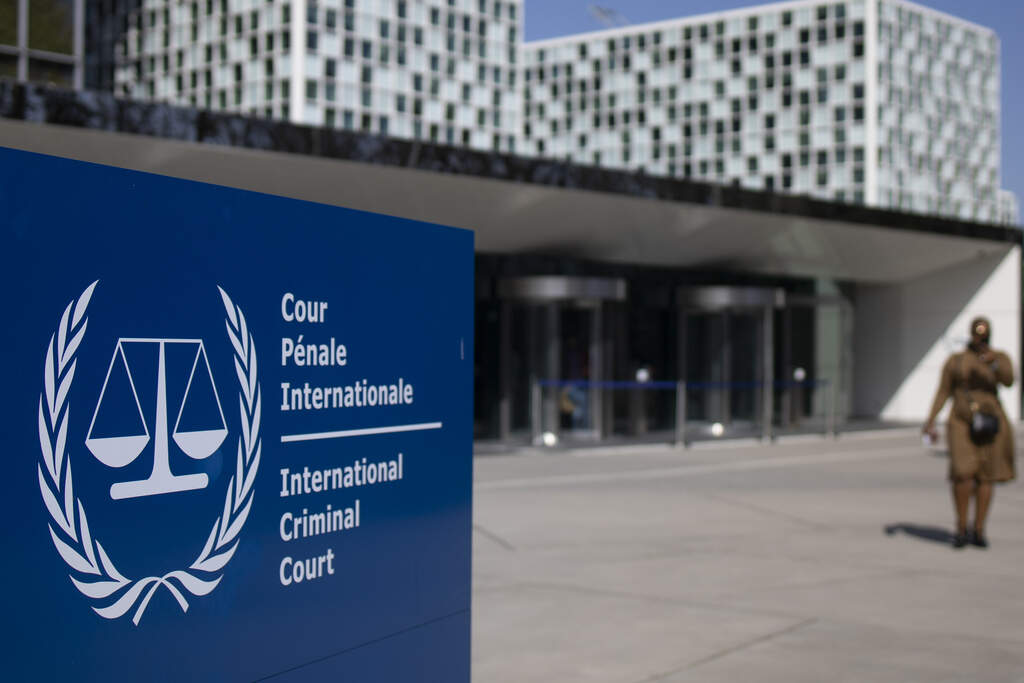
Tens of thousands of Ukrainian children have been abducted by Russian forces in the past four years of war. They have been placed in Russian re-education camps, adopted by Russian families, or sent for military training. What will it take to get them back?
Guests
Angelina Kasyanova, child repatriation specialist and Manager of the Ukrainian Child Rights Network.
Nathaniel Raymond, executive director of the Humanitarian Research Lab at Yale School of Public Health.
Also Featured
Vladyslav Buriak, student. Abducted as a teenager by Russian forces.
The version of our broadcast available at the top of this page and via podcast apps is a condensed version of the full show. You can listen to the full, unedited broadcast here:
Transcript
Part I
MEGHNA CHAKRABARTI: Vladyslav Buriak was in the car with his father, April 8th, 2022. They were trying to evacuate from their hometown of Mariupol, Ukraine. The Russian military had invaded his country just two months earlier on February 24th, 2022, which is exactly four years ago today.
Vladyslav and his father slowed down at a Russian military checkpoint.
He was just 16 years old, and so the teenager had his phone with him. A Russian soldier caught sight of it and immediately accused Vladyslav of filming the soldiers. He demanded that Vladyslav hand over the phone, and what happened next would change Vladyslav's life as it has for tens of thousands of Ukrainian teens and children.
VLADYSLAV BURIAK [TRANSLATED, VOICE OVER]: When I gave him my phone, he found some telegram groups, and in these telegram groups there was a video about a few Russian soldiers. They were saying that we don't want to take part in this war. This war is stupid. He was very furious about the situation. He shouted at me and went away from the car.
After he came back with a gun and said to me, 'Should I kill you right now or smash your phone?'
And I was really scared because I didn't understand what they would do.
They put me in a police station. The station was like a prison where they tortured people who were arrested by Russian Special Forces.
When I was in the prison, I was allowed to shower every seven or eight days. My room was literally two by two meters. Without working toilets, without fresh air, without ventilation, I was allowed to go for a walk only 15 to 20 minutes each day, walk just literally 15, 20 minutes per day.
I washed the floors between the prison cells where many other prisoners were kept. I would open a small door inside the big door to slide in the prisoner's food, that gave them a chance to breathe and to deliver packs of cigarettes from cell to cell. The prisoners put small pieces of paper in the cigarette packs, and that gave them a chance to communicate.
I understood that if Russian soldiers caught me doing this for other prisoners, they could punish me terribly. I saw how a few Russian soldiers tortured one Ukrainian man, a civilian. They watched it like a boxing match. They watched the Ukrainian man fighting the pain. It was like a fighting show without any kindness and without any humanity.
And really, to me, after my captivity, the Russians became like the German Nazis after the Second World War.
After my captivity, the Russians became like the German Nazis after the Second World War.
Vladyslav Buriak
I was really scared, but I was mostly unemotional because I fully understood that if I showed emotions, if I screamed or shouted or cried, it would get me in so much trouble.
So for 48 days, I pretended to be happy. I was smiling. I really controlled myself. When I was able to call my father, every time he would say, I'm trying to solve it. I'm trying to solve it. My parents didn't have any information about when I would have my freedom or when I would be home. Mostly our conversation was just, Hi, how are you? I'm fine. I'm okay. I'll try to solve it.
It was really hard to hear for 90 days.
It's affected me because I have some kind of psychological disease. It's not a problem in normal life, but it has affected my health. It's affected my body; it's affected my heart.
We really want a normal and peaceful life, and a future for our kids and a future for our next generation as well.
CHAKRABARTI: 16-year-old Vladyslav Buriak was imprisoned by Russian soldiers for 48 days in that police station. He was then moved to a hotel where he was held captive for another 42 days. After a total of three months, he was finally released. When we spoke with him just a few days ago, the line wasn't always clear, so we added the voiceover so you could hear his story.
Vladyslav calls the Russian military his kidnappers, and he's not the only one. Tens of thousands of Ukrainian teens and children have been kidnapped by Russian forces since the start of the 2022 invasion. Some estimates put the number as high as 30,000 children. On March 17th, 2023, the International Criminal Court issued an arrest warrant for Russian President Vladimir Putin for illegally moving Ukrainian children out of the country.
The warrant states that: "The suspect bears responsibility for the war crime of unlawful deportation of population, and that of unlawful transfer of population from occupied areas of Ukraine to the Russian Federation in prejudice of Ukrainian children." End quote. Translation, Russian President Vladimir Putin has committed a war crime by systematically ripping Ukrainian children from their families and homes and disappearing them into Russia or so-called reeducation camps.
So today, on the fourth anniversary of the start of the war in Ukraine, we're going to talk about Ukraine's children. And joining me now is Angelina Kasyanova. She's a child repatriation specialist and manager of the Ukrainian Child Rights Network, and she joins us today from Kyiv in Ukraine. Angelina, welcome to On Point.
ANGELINA KASYANOVA: So, hello everyone. I represent the Ukrainian Child Rights Network and Association of Organization that has been working in the field of child protection in Ukraine for over 11 years.
CHAKRABARTI: How, or what toll, Angelina, has the disappearance of these tens of thousands of children, what toll has that taken on Ukraine and the broader Ukrainian people themselves?
KASYANOVA: So actually, for today we have two stories about girls that we had returned. And I a little bit want to say something about our work, actually, if it's okay. So one of the key areas of our work is the return of children from occupation and deportation, as well as the further reintegration into Ukrainian society.
The Ukrainian Child Rights Network has managed to evacuate 339 children. And young people up to the age of 23, of them, 93 children were returned from the Russian Federation, and 246 were evacuated from temporary ... by territories.
CHAKRABARTI: Continue. And so you said you had two stories of children you managed to bring back home.
KASYANOVA: I would like to share two stories of girl we managed to bring back. The first story is about girl we evacuated from occupation. In November, her mother was killed and the child was placed in the orphanage. At that time, her father was in non-occupied territory of Ukraine. And the moment of her return, the girl was only 12 years old.
She had not seen her father for more than four years, due to the occupation. Our team work intensively to ensure their reunification, coordinated all necessary steps to bring the girl to safety and reunite her with her father. The second story is about another girl who we evacuated from the temporary occupied territories in August 2025.
She had been living with her grandmother and older sister after both of her parents were killed. For nine months, our return team carefully prepared her evacuation. At the last moment, we learned that she was about to be transferred to a Russian boarding school. We urgently arranged transportation, found a car on very short notice, and ultimately managed to evacuate her safely.
At just 14 years old, the girl has injured and ... trauma. She was subjected to systematic sexual violence. ... She's currently receiving psychologist support from the team of specialists from the Ukrainian Child Rights Network who are working to help her recover and rebuild a sense of safe safety and stability.
CHAKRABARTI: Angelina, can I just ask you a question? So these two examples of children that you've managed to repatriate, as you say, they were living in occupied parts of Ukraine. Is that correct?
KASYANOVA: Yeah. And here I have to say and note that evacuating children from occupied territory is just as difficult as bringing them back from the Russian Federation. Children and young people in occupied territories literally became hostages in their own homes.
Children and young people in occupied territories literally became hostages in their own homes.
Angelina Kasyanova
CHAKRABARTI: I see. So your group is working to bring children back, both from occupied areas of Ukraine and from within Russia itself?
KASYANOVA: Yes. Like I say, we have returned 93 children from Russian Federation and 246 from temporary occupied territories.
CHAKRABARTI: Can you tell me a little bit about the challenges that you face in even locating where the children are?
KASYANOVA: So a child stay in occupied territories or in Russia without their parents is not only war related trauma. For children aged seven, 10, and older this often leads to a loss of trust in adults and sometimes even their own parents, as well as disruption of attachment. Reunification is therefore not simply a cyclical return. After children are brought back professionals work not only with war trauma, but also in on restoring a child basic sense of safety, trust, and emotional connection with their family. This patterns are very similar to the consequence observed in children who have experienced institutional care as both situation involve a rupture of primary attachment bonds.
Part II
CHAKRABARTI: Now, Angelina, if I may ask, and I don't know how much detail you can give us, but it seems very challenging to even locate where the children are, especially if they're within Russia.
And then getting them out undetected. I mean, how do you go about doing this?
KASYANOVA: Okay. I cannot say a lot about the process of evacuating these children, but I just was thinking about best interest of child and their safety, probably. But I want to say one of the key areas of our work is return of children from occupation and deportation, as well as their further reintegration into Ukrainian society.
So I want to say previous it's important to understand that parents experience intense during the return process just as children too. Beyond evacuation, our work continues with reintegration of children into Ukrainian society. Each return is not only logistical operation, but also a long-term commitment to restoring a child's safety, denied family connection and future are in Ukraine.
CHAKRABARTI: Angelina, you said you've been doing this work for 11 years? Yes?
KASYANOVA: ... In just four years in Ukrainian Child Rights Network. But our organization works near with 11 years. Yes.
CHAKRABARTI: I was wondering because has this issue of children being removed from their families in Ukraine, does it predate the invasion from four years ago to perhaps even, you know, previous Russian incursions I'm thinking in Crimea, et cetera.
KASYANOVA: Yeah. We have such a lot of cases probably if we are talking about Crimea or Donetsk region. Actually I want to say that I'm a refugee from Donetsk too. And actually, when my city was occupied, I was 11 years too. And after that I live in Kyiv probably more than 11 years for now.
CHAKRABARTI: You were able to evacuate from your home region with your family?
KASYANOVA: Yeah.
CHAKRABARTI: Okay. Go ahead. Tell me, I would like to hear from you if you, if you're willing to share, that since you have been through something similar as a child yourself, what was that like for you?
KASYANOVA: Actually, I need to say that I feel something like painful if it feel okay in my English. Just because I remembered everything, how it was when I first time see the plane that starts bumped my city, probably in 2014 when I understand that I will never see my city in safety, like life like it was in previous. And actually it was a long way to understand, to try to make my life normally. And now when I begin 23 years old, I understand that I should work in that way and I need to help these children who stay in situation similar to me.
CHAKRABARTI: Hmm. I was going to ask you how you came to this work, and you just gave me the answer. Do you still carry, it sounds like you still carry the pain from having to, like you said, see the bombing of your own city when you were a child.
KASYANOVA: Yes. Actually, I don't know what to say. Probably when I remember it's actually so sad in my mind, but a lot of Ukrainians for now living with this.
CHAKRABARTI: Can you tell me a little bit about the impact on the families and parents that you're working with now, helping them, trying to get their children back? You told, you said that it has a big impact on them too, can you tell me a little bit more?
KASYANOVA: Yeah, we have all cycle support after returning children from occupied territories or from Russia Federation.
We have in our organization, psychologists and case managers that provides, all psychologists support for these families and children, or we trying to find for them new place where they can live? Probably we are helping them for making new documents. Just because we understand that Russia Federation are trying to destroy all Ukrainian documents from these people and try to put for them only Russia's documents. And that's such a big problem for now because when we are trying to find our clients, if I can say like this, it's actually a little bit hard because we understand that in Russian documents, they can change names of these children or something else.
And finding these people can be harder.
CHAKRABARTI: Angelina, let me just say that I understand that even talking about these things is difficult, let alone speaking in a language that's not your native tongue. So your English is beautiful. And you've been --
KASYANOVA: Thank you.
CHAKRABARTI: And you've been really clearly communicating just what a horrible situation this is in Ukraine for families and children, obviously the children especially. So hold on for just a minute if you could, because I'd like to bring Nathaniel Raymond into the conversation. He's the executive Director of the Humanitarian Research Lab at the Yale School of Public Health. He's joining us from On Point station Connecticut Public Radio in Hartford, Connecticut.
Nathaniel, welcome to On Point.
NATHANIEL RAYMOND: Thank you.
CHAKRABARTI: So I have been quoting this number of possibly somewhere around 30,000 children having been kidnapped, abducted from their homes in Ukraine. That's on the high end. There are some other estimates that put it at significantly lower, but the 30,000 number is yours.
Can you tell us how you came about that?
RAYMOND: The Humanitarian Research Lab at Yale School of Public Health has been tracking Ukraine's children in Russia's custody since 2022. And our estimate is that at least 35,000 children are in Russia's custody, both inside Russia and the temporarily occupied territories of Ukraine in four groups.
Those that are in camps, those that are in fostering an adoption. And those from two other groups who have been taken from the battlefield and from what's called the filtration camps, which were set up around Mariupol after its fall in the spring of 2022. And we don't know where those last two groups are, but they're spread out over at least 210 locations, which we've identified, and in some cases include military training camps.
CHAKRABARTI: How have you identified these four groups?
RAYMOND: We've identified them through a combination of really four sources of data. One is the use of very high-resolution satellite imagery, reconnaissance over indoctrination camps and transit sites in temporary accommodation centers where the children have been held or are being held.
The second is through really Russia's documents itself, public documents that have shown where kids have come from, where they're going. The third is by really infiltrating and analyzing a set of three interconnected Russian national adoption databases where Ukrainian children, at least 314 that we've identified, though the number is much higher, have been placed for adoption and fostering as if deceptively, as if they are Russian orphans, when in fact, they're from Ukraine.
The fourth is through the use of analyzing really social media posts, in particular photographs that were taken by Russian officials themselves. That in many cases had metadata, meaning latitudes and longitudes of locations, of camps, of transit sites where the kids were moved through and in some cases, buses and planes.
So it's really the fusion of those four sources together have given us what's called the mosaic effect, where we're able to actually get a very good picture of the scope, scale and really complexity of this network of child abduction.
CHAKRABARTI: Okay, so I want to take some time to talk through the sort of four types of abduction or where children end up that you described.
But first let me ask you. I mean, can we say with confidence and perhaps the International Criminal Court has already done so, but can we say with confidence that this is a systematic effort that has been directed, you know, at the highest levels of Russia by President Vladimir Putin to, you know, kidnap and remove all these Ukrainian children from their homes? It's a planned part of this war.
RAYMOND: Yes, 100%. The statements of Vladimir Putin himself are, as we say, in law enforcement inculpatory he admits he is doing this, as does ... Maria Lvova-Belova, the Child Rights Commissioner who herself has admitted she has adopted a child named Dennis, who was taken from Mariupol in the fighting.
And so we know this, they have admitted to it, and it is a crime.
CHAKRABARTI: We're actually going to hear some tape from Maria Lvova-Belova a little bit later here, but Angelina, can I just turn back to you and can you tell me a little bit about what you think about the fact that, you know, Vladimir Putin himself has said, this is part of our campaign against the Ukrainian people to remove all these children.
KASYANOVA: We understand that everything they do in Russia for now, it's just like a criminal, try to punish a person probably. And actually everything, what's going now in Ukraine is horrible and stolen our kids, it's like not something specific. It's Russian program probably to make everything for Ukrainians for our future.
Just because I understand that if they are trying to kidnap in our kids, so we understand that we will have no future.
CHAKRABARTI: Angelina ... I heard what you said a little bit earlier.
What do you think about the fact that the International Criminal Court has actually said this is a war crime and they have put out an arrest warrant for President Putin specifically about this, about the abduction of Ukrainian children? Is it enough?
KASYANOVA: I think it's not enough. Just because we have the problem when the Russia thinks that it'll never have some, that Russia will never have some punishment for all what happening now.
And actually, it's very big problem when we talking about our kids, when we talking about returning, someone asked me about how we can make a better returning kids from occupied territories and from Russia Federation. But the problem in returning is just Russia only, and only when the war ends.
It's not stop. Only when we will unite probably and trying to do more and trying to more speak about it. Maybe after that, we will try to help these kids.
CHAKRABARTI: Mm. Okay. Now, Nathaniel, I'd like to talk about the four different kinds of places where you said that these children end up. Can we start with the youngest groups?
I understand that there's a place called camp teddy bear. What is that?
RAYMOND: That's correct.
CHAKRABARTI: What is that?
RAYMOND: Teddy bear is a reeducation camp inside Russia for children who are basically toddlers to about eight to 10 years old. And camps like teddy bear and forest fairy, that's an actual name are really about younger children learning only to speak Russian and learning a Russian version of history and folktales.
CHAKRABARTI: As young as toddlers.
RAYMOND: The youngest child that we know has been taken was an infant at six months.
CHAKRABARTI: And how many children can you estimate are there?
RAYMOND: Well, it changes. In some cases, the camps are only Ukrainian kids. In other cases, particularly with what are Russian summer programs, it's a mix of Russian and Ukrainian children.
It changes in terms of program as they age. As they get older, there's more and more military training. In some cases, direct training for combat itself.
CHAKRABARTI: So tell me more about that. Because you had said for older kids there are exclusively military training camps that they're being sent to.
RAYMOND: That's correct.
There's two military training programs that really play a critical role here, Meghna. One is ... basically military Boy Scouts and Girl Scouts. The other is called Cadet Corps. Which is like junior ROTC. There's a third program that's coming online called Voin, which stands for Warrior in Russian, and the Voin program appears to be directly related to combat training, including jump school for paratroopers and training and trench warfare.
CHAKRABARTI: Where are these camps?
RAYMOND: They stretch really over 3,500 miles. So some range from the Black Sea. All the way to Magadan by the Eastern Pacific. Really a area that is in some cases closer to Japan and Alaska than it is to the United States. There are several camps in Siberia, and what we've learned over time is that the footprint of these camps mirrors the Pioneer program used by Stalin for vocation and reeducation of children, including from the Baltics during the Soviet period.
CHAKRABARTI: So tell me more about that.
RAYMOND: Well, really what Putin has done here is stand up a industrialized pipeline for children, from infants, toddlers, all the way to age of majority, so 18 years old, to really try to erase systematically their Ukrainian identity. And then eventually, for many of them, make them soldiers in the Russian Army.
And so when we get back to your previous question, how do we know that Putin is doing this at the highest level? How do we know it's systematic? Well, we can literally see from space. These camps expand, mirroring the progress of the war. And so we're talking about a logistical footprint that is the single largest industrial network of child abduction since the Third Reich in the Germanification of Polish children in World War II, which was part of the Nuremberg Trials.
CHAKRABARTI: Single largest since World War II. And you said that he, Putin is following not just a physical footprint from Stalin, but also basically a cultural and political one of erasure of Ukrainian identity as part of the campaign against the country.
RAYMOND: It's Stalin's playbook in the 21st century.
Part III
CHAKRABARTI: Nathaniel, you had mentioned Maria Lvova-Belova. She is Russia's Commissioner for Children's Rights in the office of the President of the Russian Federation, a.k.a. President Vladimir Putin.
And we have a little bit of tape here. It was recorded on March 8th, 2022. So couple, six weeks or so after the Russian invasion began, and President Putin actually spoke with Lvova-Belova in a televised conversation. So this was broadcast all over Russia.
And at that time, Lvova-Belova had said she had just quote, adopted a child from Ukraine.
(TAPE PLAYS)
So in this tape you hear President Putin saying, You adopted a child from Mariupol yourself. Right? And Lvova-Belova answers, yes. Thanks to you. Putin asks, little? As in is the child little? Lvova-Belova says, no, 15 years old. Now I know what it's like to be the mother of a child from Donbas. It's difficult, but we definitely love each other.
Putin says that's the most important thing, and Maria Lvova-Belova says, yes. I think we'll figure it out. Right?
Angelina? When you hear that, what do you think?
KASYANOVA: Yes.
CHAKRABARTI: Yeah. What do you think?
KASYANOVA: I think it's horrible, actually everything, when I hear everything of it, and if we're talking about Maria Lvova-Belova speaking a lot and all time when she's speaking about 300,000 children that they take from our country to Russia and to make them their life better. Every time when I am hearing something like that, actually, I really feel terrible about this, but actually it's our reality. And after that we have a lot of work to trying to help these children.
CHAKRABARTI: I was wondering what you particularly thought when Lvova-Belova insisted that she and the Ukrainian child love each other.
KASYANOVA: We know this story probably, we trying to find in our organization information about this boy. Actually, if we're talking about him, I should say that the first time he not really love Maria Lvova-Belova, of course, and actually he wasn't agree to be put to the Russia.
But after the time the Russian propaganda works. And it's terrible too, and we understand it. We see that boy just ... do nothing and just agree with the situation where he are staying.
CHAKRABARTI: One more question, Angelina. Then Nathaniel, I'm going to return back to you, but earlier you had said you were 11 years old, right?
When you had to evacuate back in what, 2013, 2014 from Donetsk and Luhansk. I read a quote from your mother who said that some of your friends who stayed behind, they were sent to the kinds of military camps in Russia that Nathaniel had been describing. Is that right?
KASYANOVA: Actually, I have a classmate that I spoke last time in 2019. But now I have information that when they became 18 years old, they had mobilized to the Russian army actually without any agree or understanding what's going on. And probably in 2022, these boys are dead.
CHAKRABARTI: They're dead.
KASYANOVA: Yes.
CHAKRABARTI: I'm so sorry about that.
KASYANOVA: Yes.
CHAKRABARTI: Were they sent back to Ukraine as Russian soldiers? Or they died before that.
KASYANOVA: As I know, yes, actually they were in Donetsk region. Probably they're fighting there. I don't know a lot of information just because it's probably privacy a little bit. But it's only information that I have.
CHAKRABARTI: Nathaniel this means that the practice was going on, I mean, long before 2022. Right?
RAYMOND: That's correct. We think as early as 2016 at least following the initial occupation of parts of the Donbas region, including Crimea, and we believe there's going to be more evidence public in the next few months that really shows how particularly children from institutions were being taken up to six years before the full-scale invasion.
CHAKRABARTI: Okay. Well, as we mentioned before, the International Criminal Court has actually issued arrest warrants for Russian President Vladimir Putin, and commissioner Maria Lvova-Belova, who we just talked about. So here's that announcement from March 17th, 2023 when Piotr Hofmański announces the warrants had been issued.
And by the way, he is the president of the International Criminal Court.
It is forbidden by international law for occupied powers to transfer civilians from the territory they live in to other territories. Children enjoy special protection under the Geneva Convention.
CHAKRABARTI: Okay, so those arrest warrants were issued in March 17th, 2023.
Just a couple of months later, may of 2023 Vice News had an interview with Commissioner Maria Lvova-Belova and again, this was after the ICC had issued its arrest warrants, and in this interview they asked her, are you a war criminal?
She says, that's very funny. I'm a mother and that says it all. A war criminal. What are you talking about? First of all, Russia doesn't recognize the jurisdiction of the International Criminal Court. The criminal offense of transportation, so-called deportation of children refers to forced deportation, where in fact it was evacuation from shelling according to Geneva Conventions, we can evacuate people.
Children from areas that threaten their lives and safety. End quote.
CHAKRABARTI: Okay. Nathaniel, talk about this.
This is the justification that Russia is giving that well, A, it's not forcible because they're removing children for their own safety. Respond to that.
RAYMOND: The Geneva Convention is explicit, as the president of the ICC said in the statement, you played, children have special protected status. What that means is they can't be used as hostages. They can't be traded as a POW or a spy would be in a hostage exchange, and you must return children to their place of origin. Now, there is an exemption for emergency evacuation in case of imminent danger or need for medical evacuation.
For days up to weeks, but then you must move them underneath the Geneva Convention to a third party. Locations such as Switzerland, and you must register them with the International Committee of the Red Cross and their home country and let them call home. None of that has happened and it's been four years, and so the Russian defense that this was an emergency evacuation.
A, is not true. And B, even if it was, they violated the limited provision of days and weeks and they've held them, and in some cases changed their identity and deceptively had them adopted by Russian families. That is not only a war crime. Underneath the genocide statute in the Rome statute, that can constitute a crime against humanity.
As we've documented, when you transfer children from one national and ethnic group to another, changing names, passports, birth certificates, which we know in some cases has occurred. So we're not talking about the fog of war. We're talking about a systematic attempt to destroy Ukrainian identity by taking the childhood of Ukraine's children.
We're talking about a systematic attempt to destroy Ukrainian identity by taking the childhood of Ukraine's children.
Nathaniel Raymond
CHAKRABARTI: And in fact, Lvova-Belova has also spoken quite publicly about the fact that it's not only to destroy Ukrainian identity in these children, but also just actively program against what the Russian sees as anti-Russia propaganda that's, you know, that they say takes place in Ukrainian school.
So listen to this. This again is just from last year and you're going to hear one more time. Russia's Commissioner for Children's Rights. Maria Lvova-Belova. She was on TV discussing this Ukrainian teenager who's now living with her. And she said in this interview that particular care needed to be taken because he arrived in Russia with post-traumatic stress disorder from shelling of his hometown. And then she said he also had, quote, a particular attitude about Russia.
(TAPE PLAYS)
She says: It's a negative attitude that had been cultivated Mariupol for a long time. It was a program for school children to which he was also subjected like everyone else. That's why he always told me, I love you. You are my mother, but everything else, Moscow, Russia, I can't stand any of it. He would become hysterical.
We'd talk with him all night long.
CHAKRABARTI: The interviewer then asks her, he didn't wanna live in Russia? She says, right, he didn't want to live in Russia. The interviewer says, how did you cope with that? And Lvova-Belova says, With love.
Angelina, let me ask you, you are doing this work and other Ukrainian organizations, obviously within the country of trying to find these children and bringing them back home.
What do you make of the international community's response to this so far?
KASYANOVA: Speaking about this, and probably if we're talking about United States too. In this specific career, I would also like to thank Yale University for the research they conduct on Ukrainian deported children. The Ukrainian Child Rights Network contribute to this effort by providing relevant information for this research.
These studies are extremely important for us. As they serve as an evidence based document in this crimes committed by Russia against Ukrainian children. I believe this work is highly viable and significant, and I hope there will be future opportunities for continued cooperation in this direction.
CHAKRABARTI: Nathaniel, would you say that enough is being done?
RAYMOND: No. We are, as I said before, this is the single largest child abduction in war since World War II. Since Donald Trump took office the second time, we've had our funding cut twice. We're now surviving at Yale Humanitarian Research Lab on online donations.
And we're running out of steam, and we're probably going to have to close our work without government money from the United States or Europe, and that means that who's going to suffer from that? Well, the children who are in Russia's custody. The chance that they're going to come back if we and others are not looking for them goes down. So we are not doing enough as the international community.
If you compare this to the amount of law enforcement deployed for dead missing persons, in the case of 9/11, we're not even doing a fraction of the law enforcement response and we're talking about amount of living children taken. That's 10 times the amount of missing people in 9/11, not only are they not dead, they're growing. And every day, every week that we lose without getting them back, the chance that they are going to come home decline significantly.
CHAKRABARTI: Without the government funding, Nathaniel, how much longer do you think that your work tracking the children can go on?
RAYMOND: Literally while we're on the air, I'm going back and forth with my team trying to figure that out. Right now, we can make it to the end of April. And really, you know, we lose our job, we lose our job, but it's not about us at Yale, we'll be fine.
It's really about the fact that the work that we're doing, the work that Ukraine Child Rights Network is doing is irreplaceable. And if we go dark as a community looking for these kids. No one else is coming.
CHAKRABARTI: I want to say that we did contact the State Department multiple times to see if they could give us a statement or someone to speak with regarding the U.S.' attempts here to assist Ukrainian activists like Angelina, they didn't get back to us, but in previous statements, the State Department has said: "By attacking Ukraine's children, Russia seeks to destroy the very fabric of Ukrainian society, robbing the nation of its most precious resource. We must meet this sinister attempt with unwavering resolve, united in our commitment to safeguard the rights and dignity of Ukraine's children."
End quote. And then in September of 2025, in a State Department report, it said: "The department continues to regularly engage with the Ukrainian government regarding the welfare of Ukrainian children." But we weren't able to determine any greater specifics about what the United States is doing.
Angelina, I have one last question for you. I wonder what you think about how the plight of these tens of thousands of children are playing into whatever ceasefire discussions have been going on between Ukraine and Russia.
Because for example, in President Zelenskyy's recent peace formula that he put out, the plight of these 35,000 children is number four out of 10 points. In other documents we've seen, the children don't get mentioned until, you know, point number, you know, 18, 19, 20. What's your response to that?
KASYANOVA: Actually, I can't say something about the whole numbers probably. For now, I can speak only about the numbers that have only our organization, and only about these children that we have returned now, and actually just everything that I want to say now is, as for Ukraine, we do not have the right to forget the children who are currently in the Russian Federation or in the occupied territories. We must make every possible effort to ensure that all Ukrainian children are returned home.
The first draft of this transcript was created by Descript, an AI transcription tool. An On Point producer then thoroughly reviewed, corrected, and reformatted the transcript before publication. The use of this AI tool creates the capacity to provide these transcripts.
This program aired on February 24, 2026.