Support WBUR
Celebrating Ramadan while living in fear
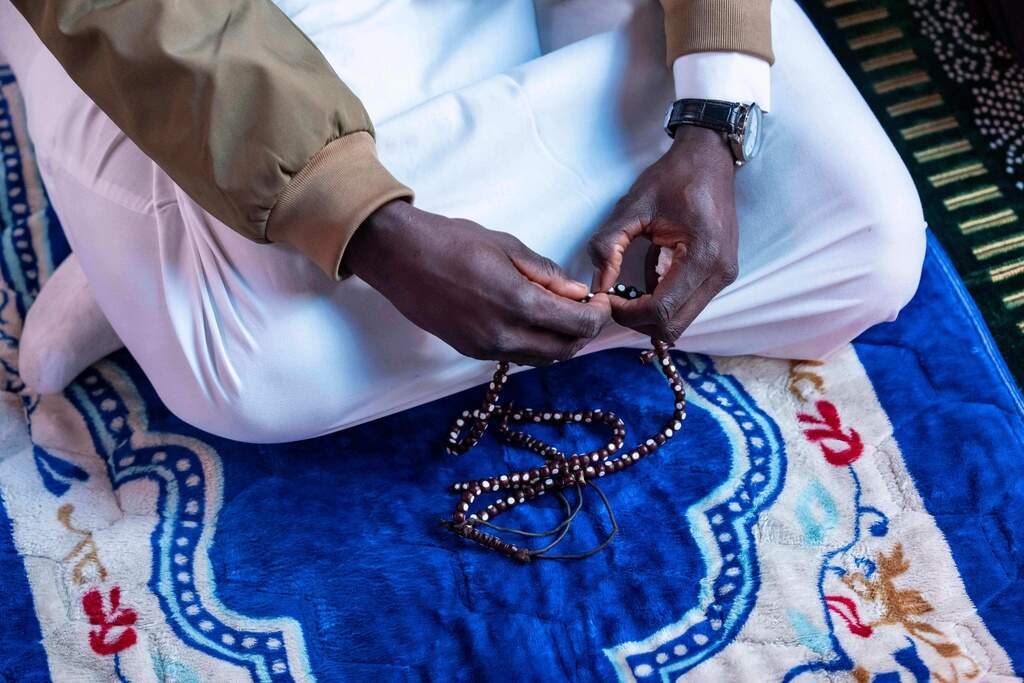
Muslims around the world are celebrating the holy month of Ramadan. But for immigrant communities in the U.S., those celebrations are being tempered by fears of ICE.
Guests
Nancy Khalil, assistant professor of American Culture, University of Michigan.
Also Featured
Ali Sultan, comedian.
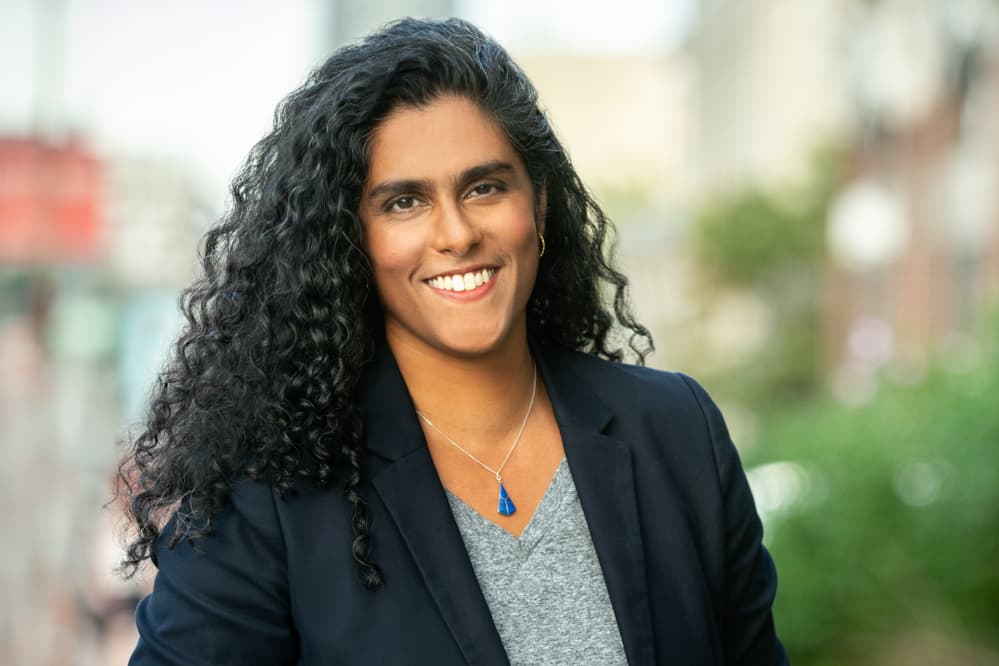
Rana Abdelhamid, founder of Malikah.
The version of our broadcast available at the top of this page and via podcast apps is a condensed version of the full show. You can listen to the full, unedited broadcast here:
Transcript
Part I
MEGHNA CHAKRABARTI: For Muslims worldwide, the month of Ramadan is well underway. It's a time for celebration. Each day involves an obligatory fast, and each night ends with communal breaking of that fast, usually with family and friends. But this year for the Muslim community in the U.S., it's not so simple.
The Trump administration's immigration raids have sparked a familiar fear in the Muslim community, one that has echoes back to the years after the 9/11 terrorist attacks. Now, American Muslims are one of the most ethnically diverse religious groups in the country. 82% of Muslims in the United States are citizens.
42% of them, American from birth, 40% naturalized citizens. Of the remaining 18% of the Muslim community, most of them are legal, permanent residents or legal Visa holders, and yet that fear has been rekindled, because ICE raids have swept up U.S. citizens, green card holders, and Visa holders as well. Federal officers have approached schools, churches and mosques.
RANA ABDELHAMID: It's been a really hard time in the sense that people are feeling a sense of insecurity, that they don't know if they're going to come home like late at night. They're like a street vendor, especially when there's been like more visible escalations. People are much more insecure walking around.
CHAKRABARTI: Rana Abdelhamid is founder of Malikah, a New York City nonprofit that works on anti-violence advocacy and runs workshops on things like self-defense, financial literacy, and community organizing. By the end of last year, immigration and customs enforcement officers had increased their presence in New York City.
Over 3,000 arrests were made by October, including a ramp up in street arrests. So now helping New York Muslims prepare for ICE is a regular part of Malikah's work.
ABDELHAMID: There will be an escalation and a presence of ICE in our community. And so we're doing a ton of know your rights trainings. We are doing small business canvases to talk to, like, workers who are in small businesses, street vendor canvases.
We are making ICE safety kits and handing them out at mosque weekly.
CHAKRABARTI: Though not nearly at the same rate as those of Latin or Latino origin New York residents from the Muslim majority countries have inevitably been detained by ICE, particularly as Trump has expanded a travel ban on several African and Muslim majority countries, and he did so in December.
Abdelhamid and others have organized fundraisers to help families of those in detention. Despite the stress that deportation operations pose, Abdelhamid says the community is committed to celebrating Ramadan like always.
ABDELHAMID: So we run the Ramadan Night Market on Steinway Street. When we first started it, the vision was really rooted in an understanding of what is creating safety in an alternative way.
And we grew up, and I grew up in the context on this block where we were surveilled as a community, where the NYPD would infiltrate our coffee shops, our mosques, our community centers. It meant that block became a place where people became insecure to talk about politics, became insecure to be themselves.
We were surveilled as a community, where the NYPD would infiltrate our coffee shops, our mosques, our community centers.
Rana Abdelhamid
Even things like going to the mosque or having a beard or eating Halal were seen as like potential markers of radicalization, literally. For us to reclaim that same block, bring all parts of our faith identity into public space, was really important for us.
CHAKRABARTI: That's Rana Abdelhamid. Joining us now is Nancy Khalil.
She's an assistant professor in the Department of American Culture at the University of Michigan, and she joins us from Ann Arbor. Professor Khalil, welcome to On Point.
NANCY KHALIL: Thank you. It's nice to be here, Meghna.
CHAKRABARTI: So first of all, talk to us about what a normal or non-pressurized Ramadan month would look like for most American Muslims.
KHALIL: Ramadan is a sacred holy month that's festive, that's looked forward to by so many Muslims across the country and the world. And the celebrations are multifold. As we discussed earlier, with meals that take place before the dawn comes in, meals after sunset that are communal, that people come together to break their fast, but also nightly worship.
It's a month of added deeds, good deeds for all of the worship that you participate in. So there are regular prayers every night in most mosques that will take place for one to two hours and acts of service, people increase their charity during the month. So there's a lot going on that brings people to the mosque.
CHAKRABARTI: What is the spiritual importance of Ramadan for Muslims?
KHALIL: Ramadan is considered to be the holiest month of the year. It's the month in which the Holy Book, the Quran was believed to be revealed to the Prophet Muhammad. Peace be upon him. And during that month, Muslims are asked to fast from food, drink and intimacy during the hours from dawn to sunset.
And it's said that anything that you do of good deed during that month is multiplied exponentially. So people try to increase their acts of service, their charity, their kindness, really work on any bad habits that they have to try to refrain from them. And community is a part of that.
CHAKRABARTI: Okay. So tell me a little bit about what you've experienced yourself or seen and heard from various parts of the Muslim community, whether it's there in Michigan or around the world, about how this Ramadan feels different and what people are doing that's different from what their normal practice would be.
KHALIL: So there's two main differences with this Ramadan from prior Ramadan. One is a positive and people are very happy about, and the other one raises concern. The first is that the majority of the month comes before the hour changes.
So sunset is on the earlier side, which excites people, because their fasting day is shorter. Historically, it's been long, and in Michigan in the summer, you could be fasting till 10:00 p.m. But on the concerning side is the presence of ICE and people being concerned with how they might come into their spaces, especially with the added membership and added community that's coming to the mosque this month.
So how do we keep our mosque safe? How do we keep our community protected has been on many people's minds and a lot of work has been put in towards that, like advocacy groups, like the one we heard from the Council for American Islamic Relations has put together a training and there's the PDF they're circulating in Michigan, have done trainings at many mosques around southeast Michigan to help the leaders understand and know what are the best practices that they should adopt to protect their community during this month.
CHAKRABARTI: Now someone listening might ask what does the American Muslim community have to fear?
I read those statistics earlier in the top of the show about the fact that 82% of American Muslims are in fact citizens. So many people listening to this might think, if you're a citizen, there have been some ICE arrests of citizens. We know that.
But the deeper fear in the community isn't necessarily justified. How would you respond to that?
KHALIL: I think it's not just the citizenship that impacts people's fears. There's also a racialization that takes place in terms of how you appear and how you look.
So even if you're not arrested as a citizen, you have to prove that you're a citizen first. So people are just taking precautions. Many people are walking around with their passports on them, or if not the passport itself, copies of it because they're afraid if they're stopped people who present in a certain way, whether it's because of their skin color or how they dress, feel that they're more vulnerable.
So that's one part of it. And the other part is even if you yourself may be a citizen, it's very likely that you have some family member or some friend who's not a citizen. And you might be concerned also about their safety in that context.
So the Muslim community, as you mentioned, is an extremely diverse community in the United States, across citizenship, across ethnicity, across race.
CHAKRABARTI: Yeah, in fact, I was reading some statistics from the 2020 census and if memory serves, I think approximately a third of American Muslims are in fact Black, right?
KHALIL: Yeah, the census is hard to grasp data on religion because it doesn't really track that. But other surveys and polls that exist have the African American Muslim community between 20% and 30%. That's right.
CHAKRABARTI: Yeah. So again, I think it's maybe the single most ethnically diverse religion in the United States.
KHALIL: Absolutely.
CHAKRABARTI: Because we have not only Black Americans, but we have legal Muslim immigrants coming from African nations, south Asia, east Asia. Et cetera. I'm wondering, let's get back to, actually, let's talk a little bit more about that, regarding the history of Muslims in the United States. How far back would you look to say that here's the first evidence we have of a growing Muslim presence in the country.
KHALIL: So scholars differ on the first presence. But all of them agreed that it was before the founding of the United States, that there were Muslims in these lands. And then the first large kind of wave of Muslims that came to these lands was with the Atlantic slave trade, the transatlantic slave trade, where scholars estimate that up to a third of the enslaved individuals who were forcibly brought to these lands came from tribes and communities of Muslim origin.
CHAKRABARTI: There's a famous, this famous quote from Thomas Jefferson, I'm just looking at it now again. He said, actually in 1776, that neither, and at the time, he said Mohammedan or Muslim, Jew nor Pagan should be excluded from civil rights in this country. So even Jefferson mentioned the importance of this religion amongst peoples of the United States.
CHAKRABARTI: We're headed towards a break here, Professor Khalil. So I'm going to start with a question. I know we're going to talk about it more afterwards, but I had mentioned earlier that this fear of the tension within the Muslim community has very strong echoes from post 9/11. Can you just talk for a few seconds about why or how that may be redoubling the concerns that the community has today.
KHALIL: Post 9/11, our national security apparatus just ballooned exponentially, and the Muslim community faced a lot of the targeting because of that. And the Department of Homeland Security was founded post 9/11 in 2002 and began operating in 2003.
And it was with the founding of the Department of Homeland Security that we had INS, which was the Immigration and Naturalization Services dissolved. And instead of it, now we have three offices, the Customs and Border Patrol, the U.S. Citizen Immigration Services and ICE, which is the immigration and Customs Enforcement.
So it became the law enforcement arm of DHS and it was part of a larger, we'll call, post 9/11 national security ecosystem that expanded policies and laws that allowed the government more rights and liberties and intrusion on people's civil rights, the privacy freedoms that disproportionately impacted people from Muslim backgrounds or who are racialized as Muslims.
Part II
CHAKRABARTI: I'd actually like to go back to 2001, 2002 and talk in more detail the experiences of the Muslim community in the United States. You had mentioned the formation of the Department of Homeland Security.
So here's a clip of then President George W. Bush in 2002. And this is from 2002 in response to the September 11th attacks. And for years, the government used the newly expanded Department of Homeland Security to really scrutinize Muslims and other ethnic minorities around the country.
But they disproportionately had an impact on immigrants from Muslim countries.
BUSH: The Homeland Security Act of 2002 takes the next critical steps in defending our country. The continuing threat of terrorism, the threat of mass murder on our own soil will be met with a unified, effective response. Dozens of agencies charged with Homeland Security will now be located within one cabinet department with the mandate and legal authority to protect our people.
CHAKRABARTI: Then President George W. Bush in 2002. Now, Professor Khalil, of course, the attacks of 9/11 were these horrific terrorist attacks carried out by Al-Qaeda and carried out by people who were legally in the United States for some time. And I just wanted to reset that tenor for what, how the country felt after 9/11.
But can you remind us a little bit more about specifically what went on within various Muslim communities across the United States? For example, the pressures that were put on mosques, both externally and even internally through the FBIs like radically expanded informant program.
KHALIL: Yeah, absolutely. So my research specifically is with imams or Muslim religious leaders many of whom work full-time in mosques. So during this time, I was conducting a lot of interviews with imams to learn about their experience and really to try to understand through their perspective how they define their profession.
And one of the questions I asked in my interviews was if they had a relationship with law enforcement. And invariably every single imam that I interviewed and we're talking about close to a hundred interviews here across states across many years, they all said yes.
The relationships varied between local law enforcement and federal law enforcement, with often federal law enforcement being part of it, which was the more, I think, distinct and red flag to the situation. It's not common for religious leadership to have relationship with federal law enforcement, local law enforcement. You're going to need to work with, if you need, if you have a big event and you need security or you need help with traffic or there's a funeral or something of that nature.
But yeah, that was a common part of their experience. There were a lot of initiatives that emerged post 9/11 specifically that expanded surveillance of mosques and of just social spaces that Muslims were believed to be present in. Some of those included what they called NCAs, which was a program under the Department of Homeland Security where all males who were over the age of 16 who were non-citizens from 25 countries, 24 of them being Muslim majority countries had to go and stand in line and register. And in that registration, they had to be photographed. Their fingerprints were taken; they were asked extensive questions. They had to check in periodically.
And the impact of that was really dramatic, because it was a sudden date, they all had to meet it. Many people weren't really sure what was happening. Some people were detained, if not deported when they went to check in. And if like to read about this in great detail, Linda Sarsour, in her book, We Are Not Here to Be Bystanders.
She was a head of an advocacy organization for Arabs in New York at that time and gives such explicit examples of how it just not just impacted those men, but also their families as well. And the different advocacy that she had to take on to serve that. So that's one initiative. The Countering Violent Extremism Initiative is another one that emerged which is a community partnership, a program that began under the Obama administration and continued under a different name under the Trump administration, where the government would partner with different communities to try to root out potential quote-unquote extremism or violence.
But in the context of that, we're then invading spaces like schools and health clinics and things that historically and typically in our country are deemed to be private places, not securitized places. And also, we're deputizing people who typically we wouldn't deputize like teachers or mental health care workers.
And then there was just a lot of relationships that were being developed with different Muslim communities and they had different names depending on the city you were in.
So I was in Boston Post 9/11 through 2018, and the meetings there were called BRIDGES and they brought together local law enforcement, federal law enforcement, different agencies along with Muslim leaders and sometimes local politicians to meet.
And it was under the auspices of developing community partnerships and outreach, but then later it was revealed that they were also using those meetings in some cities to surveil Muslim community members, to record data on them, on their immigration status, on their political observations, and then some of them were later interviewed and faced harassment and put on lists that would impact them when they tried to travel.
So there was a lot of efforts, but a lot of distrust as well, because the efforts were often sabotaged in ways that they weren't transparent about.
CHAKRABARTI: Okay. Do you see then parallels between some of the strategies that DHS rolled out after 2002 and beyond, and what ICE is doing now, how they're approaching their mandate to do these immigration sweeps.
KHALIL: Sure, absolutely. And even before that, like with COINTELPRO, that targeted the Black community in the middle of the 20th century, it was those same strategies that were then used to target the Muslim community, and the expansiveness that took place post 9/11, and we see this again now with ICE that's targeting both the Latino community and the Muslim community and many other communities. And so these aren't like innovative approaches. They're there. They just expand and get invoked in the way that meets the interest of whatever powers are at hand.
CHAKRABARTI: Let's listen to President Trump.
This is actually not from this term, it's from just before his first time in the White House, because folks know that he was campaigning very strongly against people from Muslim majority ... countries coming to the United States. But he also actually talked about places of worship here within the U.S.
So here is Donald Trump on the campaign trail June 2016.
DONALD TRUMP: I want surveillance of certain mosques. Okay? If that's okay. I want surveillance. And you know what? We've had it before and we'll have it again.
CHAKRABARTI: Professor Khalil, how do you respond to that, hearing that now, even after 10 years?
KHALIL: Offensively, I'm offended.
It's not something that I would expect to hear in the United States of America. And also, it's not really productive and it ends up really dividing people across class because the wealthier communities have the resources to bring the people they need to help defend them. They have the contact and it ends up being the more vulnerable communities that are most impacted. And so it just compounds vulnerability and marginalization. On many levels, it's very problematic.
CHAKRABARTI: Yeah. So bringing it actually back to Ramadan, can you tell me more about the role that mosques play as a gathering space at the end of every day for breaking fast or in general for prayer specifically during Ramadan. And why these places of worship are so important in this month.
KHALIL: So the mosque is never as busy as it is during Ramadan. Almost every single mosque that has five daily prayers regularly will add on what are called taraweeh prayers.
And this is in the Sunni community especially. And the Shia community they have different acts of worship, but they're all adding acts of worship in every single evening during Ramadan. So this is a very busy time and people who are looking for community who are isolated will seek the mosque to be in the community during Ramadan, especially if they're living somewhere where their family might not be near them.
It's quite common also that mosques will have iftar meals. Some of them will have them on the weekends, some will have them daily so that people who want to break their fast aren't doing it alone. Bare minimum, if you go for the sunset prayer in a mosque, you're going to get some dates and some milk and some water that's passed around, and you're going to pray that prayer.
And if they don't have a meal there, you'll probably find a friend at the prayer hall, invite you, or you can go out to eat with this is a very common kind of cultural norm, and it's meant to be a month of generosity and a month of giving and charity. So people are trying to create community and help each other out and reach out to others.
So it's a very busy time and it's a celebratory time. People look forward to Ramadan because of all of the good deeds that come with it and because of the community that's built around it. Even though people are fasting and hungry and thirsty, it's actually very much a month that people pray to be able to experience and look forward to whenever they do.
CHAKRABARTI: Yeah. I've been reading reports from local media across the country. For example, Obviously Minnesota's been a particular focus for ICE and in some mosques they're reporting that in some places fewer people are coming, but that they are continuing to hold their iftars or the evening gatherings.
Have you heard of changes that mosques are making to cope with perhaps being targeted by ICE?
KHALIL: Yeah, there are best practices that are being shared by advocacy groups. There's a group of attorneys here in Michigan that put together a PDF that circulated for mosque leaderships. I mentioned before the Council for American Islamic Relations has their guidelines that they've been sharing and providing trainings on. And part of that is really designating in your mosque, WhatsApp private space and making that clear, because one of the things that took place recently with the Trump administration is that they rescinded a policy that protected what they called sensitive areas.
Therefore, the mosque or any area really now is open for ICE to potentially enter. However, in order for them to enter what's considered a private space, they would need to have a signed judicial warrant. Not a warrant any warrant, but a warrant that's signed by the judge. If you can designate your private spaces, clearly that helps protect your community, and I think more mosques are taking steps to do that.
So it's clear what is a private space and what's not in order for their community to be protected.
CHAKRABARTI: I've been reading stories about how, for example, I believe it was in Texas, that a very well known imam was arrested in Dallas, actually, with alleged connections to funding groups that are not supported by the United States government. Let's just put it that way. That's the allegation. Is there a, help us understand how mosques work in terms of material support for the local community and why perhaps does that leave them vulnerable to even further scrutiny or possible raids by ICE?
Do you see what I'm getting at?
KHALIL: So mosques do a lot of work for the community. They have a lot of charity programs within the community that help the people in need in their community, and they also fundraise for other causes, often other organizations and institutions that serve the Muslim community in various ways, whether it's schools or civil rights groups, or charity and relief organizations.
So that's something that people. Go to the mosque for when they're in trouble. They will go looking for help, if it's financial or otherwise. So the mosques provide a lot of that. It's also possible that when mosques or individuals within mosque whether it's a family member sends funds overseas, if you're doing that as an individual, you could potentially be vulnerable to any charge because of the expansion of material support laws that took place with the Patriot Act post 9/11.
And so that means that if you were to give funds to any person who is somehow connected to any entity that the U.S. has designated as a terrorist organization. Then even if they're not, even if you're not giving money to that organization or a member of it, if you just give money to their family for food or for health care, that's considered material support towards that organization.
So the lines are so blurry that anybody could easily be accused or charged with doing something that's current, that's technically illegal, even if they were really just trying to do a good act of service.
CHAKRABARTI: Let's go back into history a little bit because again, the echoes from, excuse me, America post 9/11 are so strong here.
So in 2009 the Supreme Court heard argument in a case called Ashcroft v. Iqbal. It became a very important case regarding the government's treatment of Muslims after 9/11. Now one of the complainant here, Iqbal believed he was unlawfully treated when he was arrested and detained for suspected involvement in the 9/11 attacks. He was not.
He was later found not to be involved, but he was one of many non-citizen men from Muslim countries who had alleged that they were mistreated while in detention and when he brought legal action against the government for his treatment, after his release, here is what Supreme Court Justice Anthony Kennedy said.
ANTHONY KENNEDY: It is not all at all surprising that a legitimate constitutional policy directing law enforcement to arrest and detain individuals because of their suspected links to the attacks would produce a disparate impact on Arab Muslims, even though petitioner's purpose was not to target Arabs or Muslims.
CHAKRABARTI: Okay. To translate there Professor Khalil, and feel free to agree or disagree with this, but the justice there seems saying, because the actual known attackers from 9/11 were from Muslim countries, even if a law isn't specifically targeted to Muslim Americans. It makes sense that many people who fall under the let's say the egis of that law would be Islamic.
Your thoughts.
KHALIL: To be very candid, what he's also saying is it's not surprising that we have racism in our country, right? Because this is definitely something that happens to marginalized groups and people of color significantly more so than the dominant group, which is the white community in our country.
So when there's a school shooting and a white man happens to conduct that, we don't focus on the fact that he's white at all or what his religion is, right? We don't disproportionately target white men when we're walking around if they come near a school. So the fact that happens isn't because Arabs, there were some Arabs or Muslims that committed a crime.
It's because racism is a part of our country's ethos, and we haven't done a good job of eradicating that.
Part III
CHAKRABARTI: Let's talk a little bit, not just about the pure religious aspect of Ramadan, but how it's also, as we've said before, a celebration. And I'm going to turn to actually an interesting source here. I'm going to turn to a comedian.
ALI SULTAN: Anybody here an immigrant, any immigrants aside from France?
You, where from? England. That's not what I meant. Anybody here, anybody here suffered? Anybody here oppressed? Anybody here had to move from their country because England [expletive] their country.
CHAKRABARTI: This is Ali Sultan. He's a Yemeni comedian and he's back home in Minnesota this week to celebrate Ramadan with his family.
SULTAN: I am an ambassador, whether I like it or not, whether I feel like super Muslim or Arab or all this stuff, or East African or whatever I'm still those things and I carry that on stage and I represent it.
So you see the power of real time representation on stage and the power of humor as a way to disarm people and let them take you in and humanize you.
CHAKRABARTI: It's a conversation that he knows he is going to come up at the dinner table with his family this year, particularly as they're forced to reconsider for them if the U.S. is the safest place to be.
But he says it's not stopping him from going on stage nearly every night.
SULTAN: I don't question if it's the right thing or not, but I am aware of the risk that I'm taking, and I'm aware that the country's getting really weird, they're deporting citizens with Purple Hearts, and they're killing white men and women in broad daylight on camera. So then you have to ask yourself if they're doing that to like white Americans, what are they going to do to us?
CHAKRABARTI: So that's comedian Ali Sultan. Professor Khalil, I want to return back to the idea that Ramadan is a month of celebration, and we've been talking about it in terms of are those celebrations needing to be curtailed or do American Muslims feel like they need to curtail those celebrations somehow?
And yet at the same time, the importance of celebration in life one could argue has never been as important as it is now. And what do you think?
KHALIL: I agree with that. Like we learned from Black women that joy is resistance, right? And we learned from the genocide in Gaza watching people there despite the extreme violence that they were living through, still celebrating their joyful moments and still getting married and still having birthday parties and whatnot. So this idea of joy being an act of resistance is really important, and I think a lot of the Muslim community does embrace that, especially when it comes to things as sacred as the month of Ramadan and how much it's looked forward to.
At the same time, it's a time of serious concern, and that's on people's minds. So they're more alert and they're taking precaution. It's not just the presence of the ICE raids, but it's like how egregious they've been in overstepping, in how they're conducting these raids. As you mentioned earlier, there's even citizens that are being detained and arrested.
So how is it that ICE is detaining citizens? That means there's something that's happening that is wrong. Because that's not their mandate, and it's not just the arrests, but also, we learned just a few weeks ago of a group of Palestinian men who were deported, but they were deported on a private jet and sent to Israel, and they were handcuffed and shackled for the whole flight there.
So what's weird and unusual is that they were on a private jet that was given by a donor to President Trump and Israeli American, and that they were shackled the entire way, and that then they were taken to a country that isn't their country of origin. And then the Israelis brought them to the occupied West Bank at a checkpoint there.
So ICE is operating in egregious ways, as are all the arms of it and the extensions of it, and that's what's raising concern. People are alert, people are taking precaution, but at the same time, joy is resistance and they're not letting that prevent or stop their celebrations and their worship.
People are alert, people are taking precaution, but at the same time, joy is resistance and they're not letting that prevent or stop their celebrations and their worship.
Nancy Khalil
CHAKRABARTI: Yeah. It's a difficult moment to be in because I was thinking back again post 9/11, and if memory serves, American Muslims, many of them made quite significant changes to even just how they carried themselves throughout the day. I remember stories of, instead of kneeling to pray, for example some folks opted instead to sit.
So it's to not draw so much attention to the fact that they were praying. Do you recall other examples like that?
KHALIL: Yeah. Absolutely. People were trying to hide their prayers to not draw attention to themselves. Some women removed wearing their hijab to not draw attention to themselves.
People were changing their dress, hairstyles, even socialization, even putting a U.S. flag outside their house, like just trying to show that they were inevitably like as American as everybody else in the best way that they could. And ironically, there's so much scholarship since then that's emerged.
And especially with the backlash that the Muslim community faced and the kind of whole Islamophobic industry that came after the Muslim community, when they would try to build mosques or open cemeteries or things of that nature. And especially, I'm thinking of the scholarship of Nadia Marzouki. She has a book called Islam: An American religion where she goes through all these different cases.
One of the most famous being what they called the Ground Zero mosque and the resistance that establishment faced to build a center at that Park 51 location was the Muslims were actually the ones who were abiding by all the policies and the bureaucracy and going through the steps as they should be, as according to the laws and that policies in place.
And the resistance they faced came from nowhere legal or political. It was just basically emotion and feeling. And so the irony was that it was the Muslims who were the ones who were embracing and honoring our constitution and our policies and our laws. And the resistance they faced by people who believe they were doing it in the name of America and in defense of what America really is.
Were ignoring all that and saying, oh, this is an exception. We don't have to look at these laws and policies, because these are Muslims.
CHAKRABARTI: How has this history that we've been talking about overall of the past 25 years actually and even now, how has that had an impact on you, professor?
KHALIL: It's why I do what I do. My undergrad degree was in advertising and economics. I was on a for-profit track in college, and then 9/11 happened while I was in college, and that just changed my entire life. I was pulled into a hundred different directions to speak in interfaith events and present at churches and synagogues and schools and Girl Scout troops and try to explain why Islam wasn't violent.
And, looking back, I'm a little upset at myself that I felt like that was going to solve anything because in some ways it just reinforces that Muslims are this other and we need to explain who they are. But at the time, it just consumed what I was doing and that's why I started to think about it more deeply and ended up in this career track that I'm in and also in my volunteer and activism work.
I remember this day just a few years ago, I was here in Michigan, so it was after 2018. I got an email telling me that my email had been subpoenaed by the FBI. And my email was all given to them a year earlier or for a period of time, and they couldn't tell me why and they couldn't tell me then. Because that's part of the Patriot Act, they could put these gag orders and they could just use the word and the word terrorism, whether or not it fit and have a whole expansive access to people's privacy.
So they have my emails. I don't know why they have them. I don't know what caused them to want them. I've never been involved in anything besides my education and what I teach that would connect me to any of these things. So you do feel like a little bit on edge, but I also have trust in our system to some extent.
And would hope that if anything were to falsely come at me, that our system would save me and I would be able to exonerate myself. And it has worked, like you mentioned, the Iqbal case, right? Like in a system, eventually should work. That's the whole point of this democracy. That we're here and that we believe in and that our parents and our ancestors, some of them migrated to, and that's what we feel right now, even with the egregious overstepping of ICE, is that the system should rectify itself.
CHAKRABARTI: So that's, first of all, I'm very heartened to hear that. And so tell me more about why you hold onto that confidence. Because it's that very same system that at least at this point in time is being, I would say, stretched past its conventional limits by the Trump administration. You mentioned the issue of warrants, for example, and DHS saying, all we need is an administrative warrant, not a judicial warrant. In order to enter places like houses of worship or people's individual homes. That has never happened before, and it's also not correct legally what DHS is saying, but yet this is that same system that we're talking about.
KHALIL: Yeah. And it's a violation of our principles for sure. I agree with that. And I hope that as these egregious efforts take place and they hit the courts, we start to see them rectified. And that's part of why there's this hope in this system. And on top of that, I think what we're learning and what we've talked about throughout this time together is that policies that change, that are put in place usually to target one community, ultimately target others, and become templates for others.
So we as a whole, not as any specific singular targeted community, but as all communities that care about these freedoms, need to come together and need to develop partnerships and relationships and allyships to protect these systems and to advocate for each other and to be there legally and socially and communally when there's egregious behavior, like we're seeing now with people's resistance to ICE.
CHAKRABARTI: Yeah, so actually, it's been a quarter century. So many people may not remember, but there was so much anti-Islamic sentiment, right, after 9/11. That as you said, Muslim Americans felt like they had to go out of their way to prove their Americanness, right? And I wonder if having weathered that experience over the course of many years, if you think that there's any, I don't know if I would call it advice, but any thoughts or lessons that the Muslim American community now actually has for other groups that are being targeted by ICE today.
KHALIL: So two things I want to say. The first is that while some people reacted by trying to protect themselves and not appear as Muslim or as threatening or what people might perceive as threatening during that time, others doubled down.
And more people embraced their Muslim identity and insisted to join Muslim communities in Muslim organizations because they felt that this was an inappropriate attack on Muslim communities. And so it's the same with other communities that are targeted right now and the Latino community in particular with ICE, but it's not just them, it's other immigrant African communities.
Basically, any person of color right now is vulnerable to these ICE raids and so having relationships with other communities around you is one of the most important things to be able to defend yourself, and to have infrastructure. We saw that come out of Minneapolis with the raid that they faced and how that community came together as a whole to defend itself.
And if they didn't have those relationships in place from other advocacy and other kind of crises that they faced as a city, it would've been much harder for them to turn around and do that so quickly. So those relationships are so important that we have them proactively, that we're in community together, not just when we're in times of crisis, but in general.
CHAKRABARTI: Okay. So talk more about that. How do communities foster those sort of cross identity relationships?
KHALIL: It's really, it happens in many different ways. Like community organizing is a great example and coming together around issues of shared causes. So whether it's, it doesn't just have to be, like, what's targeting me, but for example, youth violence or high debt rates or high interest or other things that we suffer from as a community, we should be working collaboratively together to resist and have relationships with those around us who are impacted.
And there are issues like those that impact people regardless of their race or their ethnicity. So that's important. Just this proactive mindset of who is in my community, who is around me, and how do I develop relationships with them as individuals and as institutions.
CHAKRABARTI: If I may, bringing it back to Ramadan and please, professor, correct me if I'm wrong, but it's also a month that's very strongly dedicated to acts of charity, correct?
KHALIL: Yes, absolutely.
CHAKRABARTI: Okay. And so I wonder if it seems like we're seeing that also being an area of blossoming within the Muslim community, because I talked earlier about how there's lots of reporting of mosques and groups coming together to assist families that may have had members that are put in detention or things like that.
Have you been hearing or experiencing that kind of thing as well?
KHALIL: Yes, I have. There are people that are organizing to support families who've had some of their members detained. Even just for their living expenses, but also for legal representation to help their family members. There's so many people that are detained across this country that don't have legal representation and that are adequate legal representation, and that's why they continue to be detained.
So it is true that the more resources you have and the more support you have, then the more privileged you are in this context. So being able to go to all of our different communities and give know your rights trainings and offer them resources. Offer them legal support, funding for legal support when needed.
Making sure that people know that's never an obstacle that they have to be worried about if they're put in this awful situation. Not just within the Muslim community, but across all vulnerable communities, I think is really critical. Like we have to be putting each other's hands together to resist this effectively.
CHAKRABARTI: Do you mind if I ask professor, last question I have time for you here that as today winds down to an end and you will be breaking your fast, presuming that you are, if you're not forgive me. How are you going to celebrate this evening?
KHALIL: I am fasting. I'm very thirsty, but I will be drinking a lot of water, but I'll have a meal with my family tonight.
And then probably do my evening prayers and read Quran, which is part of my ritual activity. Sometimes I do it in the mosque, sometimes I do it at home, but it's a daily active worship for me and also trying to do one act of charity a day. And if I can do it physically in person I try to, but if I can't, at least to either donate online or to just call even somebody who otherwise might feel lonely or something, some kind of good deed is another goal that I have.
CHAKRABARTI: What does Ramadan actually mean to you specifically?
KHALIL: Ramadan to me?
CHAKRABARTI: Yeah.
KHALIL: It means forgiveness. Like the month is about mercy and forgiveness from God. And in order for us to ask God of that, we have to be doing it with each other. And so that's the kind of essence of it in all of the Quran reading and the prayers and the fasting is for us to be in this mindset so that we can center those values.
The first draft of this transcript was created by Descript, an AI transcription tool. An On Point producer then thoroughly reviewed, corrected, and reformatted the transcript before publication. The use of this AI tool creates the capacity to provide these transcripts.
This program aired on February 25, 2026.