Support WBUR
Seattle's new socialist mayor has big plans
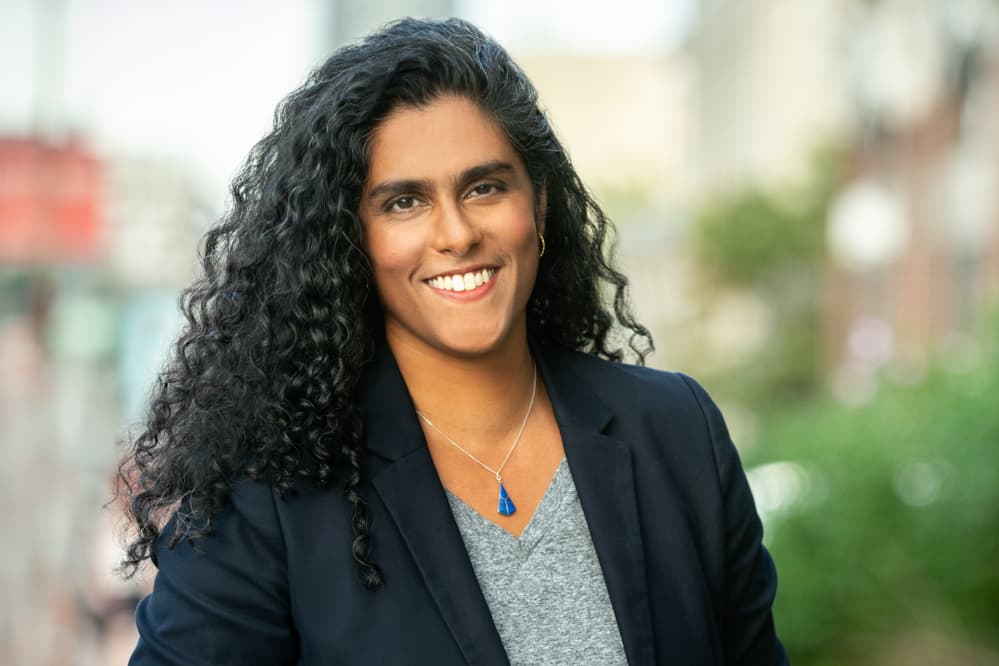
Seattle Mayor Katie Wilson had no prior political experience. She took over as the city faces an affordability crisis and a homelessness emergency. How's she doing roughly three months into the job?
Guest
Katie Wilson, mayor of Seattle.
Also Featured
Shawn Richard-Davis, former resident of Seattle's Central District neighborhood. Author of the article "In memoriam to Seattle's Central District."
Ty Griffin, program manager at the William Grose Center for Cultural Innovation, part of Africatown Community Land Trust.
Bridgette Johnson, owner of Central Cafe and Juice Bar in Seattle's Central District.
Bruce Drager, chairman of the Ballard Taskforce on Homelessness and Hunger.
Sam Thompson, owner of Seattle Biscuit Company.
Crystal Rawlings, Seattle resident who's been living in homeless encampments off and on since 2015.
Transcript
Part I
MEGHNA CHAKRABARTI: Seattle, Washington. Known for coffee, the Seahawks, the Space Needle, the rain.
But I also have learned that no one here carries umbrellas.
Oh no, we don't believe in that. How dare you carry an umbrella? Come on, man.
CHAKRABARTI: Amazon is headquartered here. Microsoft's headquarters are just across Lake Washington in Redmond.
A booming tech sector has drawn more than 60,000 people to Seattle in the past six years alone, and that means Seattle is also becoming known for expensive housing, homelessness, and an overall affordability crisis.
Talk to me about affordability.
It's not cheap.
Is stuff expensive?
Stuff is very expensive. Yeah.
What do you do?
I work in robotics.
Ooh, okay. So see, the tech influence is real. Okay.
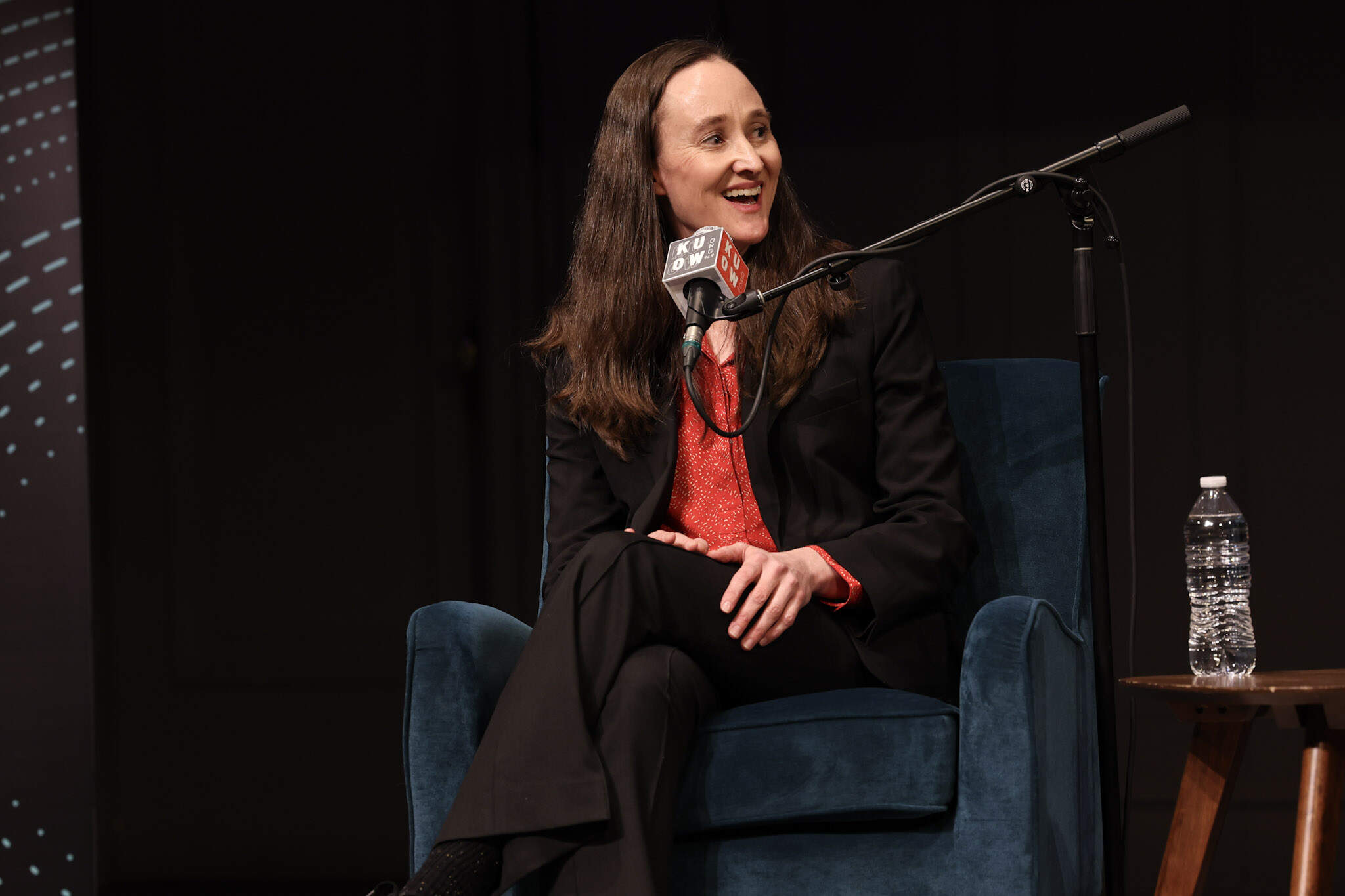
CHAKRABARTI: This is On Point. I'm Magna Chakrabarti, and you just heard on Point producer Claire Donnelly. She and I recently visited Seattle for a joint event with On Point Station, KUOW. We wanted to learn more about how this rapidly growing city is coping with being on the extreme end of a nationwide affordability and housing crunch.
Claire reported from various Seattle neighborhoods. I sat down for a conversation with the city's newly elected mayor. Back in November, the nation's attention was fixated on one self-described socialist running for mayor in New York City. Seattle also had a charismatic socialist candidate who won by just over 2,000 votes.
43-year-old Katie Wilson had never held or run for political office prior to becoming Seattle's newest mayor. She grew up in Binghamton, New York. Went to college at Oxford University in England, but she left Oxford just before graduation to pursue a different life. Wilson moved to Seattle in 2004 and worked for a living in boat repair, as an office assistant and in construction.
She then turned to activism, founding the Seattle Transit Riders Union in 2011. Mayor Wilson and I talked extensively about affordability in Seattle, but before that, for a woman with such an atypical political bio, I started by asking Mayor Wilson what makes her tick.
KATIE WILSON: Yeah, that's a really good, I don't know. I don't know. Yeah, I would say that I think and maybe this goes back to, again, I was raised by academics, biologists, and I think I was certainly raised with this sense of as I grew up, the sense of just what's the most meaningful thing to do? I really had an outlook of not find a job, find a career. And I was almost like anti that. I was no, I wanna figure out like, what is life all about? I studied physics and philosophy in college, I was like, I wanna get to the root of things. And so I think it was this kind of drive to, yeah. Just to figure out like, what's the best thing I can do?
What's the right thing to do? And do it no matter what.
CHAKRABARTI: I want to ask you a little bit about how the media described you during the campaign, because you were often cited in the media as a, quote, self-described socialist. Okay, now just for fun, I looked up the actual Oxford English Dictionary definition of socialism, and it is a political and economic theory of social organization, which advocates that the means of production, distribution, and exchange should be owned or regulated by the community as a whole, end quote.
(AUDIENCE APPLAUDS)
How do you define the kind of socialism that you wish to practice or believe in?
WILSON: That's a big question that we're probably not going to answer here. And, during the campaign, I am a socialist and I resisted questions about exactly what kind of socialist are you, and honestly, like right after --
CHAKRABARTI: But you won, so now you have to answer it.
WILSON: Yeah, and I'm not going to give you an entirely satisfactory answer. Now, sometimes, I will say like right after the election, results were clear. We got this like deluge of like national media requests, and everyone wanted to talk to me about socialism, and we just basically said no to all of them.
And I'll just say okay, I'm going to say a few things, but I didn't, I'm a socialist. I didn't, and I make no secret of that. But I didn't run as a socialist in the sense that I was not waving the socialist flag. So I think people elected me because I was talking about the issues that they experienced in their daily lives and see about them as the core issues that we need to address in Seattle.
People elected me because I was talking about the issues that they experienced in their daily lives.
Katie Wilson
(AUDIENCE APPLAUSE)
And I just, I think we're in a moment generally where people don't care that much about labels and they really wanna see results. And so I really was trying to make that core to what I was running on and now that I'm in office into the way that I'm governing, sometimes people say are you a socialist?
Like you think like the U.S. should be like Sweden or something like that. That would be a market improvement. But I will say that in many respects, at least, I don't but no, I'm a socialist in a way that goes beyond that. I actually think that we need a really fundamental restructuring of our society and our economy, and I think you can clap for that.
I actually think that we need a really fundamental restructuring of our society and our economy.
Katie Wilson
Okay. And I would, I might regret saying this, I would even say that I'm a Marxist, but I think that — okay. Okay. Although I think that anyone who calls himself a Marxist today has to be able to explain very clearly. What are those fundamental aspects of Marxism that remain relevant? Because obviously things have changed a lot since the 1860s or whatever. I think that you look at the kinds of labor that people, that our society needs, human beings to perform over time, the kinds of work that, and the kinds of production that like the market really excels at, are getting more and more efficient, more and more automated.
The kinds of things that we really need human labor for are like health care, education, combating climate change. Really collective projects, things that ideally are funded collectively, publicly. They're not things that make a profit. Where the way that our current economy works, the public sector and the things that we fund collectively and publicly, they kind of have to be funded by siphoning money off from private sector activity that generates profit.
And I think we have this growing imbalance where it's harder and harder to make a profit except through like speculation and doing things that really should be funded publicly, but doing them for profit. But the things that we need to fund publicly and collectively are growing and growing, and our ability to fund those by siphoning value off profit making activity, it becomes harder and harder. So that's a little bit of a big theoretical explanation --
CHAKRABARTI: But actually, no, let me follow up here. Here, I thought we were going to talk about housing, but this is far more interesting.
WILSON: Wasn't prepared to talk about this, by the way.
CHAKRABARTI: So when you say things that should be publicly funded, those public funds come from somewhere. So how ultimately is that different than, as you say, siphoning a percentage of profit from a capitalist system?
WILSON: That's the way that we do it now.
CHAKRABARTI: So are you recommending that some other different?
WILSON: Yes.
CHAKRABARTI: What would that be? Where would the money come from?
WILSON: So socialism, this is why it requires a really fundamental restructuring of life and work and the role of money or what money actually functions as. I don't have a blueprint. Okay. But --
CHAKRABARTI: Okay. Okay. Let me just ask you one more follow up on that, because, and the reason why this matters to me as a journalist is that all leaders naturally tend towards the solutions that are in line with their political values. And so if your political values are such that at the highest level you believe and desire that the fundamental restructuring of American society and the American economy, right?
What does that mean in terms of the kinds of restructurings you would like to see happen here in the city of Seattle.
WILSON: We're not going to get to that in four years in one city. Calm down. Calm down. But I'll say I think that this kind of informs my governing in a couple ways. One is that I believe also that the kind of fundamental change that needs to happen, that's going to be driven in large part from below, and I'm coming from a background as a community organizer.
I feel in my bones the ways that the things that I want to accomplish as mayor are only gonna be possible to the extent there are people on the outside doing that organizing, building that power. And so I want to govern in a way that really creates space for that. And that's really civic engagement, right?
That's like welcoming people into the process by which we are making the policies, making sure that we're not just governing from on high. So that's one way that I think my beliefs influenced my governing style. And then also I just really believe if we're going to move in a direction where we're doing things collectively through our government, right? People need to have faith in the government's ability to deliver. And I think we live in a time when people have lost a lot of that faith, right? And so I just, I think it's very important that we are governing in a way that restores that faith. And that means getting results.
That means being effective stewards of public dollars. That means delivering for residents in all of the ways that people want to see their government deliver for them. Because if we really believe in the public sector and in what it can accomplish, it's not good if people perceive their government as bloated and ineffective and et cetera, et cetera.
CHAKRABARTI: Yeah. So you are actually at a very interesting sort of fulcrum, which is going from being an activist to jumping directly to being the mayor of a major city. I'm just wondering what you've learned even so far about the difference between being an activist and being a policymaker.
WILSON: They're different. They're different. Yeah. And none of this is, was a surprise to me, like I think I knew what I was getting myself into. But yeah, I think as the mayor, I am much more in a position where, first of all, I'm representing the city in a lot of ways and also need to have, need to have relationships with pretty much everyone.
I need to have relationships with labor. I need to have relationships with business. I need to have relationships with people in all the different neighborhoods of the city, right? I think as an advocate, as an organizer and activist, you can kind of just choose your side, choose your issue, and go for it, right?
And the other side is the enemy. I think in this position, there's much more of a sense of, because of needing to have those relationships, you need to be able to disagree with people or with an organization on some things, and yet work together with them productively on others. I think that coming in, there was a pretty low bar of expectation for me in some quarters.
So I was able to hop over that. So that was nice. Just I think a lot of some of the large businesses were just happy that I was willing to talk to them. And also just as the mayor, everything is your problem, everything. And so which makes it like interesting and fun as well as stressful because in any given day, you're just thinking about 10 different totally different issues, right?
So just that sense of everything is your responsibility. You can't be like, no, that's not the thing that I'm focused on.
CHAKRABARTI: Yeah, no, the point about having to build relationships across the board is so vitally true and necessary. I'm just out of curiosity, have you met like Andy Jassy and you're like, Hey, let's talk about labor's share of national wealth.
(AUDIENCE LAUGHS)
WILSON: That conversation has not happened yet, but I'm looking forward to it.
Part II
CHAKRABARTI: In a few minutes, you'll hear more from Seattle Mayor Katie Wilson on how she hopes to pull back the city's high housing costs. But first, On Point producer Claire Donnelly visited Seattle's Central District and historically Black neighborhood to hear directly from Seattleites who are getting priced out of their community.
CLAIRE DONNELLY: On a Saturday morning, I take the number 4 bus to meet Shawn Richard-Davis, about 15 minutes east of downtown Seattle.
SHAWN RICHARD-DAVIS: Honey, the 4, so you did some history because I used to take the 4 from Seattle U back to my aunt's house.
DONNELLY: Richard-Davis grew up here in the Central District neighborhood, or as locals like to call it the CD.
RICHARD-DAVIS: I lived at 318 18th Avenue. I would walk from there to T.T. Minor, which was my elementary school. Go past the Immaculate Conception Church that's up there. I would go in some days to just put the holy water, dip a little and then just go. That's why I'm so blessed today.
DONNELLY: Richard-Davis doesn't live in the CD anymore, but she still remembers learning to swim at the Medgar Evers pool and her godfather opening her first savings account at the Black-owned Liberty Bank.
She says the CD was much different then.
RICHARD-DAVIS: You normally would see back in the day, Black folks walking around and now it's white folks everywhere you go on Union on Madison.
TY GRIFFIN: Seattle had a very unique atmosphere when it was about 90% Black people that occupied the Central District area. Today it's less than 10%.
DONNELLY: Ty Griffin is with the organization, Africatown Community Land Trust. He says the Central District started with a Black pioneer named William Grose. In 1882, Grose bought 12 acres of what was then just woods for $1,000 in gold coins.
GRIFFIN: His vision for that land was to create a space for Black people to actually purchase property to live and thrive in.
DONNELLY: Grose sold parcels of land to Black families. Over decades, the Central District became a hub for Black Seattleites, but racial restrictive covenants and redlining also made it nearly impossible for them to live anywhere else. In the eighties and nineties, the crack cocaine epidemic ravaged the neighborhood.
Then Griffin says, came the housing bubble and predatory lending of the 2000s, developers realized how close the Central District is to downtown Seattle.
GRIFFIN: Grab that land, tear down, redevelop, and push those who were not able to afford the taxes. You can't get back in. It's like a door that locks and you don't have your key.
DONNELLY: Of course, Seattle has also had a tech boom. More than 114,000 people have moved to the city since 2010. Over on East Cherry Street, Bridgette Johnson runs the Central Cafe and Juice Bar. It's less than a block from Garfield High School where she graduated from in the '80s. Now she lives within walking distance of her cafe, and she and her husband have a rental property around the corner.
BRIDGETTE JOHNSON: This is crazy. My husband, and I could probably say this, I don't think he'll get mad. He bought his house for $76,000.
DONNELLY: What year was that?
JOHNSON: It was like nineties.
DONNELLY: What do houses go for now on your street?
JOHNSON: Oh my gosh. Here, you can't even, I think $1 million, $800,000.
DONNELLY: The current median sale price for a home in the CD is around $900,000.
JOHNSON: More Caucasian people, of course, that's living in all these apartments that are $2,500 and above. It's so funny how they say, oh, that building has some low-income housing. And you think, you go in there and you go, what is the low income? No, they're still paying $1,800 a month.
That's not low income to me.
DONNELLY: Shawn Richard-Davis says it's not just about race when she says 'they' are taking over.
RICHARD-DAVIS: I don't necessarily mean white people, like who is they? Corporate, the establishment, the billionaires or the millionaires, people that have money, come and they gentrify.
The billionaires or the millionaires, people that have money, come and they gentrify.
Shawn Richard-Davis
They take out everything Black people had. And then what are they giving us back? We've got 23rd & Union.
DONNELLY: Richard-Davis points to where a Jack in the Box fast food place used to be. Her best friend worked there in high school. She remembers the old corner gas station and a soul food spot called Helen's Diner. Now there's an organic grocery co-op, a weed dispensary called Uncle Ike's and a local chain taco place.
There are Black owned businesses too. Colorful murals celebrate the history of the area and show the faces of Black historical figures. Richard-Davis appreciates all of this, but she still mourns the CD that was.
RICHARD-DAVIS: I have seen a number of these places sprout up and I always wonder could [my son] live there?
My son, even him having a good job, he still, he can't afford it.
DONNELLY: Former Central District resident, Shawn Richard-Davis.
CHAKRABARTI: On Point's Claire Donnelly in Seattle's Central District. In our special live conversation with Seattle Mayor Katie Wilson, I wondered if Seattle could even afford new programs to protect existing homeowners.
So I offered Mayor Wilson a comparison between Seattle and Fort Worth, Texas. Fort Worth also has a millennial leader, Republican Mayor, Mattie Parker. Fort Worth's population is about 1 million so bigger than Seattle's 800,000, but Fort Worth's city budget is less than half of Seattle's. $4.1 billion compared to Seattle's $8.9 billion budget.
There are structural differences, of course, Seattle has city run utilities, higher wages for city employees, higher construction costs, and the city delivers more social services than Fort Worth does. But the bottom line is this, Seattle spends roughly $11,000 per person to run the city. Fort Worth, $4,400 per person.
But other democratically run cities like Portland, Boston, and Denver. They also have a per capita spend rate that's half as much as Seattle's. So I asked Mayor Wilson, are Seattleites getting a bang for their buck?
WILSON: What first comes to mind for me is that the size of the government or how much we're spending per capita, it really depends on the nature and the scale of the problems that our government is called upon to solve.
And so we have a situation in Seattle where over the last 20 years or so, our population has just expanded so much more rapidly than our stock. And that in turn has driven our homelessness crisis. And so that means that then the government here is called upon to invest a huge amount of public subsidy in creating housing that is below market rate.
So I think that's just a very big difference that is not really captured when you just look at it as per capita spending on residents. Like we have a situation here, which is partly driven by policy like zoning that did not allow for the building of new housing to match the growing population, and partly by that growing population to come and feed our tech industry.
So we've got this problem that then the government has to spend a ton of money to try to solve and do that money is helping people, but it doesn't feel like we're making progress because the scale of the crisis is so big.
CHAKRABARTI: Okay. So I have some zoning and permitting stuff in just a second too but to your point about Fort Worth, does it have a housing crisis or not?
The answer is no. So I could do it in terms of median income, et cetera, et cetera, but the most salient numbers I think have to do with median home price in comparison to median income. So in 2000, Seattle median, the median home price in Seattle was about five times the median income. And by 2024, that rose to eight times.
Is a huge jump. In Fort Worth, Texas, in both 2000 and 2024, the median home price stayed steady at 3.5 times the median income. Did you want to say something about that?
WILSON: I'm just also thinking, so we're talking about housing, but I just want to, I want to give Seattle some credit too. Because I think when we compare two cities like that, also, again, like I'm not an expert in Fort Worth, but I'm guessing that their public transit system is probably not as good as ours.
And so that is another place where we have invested a lot. And I think that's really important because if we want to have climate friendly, livable cities, right? Investing in our public transit system is really important as opposed to having a car centric.
So that's just to say that we and the wider world are getting something from that investment that in Fort Worth where people are driving around a lot more.
CHAKRABARTI: Yeah, no, that's absolutely right. That's why I think the Seattle model of governments, you could call it high cost, high service. In a place like Fort Worth, it's low cost, but also lower or more regionalized services as well. Okay so let's talk about zoning, because as Claire also found out, when she asked folks, zoning and permitting came up over and over again as a lever.
A major lever that government can pull.
WILSON: Yeah. Okay. Maybe I can just explain this through my housing agenda. So I am on board with making it possible to build more housing in our great neighborhoods around Seattle, especially near transit. And so my administration is going to be trying to go bigger and bolder than the previous administration was in that.
And so we're doing a lot of work on that this year. And streamlining, permitting, all of that. So we're doing that. But in addition, so we have this new social housing developer in Seattle. And this was actually one of the big reasons why actually, the reason why I decided to run for this office, that is a kind of a different model of affordable housing than we have traditionally done here in the United States, it's publicly owned, permanently affordable, mixed income housing.
And this is inspired by cities like Vienna and Paris and other cities around the world where by creating a really robust non-market housing sector that is as close as possible to self-sustaining in the sense that because it is mixed income, it doesn't need a constant infusion of tax dollars.
So that I think is another really important intervention and project that I'm very on board with. And my administration's doing everything we can to support our new social housing developer, which now has a source of revenue from attacks on large corporations. That's very exciting. And another thing that we're working on is renter protections. So there's like a whole range of things that I think we need to do to address our housing crisis and kind of zoning and permitting reform is one of those things.
CHAKRABARTI: But I'm going to argue that it is a very big one.
WILSON: I agree.
CHAKRABARTI: It's something that government can actually do. It's boring, right?
But it's incredibly practical and it would have a very huge like impact because at the basis, not just in Seattle, but in every place that's experiencing a housing crunch. It's a supply side problem. And so I'm going to continue on with my, now it might be annoying to you guys, but comparison with Fort Worth, Texas.
(AUDIENCE LAUGHS)
CHAKRABARTI: So in Seattle it can take more than 170 days for mid-level housing projects to receive construction permits. So that's six months. Larger developments it can take over a year. In Fort Worth, who wants to guess how long it can take in Fort Worth?
WILSON: I'm not even, I'm not sure they even require permits in Fort Worth.
(AUDIENCE LAUGHS)
CHAKRABARTI: Oh, if you said six weeks, you're about right. It's two to eight weeks. Okay. The first review in the city of a permit is done in seven days, and here's why. Fort Worth issues permits in parallel, they do concurrent reviews, which as far as I understand is maybe not standard practice here in Seattle. They even have an X Team.
What's it called? They call it the X Team to assist applicants who are seeking expedited permit approval. I played around with the city's website that has tools like Scope My Project. You could literally go to the Fort Worth City website right now and look for this. And you can quickly input your project's location.
Its type, its size and some other information. And it will generate for you a packet of information about which permits you need to apply to. And then it walks you, the website walks you through the process to do that application. And here's the real kicker, I think. Fort Worth rarely does discretionary design reviews.
Whereas that's a major part of the permitting process here. So I gotta ask you, these seem like great ideas. Maybe boring, because they're very technical. And not like we're going to change the way the economy is structured. But --
WILSON: What was that?
(AUDIENCE LAUGHS)
CHAKRABARTI: It's my job to ask you questions that will force you to answer practically what you're gonna do for the city of Seattle.
Would you advocate for any of these changes?
WILSON: Absolutely. So we're, and I actually made an announcement earlier today at the annual event of the Housing Development Consortium, which is a very pro housing development organization here in Seattle that we are accelerating the next couple of phases in our comprehensive plan to basically do a lot of those things, right?
So we're both on the zoning side going to be trying to expand the distance from transit corridors that you're allowed to build multi-story buildings. At the same time, working on streamlining and speeding up permits. And we're looking at some options for design review as well. I don't want to get out of my skis here in terms of making public announcements.
CHAKRABARTI: But so Seattle is doing stuff, but I'm just trying to push like I love Simple. I'm here with you. I love simple with you, simple solutions to big problems.
WILSON: But after this event, I'm gonna text my team and I'm gonna tell them to look up Fort Worth.
CHAKRABARTI: Play around at Fort Worth. There's one more thing about permitting that I want to ask you because it gets back to what liberals like to tell themselves, and it's about that discretionary design review, what a lot of critics call an effective neighborhood veto.
Now, the history of that is actually quite important to understand because people having a say in what's done in their neighborhoods also has, that's an important thing, right? Because you were talking about redlining, freeways being built through neighborhoods, that kind of thing. We don't want that.
But at the same time now, it is a primary source of sometimes projects never even being built. Would you want to challenge how often a discretionary review could happen for projects?
WILSON: Absolutely. And as I said, we are looking at some options for design review. The phrase abolished design review has been uttered in the mayor's office.
I'm not saying that's what we're going to do. I was thinking you almost just made news there, but I'm trying to show you we're serious without, we're discussing options.
CHAKRABARIT: Such as?
WILSON: I just named one of them.
CHAKRABARTI: And another?
WILSON: Streamline design review.
CHAKRABARTI: I can do this game all night. Okay. But I won't torture you, I promise you. Okay. No, but that's interesting because I'm coming at this from living in the Boston area, so I know exactly the political minefield that is. You have two equally important constituencies, let's put it that way, that are actually ultimately in opposition to one another.
And somehow in democratically run cities that has to be resolved. It's a big job. I'm not saying that anyone can do it overnight, but it is a fundamental tension that I think could potentially hamper any new mayor's vision.
WILSON: Absolutely. Yeah. And I'll just say for my like general outlook.
I want to win in the sense that I want the initiatives that I put forward to be successful. And so that requires being strategic and building coalitions that can get ambitious policies over the finish line. Like I think there's reason and occasion to compromise, but I'm not someone who thinks that we just need to listen to everyone and choose the middle of the road all the time.
I think that sometimes there's big, bold things that need to be done and not everyone is going to be happy all the time.
Part III
CHAKRABARTI: You heard Seattle Mayor Katie Wilson say earlier that she believes high housing costs have significantly contributed to Seattle's large and growing homeless population. On Point's Claire Donnelly went to Seattle's Ballard neighborhood to learn more.
DONNELLY: Tucked between two industrial buildings in the Ballard neighborhood, a couple dozen tents are set up on either side of a paved road.
Bruce Drager pulls out a big zip top bag full of loose-leaf tobacco and calls into a tent.
BRUCE DRAGER: Crystal? Here you go. You want to. Come on. I'll make you a cigarette.
DONNELLY: Drager is with the Ballard Task Force on homelessness and hunger. He doesn't smoke, but rolling cigarettes is part of the way he connects with folks.
He pinches tobacco into a red plastic cigarette roller, and a woman makes her way over to us.
Oh, hi. Okay, good. I'm not on film, right?
You're not on film. You are on radio.
Okay, good. Oh, I am right now.
Yeah. I didn't know that. And then we go brush my teeth. Hold on a second.
DONNELLY: Bruce Drager is 73 with a white beard.
It's chilly in the wind, but he's wearing Crocs, shorts and a beanie. He and I sit down on some rocks about a block away from the encampment, next to a trail for bikers and walkers. A lot of encampments pop up near here. Drager estimates there are 600 people currently living on Ballard streets.
DRAGER: I used to know everybody's name.
I know over 500 names of people that are currently living in. That's why I know there's 600, because there's at least a hundred that I don't know the names of. Now as we're talking a young man in a dark hoodie ambles by. Drager recognizes him.
DRAGER: Alex, how's it going?
ALEX: Good, how are you?
DRAGER: Good. If you want to go to McDonald's.
ALEX: I'm okay for now.
DRAGER: Okay. Alright. Peace out. I'll say hi to your parents.
He's the guy that has been living here for three years and his parents didn't know where he was. He was, they lived down in Palm Springs and I keep watching for him and letting the parents know that he's alive and still kicking.
DONNELLY: Every time he sees Alex, Drager says he tries to talk with him about whether he wants to move off the street. Alex can't stay in an encampment.
DRAGER: He never stays with anybody because I think he has schizophrenia. And what he'll do is he will in the middle of the night, wherever he is, he gets up just screaming and scares everybody in the camp.
DONNELLY: Roughly one third of people living on the streets in Seattle's King County struggle with a serious mental illness, according to the 2024 point in time homelessness count. About 47% have a substance use disorder.
SAM THOMPSON: I would say within the past five years, it's gotten more visible and more prevalent.
DONNELLY: Sam Thompson owns Seattle Biscuit Company.
It's a restaurant about four blocks from the encampment I visited. He says, Ballard's homelessness crisis is hurting his business.
THOMPSON: A recent break-in that destroyed our walk-in refrigeration cost me over $25,000. It's like constant repair, constant, buy a new lock after this door gets damaged, buy a new window.
So there's just constant outpouring of money.
DONNELLY: Thompson says sometimes people wander off the street into his restaurant. Clearly in crisis, he worries about the safety of his employees and customers.
THOMPSON: They'll grab things off the counter, throw them around, yell, cuss. There's no police response if we call. So that's, we're truly on our own to deal with these circumstances when they occur, which again, it's scary.
DONNELLY: Periodically, the city of Seattle clears encampments in what are called sweeps.
They ask campers to leave if they do things like block roads or buildings, or have what the city calls an excessive amount of debris. Bruce Drager doesn't agree with that approach. It's something he says Seattle's previous mayor Bruce Harrell did a lot. He's hopeful Mayor Katie Wilson will handle it differently.
But according to city records, since Wilson took office, there have been around 18 encampment sweeps across Seattle and many more individual tents cleared. Seattle Biscuit Company owner, Sam Thompson, says he's sympathetic to the homelessness problem as a recovering alcoholic. He says he understands addiction, but he says things can't keep going on like this.
THOMPSON: I don't think clearing the encampments, I think that's something that maybe makes the government feel good. But it's far from any real solution because they, again, it's like whack-a-mole. They just move right down the block. I think there have to be pieces in place to address addiction as well, because honestly, temporary housing without treatment feels enabling again.
DONNELLY: Back at the Ballard encampment puffing on her cigarette Crystal Rawlings tells me she's been homeless in Seattle on and off since 2015. She says she's seven months clean from Fentanyl. Right now, she's sharing a tent with her boyfriend and three small dogs.
DONNELLY: How many times would you estimate you've had to move at this point?
RAWLINGS: Oh, let's see, since August, 1, 2, 3, 4 times. Four or five times. Five times since August. We're not all bad people. We're obstructions, we're abominations. I get it. Because of the open air drug use and like the theft and stuff like that. But not all of us are like that. Some of us really want better for ourselves.
DONNELLY: Crystal Rawlings at an encampment in the Ballard neighborhood.
CHAKRABARTI: That report from On Point's Claire Donnelly. In the final part of our live conversation, we played a part of that story to Seattle Mayor Katie Wilson, and here's how she responded.
WILSON: It's interesting that she mentioned that she's been homeless off and on since 2015.
That was the year that Seattle first declared a civil state of emergency on homelessness, and that's over 10 years ago, and it just keeps getting worse. Sometimes people ask me like, what are your top three priorities in office? And my answer is, homelessness. Homelessness. It's a tragedy for the folks who are living on the street.
And it also contributes to our public safety issues. It contributes to just the sense that our city is not a wonderful place to be out and about and spend time. And it contributes, from the point of view of our businesses, right, to a not ideal business environment.
So for me, I signed an executive order soon after taking office, which basically started the process of accelerating shelter, I've established a goal of in this first year, trying to open up a thousand new emergency housing and shelter units.
CHAKRABARTI: So we are 25% of the way through your first year?
WILSON: Yep.
CHAKRABARTI: How many, how far into that goal are you?
WILSON: So we're trying to do 500 in the first half of the year, and so we are actually next week gonna be announcing some of the first sites and trying to get those units up, I think in May.
We're moving as fast as we can.
CHAKRABARTI: But you also mentioned something else earlier that's really important about experiencing chronic homelessness, that people need those wraparound services often. Do you think Seattle right now is adequately offering those services? Would you like to enhance them?
WILSON: Seattle provides a lot of services, not enough, but I think part of the problem is not just the amount, but also the way that those services are provided. And for example, mobile treatment vans that are going around trying to provide drug treatment to like people living in encampments.
Then you lose track of that person and they're still living unsheltered, nothing against mobile treatment vans, actually. They have a very important place in the ecosystem. But the point I'm trying to make is that we create this system of dead ends where you're starting to provide a service, but then you don't have all of the pieces that are needed to make that really successful.
And like for example, when someone has a medical emergency and they go to Harborview Hospital, right? That is a moment where we should not be discharging someone back onto the streets. But that happens all the time.
(AUDIENCE APPLAUSE)
WILSON: And can so that's just to say that some of this is about aligning the different parts of the system better so that people aren't falling through the cracks as much.
And then some of it is also about needing more of everything.
CHAKRABARTI: So the first part actually offers a lot of opportunities to do more with the same amount of money.
WILSON: Correct.
CHAKRABARTI: But the second part, Seattle's budget is all also under strain right now, to put it mildly.
WILSON: Yes. We have a very large deficit.
CHAKRABARTI: The longer-term solutions, can they happen without additional funding?
WILSON: We're going to do as much as we can with what we have and as we're getting toward the budget process, we're going to be making some hard choices. And I campaigned on progressive revenue. We're also working really hard to figure out what the most viable progressive revenue options that we might be able to propose. But also, we are going to do, we're doing a very close review of all the ways that the city is currently spending money, programs and services and what's working, what's not working. And I think we need to not be afraid to stop doing things that aren't working very well and to do things that work well.
As we're getting toward the budget process, we're going to be making some hard choices.
Katie Wilson
(AUDIENCE APPLAUSE)
CHAKRABARTI: Yeah. So I think that interviewing mayors for me as a journalist is actually one of the most exciting types of conversations to have. Because the function of a mayor isn't just all the technocratic stuff, obviously, that I was talking about earlier, but it's also about advancing a vision. And I would suggest that successfully advancing a vision also requires acknowledging, as you just said, where things have gone wrong in the past.
That actually, when it comes to leadership, and just in my interviews with other mayors, I think that's the really hard part. Because sometimes you have to risk criticizing some of the ideas or let's say practices of your own sort of part of the Democratic tribe. It's more than just saying moderates didn't do a very good job. Do you think that it's worth applying the same sort of critical lens to the progressive wing of the Democratic party?
WILSON: I've already been doing that.
So I guess I'll go back to before I even was considering running for office and rewind the clock to January of last year and I had no idea that I would be here. But in January of last year, I wrote a piece for The Stranger, which is our local alternative weekly called Where the Left went wrong on Homelessness.
And it was criticism and also self-criticism. And really trying to understand, this was trying to understand kind of the last couple election cycles, which from a progressive left perspective, have been real backlash elections where kind of candidates who are more perceived as law and order.
Tough on crime, tough on homelessness in a way that we on the left don't always agree with, got elected. And that piece that I put out there was very controversial among folks that I'd been organizing with for years and years.
CHAKRABARTI: I actually read that article twice.
WILSON: Oh, thanks.
CHAKRABARTI: It's really good.
I actually highly, I highly recommend it. And as you said, you published it in January of 2025. And there's some specific parts of it I'd actually like to hear more about. So for example, you write, the central weakness of the left narrative on homelessness is the habit of deflection that makes it sound at best as though we are in denial about the grim reality on the streets.
At worst, like we embrace it. So basically, you then say that this habit of deflection trivializes what anyone who spends some time walking around Seattle streets can plainly observe. That's the best sort of summation I think, of what a lot of the criticism that the left comes under from the right and it's an accurate one.
So how would you go about recommending to the progressive left to disabuse itself of this habit of deflection?
WILSON: Speak in plain terms that people understand and that resonate with what they're experiencing every day. And I think that there is an element of you walk around the city and it feels dystopic, right?
People who are having mental health crisis in public or actively using, sometimes selling drugs and that's not good. And I think part of what I was critiquing in that piece is that there was I think a habit on some parts of the left of just like not wanting to talk too much about drugs and mental illness because of wanting to uphold this image of a homeless person as someone who's like just happened to fall on hard times and missed a paycheck and lost their housing and just needs an affordable place to live. And yes, there are homeless people like that out there, make no mistake.
The folks who are often causing the greatest impact on the neighborhoods that they're living in public in, are folks who are often chronically homeless and experiencing mental illness and substance use disorder, and we just can't be afraid to talk about that and to talk about that with compassion and understanding. Because I think any time that you sit down and understand an individual human being and the life that they lived and the experiences that they've had, and often, people who are addicted to drugs, usually there's underlying trauma, right?
And drugs end up being a way to self-medicate. I've heard multiple times kind of the experience of using, like, fentanyl described as being like, it's like you're being loved. It's like you're being hugged. So there's like deep emotional needs that are often being filled by drugs.
But anyway, it's just like we can't turn away from those tough conversations and recognize the magnitude of what we need to do to solve the crisis.
CHAKRABARTI: Again, I keep reminding myself, I have to keep remind, reminding myself that you're in month 4, 3.
WILSON: We're not even done with three.
CHAKRABARTI: Three, okay. At the end of this year, if you look back, at the end of this year, what do you want to say that you have achieved beyond the 1,000 emergency shelter options?
WILSON: On that, I will just say that's not really the meaningful number, right? I think the meaningful number is how many people are sleeping unsheltered on our streets and dramatically reducing that number, I think would really constitute success on the homelessness crisis. And so that's something that I really wanna achieve. Yeah.
(AUDIENCE APPLAUSE)
CHAKRABARTI: Everyone, I should tell you that I believe this is the sixth large audience event you've done today.
WILSON: Today's been a day.
CHAKRABARTI: So your new mayor possesses both poise and an incredible amount of resilience.
(AUDIENCE APPLAUSE)
WILSON: Can I say something about this job?
CHAKRABARTI: Yes, please.
WILSON: So being the mayor. So I've been here for just a few months. Being the mayor is the best job in the world. It really is. And I feel like the work that I was doing before becoming the mayor, sometimes it felt like pushing a large rock uphill, being the mayor is like playing ping pong and also pushing multiple large rocks uphill at the same time.
But first of all, I'm a mother, so I love multitasking, but also, I have a lot of great people working with me at it, pushing those rocks uphill and playing ping pong.
The first draft of this transcript was created by Descript, an AI transcription tool. An On Point producer then thoroughly reviewed, corrected, and reformatted the transcript before publication. The use of this AI tool creates the capacity to provide these transcripts.
This program aired on April 16, 2026.