Support WBUR
How can you be drunk without drinking?
A mysterious condition can push your blood alcohol level sky-high — even if you haven’t had any drinks. What causes auto-brewery syndrome — and what are the legal and medical implications?
Guest
Dr. Bernd Schnabl, professor of medicine and co-director of the San Diego Digestive Diseases Research Center at University of California San Diego.
Barbara Cordell, president of the organization Auto-brewery Syndrome Advocacy. Registered nurse and auto-brewery syndrome researcher. Co-author of the 2025 paper “From Bacillus Criminalis to the Legalome: Will Neuromicrobiology Impact 21st Century Criminal Justice?”
Joe Marusak, attorney specializing in criminal defense and plaintiff personal injury.
Also Featured
Karen and Scott Evenson, husband and wife. Scott was recently diagnosed with auto-brewery syndrome after roughly a decade of symptoms.
The version of our broadcast available at the top of this page and via podcast apps is a condensed version of the full show. You can listen to the full, unedited broadcast here:
Transcript
Part I
DEBORAH BECKER: On a Thursday night in 2024. Karen and Scott Evenson were at their church in Anoka, Minnesota, where Karen's a pastor. After the service ended, Scott went looking for something to eat and found some pasta.
SCOTT EVENSON: It was in the refrigerator at church. It was a leftover, and I just thought, I'm going to eat this.
I'm hungry.
BECKER: Less than an hour after Scott ate the pasta, Karen says, he started acting drunk.
KAREN EVENSON: It was incredible. Everybody else pretty much had left after church that night. He couldn't stand up straight, tried to sit him down, get him drinking some water, he fell, he got up again to go throw the water bottle away and fell.
And I had a few people were left over and helped us get to the hospital.
BECKER: At the ER, the doctors gave Scott a blood test. He was drunk. His blood alcohol content was 0.345. That's more than four times the legal driving limit. But Scott hadn't had anything to drink.
KAREN: The MD there, the attending physician said, this makes no sense.
Now, he shouldn't even be talking, let alone even walking or moving around. He should be in a coma, right?
SCOTT: They couldn't believe that, and I certainly wasn't functioning well, but I was alert and communicative. It seemed really bizarre.
BECKER: And this wasn't the first time that something like this had happened to them.
Scott was a social drinker, but for years off and on, Karen noticed that sometimes even when he hadn't had any alcohol, Scott would slur his words or seem off balance. He could also get belligerent. Karen says when she told doctors, they often just assumed Scott was a closet drinker.
KAREN: When we would try to go in and get care, it was, he is just drinking.
He is just this, I can't even tell you that. He went for a test. At one point, the nurse came back to me and asked me, so how much did he really drink? And it was just, it was like that a lot. We heard that kind of treatment a lot.
BECKER: Scott was recently diagnosed with a rare condition called auto-brewery syndrome.
It's when someone's gut ferments its own alcohol, that alcohol gets into the bloodstream and makes that person intoxicated. Karen initially learned about the condition online. She estimates that Scott has had hundreds of episodes or flares, as she calls them over the past decade or so. She says high stress and fatigue can trigger them, plus eating carbs and sugars.
They've spent the past couple of years carefully monitoring Scott's diet.
KAREN: He is now trying complex carbohydrates. Which is a huge deal. Things that will digest more slowly. Oatmeal has been the greatest gift. And adding some strawberries back in and some, is there something else?
SCOTT: Pasta or popcorn.
KAREN: Not pasta. I was gonna say no pasta.
SCOTT: Yeah. Not pasta. Popcorn.
KAREN: Not pasta, but popcorn because it's a slowly digesting food. So now we've got three things that he hasn't been able to have in his diet for years. And so this is, it does give us a lot of hope.
BECKER: That was Karen and Scott Evenson in Minnesota.
Today we're looking at this auto brewery syndrome. What do we know about it? How does it work, and what are the medical and legal implications? Is auto-brewery syndrome a potential defense for someone with this condition, who's pulled over for drunk driving? And what does all this say about the gut-brain connection?
We're going to start the conversation today with Dr. Bernd Schnabl, a professor of Medicine and co-director of the San Diego Digestive Diseases Research Center at the University of California San Diego. Dr. Schnabl, welcome to On Point.
BERND SCHNABL: Hello Deb, and thank you for having me.
BECKER: Can you tell us what's happening here with Auto Brewery Syndrome?
What's happening in the body?
SCHNABL: Yeah, so auto-brewery syndrome is really a rare diagnosis. In the rare condition, we are actually, the microbes in our body, so mostly in the gut or predominantly in the gut, like bacteria and yeast or other fungi, they can ferment carbohydrates like for example, glucose or other sugars into alcohol.
So the body really produces its own ethanol. That's the type of alcohol that is being produced. The ethanol is then being absorbed into the bloodstream. And like we heard before, these people can develop symptoms of intoxication. They can have, if they have not high enough blood levels, they can be dizzy, slurred speech, but then they can, on the other hand, they can be also completely intoxicated.
And again, without drinking. And that's often linked to a imbalance in the gut bacteria and yeast. And as we also have heard, it can be triggered by really high carbohydrate meals.
BECKER: So it's rare you say, but roughly any ideas of how many people you think might have this, or at least how many people you've come in contact with who might have this.
SCHNABL: Yeah, so this is a very good question. We believe it's a rare condition, but in my hand I think it's probably rarely diagnosed and certainly probably underdiagnosed. We don't have a very good number of how many people have it, like in our population, we are trying to set up currently a study where we test systematically just all cameras for production of alcohol in their gut and that we can detect them in the peripheral blood from these.
From these participants, from the research participants. But again, we don't have really good idea how many are generally affected in our general population. And we published a paper or a study like earlier this year, and we had, we collected and enrolled 22 patients with auto-brewery syndrome.
Like over the last probably five to six years from all over the United States. So as I said, it's currently, it's a rare condition.
BECKER: And so how would you diagnose this then? Diagnose this? Would it be blood tests or what do you do?
SCHNABL: Yeah, so this is one of the challenges that these patients are facing because they need to have a firm diagnosis.
And if a patient has like low blood alcohol levels and have very mild symptoms, like a little bit dizziness. A little bit of, many patients describe it as brain fog. It's very hard to diagnose because few physicians then, if they show up with their primary care provider would check the blood alcohol levels in these patients.
On the other hand, like if somebody's really intoxicated, like we also heard from these patients before, they are going to the ER, they are really intoxicated, then we know that they have high blood alcohol levels and that obviously should raise the suspicion of a physician if a patient does not drink any alcohol or socially alcohol of potential diagnosis of auto-brewery syndrome. So we can essentially diagnose auto-brewery syndrome. And we have to diagnose this in every patient very strictly. And we have two tests. One is that in a supervised condition. So typically in the hospital or in an outpatient setting, these patients are being monitored for their blood alcohol level.
And if they are in a flare and if their blood alcohol arises, like over time, again, under supervised conditions, no alcohol drinking. This essentially confirms the diagnosis of auto-brewery syndrome. And the second test we often also use is that we actually give these patients our glucose challenge.
So we give them, between 75 to 200 grams of glucose, they drink it, this is a liquid, and then we monitor their blood alcohol level like over time. So every hour. And then if again, under supervised conditions in a hospital or outpatient setting, the blood alcohol level rises in these patients.
The diagnosis of auto brewery syndrome has been confirmed.
BECKER: Do you have any idea here? Is this sort of a digestive malfunction? Why does it seem that some people's microbes do this and other people's don't?
SCHNABL: Yeah. This is also a very good question. We do not have a very good idea why most of our patients actually develop auto-brewery syndrome. We have a few ideas about an imbalance between the good and the bad microbes in our body. And this can be triggered by more these fermented diets that we have more of this bad bacteria that potentially can produce alcohol. We have in our series of our 22 patients, we have one patient who received chronically antibiotics for a chronic infection, and that clearly triggered it in this case.
We also, other case reports in the literature reporting the same phenomenon. Chronic antibiotics disturb the microbiome, get an imbalance in the gut microbes, and then this can then trigger auto syndrome. So there are a few hints, but overall, I think this is still a black box for us.
That's obviously we are trying to do more research. Why are these patients developing these conditions?
BECKER: And as we heard from Scott in Minnesota, his blood alcohol level was so high enough that he shouldn't have been functioning. So what does that suggest in all of this?
SCHNABL: Yeah, this suggests that in this very severe cases, we have a complete imbalance from the gut microbes and the blood alcohol or the ethanol that is produced in the gut is just absorbed into the bloodstream. And then these patients then function like if they would have drunk just regular alcohol.
So this is really the very severe condition in this case. Probably, and I'd have to mention this was also one of our findings from our study and not initially surprising to us. But when we then look back into literature, it's not that surprising that in fact, like everybody from us, even a healthy person makes some degree of alcohol in the gut.
But this alcohol is then, very small amounts and this alcohol is immediately probably metabolized either in the gut or some if you have a little bit more alcohol that goes to the liver. The liver is our central organ for metabolizing alcohol. Even if we drink it. And so in a regular steady state conditions, we, as healthy persons, we would not have any intoxication symptoms.
But in patients with auto-brewery syndrome, their production exceeds the capacity of our body to metabolize it. And then they get this feeling of intoxication.
Part II
BECKER: Dr. Schnabl, one thing I wanted to ask you about before the break was, what do health care providers know about this rare disorder? And do you want to get the word out? Are you trying to get the word out so folks may be able to help people like we heard in the beginning of the show, Scott, who has auto brewery syndrome.
SCHNABL: Yeah, definitely we want to get the word out. So we want to, we need to make physicians more aware of the diagnosis of auto brewery syndrome. And if a patient is really intoxicated, I think it's then the physician then checks the blood alcohol levels and sees that the blood alcohol level is elevated.
And if the patient denies any drinking, that should really trigger a differential diagnosis in the patient, with the physician. Could this be potentially auto brewery syndrome? But it is, even with my own physician colleagues, if I give a talk and present our very hard data, scientific data showing microbiome changes in these patients. I always have somebody afterwards, after the talk, come up to me and say, I don't believe it. So I think this is almost like a hurdle we have to jump to really convince on a scientific basis, to convince our physicians that this syndrome is really existent and indeed that the body can produce so much alcohol in these patients with auto brewery syndrome that they are intoxicated.
So this is definitely a hurdle we have to jump.
BECKER: And also, then how do you treat it?
SCHNABL: Treatment is very difficult. Most of our patients that we have in our cohort, they are on a carbohydrate low diet almost exclusively. They are, they know, these patients, if I have a carbohydrate rich diet that would trigger a flare of their symptoms.
We have currently a study ongoing. This is NIH funded and also FDA approved where we actually treat eight patients with fecal microbiota transplantation. So in this case we have capsules. And in these capsules, there is stool from a healthy donor. And these patients would take these capsules and then we would try or aim at replacing this imbalance in the gut microbes in these patients with a more healthy donor transplant.
So from this healthy donor. So this is one options we have. We have not concluded the study, but at least some patients it looks like that they are very nicely responding to this. But otherwise it's very hard for these patients to get any treatment. So there are a lot of empiric treatments by physicians who have diagnosed the patients with syndrome, they get antibiotics, they get antifungals, they get probiotics. So many of these empiric treatments, in some cases, they work, in other cases, they don't
BECKER: . Why do you give antibiotics if you think that antibiotics may have severely disrupted the microbiome to begin with and helped cause this.
SCHNABL: That is a very good question. So in our study, we actually were able to link the production of the alcohol in most of the patients to bacteria. So these bacteria, for example, E. coli or Klebsiella pneumoniae, we can actually take them out from the stool from these patients, put them into a culture tube, and then these microbes would make alcohol.
So very convincing and to really get rid of this bacteria, the only options we have is we need to still use antibiotics to eliminate them. As I mentioned, fecal microbiota transplantation. Currently in the research stage might be an option for the future.
BECKER: I'm gonna bring another voice into the conversation right now.
Someone who's trying to bring more awareness to this disorder. Barbara Cordell, president of the organization, Auto-brewery Syndrome Advocacy. She's a registered nurse and a researcher. Barbara, welcome to On Point.
BARBARA CORDELL: Hi Deb. Thanks for having me.
BECKER: Yeah. So we've been talking with Dr. Schnabl about auto-brewery syndrome, and you have a personal story about how this has affected you and how you became involved in your advocacy and your research.
Can you tell us a little bit about that?
CORDELL: Yes, so my husband Joe had some episodes back in 2004 that were unexplained. He would be slurring his words and having mental confusion, and this went on for a couple of years. We took him to all kinds of doctors to try to figure out what was wrong with him. And finally, one day I thought he was having a stroke, and so I took him to the emergency room and found out he had alcohol in his blood, and I was shocked.
I really had never heard of anything like this, but I started looking online and found the term auto-brewery syndrome, and so I really suspected that was what he had, and we were fortunate that we found a gastroenterologist that would read the literature, examine my husband, and diagnose him and treat him.
So that's how I got involved with this whole thing. Once we published his case study, then I started getting calls from all over the world and I really felt like I wanted to help these people. I didn't want them to have to go through what I had to go through searching and trying to figure out what was wrong with my husband.
So I started a nonprofit organization.
BECKER: And how was your husband treated?
CORDELL: He actually was given antifungals because they were able to culture fungus out of his stool. But that was before we had the metagenomic testing that we have now that Dr. Schnabl was talking about. So it was that empirical treatment.
They tried antifungals, they put him on a low carbohydrate diet, and he did take some probiotics as well.
BECKER: And is he fine now? Did that work? Did he stay in remission, or do you have to constantly monitor this?
CORDELL: He is fine. He was very strict with his diet and stayed on it for over a year. He took the probiotics and that's been 15 years now.
He's been without an episode, and so we do use the word cure with him now.
BECKER: Okay. And you mentioned a gastroenterologist, I wonder, and we're talking 20 years ago, right? I wonder how difficult was it for you to find a health care provider who would look into this as a possible cause for some of the symptoms that your husband Joe was experiencing?
CORDELL: It was very hard. Most practitioners had not heard about auto-brewery syndrome any more than I had, so it was very rare, very scantily published in the literature. And so we did have a hard time finding a doctor. We were very fortunate to have someone who would at least read the two or three case studies that we presented him with and entertain the idea that this could be possible.
And I wonder, Dr. Schnabl, what do you say to folks who likely are still having difficulty getting health care providers on board here and getting treatment if they may have auto-brewery syndrome? What's your advice?
SCHNABL: Yeah, read our studies. That's my advice and listen to our talks. As I mentioned before, we can take for example, the stool from a patient with auto-brewery syndrome and as controls, we actually have the stool from healthy household partners.
And when you just take the stool from the auto-brewery syndrome patients into the culture tube and add glucose so that they can ferment the glucose into alcohol, the blood, the alcohol level in the culture tube. So out from these patients was actually much, much higher in the patients with auto-brewery syndrome as compared to the healthy household partners.
What we had an additional control, just regular ... who are also healthy. So that is the most convincing scientific evidence. Yes. The microbes, the microbiome from these patients can produce alcohol. I think if I cannot convince anybody with this scientific evidence, then it's very hard to convince them at all.
BECKER: Yeah. And do you think that this has implications for other potential disorders that may be in the early stages of research that link the gut to the brain and behavior?
SCHNABL: Completely correct. So I think we have already linked the production of alcohol. And this is not in patients with auto-brewery syndrome.
These are more these patients that I described before. Everybody from us produces some alcohol in the gut. They are then, this patients who have a little bit more production of alcohol and that goes to the liver and is metabolized in the liver. And these patients then develop fatty liver disease.
They can actually develop fibrosis and even like end stage liver disease, a condition we call cirrhosis. So there is a clear link from these, from alcohol production in the gut to liver disease. But these patients, again, they are not auto-brewery syndrome patients. Their blood alcohol level is usually below the detection limit, but you're completely right.
So this could have actually much broader implications, could this affect just behavior in patients. And we know this, they have dizziness, they have brain fog. So this is a clear gut-brain axis connection.
This is a clear gut-brain axis connection.
Dr. Bernd Schnabl
BECKER: All right, Dr. Bernd Schnabl, professor of medicine and co-director of the San Diego Digestive Diseases Research Center at UC San Diego.
Thanks so much for being with us.
SCHNABL: Thank you for having me.
BECKER: Barbara Cordell, I want to go back to you and I'm wondering if you could tell us because you've been an advocate for so long and have been studying this Dr. Schnabl recommended some studies that he's doing and some estimates that he thinks of how many people may have auto-brewery syndrome, but as he explained, it's likely underdiagnosed. What do you think, how many people might have this sort of disruption in their microbiome that's causing them to appear to be intoxicated when they haven't had any alcohol?
CORDELL: I think it's much bigger than we know. I think it is, he mentioned that it's underdiagnosed and I believe that as well. In the last 15 years, I've been contacted by over 3,000 people who think they have auto-brewery syndrome, and they're struggling to find a doctor who will even do the differential diagnosis and say, No, you don't have it. Or maybe you do. So it's really difficult to say. I've also been in touch with about 300 people who have been diagnosed by a medical provider. So while it is rare, I do think it's underdiagnosed.
BECKER: So health care providers are at least learning more about this, and some of them may be willing to, able to diagnose this as a syndrome, as a disorder, and provide treatment.
CORDELL: Yes, and I spend most of my days trying to educate health care providers. I do that by writing journal articles. I have written a book, and I will mail my book out to any health care provider who will read it. I also talk to a lot of lawyers and try to educate them. And we actually get, every once in a while there'll be a episode on television, and an evening television show that mentions auto brewery, something like The Good Doctor or ER. And we love those mentions because at least it gets the word out there and people are aware of it. Start thinking about it. Maybe they will go and look at the science.
I suspect you can't bill insurance for this kind of treatment.
So that's gotta be an obstacle.
CORDELL: That's very much a challenge, and that's one of the things we work on too, is trying to find ways to even do the testing. Because the testing is not typically authorized by insurance. And so we try to work around that and figure out ways to help pay for that.
BECKER: I wonder did your husband ever get in any legal trouble? Because I think what we're hearing about here really is some of the legal implications of this. Someone getting pulled over for drunk driving and it's really something that their body's doing naturally. There's no criminal intent or anything.
Did that happen in your case?
CORDELL: It did not happen to my husband, but I have talked to dozens and dozens of patients who that's often the first time they even know they have a problem is that they're stopped and given a DUI or a DWI, and then they say I wasn't drinking. I can't imagine what happened to me, and so then they start looking online and somehow, they end up with me and then we talk about that and say, but I've been involved with a number of people who have legal difficulties. And I've even testified in a number of cases.
BECKER: Which brings up this idea of a legalome.
Can you explain that?
CORDELL: The legalome is a combination of the legal justice system and omics, which is a study of microbes. And so how that intersects. And we know that, for example, we talk about the genome, which is a collection of genes. When you talk about the microbiome, that's a collection of microbes.
And so when you intersect that with the legal justice system, we're talking about how these microbes can affect our behavior. And especially when it comes to illegal behavior.
BECKER: And so far I would imagine that courts are not willing to embrace this connection that you're talking about and saying that there's some sort of potential genome-microbiome connection to criminal behavior.
CORDELL: You are correct. So far that I have, we have not found a court system or a judge or a jury that has said, we believe auto-brewery is real and this case should not go forward. We have had a few cases dismissed though, so I think there are many courts that are beginning to realize that this is a possibility.
So that's good news.
BECKER: And you've testified in some of these cases you said.
CORDELL: Yes, I have.
BECKER: And they still don't win. You explain your research and you're still not winning.
CORDELL: I've done about 10 cases and three or four, I think four of them have been dismissed, which again, I think is a pretty good start, that we're beginning to see there is some doubt there that they're saying maybe this could be real, so we'll just dismiss it. No one's quite willing to put that in writing yet. To set a precedent, but we're looking for that case for sure.
BECKER: Yeah. Yeah. Now, one of the things we talked about with Dr. Schnabel was how high someone's blood alcohol level can go and how unusual that is. For most people, that would be very debilitating, and yet some folks with auto-brewery syndrome are able to function, even with very high blood alcohol level.
But also, Scott, who we spoke with at the top of the show about his symptoms of auto-brewery syndrome also said that after he went into remission, if you will, or was cured, however you'd like to describe it, he started craving alcohol and hiding his drinking, and he had to be treated for alcohol use disorder and he's now on medication for that.
So I wonder, is there something happening here about perhaps the body feeling that it needed this alcohol and that's something that may be a contributing factor? Do we know anything about that yet?
CORDELL: We do in the auto-brewery community, we have a number of people that experience those cravings, and it makes perfect sense because you have endogenous ethanol coming from the gut.
It goes into your bloodstream. It works on your brain chemistry, and so people do develop addictions, cravings. It makes perfect physiological sense. Now, whether drinking contributes to or as a result of? We don't know that yet. It could be two things going on at once. It could be that alcohol use disorder develops after auto-brewery syndrome.
We just don't have enough information, but we certainly are looking into that.
Part III
BECKER: We're going to bring Joe Marusak into our conversation. He's an attorney specializing in criminal defense and plaintiff personal injury. He's of counsel at the law firm, Kloss Stenger & Gormley. Also with us is Barbara Cordell, who's president of the organization, Auto-brewery Syndrome Advocacy. But Joe, I wanna go to you first. Welcome to On Point.
JOE MARUSAK: Hi Deb. Hi Barbara.
BECKER: Okay. Hi Joe. We should say you two know each other because Barbara was one of the experts you used in a DWI case in 2019 that actually talked about auto-brewery syndrome because the person charged had that syndrome.
Tell us about that case, Joe.
MARUSAK: It happened when I got a call from someone that I knew whose spouse was arrested for DWI. And I was told that although the couple had some drinks for brunch into the afternoon, they hadn't had any since then. But what happened was as my client was driving home after going to the grocery store, she got a flat tire.
Somebody thought that my client was driving erratically. Police stopped my client. She exhibited according to the police officer signs of intoxication, and they drew, or they did a breathalyzer. She registered a 0.30, which was more than, at the time, it was three times the legal limit, got arrested.
And by their protocol, because the blood alcohol content was so high, they had to send my client to a hospital. And my client and their spouse were dumbfounded because my client believed that he wasn't drunk, had the hospital blood test them, and it came up a 0.33.
BECKER: So it kept going up.
MARUSAK: So they called me and I knew both ... my client and my client's spouse. So I said, and I believed them when they said, look, there's no way that my client was intoxicated. So I told them, so there was really no roadmap, no legal roadmap for me to figure out what to do in this case. So I did a little computer search, engine search and came up with some articles on auto-brewery syndrome and Barbara Cordell's name and so I contacted Barbara. She gave me a lot of great advice about what research articles I should look at as a first step and then indicating that you need to get this medically diagnosed. Before I did that, I thought it would be best to see if this was in fact the case.
BECKER: Yeah, why wouldn't you think it was the testing equipment? Maybe they were testing wrong.
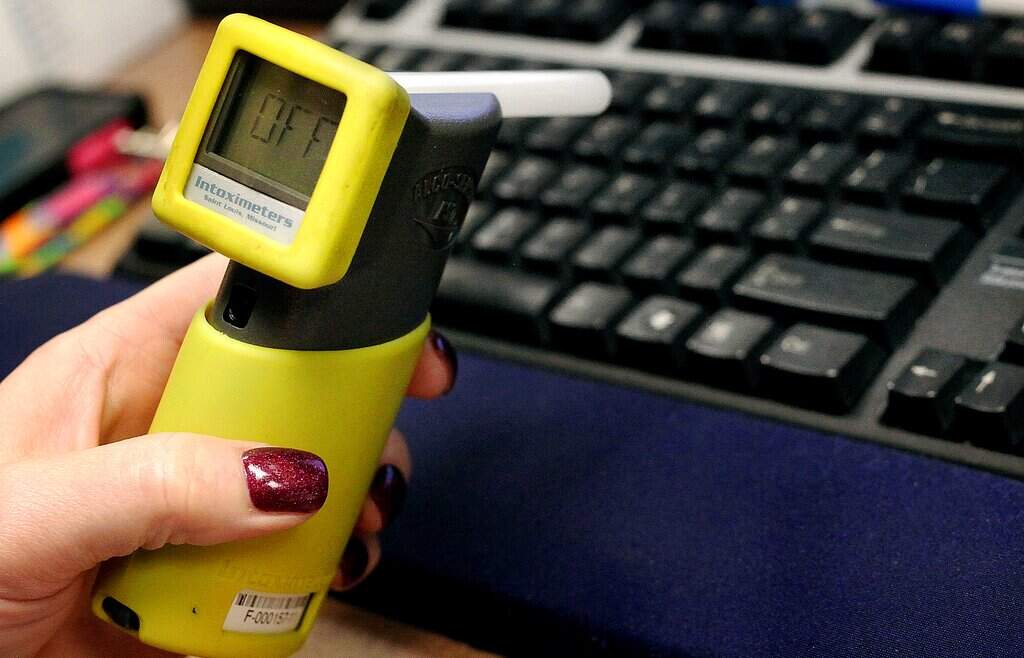
MARUSAK: Exactly. Exactly. So I had my client purchase a portable breathalyzer device. You can get it, I just looked online and there's a whole bunch of 'em now available from about $90 to $200 and some dollars.
And my client then tested every night after work and it was above 2.0 and they hadn't been drinking. So I said, okay, I think we've got something here. Again, through Barbara Cordell's advice, I was able to contact Dr. Kanodia outside of Columbus, Ohio, and he and his staff were fabulous and they said, look, you gotta get your client here.
We will do very exhaustive testing to confirm that my client may have auto-brewery syndrome. That's what happened. We, she had, my client had to go there a number of times, undergo a battery of extensive testing, had to be evaluated by forensic laboratories and was able to get an affidavit from Dr. Kanodia laying all this out and putting, and he was a board certified family medicine specialist. Able to get an opinion within a reasonable degree of medical certainty that my client had auto-brewery syndrome. So that didn't end it. Because I said I talked around in the local legal community and no one believed me.
Defense lawyers didn't believe me, judges didn't believe me. So I had, and then I said, okay, we're going to do a monitor testing. I first wanted to see if we could get a hospital to do this or a clinic, and nobody would do it for insurance reasons. So I had to hire two nurses and a physician's assistant, and they continually monitored my client from nine in the morning until nine at night to make sure she wasn't, my client wasn't drinking. And they would, I had to go to court to get a court order to allow me to withdraw my client's blood.
Store it in a refrigerator and then take it to the forensic lab that the district attorney's office uses. So we did that. My client was a 0.18% at nine o'clock in the morning, almost double the legal limit at 6:15, .25% and at 8:48, 0.37%. So I got those results. I had to hire a pharmacologist to explain my client and my client's spouse prepared affidavits as to how many drinks they had early afternoon. The pharmacologist said if you had those drinks, your blood level would be somewhere between a 0.01 and a 0.05, which is nowhere near the legal limit. I presented all that paperwork to the judge and asked the judge to dismiss the case in the interest of justice.
The district attorney's office opposed it, but they really didn't put in any evidence to counter, to offset my medical evidence from Dr. Kanodia and the pharmacologist.
BECKER: What could they say?
MARUSAK: They would have to do their own investigation, hire their own expert. They didn't wanna do it.
It was a misdemeanor DWI case. And the judge ended up dismissing the case in the interest of justice.
BECKER: But there was a lot of skepticism and there's still a lot of skepticism. So this case is dismissed, so that means there's no ruling here that could be legal precedent in other cases.
MARUSAK: He published; he wrote a decision. And but unfortunately, the DA's office did not appeal it. There's no appellate court that has published a decision on my case. So my case lawyers in Western New York, they could get this decision and submit it, but it doesn't necessarily have any precedential value.
In other words, a judge doesn't have to follow what this judge did. So it's just, it can help, but it can't cinch the deal.
BECKER: Before we get to some of the legal implications, do your client, did your client get treatment and your client's okay now?
MARUSAK: Yes. Yes. Dietary. I'm not sure if my client got medication, but after this I had contact with my client and they're doing fine and keeping things under control.
BECKER: So I wonder, what do you think some of the implications for auto-brewery syndrome might mean for the justice system? And I think in particular, how do you make sure, because it's so new, in part, how do you make sure that you don't open this up to a lot of folks who don't have auto-brewery syndrome, but would certainly like to say it was my gut that did it and I had no intent of doing this.
It wasn't my intent. So how do you make sure that's not corrupted?
MARUSAK: Okay, so intent really doesn't apply here. What you're dealing with is what's called a strict liability statute, in the sense that if you're driving with more than 0.08 or 0.10 of blood alcohol in your system, it doesn't matter what your intent was.
Fortunately, a lot of, in New York, and I'm sure in other jurisdictions, you have a venue by which you can say, look, even though technically they had more than 0.08 blood alcohol, the spirit of the law is such that it's supposed to be related to a voluntary consumption of alcohol. And in this case, we don't have that.
So you can, the legal system, even though it doesn't have the best way of addressing this, most state jurisdictions have ways to dismiss it in the interest of justice. But the point is, you can't fake this. You're gonna need, and it's expensive. I had to hire two separate experts, one in pharmacology, one in medicine, and then hire the nurses and the physician's assistant to lay a foundation to provide a court with evidence.
You've gotta lay that forensic evidentiary foundation, that costs a lot of money. And unfortunately, you're gonna have indigent clients who get assigned council and the assigned council program doesn't have those resources. And you can't prevail unless you've got the resources to get the evidence.
BECKER: But you still have the problem of convincing a skeptical criminal justice system that doesn't move quickly.
MARUSAK: No, it doesn't. And so in my case, what could have happened was the district attorney's office could have said, look, we think this is junk science.
We wanna have a pretrial hearing. In order for the doctor to come in and testify in person. But they didn't do that. But if they did, then I'd have to hire and pay the doctor to come to Buffalo from Columbus, Ohio, testify and then wait for a decision for the judge to conclude that this wasn't junk science, that it was generally accepted in the field of this particular medicine.
BECKER: But yeah. I just want to go to Barbara for a minute. Barbara Cordell. Do you think that this is critical here in terms of working with the criminal justice system on recognizing this.
CORDELL: Yes, I think they're the next big group that need to be educated. And I'm doing a seminar coming up with public defenders in a couple of months, and that's really our next avenue is to educate.
We're going to continue educating the health care providers, but yes, the legal justice system is next.
BECKER: And what do you do about the costs that Joe mentioned, these astronomical costs of trying to prove that this is a real thing and not somebody just trying to get out of drinking too much.
CORDELL: One of the things we're trying to do is set up testing centers throughout the United States that people could travel easier to. So that I may have one here in Texas. We have one in the northeast. We're trying to get one in the northwest. So it would enable patients to travel at low cost to some of these centers to get tested.
BECKER: And Joe, I wonder for you, what do you think the broader legal implications are here?
MARUSAK: Right now, I don't, fortunately, most courts, like I said before, have this avenue through which they can dismiss cases where this condition exists. But because this is so rare, you're probably not going to get any legal or political momentum to try to make this defense more affordable. And that's unfortunate. Because it's so rare I think it would fall low on the totem pole if you wanted to make any legislative changes to the legal system. It's going to, you're going to get a tough audience on this, given the rarity of the condition.
BECKER: But what, so then what about how gut microbes might be affecting other forms of behavior? Is that, are we talking about something way down the road here?
MARUSAK: Yeah. Yeah, that's a good question. That's where your experts come in. In terms of, certainly this affects drinking, alcohol related crimes.
Whether it can explain or mitigate behavior in other assault type of crimes mens rea type of crimes. You'd have to get, now you're looking into neurologists. You're not looking just into behavioral, you're looking into cognitive and neurology. And so you're going to have to get the pros in, the certified practitioners in neurology to see if they can do any research. Again, it's all research driven. If you don't, if you cannot get this connection accepted within each field of a particular medicine, it's not going to get into evidence. You've got to have that forensic foundation and it requires experts through research, to convince their peers.
That there is in fact such a connection. So if it does happen, it's gonna be years down the road. Because you're looking at a lot, you're looking at a new area of medicine, neurology.
BECKER: So this DWI case that you had dismissed in 2019, I bet you've been flooded with people talking to you about this since that dismissal. And how many, do you know, roughly how many people or how many cases do you think are out there like this?
MARUSAK: That's a great question too. I've gotten, I wouldn't say flooded, but I've gotten probably, I'm going to estimate here, about 20 phone calls, 20, 25 since then from either lawyers or clients all over the country.
California, Washington, downstate New York, other states. I just, I can't remember now. And I just tell 'em, you're gonna have to get educated. Your lawyer has to get educated forensically.
BECKER: But yours is one of the only cases.
MARUSAK: That I know of. I know that there are cases that have gone to court and Barbara has mentioned them.
But you don't see, unless an appellate decision, an appellate court writes a decision on this information, it doesn't get disseminated across the country.
The first draft of this transcript was created by Descript, an AI transcription tool. An On Point producer then thoroughly reviewed, corrected, and reformatted the transcript before publication. The use of this AI tool creates the capacity to provide these transcripts.
This program aired on April 22, 2026.