Support WBUR
Why are American children such picky eaters?
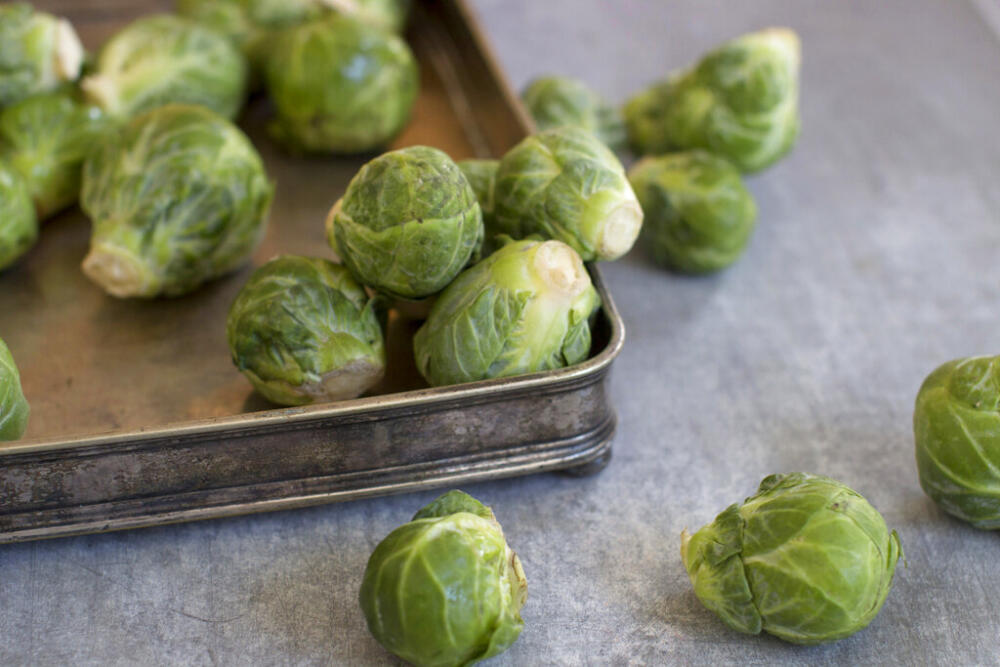
Why do American kids love chicken nuggets and applesauce, but hate broccoli and brussels sprouts? In her new book “Picky," Helen Veit explores how American children became the fussiest eaters in history.
Guest
Helen Zoe Veit, associate professor of history at Michigan State University. Author of "Picky: How American Children Became the Fussiest Eaters in History."
The version of our broadcast available at the top of this page and via podcast apps is a condensed version of the full show. You can listen to the full, unedited broadcast here:
Transcript
DEBORAH BECKER: Are you a picky eater or are you dealing with one? Did you grow up in a clean your plate or else household? On Point listener Cathy from Fairfield, Iowa did. So she says she tried to come up with tricks to get around that.
I didn't like vegetables very much, which is probably pretty common for most children, but I hated peas. They made me gag and my dad would not let me leave the table until my plate was clean, no matter what we were having. And I used to try to take peas and take them like a pill. I would take a couple peas and then drink some milk, and he wouldn't even let me do that.
BECKER: Or maybe you're a parent today, and you are the one coming up with tricks for a picky eater like Alexander in Salem, Oregon.
ALEXANDER I'm a professional chef and my 5-year-old daughter, she's really funny. No matter, whatever I do to a zucchini, she just will not eat it. Just won't touch it. But the moment I put that thing on a spiralizer and make zoodles, sauté it with a little butter and garlic, man, that girl can not get enough.
BECKER: Many parents say, no matter what they do, their kids are simply refusing certain types of food. On Point listener Sarah and Iowa left us a message about her son, who she says has gone through different phases.
SARAH: He was always a picky, little fussy baby who spit up all the time, and we had to actually give him an amino acid-based formula. After he turned one, he started eating foods regularly and he would eat everything from spaghetti to chicken breast to broccoli.
About two years old, he started self eliminating foods where he would just push 'em away. And then it resorted to just feeding him crackers and those baby pouches with vegetables, just so we could feel a little bit better about getting some nutrients in him. And ever since, he's now 11, he eats about maybe five things, which consists of just your basics, crackers, goldfish the occasional McDonald's fries.
Plain tortillas with shredded cheese but does not like sweets. Has never had a cookie, no cheeseburgers, no regular fruit.
BECKER: Our guest today says pickiness is a mass phenomenon in the United States, and it's not natural or inevitable. And she says, parents relax because that's one thing that will help make meals enjoyable.
Helen Zoe Veit is not a nutritionist, but a historian who says a perfect storm created this picky eater phenomenon and she says we can learn a lot from what is actually an incredibly complex story of food in the United States. Veit is an associate professor of history at Michigan State University and author of the book, Picky: How American Children Became the Fussiest Eaters in History.
Welcome to On Point.
HELEN ZOE VEIT: Thanks so much for having me.
BECKER: So pickiness, I think, we all assume is natural in a lot of kids. But you say it isn't really, and your book outlines a fascinating history of food and what people have eaten for hundreds of years, especially children. And you start by explaining what children used to regularly eat years ago.
Things that we wouldn't think were picky at all right now. So can you tell us some of those?
VEIT: Yeah, so it's completely normal that we look around today and kids refusing food all the time. We see kids with special diets, even kids that we don't think of as especially picky. We assume they're not going to like adult foods, like spicy curries or bitter greens or coffee.
This is the landscape that we live in today, and as a result, most Americans assume that there are pretty real biological bases for children's pickiness. And in fact, you often hear that it's biological or it's evolutionary. We must have evolved as humans to be nervous about food, new foods as kids and to have a need for a really limited diet because of our hunter-gatherer ancestors had gone around as children without Pickiness, they would've just shoveled poisonous mushrooms or berries into their mouths, and soon humans would've died out. That's what you hear today. However, fascinatingly, when we look around the world, or even when we look in the American past, we see children eating totally differently than they do today, and usually with vastly more pleasure.
I became really fascinated by American history because I am an American historian, but also American children are so picky today, and yet in the relatively recent past, children weren't considered to be picky at all. Back in the 19th century, there was no such thing as childhood pickiness, that did not exist as a concept.
If people thought that anybody was likely to be a little picky back in the 19th century, it was wealthy adults, people who had the luxury and the education to be discriminating. In the 19th century American kids generally ate like their parents, which meant that in some cases they were eating a kind of monotonous diet.
If the family was poor or it was in the middle of winter, they might not eat a whole lot except maybe cornmeal and potatoes and dried beans. In more prosperous families and in spring and summer and fall, kids were eating a remarkable diversity, generally much more than they eat today.
Many more plant and animal species. Lots of organ meats, lots of shellfish. They loved coffee. They were having all sorts of spicy fermented condiments. Now when we hear about this today, we hear, oh, kids in other places, or kids in the past used to eat broadly. We tend to assume two things. One, we generally assume it must have been harsh discipline.
Parents must have forced their kids to eat foods they didn't want, or we assume. It must have been scarcity. There wasn't enough food to go around, so kids must have forced down vegetables and other hated foods because those were the only alternatives to starvation. However, when we look in the past, it turns out that neither of those is true.
Kids were omnivorous. They love to eat. Very few people talked about forcing kids to eat or discipline. That's actually almost invisible in the historical sources and kids with plenty to eat, and that was actually most Americans. The United States was the most food abundant country in the world in the 19th century, and although some kids were desperately poor, most had enough to eat.
Kids were omnivorous. They love to eat. Very few people talked about forcing kids to eat or discipline.
And even the kids who were the wealthiest kids with lots of choice, kids on prosperous farms, indigenous children living in situations of abundance, they weren't remotely picky either.
BECKER: But then it was also in the 19th century, right, that this idea of children being biologically different started to take hold.
That maybe when feeding children, they needed to be handled differently than when feeding adults. And there were a lot of reasons for that. The child mortality rate was unbelievable at the time. Is this how you would describe the beginnings of what led us to what you say now is a phenomenon of pickiness in the United States?
VEIT: Yeah, I do see the origins in the 19th century and in those high rates of childhood mortality. So this was before germ theory, for most of the 19th century, people didn't know about germs or bacteria or viruses. They didn't understand how diseases spread. They didn't know about food poisoning. And as a result, especially of epidemic diseases and food poisoning, children's mortality rates were really high. About one in four.
Or one in five kids died during their childhoods, tragically high rates. Americans didn't know what caused it. And some reformers started to say, I think it's children's diets. Because children were eating so broadly. They were seen as so omnivorous, so willing to try anything.
And some reformers started to say, they're eating foods that are too rich or too stimulating. These are causing diseases. Of course today we would understand this as pseudoscience. They didn't understand how contagion actually worked. But at the time, this seemed a plausible, explanatory model to some people.
Now, most Americans didn't listen. Most American parents in the 19th century just kept feeding their kids the same food that they were eating, in part, just logistically, for most people, it would've been really hard to make a separate meal. But this idea that kids should eat differently and specifically that they should eat more blandly, that their food should be plain, unseasoned, often served separately, so not mixed together. This was seen as not having anything to do with children's tastes or preferences, but as something that was good for them.
And by the early 20th century, these ideas start to take hold in middle class parenting.
BECKER: Yeah, so I wonder, are you saying children really don't have different tastes?
Because that's still, as you said, argued very much today, lots of pediatricians saying that children's taste buds are developing and that can't be expected to eat complex, rich, spicy food. Are you saying no, not really. They can.
VEIT: This is so counterintuitive to us today. It's not only going against mainstream culture, for many of us, it's going against our lived experience.
Many of us today were picky children ourselves. And a whole lot of us are raising kids today who seem biologically picky. No matter what we do to encourage them to eat broadly, to try new things, parents feel like they're banging their heads against a wall of biological pickiness. To suggest that this isn't inevitable or that this isn't just deeply biological, seems for one thing, it can seem really offensive. What are you talking about? Of course it is. I could see this myself, but it also just seems impossible to believe. Like, how could you suggest this?
And yet, when we look around the world and in other times we don't see kids as picky, I do wanna stress this, the mass childhood pickiness that emerged in the United States in the mid 20th century, nothing like this had ever existed before in the history of our species. As far as we know, in the whole history of homo sapiens, which goes back something like 300,000 years, children as a group had never been seen as picky until the 20th century. Now this doesn't mean that children don't have special taste. Most animal species, or many, I should say, many animal species go through a period of neophobia.
The mass childhood pickiness that emerged in the United States in the mid 20th century, nothing like this had ever existed before in the history of our species.
Neo phobia means being scared of new things. So being initially reluctant to try a new food. and we can all see how this would be biologically really adaptive. A lot of things in the plant world are toxic. And it would really make sense for an animal to be cautious about trying something new.
However, what we see in the animal world is that neophobia often just last a matter of minutes that a young animal or sometimes an older animal is reluctant to eat a new food. But when they're, especially if a young animal is shown by an older animal that it's safe to eat, that it is okay, it can usually be overcome really quickly. And in other cultures around the world and in the American past, this is what seems to have happened with humans too, that when offered a new food multiple times in a positive setting, when assured that it's good to eat, that it's enjoyable and safe, kids learn to eat it.
Part II
BECKER: Helen, we were talking before the break, we got up to the beginning of the 20th century where we looked at how children were really enthusiastic eaters of everything. And then this idea of a separate children's food, maybe a different food for children that was more bland, believed to be easier to digest. And then the 20th century came along, and things changed dramatically for kids and for the way they eat. And it was really in the thirties, you said, when we started seeing pickiness emerge as a real cultural force. And you said it at that time, it was seen as a problem of privilege. So explain when we really started to see when pickiness became mainstream.
VEIT: Yeah. Surprisingly, we first start to see Americans talking about kids as a group, as picky eaters, during the Great Depression, and that can be really surprising to people. Just because you'd think that was a time of desperation. And of course, many Americans were desperately poor during the depression, and parents were desperate to get enough food to feed their kids, but many parents weren't.
And middle class and upper-class parents who had enough to eat started talking about kids as a group, being unwilling or reluctant to eat food in a way they never had before. And for these parents, that was really perplexing, because none of these parents for the most part had been picky themselves as children.
They'd grown up in the early 20th century, or late 19th, at a time when children weren't picky. So this was really confusing to people. To understand why it was happening, you have to go back and say why weren't kids picky in the 19th century? If it wasn't scarcity and it wasn't harsh discipline, why weren't they picky?
And it turns out one of the biggest reasons was hunger. So having plenty to eat overall was not mutually exclusive with having a great appetite before a meal. Most kids in the 19th century got a lot of exercise. They were just using their bodies more. They often walked to school. They were doing lots of outdoor and indoor chores.
Many of them were playing a lot, playing outside. And there wasn't much snacking. Snacking had just been logistically difficult. Back in the 19th century, there hadn't been shelf stable snacks or refrigerators and snacking was frowned upon too. It wasn't a big part of culture. Kids sometimes ate a little bit between meals, maybe some bread, or they may have foraged fruit outside.
But there wasn't a culture of heavy grazing. And the result was that kids in the 19th century had come to their meals generally with really big appetites. And I always say, if you've ever gone to the grocery shop hungry, to the grocery store hungry, you know how much a good appetite can sharpen your interest in new foods.
And that was a really crucial factor. That was helping kids learn and be eager to try new foods back in the 19th century, what we see by the 1930s is the reversal of this. So by the 1930s, middle class homes, they had, most of them had refrigerators and ice boxes, middle class homes.
They also were having these new products and grocery stores, things like Ritz Crackers and Wonder Bread and Skippy Peanut Butter. And canned, all sorts of canned goods and boxed macaroni and cheese. All of these foods were starting to emerge by the 1930s, which meant two things. One, kids were snacking much more than they ever had.
There was just this availability of between meal edible food in a way they'd never been before. Also, milk. Nutritionists starting in the early 20th century had started recommending that kids drink large amounts of whole milk. The standard recommendation was a quart of whole milk for kids as young as two, which is a lot of stomach real estate.
So kids are coming to meals in middle class homes and wealthy homes much less hungry than they've ever been. At the same time, those same factors that the availability of this shelf stable food and the refrigerated food meant that there was other edible food on hand. So that if a child was reluctant to eat or hesitated to eat a family meal, increasingly, parents were saying, we'll just give them something else instead. We'll make a peanut butter sandwich. We'll heat up a can of soup. We'll make macaroni and cheese. This was possible for the first time and the fact that there were these alternative meals really changed how children learned or didn't learn to eat new foods.
BECKER: I'm going to give some specific advice about whether to go the alternative meal route if you're a parent in a little bit. But I want to get back to the history a little bit more because you talked about all of a sudden, homes have refrigerators. And there are other things to protect food and to make more food available.
But also, what happened was most homes got televisions, right, and there was a lot of advertising for about the way to feed children and of course, what to feed children. And we have a clip of several ads that ran in the sixties and seventies for the most part, about food directed, food designed rather for children.
Let's listen.
OVALTINE AD: Yes, chocolate flavored Ovaltine, either hot or cold, because Ovaltine helps give you the nourishment you need for strength and staying power. When you add Ovaltine to milk, just look at the extra food value you get. It's good, and it does you good.
McDONALD's AD: This is a McDonald's happy meal. Your kids will love it. It's food and fun in a box. Your kids get a regular sized soft drink, a regular sized fry, a hamburger or cheeseburger, and a McDonaldland cookie sampler.
BEECH-NUT AD: All babies eat best when they enjoy their meals and they get the nourishment they need without coaxing. That's why Beech-Nut caters to your baby's taste.
BECKER: So those were ads from the sixties and seventies for Ovaltine, a McDonald's kids meal and Beech-Nut baby food. They all sort of show how much kids might like the taste and these foods might still be nutritious for children. I wonder what did this marketing for children do to our diets at that point, and how did it contribute to picky eaters?
VEIT: Yeah, marketing was enormously important in shaping our visions as a culture of what children's food was and what it should be. Those three ads really touched on a lot of big themes. One was fun, especially with the McDonald's ad, you see this idea that food should be fun for kids. The idea that food, just normal food would be boring on its own for kids. No one had really talked about that before. In fact, playing with your food had been a pillar of table manners in the past, but marketers told parents to throw those old rules out the window. That it was important for kids that food was entertaining, fun, often interactive.
And you see all these new products emerge. Things like Jello ... and fruit roll-ups and Happy Meals, and Pop Rocks and Lunchables, all, and you could go on and on with foods that are part food, part toy, with the underlying idea is you have to entice kids to eat because if the food isn't entertaining, it doesn't rise to the threshold of interesting the child.
And the children have to be enticed to eat. That's a very second half of the 20th century idea. Another theme in those ads is fortification. With the Ovaltine had vitamins and minerals that were added to it, and this was really important in shaping, on the one hand, there's all this new knowledge about nutrition in the 19th century.
It's so ironic, really, because back in the 19th century when no one had heard of vitamins, children, for the most part, were really enthusiastic vegetable eaters. By the 20th century, as parents start pushing vegetables more, at the same time that kids are more full and the meals are less seasoned, they're more reluctant to eat them.
This idea emerges that kids naturally hate vegetables, even that they can't learn to like them or eat them. It's a very new idea, but this became possible in our culture, in part because of the added vitamins and minerals that were being put into factory foods through fortification. Foods like Ovaltine or Wonder Bread, which has lots of vitamins and minerals added, or Hi-C, which has added vitamin C.
All of these foods aimed at kids. Were also aimed at parents to say, Hey, your kid is getting vitamins and minerals, even if they're not eating vegetables. And of course, there were multivitamin supplements themselves, which really helped to ease a lot of parents' minds, but also made it seem like, you don't have to feed kids vegetables. This is optional. They don't have to eat the same things as adults. Marketing, it was for parents, but a lot of it was also directly aimed at kids. There were ads in the fifties that said things to kids like, bring a piece of paper up to the screen and trace the name of our brand on the piece of paper so you'll be reminded to ask your mom for it later.
This will sea change in kids as consumers.
BECKER: So I wonder, was there oversight in that? Were they allowed to make any claims they wanted? Because one of the most famous jingles in history that I really wanted to play today, because it's stuck in my head because when I was reading your book, you were saying initially meat was seen as something maybe kids should stay away from too stimulating, especially bologna, right? But one of the most famous jingles in ads to children about food is one about bologna. Did they have to tell the truth? Let's listen to the ad first.
(OSCAR MEYER JINGLE PLAYS)
BECKER: Yeah. Anybody who can remember that as dating themselves, I think. ... I wonder, could anyone make claims about this food as well to children that they should eat whatever the marketers are telling kids to eat and parents to feed them?
VEIT: Yeah. Especially in the early days, there was absolutely no regulation on children's advertising and there hadn't yet emerged a broad sense that there was anything possibly wrong with direct advertising to kids. So you see these really direct approaches to kids in the early days.
There were some shows produced in the early 1950s when Americans were just getting televisions, that were really like long form commercials, where there was one called Mars Super Circus where the characters were just constantly eating Mars candy bars and telling kids that they should eat them too.
You see a lot of really blatant product placement or this just total blurring of what's the commercial and what's the show? You have Dennis the Menace starting to eat Campbell's canned mac and cheese and talking about it in the middle of the episode. So this was, solidified more rules later on about what's acceptable and what's product placement and we have a little more regulation today.
When they started to look into, by the 1970s, they started to look into advertising to kids and how it influenced food buying decisions. And what they found predictably is that the products that were most heavily advertised to kids were those that the kids asked for most often. In other words, advertising worked, doesn't mean that kids were dupes or that parents would just unthinkingly listen to everything, but it was a really powerful tool for getting, for inculcating brand loyalty and for having the sense that kids need this certain kind of food. By definition, the foods that were advertised almost always were factory foods. They were produced in factories. They were branded and labeled.
BECKER: But they were also, there was a lot of research that went into these foods to make them pleasurable to eat.
So what about personal preference? I wonder, in all of this, it just seems to make sense that someone would, especially a child, would want ice cream over a hot pepper, right?
VEIT: Yeah. Certainly, we have biological drives as humans to salt, sugar, fat.
These are things that have calories, our body's needs or minerals. They're attractive to us as humans. What's fascinating though is that when you look around the world, you don't see everyone wanting these foods in the same way. Culture is so powerful in shaping the foods that we come to think of as natural and right.
Culture is so powerful in shaping the foods that we come to think of as natural and right.
I think all of us like ice cream. I think ice cream's a deeply pleasurable taste to most people. Not to everybody by any means, but to many people. In the 19th century, when people talked about personal preferences, Americans thought people had personal preferences, but they didn't think of it as something that was strongly inflected by age.
And they absolutely thought kids loved ice cream, but not necessarily more than a lot of other foods they were taking obvious pleasure in. If you'd asked any 19th century American what food do children love? Most people probably would've said fruit. It was just so widely thought to be the most beloved food of childhood at the time.
Personal preferences, it's one of the hardest things to denaturalize because it seems so intimate to most of us. The foods that we like are so hard to separate from who we think of ourselves as, and the flip side of foods we like is foods we don't like.
It's revulsion or disgust. And that seems so innate. It seems so personal and yet fascinatingly, when we look around the world, we see kids in other places truly enjoying things that we think of as inherently unlikable by kids. Things like really strong fermented foods like nattō in Japan or kimchi.
We see kids enjoying olives. We see kids enjoying the very spiciest chilies. Really the kind of chili that makes a jalapeno tastes like a bell pepper. We see kids in other cultures, again, not just eating it because they're forced to or because of scarcity, but genuinely learning to like these foods.
Many foods I came to believe are acquired taste. Many foods are a little harder to like at first. In our culture, we've made acquired taste almost synonymous with adult foods. We think of a food has, if the taste has to be acquired, that's a food of maturity. That's a food that, down the road, maybe eventually a kid could learn to like.
But in most times and places in the history of our species, we see kids acquiring the taste of their culture in earliest toddlerhood.
BECKER: I wonder though is there room for biological predispositions? The whole debate about cilantro, right? That some people don't like it because they're just biologically made that way, that cilantro tastes soapy to them, right? Some people can't eat tomatoes perhaps because of a mild allergy that's going on that not a lot of people have. Couldn't there be biological reasons for some things? And how does that play into pickiness?
VEIT: Absolutely. I think most parents who have more than one children, more than one child can testify that often one child just seems biologically pickier than another.
Sometimes really biologically picky. I think, undoubtedly, we have biological predispositions that make it easier for some of us to acquire new taste, and for some people it might take many more tries to like something. Cilantro is actually a wonderful example. There are really clear genetic reasons why some people can identify those soapy tastes.
Some people have receptors that allow them to detect these soapy aldehydes in cilantro that other people can't. And if they grow up without much exposure to it, they often do not like cilantro at all. That soapiness is overwhelming. They don't like it. However, what we see is that people have these special genetic receptors for these aldehydes all over the world.
They're pretty equally distributed. And when people with those exact same genetic receptors for the soapy taste are growing up in cultures where cilantro is really common in cuisine, and that's actually a lot of parts of the world, a lot of South Asia, a lot of South America, some parts of Europe have a lot of cilantro in the cuisine.
And when kids or other people grow up with repeated positive exposures to cilantro, they learn to like it as much as anyone else for the most part. So that's a really vivid example of the ways that biology and culture can interact. And also, how culture can often overwhelm biology.
Part III
BECKER: Many On Point listeners told us their experiences about picky eating and eating in general, and those experiences varied widely. We heard from 74-year-old listener Ray, who's from Gettysburg, Pennsylvania.
He says he grew up with a mom who did not tolerate picky eating at all. Let's listen.
RAY: My mother's simple remedy was to set the timer in the kitchen stove. And if we didn't eat all that was on our plate, within five minutes she would take, especially me, into the kitchen and had me bend over and she'd vigorously paddle me. Now, today this would be considered definitely abusive, but I want you to know the love she showed in me eating everything that was on my plate now represents a person that is quite healthy from eating all the right things. At the age of 74, I love all things put in front of me and I'm always interested in trying new foods from different cultures.
BECKER: And of course, right now if you look online about how to deal with picky eating, especially if you're a parent, you can feel pretty overwhelmed. There are all kinds of people talking about what you should do. Maybe try this or don't do this or do this, or you could harm your child if you do this. So it's hard to know how to make sense of it.
We have a holistic pediatrician, Dr. Brian Thornburg. He shares parenting and wellness tips on Instagram, and this is some of the advice he's giving to parents.
So if we're going to change picky eating, we have to make a conscious effort to focus on the healthy foods that'll slowly repopulate the gut. Now we'll have the good gut bacteria that make us want to eat healthy foods.
So make sure you're focused on the foods that you're choosing to give to your child. Understanding that they won't want to eat healthy foods right away, but it's a gradual change. Just like a large cruise ship trying to turn around, it takes a little bit of time.
BECKER: We want to talk now about some tips for parents.
Helen, you seem to lean toward having children and parents eat together. Parents say, no, we're all eating the same thing. And this is what we're doing. But let's talk about what we heard just now. We heard from Ray who said discipline was one way that got him to eat as a child. Maybe a harsh discipline at times.
And also how do parents wade through all of the advice they're now getting and to know what's reliable. So let's start with discipline.
VEIT: Yeah, that's Ray's story is, I think, really important. Parents in the mid 20th century, so Ray, based on his age, would've been born in the early 1950s. Parents in this exact era.
This is when real mass childhood pickiness was emerging. As I said, people were starting to talk about it in the thirties. By the fifties, it was really getting democratized. In other words, independent of class in many cases, kids across the income spectrum were getting pickier and it was getting naturalized.
But these parents themselves had not been picky eaters as kids. Most of them had been born somewhere in the early 20th century. And they often had no idea what to do with pickiness. They had never, no one on Earth had ever dealt with this problem before on this scale. And a lot of mid-century parents did some pretty harsh disciplinary responses to pickiness, saying, stay at the table, or else you have to stay till you finished everything.
If you don't finish it tonight, you're going to eat it for breakfast. Even corporal discipline or corporal punishment, as we heard in the case of Ray. And I think a lot of our parenting responses today, which are like, oh God, I would never be that kind of parent. I would never want to do that. The extreme passivity and desire to be hands off and not to be a harsh disciplinarian around food are a counter reaction to the kinds of somewhat ham-handed responses of mid-century parents today. One thing I just wanna emphasize, in the earlier past in the 19th century, parents rarely talked about discipline when it came to food. There was very little sense that you had to discipline or force kids to eat. There was a much more organic happening among kids.
BECKER: It may be a bit of a, I just want, sorry to interrupt. It may be a bit of a backlash, but I want to make sure we get this point in. I also wonder though, it's a pretty common belief, right?
That children should have some autonomy here. They shouldn't expect it to be, they shouldn't be expected to eat what their parents eat and that they could develop these dysfunctional relationships with food or eating disorders if these sorts of things happen. So it's not just, I think, counter to corporal punishment or harsh ways of the past. I think people are really worried that they could do something wrong.
VEIT: Absolutely. I think so parents are in such a hard position today. They've been told on the one hand, kids food really matters. It affects health and growth. It is really crucial for making sure that they're developing in the right way.
Kids are now increasingly obese. Obesity has quadrupled in the U.S. since the 1970s. Kids are now developing diseases like type two diabetes, high blood pressure and heart problems that they've never had in large numbers in childhood before. So on the one hand, parents are really worried about health, and they certainly feel that they're getting the message that they should be doing something.
But on the other hand, they've been told, you can mess your kids up if you push too hard. If you say they have to eat something. Even if you reward them for eating, that can mess them up. If you say they have to eat a bite more of something after they say they're full, they'll never develop a sense of authentic fullness.
They might be prone to overeating later. If you reward them, they'll associate dessert with love and rewards and they'll overeat. And they're really, parents are told pretty explicitly, if you say the wrong thing or push too hard, you could cause your children to have a dysfunctional disordered relationship with food.
Even an eating disorder. So parents feel absolutely paralyzed in many cases. They've gotten these two very different messages. They're told their kids shouldn't be picky, and yet they've gotten really poor advice about how to prevent pickiness. And as a result, there's a lot of anger, frustration.
In some cases, even shame. One of the big messages of the book is that this is not parents' fault. Mass childhood pickiness is a historical phenomenon. It's a mass phenomenon that was caused by concrete forces, and that's not the fault of any individual parents. Most parents around food today are desperately trying to get their kids to eat broadly, but also to have a healthy and pleasurable relationship with food.
Mass childhood pickiness is a historical phenomenon. It's a mass phenomenon that was caused by concrete forces, and that's not the fault of any individual parents.
And they're finding those things are often at odds, and it's immensely frustrating. That's one reason that I think a historical perspective is so important. It shows us that an entirely different model of how to approach child feeding is possible.
BECKER: Okay. You have three kids. What's that model?
VEIT: I was spending my workdays immersed in a totally different food culture.
I started this book when my first child was a baby. She just turned one and I started the research. I had two more children while writing it, and I felt that I had two superpowers. One was that I was spending my workdays reading about a totally different food culture where kids ate broadly, where they love to eat and where everyone around them assumed that they could eat broadly, and as a result, the second superpower was just confidence. Because I was just seeing this in literally millions of people.
I would just come home just bursting with enthusiasm and confidence that my children were biologically capable of learning to like the same foods that children in the American past had been eating. As a result, I parented really differently than parents are told that they're supposed to, and that's really crucial.
I broke rules because the more I researched, the stronger my sense became that the rules were not serving us, they're not helping kids or parents, and that they weren't based on good research. This is a really important piece of information. All of these warnings that we've been gotten, that you can mess your kids up if you parent the wrong way or say the wrong thing.
There has never been one single robust comparative research study that compares the different psychological outcomes of children raised with different feeding models. So this idea that you have to be hands off and that's the only way to do it around food. It's just not based in research, doesn't mean it's necessarily wrong, but there is not evidence for it and there's a lot of evidence that other ways can be really successful.
One other important fact is that in the 19th century, all of these things we're scared about today that kids might become obese, that they might develop eating disorders, that they'll have negative relationships to food. Those things simply weren't happening in the past, eating disorders were vanishingly rare.
Most people had pretty healthy relationships to food, and most people had pretty healthy body weights, overweight and obesity were not problems until the 20th century on a big scale, even when people had plenty to eat. So all of these fears that we have, a lot of these are myths.
So I took this confidence into my own parenting, and I did quite a few things that parents are told they're not supposed to do. One thing is that I was cautious about snacks. I love snacks myself, and I was happy to give them to my kids some of the time, but if we were going to be eating in 45 minutes or an hour, I would, I'd say, oh, hold off.
Don't have a snack now. I want to make sure you have a good appetite for dinner. You're going to love it even more if you're a little hungry. I didn't give a lot of milk, certainly between meals. Milk wasn't a big drink in our house. We did sometimes drink milk for fun or pleasure, but it wasn't something that I felt that I had to give, especially between meals.
BECKER: Even though it's still recommended by a lot of physicians.
VEIT: Sure. To be clear, my husband's French, so we actually consume so much dairy. Like it just, that wasn't really nutritional work for us. But as a sort of between meal supplement, I was just aware of its power as an appetite suppressant, and I wanted my kids to have a pleasant, pre-meal appetite coming into a meal. Then during a meal, my kids were incredibly neophobic. They refused foods all the time. They clamped their jaw shut; they twisted their faces away. They sometimes gagged, but I saw this as the same kind of mammalian neophobia that occurs in a lot of animal species.
And I knew based on the research that it could probably be overcome pretty quickly. I encouraged my kids to eat lovingly and with a lot of enthusiasm. Over and over again at the same meal. So in other words, if a child refused to eat something, once, twice, three times at the start, I would just keep, with humor and jokes and sometimes little games or songs, just keep saying, try it again.
I love it. I also would talk, I would market the food. I would talk enthusiastically about the foods I loved and why I loved them, and I would describe the sensory properties, even things like bitterness or spiciness, things we think kids aren't supposed to like. I would talk about them, and I can't tell you the number of times a child, actually it was the norm that a child would be eating something, often with pleasure by the end of the meal, that they'd refuse multiple times at the start.
BECKER: What if they refuse, like no alternate meals?
VEIT: So that is the most radical thing I did, and it's the hardest for parents to hear, because today we think of this as almost akin to corporal punishment, but I didn't provide alternative foods. I knew that in the history of our species, most people had not had alternative foods on hand.
And that had been a really important factor in preventing picky eating and in teaching kids to learn to enjoy a much broader range of foods. So if a child, at the end of the meal hadn't eaten, I would say, I'm so sorry you didn't want to eat. You don't have to eat, but I know you can learn to like this food and if you get hungry in a little while, just let me know.
I'm going to save your food in the fridge. We'll heat it up. Every single time in my household after 45 minutes or so, a young child would come back and say, oh, I'm hungry. And I'd say, oh, that's great. Let me heat up your food. Have two more bites. We'll call that dinner and then you can have a snack. That kind of model.
Of course, people in the past didn't have refrigerators or microwaves, but that in my family, worked incredibly well as this kind of family culture where the family meal is the meal that's available. I have deep confidence you can learn to like it and at least in my own children. It resulted in the kind of wildly unpicky love of food by early preschool that, you know, that I had been reading about in my historical sources.
So of course, confidence begat success, which of course begat more confidence. This was this kind of positive feedback loop that's very different from parents today, that I knew had existed in the past. For most parents today, it's the opposite. There's a kind of negative feedback loop where a child is reluctant to eat.
They're often given an alternative, more highly palatable food. They get used to eating that, they don't want to eat the others, and it erodes the kind of confidence that kids are capable of learning to like foods.
BECKER: I think it's tough for a parent of a toddler who is adamantly refusing things to be able to do that.
I think it's really hard and I understand it, but also, I wonder about personal preference. I read in the book that you said, somebody asked you, maybe it was an interview someone asked, is there food that you don't like? And you said you have a problem with insects?
So if someone kept saying to you, take another bite. Take another bite, maybe you'll get over it. What do you, is that what we should be doing? What if you say no? You know what, I'm just not going to like insects. I can't do this, where do we make space for that?
VEIT: Yeah, that's a good question.
I do say, you know, I'm sure like around the world today many people enjoy eating insects knowing we eat them too, by the way, in America. Because a certain amount is allowed in our food supply and our grains and our nuts. But of course, we don't know it, so we don't think about it.
People who grow up in cultures where insect eating is normal, really come to enjoy them. The taste of most insects is actually pretty inoffensive and often pleasant to people who are used to it. So I have no doubt that if I had been raised in a culture where insect eating was normal, that I would get used to it.
I also think I could probably get used to it today, if I had never eaten an insect at all until a few years ago, and then I started going to food events where they were offered, and so I started eating it. They're not my favorite. I'm still not used to it. But I guess I would say, yeah, I think I could get used to eating them, if I had a lot of positive exposures and they were delicious.
BECKER: So then would you say most of us who have, perhaps, real aversions to some foods or children have real aversions to some foods, eventually we'll grow out of those and maybe it's just something that's happening at the time. Eventually we'll get accustomed to it and we won't be picky forever.
VEIT: Not necessarily, I think a lot has to do with exposure. I think if you have a personal preference and, you know, you're okay with it, and don't ever try that food very much, you might not grow out of it. I don't necessarily know that that's an inevitable change.
But, for example, people who grow up in America who have genetic receptors for the soapy cilantro taste. There are some communities of folks who are really trying to overcome it and what we're seeing is that they can overcome it with repeated positive exposures. Even people who initially were like, oh, cilantro, it's so soapy.
They too can potentially learn to enjoy it. So I would say I do have deep faith in human's ability to learn to like new foods given the right context, given lots of repeated positive exposures and perhaps a cultural confidence that it's possible.
The first draft of this transcript was created by Descript, an AI transcription tool. An On Point producer then thoroughly reviewed, corrected, and reformatted the transcript before publication. The use of this AI tool creates the capacity to provide these transcripts.
This program aired on April 24, 2026.