Support WBUR
Why California wants folic acid in its corn tortillas
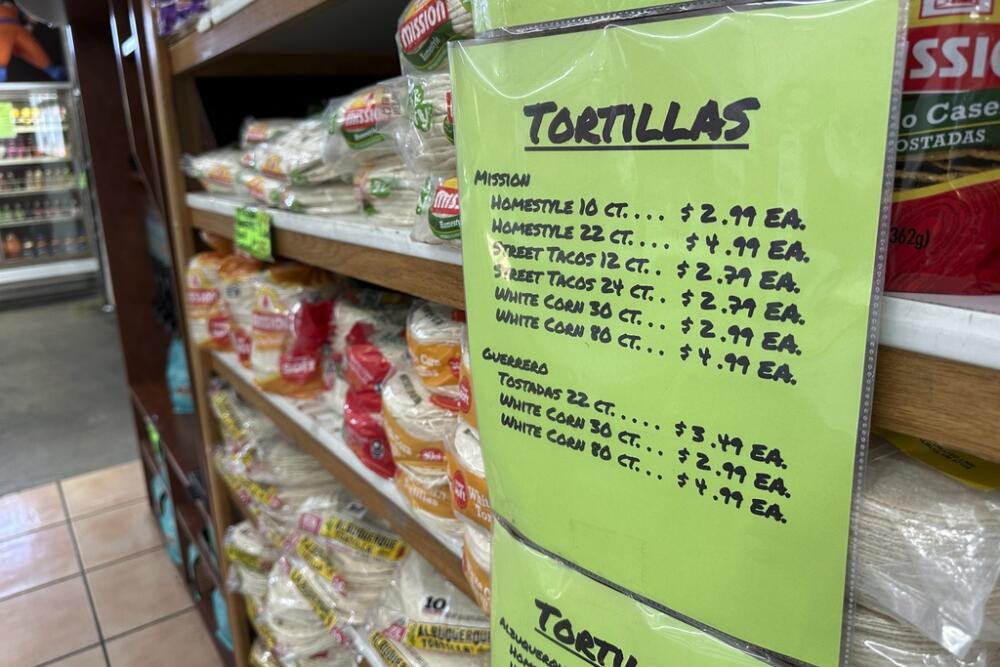
In 1998, the FDA required folic acid be added to breads and pastas but not corn masa, a staple in Latino communities. Folic acid is known to prevent neural tube birth defects. So, states like California and Alabama are now passing their own mandates.
Guest
Eva Greenthal, Senior Policy Scientist at the Center for Science in the Public Interest, a nonprofit focused on promoting nutrition, food safety and health. She authored the 2023 report: “Failure to Fortify,” which looked at what companies fortified their masa products after the FDA in 2016 allowed folic acid fortification in corn masa.
Dr. Joaquin Arambula, California Assemblymember representing the 31st Assembly District in Fresno County in the Central Valley. He authored the California law mandating folic acid fortification in corn masa, which took effect January 1, 2026.
Jim Kabbani, CEO of the Tortilla Industry Association.
The version of our broadcast available at the top of this page and via podcast apps is a condensed version of the full show. You can listen to the full, unedited broadcast here:
Transcript
Part I
MEGHNA CHAKRABARTI: If you've eaten most grain products in the United States like breads and pastas and rice, you very likely eaten folic acid. Now, folic acid is another name for an important synthetic vitamin. We're really talking about Vitamin B9 here, and it's widely used in fortified foods in this country.
The synthetic version, Vitamin B9 is more stable than natural folate, but you can also get plenty of that natural stuff in things like leafy greens and legumes. Now Vitamin B9 or folate is crucial during pregnancy. Daily consumption is known to prevent birth defects like spina bifida and anencephaly.
Now these are neural tube defects, which form in an embryo in the earliest weeks of pregnancy. So folic acid is most effective then early in pregnancy, but it's often so early that many women don't even know they're pregnant yet. So that's one of the reasons why back in 1998, the CDC mandated that folic acid or synthetic Vitamin B9 be added to many common, everyday American foods.
But CDC didn't mandate the fortification in one of the most commonly consumed foods in the country, specifically in the Latino community. CDC did not require that Vitamin B9 B added to corn masa, the main ingredient in things like tortillas. Decades later, states are now stepping up.
Starting January 1st of this year, most corn masa products sold in California must have folic acid added to them. So that's a huge state making this big change. And on June 1st, so just about a little over a month from now, Alabama's similar mandate kicks in. Meanwhile, a handful of other states such as Texas, Florida, Georgia, and New York are also considering it.
So let's learn a little bit more about this question of folic acid and tortillas. And joining me now is Eva Greenthal. She is the senior policy scientist at the Center for Science in the Public Interest, where she leads campaigns related to food labeling, alcohol policy, and FDA initiatives like food fortification.
Eva, welcome to On Point.
EVA GREENTHAL: Thanks, Meghna. It's great to be here.
CHAKRABARTI: Okay, so I like to start with the history on how we come to certain conclusions, especially in scientific things. So we've known about the positive benefit of folate or in the synthetic case, folic acid for a long time. But how long have we known about this?
GREENTHAL: Yeah. The research on folic acid has been very strong for decades, and by the 1990s it was really unquestionable that this synthetic nutrient when added to food or taken in dietary supplements in the very early stages of pregnancy could prevent neural tube defects, which are birth defects like spina bifida and anencephaly.
It's extremely effective and safe, and it's in our foods, certain foods, but not all foods.
CHAKRABARTI: Yeah. So we've known about this what, for 40, going on 50 years almost.
GREENTHAL: Yep. And it's been in the food for that long, so we certainly know that it's safe and effective.
CHAKRABARTI: Yeah. So what's interesting is that many women hearing this who are able to get comprehensive prenatal care early or even if they visit their doctor and they think they want to get pregnant, it's a familiar question, right? Because almost immediately an OB or a midwife or a doctor will say, a primary care doctor will say, oh, are you taking a folate supplement?
So this should sound really familiar to a lot of women, but how did it, how was it decided that it was so important that FDA was like, we should put it in foods.
GREENTHAL: Yeah. So even before folic acid fortification in foods, there have been lots of different fortification initiatives in the food supply since as early as the 1930s and '40s, there have been vitamins added such as riboflavin and niacin and different nutrients added to foods.
When people aren't getting enough of them and can prevent really important diseases. One of the reasons folic acid in food is so important is because most pregnancies actually happen unplanned. And you're not going to be taking prenatal supplements if you don't even know you're going to become pregnant.
So having it introduced through the food supply means you don't need to be taking that prenatal supplement to get the benefits of folic acid.
CHAKRABARTI: Because you're already eating it. In terms of fortification or of food supplementation the big one that comes to mind just because like I remember seeing it every day growing up is iodized salt, for example.
GREENTHAL: Yes. So that was really the first.
CHAKRABARTI: That was the first one? Oh, so that we're talking about from like the 20s and 30s back then. Wow. Okay. We're doing this entire show because it was what, in 1998 that FDA made this mandate for folic acid to be added to fortified foods.
So the obvious question is there a reason why back in '98 corn masa was not included?
GREENTHAL: Yeah, it's a really great question, and the history of food fortification is a little bit complicated. So some countries actually have true mandatory fortification in their food supply, where, for example, flour, all flour sold in that country must contain fortified nutrients. In the U.S. we have a slightly different system. We call it mandatory fortification, but it's actually only mandatory to fortify foods that are labeled enriched. In the U.S., you can sell wheat flour without added vitamins. You can't sell enriched wheat flour without added vitamins.
Same goes for pasta versus enriched pasta.
CHAKRABARTI: Okay. So wait, this is a little bit weedy. But understanding what's happening in the weeds is one of the things we love to do on this show. So are you saying that a food producer, they can make a flour that if they want to call it enriched, they have to add certain things.
GREENTHAL: Exactly.
CHAKRABARTI: But they can say, sell the same flour without the enriched additives. They just simply cannot call it enriched.
GREENTHAL: That's right. But since enrichment of staple foods like wheat flour, pasta, bread started many decades ago, it really became the norm and people expected to be purchasing enriched foods.
The vast majority of wheat flour is enriched flour. And so that's how we ended up with widespread fortification of our food supply. The catch with corn masa and corn tortillas is that there was never enrichment standards set for those foods back in the earlier part of the 1900s. And so there was no mechanism to require fortification through enrichment standards.
CHAKRABARTI: Okay. Okay. So we're going to disentangle this. Because it's important, people really want to know what's in their food, so I appreciate you taking some time to go through this with me. So first of all, you said some of these enrichment standards date back to the early 1900s?
GREENTHAL: Yes. The earliest ones were between the '30s, '40s.
CHAKRABARTI: Okay. But there are not enrichment standards for all foods in America, obviously.
GREENTHAL: That's right.
CHAKRABARTI: Okay. And what are these enrichment standards supposed to mean? That means that has FDA identified in a non enriched product, this is what it's should be composed of.
GREENTHAL: So this gets to, again, another kind of wonky term.
Which is standards of identity. So these are standards that the FDA sets that define what ingredients have to go in a certain food. And these were originally created again in the earlier 1900s. For reasons having to do with food safety and preventing food fraud. So at the time, there were some kind of nefarious things going on.
Like some sellers were adding chalk or plaster powder to milk and dairy products as these cheap fillers. And obviously the FDA wanted to prevent that. And so they created this system called Standards of Identity to say if you're going to sell milk. It needs to really be milk, and here's what that means.
If you're going to sell pasta, it needs to have flour, water, X, Y, Z ingredients and it can't have anything else. So that's the origin of standards of identity. And by now, there are about 250 standards of identity out there. So that covers some, but not all of the food supply. So some foods have these standards, some don't.
And then foods that can be enriched have these additional enrichment standards.
CHAKRABARTI: Okay. Okay, so this is really important because, oh my God, the history of food in this country is so fascinating that we decided to have standards because we didn't want people to add chalk to flour. Or like oil or like motor oil to balsamic vinegar.
Who knows? I'm just making stuff up. But, okay, so 250 may sound like a lot, but there are way more foods than that in a grocery store. So let's just put that out there. And I presume that, does FDA like create these standards of identity when there's a concern about fraud or when someone requests it?
Do we know?
GREENTHAL: Yeah. I think most of the standards were created many decades ago. And sometimes they're amended here and there in smaller ways. But ultimately, they were created at a time when the food supply and our whole food system was quite different. And they're a relic of the past in that way.
CHAKRABARTI: I see. Okay. Less food safety back then, essentially. And less standardization in terms of production of food. Okay. So I guess what you're getting to here is that fundamentally for corn masa, is that one of the products that does not have an FDA standard of identity?
GREENTHAL: That's exactly right.
There was never a standard of identity for corn masa or for tortillas or for corn tortillas. And that means it was not really an option to create a subsequent enrichment standard of identity.
CHAKRABARTI: Got it. So since we have no formal government definition of this is corn masa, without anything added to it, we couldn't say this is the enriched version.
There was no baseline.
GREENTHAL: So that's part of the reason we, for a very long time until recently, did not have fortified corn masa or corn tortillas.
CHAKRABARTI: Okay. So at the time when FDA then stood up and said regarding folic acid, separately across the food system in the United States, we want to create this mandate.
Was there pushback against it at the time?
GREENTHAL: It's a good question. I will say I wasn't around then, but my understanding is that it was pretty welcomed by the population. There were these diseases from nutrient deficiencies going around, and this was seen as a welcome solution.
Part II
CHAKRABARTI: Okay, so Eva Greenthal, you gave us an actually, thank you for that background. I know going through the bureaucratic weeds can seem tedious, but it's really important to understand. So FDA then makes this mandate, folic acid shows up, because it has to in enriched pastas, enriched flours, et cetera. Not in corn masa. We're talking about. Do we have evidence that the mandate has worked, that these neural tube birth defects actually has have gone down.
GREENTHAL: Yes, so the CDC did a study looking at the changes in rates of neural tube birth defects between 1995 and 2011, and found a 28% reduction in rates of neural tube defects in the United States during that time, and an estimated 1,300 prevented births with neural tube defects.
CHAKRABARTI: Okay, so CDC says it has worked. A 28% reduction is huge. Okay. But that's a nationwide picture. We're doing this conversation because one of the most commonly consumed foods in the Latino community. Now, beyond the Latino community, I probably have a dozen tortillas a week myself, but that it wasn't added.
So in that same time period, did any disparities show up in these neural tube defects?
GREENTHAL: Yes, they did. So the reduction in birth defects was experienced by all populations, all races and ethnicities. But by 2011, there was still higher rates of these birth defects among Hispanics compared to white and Black Americans.
By 2011, there was still higher rates of these birth defects among Hispanics compared to white and Black Americans.
Eva Greenthal
CHAKRABARTI: Okay I'm seeing here that in California, and we're going to listen, talk to a California assemblyman in just a second here, that in just a two year period, the rate of neural tube defects in the Hispanic population was 7.1 out of probably 100,000 or so, whereas it was half of that in the white population of California.
Now I'm going to just ask quickly. We can't say that there's a 100% causation here because there's a lot of other reasons why birth defects happen. Yes? Is that fair?
GREENTHAL: That's fair.
CHAKRABARTI: Okay. And yet, so then, but why do you still think it's important to get a synthetic benign into corn masa.
GREENTHAL: Yeah, so in addition to the data from CDC on rates of birth defects, there's also data on folate consumption and folic acid consumption, which shows there is lower consumption of folic acid among Latinos compared to other ethnic groups.
CHAKRABARTI: Okay, so there's a correlation there that's important. Okay, so Eva Greenthal, hang on here for just a second.
Because as I said, let's turn now to a California assemblyman. Dr. Joaquin Arambula joins us from Sacramento. He's California Assembly member representing the 31st Assembly District in Fresno County, first elected back in 2016. And prior to that, he was an emergency room physician for a decade in Fresno County.
Dr. Arambula, welcome to On Point.
DR. JOAQUIN ARAMBULA: Thank you Meghna, for having me.
CHAKRABARTI: I'd just like to actually hear a little bit about your experience in the ER in Fresno County. Did you encounter any cases that were linked to a folic acid deficiency while you were there?
ARAMBULA: I saw several cases of spina bifida, which is when the spinal cord --
CHAKRABARTI: Dr., you oftentimes will see, no, go ahead, please.
ARAMBULA: Spina bifida I saw several times, which oftentimes is when the spinal cord doesn't fully form and you have what appears to be a bag behind their back, which can lead towards paraplegia and seeing this birth defect in several families and farm working community that I worked for in a decade which was Selma, the Raisin capital of the world. Made me drawn to the research that I saw, that showed the disparities, that showed a broader disease of health inequity and the need for us to make sure that we had a culturally appropriate way for adjusting folic acid.
CHAKRABARTI: So Dr. Arambula, let me point out that I believe, and Eva, you can correct me if I'm wrong, but in 2016, FDA actually made adding folic acid to corn masa optional. They did not mandate it, but they made it optional. Did that not make a difference in California as you were able to observe it, doctor?
ARAMBULA: The research oftentimes takes several years to see if those changes make a significant difference. But that voluntary mandate was not as effective as the mandate we saw in 1998 towards cereals and grains, pasta, those types of mandates saw nearly a 30% reduction in neural tube defects.
And as we were seeing double the rates of NTDs and Latino families felt there was more we could do to make sure we were preparing families to be as healthy as possible. Now I will just say those oftentimes females will get onto prenatal vitamins. Unfortunately, by the time people find out that they're pregnant is past the point where we're forming those spinal canals or we're forming the brain.
And thus it's too late for them to be having the folic acid necessary through the prenatal vitamins to be protected, which is why getting it through your diet supply is such a more effective way for us to prevent those NTDs.
CHAKRABARTI: Yeah, I think the neural tube forms in the first couple of weeks, right?
After a woman gets pregnant, so it's very early in pregnancy. Okay. And so then you proposed passing a mandate in the state of California which went into effect this year on January 1st, in the process of getting that law passed, Dr. Arambula, did you get any pushback?
ARAMBULA: We heard from some that there were concerns.
Critics usually frame it as mandatory fortification as a government overreach, or they express concerns about autonomy, bodily serenity, or the impact this will have on certain communities. But I really focused on the public health experts and I took an evidence-based stance on this, that fortification has a long track record of preventing neural tube defects and thus it really required us to do more outreach and education to work with the nonprofits and the public health experts to speak about the importance of fortifying corn masa.
CHAKRABARTI: I wonder if some smaller producers were telling you that, look, this was going to be an outsized cost for them to, I don't know, retrofit their production lines or change who their suppliers were.
The huge, like mega food companies, I'm going to presume they can absorb that cost. But did you hear from smaller makers?
ARAMBULA: When we had an analysis of the cost of the amount of folic acid that was needed, it was pennies per pound per ton, excuse me, pennies per ton. So at that point, we really did focus on the large corn masa producers, and we gave some exemptions for the cottage industries, those who are very small producers to make sure that there were some options, but we wanted it. And many of the manufacturers actually saw it as a benefit to putting that it was fortified with folic acid, helping mothers and families as a sign that they could better market tortillas. And California is the 10th of the buying power of the United States.
CHAKRABARTI: Yes. Actually, I was just going to turn to that. And Eva, let me get your thoughts on this. As Dr. Arambula just mentioned there, there have been times in the past where California just itself has changed a law and effectively it is such a huge market that businesses or industries have said we're not gonna make two separate products, when one of them is requiring us to do it some in a particular way. So it affects a national change, could that happen here with California?
GREENTHAL: I think it certainly could. I am so grateful for Dr. Arambula's leadership in this area, in passing this law in California.
And in addition to what was mentioned in terms of many women not even knowing they are pregnant at the time when they would need to be consuming, folic acid supplements are also very expensive. And so fortifying the food supply and fortifying corn masa, getting that folic acid to Latino mothers is just an incredible and equitable solution to this issue of birth defects.
Fortifying the food supply and fortifying corn masa, getting that folic acid to Latino mothers is just an incredible and equitable solution to this issue of birth defects.
Eva Greenthal
CHAKRABARTI: Okay. Dr. Arambula, help us wade back into the weeds here because I've only recently learned in in getting ready for this conversation today that there are actually two different types of corn masa that are important in the food system in the United States, wet and dry. Is that correct?
Dr. Arambula, are you with us?
ARAMBULA: Yes, I am. Yeah, that's correct.
CHAKRABARTI: Yeah, that's correct. Okay. Sorry, your line just keeps dropping in and out. Apologies. And the difference between the two, can you help me understand that?
ARAMBULA: One is the powder itself, the other is the one that you make into tortillas or sopes or papusas.
Many of the delicacies we enjoy. I'm really proud of our diversity that we have across the United States and believe that by making sure we have a broad range. That when we start with the basic ingredient, which is that wet masa, that anyone who's purchasing it then is utilizing corn masa that's fortified.
CHAKRABARTI: Okay. Wait so the fortification requirement in California covers wet and dry masa.
ARAMBULA: I believe we're actually; I'll need to look at the legislation where we finally landed up. We were debating throughout, but I can get back to you with that specific.
CHAKRABARTI: Yeah, because I think here that I'm seeing that wet masa, and we'll get this checked as well is maybe voluntary.
Eva, do you have any insight on that?
GREENTHAL: Yeah. The latest version I've seen of the law that passed had a requirement for the dry masa and then a voluntary standard for wet masa products.
CHAKRABARTI: Okay. But as the doctor just said, it's wet masa that's used to make things like tortillas.
GREENTHAL: Not always though. Many tortillas are made using the dry masa process.
CHAKRABARTI: Okay. I suppose maybe especially in large scale production.
GREENTHAL: That's right. Okay. And we know that for example, Gruma, one of the largest tortilla manufacturers in the U.S., uses the dry masa process, the dry, most of its products.
CHAKRABARTI: Okay. And by the way, I should say, we did reach out to some of the major producers in this country, including Gruma, to get their answers to several questions that we had, or have someone come on. They did not respond to our requests. Dr. Arambula, have you heard from legislators in other states now about interest in passing a similar mandate?
ARAMBULA: Alabama currently is looking at a mandate that will begin in June. I've heard from states such as Delaware, New Jersey, and others that are looking at similar mandates. I think it's important for us to partner with larger coalitions, such as the March of Dimes to try to get this at the federal level as well.
We've heard some critiques from national figures that we should just look at leafy greens as a mechanism to get folic acid into people's diets. And yet the communities that I serve, that I practice medicine in, many of those farm worker communities barely could make ends meet and put enough food on the table.
They weren't really looking to, they could pick such fruits and vegetables to abundance on other people's tables, but had so little left for themselves that we thought it important to work with the staples that they were receiving to make sure they were getting it. But I'm glad that there are other states looking at this policy and I'm meeting with New Jersey here shortly to figure out how they can raise a similar type of bill.
CHAKRABARTI: Okay. You were very diplomatic in saying that you've received some criticism from national figures. I will be more specific and say that ... Secretary Robert F. Kennedy, Jr.
Secretary of Health and Human Services said at least he posted on X just before California's new law went into effect. He posted this, quote: This is insanity. California is waging war against her children, targeting the poor and communities of color. End quote. Dr. Arambula, how do you respond to that?
ARAMBULA: The benefit of me not being on social media is I don't see those things in real time. I have taken myself off both for my sanity, but also so that I don't fall into misinformation and get distracted from what the research is showing. We see such health disparities that we need to make sure that we're addressing it and focused on solutions that can work.
CHAKRABARTI: Okay. I'm going to respectfully push you a little bit on this because this is an area in which many people actually are very strongly aligned with what the secretary often says about using food as medicine essentially. And so he's asserting that instead of pushing or finding ways to assist the very communities you're talking about, to be able to afford and consume more folate, right, through leafy greens, he says you're using big food to do it instead.
And that, he's saying, quote says, the waging war against the very children of your community. Are you willing to say here that he's wrong?
ARAMBULA: I believe we are using food as medicine to make sure that we're protecting against neural tube defects and not all of us can afford the food that he's speaking about.
And while that's a luxury, too often families are struggling with an affordability crisis at their very own kitchen tables. I don't see him reversing the fortification into cereals and grains and waging a war on that end. So I believe it's important for us to utilize all the tools to make sure we have a culturally appropriate way for us to be ingesting folic acid.
CHAKRABARTI: Yeah. Eva Greenthal, we have just a minute before our next break here. Your whole area of work has to do with policy, federal policy on food and labeling and nutrition. Just your take on Secretary Kennedy's resistance to California's nation leading law here.
GREENTHAL: On this concept of food as medicine and access to healthy food for communities of color and poor communities.
Secretary Kennedy is certainly speaking out of both sides of his mouth in terms of he's part of an administration that's implemented massive cuts to SNAP, massive barriers to food access and he really should be supporting a policy like this that promotes healthy food access through food fortification.
Part III
CHAKRABARTI: In a moment, in just a minute, we're going to hear from the CEO of the Tortilla Industry Association. But Eva, since, and I want to apologize to all listeners, there was a little confusion about what's actually California's law mandating folic acid's addition to corn masa. I want to be clear. So it is, California's law does not require it for wet masa.
GREENTHAL: That's right.
CHAKRABARTI: That's correct. We looked it up to be triple sure just now, but it does require it for dry masa. Now I just wanna get even more clarity on this. Are you concerned at all that the wet masa requirement is not there? Because I think wet masa is what 48% of the masa consumed in this country.
GREENTHAL: I think dry masa is a really good start. It means that bags of flour that people purchase to make their own corn tortillas will be fortified, and then also a pretty substantial proportion of corn tortillas on the market.
That are made through the dry process instead of the wet processes used for things like snack foods, I think Fritos, for example, are a corn masa product made with the wet process, but that's not really like the cultural Latino food that is the target of these fortification policies. So I think the California law will cover a really important swath of the corn masa supply.
The California law will cover a really important swath of the corn masa supply.
Eva Greenthal
CHAKRABARTI: Okay. So you mentioned snack foods. And I think one of the reasons why wet masa is used in those snack foods is because many of them, if not most, are actually extruded from through machines. So you need a wet product for that extrusion. So we're talking about chips, crisps, other extruded products.
Those snack foods were also exempted from the California law.
GREENTHAL: That's right, by way of being wet masa. And then I know in the Alabama law, they were explicitly exempted.
CHAKRABARTI: Is that a problem?
GREENTHAL: It's a category of foods that won't be fortified, which means some less levels of folic acid getting to consumers.
But again, I think the main target of fortification initiatives is staple foods that people are eating every day that are making up an important percentage of their calories and their dietary intake. And I think policies targeting dry masa products, including most tortillas are going to make a really big impact.
CHAKRABARTI: Okay. Fair point. But I just want to go back to something else that we talked about earlier, and that is when fortification is made voluntary. Because again, to be clear, in 2016, FDA did make folic acid fortification voluntary. It doesn't actually change the behavior of makers all that much.
So in terms of the wet masa thing, wet masa side of things in California, it doesn't seem like we can, that maybe that large portion of the market will change.
GREENTHAL: I think it remains to be seen, and I think, yeah, I think the mandate for dry masa products is going to have a really big impact.
And we'll see what happens with wet masa products. And if there is not good uptake among wet masa producers, maybe California will look at additional mandate.
CHAKRABARTI: Okay let's talk to someone who knows about the producers inside and out. Jim Kabbani joins us now. He is the CEO of the Tortilla Industry Association.
It began some 30 years ago and represents a roughly $32 billion a year industry in this country. That includes tortilla products of all kinds from corn masa to tortilla chips, tortillas themselves, taco shells, et cetera. They have members such as PepsiCo, Tyson's Foods and Mission Foods, all the way down to smaller businesses as well.
Jim Kabbani, welcome to On Point.
JIM KABBANI: Hi Meghna, Eva. Thank you. Glad to be with you.
CHAKRABARTI: Really grateful to have you here. So help me understand, there was just an annual tortilla convention in Las Vegas just last weekend. Was the California mandate discussed there?
KABBANI: Yes, I'm back and slightly over my jet lag already.
And yes, we had a couple of educational topics on that. Not a ton of discussion among the attendees, however, which was interesting. I do agree with Eva's point about the wet masa and the snacks and so forth. The target really was the staple foods. The target was foods that people rely on and in general, people who are eating those types of snack foods are already getting their folic acid fortification through other things that they're eating.
Yes, I think that was a good compromise.
CHAKRABARTI: Okay. Now we sent emails requesting that people from FritoLay for example and other large food producers in this country, if they could join us.
They didn't answer. So then we sent a long list of questions as well. Did not get responses from them. But many of those questions, Jim, I have to say, I wanted to know in detail, like what does it take to add this folic acid fortification to products? So you are the tortilla expert, honestly, tell me, for mass produced tortillas, is it hard, would it be challenging to add the folic acid supplement?
KABBANI: Slight disclaimer, I'm the expert at running the Tortilla Association, but not necessarily making tortillas myself. So let's just put that out there. But I have spoken with my members who are, indeed, the production gurus in this area.
And what I've heard from them is that no, it's not either complex technically nor expensive financially to do. They explain that it's like a process where you spray the additive, just like you put any flavoring or other ingredients like that. And it's in fairly small quantities.
And so it's somewhat trivial.
CHAKRABARTI: Okay. So it's just like a spray, does it change the flavor of the tortillas?
KABBANI: That was one of the questions that people were grappling with and we had a few traditionalists who claimed that it did. But in taste tests that have been conducted by most of our members, they couldn't tell a difference in blind tests.
There was no difference that they could discern.
CHAKRABARTI: Okay. Now I'm seeing in terms of like, how much would this increase the cost per tortilla, for example? My producer Paige did some deep research on this and found some numbers from the food fortification initiative, for example, that says that the addition of folic acid to tortillas would essentially amount to a 0.032 cent increase.
So three one hundredths of a penny for a 30 count bag of tortillas. Does that sort of match with the kinds of?
KABBANI: Yes, absolutely. And in fact, Scott Montgomery, the head of the Food Fortification Institute was one of our speakers last week at the Tortilla Convention. Yeah, so when you look at numbers like that and you compare them with things like the increased costs of fuels these days and transportation so forth, it just evaporates.
CHAKRABARTI: The folic acid edition is nothing compared to how much people having to pay at the pump. And then therefore, to get food transported across the country. That's a really good point. Okay. So then overall, tell me, we had talked about this before with our California assemblymen, but California, as he said, it's like a 10th of the overall market in the United States for products like this.
Do your members at the Tortilla Industry Association, are they looking at this? Is it like effectively a national mandate. Why would they bother to make two different kinds of products now?
KABBANI: Exactly. The cost savings of not fortifying some of your product versus fortifying the rest in the complications that builds into your operations is just simply not worth it.
And furthermore, this is something that with a good, effective PR is going to be seen more and more as a competitive advantage. So even companies that are producing products that are not fortified, because they have the ability to skip that. Whether it's because they're making wet masa or because they're located geographically elsewhere.
We'll soon start to see that this is something that they can brag about. Healthy eating and nutrition has become very important in our industry and clean label and so forth. Therefore. I think that it's just going to be something that's going to work itself out.
CHAKRABARTI: I'm seeing here that Walmart and Kroger even have begun requiring fortification for their house brands of things that contain corn maa. So two huge retailers there.
KABBANI: Correct. Yeah. And if you peel back another layer on the onion there both of those folks buy their tortilla products private label.
So they're manufactured by other team members.
CHAKRABARTI: Yeah. Okay. Jim Kabbani, CEO of the Tortilla Industry Association with us from Arlington, Virginia today. Jim, thank you so much for joining us.
KABBANI: You're very welcome. Have a good day.
CHAKRABARTI: Okay, Eva, so let me turn back to you. It occurs to me that even though there are definitely always complications and there are lobbyists that are involved in every bill, not just federally, but in every state across this country, and I think there is some evidence that in getting some of the amendments done in California, the food industry probably put its efforts in having those amendments included.
But nevertheless, it seems to me like this is actually one of those rare good news hours that we're doing on this show. Do you think that this is actually a meaningful step forward in helping protect Latina moms in the earliest stages of their pregnancies?
GREENTHAL: I certainly think it is. It was really heartening to hear that the Tortilla Industry Association views fortification as a competitive advantage for products and sees consumers wanting to purchase fortified products. I think that we need to collect data on the impacts of the California policy and its impact both in California and nationwide, but we could really be seeing a reduction in rates of neural tube defect.
CHAKRABARTI: It's interesting because, not only Alabama, which is having its similar mandate coming to effect on June 1st, but as I said earlier, we've got some other huge states that are thinking about it, Texas, New York, Florida. The snowball may be on its fast way downhill here.
I want to spend the last few minutes though Eva talking about some misconceptions, right, around folic acid because I did make that quote, I offered that quote from Secretary Kennedy. There seem to be some, there's some assertions about the potential downside of adding folic acid to foods.
There's some people who say, and including the secretary, that says there are some people who have genetic mutations where they cannot process folic acid. Can you set us straight on that?
GREENTHAL: Yes. So there is definitely a lot of misinformation about the safety and benefits of folic acid in foods and folic acid in prenatal supplements circulating online.
And as we talked about, Secretary Kennedy has been elevating this misinformation, when he called California's corn masa fortification law insanity. He was actually retweeting a post from another user of X who said that people with the MTHFR genetic mutation cannot process folic acid and it becomes toxic in their bloodstream.
So I'd love to break down that misinformed statement about folic acid and why people believe that, where it's coming from and what we know about the actual safety and how these misconceptions are not true.
CHAKRABARTI: Break it down.
KABBANI: Okay. So first we have this assertion that people with MTHFR genetic mutations cannot process folic acid.
This is not true. What is true is there are genetic variants of this specific gene, the MTHFR gene that can modestly reduce a person's capacity to process folate. So people with these gene mutations might have about 8% to 16% less folate in their bloodstream, compared to people without the mutations who consumed the same amount of folic acid.
CHAKRABARTI: So these were in controlled trials? Controlled tested, yes. Controlled tests. Okay.
GREENTHAL: Yes. So the best available evidence shows that there can be this very modest reduction in ability to process folate, but that it's really not a reason for anyone to avoid consuming folic acid. Folic acid is safe and effective regardless of your genetics.
CHAKRABARTI: I think CDC itself also came to that, made that same conclusion. They said it's not a reason, quote, common MTHFR variants are not a reason to avoid folic acid. End quote. Okay. So that's one of the pieces of misinformation that's come up. Then there's always this concern between synthetic vitamins and natural sources, right?
So folic acid or synthetic Vitamin B9 versus getting folate from leafy greens. That one may, the synthetic version isn't as easily metabolized, for example.
GREENTHAL: So yes. It attached to this misconception about people with certain genetics not being able to process folic acid. There's these misconceptions about if you can't fully process it, what happens when you have unmetabolized folic acid in your bloodstream?
Does it become toxic? Does it cause adverse health effects and unmetabolized folic acid in people's bloodstreams? That is a real and actually very well studied phenomenon. But having unmetabolized folic acid in your bloodstream is not linked to any actual adverse health effects. So one claim that is going around, unfortunately, on the internet is that unmetabolized folic acid is linked to autism.
Actually, the exact opposite is true. Consuming folic acid during pregnancy has been very clearly linked to a reduction, a reduced chance of having a baby with autism.
CHAKRABARTI: Wow. Okay. We have one minute left. There's also always, with the issue of any kind of state or federal mandate to add things to food, there are lots of people who say I'm thinking about all the men out there who are like, I'm not going to get pregnant.
Why should I be eating stuff with more folic acid in it? You know what I'm saying? In a nation full of individualists, there's a thought, don't make me eat something I don't want to eat.
GREENTHAL: So the truth is folic acid is an important vitamin for all people, not just people who might become pregnant.
Everybody needs about 400 micrograms per day of folate, whether that's from foods or from fortified foods with folic acid or from supplements, and then pregnant women need even more than that, but folic acid is beneficial for everybody, and that's why it's in our food supply.
CHAKRABARTI: Okay. So your last thoughts here, we've got about 30 seconds, Eva, in terms of, this does seem to be like a very big step forward. And especially since the growth in just the Latino population in this country since 1998, when FDA first made its folic acid mandate in other foods, is rather significant. I guess here's an example where governments doing, these are state governments, but like they're doing the right thing.
GREENTHAL: That's right. There are just not that many public health interventions that in one fell swoop can lead to a near 30% decrease in birth defect rates. And food fortification is just one of those special examples of a public health policy with huge impacts, and I can't wait to see the benefits on the Latino community.
The first draft of this transcript was created by Descript, an AI transcription tool. An On Point producer then thoroughly reviewed, corrected, and reformatted the transcript before publication. The use of this AI tool creates the capacity to provide these transcripts.
This program aired on April 29, 2026.