Support WBUR
Who's a 'domestic terrorist' in Donald Trump's America?
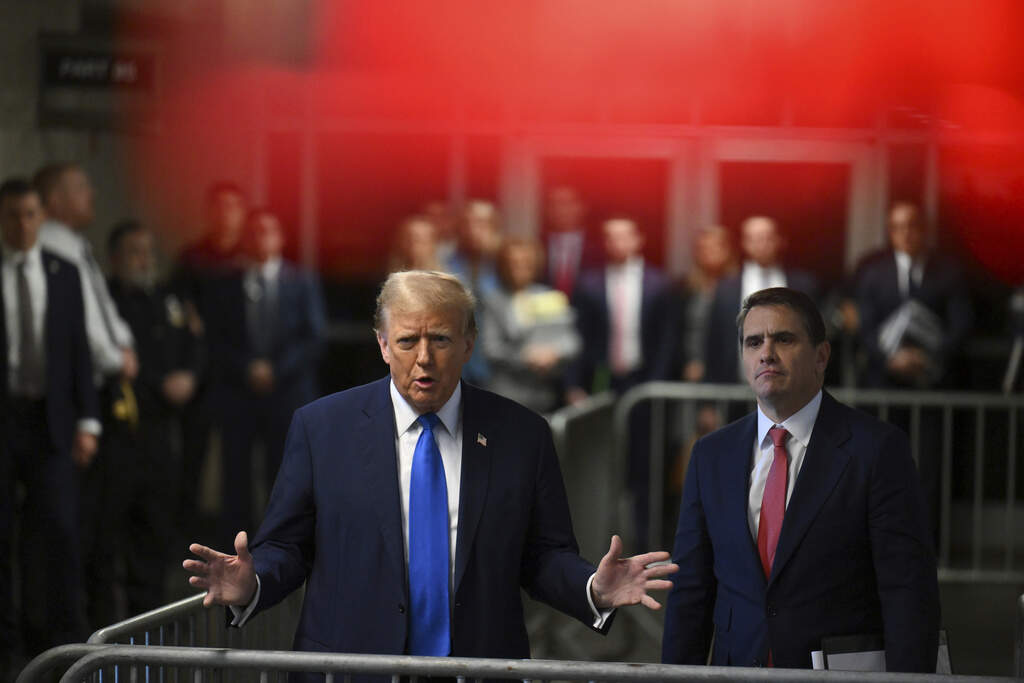
President Trump is directing the Justice Department to treat beliefs like "anti-Americanism, anti-capitalism, or anti-Christianity" akin to domestic terrorism. Can the president criminalize beliefs?
Guest
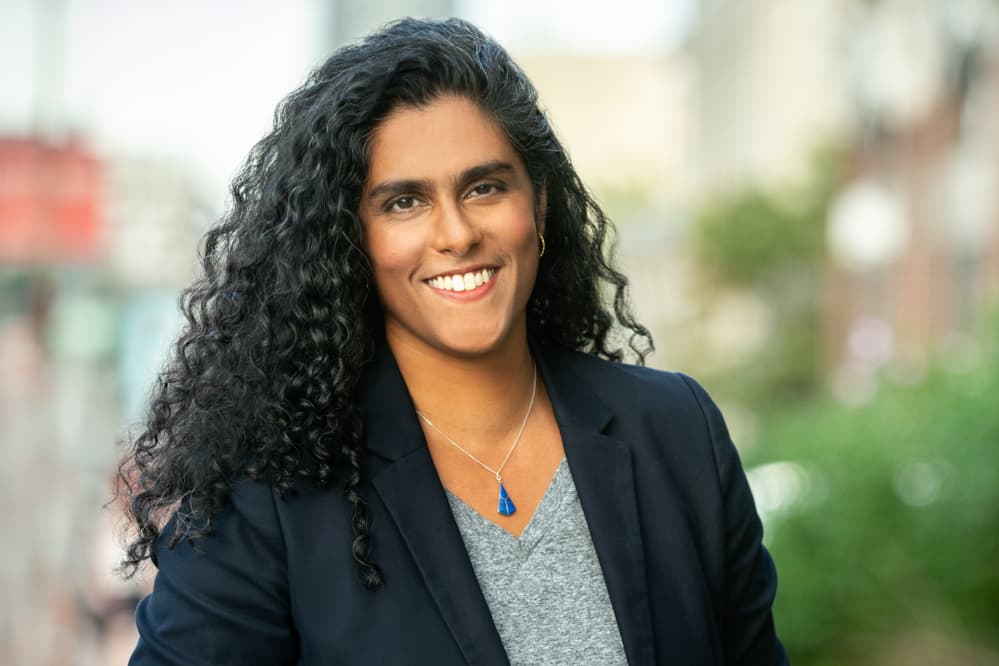
Faiza Patel, senior director of the Brennan Center's Liberty and National Security Program.
Also Featured
Mark Bray, professor of history at Rutgers University.
Tony Kahn, broadcaster.
The version of our broadcast available at the top of this page and via podcast apps is a condensed version of the full show. You can listen to the full, unedited broadcast here:
Transcript
Part I
MEGHNA CHAKRABARTI: On January 7th of this year, 37-year-old Renee Good was shot and killed by an ICE agent in Minneapolis, Minnesota. She was in her SUV, stopped sideways on the street. ICE agents circled her car. They reached through the window and ordered her to get out of her car. Good briefly reversed and slowly turned the SUV to the right in the direction of traffic. At that point, ICE Agent Jonathan Ross fired three shots directly at Good as her vehicle turned away from him and passed him.
Just one hour later, in Brownsville, Texas, then Secretary of Homeland Security Kristi Noem declared that Renee Good was a terrorist.
Noem would later say the same thing about Alex Pretti when he was tackled by ICE agents, and shot and killed at point blank range on 17 days later on January 24th.
On January 11th, between the Good and Pretti shootings, Noem appeared on CNN with Jake Tapper. He asked her how she could possibly know what Good was thinking – her intent-- when she began turning her car away from the ICE agents.
(TAPE PLAYS)
CHAKRABARTI: Noem is right, there is a definition of domestic terrorism in the United States Code. Section 18, subsection 2331(5). It refers to acts dangerous to human life that violate federal or state criminal laws, occur primarily within the U.S. jurisdiction, and appear intended to intimidate/coerce a civilian population, influence government policy by intimidation/coercion, or affect government conduct by mass destruction, assassination, or kidnapping.
The former Secretary of Homeland Security insists that she knew what Renee Good intended. She knew what she was thinking.
Well, last year, President Trump did take steps to try to codify how thoughts could contribute to act of domestic terrorism.
He signed National Security Presidential Memo number 7 — or NSPM-7 – a directive that grouped things like anti-capitalism, anti-Christian, opposition of quote “traditional American views on family, religion, and morality” and anti-fascism into one big bucket officially associated with domestic terrorism. NSPM-7 gave the federal government power to investigate and prosecute individuals simply associated with these opinions.
Faiza Patel joins us now. She's the senior director of the Brennan Center Liberty and National Security Program. Faiza Patel, welcome to On Point.
FAIZA PATEL: Hi, Meghna.
CHAKRABARTI: NSPM-7 is what we're looking at today, but before we specifically dive into the language of the memo, reflect back with me on what the Trump administration, specifically Kristi Noem had said during, after the killings of Good and Pretti about just being immediately able to assert, according to them, that these were domestic terrorists because we knew what they were thinking.
We knew their intent. What did you make of that then?
PATEL: That seems quite in line with the general position taken by the Department of Homeland Security and other officials who tend to characterize protestors and really anybody who opposes ICE as domestic terrorists. You look, for example, at this document, it's not a document really, but this number that ICE throws around, that the number of assaults on ICE officers have gone up by 1,000%, I think, was the last August number. And you look at what they think counts as assault. So it's sort of everything from doxxing to batting away an officer's arm to actual violence.
So there's been this consistent conflation of all protest activity with domestic terrorism that sort of predates the Good killing. So I think this is very much in line with that thinking that all protests is potentially domestic terrorism.
CHAKRABARTI: Okay. So that's why I wanted to bring up the Good and Pretti cases, again, because they happened this year and these, the presidential memo came out, what, September of last year.
And at the time of the Good and Pretti killings, I was like, how can they possibly assert this? It was ridiculous on the face of it, but now we have this sort of chain of actions from DOJ and from the White House that seem to be setting the stage for, as you said, just believing certain things while in a protest as being, what, adequate for being under suspicion for domestic terrorism?
PATEL: The government has enormous powers of investigation and prosecution. And the rules that sort of constrain them are quite weak. And they have pretty close to carte blanche to decide who they want to investigate for domestic terrorism. And remember, when you look at something like a terrorism crime, whether it's international or domestic, ideology is kind of part of the crime in some sense, right?
So the whole point of something being terrorism as opposed to a regular crime is that you're trying to achieve a political perspective, sorry, a political goal, right? So oftentimes, and this is why terrorism prosecutions are often so fraught, is that there's an action component, and then there's this motivation component, which is very political in a lot of ways.
So there is this construct that we have in terrorism, which when you transplant it into the domestic space, you're talking about political convictions in the domestic space, and you really create very a lot of impact on speech and chilling effect and First Amendment violations.
CHAKRABARTI: Okay. So then let's talk about the president or the National Security Presidential Memo - 7.
The part that I have specifically quoted here, I'm gonna read again, and this is from September of last year, where the memos, it's actually largely about Antifa or anti-fascist organizations. And it says here that, quote, "Common threads animating this violent conduct include anti-Americanism, anti-capitalism, and anti-Christianity, support for the overthrow of the United States government, extremism on migration, race, and gender, and hostility towards those who hold traditional American views on family, religion, and morality."
And then it says, "Groups and entities that perpetuate this extremism have created a movement that embraces and elevates violence." That's the part that really stuck out to most people. Upon reading it carefully, Faiza, do you find it as taking steps towards just criminalizing, simply having those beliefs?
PATEL: It does that in a sort of a two-step, if you will, right? So the first thing it does is that it says all, anybody who holds these beliefs or expresses them any way is potentially a target of the government, but obviously they're not going to prosecute everybody who holds these beliefs, but they are going to try and prosecute a few people.
And we've seen a couple of examples of that coming up, but the effect that it has is the chilling effect on that whole swath of people who hold beliefs that could be potentially classified as anti-American or anti-capitalist or extremism and migration or whatever. So you have this kind of two-step, which is these are the beliefs we're going after.
We know they're not going to be able to bring so many prosecutions. They can't prosecute, I don't know, 40% of the country or whatever who holds this belief, but the effect is, the few prosecutions they bring will have a chilling effect on the broader population and on protest activity in general.
CHAKRABARTI: How is this different than what has been well established for many years, even decades? That law enforcement, the Justice Department, the FBI, sort of have a history of following certain groups they believe have potentially dangerous beliefs. There was a time that we had civil rights activists being under constant scrutiny by law enforcement.
PATEL: Yeah. So it's an interesting historical parallel, right? So if you go a little bit further back and you go to the McCarthy era, you had all these lists of subversives in the federal government or rabble rousers. The government, you kept a lot of lists of people who they thought were troublesome in some way, shape or form.
And now we have former Attorney General Bondi, who apparently keeps a list of people who might potentially be domestic terrorists. So there's definitely this parallel to earlier times in our history. And at the same time, when you look at sort of the targets in today's world, in the NSPM-7, you have to look back and look at the FBI's history of targeting civil rights groups, Martin Luther King in particular, but also anti-war groups, feminist groups.
There was a whole litany of, sorry, there's a whole list of groups that were being targeted. And when all of this came out, which was in the 1970s, around the time of Watergate, the Senate actually did a very extensive investigation of this. This is known as the Church Committee investigation, and that led to some of the most significant reforms of the post-Watergate era in terms of government surveillance and national security authorities.
And one of the things that happened in that time was that the FBI adopted these rules that said we're really going to investigate people when we have some kind of factual predicate. We have some, we have a tip or we have some indication that somebody's committed a crime." After 9/11, these rules were completely shunted aside and the new rules give the FBI a lot of authority to open intelligence investigations, domestic intelligence investigations, which don't need to be linked to a criminal act or an actual suspicion of a criminal act.
They just need to be linked to an authorized purpose. So if your authorized purpose is combating domestic terrorism committed by anti-American, anti-capitalist forces, you have a lot of discretion as the FBI to decide who you're going to go after. So this is the way I see it, the trajectory of historical abuses reform, 9/11, loosening of rules, and I think we are again in another time of where we will see significant abuses.
Part II
CHAKRABARTI: And Faiza, if we could, I'd like to take us a finer tooth comb to the memo specifically. And I also just want to note that, as you've written extensively, the memo comes hand in hand with an executive order that was issued a few days before NSPM-7 that appeared to designate Antifa as a domestic terrorist organization.
We'll get to that in a little bit. But as you note, the memo starts by listing a bunch of different incidents as sufficient to create some kind of climate of profound concern and fear about purported left wing activities. They talk about, it talks about Charlie Kirk's assassination obviously attempts on President Trump's life, Justice Brett Kavanaugh.
It talks about the killing of the United Healthcare CEO Brian Thompson, and then it says there's a 1,000% increase in attacks on ICE officers. But you say that this list is a mishmash. Why?
PATEL: So one of the risks in terrorism prosecutions and investigations is always this risk of conflating ideology with action.
And what this list does very explicitly is that it takes things that are clearly crimes, right? The Charlie Kirk assassination, and then makes them part of a conspiracy, a sort of left-wing conspiracy, which includes also protest activity, doxxing ICE agents and things like that. And what that does is that it makes this entire spectrum of activity a potential target for federal law enforcement, but the memo does more than that, right?
It actually tells federal law enforcement, "Go after, this whole range of people." And we know, for example, that the attorney, the former attorney general has created this list of domestic terrorist entities. We know that the FBI director has set up a special NSPM-7 mission center, which brings in agents from 10 different agencies to find potential violations, to find potential domestic terrorism cases.
So this is being implemented. It's not like it's a completely abstract thing, but that's what it does. It creates this threat, it defines the threat extremely broadly, and then it directs federal law enforcement to go after that threat.
CHAKRABARTI: Yeah. And interestingly, the examples that the memo uses emerge from what the president believes are extremist left-wing activities.
And I don't know if it's meaningful or not that the memo leaves out things like the entire attack on Congress on January 6th, 2021. Because one of the things that the memo says is dangerous here is preventing the functioning of a Democratic society and the Jan. 6 attack is literally the definition of that also leaves out the shootings of Democratic lawmakers, for example. Is that simply just politicking in the memo, or do you feel that is from a civil rights and law enforcement perspective, a significant omission?
PATEL: I think it calls into question the motivation behind the memo, right? Because if you were truly concerned about domestic terrorism, then you would want to identify the full range of threats and the sources of those threats.
But the memo doesn't do that. It simply cherry-picks those threats and even things that aren't threats like protests, and forces them into this frame while ignoring actual acts of violence. So I think it really calls into question the good faith, if you will, of this memo.
CHAKRABARTI: And actually, also point out something else, which just let me reiterate here. The memo in organizing these particular incidents together, and then also goes so far as to say that these are, quote, organized campaigns, that they did not emerge organically. It seems to be trying to create an atmosphere in which the president is saying, "Look, there is a vast left-wing coordinated conspiracy out there that's threatening America, and so therefore, we need to expand law enforcement's power.
We need to expand the Department of Justice's power to look at anyone who may be connected with this organized conspiracy, based on even just what protests you show up to or how you think.
PATEL: Yeah. And it actually reflects back to something that the president did in his first administration.
You'll recall that 2020 was marked by the protests triggered by the killing of George Floyd and others. And there was a lot of rhetoric at that time from senior administration officials saying, "Oh, this is all the handy work of Antifa." You'll remember that Antifa was also mentioned in the context of having instigated the January 6th riots.
So there was this theme already in the first Trump administration that protests are the work of Antifa, and there were actually some moves made to go after what the administration called Antifa. The Attorney General at that time, Bill Barr, activated joint terrorism task forces and told them to go out and look for Antifa activity.
They didn't find any and so that sort of fizzled during the first Trump administration. But now I think they're making a much more concerted effort to pick up that threat and move forward. In terms of this sort of claim of a broad conspiracy, I think it's also a piece with sort of other claims this administration has made. Which have framed reality that we can see on the ground in ways that are less than truthful.
So for example, that we are facing an invasion of migrants at the border, right? That was used to justify other actions that the administration took last year. So this is a constant kind of theme that we see throughout this administration, which is they take a certain set of facts, and they use them to, in essence, create or attempt to create a new reality and then take actions based on that reality.
CHAKRABARTI: Yeah. To be clear here though Antifa members have actually destroyed property, they have participated and in various protests, the participation in and of itself is not the problem, but sometimes Antifa members do actually interact with law enforcement and things end up being violent.
I don't want to deny that those things have happened, but the memo here is trying to craft a narrative that there's this coordinated universal criminal activist group that Antifa is. And as you said, there's been actually formal investigations into that and no evidence of coordination has been found.
PATEL: So I think that's exactly right. And I'm glad you mentioned that. Because it is true that there are violent crimes that are committed. There are violent crimes that are committed by people who are operating under left-wing ideologies and right-wing ideologies. That's a fact. And those crimes have to be prosecuted and should be prosecuted.
But here's an example of how the whole thing gets a little messed up. So there's this case out in Prairieland, Texas, right? There was a protest at an ICE facility and there were a number of people there who were doing protest things and they were making a lot of noise. And there was one guy there who actually shot and wounded a federal officer, right?
And then all of these people were indicted. This was last summer. And then later in the year, and I think it was after NSPM-7 came out or right around the time it came out, the government added terrorism charges to the indictment. And these people were convicted just a few days ago, a couple of weeks ago.
And the conviction for all of them, so the conviction for the guy who actually shot the federal officer, as well as all of the other people who were at the protest and who were doing things that were pretty obnoxious honestly, but they weren't killing anybody.
All of them get lumped into a single conspiracy for material support of terrorism, which carries a 15-year prison sentence, right? That seems like very disproportionate to the activity that all of these people, other than the guy who shot the federal officer, were carrying out at the protest.
CHAKRABARTI: Okay. There's one more historical parallel that I want to just talk about with you, Faiza Patel, because you went through quite a few of them that the United States federal government has, or moments where the federal government has tried to radically expand the number of people it believes is justified to investigate.
And I think the one that we should point out specifically is, of course, the McCarthy era because in the 1950s, for folks who don't remember, we had the quote-unquote Red Scare where Republican Senator Joseph McCarthy led the charge to hold congressional hearings, probing people whom the government suspected had ties to communism.
JOSEPH MCCARTHY: One communist on the faculty of one university is one communist to many. One communist among the American advisor that Yalta was one communist too many. And even if there were only one communist in the State Department, even if there were only one communist in the State Department, that would still be one communist too many.
CHAKRABARTI: McCarthy did vigorously go after the State Department, but he also went after artists, academics, and a number of Hollywood filmmakers who were subpoenaed by McCarthy's House on American Activities Committee.
Screenwriter Gordon Kahn was one of the first. Kahn was a prolific writer. He wrote more than two dozen scripts in the '30s and '40s. He also helped found the Screenwriter's Guild. After being subpoenaed though, Warner Brothers Studios fired Kahn and he fled to Mexico, leaving his family behind, including his son, Tony.
TONY KAHN: When I was five years old, my father disappeared, and nobody would talk about where he had gone or why he had disappeared. And in the midst of all of that silence, I was after all, only five years old and the parents .. didn't know how to explain politics to me. I thought that he probably died and that nobody wanted to tell me.
It turned out that that wasn't the case. He had fled the country because he was under investigation by the House of American Activities Committee for being a left-wing Hollywood screenwriter.
CHAKRABARTI: And by the way, McCarthy was not the first person to assert that spies were operating within the U.S. government or that communists were infiltrating American life.
It goes back to 1947. We're in the Cold War, right? President Harry Truman created the Federal Employee Loyalty Program, which directed the FBI to investigate government employees with quote, "membership in, affiliation with or sympathetic association with any foreign or domestic organization designated by the Attorney General as totalitarian, fascist communist or subversive."
Almost five million federal employees back then filled out loyalty investigation forms. McCarthy continued that, obviously, with his Red Scare and those House On American Activity Hearings. He called hundreds of people to testify in closed session. He ruined hundreds of lives. That's why Tony's dad left the country.
KAHN: He fled the country because he was afraid that if the Committee subpoenaed him and got him to testify, they would ask him not just to renounce his own left-wing views, but to prove he was a patriot, name anybody who knew, who still held those left-wing views, and he was unwilling to have his privacy invaded that way, and he was unwilling to betray his friends, and so he fled the country.
At that point, if you didn't cooperate with the Committee, it turns out have the power to hold you in contempt of Congress and possibly send you to prison for a year.
CHAKRABARTI: After about eight months, Gordon Kahn brought Tony and the rest of the family down to Mexico, where they stayed for the next five years before coming back to the U.S.
KAHN: But what happened when we returned was that the Red Scare was not over. We returned because we had to, we run out of money. My father couldn't work because he was blacklisted, and that's a whole other story, how people got blacklisted. But there was a kind of industry in the country that was set up to provide people with the names of left-wing people who shouldn't be hired, and they made a living doing that.
Everybody was scared. They were scared of being seen with anybody who was considered to be an enemy of the state, for fear that they would be regarded as an enemy of the state.
CHAKRABARTI: Even though the McCarthy era has long-ended, Tony remains deeply opposed to any time governments use fear to advance political goals.
KAHN: My whole life has been shaped by the experience of what it's like when a society gets scared. And I concluded from that, the only thing I think I probably learned is that when a country is scared, when a society is scared, most people do not behave well.
CHAKRABARTI: Tony Kahn is the author of the book, Fugitive: My Boyhood Under the Hollywood Black List.
Faiza Patel, do you see parallels between McCarthyism and the Trump administration's September executive orders and that national security presidential memo?
PATEL: 100%, right. McCarthyism worked both by directly penalizing people, right? Whether they could hold you in contempt, for example.
It worked by publicity, like with watchlists and lists of people who were considered to be subversive or who should be targeted. It worked through blacklisting and it worked through intimidation. And now what we see is the setup for something quite similar, and we've seen pieces of this already, right?
Everybody talks about, in the McCarthy era, a lot of people lost their jobs because of accusations of communism. And we saw that after the Charlie Kirk assassination, for example, people who may have called out their concerns about what Charlie Kirk had said in previous interviews and speeches, many of these people were either fired or there were calls for them to be fired, and it created this atmosphere of fear about actually criticizing Charlie Kirk in the wake of his assassination.
It's pretty similar to the kind of mechanism we saw in the McCarthy era. But even more precisely, a week or two ago, maybe it was just last week, the news broke that the administration had indicted the Southern Poverty Law Center on charges of fraud, basically.
And their argument in that case is that the Southern Poverty Law Center, which is known for documenting extremist groups and publishing these lists of extremist groups, had actually been supporting the very kind of neo-Nazi far right groups that it claims to be opposing, because it had paid informants who infiltrated these groups and extracted information about them. And it's truly almost an absurd idea that you have this organization, the mission of which is to combat violence such as we've seen coming from the very far right, neo-Nazis and say actually what you were doing was you were supporting that violence.
Part III
CHAKRABARTI: Faiza, I actually just want to dig in a little bit more detail to what you were saying earlier about what constitutes actual support of terrorism.
So let's pick this apart a little bit. First and foremost, there's a difference obviously between foreign terrorist groups and quote-unquote domestic terrorist groups. Does this presidential administration or any presidential administration for that matter have legal authority to designate groups in the United States as domestic terrorist organizations?
PATEL: No. The short answer, there is a law in the books which makes it a crime to provide support for designated material, sorry, foreign terrorist organizations. The State Department has a procedure for designating groups as foreign terrorist organizations and any support you give these groups, whether it's a dollar or a million dollars can be considered material support of a foreign terrorist organization and you can be prosecuted for it.
There is no parallel provision that allows the government to designate domestic groups as domestic terrorist organizations. And there's a really good reason for that, right? Because if the government could do that, then it could decide tomorrow that the Southern Poverty Law Center, for example, is a domestic terrorist group and that any support you give them would be a violation of the material support law.
There is no parallel provision that allows the government to designate domestic groups as domestic terrorist organizations.
Faiza Patel
So they can't do that. And in any event, it's not just a question of the discretion in the government, it would also be an enormous First Amendment problem. And the court case that allowed this statute to stand for foreign terrorist groups, which also considered First Amendment implications, had a very clear carve out saying that this ruling really isn't about domestic terrorist organizations.
So there's good reason why we don't have a parallel statute for domestic groups.
CHAKRABARTI: And that was a Supreme Court case you were talking about.
PATEL: That's right. That was a Supreme Court case, Humanitarian Law Project v. Holder. Okay. But then explain to me this that you wrote. You said, "Because terrorism is inherently a political crime, extending the foreign material support for terrorism regime would allow the government to assign the label to domestic groups with unpopular beliefs."
Is that what's happening here with the presidential memo and his executive order or not?
PATEL: Yeah, that's exactly what they're trying to do, right? We don't actually have a list of designated domestic terrorist groups. Because there's no mechanism for one, but there is apparently according to former Attorney General Bondi, a DOJ list, which isn't public and which apparently has thousands of names of organizations on it.
CHAKRABARTI: Okay. But then you, but as you said, then that implies that there's no legal standing for this whatsoever, but you're talking about court cases that are already happening that are attempting to use this, bring this legal logic into these cases?
PATEL: No. No. They're not attempting to bring this legal logic into the cases, right?
The domestic terrorism organization rhetoric is a narrative framing. It's saying all of these different things that are out there are domestic terrorism, and we're going to prosecute them using different laws. So the Prairieland, Texas case used a different provision of the law, which can apply to domestic or international terrorism, prosecuted on the basis of that provision because there you had a violation of the law.
So the way to think about this is in the foreign terrorist context you can be prosecuted and convicted for supporting a group. In the domestic context, you can only be prosecuted for committing an act. So it's not the support of the group that could expose you to criminal liability, it's supporting a particular act.
And the law defines I think it's some 50 crimes that are considered terrorism. So if you provide support for one of those acts, then you can be prosecuted for domestic terrorism. It has nothing to do with any group whatsoever.
CHAKRABARTI: Okay. That seems even more dangerous, actually, Faiza, if I'm understanding you correctly.
PATEL: Yes and no. It is dangerous in that it is quite a sweeping statute in the sense that you can be prosecuted and it's just for supporting an actual violent act, but like a whole host of different acts. At the same time, you do have to have some nexus with a criminal act before you can be prosecuted.
In the foreign context, you don't have to be committing a foreign, any kind of criminal act. You may think that you are supporting an organization's charitable work, but as long as you're supporting that organization and that organization is on the list, you can be criminally liable. So that is the difference.
The foreign terrorist regime is in fact more broader and more intrusive on speech than the domestic terrorism laws that we see being used, but the domestic terrorism laws are also quite broad and quite easy to capture a lot of activity that we wouldn't normally think of as terrorism.
CHAKRABARTI: Okay. I suppose I'm seeking clarity here on what's happening in several courts across the country right now with cases that are related to allegations of domestic terrorism and support. Clarity between that and what's actually written in the executive order and the presidential memo, because there's a sentence here in one of your analyses that you wrote that really caught my attention.
You said the implications of applying this construct in the context of Antifa are enormous. You say, quote, "Buying a sandwich for an activist or allowing a protestor to crash on your couch or briefly lending a computer to print pamphlets, critical government policy," they could all be potentially considered material support of a terrorist group.
PATEL: They could. Yeah. But they wouldn't necessarily be considered material support of a criminal act, right? Okay. So I know it's really complicated, so let me try again to see if I can explain this. Foreign terrorists, it's a group. Anything you do to support that group can be a criminal act, right?
When you come to the domestic context, you have to support a specific crime, one of 50 plus crimes that are actually listed out in the federal code. If you provide support to somebody who commits arson at a federal facility, in any way, that could be material support. Now, you have to intend to support them, so that's an important constraint on that, but it is still quite a broad statute, but it doesn't turn on the group.
So it doesn't matter if you're trying to support Antifa. It doesn't matter if you're trying to support some other group that the government considers to be a domestic terrorist group. What matters is the act that you're performing and the act that you're supporting. That act has to be a crime.
CHAKRABARTI: Okay. In terms of being prosecuted by the government, but-
PATEL: Precisely.
CHAKRABARTI: But then I think the concern here, now it's all starting to co- become clear to me. And sorry if I'm a little-
PATEL: So it's, honestly, it's like a super weird construct.
CHAKRABARTI: But I think it's really important to understand. Anyone who has a belief in civil liberties when the government attempts to radically expand definitions that give it extra power to surveil Americans, I think we should try to understand it as carefully as possible.
But so now, the Trump administration is attempting, whether it legally can or not, attempting to designate Antifa or anti-fascist organizations as terrorist groups, then you bring in the NSPM-7, which includes, which throws under the umbrella of Antifa, those other beliefs that we were talking about, anti-Americanism, anti-capitalism, anti-Christianity, extremism on migration, race and gender, hostility towards those who hold traditional American views on family, religion and morality.
This is the most enormous swath of potential beliefs one could possibly imagine. So is what's happening here, maybe you said this clearly at the top, but I want to reiterate it, is that the Trump administration is saying we believe Antifa is a terrorist organization. Antifa believes in these certain things.
So if you do too, then you are, you could potentially be the subject of Justice Department scrutiny."
PATEL: Exactly right. And the cases they are bringing will sometimes rely on terrorism statutes and will sometimes rely on other statutes in order to get their point across. And that's not new in terrorism, by the way.
A lot of things that the Justice Department considers foreign terrorism prosecutions are actually like immigration law violations. So there's always this sort of using of different laws in order to accomplish a goal. So the Southern Poverty Law Center is being prosecuted under fraud statutes.
It's not being prosecuted under material support for terrorism statutes, but the point that the government is making with that prosecution is the same one, right? Which is that we don't like this organization, because we don't like these lists that it publishes, so we're going to find a way to prosecute this organization.
Similarly, we know that they are planning to use IRS investigations, particularly into organization's tax-exempt status, right? That's not your typical material support terrorism prosecution, but it's another way of getting at the same goal, which is basically suppressing dissent and protest.
CHAKRABARTI: Okay. So we have an example of how this is already having an impact on people's lives. So listen with me for a moment, if you could, to Rutgers' history professor and researcher, Mark Bray, because he researches Antifa and he feels, or he felt that he had to flee the country.
MARK BRAY: It was clear from the Executive Order on Antifa forward that the Trump administration was organizing a concerted campaign of demonization, not only of those allegedly associated with anti-fascism, but as the Department of Homeland Security memo about the quote-unquote Antifa online suggested, trying to conflate left activism or political opinions more broadly with anti-fascism which they characterize wrongly as terrorism.
And so I felt like I was really in the eye of the hurricane of that.
CHAKRABARTI: In 2017, Bray wrote a book called Antifa: The Anti-Fascist Handbook. It's a history book, a history of anti-fascism in the United States. He's been doxxed repeatedly by members of the far right since then and harassed.
So that's why Bray and his family made the decision to move to Spain. On a Saturday they booked a flight for the following Wednesday.
BRAY: I was stopped, searched and interrogated by customs and border patrol agents for an hour prior to leaving, although I have yet to be charged with any crimes, and in fact, I was the victim of crimes at this time.
And among the things they asked me was this recurring question that the far right alleges that I am the quote-unquote financier of Antifa as if on a professor's salary, I had the money to finance much of anything. But that question was brought up again by the customs and border patrol agents, which to me shows the kind of really politically motivated nature of this harassment.
CHAKRABARTI: Now, as mentioned, Bray and his family are in Spain right now, and as the end of the school year approaches, he wants to come home, but his family's taking new precautions in preparations for further threats from the far right and from the government itself.
BRAY: Obviously, there's a certain risk in coming back, and if things really do get as bad as they could become in the United States, it would be a mistake for me to go back.
I'm not ignorant of that. What I am hoping for is that our movements of resistance prevent it from getting as bad as it could get, that we all manage to create such a powerful force that we don't end up in a situation where everyone who is considered a leftist gets rounded up and put in a camp.
That's what I'm hoping for, and that's what I'd like to help participate to make happen.
CHAKRABARTI: That's Rutgers professor and historian Mark Bray. Faiza, do you think Professor Bray's decision to leave the country in the wake of NSPM-7 was too extreme, or do you find reason in it?
PATEL: I can understand that he was nervous about what might happen to him in the wake of NSPM-7, and I think that's the point of NSPM-7, right?
Which is to make people nervous, which is to make people scared, and which is to create this broader chilling effect where everybody is thinking, "Wow should I really be posting this online? Should I be going to that anti-ICE protest, or is that going to put me very firmly at risk of being called a domestic terrorist and investigated as such?"
CHAKRABARTI: NSPM-7 also targets grant making organizations. It directs the joint terrorism task force to coordinate and supervise investigations. It directs the treasury secretary to disrupt, quote, financial networks that fund domestic terror and political violence. At the same time though, Faiza, I hear you saying there isn't actually much legal grounding for these directed actions, but who's going to stop the federal government, if not these court cases?
PATEL: So the court cases are critical piece of this, right? But I think the point that I've been trying to make is that the government going after these institutions and individuals in and of itself is the tactic. So whether or not they win or they lose at the end of the day, in some sense is irrelevant, right?
It's obviously relevant for the particular institution or individual, but for what the government is trying to accomplish here, which is sending this broader message, which is anti-protest, anti-dissent, it really doesn't matter. Now, but the consequences, I think, for organizations and individuals who get tarred with the domestic terrorism label are really for being prosecuted by the government as fraudulent, as is the case for the Southern Poverty Law Center. Are extraordinary, right?
You have reputational harm, who is going to donate to a group that's been called a domestic terrorist organization or has been called fraudulent. You have expenses, you have to mount a legal defense. It's very costly, particularly for smaller groups. You may be debanked.
We saw already that, you know ... you can lose financial access as well.
The first draft of this transcript was created by Descript, an AI transcription tool. An On Point producer then thoroughly reviewed, corrected, and reformatted the transcript before publication. The use of this AI tool creates the capacity to provide these transcripts.
This program aired on April 30, 2026.