Support WBUR
What Yale saw when it looked in the mirror
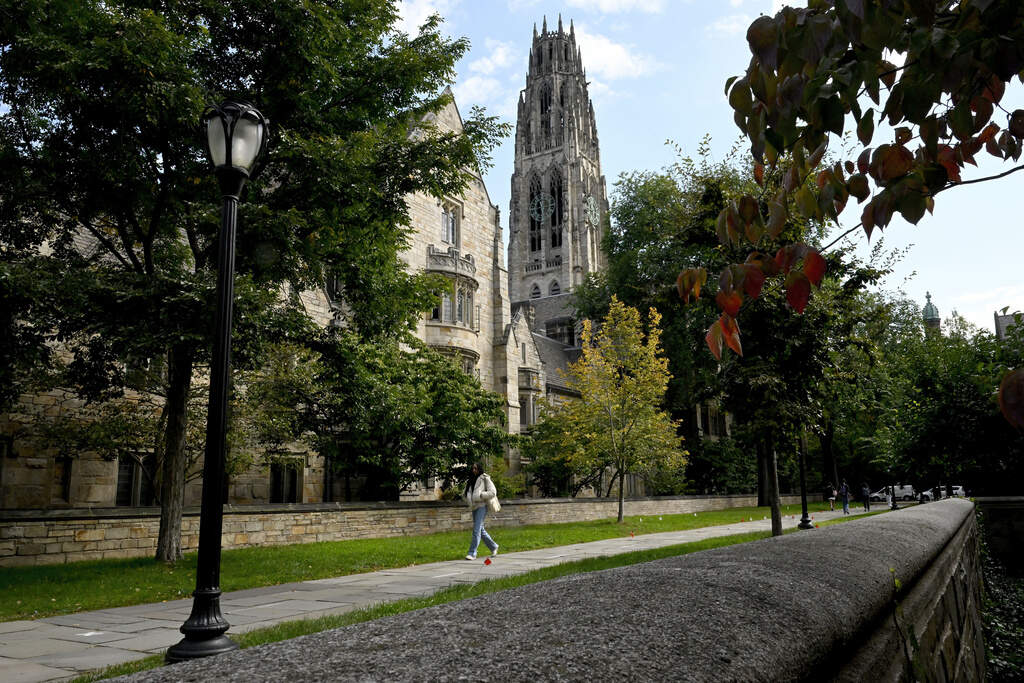
Conservative critics say America's elite colleges don't encourage political diversity and have biased admissions. A Yale University commission recently concluded that those critics may be right.
Guests
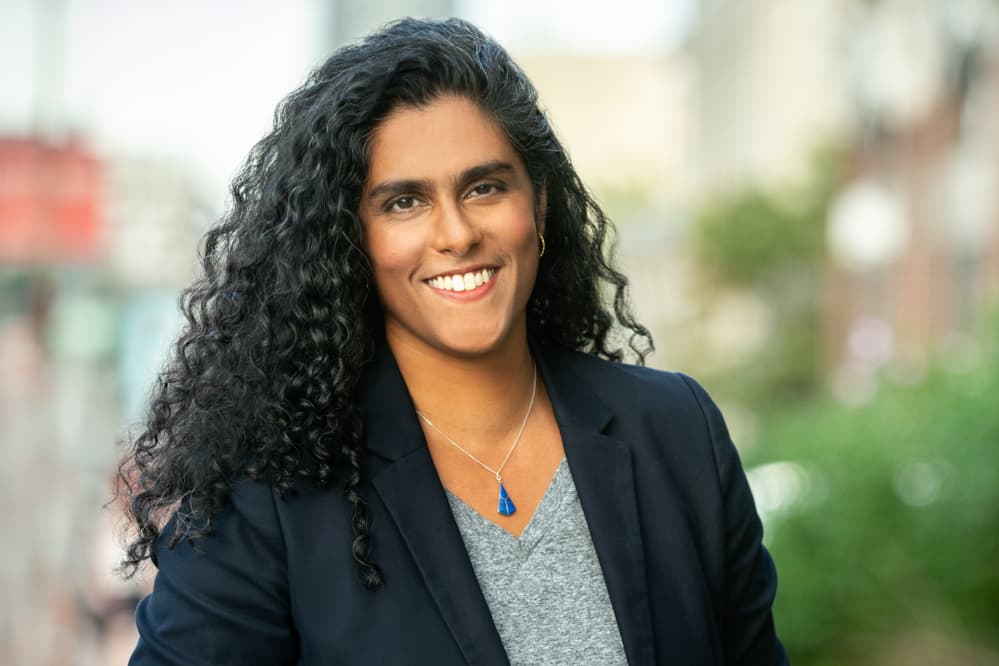
Julia Adams, professor of sociology at Yale University. Co-chair on the Yale Committee on Trust in Higher Education.
Doug Belkin, education reporter at The Wall Street Journal.
Also Featured
Charlotte Canning, professor of drama at the University of Texas.
The version of our broadcast available at the top of this page and via podcast apps is a condensed version of the full show. You can listen to the full, unedited broadcast here:
Transcript of Full Broadcast
Part I
MEGHNA CHAKRABARTI: In the spring of last year, the Trump administration amplified what was already a concerted effort to change higher education. Critics of the administration called the efforts an attack on some of the most respected educational institutions in the world.
But supporters of the president's efforts saw them as desperately needed reforms for universities that had become, quote, "too woke." Trump signed several executive orders, including the Reforming Accreditation to Strengthen Higher Education order, that directed the Department of Education to require accrediting bodies to force universities to drop diversity, equity, and inclusion standards.
Next for you, sir, university accreditation is currently a process controlled by a number of third-party organizations. That's by statute, by law. Many of those third-party accreditors have relied on woke ideology to accredit universities instead of accrediting based on merit and performance.
TRUMP: Will we look into the past people that they've taken?
CHAKRABARTI: Trump also signed an executive order to, quote, "eliminate the Department of Education itself," quote, "once and for all." More directly, Trump leveraged the financial power of the federal government against the nation's most elite college campuses that he believed were, quote, "infested with radicalism like never before."
In March of 2025, Trump sent letters to 60 universities warning them of potential enforcement actions if they did not crack down on antisemitic discrimination. That same month, he cut $400 million in federal funding to Columbia University and demanded that Columbia reorganize the leadership of its Middle East Studies department.
Columbia reached a deal with the administration. He froze or cut billions of dollars in federal grants to Cornell University, Northwestern, Princeton, and the University of Pennsylvania, among others. Brown University reached a deal with the White House when it agreed to remove any consideration of race in its admissions and agreed to adopt the Trump administration's definition of male and female.
But President Trump held special contempt for Harvard.
TRUMP: Where these students can't add two and two, and they go to Harvard. They want remedial math, and they're going to teach remedial math at Harvard. Now, wait a minute. So why would they get in? How can somebody that can't add or has very basic skills, how do they get into Harvard? Why are they there? And then you see those same people picketing and screaming at the United States and screaming at, they're antisemitic or they're something.
CHAKRABARTI: In April of 2025, Trump officials froze $2.2 billion in grants to Harvard, saying that the university had, quote, "failed to live up to the intellectual and civil rights conditions that justify federal investment."
They demanded that Harvard cease all preferences based on race, religion, sex, or national origin in its hiring and in its admissions, and that the university would have to share all hiring and admissions data with the government. They demanded that Harvard hire a third party to review every department and teaching unit for viewpoint diversity, and they demanded that Harvard cut specific programs in specific departments.
Harvard sued the federal government and won. But meanwhile, something else was percolating among the American people, a historic drop in the trust in higher education. By 2024, already, only 36% of Americans said they trusted higher ed. So it's amidst this barrage that Yale University decided to commission a special report looking into that decline in trust.
And the commission, a year later, recently released their findings. It concludes that universities do indeed bear some responsibility for the shadow cast over them and their reputations, and the commission recommends reforms in admissions, protecting free speech, and the cost of college. Yale Professor of Sociology Julia Adams co-chaired the Yale Committee on Trust in Higher Education, and she joins us now from New Haven, Connecticut.
Professor Adams, welcome to On Point.
JULIA ADAMS: Hi, Meghna, and please do call me Julia.
CHAKRABARTI: Okay, will do. Thank you very much for that. If I may, I'd actually like to start with one of the recommendations that Yale almost immediately adopted from the commission as a way to get a deeper understanding as to the commission's analysis about higher education, or Yale specifically.
And that recommendation was that Yale change its fundamental mission statement, the purpose of the university. In 2016, the mission statement for Yale was, quote:
"Yale is committed to improving the world today and for future generations through outstanding research and scholarship, education, preservation, and practice. Yale educates aspiring leaders worldwide who serve all sectors of society. We carry out this mission through the free exchange of ideas in an ethical, interdependent, and diverse community of faculty, staff, students, and alumni."
As of April 30th of this year, so just a couple of weeks ago, Yale's new mission statement, which is directly from the commission, reads, quote:
"Yale's core mission is to create, disseminate, and preserve knowledge through research and teaching."
Why that change?
ADAMS: It is a big change, but I should note that it's also, in some ways, a return to earlier mission statements. And so we are at a point where higher education, including Yale, is really being buffeted from all sides. And also has in some cases seemed to promise to be all things to all people.
And so the committee thought that it was crucial to underline what we are basically here for and the core of what universities do best. And so this is a kind of response to a mission drift that is seen at a great many colleges and universities, but we, of course, were addressing our home base.
CHAKRABARTI: Okay, mission drift. But if you, if the commission went so far, which it did, as to recommend this radical change and simplification of Yale's mission to its core, those core things of creating, disseminating, and preserving knowledge through research and teaching, it implies that the previous mission statement, which is, it's a statement of purpose for any institution that has a mission statement. How far adrift and where was the mission drift that you felt you needed, the commission needed, Yale needed to pull back from?
ADAMS: Yes. The previous statement contains many admirable components, and it is not as if Yale wants to, for example, stop educating leaders. In fact, the residential colleges at Yale have this as part of their own mission statements. But we believe that it's also important to focus in on, concentrate on and enhance the core of what Yale does, and that involves the preservation, research and teaching. It involves knowledge.
The committee thought that it was crucial to underline what we are basically here for and the core of what universities do best.
Julia Adams
CHAKRABARTI: If I may Julie, I'm going to put it more directly. I see this change in mission statement as the committee and now the university itself, because it did indeed adopt this new mission statement, as a tacit agreement that certain values in the old mission statement, improving the world and aspiring leaders, to educating aspiring leaders, and then of course, there's the specific words of ethical, independent, and diverse community, that somehow those values as embedded in Yale's mission were setting the stage or at least reflective of a direction in which Yale had drifted, which wasn't actually at the core of what an institution, an elite institution of higher education should be about.
ADAMS: Well, Meghna, I think you put that very well, and I'm not going to contest your version of this. I think it's quite spot on.
CHAKRABARTI: And what were the consequences of that then, as the commission found?
ADAMS: We were delighted that President McInnis did move so swiftly. And of course, debate immediately began to erupt on campus.
But yesterday was graduation. So we think that probably things will continue in the fall. But it really represented a really welcome move in the committee's view.
CHAKRABARTI: But I guess forgive me if I didn't phrase my question clearly enough.
Regarding that mission drift, what did the commission find were the consequences of that drift as redounded back onto the university?
ADAMS: The mission drift can appear in dramatic ways and in subtle ways, but one whole set of recommendations you will have seen has to do with focusing back in on the classroom and on the core importance of the classroom, and of course, the lab and the field site at Yale.
There is with such an expansive mission statement, it does encourage a kind of an over-broadening in which the core focus on the communication of knowledge, on teaching and on learning then can take a back seat, and we contested this in the report.
CHAKRABARTI: Okay, so you contested that, meaning you didn't think that it took a back seat, even though those words that indicated mission drift were in the former university mission statement.
ADAMS: Right. We didn't want it to take a back seat. There are so many pressures on the classroom. Of course, some of those come from outside colleges and universities. Social media, for example, is a very big one, and perhaps we'll get to that. But we, so are things internal to colleges, the rising prominence of things like extracurriculars other forms of student life.
And a renewed focus and a doubling down on the academic mission will help faculty, students and administrators be in a strong position to, basically, insist on the importance of education.
CHAKRABARTI: Okay. Julia, the reason why I'm focusing so much on just some words in a mission statement is that I think that's one of the things that people who read the report, including me, came away.
That the report is very brave, if not brutal, in its honesty regarding the fact that it seems as if you're saying that as embodied in the former mission statement, that Yale had become distracted from its core duty as an institution of higher education by performative progressive values.
ADAMS: I think distraction is an apt word, but it's wider than that, right?
It really does include all kinds of buffetings, as you say, from the outside. The fact that universities are, have been expected to be all things to all people. And so we were responding to something broad and societal. It sounds dry, but that's really the issue.
We were responding to something broad and societal.
Julia Adams
CHAKRABARTI: Sometimes even if it's dry, it's very important to understand.
Part II
CHAKRABARTI: Professor Adams, if I may, I want to go straight to one of the most hot button topics that the commission took on.
ADAMS: Okay.
CHAKRABARTI: And that is the issue of speech on campus, free speech and self-censorship on campus. First and foremost, I actually would love if you talked for a moment about how Yale actually has a pretty solid history of supporting free thinking and free speech on campus, because the commission quotes something called the Woodward Report from Yale in 1974.
What was that?
ADAMS: Yes. That was actually something another faculty committee, the Committee on Freedom of Expression at Yale, which was chaired by the historian C. Vann Woodward about half a century ago. And that report noted that universities have a very distinctive role to play in modern democratic society.
Of course, they educate students, they preserve cultural heritage, but they also have to push the frontiers of knowledge. And in order to do this and I'm going to use a phrase from the report, they need the, quote, "Right to think the unthinkable, discuss the unmentionable, and challenge the unchallengeable," unquote.
And of course, Yale and other institutions of higher ed have not always lived up to that mission, either now or in the past, but it does function as a kind of North Star for us, helps us through really particularly challenging times, and I experienced that myself in my 10 years as a head of college at Yale.
And it was --
CHAKRABARTI: Tell me more, specifically.
ADAMS: What, yeah, what was originally Calhoun College, now called Grace Hopper College, and I was head during a couple of periods of political turbulence on campuses nationwide.
CHAKRABARTI: And what did you experience?
ADAMS: One thing you experience as a head of college, and residential colleges are a wonderful part of Yale, is deep embeddedness in student community.
And so you see all sides of argument, struggle and part of your job is to help the community preserve the community in order to keep it together in a warm and wonderful way. And so again, you're buffeted from all sides, but you help create a through line, all kinds of ways of doing that, but the Woodward Report was helpful to me personally in that whole period.
CHAKRABARTI: Yeah. Because the commission quotes the Woodward Report as saying clearly and unequivocally that free speech is a barrier to the tyranny of authoritarian or even majority opinion as to the rightness or wrongness of particular doctrines or thoughts. But then the committee says this, that, quote, "Even the campus has not been immune from pressures towards conformity, intimidation, and social shaming that have affected the rest of higher education and the rest of American society."
ADAMS: That's right.
CHAKRABARTI: Now, if I may, in that very same paragraph, you and the committee point to a specific event that happened in 2015 on the Yale campus. And in fact, it goes by a code name now at Yale, quote-unquote, Halloween. And I actually just want to share a little bit of why this is a standout moment.
Maybe not a laudable standout moment, but one in Yale's recent history. Because to give listeners a little bit of context, back in 2015, the Yale Intercultural Affairs Committee, they actually circulated a message to students urging them to not wear culturally insensitive costumes on Halloween.
But another university official, Erika Christakis, wrote an email telling students that she wouldn't be enforcing that directive, and actually called the initial warning not to wear culturally insensitive costumes as implied control over students and their expression. Now, that kicked off a firestorm of objection on Yale's campus.
Hundreds of students rallied against Christakis. They called her racist. They called for her to resign from Yale faculty, and also her husband, Nicholas Christakis, Yale faculty as well and also one of the house leader, a house leader at the time, they called him to resign.
And on November 5th, 2015, on campus outside one of the houses, students actually confronted Nicholas Christakis, and here's a little bit of what happened.
(TAPE PLAYS)
CHAKRABARTI: And the conversation continued. Again, there were a couple of dozen students speaking with Christakis, and emotions became extremely heightened.
(TAPE PLAYS)
CHAKRABARTI: So that was 2015, Professor Adams, and listening to it more than a decade later, still two things stand out at me, that Yale had a campus culture in which a group of students, like engaging with faculty is great, that's what you want, but here these students were shouting down a faculty member, saying that by virtue of one email that this professor and his wife had created like an environment where violence could happen, some kind of undefined violence.
That is, I would say, the definition of campus culture that would not countenance a variety of points of view.
ADAMS: Yes. I'm having flashbacks here, of course. I was not present there, but I was in the adjoining, virtually adjoining residential college right next door. And Nicholas Christakis is also a colleague of mine in the sociology department, and Erika Christakis, a personal friend.
So let me say first of all, you're right about your diagnosis of the campus culture at the time. I do want to note that this was a nationwide moment of incredibly heightened emotion and Yale was one piece of that. But in part because of these recordings which went internationally viral, it also came to be seen a symbol of some of the problems of speech.
This was a nationwide moment of incredibly heightened emotion and Yale was one piece of that.
Julia Adams
Throughout all this, the [Nicholas and Erika] Christakis were very courageous and also, as you have just heard, insisted on attempting to recognize the pain of students, but also to underline the importance of reasoned discourse. And that was a very hard line to walk. And I think it's easy for many folks now to do Monday morning quarterbacking and so on.
But I think they did an excellent job at that time.
CHAKRABARTI: I would say it was an impossible line to walk to the satisfaction of the students.
ADAMS: Yes. Yes.
CHAKRABARTI: Because I watched the whole thing again, as much video of it as is still out there, which is quite a lot, and Professor Christakis continuously trying to find the right words.
The students are demanding an apology, and a specific one. So he goes so far as to ask them, "What words should I use?" It's this almost ritual genuflecting that the students are demanding, and even when he does that, they still say it's not enough because he's lacking in some kind of something, and it's not clear what they actually ultimately want from him, even when he issues the apology.
And so when that's the level, when that's the standard that people are expected to meet in order to satisfy the ideology and the emotions of a campus full of young people, I don't see how anyone could feel anything but an urge to self-censor, that there had to be a chilling effect across campus.
ADAMS: Yes, and there was, and I think greatly increased by social media. And unfortunately, Yale never did do a kind of truth and reconciliation commission. And so they, as you noted, the quote-unquote, "Halloween signifier" lingers on to this day, and I think the Christakises themselves are often quite tired of addressing it.
And yet it's still important.
CHAKRABARTI: Okay. So Professor Adams, Julia if I may, I want to bring in another voice into the conversation now. It's Doug Belkin, and he's an education reporter at The Wall Street Journal. Doug Belkin, welcome to On Point.
DOUG BELKIN: Hi, how are you?
CHAKRABARTI: I'm doing well. So let's stick with this question about free speech and freedom of expression on campus.
In the Yale committee report itself, they say that Yale's data, Yale's own data, suggests that self-censorship, excuse me, self-censorship on campus is a problem. They found that in a 2025 survey by the university, nearly a third of undergraduate respondents disagreed with the statement that, quote, "I feel free to express my political beliefs on campus."
So first of all, Doug, just your response to that, and then what I really want to get to is what can a university do about it?
BELKIN: So that, I think, intolerance of perspectives that led to folks feel uncomfortable to be able to speak out is downstream from the mission statement, which holds up this notion that we call it wokeness or social justice is important, more important than the search for truth, and that gets interpreted and there becomes a right and a wrong.
And this is the extreme end of things, but you hear it in that clip. It ends up getting very emotional, and you end up with potentially an echo chamber on campuses where only one perspective is okay. And that's what ultimately creates fear in students who say, "I don't feel comfortable expressing a perspective that doesn't align with the majority."
CHAKRABARTI: And so then, I guess Julia, let me turn back to you, and then Doug, I'll get your response to this question also. And let me lean, Julia, on your expertise as a sociologist. Somehow this particular political culture emerged on Yale's campus. It's a big question as how do you think that happened?
But let me ask it in the spirit of, and then what could Yale do to foster comfort in free expression on Yale's campus?
ADAMS: Yeah. Thank you for that. I think it's a very complicated answer, so maybe we can have a couple go rounds on it. Because there are answers that have to do with the classroom and the importance of students and faculty not censoring themselves amid the reasoned discourse of the classroom.
But there are also the importance of campus more widely and in the case that we just discussed, the residential colleges. And you heard one student refer to those as home. Those colleges have both, are homes to the students as well as crucibles of learning and leadership training.
And I'm going to just take us back to the Woodward Report for a moment to say that the Woodward Report itself notes that there are all kinds of important things that happen at universities and making a good home for students is one of them, but those are not the primary things. And here I agree with Doug.
CHAKRABARTI: Okay. I suppose I'm still trying to sniff my way through this maze here. Doug --
ADAMS: It's a maze.
CHAKRABARTI: Yeah. Yeah. So Doug, but again, when it comes to the formation of culture, right? Or dominant cultural forces as they evolve, it takes time. It takes the voicing and support of that culture from influential members of any community.
I'm just wondering, would you look to the students, or would you look elsewhere to the emergence of what actually seems like a pretty speech intolerant worldview at places like Yale?
BELKIN: The kids who come to study at Yale and all these universities are there for four years, five years, six years, and then they're gone.
The faculty are there for 20 or 30 or 40 years, right? If they're tenured. So they set the tone and the culture. Even the presidents are in and out in five or six years, generally speaking. So it really does come down to the faculty and what they believe and how they conduct themselves in the classroom and on campus.
The faculty are there for 20 or 30 or 40 years, right? If they're tenured. So they set the tone and the culture.
Doug Belkin
And I think the report points to the fact that there's a real, excuse me, sharp partisan divide. I think it's 36 to one, one of the studies showed, of Democrats to Republicans in the social sciences and the humanities and the law school. You have to ask yourself, what does that do if everybody's coming from the same side of the aisle politically, are they open to ideas from the other side?
Are they considered less than? Does it affect students' grades if they're going to champion those perspectives in classrooms? These are some of the things that happen on campus.
CHAKRABARTI: Okay. So Julia, we've got a minute before the next break. Did the commission find that encouraging viewpoint diversity amongst faculty is a place that Yale could do some work?
ADAMS: Absolutely. This is our recommendation, open minds, beginning with self-scrutiny in the next academic year, and then experimenting with different approaches. Many universities are trying this right now. The committee actually didn't agree on what would prove or might prove most effective. As we say, we think we should take action and see what works.
CHAKRABARTI: But that achieving a greater viewpoint diversity at Yale for faculty would be an important goal. Is that, that's what I'm hearing?
ADAMS: Absolutely. Yeah. I do think that Doug underestimates the autonomous power of student culture, however.
CHAKRABARTI: Meaning what?
ADAMS: Through social media, through student culture.
That is, students also have their own impact to make, and we have a recommendation that actually calls on students as well.
CHAKRABARTI: Students to do what?
ADAMS: Students to work on campus culture.
CHAKRABARTI: To take part in the broadening for accepted beliefs or even just the support of speech of all kinds?
ADAMS: Absolutely.
Part III
CHAKRABARTI: I'd actually like to spend a couple of minutes on some of the even more nuts-and-bolts recommendations, Julia, that came out of the report, because two other very highly controversial aspects of life in elite universities has to do with, one, the cost, the sticker price, right?
And two, admissions. So let's talk about cost first. What did the committee conclude on why the cost is actually part of the downward trajectory in trust amongst the American people?
ADAMS: Yes. As the ecology of higher education is complicated, and Yale's situation is not the situation of every university, of course.
But there are some lessons for at least some other colleges and universities. One of the big ones is the lack of transparency in what actually students and their families will pay. So there is a high sticker price, but that is not necessarily what will be paid because there is also high aid.
But it's very difficult to parse for students and faculties trying to determine exactly what they would pay over four years.
CHAKRABARTI: And so the reform recommended is what?
ADAMS: One thing we don't recommend, perhaps surprisingly, is that Yale be free. Is we don't recognize, recommend that students should pay no tuition.
And in part that is because that would actually make Yale more dependent on generous donors and on the federal government. So we think that those families that can afford to pay should pay. But Yale should do its utmost to make its undergraduate education affordable by those who can't.
One thing we don't recommend, perhaps surprisingly, is that Yale be free.
Julia Adams
CHAKRABARTI: So the report says that for families earning under $200,000, actually, this is actually a decision Yale recently made, to offer, to be tuition-free if your family earns less than $200,000 a year.
ADAMS: Yes.
CHAKRABARTI: But also this transparency issue I think is a really big one, because misunderstandings happen due to a lack of transparency.
So you're basically just telling Yale, "Do everything you can to make it clear to students how much they would actually pay beyond the," I don't know what it is now, "$90,000 sticker price for a year at Yale." Yes?
ADAMS: Exactly.
CHAKRABARTI: Okay. Doug, what do you think about that?
BELKIN: This has been a problem for higher education for a long time, because the sticker prices can be so much larger than what kids actually pay.
And it's transparency issue, but it's also just a complicated situation. So some schools have moved to drop the sticker price down to what you're actually going to pay. That ends up not working in a lot of cases, because they lose, there's a lot of wealthy families who send their kids to Yale who can afford $95,000, and so they lose that extra cash.
But the larger issue is debt. And it's really not a Yale issue so much, but there's I think $1.7 trillion in higher education debt right now, and that's driving the frustration with higher education at large.
$1.7 trillion in higher education debt right now, and that's driving the frustration with higher education at large.
Doug Belkin
CHAKRABARTI: Yeah. Okay, so let's go to another proposed reform from the commission, and this has to do with undergraduate admissions, right?
Which has been under political scrutiny for many years, right? Including all the way up to the Supreme Court. And Julia, I actually think the two primary recommendations from the commission are perhaps the most, two of the most clear, concrete, and surprising ones, out of the whole report.
Because the report says, "We recommend that the university embrace a standard of candor. It should only use criteria for admission that it is willing to describe publicly and defend openly, that the top priority admissions decision should be academic achievement."
ADAMS: That's right.
CHAKRABARTI: Now, some people would read that as an entire rolling back of the admissions office's previous mission of creating a diverse class every year.
ADAMS: You can see that the mission statement revision carries through here in our reform undergraduate admissions. And of course, there are all kinds of legitimate, or may be kinds of legitimate reasons for diversifying a class. For example, with respect to regions of the country represented, et cetera.
So I think I don't personally see it as a rollback, but as an injunction for clarity and straightforwardness, candor.
CHAKRABARTI: Yeah, the criteria have to be able to be made public and defended by the admissions office. Has the admissions office responded to you on that?
ADAMS: I, actually, it will be the admissions office and that will be responding to the president, not to our committee.
CHAKRABARTI: Okay, understood. Understood. Fair. Okay, but there's two other things. The committee recommends that Yale reduce preferences for special classes of applicants, but you don't necessarily say which classes that is.
ADAMS: Yes. We should note these are, there is a current system of preferences for certain groups, and those would include varsity athletes, legacies, and children of faculty, staff, and donors.
CHAKRABARTI: Yeah. And so let me just jump in here ... for those for legacy and varsity athletes, I think, and a lot of this was actually discovered through the affirmative action case in Harvard that went to the Supreme Court, that if you're one of those two classes, your chances of getting into somewhere like Yale are multiple times higher than someone who has the exact same academic background.
ADAMS: You can see that this might be an unpopular recommendation. That is, a lot of people love our varsity athletes, and for good reasons. And of course we are ourself recommending reducing preferences for children of faculty and staff.
CHAKRABARTI: And yeah, the legacy ones have to do with money too. Yeah.
Okay, so Doug, let me turn to another, there's another recommendation made here, and that is the commission says that the admission system could be made more effective and less onerous for applicants by making public, and this is the bold thing, a minimum standard of academic achievement necessary for even consideration, meaning they say a floor such as a minimum SAT score or a Yale-specific entrance exam would ensure that kind of transparency and tell students what kind of academic preparation they need to even be considered.
That seems, if Yale were to do, that would be a first. And Doug, what do you think?
BELKIN: So that unwinds a practice in higher education that's been going on for a long time, in that universities, I'm not naming Yale specifically about this, but it happens across the board. Universities will market, they'll buy names from college board on SAT, where kids land, and sometimes they'll buy names of kids who are probably too low to have a realistic shot of admission.
But if they market to them and they say, "Listen, you have a good shot of getting into elite university X or Y," then they get rejected from it, it benefits Yale, or it benefits the universities rather, in that it elevates their prestige because they have a lower admission rate.
So this has been going on for a long time, and it benefits schools. So to unwind this is going to unwind a lot of the way things have worked for quite a bit.
CHAKRABARTI: I can already hear the criticisms of this recommendation, though, right? Because many people would say that, look, if you, I'm just putting out an arbitrary number, that if you, if Yale says, "If you score less than 1500 on SAT, don't even bother applying," that they would hear criticisms of it being racist, it being classist, that a lot of students who are highly intelligent and would qualify, would be great Yale students simply can't score that high because they can't get, I don't know, test prep.
They can't pay for test prep, things like that. Just Julie, just very briefly, if you could, just can you respond to those potential or already extant criticisms?
ADAMS: Yes. I think that's less of an issue for Yale, but will be because of the sheer numbers of people who apply, but will be an issue at other universities and colleges.
Because it is certainly true that a college or a university may want to admit someone with special talents, for example, concert pianism, that are not captured by something like an SAT. So there's some really, there are some hard questions to be worked out here.
CHAKRABARTI: But I see the thread of transparency and candor, though, in the recommendations.
ADAMS: Thank you.
CHAKRABARTI: But so you said other colleges, and that's where I actually want to take the conversation now in a slightly different direction. Because Yale is part of this very top sort of high-altitude elite when it comes to American institutions of higher education. And we spoke to someone who says that this is very, this report is a Yale specific report, so it means it tells a story of one college or one university and not higher education more broadly.
CHARLOTTE CANNING: Such an infinitesimally small, not even 1% of the people who go to four-year institutions in this country go to the Ivy League. So it's almost a bait and switch to talk about the Ivy League. Because when we talk about them, we are not talking about what almost everyone in this country experiences as higher education.
It's almost a bait and switch to talk about the Ivy League. ... We are not talking about what almost everyone in this country experiences as higher education.
Charlotte Canning
CHAKRABARTI: So Charlotte Canning is a professor of drama at the University of Texas at Austin, and she wrote a response to the Yale report. It was published Inside Higher Ed, that publication. And from Professor Canning's perspective, the idea of public trust and putting that under a microscope actually isn't the right approach.
CANNING: So trust has been on my mind for a while. Because it kept getting invoked nationally, and it kept getting invoked as though it were something we all knew about, we all agreed on, that higher education has lost its public trust. So for example, the past two years, the University of Texas has had massive record-breaking number of applications.
How could this be true if people didn't trust higher education? We wouldn't have had the scandals around cheating to get kids into higher education, admission scandals, if there wasn't a feeling that higher ed is important, that it's a good thing, that students should be going.
CHAKRABARTI: Now, it is true that fewer than 1% of undergraduates in this country attend Ivy League schools.
Some estimates put it at even less than 1%. So for the other 99% of American college students, a college education can, and has historically been, a very huge stepping stone.
CANNING: Higher education in its history, since its sort of reinvention after World War II, is the best engine for social mobility that this country has ever seen.
Higher education in its history, since its sort of reinvention after World War II, is the best engine for social mobility that this country has ever seen.
Charlotte Canning
Now, when you're talking broadly about statistics, you're talking in generalizations. Does that mean that every single person who goes to college is guaranteed a better financial or economic situation than their parents or than the one they came from? Of course not. But what it means is if we look at the country as an aggregate, going to college is always gonna be better than not.
College graduates out earn high school graduates. Does it mean everyone should go or has to go? Absolutely not.
CHAKRABARTI: Now, as a professor in Texas, Canning says she's witnessed firsthand the effects of state laws that restrict state funding for colleges. They're also prohibiting diversity, equity, and inclusion initiatives at Texas schools, controlling faculty curriculum even.
And she says Republicans have also called for more conservative faculty. But here's the thing, Canning actually says that's not going to change much.
CANNING: There's not one single study that supports the idea that either political affiliation tells you anything about how effective or accurate an instructor is in the classroom, or that demonstrates the interference of partisan politics has a positive or beneficial impact on education.
In fact, it shows quite the opposite. It shows that party affiliation is actually completely useless data in terms of determining how well an instructor teaches.
Party affiliation is actually completely useless data in terms of determining how well an instructor teaches.
Charlotte Canning
CHAKRABARTI: So that's Charlotte Canning, professor of drama at the University of Texas at Austin. Julia and Doug, we only have two minutes left unfortunately, so I wanna end with this question for both of you.
And Doug, I'll start with you. What evidence would you look to, that say Yale adopted all of the changes recommended in its report, and say some other universities did, too. Would that actually have a tangible impact on this decline in public trust in higher ed?
BELKIN: I think the pendulum is beginning to swing back.
It's not going to happen quickly. The fact that Yale and other schools have begun to address this is a positive sign and will close the gap.
The fact that Yale and other schools have begun to address this is a positive sign and will close the gap.
Doug Belkin
CHAKRABARTI: But close the gap, is that possible given that so much of the decline in trust in higher ed also matches a general public decline in trust in almost every American institution, Doug?
BELKIN: We're in a polarized, hard moment in this country right now, and universities are not immune from that. There'll be fewer schools going forward, and schools are gonna have to struggle harder to maintain their status and their ROI. There's no guarantees that universities in 20 years will look anything like what they've looked like for the past 20 years.
There's no guarantees that universities in 20 years will look anything like what they've looked like for the past 20 years.
Doug Belkin
CHAKRABARTI: Julia, my last question for you is this, and I really appreciated how in the report the commission or the committee identifies not only the decline in public trust, but that higher education institutions, perhaps more than others, rely on the public having faith in them in order to achieve their very missions of research and knowledge and education.
It's a really, it's a virtuous circle. So what's at stake for places, all universities, but Yale specifically, if public trust doesn't rise?
ADAMS: I think a great deal is at stake. I agree with much of what Professor Canning said, but I think it's also important, as we say in the report, quoting Ken Goldstein, that universities are aligned with public purpose in the broad sense, and if they aren't, the stakes are huge.
Higher education is also a national treasure, and I want to underline that. Are we going to build on this living store of knowledge, do better at passing it down to all of our children, to the whole society? Personally, I hope we can work together to help make that happen. And it seems as if the report says that universities, and specifically Yale, can and should do more to earn back much of that public trust.
The first draft of this transcript was created by Descript, an AI transcription tool. An On Point producer then thoroughly reviewed, corrected, and reformatted the transcript before publication. The use of this AI tool creates the capacity to provide these transcripts.
This program aired on May 19, 2026.