Support WBUR
Does Trump's 'anti-weaponization' fund go too far?
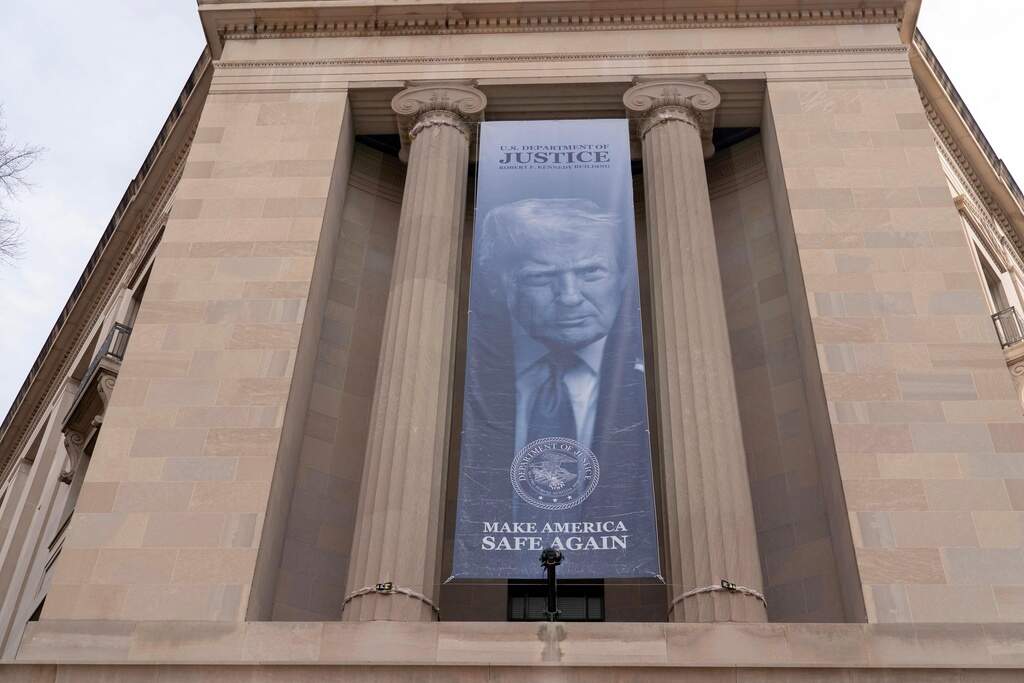
Donald Trump plans to use a $1.776 billion fund to compensate anyone he chooses, including people who stormed the U.S. Capitol on Jan. 6. Some Congressional Republicans are furious. Other critics call it the worst act of presidential corruption in history.
Guest
Mitch Jackson, trial lawyer with 40 years’ experience. He writes the Substack “Uncensored Objection. Law. Facts. No Spin.”
Judd Legum, journalist. He writes the Substack “Popular Information.”
Also Featured
Winston Pingeon, former Capitol police officer.
Brendan Ballou, lawyer representing two former Capitol Police officers in a federal lawsuit.
Transcript of Full Broadcast
The version of our broadcast available at the top of this page and via podcast apps is a condensed version of the full show. You can listen to the full, unedited broadcast here:
Part I
MEGHNA CHAKRABARTI: This is On Point. I'm Meghna Chakrabarti, and I'm old enough to remember May 14, 2026. Just a fortnight ago, as we elders like to say. And it was then that attorney Mitch Jackson was on the show, and we were talking about a federal court case that he said was going to come to a very quick end. That case was Trump v. Internal Revenue Service, wherein the president of the United States instructed the Department of Justice he oversees to sue the Internal Revenue Service he also oversees for $10 billion. Because back in 2019, an IRS contractor leaked the tax returns of thousands of wealthy individuals to the press, and among those individuals was President Donald Trump himself.
Now, to be clear, it is the first time in U.S. history that a sitting president has sued his own government, which basically meant that President Trump was both plaintiff and defendant. So on May 14, again, way back two weeks ago, Mitch Jackson comes on the show and he says, "Good thing you guys are talking about this now, because this case is gonna get wrapped up, pronto."
MITCH JACKSON [TAPE]: I think it's going to be settled by the end of the month, because the trial judge on this case set a hearing between now and the end of the month for the Trump administration to come in and show that, in fact, there's a real controversy. What that means is if the person who's suing is also the defendant, who also is in charge of whether or not the case gets settled or resolved, who's also in charge of whether or not a check gets settled, there's no real controversy. And for that reason, the case can be dismissed.
CHAKRABARTI: Mitch also threw in the fact that there's a two-year statute of limitations on this kind of case, and the leak took place more than six years ago, so time's up for a lawsuit. Okay, so remember, that was back on May 14, just 14 days ago. Just four days after that, on May 18:
NEWSCASTER [TAPE]: Breaking news out of Washington. Now, President Donald Trump and the Justice Department have reached a settlement on the president's $10 billion lawsuit against the IRS.
CHAKRABARTI: Case closed. Mitch called it. But he would be the first to say that the press has been misreporting this ever since, because it's not really a settlement. The Department of Justice just dropped the case.
Now, you can always do that, DOJ does that not infrequently, but it's especially easy to do when you're both the plaintiff and the defendant. Very convenient. And you can also make a deal with yourself, which is essentially what DOJ and IRS did.
NEWSCASTER [TAPE]: Another story we're covering tonight, the Justice Department said today it's creating a nearly $1.8 billion fund that could compensate Trump supporters who say they were wrongly investigated or prosecuted by previous administrations.
CHAKRABARTI: Now, remember, this is the Justice Department that's run by a Trump appointee, and also similarly at the IRS. He oversees that too. Now, the Trump administration calls that fund the "Anti-Weaponization Fund," and rioters who have been convicted in U.S. court of attacking Congress on Jan. 6, 2021, are claiming that they're victims of previous administrations, namely of the Biden administration, and they say they plan on cashing in.
BRANDON FELLOWS [TAPE]: So, the number I've put in is $30 million. 21.5 million is for the wrongful imprisonment.
RACHEL POWELL [TAPE]: Our lives are still not the same, so I don't know what kind of price you can put on that.
CHAKRABARTI: Brandon Fellows and Rachel Powell were both convicted and sentenced for crimes committed on January 6th, 2021. Fellows for breaking into Congress. He later said he liked the fact that members of Congress feared for their lives. Powell's crimes include using a bullhorn to direct rioters to specific parts of the U.S. Capitol building. But that's not all. In the art of the deal, there's nothing sweeter than making a deal with yourself.
NEWSCASTER [TAPE]: This morning, in a stunning move, the Justice Department announcing the IRS is dropping all audits of President Trump and his family, declaring it is, "forever barred and precluded from pursuing any previous claims against the president, his sons, and their businesses."
CHAKRABARTI: Now, some members of Congress are showing signs of life.
They're beginning to push back, including retiring Republican Senator Thom Tillis and Democratic Representative Jamie Raskin.
THOM TILLIS [TAPE]: I have almost zero confidence in the DOJ right now. And so let's go back and try and regain some of that confidence before we talk about any money.
JAMIE RASKIN [TAPE]: He just wants to continue to use the budget of the United States illegally as a political slush fund for his foot soldiers.
CHAKRABARTI: So that first voice you heard was Tillis, the second one was Raskin. Now it's 10 days after May 18, so what's left to talk about regarding the "Anti-Weaponization Fund?" Turns out quite a lot, actually. And to do that, we're bringing back the oracle himself, attorney Mitch Jackson. He writes the Substack, "Uncensored Objection: Law, Facts, and No Spin."
Oracle, welcome back to On Point.
MITCH JACKSON: Meghna, it's really good to be here. Thanks for having me back.
CHAKRABARTI: I can't stop myself from asking you if you have lottery numbers, but you don't have to answer, okay? I really, I was quite amazed when just a couple of days after you were on the show, literally everything that you said happened on May 18.
So, before we dissect that carefully, can we go back to the original lawsuit? Because I think it's helpful to lay the context of what the president actually claimed against himself in Trump v. IRS.
JACKSON: Absolutely. And I've got to admit, it wasn't a tough call, just so you know. I think most lawyers felt like this would never end up back in front of the federal judge that asked the parties to come in and explain why in the heck are we all here, because of the reasons you and I talked about in our last episode.
Here we have a situation where as you said in the opening of the show, Trump and the members of his family, they sued the IRS for $10 billion over a 2019 theft and leak of certain tax returns. There were over 4,000 other tax returns leaked during this breach by a third-party contractor that had nothing to do with Trump.
But of course, Trump making a big deal over this decided he was going to sue the the IRS. And I don't want... Jump in any time.
CHAKRABARTI: Okay. Sorry, Mitch. Sorry. I was just trying to, I'm trying to work on my timing here. I'm still a long ways off from being really good at that. But but what was the claim of harm that Trump and his family made in the suit?
JACKSON: That's a really good question, because they were claiming that they were damaged to the tune of $10 billion. The way it works under the statute that they sued, which basically is 26 United States Code section 7431, a taxpayer that's harmed by an unauthorized disclosure of tax information can recover up to $1,000 per act.
And in this case, they weren't suing for $1,000, they were suing for $10 billion. So, that was the primary cause of action, which wouldn't have held water had it ended up back in front of this federal judge.
CHAKRABARTI: Got it. Okay. So, legally, they should have, I guess under the law, $1,000 claim was the largest they could do.
I think you also said in the last show, just to, again, recap, that in order to add up to the 10 billion, they would've also had to make that claim on behalf of thousands of other people?
JACKSON: Exactly. They would have had to say that every person that read, I think it was, The New York Times article that originally broke the story, would constitute a separate claim and the courts in the past have clearly said, "That's not the way this works. It's the initial disclosure that matters." And I think that would have all came out had this case gone forward. But what's really interesting is the Department of Justice and Todd Blanche, they never filed a responsive document to this lawsuit. They never raised any of the three or four available defenses.
They never did anything to protect the American people from this lawsuit.
Mitch Jackson
They never did anything to protect the American people from this lawsuit. Their job in the DOJ exists to enforce the law and defend the United States and its citizens, not the president personally. And in this particular case, after you and I spoke last time, I wrote another post and I talked about how the DOJ basically committed malpractice in the private sector.
They never opposed the lawsuit. They never made any strong arguments as to the statute of limitation running, as to no legitimate controversy existing because the person suing also ran all of the people and entities that were defending the lawsuit, basically suing yourself, and you're also the person that writes the checks. Also the the two-year statute of limitation, along with some other causes of action. So, it's one of those situations where the DOJ just, if this was in a private sector case this person would be reprimanded by the local state bar association and probably be the defendant in a legal malpractice case. That's how bad this case is.
CHAKRABARTI: Okay. This is why I'm really glad we have you back so soon after you were on last time, because I think it's these details that we have the opportunity to dig into in ways that maybe other news coverage doesn't. So what you're saying is, I'm just looking at the name of the lawsuit, it was Trump v. IRS, right? So meaning that it wasn't U.S. v. IRS or Department of Justice, it was Trump and his family, they were suing as individuals?
JACKSON: Yes. Trump and his two sons, along with one of his companies, were the plaintiffs in the case.
CHAKRABARTI: Okay, so which is why in other circumstances, in normal circumstances, as you said, the Department of Justice would usually or would customarily step in and say "In order to protect the United States from a basically frivolous $10 billion lawsuit, we're gonna file, briefs or motions in defense of the IRS, essentially, or arguments to have the case dismissed." That would've been normal behavior from the DOJ?
JACKSON: 100 times out of 100 times, you would either file a motion to dismiss because of the statute, you would file a motion to dismiss because of the failure to show an actual controversy, you would file a motion to limit damages because of what we talked about earlier.
That's why this federal judge unilaterally set a hearing to have the parties come in and actually explain these things to her so she could decide whether or not this case should move forward. The DOJ and Todd Blanche did not want to allow that hearing to happen. Had that hearing happened, I think what the judge would've done is set what's called an order to show cause to dismiss the case.
In a further hearing, the parties would've come back in and the case would've been dismissed. It would've prevented a situation that we're facing today. I don't call it a settlement, I call it a conspiracy to commit fraud. And having said that, where I'm going with this, is that this entire conversation, this slush fund that was set up, would never have been established had this case been dismissed by the judge.
And so, that's why I was so confident in my prediction, because I knew if this is where they wanted to go, they wouldn't ever be allowed to appear in front of the judge again, and this is where we are today.
CHAKRABARTI: Yeah. So, On Pointers, the reason why we love searching around in the weeds is, I know this seems like a weedy legal conversation, but what Mitch just explained is yet another sort of piece of the puzzle of how normal institutional behavior that we've relied on for two and a half centuries is being, hopefully not irrevocably, but really structurally tweaked by this second Trump administration to the point that we're seeing the Department of Justice not even defending the interests of the United States.
Part II
Mitch, let's go to the fund itself. $1.776 billion. Yes, we all get it. But it comes from the United States Treasury, correct?
JACKSON: Yes, that's correct, and it's up to Congress to be able to determine how those funds, which have been previously set aside to handle legitimate adjudicated federal claims, how they're dispersed.
And in this case, that's not happening. And frankly, in one of my subsequent articles, I raised over 25 different potential laws, rules, and regulations that may have been violated by this fund being set up in the first place and as money is distributed to claimants, if that ever happens, and I don't think that's going to happen, there will be additional laws, crimes, and violations, rules, and regulations violated with each distribution.
I raised over 25 different potential laws, rules, and regulations that may have been violated by this fund being set up.
Mitch Jackson
So, it's a very complicated situation that's never happened before in the history of the United States, and it's interesting to me.
CHAKRABARTI: Okay so there's a lot of uncertainty, which is also interesting because the way this has been covered so far and the way the president himself has talked about it. The DOJ put out language that says, there's this fund, basically, the president's in charge of it. I'm not sure if it's gonna have any oversight whatsoever, and it, it seems as if the president can give the money to whom he wants.
JACKSON: It seems that way, the way the fund is set up. As a matter of fact, one of the things that I shared on another conversation I had, had to do with, let me just bring it up real quick because I think it's very important. What's interesting here is the president and the committee on this fund, made up of five people that he has the ability to fire if he doesn't like what they're doing, if he doesn't like what they're saying, can basically do whatever they want with this money.
There's no oversight. The attorney general may, and that's a discretionary move on the part of the attorney general, conduct oversight as to what this fund's doing. There's no oversight. And so under different laws, Congress does have the right to get involved. Private parties do have the right to bring lawsuits.
There's a lot that's going to happen between now and when the first check is written, in my opinion, and that's why we're monitoring this very closely.
CHAKRABARTI: Okay, so not a fait accompli. And we'll get later in the show to, as I said, the signs of life that might be trembling through Congress right now.
But in terms of who's already spoken up as to, they want to make claims for this money, you heard the voices of two convicted felons. Two of the 1,600 people who were convicted of attacking Congress on Jan. 6, 2021. By the way, that was the largest, I believe, the largest overall criminal investigation in Justice Department history, and it was, excruciatingly detailed for each one of those cases.
Those people were convicted in United States courts. The president has subsequently pardoned them. But Mitch, your take on the fact that here we have literal taxpayer dollars that are coming out of the United States Treasury that could go to people who have been convicted of attacking their own government?
JACKSON: It's really unbelievable.
And if Congress was doing oversight, if it was enforcing a separation of powers obligations under the appropriations and fiscal law, which is Article 1, Section 9, Clause 7, it says that "no money shall be drawn from the Treasury, but in consequences of appropriations made by law." Congress controls federal spending, and only Congress, full stop.
You're going to hear more about this particular provision, this particular law for that very reason. It flies in the face of decency. It flies in the face of equity and fairness. This is something that Congress needs to determine what it can and can't do. When you piggyback that with the Judgment Fund theories and the purpose statutes, what you're going to see is, I think, a full stop on funds eventually being distributed.
But right now it's a talking point. It's something that the president is hanging his hat on. And frankly, it might even be a diversion from other issues facing this administration.
CHAKRABARTI: Oh, interesting. Okay. But, to be clear, as you said earlier, do you, you believe this is an overt act of corruption?
JACKSON: I'll tell you what. As a lawyer, I want to be careful about what I say. But, I am very uncomfortable about what I'm seeing, and I do feel that, as we've seen with many other executive orders by this administration, what we've seen from, for example, the tariffs, for example penalizing law firms as to who they can or cannot represent, we're seeing federal judges step in and holding court.
We're seeing federal courts step in and making sure the laws are eventually followed. It takes time. It takes effort. It takes money. It takes very brave people to protect the legal rights of every single U.S. citizen. So yes, I think that these types of cases, this particular settlement, if we wanna call it that, will eventually be found to be illegal, inappropriate, unenforceable, but it's going to take time, and that may not happen until after the midterm elections this year.
CHAKRABARTI: Okay. But illegal, unenforceable, inappropriate, when I just, Meghna public, apply that to elected leaders and it involves significant amount of money, I don't know. Maybe I'm oversimplifying, but it sounds a lot like corruption to me. You know, I'm not a lawyer, though.
JACKSON: Wouldn't it be interesting to see how we could be using these funds, these monies for so many other things than to compensate people who have either pled guilty in court, who have either been found guilty by a judge or a jury, people who intentionally put themselves in situations that most of us watched on television, weren't comfortable with seeing?
In fact, as a lawyer, I'm watching crimes take place in real time. They're the last people I want to see get my taxpayer dollars. That's not why I'm paying taxes. That's not why you're paying taxes. And I think that's not why most of the listeners are paying taxes, and that's why that's, this is such a big issue today.
CHAKRABARTI: Yeah. So that's... I agree with you totally. That's what makes this particularly acute. And in fact, some of the strongest reactions against this "Anti-Weaponization Fund" have been coming from the very men and women who risked their lives defending the capital on Jan. 6, 2021.
WINTSON PINGEON [TAPE]: My first reaction was just complete disgust with this, and yet not surprise, because we've seen from this administration the pardoning of the Jan. 6 criminals, convicted violent felons, and there just continues to be no end to the corruption and the celebration of lawlessness and violence from the current president.
My name is Winston Pingeon, and I am an artist, and I used to be a police officer with the United States Capitol Police.
On Jan. 6, 2021, I was assigned to our Civil Disturbance Unit, which is the Capitol Police's riot team, where I was in full riot gear. That morning at our roll call, we were told that a group may be coming to the Capitol, but we were really just on standby until we were being deployed to the West Front of the Capitol, where we faced what was a ever-growing angry mob.
OFFICER [TAPE]: I need 11 priority. We can pass close to speaker. We're breach the line. We need backup.
PINGEON [TAPE]: There were people in the crowd saying, "President Trump sent us. We don't want to hurt you, but we will. We're getting in that building." And I remember even then thinking there's no way they'll be so violent and so brazen to actually break into the building.
MAN [TAPE]: Let's get some fresh faces up front. Fresh faces up front.
PINGEON [TAPE]: Really, I ended up on the Upper West Terrace, and when I came around the corner of the building and saw to my horror that the building had been breached and that hundreds of people were streaming inside.
OFFICER [TAPE]: 50, we have a breach of the Capitol. Breach of the Capitol to the upper level.
PINGEON [TAPE]: That was a moment I will never forget, and I don't think I could have ever imagined that happening, especially from my own fellow Americans. This was not a foreign terrorist group. This was literally my neighbors.
OFFICER [TAPE]: We're trying to hold the upper deck. We are trying to hold the upper deck now. We need to hold the doors of the Capitol. I need [UNINTELLIGIBLE] support.
PINGEON [TAPE]: As I rounded the corner and saw them streaming into the building, I pushed forward and was able to secure one of the doors that they had breached and were entering through. When I was attacked by them, I was punched in the face and knocked on my back. My baton was ripped and stolen out of my hands by this crowd.
And I just remember thinking there were so many of them and I had been separated from my squad. It was just myself and a few other officers, but thinking that here I was facing death on the steps of the U.S. Capitol.
When I look at what my fellow officers from the Capitol Police and DC Police went through that day, there was no compensation. There was no reward. It took years for the Congressional Gold Medal to be awarded to the officers for protecting Congress and our democracy that day. And now to see those felons be rewarded with cash it's just beyond wrong.
The fact of the matter is, as an officer, I could not even accept a cup of coffee or a free breakfast paid for by somebody. The rules of bribery were so strict that we were not allowed to accept anything, and now violent felons can accept cash from the government? It is so beyond corrupt and so beyond wrong.
CHAKRABARTI: Winston Pingeon is a former member, a former officer with the United States Capitol Police. Now, Mitch Jackson, if you'll hold on here for just a minute. There's so much going on with, let's say, novel behavior from the administration that I'd like to turn for one moment to Judd Legum. He is a journalist and he writes the Substack, "Popular Information," and Judd has been following in detail another unusual set of behaviors coming out of the second Trump administration.
So Judd, welcome to On Point.
JUDD LEGUM: Thanks for having me.
CHAKRABARTI: Okay. So you've done a really close investigation into stock trading by the president of the United States, which was revealed in a 100-plus page document that the Trump administration itself recently released?
LEGUM: As president Trump is required within 45 days to report any stock transactions, and so this filing was very late.
Many of these stock transactions occurred much further in the past than 45 days, but we just recently got them a couple weeks ago.
CHAKRABARTI: Okay, but they catalog the stock trades in 2026 basically thus far that the president has made, correct?
LEGUM: Yeah, the first three months.
CHAKRABARTI: The first three months.
LEGUM: Through the end of March.
CHAKRABARTI: Okay, so just the first quarter essentially, and there were what, 3,700 documented trades? Something like that?
LEGUM: Yeah, it's an extraordinary amount of trades. Clearly some of these trades must be algorithmic or with some computer-assisted strategy, but there are also other trades both by their nature and by some notations within this document that indicate that there was a client requesting that these trades be made.
CHAKRABARTI: Okay. So did you detect a pattern? You looked at all, almost all of them, Judd. Did you detect a pattern in the trades?
LEGUM: Yeah. I looked at all of them, and I compared them to Trump's public schedule, his public statements, and what I found was that on several occasions Trump was touting these companies on the same day or, in certain cases, one day after or about a week after he purchased them.
One instance in particular there is a company called Thermo Fisher. It's essentially a pharmaceutical contracting company. They produce drugs for big pharmaceutical companies. He bought a significant amount of stock in this company and on the same day actually toured the company's a facility in Ohio where the company produces drugs.
And, he touted this company, encouraged other manufacturers, other pharmaceutical companies to do business with them. So, within the same day, buying a company stock and touting this company, essentially drumming up business for this company in an official event.
CHAKRABARTI: As president of the United States, right?
And then that wasn't the only one. It seems like you found a recurring pattern like this. Did it go so far as to the president buying shares of a company and then soon did any of those companies win government contracts?
LEGUM: That wasn't the focus of my reporting. There's been other people who have reported that. It's not necessarily, something happening the same day, but he bought a lot of pharmaceutical companies. There's been actions to increase the availability of weight loss drugs, and that, of course, increases the value of those stocks.
So there are instances where the federal government and the Trump administration have taken actions that have benefited his stock purchases.
CHAKRABARTI: Okay. So what's your takeaway then from all this, Judd? It seems like a pattern doesn't necessarily equate to presidential wrongdoing.
LEGUM: I think it's important to take a step back and understand that all previous presidents were not involved in this.
They did not trade individual stocks and either used a blind trust, which would completely insulate the president from even knowing what's in there, or a president like Barack Obama just invested in index funds. So you have a unprecedented situation where a president is not only trading individualized stocks but also doing so extraordinarily aggressively.
So I think even just the fact that he's engaged in this is a form of corruption, and certainly lots of questions are being raised by the timing of some of these purchases. The response has been "Trump is not involved," but he very intentionally did not set up the mechanism that would actually insulate him from being involved.
CHAKRABARTI: I'm looking at your reporting here, Judd, and you've even found that on March 11, Trump purchased maybe up to $500,000 of Apple stock, and then in a speech that same day was talking up Apple, saying, "It's a great company, manufacturing 100% of the glass for iPhones and Apple Watches in Kentucky factories."
I'm not even sure if that's true. But he'd also purchased between a million and $5 million of Apple stock just a few days before that. Judd Legum writes a Substack, "Popular Information." Thank you so much for your reporting, Judd.
LEGAM: Thanks for having me on.
Part III
CHAKRABARTI: Okay, Mitch Jackson I'm still looking at Judd Legum's reporting here. There's another example of very close proximity of a presidential purchase of stock and then President Trump himself talking up that same company. Like Judd has an example of on Feb. 10, President Trump purchased between one and $5 million worth of Dell technology stocks.
Then nine days later, he was doing, giving an economic speech in Georgia and he told the audience to go out and buy a Dell computer. He also talked about Dell again on Feb. 27, March 9, April 16, May 8 and soon thereafter, Dell stock reached an all-time high. Now, there's a lot of thing that go, things that go on in a market to propel stocks, individual stocks up or down. But I guess the reason why I wanted to bring up this example, Mitch, is there anything overtly illegal about a president actively trading positions while in office or is this simply unethical?
JACKSON: I think it's both. And let's talk a little bit about what insider trading is for your audience. I think the definition's rather straightforward.
It's buying and selling stocks, bonds, or other securities based on important secret information that the general public doesn't have access to. It's using confidential, privileged, peek-behind-the-curtain, make-money-or-lose-money information which gives you an unfair advantage over everyone else who is playing by the rules.
So the next question in response to your question is insider trading taking place? And if it is, even if it's illegal, does it really matter if Congress isn't willing to act, which is what we have here? We don't have any oversight. I'll tell you what jumped out at me when I listened to you and Judd discussing these issues, is what Judd was talking about was public disclosures of publicly traded stocks on the different exchanges. I think you can multiply these numbers 10X, 20X, 30X when you look at insider trading and sniping when it comes to the cryptocurrency transactions taking place in meme coins.
I know you had one of my experts, Molly White, on your show in the past talking about what's going on with what Judd just discussed, except with cryptocurrency and Trump and the Trump companies and the Trump families, where it's not laid out. The facts are being hidden. We don't know who's participating.
And what people don't realize is if you're sniping when it comes to meme coins, we're talking about insider information, taking action within milliseconds of a meme coin going public for buyers to purchase, you can make hundreds and millions of dollars, and nobody knows who you are, what insider information you acted upon, et cetera, et cetera.
So, between publicly traded stocks and cryptocurrency that the Trump administration family members are involved with, it may be "legal," but the question is it ethical? Do we need further regulations prohibiting this from happening, prohibiting people with insider information from profiting where the rest of us don't?
And the reason I'm bringing this up is that with both the Trump coin and the Melania coin, which are meme coins, something like 95-plus percent of the people that purchase these coins lost money, with a large percentage of these people being retired individuals using their retirement accounts to purchase these meme coins.
It's a big problem. So, public trading, private cryptocurrency transactions, all these things need to be looked into by Congress.
Public trading, private cryptocurrency transactions, all these things need to be looked into by Congress.
Mitch Jackson
CHAKRABARTI: So, we keep mentioning Congress and Mitch, I promise I'll let you talk about them more in a few minutes, but I keep wondering also regarding these trades, where is the SEC?
Part of the Security and Exchange Commission's job is to investigate and, when necessary, prosecute acts of insider trading, and they do that. Or is it because the president isn't technically on the board or an employee of any of these companies that he's investing in, the SEC doesn't see it as insider trading?
Or is it simply that he's also running the SEC?
JACKSON: I think he's also running the SEC and they're looking the other way. That's my take and I'm sticking to it.
CHAKRABARTI: Okay. A lot of it seems to be coming down to that. So let me then move to how certain individuals or groups are trying to push back against we'll return to the IRS case and now the $1.776 billion "Anti-Weaponization Fund."
And Mitch, one of those folks is Brendan Ballou. He is also an attorney, and he's representing two former Capitol Police officers who are suing to block the fund.
BRENDAN BALLOU [TAPE]: This fund is going to pay Jan. 6 rioters, militia members, the very people who are threatening the safety of our clients. If these people get that money, they are receiving a presidential endorsement for their violence and are going to literally have the money to act out on their threats of violence.
CHAKRABARTI: Now, Ballou's concern doesn't just stop with his clients' safety. He is also worried about the long-term corrosion of the federal agencies involved here and just how compromised he believes they have become.
BALLOU [TAPE]: The fact that not only did the slush fund proceed, but now actually is going to exist, at least according to DOJ, I think speaks to the complete breakdown of those internal safeguards, and also just a complete breakdown of the culture of lawfulness of the Department of Justice.
I also think it speaks to the danger that this administration is willing to put people into. If they are going to pay, literally pay, rioters who tried to kill police officers on Jan. 6 because they were loyal to Donald Trump, I think it speaks to this administration's not just willingness, but eagerness to encourage violence by those who continue to be loyal for the president.
CHAKRABARTI: Regardless, Ballou is confident that his case against the fund will succeed in court. That is up to a judge, of course. So Ballou says if they lose, he'll appeal, but if they win and the Trump administration does not comply with the judge's ruling, Ballew says there are other ways to block the fund from paying out.
BALLOU [TAPE]: One thing that's important to remember is the Department of Justice is full of lawyers who can be sanctioned, lawyers who can be disbarred. Todd Blanche presumably wants to continue to be a practicing lawyer after his time at the Department of Justice comes to an end. I'll also say this is money that has to go through the American financial system.
And even if the president doesn't comply with the law, banks can be compelled to comply with the law. So, there are ways to physically prevent the transfer of money if it comes to that. But we're hoping that, because the illegality here is so obvious, because the danger is so obvious, that it won't come even close to that.
CHAKRABARTI: So that's Brendan Ballou, who filed a suit on behalf of two former Capitol Police officers against the "Anti-Weaponization Fund." Okay. So, Mitch, let's just take a quick look at what's happening in courts, not just with Brendan's case, but I think just yesterday I saw that 35 former federal judges filed a motion in Florida actually asking the court there to reopen the original Trump v. IRS lawsuit saying that the court was deceived and that the suit should have never been allowed, to be to be settled or closed out of court. What do you make of these these sort of legal efforts here?
JACKSON: And that's what I was talking about earlier. We're just getting started.
I think there are over 25 different approaches, legal efforts, lawsuits, claims that can be made that will put a full stop to everything we're talking about. People need to listen to what Brendan talked about because he's a former DOJ prosecutor. He worked on the Jan. 6 cases. He knows what he's talking about with, his participation with the Public Integrity Project.
And people need to understand this isn't just about Jan. 6 insurrectionists or rioters. We're seeing people come out of the woodwork, whether they're congresspeople passing laws to allow themselves to make claims to this slush fund. We're talking about past convicted Trump administration employees, people that participated with Trump one, whether it's Giuliani, whether it's other people that are starting to come forward indicating to the public that they're going to be making claims under the slush fund rules and regulations.
This has a lot more to do with anybody that Trump wants to have on his team and protect and encourage, whether it's those individuals, whether it's past politicians, whether it's the Proud Boys or Oath Keepers. He wants them to know that he's got their back. He wants them to know that there's a chance he could either pardon them and/or compensate them, too.
So this is a much bigger issue than just the Jan. 6 rioters.
CHAKRABARTI: It's interesting that Brendan also said there that, okay even if the Trump administration doesn't comply with a court ruling banks can be compelled to comply and, but would the money flow through banks or just come straight from the Treasury?
That's the part I don't get.
JACKSON: So, both. And that's, I'm glad he brought that up because the way it works is you have Inspector General complaints both at the state and federal level that could be made by companies, it could be made by people contesting these payments. You've got senators and congresspeople probably after the midterms that will be able to step in and use federal laws to put a stop to what's going on.
Here's a big thing. The lawyers behind this slush fund that signed off on it as those federal judges in Florida are arguing, if they misrepresented to the court who they were representing, what the interest of the parties were, there are certain state bar grievance procedures that can be filed against Blanche and Woodward in DC, in Florida with Attorney Carlos Brito.
Florida state disciplinary proceedings can be initiated by the general public against that individual. There are many different requests. False claim acts can be filed by private individuals. There's a lot going on with where we are today and additional rules, regulations of potential violations of laws as each check, if this ever happens, gets distributed to a claimant.
Is the claimant's claim accurate and truthful? Did they perjure themselves under penalty of perjury when they made this claim? There's just a lot going on that the general public's not aware of.
CHAKRABARTI: Okay. So let's now focus on Congress for the last portion.
JACKSON: And I'm sorry to throw so much at you at once.
CHAKRABARTI: No, you need to stop apologizing for helping us understand the nuances, Mitch. This is why we have people like you on this show. So okay, so I promised you I'd leave some time to talk about Congress. At the very top of the show we heard from Senator Thom Tillis of North Carolina being upset about this.
He, of course will not be in Congress after these midterms. There's also Republican Senator Bill Cassidy of Louisiana. He told WWL-TV in New Orleans that he opposes establishing the fund.
BILL CASSIDY [TAPE]: It's as if somebody sued themselves, agreed upon a settlement with themselves, and that's gonna be funded by the rest of us There is no legal precedent for this.
And so going back to the family struggling, if we say we're gonna put 1.7 billion because some people sued themselves and they settled with themselves, but we got the bill, I can tell you, the voter doesn't like that. Or if they like it, maybe they're in on it. I'm not in on it, and I'm gonna oppose it.
CHAKRABARTI: Cassidy also is not returning to Congress after these midterms because he lost his primary for re-election to Louisiana Representative Julia Letlow, who was backed by President Trump. Okay, here's another one. This is from the House side. This is Republican Congressman Brian Fitzpatrick of Pennsylvania.
He says he's already working to block the fund from ever becoming a reality. He recently appeared on WBUR's Here & Now, and outlined exactly why the fund should not exist according to rules of governance.
BRIAN FITZPATRICK [TAPE]: You can't just come up with an idea of a fund like this without coming through us. We are the appropriators.
That's the way the Constitution is written. If you want money appropriated to a certain cause, you need to come to Congress, you need to present legislation, it needs to be marked up in committee, it needs to be put on the floor, opened up for amendments, and voted on with all 435 members of the House, each of which represent roughly 750,000 constituents.
That's how the system works.
CHAKRABARTI: Okay, Mitch, here's my question for you. I can hear clearly that there are, there's a critical mass of obviously Democrats and Republicans who are saying, "Yeah, this one may be a little bit too far. Congress can do things." However, to me, the big question is, will House Speaker Mike Johnson ever allow any "Anti-Weaponization Fund" legislation even make it to the House floor?
This is the same speaker who suspended House operations so that the House didn't have to vote on, making the Epstein files public.
JACKSON: You know how when you ask a politician a question and they don't answer your question, but they talk for five minutes? I'm gonna answer your question. It's never coming to the floor.
Mike Johnson isn't going to let Congress do anything to stop this fund, and that's going to be the problem. Republican Senator Thom Tillis said this whole thing is stupid on stilts and he was spot on. This is something that we're going to have to deal with, and the breaks between now and the midterms will happen with federal litigation.
It's going to be the federal judges and the lawyers pumping the brakes and putting a stop on anything that happens via injunctions, via lawsuits and things like that. After the midterms, if Democrats take a majority, we're going to see oversight. We're going to see subpoenas. We're going to see the power of the purse kick in and separation of powers, where nothing will happen until investigative oversight first takes place and decisions are made.
So that's what's going to be happening for the next, let's just say, 10 months in Congress on this particular issue.
CHAKRABARTI: When a member of Congress says out loud, "This is stupid on stilts," and yet the leadership of that same Congress refuses to do anything about it, to me, that is, that comes from the textbook of how powerful nations, harm themselves.
They start crumbling from within. Do you still... It sounds though, Mitch, that you still have hope that through the judiciary or post the midterms, that some sense can kick in about a president suing himself and then, making a deal with himself and walking away with $1.8 billion simply cannot happen, even in these United States in 2026.
JACKSON: Elections have consequences, right? And I think what we saw with the tariffs that were rolled out with Trump's executive order back in the day eventually being found by the Supreme Court to be illegal and invalid, it took time, and I think this particular slush fund settlement that we're seeing also will end up with the same outcome.
How long will it take? I'm not sure. Will it happen before the midterms? Absolutely not. Will it happen after the midterms? Just like I called this lawsuit would be settled before the end of the month, I'm predicting, just like Trump's tariffs, this entire slush fund is going to be found to be illegal, invalid, and unenforceable, but only time will tell.
The first draft of this transcript was created by Descript, an AI transcription tool. An On Point producer then thoroughly reviewed, corrected, and reformatted the transcript before publication. The use of this AI tool creates the capacity to provide these transcripts.
This program aired on May 28, 2026.