Support WBUR
China's take on the Trump summit
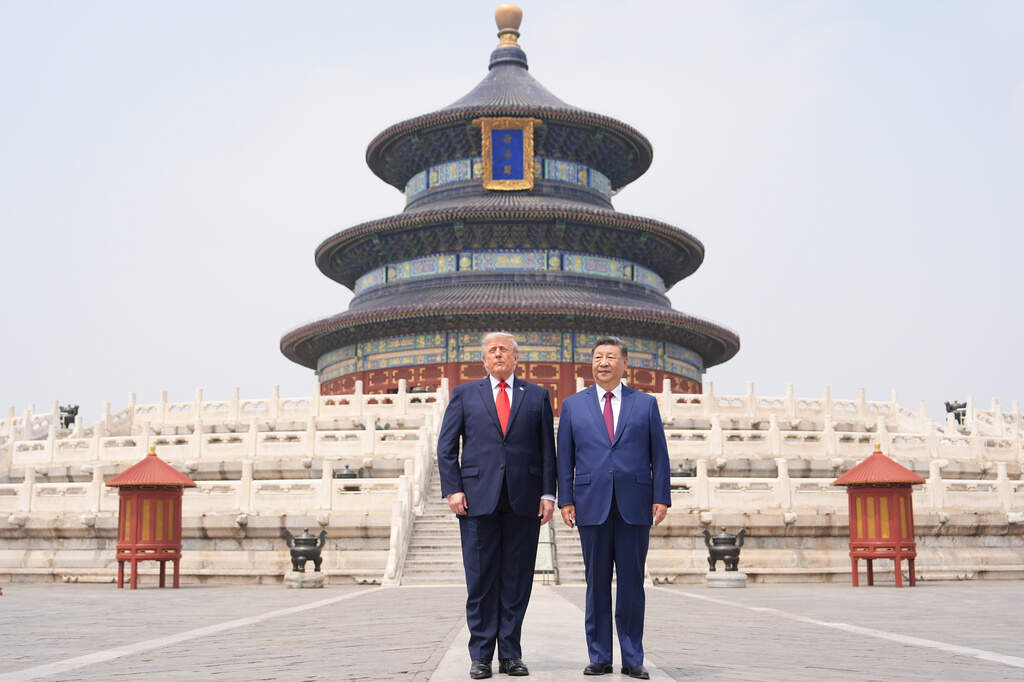
President Trump heaped praise on China’s President Xi after their recent summit. While the Chinese leader’s rhetoric was much more restrained. A review of the U.S.-China summit from China's perspective.
Guest
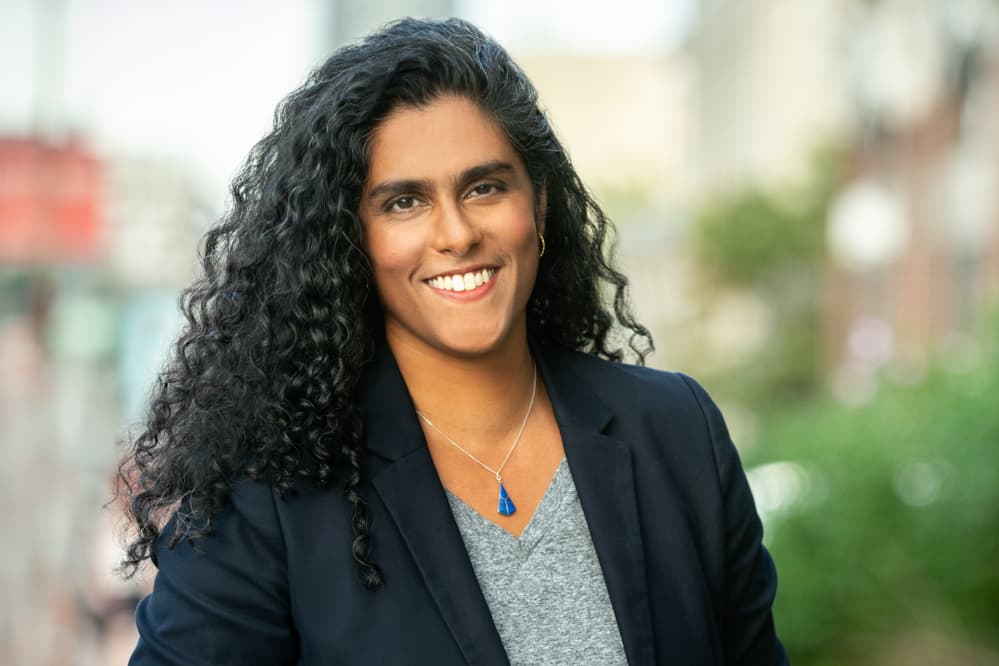
Yangyang Cheng, fellow and research scholar at Yale Law School's Paul Tsai China Center. Frequent columnist on Chinese politics and U.S.-China relations.
Also Featured
Julian Gewirtz, senior research scholar at Columbia University's School of International and Public Affairs.
Richard Hoskins, professor at the Northwestern Pritzker School of Law. Instructor at the University of Chicago’s Graham School.
Transcript of Full Broadcast
The version of our broadcast available at the top of this page and via podcast apps is a condensed version of the full show. You can listen to the full, unedited broadcast here:
Part I
MEGHNA CHAKRABARTI: When President Donald Trump and China's President Xi Jinping met for an historic summit in Beijing last month, the contrast between the two leaders could not have been sharper. Trump lavished praise on the Chinese president.
DONALD TRUMP: People don't know, whenever we had a problem, we worked that out very quickly, and we're going to have a fantastic future together. I have such respect for China, the job you've done. You're a great leader. I say it to everybody, you're a great leader.
CHAKRABARTI: President Xi chose a different perspective. Rather than heaping compliment upon compliment on the transactional Trump, China's leader emphasized the importance of a stable, non-confrontational relationship between the two powerful nations.
(TRANSLATION)
XI JINPING: Today, President Trump and I had in-depth exchanges on China-U.S. relations and international and regional dynamics. We both believe that the China-U.S. relationship is the most important bilateral relationship in the world. We must make it work and never mess it up. Both China and the United States stand to gain from cooperation and lose from confrontation. Our two countries should be partners rather than rivals.
CHAKRABARTI: In the weeks since the summit, there has been adequate coverage on reactions from the White House, whether the United States emerges from the meeting stronger or not, essentially the American perspective. But of course, the American perspective is not the only one that matters.
So today, we are going to spend some time trying to understand in detail how President Xi and the Chinese people viewed the summit. Now, that's a proxy, of course, for how China views the United States as a whole, and that perspective is crucial to understand as the tectonic dynamic between these two nations continues to shift and strain.
So today, the view of the summit in China from China. And Yangyang Cheng joins us. She's a fellow and research scholar at the Yale Law School's Paul Tsai China Center. She's a frequent columnist on Chinese politics and U.S.-China relations. Yangyang, welcome back to On Point.
YANGYANG CHENG: Thanks so much for having me.
CHAKRABARTI: It's always a delight to have you on the show. Summits all have the sort of same trappings, right? There's public statements by leaders. There's walks outside on a handshaking line. There's the exchange of gift. There's banquets. I'm wondering what part of the sort of visual spectacle of the summit first stood out to you, or you think stood out actually more importantly to people in China.
CHENG: I think in terms of the visual spectacle, as you mentioned this is a highly rehearsed event, especially on the Chinese side, so there are certain ritualistic elements of it that are not so different from previous summits. And I think there are two elements that are interesting and especially the Chinese public are also picking up on.
The first is in terms of the U.S. delegation and this is not that different from 2017 in terms of Donald Trump brought leading U.S. business leaders, people from, and in particular this time the business leaders who accompany Donald Trump on this trip are the ones from major tech firms or financial firms.
And these business tycoons' presence in China did get good amount of public attention. And I think I should also mention here that, as you said, this is a diplomatic summit. And if we compare this to 2017, this is a smaller summit in both the range of issues discussed, and also in terms of the elaborateness, right?
Last time when Donald Trump went to China, both first ladies were present. There were more family dynamics. There were more cultural visits. And this time it is more toned down, but there are still these interactions, and there are still some sightseeing and interactions between the two state leaders.
CHAKRABARTI: Okay, interesting. Again, since we are trying to understand the Chinese perspective of it, I presume there's agreements made between both parties before a summit even begins, but from China's point of view or President Xi's point of view, is it significant that this summit was slightly, was more toned down, as you say?
CHENG: I think this is interesting, and I think partly the range of issues being discussed are narrower is indeed a lack of prep from the U.S., especially from the U.S. side, partly due to disruptions in the State Department and White House personnel under this administration. So usually, while we understand these kinds of meetings between top leaders, it's not that Xi Jinping and Donald Trump themselves are going to have elaborate discussions on the range of detailed policy issues, right?
A lot of the most important discussions actually take place before the summit, and both sides have reached a certain type of understanding, at least an understanding of what each other's positions are. And the summit is some ways there is a degree of formalization of these kinds of agreements.
And for this particular summit, there is indeed a lack of prep, and so as I understand, especially on a lot of the security issues, there was not enough pre-summit discussion. The only part that has been discussed before the summit to some degree of detail is on trade and tariff issues between Treasury Secretary Scott Bessent's team and Vice Premier He Lifeng on China's side.
For this particular summit, there is indeed a lack of [U.S.] prep.
Yangyang Cheng
CHAKRABARTI: Okay. Yangyang, you just mentioned trade again, and I went back and re-watched some of the remarks that were given during the summit when the two leaders, and their delegations sat across from each other. And we'll talk about what President Xi said in just a few minutes.
But when President Trump spoke, I couldn't tell if he was on script or not, but he did mention, the American business leaders that were with Trump. And he said, they're the greatest in the world. And then he talked about, "We look forward to doing a lot more trade and economic partnership," et cetera.
Again, I take your point that this is for the public's consumption, but nevertheless, as the camera panned back to President Xi, I just couldn't help thinking, what is China's president, what is his actual internal reaction here when the President of the United States, who slapped 100% tariffs on China, says, we're looking forward to doing more trade with you.
CHENG: This is very interesting. So I think while Donald Trump is known for saying things quite spontaneously and in an unvarnished way, while Xi Jinping is not someone who wears his emotions on his sleeve.
Donald Trump is known for saying things quite spontaneously and in an unvarnished way, while Xi Jinping is not someone who wears his emotions on his sleeve.
Yangyang Cheng
So I think partly it's just their personal styles. But I think what is also quite interesting is, for example, Donald Trump, right after the summit, in his interview with Fox, with Bret Baier on Fox News, he said he welcomes Chinese investments to the U.S.
If the Chinese side want to avoid tariffs, they can come and build here. And of course, that is something that is quite controversial here in the U.S., including within the Republican Party, and so we'll see. And so I think this is interesting and, of course, on the Chinese side for Xi Jinping, there are their own state interests at hand.
But I think the Chinese side is also very aware of this particular personal style, a more transactional style from this U.S. president, and they are trying to make use of that.
CHAKRABARTI: Ah. I'm trying to think. I'm thinking to myself if the next question I should ask is appropriate or not, but I'm just gonna say it, Yangyang.
I wondered if Donald Trump is President of the United States, but does President Xi, as a leader, does Trump as a leader, I don't know if, in monitoring Chinese social media or the Chinese press, if you get the sense that President Xi takes Trump seriously as a leader.
CHENG: I actually think he does. And I say this in a sense for all of his policy issues with regards to internal oppression and everything, Xi Jinping is a professional. He is a politician, and he respects the office of the President of the United States, and he recognizes the United States as a superpower. And so there is no particular reason for him, as a professional, to disrespect a U.S. president. That brings no positives to the Chinese government or to his policy objectives.
There is no particular reason for [President Xi] as a professional to disrespect a U.S. president. That brings no positives to the Chinese government or to his policy objectives.
Yangyang Cheng
CHAKRABARTI: Okay. Now there was a banquet, as there always is, in these summits. And I'm wondering if there was anything significant that caught the attention of the Chinese people coming out of the banquet, because it was another opportunity to watch President Trump speak freely or as freely as he might in a major dual-party summit.
But I'm just wondering how that went over.
CHENG: This is really interesting. I'm really glad that you mentioned the Chinese public, because of course for this kind of high-level diplomatic summits, the Chinese public are not in a position to interpret what constructive strategic stability, quote-unquote, actually means for their own lives.
But they may pick up on these more theatrical elements, as I mentioned earlier, the visits of U.S. business tycoons. And for this banquet in particular, what is actually quite interesting, my mother is a, she is a retired schoolteacher. She still lives in China, and she became aware of the banquet because Donald Trump's banquet speech actually went viral on Chinese social media.
And including his speechwriter, I think Ross Worthington, there are some Chinese netizens who are trying to find out who the speechwriter is who wrote a pretty impressive speech. And what is actually quite interesting is a speech that doesn't touch on current policy issues or particular things. It goes into the history of U.S.-China relations on the people-to-people level, right?
How Benjamin Franklin quoted Confucius, how Chinese workers helped build the transcontinental railroad, how the two countries were allies during World War II, including how under President Teddy Roosevelt, the Boxer Indemnity remittances helped fund and construct President Xi Jinping's alma mater, Tsinghua University.
And in particular, the part that caught a lot of Chinese public's attention because it is relatively new knowledge, is this stone tablet as part of the Washington Monument that has a Chinese inscription on it, and that inscription came from a Qing era official in the mid-19th century who wrote this personal praise about George Washington.
And when the Washington Monument was being built, there were U.S. missionaries based in China who read this Qing official's praise of George Washington and commissioned this stone tablet and sent it to the U.S. as a gift from the Chinese side.
CHAKRABARTI: Interesting. And so therefore, so that must have been received well by the Chinese public, as far as we can tell.
CHENG: Yes. And so this is actually quite interesting, right? And the banquet, the banquet speech, because it's not overly like partisan or especially political.
It really talks about how there are deep ties between the people on both sides. And if we go back to the Washington Monument stone tablet, right?
The Qing era official, Xu Jie, he wrote about how George Washington, he was not just a legendary military leader, a great warrior, comparing him to ancient warriors and sages in China, but also in particular, this Qing era official emphasized that George Washington had this political vision that he did not make himself king or emperor.
He did not establish a monarchy. He established a democracy to have public affairs being ruled and determined by the public. And that's what really impressed him.
Part II
CHAKRABARTI: We wanted to understand how the recent Trump-Xi summit in Beijing was received by the Chinese people and also Chinese leadership as well.
So essentially, the view of the China summit from China. And Yangyang, I wanted to ask you about, again, just for a moment on the theatrics of this summit because at least in U.S. social media, I saw that there was some noise being made about things like there was a moment where both leaders were seated in large white cushioned chairs.
I think this was for a press conference, although I could be mistaken about that. But they were seated in these chairs, and President Trump's chair was actually maybe an inch or two lower to the ground than President Xi's chair was, and so that put, actually put them, their heads on the same level.
These things, as you said earlier, are extremely carefully produced, but I'm wondering if that mattered to the Chinese public, that visual, or what the purpose was behind it.
CHENG: I think as mentioned earlier, one thing about this summit is indeed there is lack of prep on the U.S. side before the summit.
So some of these kind of visuals, some of these kind of stage management should have been addressed before the summit to make sure that it doesn't create some kind of, these kind of optical contrasts. And the Chinese side, of course, are very experienced and very good at creating these kinds of images, including some Chinese netizens have joked, right?
Xi Jinping somehow seems to appear always around the same height, whichever world leader he meets. And so these are also the kind of stage management that the Chinese diplomatic team are very good at. On the other hand, I also want to emphasize that I think it is important when we evaluate a diplomatic summit, when we evaluate a politician to emphasize on what they do or say and less on how they look.
Some Chinese netizens have joked ... Xi Jinping somehow seems to appear always around the same height, whichever world leader he meets.
Yangyang Cheng
CHAKRABARTI: True, we should. I don't disagree with that at all, and yet the stage management still remains important because we're still a visual culture, but I take your point. So in that case, let's talk more about what was done and said. Now, if memory serves the readouts that come from the various delegations following a summit like this, for many nations, there's a joint statement.
There hasn't been a joint statement between the U.S. and China in a summit for some time. Is that right, Yangyang?
CHENG: Yes. So I think the joint statements on the presidential level between the two presidents would probably date back to the end of the Obama administration, where there were a series of joint statements with regards to, on climate cooperation.
Of course, joint statements do not have to necessarily just come out from this kind of bilateral summit. And the last time, in the first Trump administration, there was a joint statement at the cabinet level under directions of both presidents with regards to the trade negotiations back in 2018.
But yeah, it has been a while since there was this kind of a more elaborate joint statement from both presidents.
CHAKRABARTI: Okay, so we have separate readouts or summaries of the summit from the U.S. delegation and the Chinese delegation then, and they came out at different times, too. I think China's readout came out before the United States.
Is that right?
CHENG: On that, I'm not entirely sure.
CHAKRABARTI: Okay. So but then, so what did you see in the differences between those two readouts, though?
CHENG: Yeah, it is actually quite, the differences are quite striking, right? On the U.S. side. But this is partly also the personal styles and the political objectives from both governments.
And for Donald Trump's side, he's a businessperson. He says he wants to bring business deals for the American people, including in particular, his voter base. And so the readout from the White House emphasized these kinds of purchasing agreements, so the Chinese side are agreeing to buy beef and beans and Boeing planes.
And if you will look at the Chinese readout, there is not very specific comments about specific items being purchased. But the Chinese readout, on one hand, the one particular issue that gets emphasized in the readout is Taiwan, which we can discuss later.
But the Chinese statement really emphasized this grandeur narrative, and this is why the Chinese side emphasized that this is a historic summit or a milestone summit, as Xi Jinping himself said, is that it has redefined this bilateral relationship with this new phrasing, quote-unquote, "constructive strategic stability."
So on the Chinese side, it's really being seen as an agenda-setting summit, rather than focused on very specific deliverables.
On the Chinese side, it's really being seen as an agenda-setting summit, rather than focused on very specific deliverables.
Yangyang Cheng
CHAKRABARTI: Okay, tell me more. You said the sort of grandeur take of it, that this summit, at least President Xi wants to project it as ushering in a new era in U.S.-China relations or some kind of shift between the two powers.
Tell me more.
CHENG: Yeah, first of all, this kind of using a very specific set phrase to define U.S.-China relations or define Chinese policy is a feature of the Chinese political system, a feature of the Chinese political culture. So it uses, it can be used for domestic purposes as propaganda, as a way this is a signature achievement of this current Chinese leader.
This is being used to discipline language and interpret and direct policy on a domestic level. So this needs to be understand that this is something that the Chinese government has been doing very consistently as part of its political culture. On the other hand, if we look at specifically on this language, it's actually quite interesting because it marks a shift compared with the language Beijing has preferred before, to describe U.S.-China relations.
In the earlier, during the show teaser, we heard even that Xi Jinping himself still said the U.S. and China should be partners not rivals. However, the language constructive strategic stability is not the language to describe friends, or partners. It is a language to describe rivals, right?
The term strategic stability dates back to the Cold War to describe arms race and arms control between the United States and Soviet Union. The term has since been expanded, but it has always been understood that this is a term that is not to describe a partnership. And so I think this does indeed signal a shift on Beijing's assessment of this bilateral relationship, that it is indeed a rivalry, but this rivalry can be managed to avoid major conflict, and so that is how the term constructive strategic stability is being written.
CHENG: And I should also emphasize that on the U.S. side, the White House readout does include this, but not in the exact language as the Chinese side. The White House added its own conditions. It is a constructive relationship of strategic stability on the basis of fairness and reciprocity. Wow. And so it is not an identical language.
There are some conditions to it.
CHAKRABARTI: Oh, interesting. Okay, so constructive strategic stability. It's a phrase we should keep our eyes on. I also wonder when you say it's the Chinese government tacitly saying, we should be friends, but in truth we are rivals, are they also projecting through things like this readout and the management of the summit?
Again, I think you said you found it interesting that President Xi was calling it a milestone and historic even though it was actually not as large as even the last time the two met in Beijing. Is it, is that a way of asserting, let's say, that China and the United States are equals now?
CHENG: This is a really important point. And if we compare some of the language the Chinese side has tried to use, and so as I mentioned, this kind of like using some kind of a catchphrase, a set phrase to describe bilateral relationship, is a feature of the Chinese system that has been tried.
During the Clinton administration in the late 1990s, the Chinese side's preferred language was, quote, "constructive strategic partnership." And then later during the Obama era, the Chinese side really wanted to say it's a new model of major country relations, or sometimes also translated as a new model of great power relations.
And so now it is constructive strategic stability. So we can see there is a subtle shift here, both in terms of the chilling of the relationship, but also a more assertive Beijing. And I think that is also seen through some of the elements of the summit, in particular, how Beijing really pressed on the issue of Taiwan with the U.S. side.
Beijing really pressed on the issue of Taiwan with the U.S. side.
Yangyang Cheng
CHAKRABARTI: Okay. So we will get to Taiwan in just a moment, but the sort of what kind of relationship President Xi, the Chinese government actually see China as having with the United States now, also came up in another interesting way that did grab some attention here in the United States. There was that moment where President Xi and Trump with their respective delegations, they were sitting across from each other in this beautiful, ornate, wood-paneled room.
There was a large painting of cranes on one wall, and filigreed wood carvings on the door. So the pomp and circumstance was definitely there. And then President Xi makes his remarks, and he addresses President Trump by saying, quote, "Our meeting is drawing worldwide attention."
XI: The world has arrived at a new crossroads. Whether China and the United States can transcend the Thucydides Trap and create a new normalization of relations between major powers.
CHAKRABARTI: Now, the president of China dropping an ancient Greek reference caught a lot of people's attention, and the Thucydides Trap specifically is a theory that was advanced by political scientist Graham Allison in both the 2015 article and a 2017 book.
The book was called Destined for War: Can America and China Escape Thucydides's Trap? And we'll hear a quote from Graham Allison in a moment. Now, the theory has to do with ancient Greek history. So we first called up Professor Richard Hoskins at the Northwestern Pritzker School of Law. He's also an instructor at the University of Chicago's Graham School, and he gave us a quick classics primer.
RICHARD HOSKINS: Thucydides is ordinarily considered, along with Herodotus who preceded him by a few decades, the father of history. Together, they really launched what we think of as the study of history. Thucydides also included a lot of political observations, and chiefly those observations have to do with the underlying fundamental causes of war, and he generalized that there are generally three: fear, interest, and honor.
And I can say on my own behalf that as I've looked at various wars, and there have been many, it is true that you can generally categorize the causes of war, the fundamental causes, within one of those three categories properly understood.
CHAKRABARTI: Now, Thucydides was a historian in ancient Greece. He was also briefly a general during the Peloponnesian War, which was from 431 to 404 B.C.
And he's credited with being the first historian to record key events chronologically and is considered the father of political realism.
HOSKINS: And by realism is meant a realistic, although some would say somewhat pessimistic, view of human nature when it comes to those who have power and are very jealous of it and don't want to lose it. And in particular, in relation to those who are increasing their power and want more of it.
And both parties feeling a sense that the world may not be big enough for the two of them.
CHAKRABARTI: So where does the trap come in?
HOSKINS: Basically, Thucydides Trap means if you have a situation where there's a status quo power and a rising power at the same time, and assume that both of these are great powers.
Currently, the United States is the great status quo power in the world. China is a rising power. And the Thucydides Trap is the suggestion that in many cases through history, though not all, the result of a rising nation, very ambitious and wanting to find its place in the global scope of things, and the status quo power will end up going to war.
The trap referred to is the tendency of the two powers not to be able to see beyond the fear that the two of them will inevitably have to go to war because they can't both coexist.
CHAKRABARTI: So Professor Hoskins says that the lesson to learn from Thucydides today is simple: beware.
HOSKINS: That book has often been interpreted, and I think correctly, as a cautionary tale.
In other words, it's not inevitable that Athens and Sparta had to conflict. Yes, there were reasons for it. Chiefly, Thucydides argues the fear that Sparta had that Athens was getting too big and powerful, but that need not inevitably lead to war. So in that sense, Thucydides considered his history, and I think this is pretty clear from the text and the subtext, to be a kind of cautionary tale for subsequent leaders.
CHAKRABARTI: So that's Richard Hoskins, professor at Northwestern University and the University of Chicago. So okay, I mentioned that the sort of popular notion of this theory of the Thucydides Trap was created by Harvard political scientist Graham Allison. So what did he think about President Xi's reference to the Thucydides Trap?
And by the way, Allison, in his 2017 book, basically analyzed about 16 historical incidents in the past half millennium where a rising power challenged a ruling power, and he found that 12 out of those 16 rivalries, 12 of them, so 75% of them, ultimately ended in war. Graham Allison said recently to Channel News Asia that while he believes that neither President Xi nor President Trump wants a cataclysmic war, particularly over the Taiwan trigger point, the possibility hasn't been entirely eliminated.
GRAHAM ALLISON: And I think have communicated with each other that they're going to try to be sure that no other party drags them into a war that they don't want to choose. And they've made it very clear with each other, and with all of their colleagues, that they do not want a war with the other party, because they understand that would ultimately be catastrophic for themselves.
So I think that they're working on that issue. I think what they will say publicly as compared to what would they say and discuss privately will be, there'll be a pretty big gap.
CHAKRABARTI: Okay. We're back with Yangyang Cheng now. Yangyang, is it, can we read President Xi's mentioning of the Thucydides Trap, and it was very early in those remarks, as anything other than, again, a caution or a warning to President Trump?
CHENG: This is really interesting because President Xi Jinping has been talking about Thucydides Trap for over a decade now. He first mentioned this, I think, in late 2013, and I mention, I say this in the context of in front of U.S. guests. And then very notably in 2015 when Xi Jinping visited U.S. and during his banquet speech in Seattle.
And more recently in 2023, for example, when U.S. senators visited, including Chuck Schumer visited China, and Xi Jinping again said the Thucydides Trap is not inevitable. So in this context, it's not particularly new language coming from Xi Jinping in terms of saying to avoid the Thucydides Trap.
However, I do think there are a couple notable shifts in terms of how Thucydides Trap is being invoked this time. First is, before when we see how Xi Jinping talks about Thucydides Trap, in particular like in the 2015 banquet speech, he talked about there is no such thing as a Thucydides Trap. But if great powers distrust each other or are swayed by misinformation or paranoia, then they may create the trap, right?
And but this time there, he did not dispute the existence of the Thucydides Trap, but went directly into how do we avoid it. And secondly, I think for in terms of who are the actors in avoiding the trap, when Xi Jinping was first known to mention this in 2013, he actually used some kind of essentializing, a little bit self-orientalizing language to say, "It is not in China's cultural DNA to provoke conflict," and so it was more like presenting China as a peaceful power.
And then the language in the years has more shifted to this is a joint responsibility between the U.S. and China. However, this time, I think the language is both a joint responsibility, but also the Chinese side has drawn a very bright red line with regards to Taiwan.
Part III
CHAKRABARTI: We mentioned Taiwan several times. Let's face it head on. When you said that President Xi made it clear that Taiwan is a bright red line now, tell me more about what you meant, especially vis-a-vis the discussion of Xi also having said pretty clearly that he sees the U.S. and China as rivals.
I think this is interesting, as first of all, the issue of Taiwan being a bright red line for Beijing is not new. And Beijing also does repeatedly bring this up in its dialogues with Washington for decades, right? As long as there has been a relationship between the two governments.
And but what has indeed changed in this time and is partly correlated with what we discussed earlier, right? On one hand, this issue is being foregrounded, and it with the exception of probably trade and tariff issues, that this is the major issue Beijing brought to this summit to discuss.
Not really to discuss, but really to assert with Washington. And this to an extent is also a demonstration of how Beijing sees China as a peer to the United States and is able to assert its positions in such a way. And the second dimension is there is also Beijing is also aware that Taiwan Relations Act is law in the U.S., and it's something that has broad bipartisan support in the U.S.
And so Beijing's expectations and objectives coming into this summit on the issue of Taiwan, it's not so much as in having the United States change its positions per se, but to score some rhetorical points. And Beijing sees President Trump as someone, with his particular communication style, as someone who is probably possible to score some rhetorical points on Taiwan with.
CHAKRABARTI: You said that so subtly, Yangyang. I appreciate your diplomacy in the way you said that. So do you think that happened, that President Xi and the Chinese government came away thinking that they did successfully score those rhetorical points?
CHENG: I think to an extent probably, I think. But I also I want to mark this is for President Trump's style of communications when he speaks in an unvarnished, spontaneous way, right?
He talked about he might want to delay on arm sales to Taiwan, which is probably something Beijing would like to see. However, he also said he wants to talk to Taiwan's President Lai Ching-te, which would be breaking major diplomatic protocol, which is not something that Beijing wants.
And so I think this is a tricky thing that Beijing also understands that Donald Trump talks a lot and he can change his positions on things or talk in a different way in the next moment. And so that's a tricky thing to evaluate. But I also think what is quite important is, as I mentioned earlier, Taiwan Relations Act is law in the U.S.
It's not something that the president can unilaterally change. And it is also very important that both President Trump and Secretary of State Marco Rubio said after the summit that the U.S. position on Taiwan has not changed. And Marco Rubio also acknowledged, like including in the issue of arm sales to Taiwan, Congress also has a say in this.
Taiwan Relations Act is law in the U.S. It's not something that the president can unilaterally change.
Yangyang Cheng
And so I think there are practical constraints that Beijing has. Beijing also recognizes and has reasonable expectations with regards to this.
CHAKRABARTI: Understood. Okay, so let's listen to President Trump himself at two different moments here about Taiwan. This first clip is from the joint appearance between the two presidents on May 14th when Trump and Xi stood next to each other for a photo op, and reporters were repeatedly asking about whether Taiwan had been part of any of the two men's discussions, and President Trump ignored those questions entirely.
REPORTERS: Did you talk about Taiwan, Mr. President?
TRUMP: Thank you very much.
REPORTERS: Mr. President, did you talk about Taiwan?
CHAKRABARTI: Now, that was in China, and President Trump very uncharacteristically saying nothing. But then, aboard Air Force One after the summit, Trump had a different set of responses to questions about supposed conversation he had with Xi regarding Taiwan.
(CLIP PLAYS)
CHAKRABARTI: So again, that was aboard Air Force One, so a little hard to hear.
But Yangyang, now this comes out of what you mentioned earlier, that it seems that the U.S. has paused an arms sale, I should say, to Taiwan. And I can't figure out whether or not the reporting around if President Xi had advocated for this at the summit or not, was, is reliable.
What's your take?
CHENG: I think some of the details about that is probably ambiguous. And I think for Donald Trump, when he's a businessperson, and he sees himself as having mastered the art of the deal. So he has said this is a major arms deal, that it's a great bargaining chip, though he has never specified what kind of concessions he might be trying to extract from the Chinese side with regards to this.
So it is indeed quite ambiguous. But I also do want to emphasize that I do think it is somewhat frustrating that the defense of Taiwan, that safeguarding the safety and security of the people of Taiwan, has somehow been boiled down to just an issue of how many weapons that the Taiwanese should buy from the United States.
And I think this kind of rhetoric, this kind of discourse, is quite dangerous. And I say this because the issue with regards to Cross-Strait relations, this is in terms of national identity, this is in terms of historical narrative. This is in terms of how people see themselves, how they want to be governed.
And this is a political question that does not have a military solution. And I do think it is somewhat disappointing that this discourse of about the safety of Taiwan is somehow very narrowly constrained in terms of, on arm sales and that is effectively saying war is inevitable, war is predestined, and the only question is on how it can be fought or how much the United States gets involved with this.
And I think this kind of discourse constrains the political and moral imagination on this issue and that actually lowers the threshold for war.
CHAKRABARTI: Point well taken. And what's at stake for the Taiwanese people is unimaginably large for those of us here in the United States. So in a sense, even though as I take your point in terms of things to hold onto to understand in smaller degrees, things like weapons sales or even whether or not the prospect of war between the United States and China over Taiwan is closer, that's where we're at right now.
So even with what you said in mind, can I just ask you one quick follow-up though? Because I'm seeing here that Trump had disclosed that he and Xi, he and President Xi, quote-unquote, "Talked the whole night about Taiwan" while he was in Beijing, and I think, and thereafter was holding, quote, "in abeyance," that arms package.
And I guess I'm wondering again, from the Chinese perspective, even Trump's connection of those two things, did that, was that one of, another one of those rhetorical wins that, oh, China actually has some kind of political or diplomatic influence over U.S. decisions to move forward with weapons sales or not to Taiwan?
CHENG: I think this kind of, I'm not going to speculate on what in the world kind of discussions might have happened behind the scenes, but I think from Beijing's perspective, the rhetorical wing it wants to score on one hand is things that Donald Trump or his administration might say or might make even more ambiguous in terms of U.S. support for Taiwan.
On the other hand, it is also Beijing's own gesture, Beijing's own way of asserting its position by itself is a rhetorical victory or a rhetorical accomplishment, right? It is asserting Beijing's own power in this. But on that point, I would also like to add that Taiwan has power and agency in this as well.
And arms purchases from the U.S. is also a highly contentious domestic issue in Taiwan because it's not just about external defense, right? It's also about internal spending and domestic policy.
CHAKRABARTI: This is why I'm so glad we have you, every time you come back on, Yangyang. Okay. So we also reached out to another voice in to add some further analysis to this conversation about China's view of the summit, and that person is Julian Gewirtz, senior research scholar at Columbia University School of International and Public Affairs.
And perhaps more importantly for this conversation, he previously served in senior China policy roles at both the White House and the State Department.
JULIAN GEWIRTZ: The most startling takeaway from the summit really was the propaganda victory that President Trump handed to Xi Jinping. And there's no doubt coming out of this summit that much of the world now sees China and the United States as equally matched superpowers, and President Trump seemed very willing to give Xi Jinping that degree of status on the world stage, and that is unprecedented, and I think there's no going back from that reality that we're in.
The most startling takeaway from the summit really was the propaganda victory that President Trump handed to Xi Jinping.
JULIAN GEWIRTZ
CHAKRABARTI: And in his view, the summit reinforced a broader shift in how the U.S. is being perceived worldwide due in large part to Trump's unconventional style of foreign policy compared to previous presidents.
GEWIRTZ: Of course, President Trump is a profoundly different figure in how he interacts with foreign leaders than any other U.S. president.
And with Xi Jinping, he sees President Xi as a kind of peer, as a powerful strongman leader, and he's extremely deferential to Xi Jinping to an extent that is quite surprising to many American analysts.
And deferential is just one piece of it. He candidly is quite ingratiating, even sycophantic, when he's with President Xi.
He's always talking up how strong and how impressive he thinks that Xi Jinping is. And of course, Xi Jinping is not the kind of guy who reciprocates.
CHAKRABARTI: Gewirtz also said that the contrast between Trump and Xi's rhetorical style is something that the Chinese president is highly aware of and using.
GEWIRTZ: So his approach to diplomacy with the U.S. president is to buy time, to try to lower tensions, create space for China's economy to grow and its ambitions to march toward reality.
And so he's going in to these meetings with that mindset. He has years of practice dealing with Trump, going back to President Trump's first term, and Xi Jinping sees this summit as a temporary lull in a long struggle, a kind of test of wills.
CHAKRABARTI: But Gewirtz also says that the divergence of messaging styles between Trump and Xi, while notable, it's not nearly as significant as the few points that they did seem, at least, to align on this time around, and we've touched on one of them, the most important one, Taiwan.
GEWIRTZ: The most significant messaging to come out after the summit was not the very different official readouts, but the remarkably convergent language that President Trump used about Taiwan. He delivered some comments where he made clear that he has imbibed the Beijing perspective on this important issue, making clear his sympathies lie with Xi Jinping, not the 23 million people on Taiwan.
And in doing that, he's inviting Xi Jinping to push even harder on Taiwan and to try to get even more, and this is just profoundly concerning.
[Trump is] inviting Xi Jinping to push even harder on Taiwan ... and this is just profoundly concerning.
JULIAN GEWIRTZ
CHAKRABARTI: That's Julian Gewirtz, senior research scholar at Columbia University School of International and Public Affairs, and former senior advisor on China in both the White House and the State Department.
Yangyang, we only have about two minutes left here. First, your response to what Julian was saying there.
CHENG: Oh, Julian is a good friend and a highly respected colleague, and I think I agree with his take in terms of this is a propaganda victory to the Chinese side, in terms of the perceptions of the summit.
But I also wanted to point out two things. One is the idea of the United States and China are effectively peer competitors is not a result of the summit. It's a reality, and that the summit has exposed this reality is not necessarily a bad thing. And I think in some U.S. policy circles, there seems to be a sense of denial or saying that Donald Trump has somehow surrendered the U.S.'s image to China, and I do not think that is a correct assessment of reality.
And I think on the second point, in terms of Taiwan and also in terms of acceptance of reality is I think for Donald Trump's unvarnished personal style, of course he makes blunders. On the other hand, he also takes, he tears down the facade of some of the pretenses, right? And there are very serious consequential questions that both U.S. policymakers and the U.S. public need to reflect on and reckon with. What is the actual cost the United States is willing to shoulder in a hypothetical conflict with China over the issue of Taiwan? And that is a very difficult question.
What is the actual cost the United States is willing to shoulder in a hypothetical conflict with China over the issue of Taiwan?
Yangyang Cheng
And I do not think simply avoiding it is the right approach either.
CHAKRABARTI: We just have 15 or 20 seconds left. Are the same considerations going on amongst the Chinese people?
CHENG: I think for the Chinese people, and the last note is I think the most viral moment coming out of this summit is the noodles that Jensen Huang, the CEO of Nvidia ate on the streets of Beijing. So I think the Chinese people pay attention to what people around the world pay attention to, which is to eat well and live well and take care of themselves and their loved ones.
The Chinese people pay attention to what people around the world pay attention to. Which is to eat well and live well and take care of themselves and their loved ones.
Yangyang Cheng
The first draft of this transcript was created by Descript, an AI transcription tool. An On Point producer then thoroughly reviewed, corrected, and reformatted the transcript before publication. The use of this AI tool creates the capacity to provide these transcripts.
This program aired on June 3, 2026.