Steven Spielberg faced serious challenges making “Jaws” — from unpredictable weather to mechanical shark troubles — but ultimately created the original summer blockbuster.
The final episode of this three-part series explores the groundbreaking techniques behind the classic. Production designer Joe Alves reflects on the challenges of filming on the Atlantic Ocean (“Just finishing the movie was very, very difficult”). Listen to why the film’s legacy endures in cinema, pop culture, and the hearts of generations.
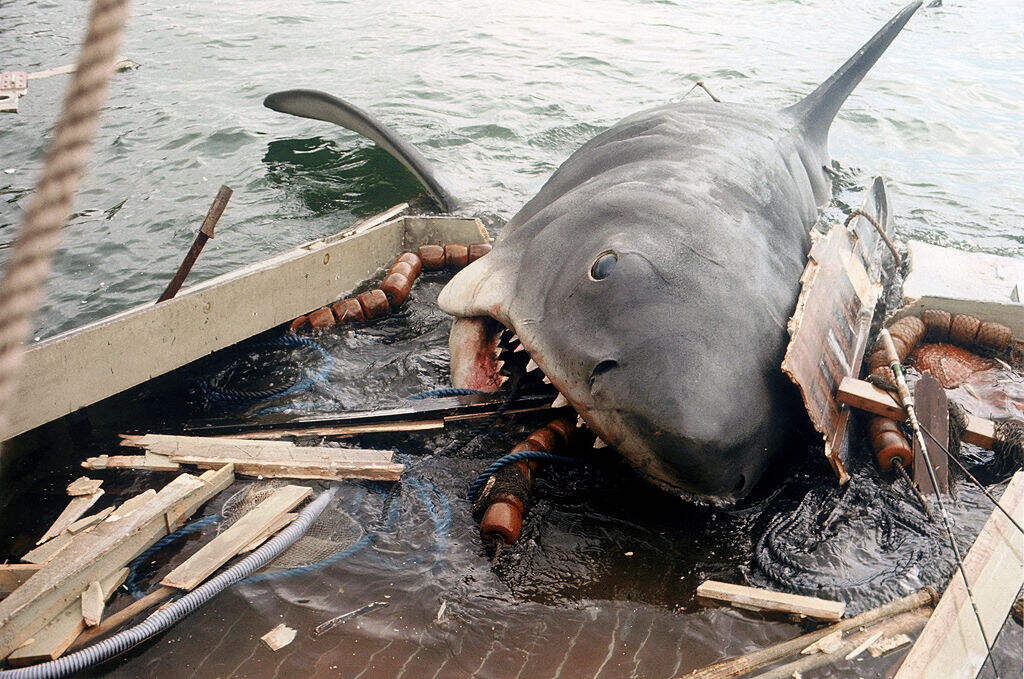
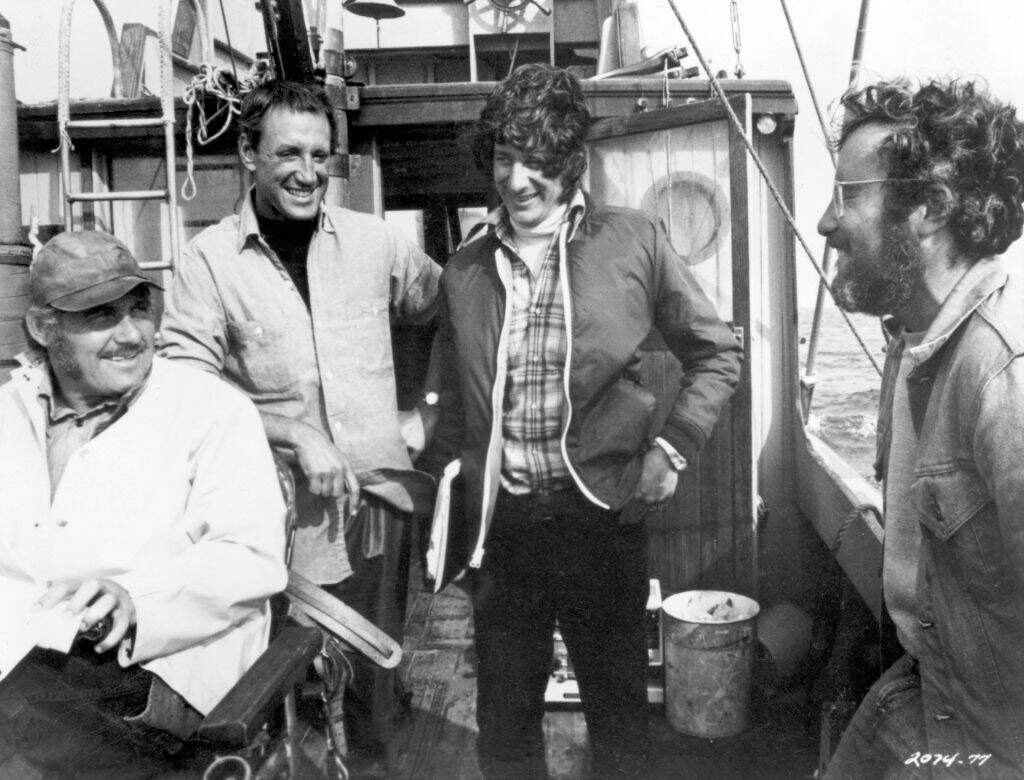
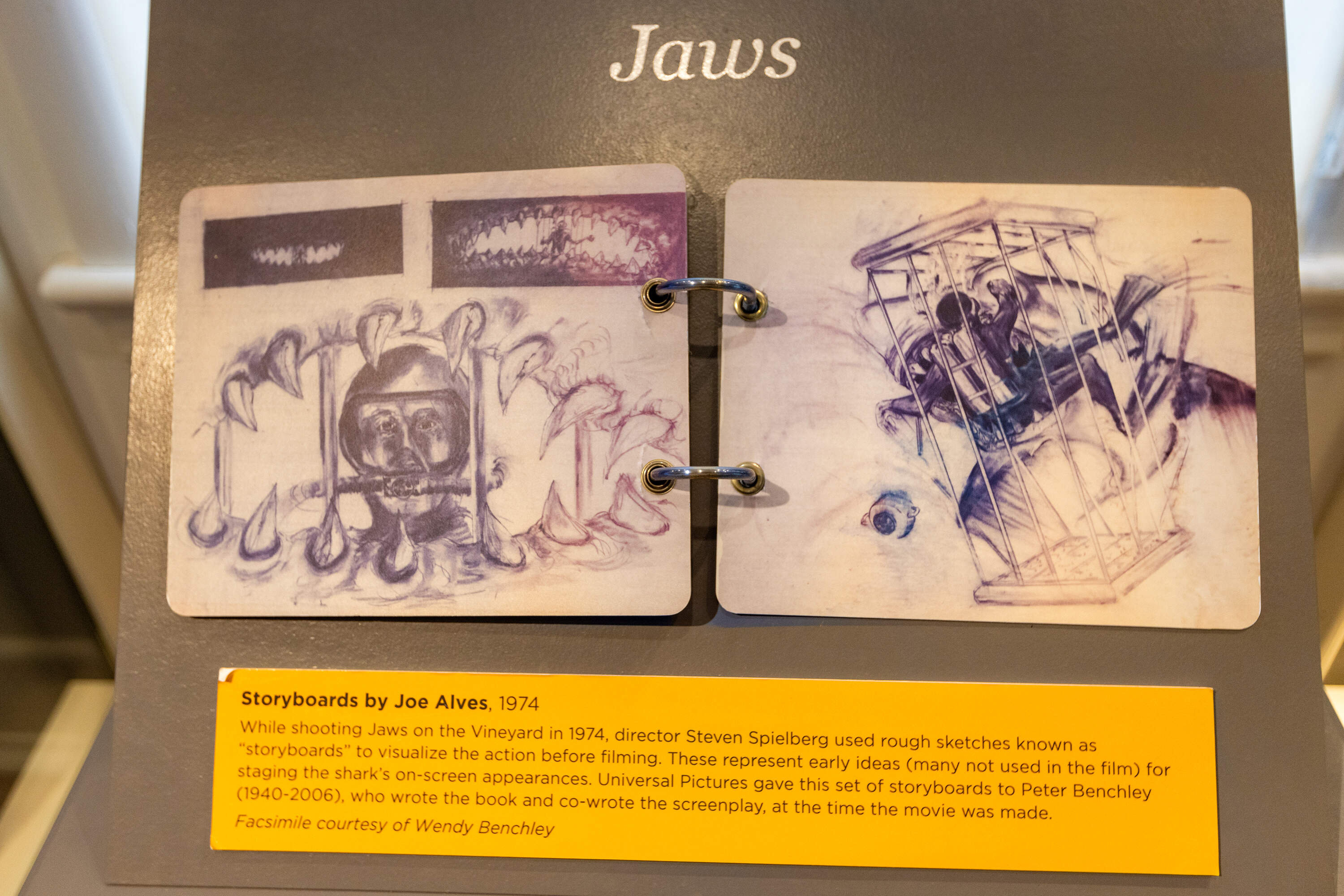
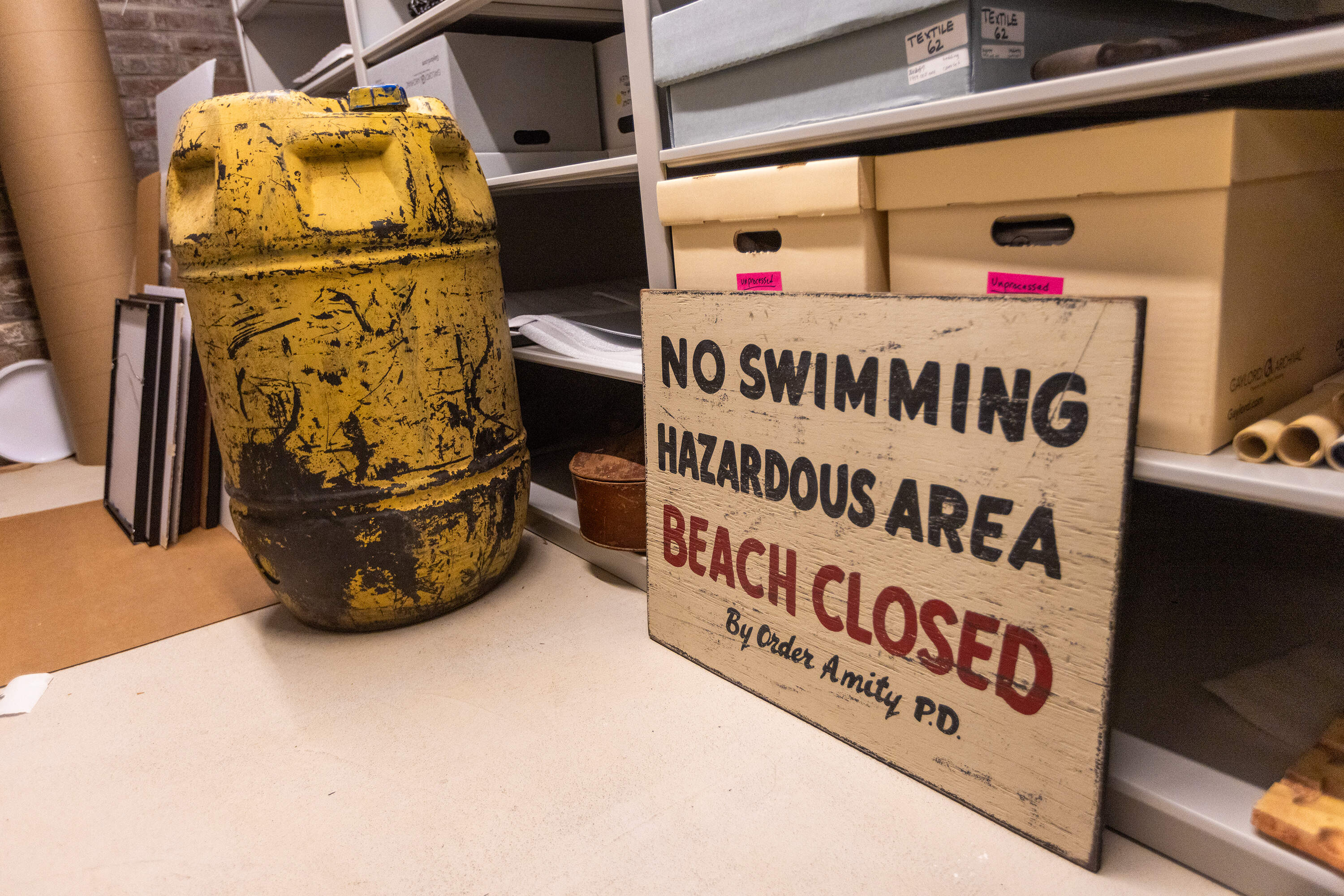
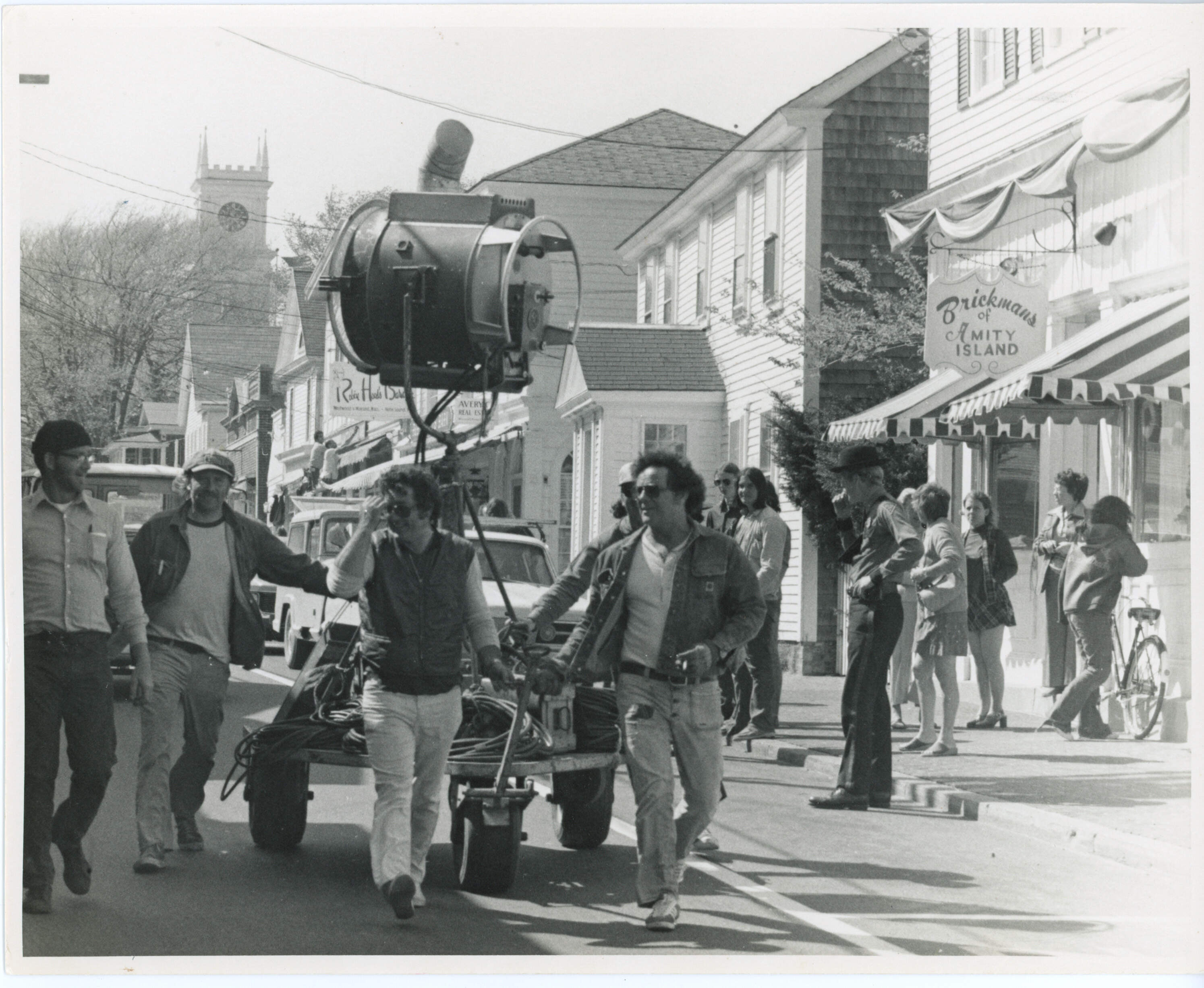
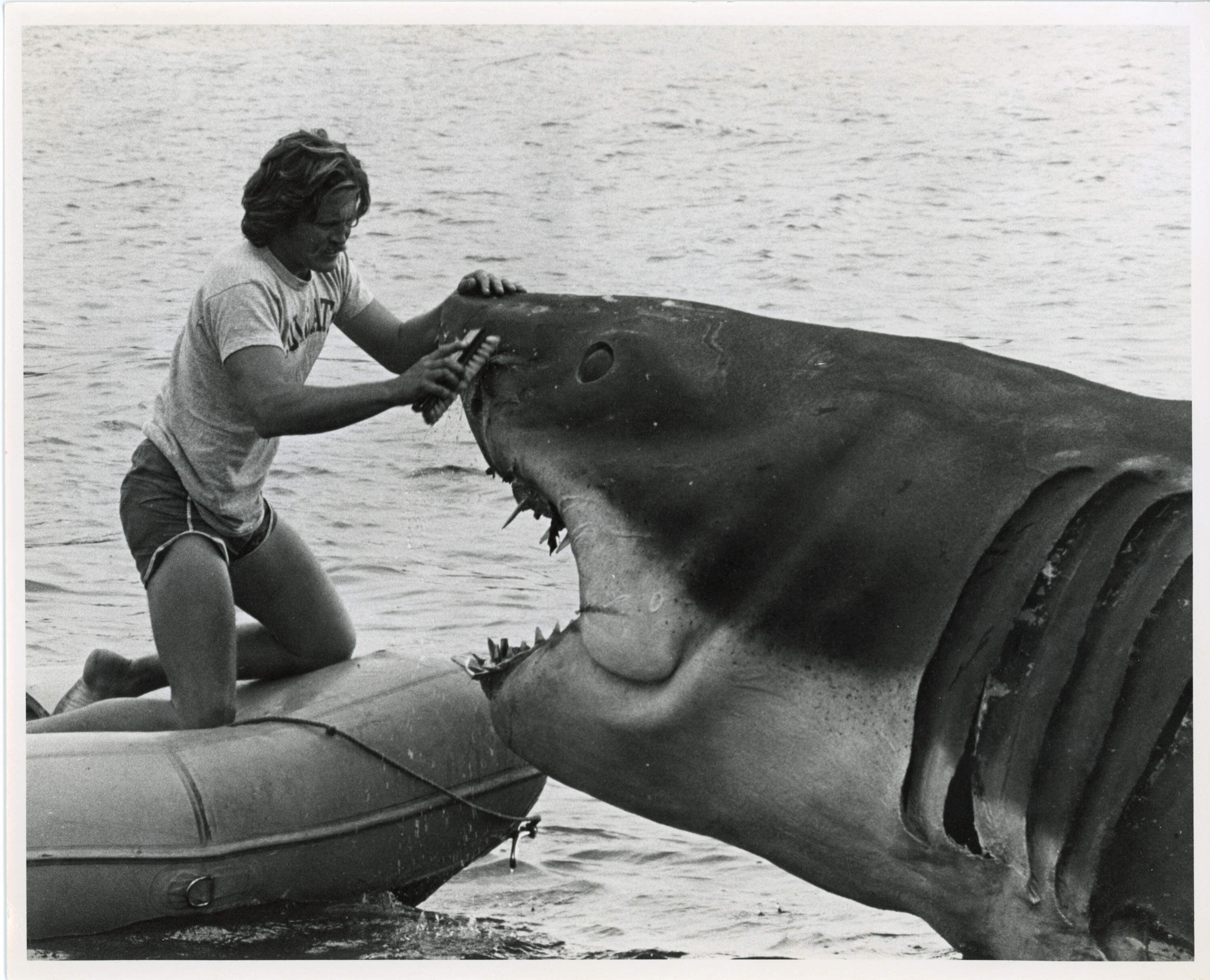
The mechanical shark, on the set of Jaws, in 1974. The film's production team created three sharks for the shoot, each weighing 2,000 pounds. (Photo by Sunset Boulevard/Corbis via Getty Images)Robert Shaw, Roy Scheider, Steven Spielberg and Richard Dreyfuss laugh together during the filming of Spielberg's "Jaws." (Photo by Universal Studios/Getty Images)Storyboards by Joe Alves used during the filming of Jaws in 1974 are on display at the Martha’s Vineyard Museum. (Jesse Costa/WBUR)One of the iconic yellow barrels used in the Movie Jaws and lent to the Martha’s Vineyard Museum by Vineyard local Wayne Iacono, and a replica of the "No Swimming" sign to resemble the one in the film. (Jesse Costa/WBUR)The "Jaws" lighting crew rolls equipment down Main Street in Edgartown. A "Brickman's of Amity Island" prop sign hangs in the background. (Courtesy of Edith Blake/Martha's Vineyard Museum)Special effects operative Richie Helmet scrubs the face of the shark prop. (Courtesy of Edith Blake/Martha's Vineyard Museum)