Support WBUR
A new art exhibit centers women's experiences of the Holocaust
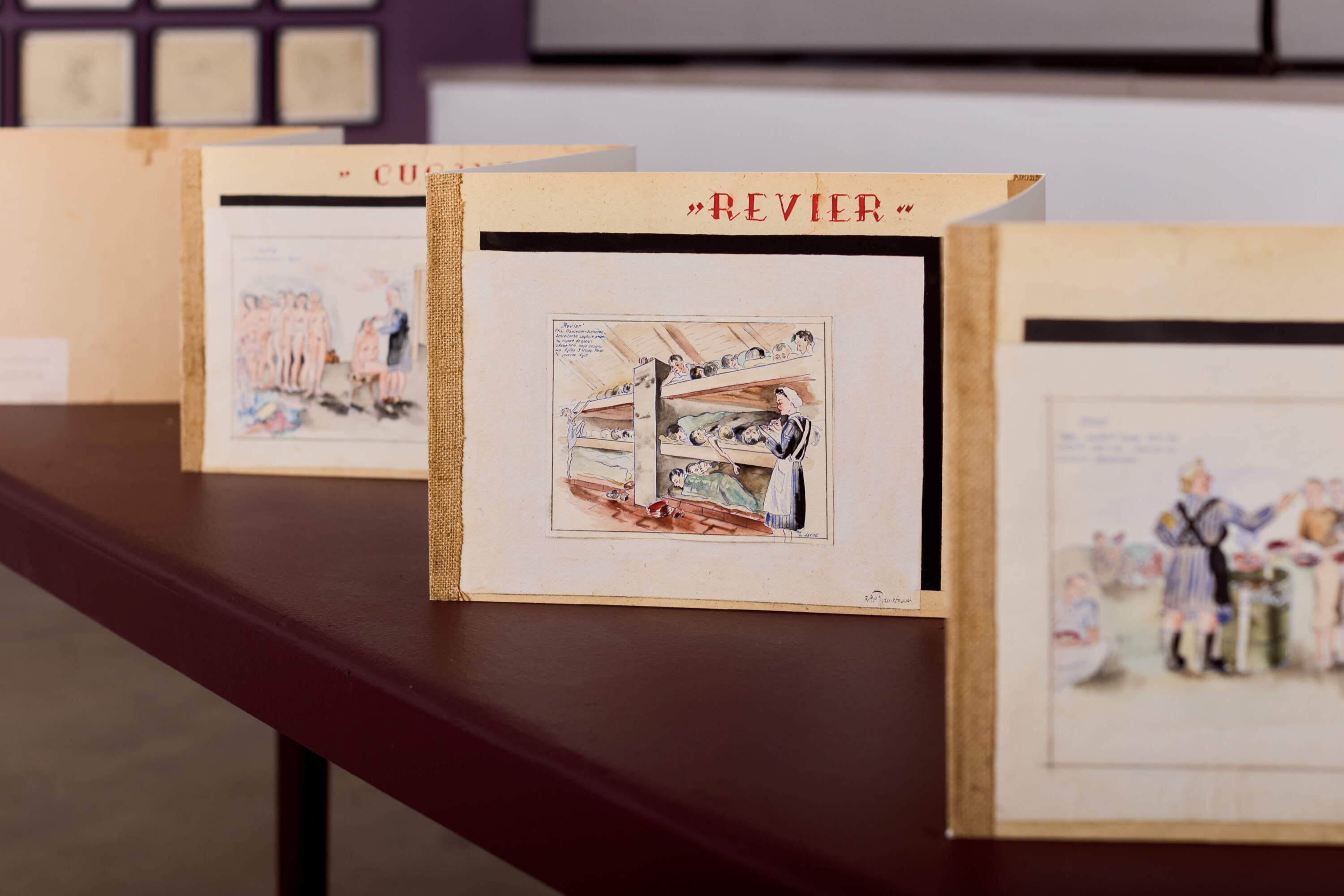
By the time Zofia Rozenstrauch turned 30, she had seen and experienced more than she should have. The Warsaw-born architecture student had survived death camps; she was the only member of her family to do so. She also watched Nazi officers murder her fellow prisoners on a death march.
After her escape, before the war was even over, she began to paint what she saw.
The results are 19 watercolor paintings in an accordion-style book, called “The Auschwitz Death Camp.” They show the atrocities that took place when cameras weren’t available to document them.
The book is part of a new exhibit at Brandeis University’s Kniznick Gallery called “Who Will Draw Our History? Women’s Graphic Narratives of the Holocaust, 1944-1949.” The collection features 10 female artists and their work depicting life during and after the Holocaust. The exhibit’s curator, Rachel Perry, said the pieces focus on the experience of women.
"There is a belief that after the war, the survivors didn't speak … that survivors were too busy rebuilding or too traumatized by the war," Perry said. “What this exhibition shows you is that the survivors were intent [to speak] even when they were displaced and deterritorialized and dispossessed, they felt compelled to document what they had experienced.”
The collection features art created using a variety of mediums, from line drawings in graphite to colored prints created with gouache, a water-based paint. None of these works has ever been displayed in the United States, and they’ve never been shown together.
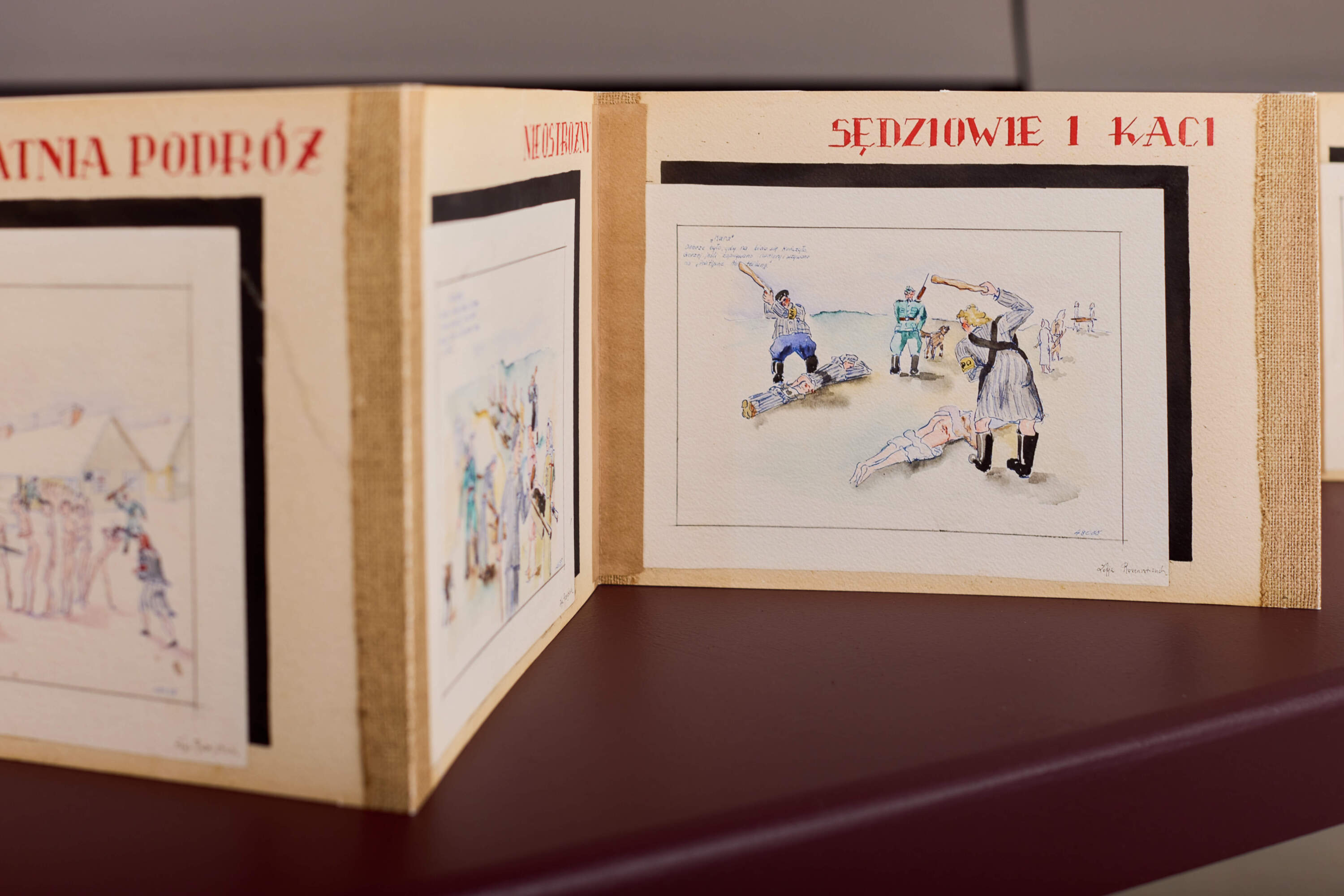
A facsimile of Rozenstrauch’s paintings are at the center of the exhibit, displayed on a long table. The originals are in Israel and are too fragile to travel, Perry said. Behind the display is a monitor. It shows clips of the trial of Otto Adolf Eichmann, a convicted war criminal and one of the major organizers of the Holocaust. During the trial, Rozenstrauch’s paintings were entered as evidence. The monitor shows a witness looking at the paintings.
“ What you can see is the witness being asked, ‘Is this how it was in Auschwitz?’ And each time, she says, ‘It was exactly like that. This is exactly as I saw it,’” Perry said.
Rozenstrauch never knew her paintings were used in the trial. She left the originals in Warsaw after the war. From there, she married and changed her name. It wasn’t until 2005 that Rozenstrauch was identified as the true author of the works, thanks to a stranger who made the connection between her two names.
Perry said she feels very connected to these stories as a Jewish woman.
“You can't help but feel somehow that these women have become part of my family,” Perry said. “It's a kind of research that you can't distance yourself from, that you can't help but feel connected to. I'm really struck by their call to duty and what they were able to create.”
“Who Will Draw Our History?” is on display through April 30.
This segment aired on February 5, 2026.