Support WBUR
Former Gov. Deval Patrick reflects on the legacy of late Congressman Barney Frank
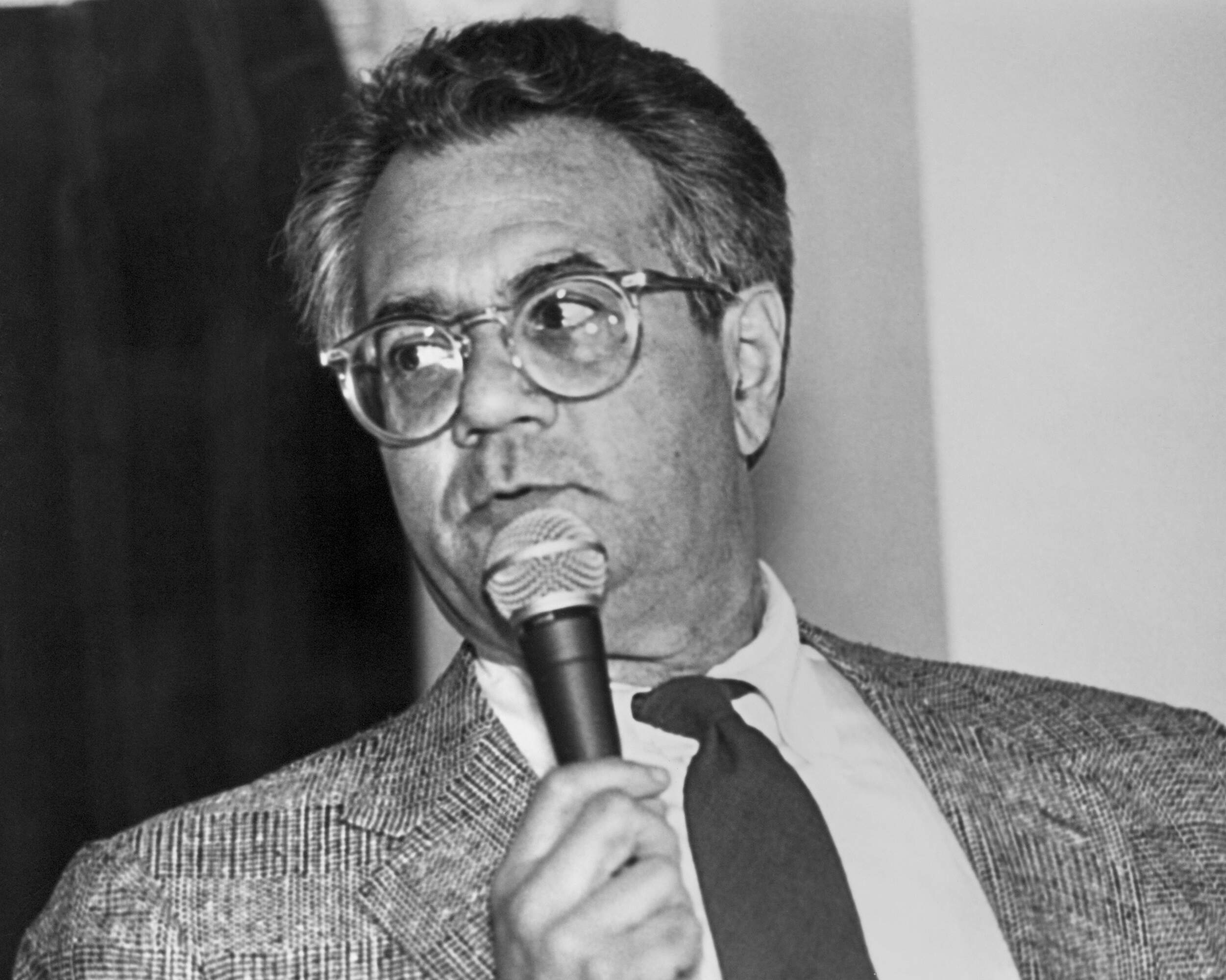
Former Massachusetts Congressman Barney Frank died last night at the age of 86.
Frank was the first member of Congress to voluntarily come out as gay. He was a fierce advocate for LGBTQ and women's rights. And he helped create the landmark Dodd-Frank Act after the 2008 financial crisis. The law dramatically increased oversight of Wall Street and U-S banks.
Former Massachusetts Governor Deval Patrick joined WBUR’s All Things Considered host Lisa Mullins to talk about Frank’s legacy.
These highlights have been lightly edited for clarity.
On how he would describe his legacy:
“He was unapologetically liberal at a time when a lot of work has gone into making that sound like a bad word … He had a way of talking about his work and his sense of service that was very, kind of foundational and approachable. I remember he described government not as some abstraction, but as the name we give to the things we choose to do together.
"And when you get right down to it, that is what government's supposed to be, and that is how liberals think about what governments are supposed to do. And that idea of how we choose, how we make those choices among alternatives is really democracy's supposed to be about.”
On working across the aisle, specifically when it comes to the passage of Dodd-Frank:
“Those were days … when bipartisan wasn't a bad word. He was effective in winning and building coalitions and getting votes through. I remember he described Karl Rove, who was the political strategist for President George W. Bush, as one of his great nemeses when they were both serving in Washington. And after the Bush administration, and when Barney had left Congress, I remember him quipping, he said, ‘You know, once upon a time, you couldn't pay me to sit down and have a conversation with Karl Rove.’
“He said, 'Turns out you can' because at that point he and Karl were on various panels together and talking about policy agreements and policy differences. I think, in fact, behind closed doors he did that, too, when he was in office.”
On officiating Barney Frank’s wedding:
“I remember being incredibly touched that he would ask me … I think for both of us it was meaningful to be part of a ceremony, the legality of which, you know, in Massachusetts I'd had a lot to do with … I was glad to be a part of his own expression of his and Jim's own expression of freedom.”
“I rarely had seen Barney kind of humble and even a little awkward about being the center of attention. He was moved by what was happening in his life … and I think he absorbed all that.”
On what he wants younger generations to take away from Frank's life:
“He was a champion for the meek, for the outcast, for regular working people long before we were talking about affordability as a political and social reality because he understood that there were particular struggles, particular ways of making the playing field even that the government had an opportunity to step to.”
“I encourage everybody I know to take nothing for granted about economic mobility and the chance to put one foot in front of the other for yourself and your family. That's gotten harder. But we had a time that Barney Frank worked in and for making the government do its part to help us help ourselves. And I think remembering his contribution is important now because that's exactly what I think a lot of us are yearning for in public policy.”
This segment aired on May 20, 2026.