Support WBUR
Former Surgeon General Vivek Murthy: 'staying human' requires connection and time away from tech
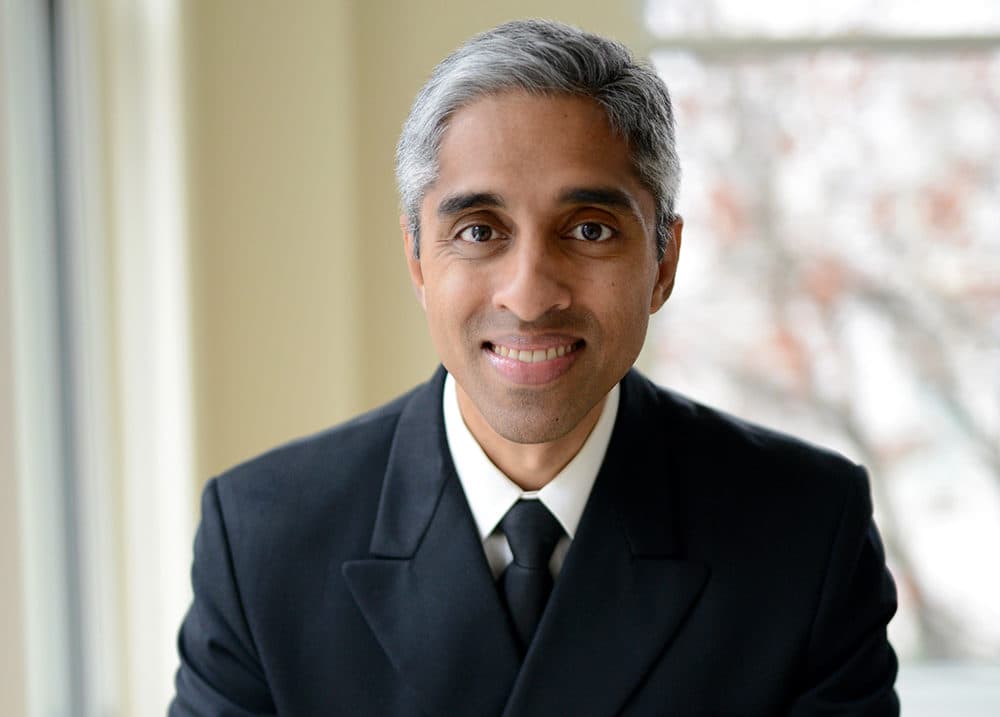
Dr. Vivek Murthy held the position of U.S. Surgeon General two times — first under President Obama and for a short time in President Trump's first term, then under President Biden.
Before that, he was an internal medicine physician at Brigham and Women's Hospital in Boston and Harvard Medical School.
Now, in Murthy's civilian life, he continues to sound the alarm about something he first warned of as Surgeon General: millions of Americans feel lonely and unfulfilled. And that takes a toll on people's health. The trend of declining social connection and community has been exacerbated by the explosion of artificial intelligence chatbots the last few years.
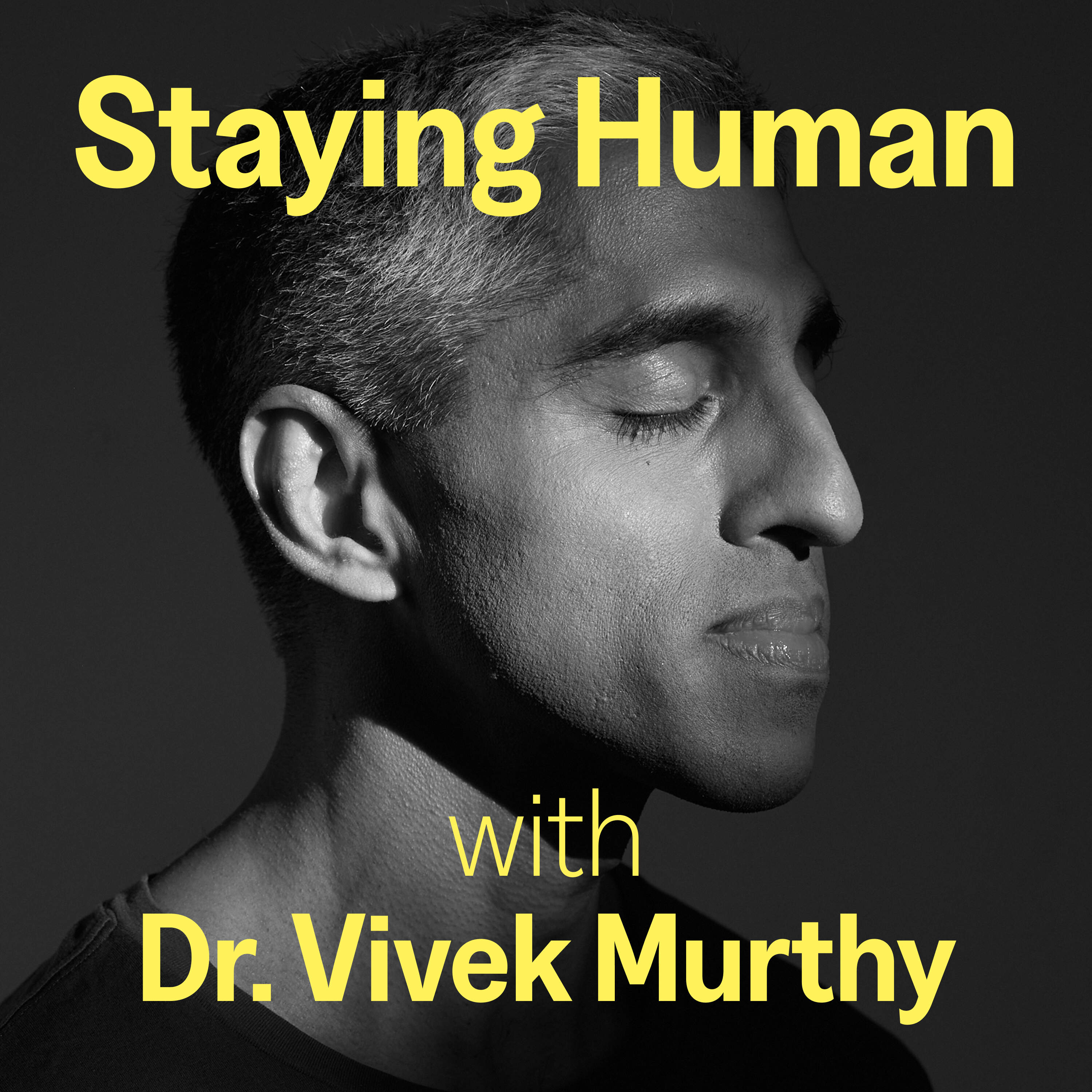
Murthy claims that's all threatening our actual humanity. He's getting out his message and proposing remedies via a Substack newsletter he calls "Staying Human." And he's about to launch a podcast by the same name. They're both part of a larger initiative of his called The Together Project.
Murthy will tape an episode of the podcast live at The WBUR Festival on Friday, May 29. He spoke with WBUR's All Things Considered host Lisa Mullins.
Interview Highlights
On what he believes is getting in the way of the elements that make us uniquely human, including our ability to be present with each other, our creativity and our capacity to be empathetic and loving:
"The challenge is that there are forces all around us, accelerating forces, that are chipping away at our humanity. There's technology that increasingly is seeking to replace people wholesale, culture that we're living in that often convinces us that we're never enough. ...
"Political discourse, also, has often become so dehumanizing and often tends to look at people with different views as less than human. And finally, we look at the experience of social media. I think about what young people have told me so often over the years — that their use of the platforms involves constant comparison that makes them feel that they're unworthy and that they have no value."
On why he's doing a podcast, thereby inviting people to spend more time on their device screens:
"Well, actually, many people listen to podcasts not with screens, but just with a voice in their ear. There's an intimacy, actually, to podcasting which I really enjoy.
"And I’m glad you brought that up, because part of what we have to do now is accelerate the conversation about what we want to protect about our humanity — because if we don't do that, if we're not intentional about that ... we will quickly come to a place where suddenly we don't have human presence in our lives, we're being cared for by machines, our friends have been replaced by machines. And that seemed dystopian 10 years ago. It is already starting to happen today. That's why it's so urgent we act now."
On what he learned from talking with Americans on listening tours, both as Surgeon General and since, about their lives being negatively impacted by how much time they spend online:
"I hear two things, primarily. One is from young people in particular, but from people of all ages — a concern that the time that they're spending online is often time that doesn't leave them feeling better off. ... What people also said, though, is despite knowing that, they found it hard to reduce the amount of time they were online, in part because the platforms that many people use — the social media platforms in particular — are built with the kind of features that keep us on as long as possible. And that's why it's not a surprise that people feel addicted."
On the remedies he's putting forth:
"If you truly want to re-anchor in human connection and rebuild a sense of community, there's several things we've got to do. And they include systemic changes that we've got to make to build social infrastructure — investing in the spaces where people can gather, making transportation easier, shifting and changing what we do in the workplaces and in schools to actually enable people to build healthier relationships with one another.
"But at an individual level, there are also steps we can start to take today ... that actually add up to really big impacts.
"So, taking five minutes a day to reach out to someone you care about; ensuring that you do one thing to help someone each day; creating tech-free zones in your day — whether that's around meals or the hour before bedtime and throughout the night, so that you don't have your device with you. But you're focused on something else, whether that's talking to a human being, reading a book. Just spending time in solitude, reflecting, can be very powerful in a world where we're constantly engaged with the digital environment around us.
On what science says about how helping people and spending time away from our devices is more rewarding than scrolling on our phones and getting responses on our social media posts:
"The rewards that you get from 'likes,' from people reposting your content … they give you a temporary and very short-lived gratification. ... But what's different about building real relationships — a connection where somebody knows you for who you are, where you can be authentically yourself, where you can show up as you are without feeling the way so many people do online, which is that they have to wear a 'mask,' put on airs, be perfect in some way — those relationships are extraordinarily protective for our mental and our physical health. They reduce our risk of anxiety and depression. They reduce our risk of heart disease, dementia, and premature death. They're associated with an increase in longevity.
"Conversely, loneliness is associated with a shortening of lifespan, a mortality impact comparable to smoking and obesity. So we know that that kind of connection really matters, and we know that service in particular is a very powerful antidote to loneliness and actually has its own benefits — both on mental health but also on physical health."
On what kinds of service promote well-being:
"Service can be either formal or informal acts of helping others. So, formal could be I volunteer for an organization that's helping folks who are unhoused or that's caring for children who are ill. Informal acts could be that my neighbor is struggling and is ill, and I stop by and drop off some food. Or I recognize a coworker is having a hard time, and I offer them some support.
"When you engage in service, what happens is very interesting. You forge a meaningful connection with another human being. Meaningful matters — it's not just surface, it's not transactional. ... But what you're also doing is you're reaffirming to yourself that you have value to bring to the world. And this is essential, because when we struggle with loneliness over time, we start to believe that the reason we're lonely is because it's our fault, we're broken, we're not likable. And our self-esteem erodes over time."
On stressful and traumatic news — from political division and antagonism to mass shootings to war and economic struggles — making it difficult for people to feel connected and optimistic:
"It's a real challenge, and I hear this often. People look at the world around them, and they see problems. They see crises. They see conflict. But what it often obscures are the extraordinary good, the extraordinary humanity that actually is present but doesn't always get a headline — or the algorithm doesn't choose to amplify it on social media.
"And it's not to say we should ignore that pain. That pain is often real. Those crises are substantial. We have to deal with them. But here's one thing that I have learned in my own life and in my care of patients, is that we are capable as human beings of dealing with extraordinary adversity — but only if we are together, if we are connected to one another.
"When we are feeling alone and isolated, then even everyday adversity feels absolutely overwhelming. And that's one of the reasons why I'm so focused on building social connection and community, because we need it more than ever to take on the big challenges that we're facing."
This segment aired on May 21, 2026.