Support WBUR
Stamp bonanza in Boston: Philatelists flood city for 2026 World Expo
Postage stamps are arguably pricey, tedious and, in an age of digital communication, increasingly unnecessary. But, this week a conference hall in the Seaport was filled with thousands of people who passionately disagree.
“Most people would tell you, ‘Well, philately [the study of stamps] is a hobby,’” said curator and collector Richard Scott Morel. “I think, actually, it's a way of life.”
The Boston 2026 World Expo, which began on May 23 and runs through Saturday, isn't just for the philate devotees. The free event at the Thomas M. Menino Convention and Exhibition Center comes around every decade, offering over 1,000 displays and tens of millions of dollars worth of stamps and philatelic items for sale.
About 40 national post offices from places as far as Fiji and Antarctica also set up shop to delight visitors.
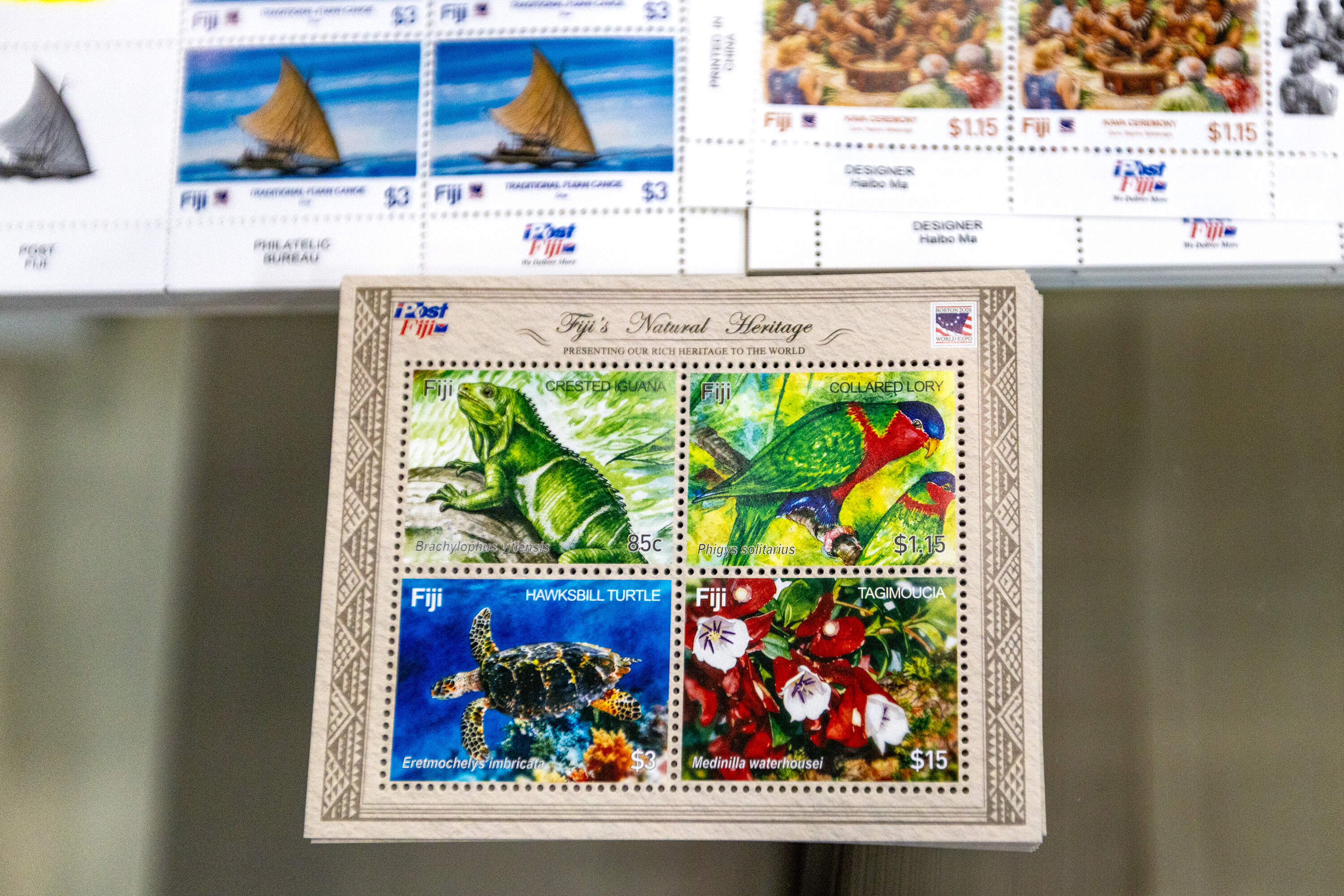
Lisa Bobb-Semple, director of stamps for the United States Postal Service, said this year’s expo is a chance to make the public appreciate the tiny pieces of adhesive art.
“Stamps can tell stories,” Bobb-Semple said. For instance, there’s a mini exhibit outlining the 250 years of postal history. “ This is an opportunity to be able to tell the story of America, which we have been sort of core and central to.”
On the floor
Alexander Haimann co-curated an immersive exhibit across the floor: “From Empire To Commonwealth: Commemorating The Centenary of Queen Elizabeth II's Birth.” He’s passionate about postage stamps.
“I discovered stamps when I was 7 years old,” said Haimann. “A second grade teacher brought them in for a 20-minute geography lesson, and it changed my life.”
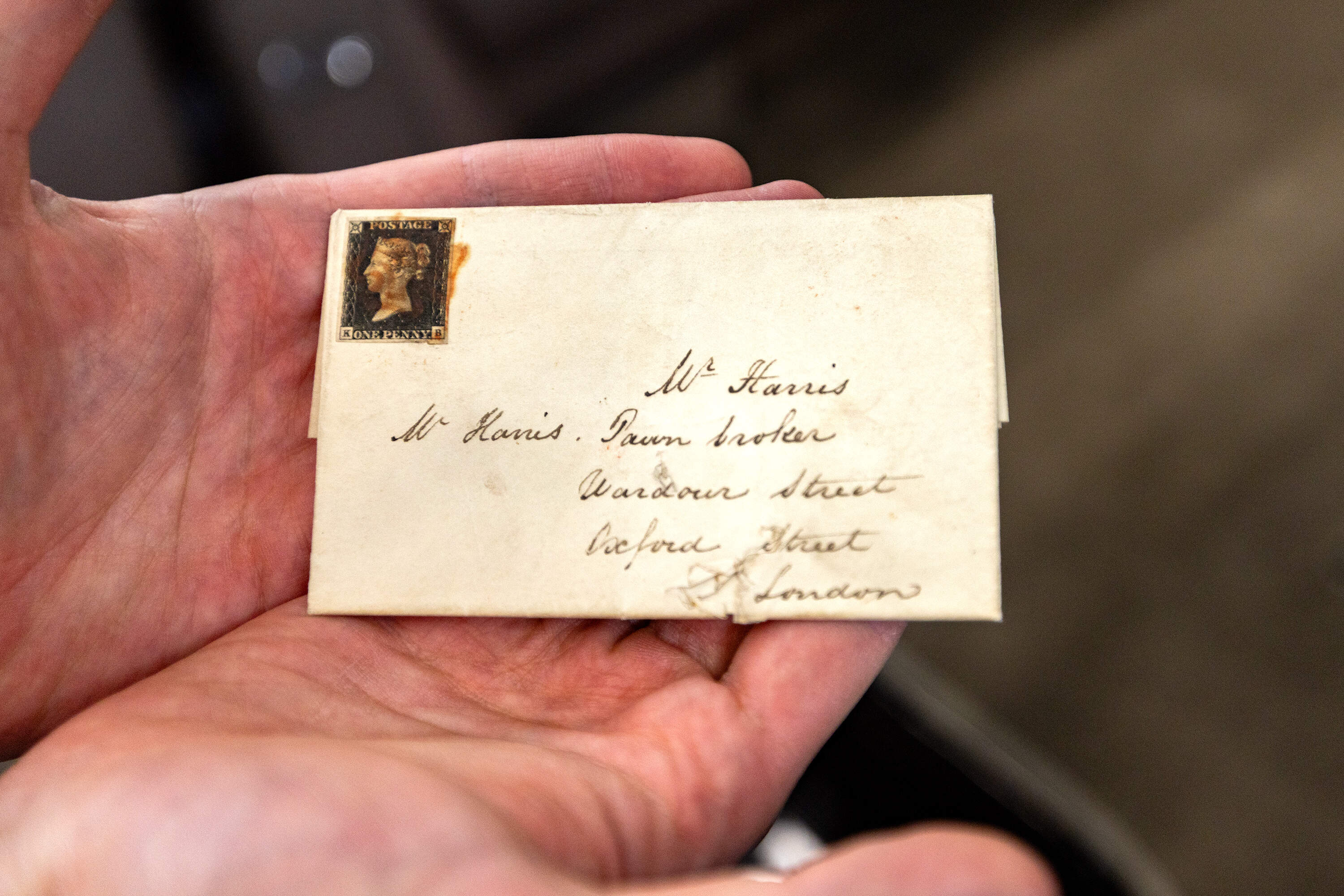
One of the marquee artifacts in the display is a letter from 1840 with an example of the world’s first postage stamp. It’s a black stamp with an image of Queen Victoria and is called a Penny Black.
“This was the mechanism by how people connected with each other in the simplest, easiest way for one penny,” Haimann said with a smile.
The letter was addressed to Harris, a pawn broker on Oxford Street in London, from William Gray. There is no envelope because at the time, people simply folded the letter in half and addressed it on the back. While still considered highly prized, millions of Penny Blacks were printed in 1840, and many collectors saved them. Haimann said they sell today for around $50 to $200.
“[Stamp collecting] is a way to connect people with history, heritage and culture,” Haimann said as he handed over the letter. “Here we are, 186 years later ... and you're now, just for a moment, connected to this place and this time and this interaction in a way that I probably couldn't execute in any other way."
It’s not just stamps at the exhibition. In the middle of the “Empire to Commonwealth” show is Queen Elizabeth II’s eye-catching Rolls Royce.
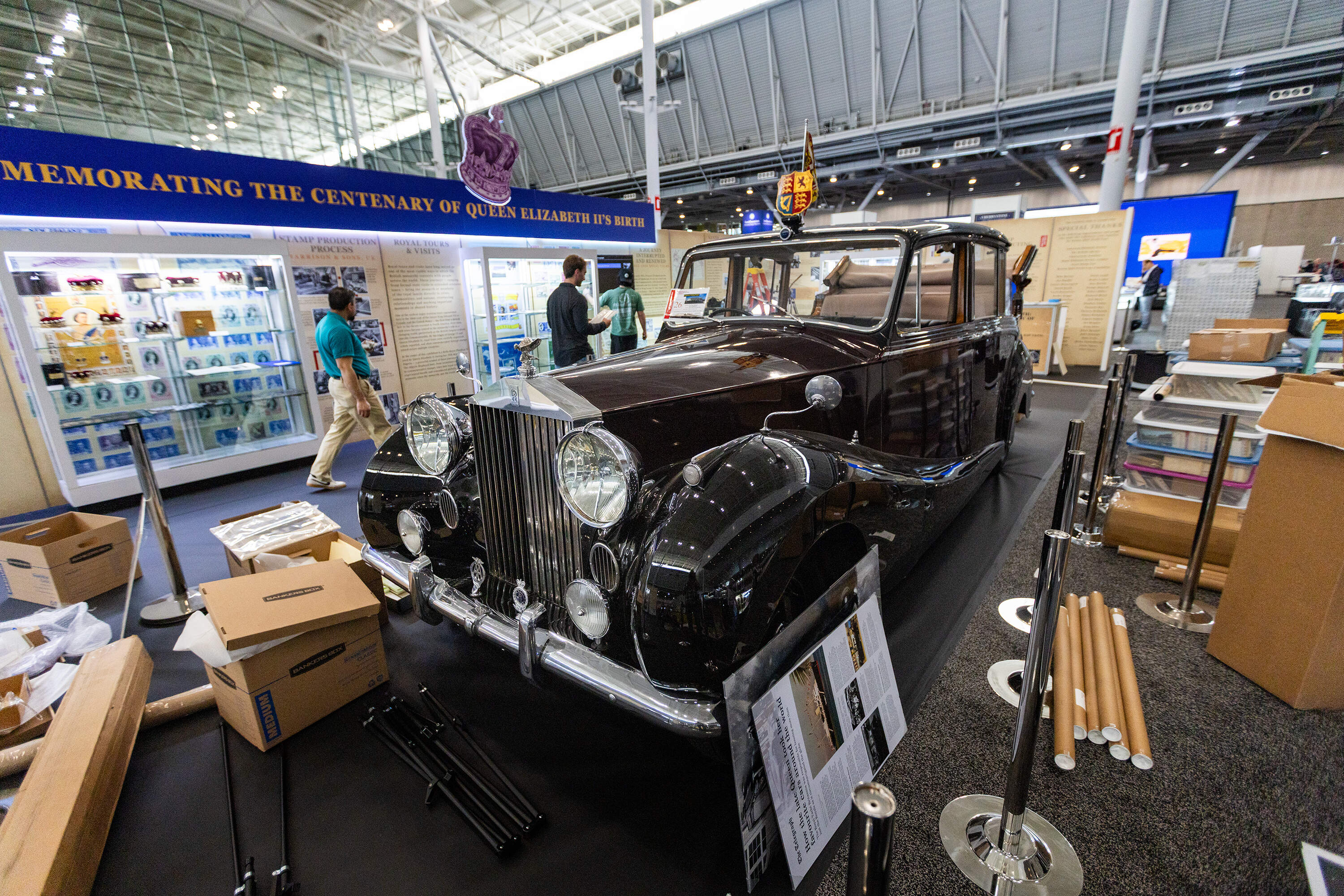
“Queen Elizabeth II is the most depicted person in the history of all stamp production,” Haimann explained.
Queen Elizabeth II was also an avid stamp collector. She inherited the hobby from her grandfather, King George V, who created the Royal Philatelic Collection, considered the most important privately held stamp collection in the world.
Richard Scott Morel, the co-curator of the exhibit, said people often overlook the historical significance of stamps. He spoke about the Stamp Act and how it generated revenue for the British, while upsetting colonists forced to prove – with stamps – that they’d paid taxes on nearly all paper goods, from pieces of parchment to playing cards.
"You're looking at two things here: the development of national revenue to fund our communication infrastructures and the kind of taxation system for the government,” Morel said. “ These kind of paper objects literally built the modern capitalist world system.”
The philately community
Morel said philately quickly became more than just a hobby for him. It gave him a community.
“We have our own language, we have our own dress code, we have our own social events,” Morel said. “I love the fact that through these tiny objects, I've met people from all over the world.”
Mark Vervaeke, owner of Sterling Stamps in Brighton, Michigan, said he’s been striking deals at the conference with other collectors for years.
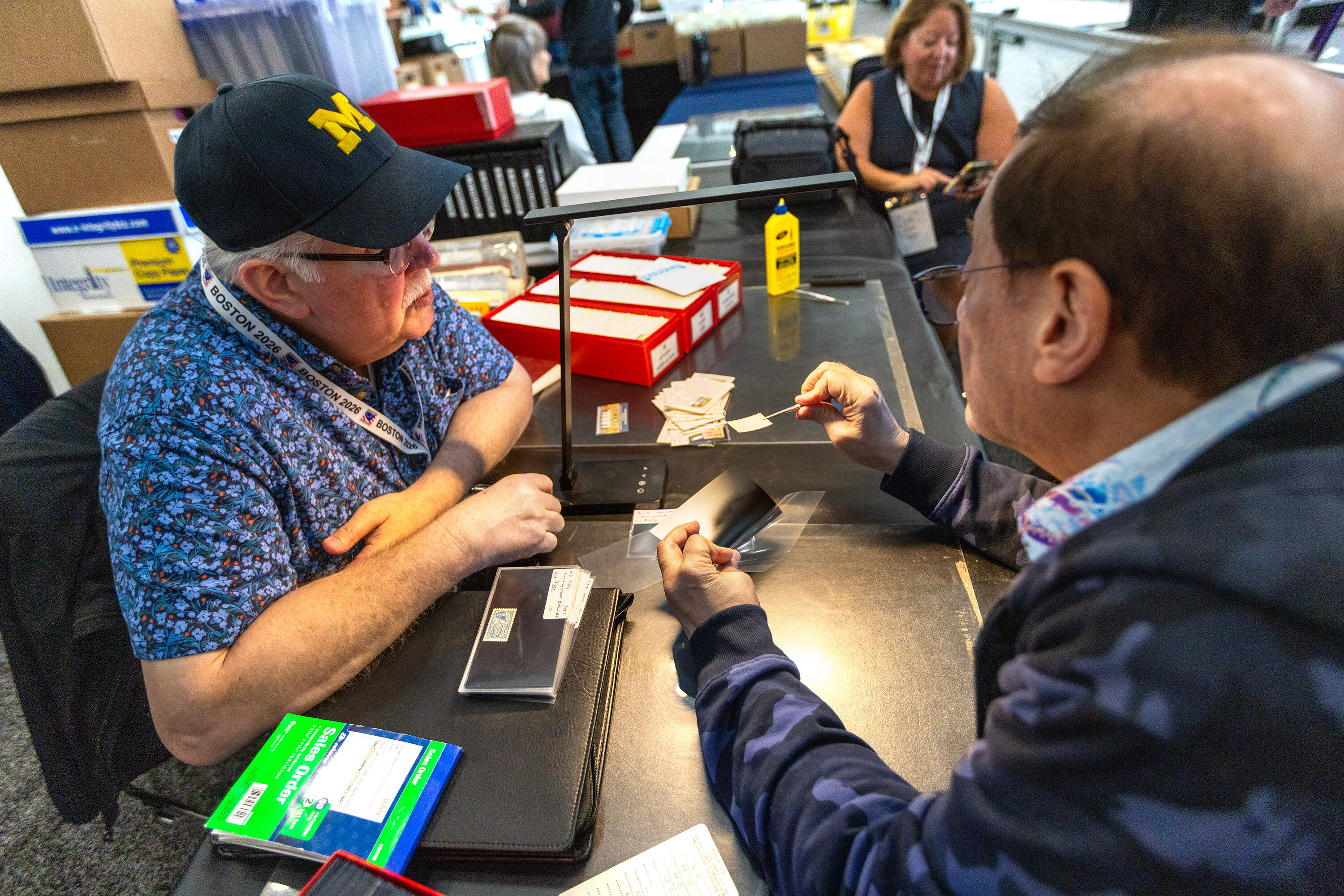
Vervaeke said a good stamp is rare. For him, it’s got to be pristine with a centered image, clean borders and specific watermark. And it needs to be something he hasn’t seen in his 60 years (and counting) of collecting.
“It's very much like a baseball card,” Vervaeke said. “We go up to a scale of 100 and hardcore collectors are looking for 95, 98 or even 100 and will pay quite a bit more than what we see as book value.”
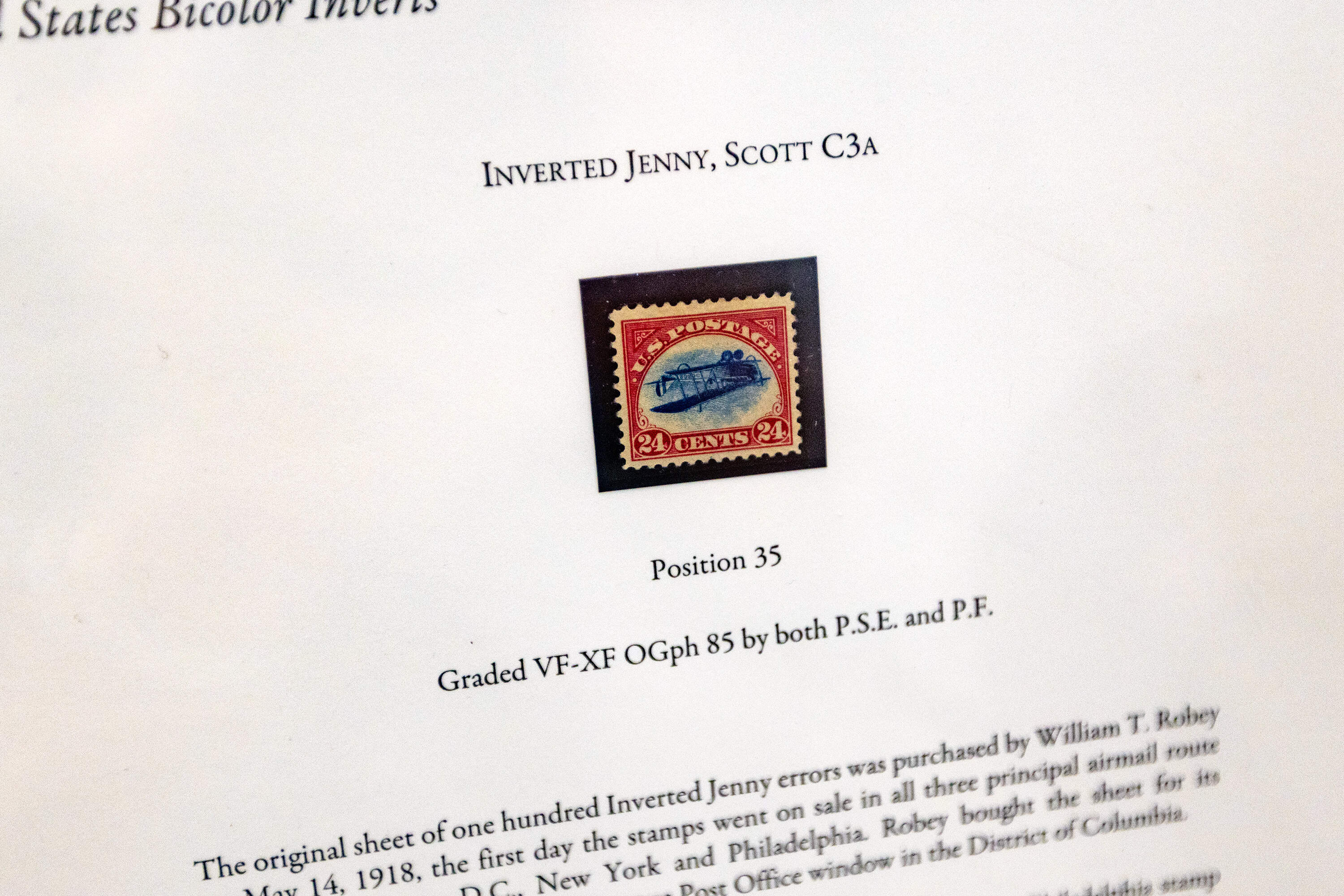
Another hallmark of a high value stamp is a printing error. One of the most famous is the inverted Jenny: the 1918 stamp features an upside-down airplane in the center. In 2023, one went for $2 million. Thirteen of the inverted Jennys are at the Boston expo and will be auctioned off.
Vervaeke isn’t naive. He knows younger generations don't collect — or even use — stamps as much as he does. That shift has put the U.S. Postal Service in a dire predicament, with its leaders warning it could run out of cash over the next year.
“We look at it from a historical standpoint,” Vervaeke said. ”Every stamp tells a story. … Every country in the world issues stamps for the most part, and they issue 'em for a reason.”
For his part, Vervaeke is doing what he can to keep the tradition alive.
“I have a new grandbaby that was born in November, so of course I'm gonna get her into collecting.”
The expo is open to the public through Saturday, from 10 a.m. to 3 p.m.
This segment aired on May 28, 2026.