Support WBUR
YEAR IN REVIEW
Time travel with us: The Cog 2024 playlist
Music, I’ve realized, may be the closest we may ever get to time travel. A certain song, even just a few beats, can take us back in time or — more importantly — to another version of ourselves. It happens to me all the time. I’ll be on a road trip or a long run, barely paying attention, when a certain song pops up on a playlist. Suddenly I’m a teenager and on the 7 Train, headed to Chelsea to dance at the Tunnel. Or I’m a college student pretending to write my thesis, but mostly studying the guy who will become my husband. The distance between current Kate and younger Kate, the choices I live with and the options I left behind, feels very big until I hear the first few chords of a song that turns back the clock, erasing decades.
I know I’m not the only one who feels this way because 27 of the 245 essays we published this year featured musicians and/or their music. Sometimes the music was the story’s main character (“Joni Mitchell is still the best of us all” and “You think AI could write 'Shake It Off?' As if”). But more often than not, the music was a sidekick.
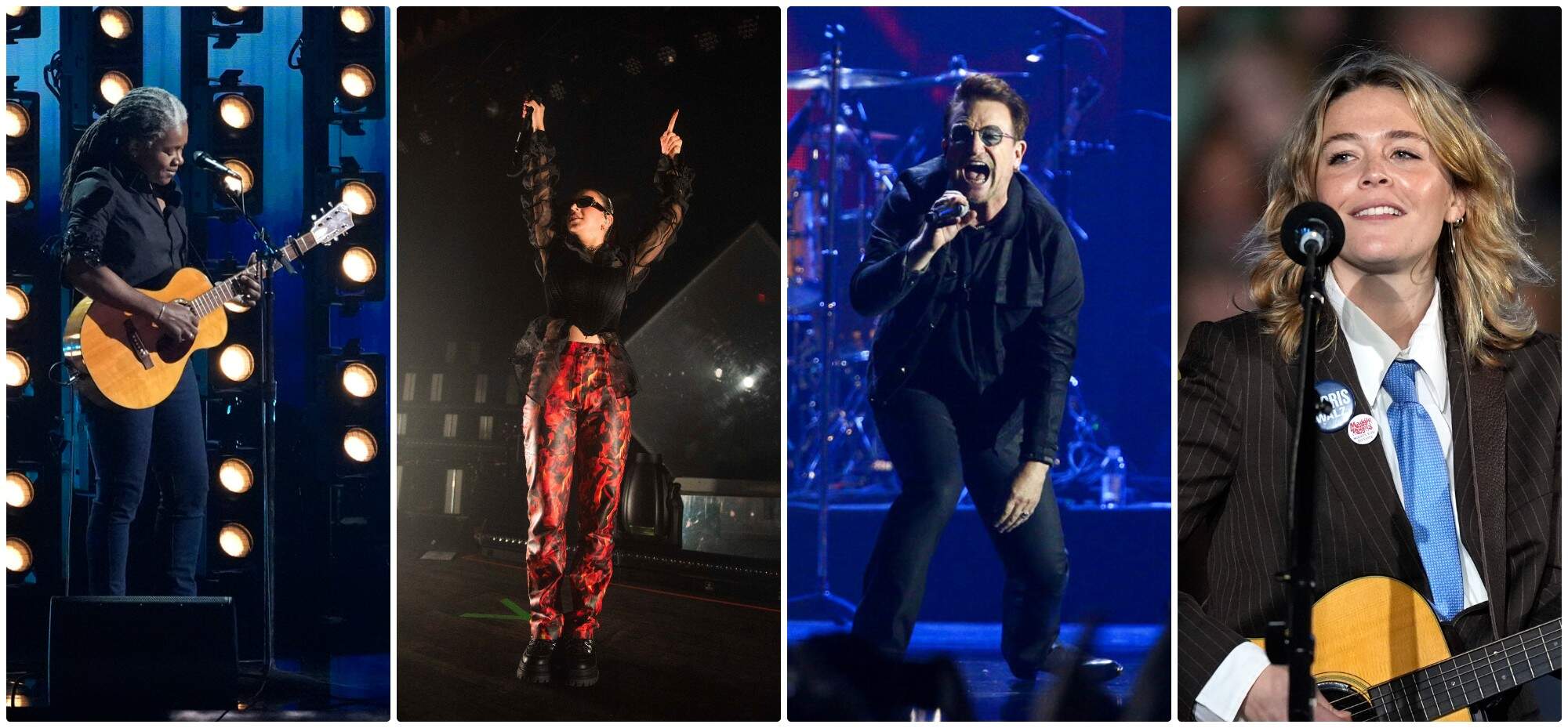
In one of our favorite essays Susan Donovan Bernhard wrote about how in 1988, Tracy Chapman’s unlikely hit “Fast Car,” tapped into something “fragile and raw and aching.” And as was evident from the reaction Chapman got when she played the song as a duet with Luke Combs at this year’s Grammy’s, it still does. Bernhard wrote,“‘Fast Car’ sometimes feels like an homage to what I’ve overcome, how I’ve had to forgive myself for being the screw-up that I was.”

Music often fills that role, whether it serves to honor an earlier version of ourselves or someone we love. When Símon Rios’ best friend died, his favorite band — The Grateful Dead — helped Rios mourn. And one of Linda Wertheimer’s favorite teenage memories is of listening to mixtapes on a two-day road trip with her big brother, who died when he was just 23 years old.
Chris Ritter (“Jacob Collier and the joy of being a nerd”) and Jonathan Fitzgerald (“Newport Folk Festival and the art of the good surprise”) wrote about the joy of live music. And Sara Schreur realized “that seeing your favorite band live can only be eclipsed by watching the person you love most see theirs” (Finding ‘the real thing’ with U2 at Sphere).
Other Cog writers focused on the transformative power of performing music — whether with total strangers (“‘Chasing joy’ with Maggie Rogers and 400 strangers”) or the Boston Pops (“This Mayor is an Artist”).
A few of our contributors found inspiration in music. Lindsay Hameroff was so captivated by the lyrics of a Harry Styles song that she wrote a romance novel based on them (“First I fell in love with romance novels. Then I wrote one”) and Stephanie Burt turned her love for Taylor Swift into a literature class (“Why I'm teaching Taylor Swift at Harvard”). “[Her songs] speak to my privilege, to my insecurities, to my wish for attention, to my hopes that everybody will love me for who I am,” Burt writes. The waitlists for Taylor Swift-adjacent classes tell us she’s not alone.
Cog editors even got in on the fun, creating a playlist for our summer retreat (“In August, we float”).
And, of course, there was the soundtrack to the presidential election. Jason Aldean and Kid Rock stumped for Donald Trump. Barack Obama stole the show from Eminem. Charlie XCX declared Kamala “brat” (“Gen Z voters need Kamala Harris to be more than ‘brat’”). And who could forget the celebratory musical roll call at the Democratic National Convention, which featured a signature song for each state (“'In the room where it happens' — a day in the life of a DNC delegate”).
The best songwriters realize their songs don’t just belong to them. They belong to a brokenhearted stranger they’ll never meet, a group of old friends who vacation together once a year or — in the case of that roll call — an entire state. Jason Isbell, who has written deeply personal love songs about (and with) his ex-wife, discussed this phenomenon with People magazine after his divorce.
“Once I was done writing those songs, they didn’t really belong to me anymore,” he said. “For me it’s a matter of honoring other people’s connections with that music and also my own past.”
So, readers, this is our holiday gift to you — the Cog 2024 playlist. Happy time traveling.
Follow Cognoscenti on Facebook and Instagram. And sign up for our weekly newsletter.