Support WBUR
Commentary
My dad, the explorer, can still find true north
It’s 9 a.m. on a Thursday and my work day has just begun. Before I check my email, I check my phone to see where my dad is. A few months ago, my dad — known to all as Tap — moved from Maine to live near my family in Boston and he likes to explore his new neighborhood. So, with his permission, I pinned an AirTag to his power wheelchair because, despite being 93 and legally blind, Tap could be just about anywhere in the city on this morning.
Today, the app on my phone has tracked Tap to the Museum of Science, about a mile from his apartment. The museum isn’t even open yet. He’s probably waiting outside so he can be the first visitor and have the exhibits all to himself. A few weeks ago, I was in Los Angeles and checked my dad’s location. On that day, he was passing the Prudential Center, on his way to the Museum of Fine Arts (MFA), several miles from his apartment.
He had mentioned wanting to go to the MFA and I suggested we go together some weekend — he in his powerchair and me on my bike. Instead of waiting for me, I realized, Tap had set off on his own, having memorized the route on a street map he pulled up on his computer monitor to study through his high-powered magnifying glass. I could imagine his confident route planning: Go straight along the Charles River, cross the bridge at MIT, make a right on Huntington and keep going.
I tried to picture the route to the MFA in my mind, too, thinking of Boston’s busy streets and crosswalks, where Tap can’t see the walk signal through blurry retinas. I imagined the broken brick sidewalks and tree well traps that could snag his wheels and knock him off course. I have seen Tap ricochet off a crack in the sidewalk at full speed, then recover control midflight like the ace Marine helicopter pilot he once was. He cannot see a smartphone screen and therefore cannot use GPS. He does not care about the risk.
But he is resourceful. Along with courage, the ability to make friends is one of Tap’s greatest resources. If he snags a wheel in a tree well, surely two beefy young men will show up and lift him and his 200-pound chair and accept his offer of a beer as thanks.
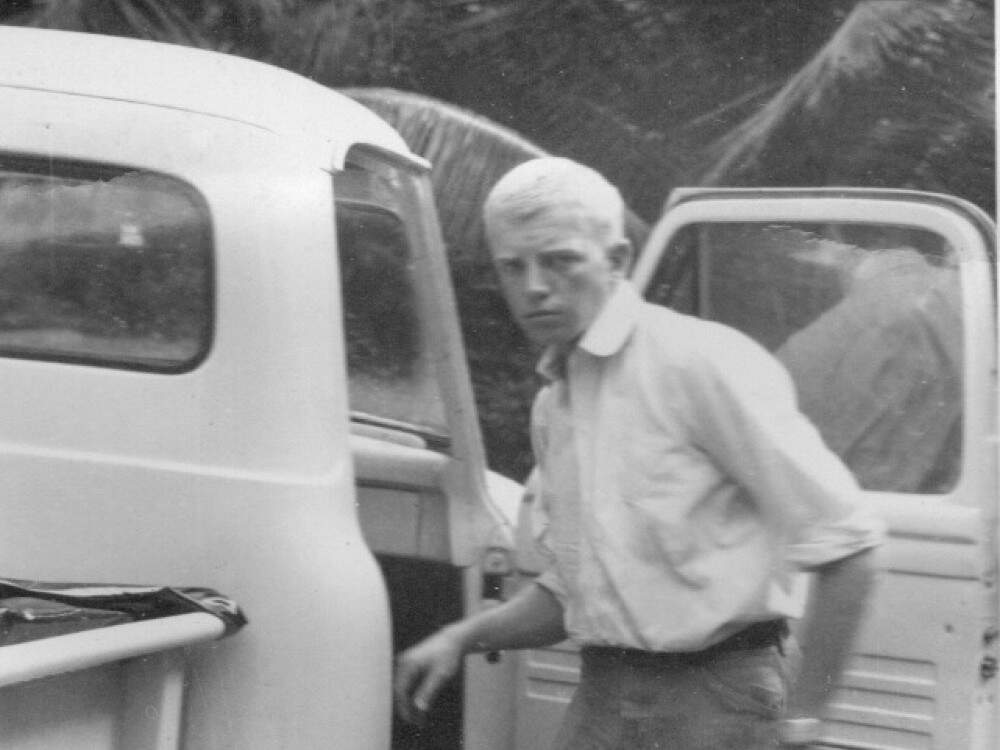
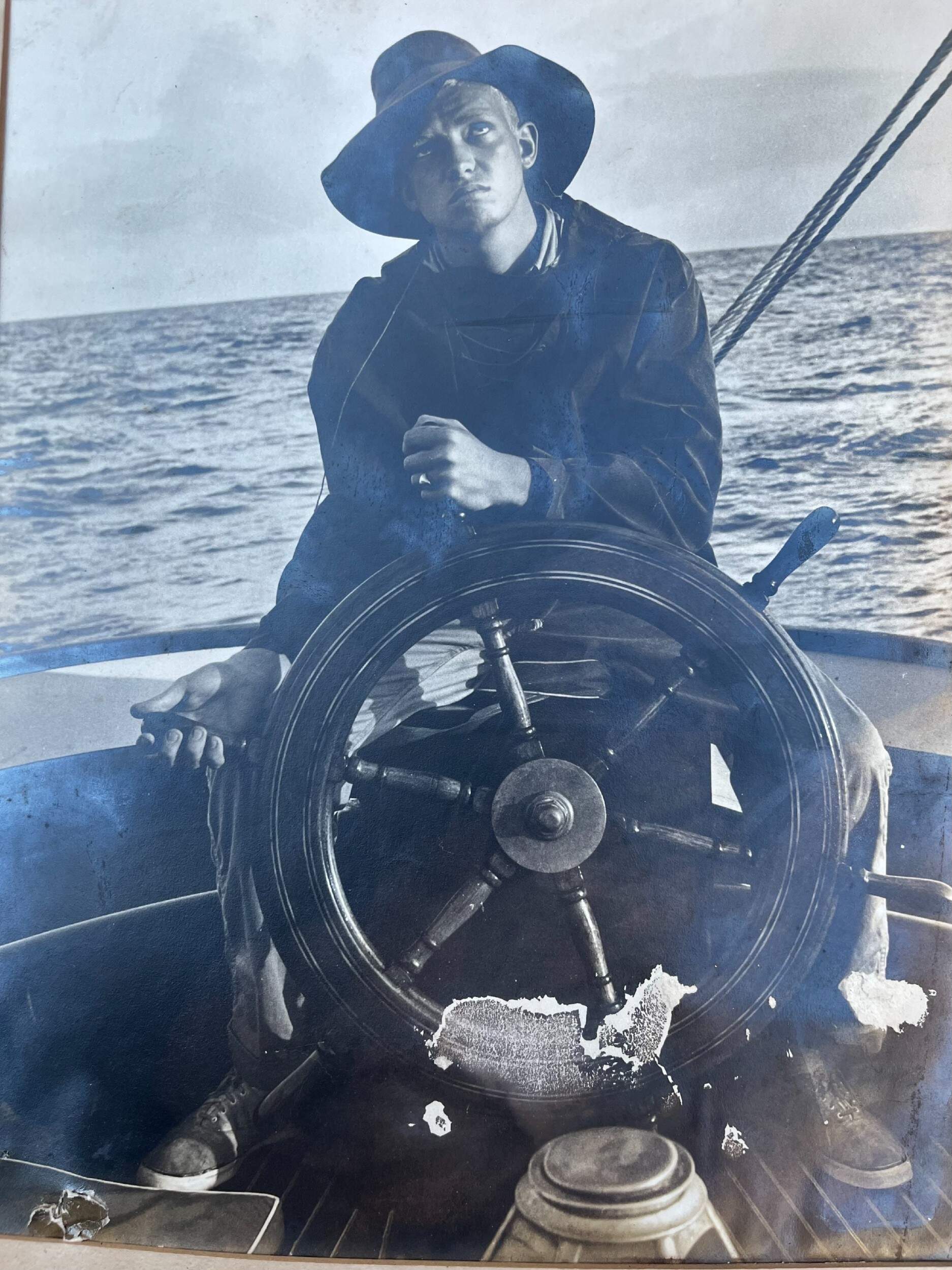
He’s always been this way. In the summer of 1948, Tap was 17. His father had been a Pan American Airlines executive in the early days of international jet travel. That meant that if a plane in the PanAm fleet had an empty seat, family members could hop on for a free flight. One June morning after school let out for the summer, Tap put a change of clothes in a backpack, grabbed his passport and took the train from his home in Connecticut to Idlewild Airport (now JFK). After scanning the available options for a free seat, he hopped on a flight to Africa. He landed in Entebbe, Uganda. He checked in at the local PanAm office, the single safety measure required by his parents, then went for a cold beer at an ex-pat bar.
At the bar, Tap got lucky in a craps game, bought a round of drinks for the bar with his winnings, and made friends with some bush pilots. One invited him to come along on a flight over Lake Alfred, the source of the Nile, the next day. Peering out the small plane’s window at a herd of elephants bathing in the lake, Tap decided he would hitchhike from Lake Alfred up the Nile, all the way to its end in Cairo, catching rides along the route followed by truckers. But his grand plan was sidetracked when a driver made a stop at the remote home of an anthropologist. The anthropologist invited Tap to join her on a visit to the pygmy forest dwellers. The pygmy elders invited Tap to stay with them, which he did, and had a wonderful time. A few weeks later, Tap made his way out of the forest and back to the PanAm office in Entebbe, which alerted the staff at the hotel where his parents were staying, having flown over from Connecticut to plan his funeral.
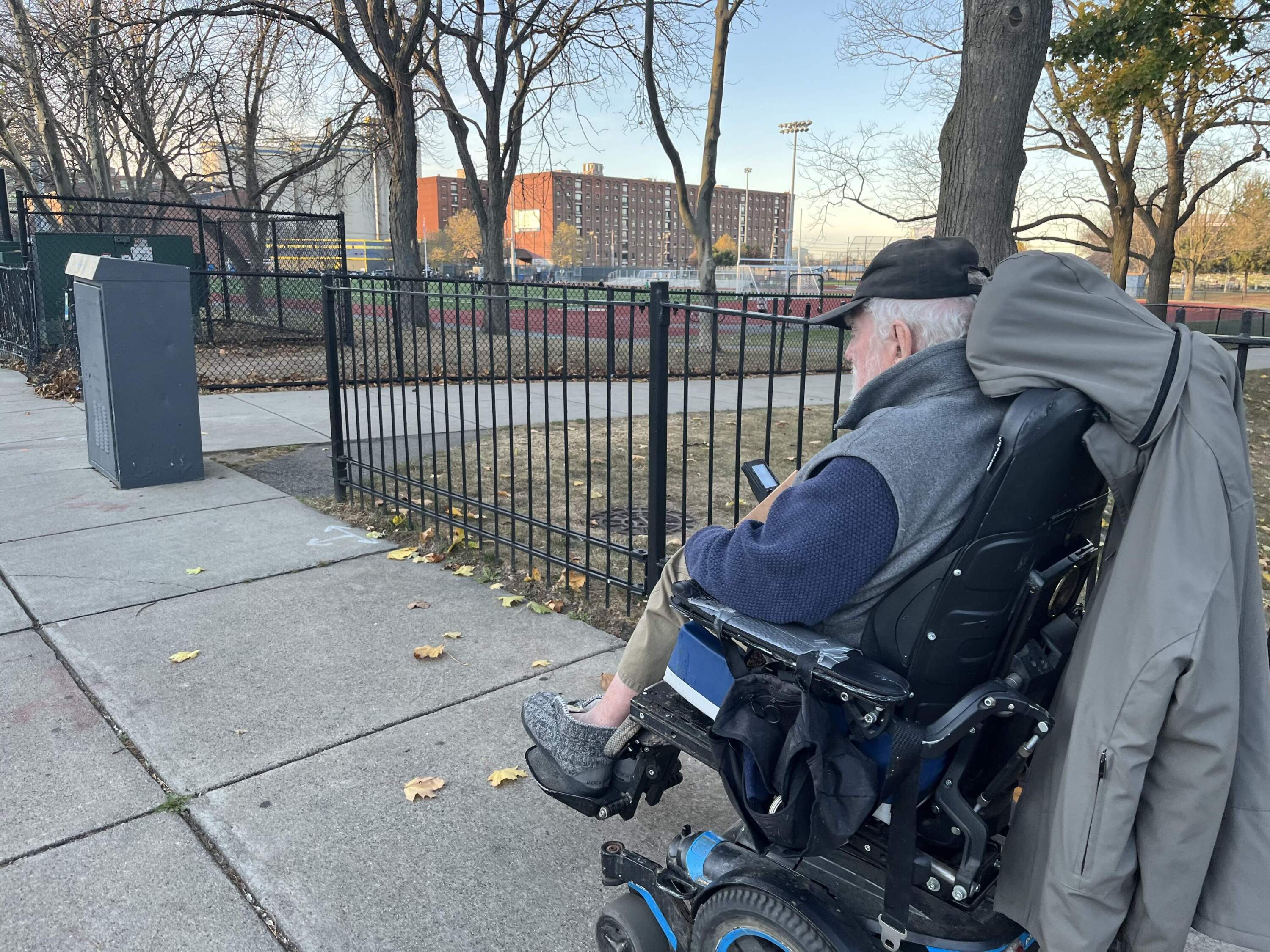
At 93, Tap is the same headlong explorer he was at 17. Staring at my phone, I watch his AirTag inch along Huntington Avenue. Either Tap would make it to the MFA, or he wouldn’t. Either way, he’d probably have a wonderful time.
I once asked Tap how he knows which way to turn when he can’t see street signs. “You know where north is, right?” he answered, perplexed by my question. At sunrise or sunset, I might be able to point north. But plop me in an unfamiliar place at midday, and I’d have no idea. Tap, however, knows his cardinal directions the way the rest of us know left from right. He navigates Boston as he did Africa: by his internal compass.
I’ll turn 65 in 2025. The 29 years separating me from my dad suddenly seem brief. If I have his good luck, I’ll be 93 myself in no time. How will I navigate the next 30 years? Tap won’t teach me how to ramp down to a sedate and secure old age, that’s certain. The boy who yearned to get out there, whatever the risk, is undiluted in the elderly man in a powerchair. Reaching his 90s without losing his essential self is a triumph for Tap — and a revelation for me.
As the time in front of me begins to feel measured, I claim my dad’s boundlessness as my own true north for life. Tap won’t yield to assumptions or limitations that could prevent him from experiencing the glory of life on Earth at any age. Nor will I. For it is in our elder years that saying yes matters most. Yes to exploration. Yes to risk. Yes to yearnings, yes to it all. There’s no map, and no time to be lost.
Follow Cog on Facebook and Instagram. And sign up for Cog's newsletter, sent on Sundays. We share stories that remind you we're all part of something bigger.