Support WBUR
Cog's Weekly Newsletter
It's our job to remember the pandemic — even as the beat goes on
Editor's Note: This essay appeared in Cognoscenti's newsletter, delivered weekly on Sundays. To become a subscriber, sign up here.
The New York Times published 30 charts last week showing how American life has changed since the pandemic began in March 2020. The Times’ data journalists created bar charts and line graphs showing dramatic swings in the average time spent commuting, alcohol sales, the share of women in the labor force, online shopping, marriage rates and a whole lot more.
The data, presented in that way, stopped me cold. It showed me, in stark terms, how my life has changed, even as it’s kept bumping along.
For a lot of people, recalling the pandemic — and especially those first terrifying months — is unpleasant. It’s too scary, uncomfortable and sad to return to the sounds of sirens, to how closely we tracked ventilators and hospital beds. So, instead, we try to put it far from our minds. We allow ourselves to breeze past the millions of souls who died, their deaths obscured by political fights over vaccine mandates and distrust in science and public health. I’m guilty of this too sometimes.
I can take myself back to pandemic times by looking at photos on my phone. My family was fortunate and privileged; my husband and I could do our jobs from home, and nobody close to us died. In March 2020, I had a toddler and two kindergartners. We spent a lot of time outside in the woods that spring, listening to the peepers and waiting for the honeysuckle to bloom. During the whole of 2021, my dining room was a makeshift “school” room. We tested many masks before finding ones that fit my kids’ tiny profiles.
But I have to force myself to remember all of this. And when it comes to pandemics, many of us would prefer to forget. It's not just about COVID. Consider the 1918 flu pandemic, which killed more than 50 million people worldwide, including 675,000 in the U.S. In 1924, the Encyclopedia Britannica published a 1,300-page, two-volume history of the 20th century thus far. It included no mention of the mass death that occurred only five years earlier.
I read about this great forgetting back in 2020, and I thought to myself: No, no, we’ll never forget what it means to live through this pandemic. How could we?
Last week, I talked to Alex Goldstein about this question. Alex runs a communications firm in Boston. But early on in the pandemic, he started a project called Faces Of COVID, his effort to remember the people behind the statistics. Over three years, Alex shared, one by one, the stories of 6,000 people who died from COVID-19 — he got tens of thousands of submissions, from all over the country. He memorialized the dead and helped people connect with one another over the intimacy of their profound loss at a time when we couldn’t gather in the traditional ways to say goodbye. (He also connected Cog to people we could talk to about their experiences.)
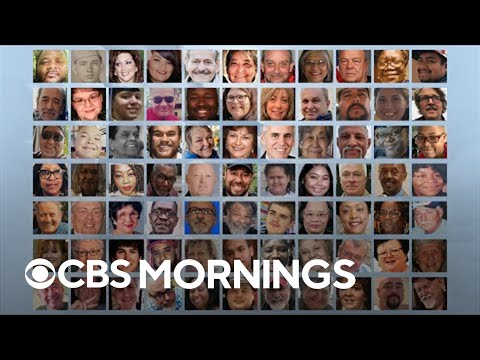
I asked Alex how he’s reflecting on all the hours and heartache he devoted to Faces Of COVID, five years since the pandemic’s onset. “We all went through something deeply traumatic,” he told me, “even if we didn’t personally lose someone.” He believes that unless people were intentional in processing what happened, they were more likely to compartmentalize it and shove it away. And that’s what we’re seeing now. People are eager to reassert themselves, and believe everything will be OK. For Alex, running Faces of COVID required an active sort of grieving; it gave him purpose and kept him tethered to humanity when community was fading.
One of the people Alex connected Cog to was Noreen Wasti, who lost her father, Salman Wasti, to COVID in December 2020. Salman was a healthy 76-year-old before COVID — an immigrant, a professor, a cook, a lover of plants, a collector of things. He died alone in the hospital. It was devastating for Noreen and her family. Her mother, widowed, had to start over; they had to sell their family home in Rhode Island, the only place she’d really ever lived. I talked to Noreen this week, too. We’ve been in touch over the years, but I hadn’t heard her voice live, since our interview in February 2021, just a few weeks after her father died.
“I think I only started to feel a little more like myself in 2023,” she told me. “I was deeply isolated, living in the grief.” Noreen still lives in the same Brooklyn apartment she did in 2020. She’s working on her first cookbook now, scheduled for publication in the spring of 2027. She knows that Salman — an academic, a man of letters — would have been proud, and so her joy and pride is tinged with the sadness that he will never see the book. It will include some of her father’s favorite Pakistani dishes, including a traditional meat and lentil stew she’s calling “Haleem House” because when her father was alive, the warm, savory spice of haleem often wafted through their home.
Noreen thinks about her dad and the pandemic every day. These COVID “anniversaries” are difficult for her. “No one else I knew personally was affected by it, but I felt really isolated in it,” she told me. “Now, you’ll be sitting with a group of people, and someone will say: Oh during the pandemic we did XYZ, and it’s always memories of cooking and being home all the time. But I don’t look at it that way whatsoever.” Maybe those nostalgia-tinged reflections on the pandemic years don’t intend harm, but they sting just the same.
The Spanish-American philosopher George Satayana wrote: "Those who cannot remember the past are condemned to repeat it." I worry about this now. People with long COVID are still suffering, still feeling ignored. Americans’ trust in scientific expertise continues to dwindle. There’s been a steady decline in the national vaccination rate for measles, mumps and rubella. You’ve likely heard about the measles outbreak in Texas and New Mexico that’s growing by the day. Meanwhile, our federal secretary of health and human services is a prominent vaccine skeptic.
When we talked this week, Alex told me that he felt he was doing a public service during the pandemic — documenting history in a way. He worried then, as I do now, that the “risk inherent in not remembering is that we would lose sight of our responsibility to care for each other and do better next time.” Because there will be a next time. Maybe forcing ourselves to go back, to remember, can remind us of the dignity and kindness we owe one another.
Follow Cog on Facebook and Instagram. We share stories that remind you we're all part of something bigger.