Support WBUR
Commentary
80 years ago, the U.S. helped end the Holocaust. Young Americans need to hear that story
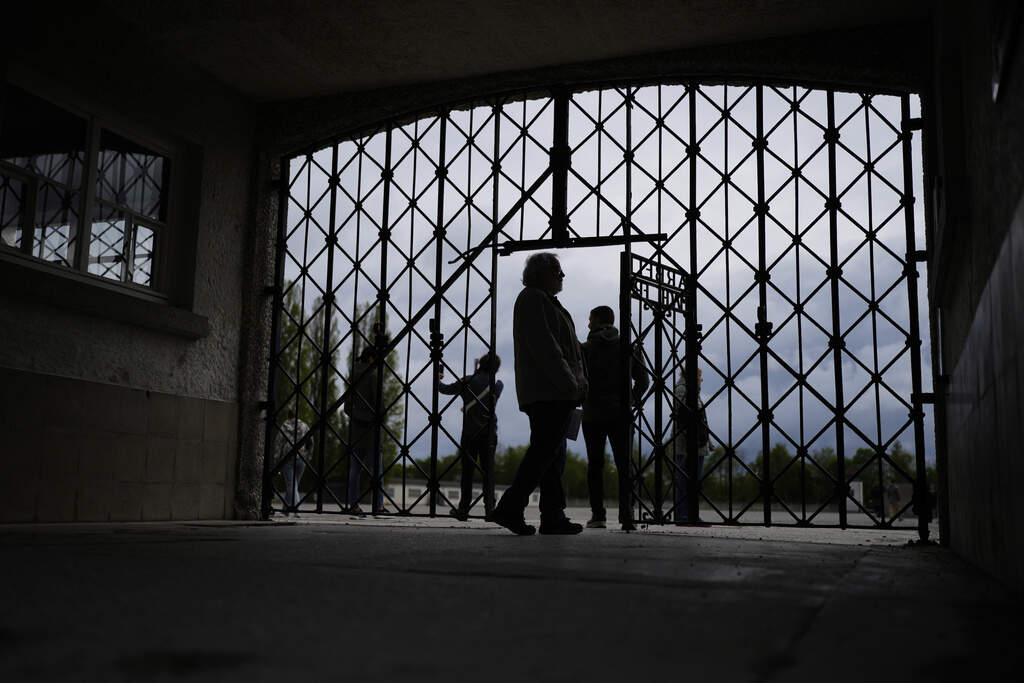
On April 29, 1945, when U.S. Army officer Felix Sparks and his men approached Dachau concentration camp, a sweet odor reminiscent of the Chicago stockyards nauseated them. After encountering the grizzly spectacle of human carcasses piled high, they crept through gardens where roses bloomed outside abandoned SS officers' homes.
Shots were fired. Silence. Then a spine-chilling roar — tens of thousands of prisoners yelling, “Long live America!”
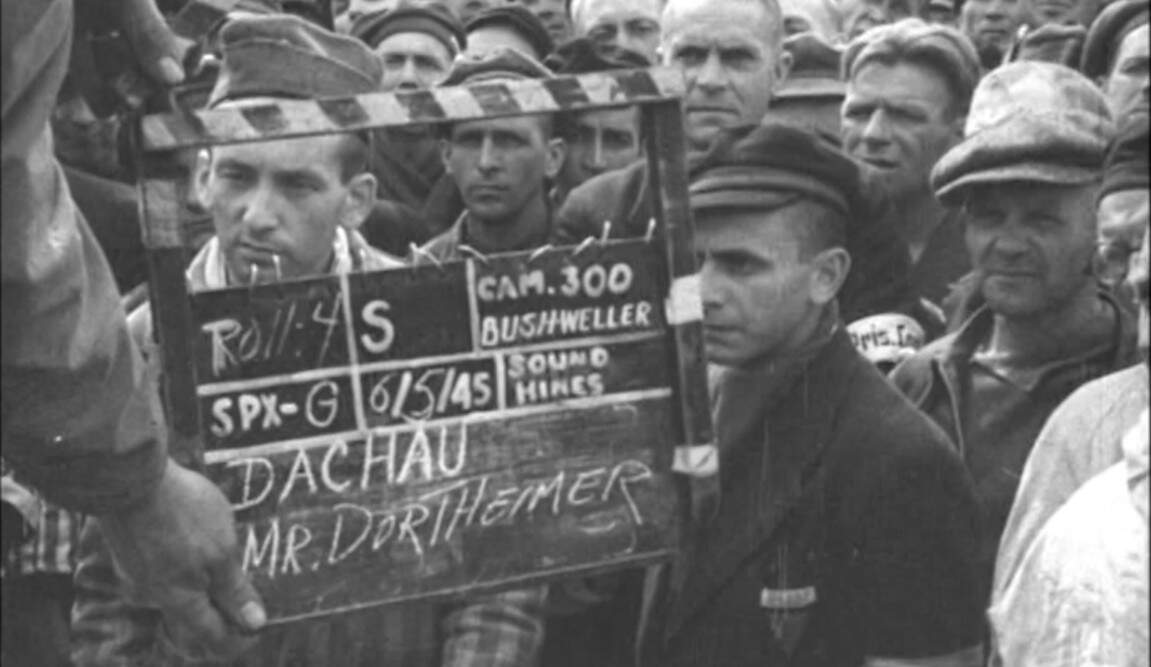
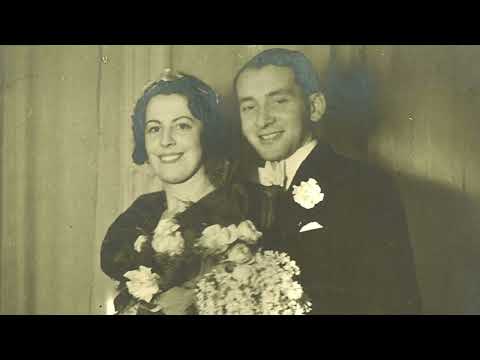
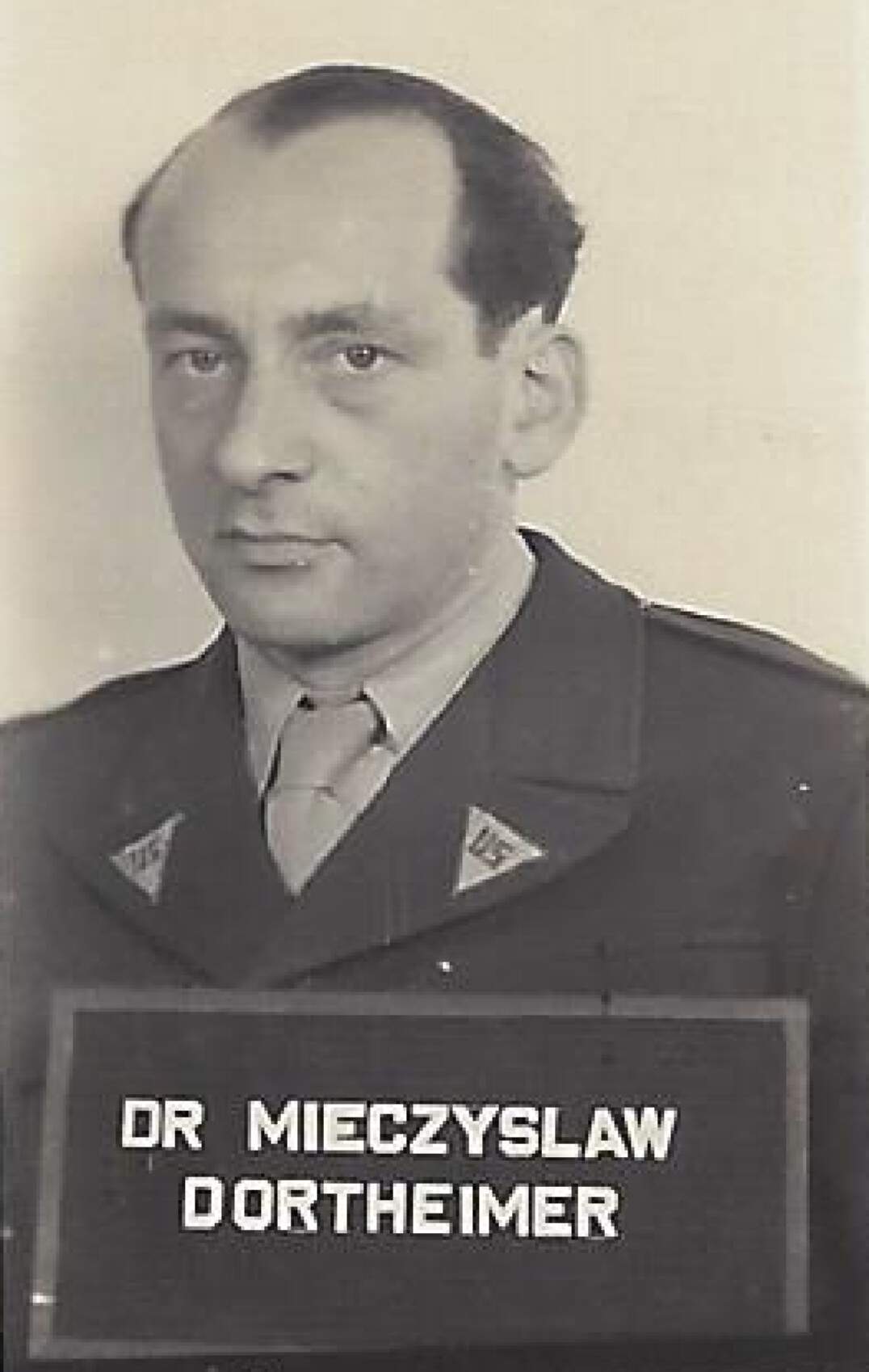
Weeks earlier, my 34-year-old Jewish grandfather, Mietek Dortheimer, had contracted typhus. He knew the Americans were advancing, and hoped he might survive. “If we hadn’t that hope, we would kill ourselves,” he told Hollywood filmmakers days after the camp was liberated.
I am a Holocaust educator who shares my family’s story in schools. I believe we must rekindle pride in America’s role in defeating Nazism, but also in rebuilding Western Europe and forging a global order rooted in democracy, economic cooperation and human rights. As America steps back from Europe and the world, it’s vital we commemorate the ideals America once championed, or risk squandering 80 years of peace.
It starts with knowing the basic facts.
Soviet forces liberated Auschwitz. The British liberated Bergen-Belsen. But April 29,1945 is known as “The Day of The Americans” according to Alex Kershaw, a journalist, author and historian for the Friends Of The National World War II Memorial. In April and May of that year, 36 U.S. Army divisions liberated camps including Mauthausen and Buchenwald. Yet when Kershaw visits high schools today, students often cannot name a single chapter in U.S. history that makes them proud to be American. He told me in an interview: “It amazes me every young American doesn’t know ending the Holocaust and liberating Western Europe is the greatest thing any country in modern history has achieved.”
He is not wrong. Eighty years after U.S. forces liberated my grandfather, only 17% of young Americans (aged 18 to 39) had heard of the Holocaust, knew 6 million Jews were killed, and could name a concentration camp, constituting what the Conference on Jewish Material Claims Against Germany called a "basic knowledge of the genocide."
I talk with hundreds of U.S. middle and high school students every year. Young people who engage with testimonies of the Greatest Generation, those who fought, sacrificed their lives and pursued justice through trials by the U.S. Army, including The Nuremberg Trials, are inspired by that generation’s courage and moral clarity. Those series of trials marked the first time individuals—not states—were prosecuted for war crimes. Standards and procedures established then are still in place today.
My grandfather believed America and Britain would dispense justice for murdered friends and family. He was a lawyer in Poland before the war -- fluent in five languages — and at night in the camps, he’d urged prisoners to recite SS officer’s names and their insidious crimes. When the U.S. military established the Dachau Trials, they hired him as administrative director of the war crimes branch to help prosecute high ranking Nazis.
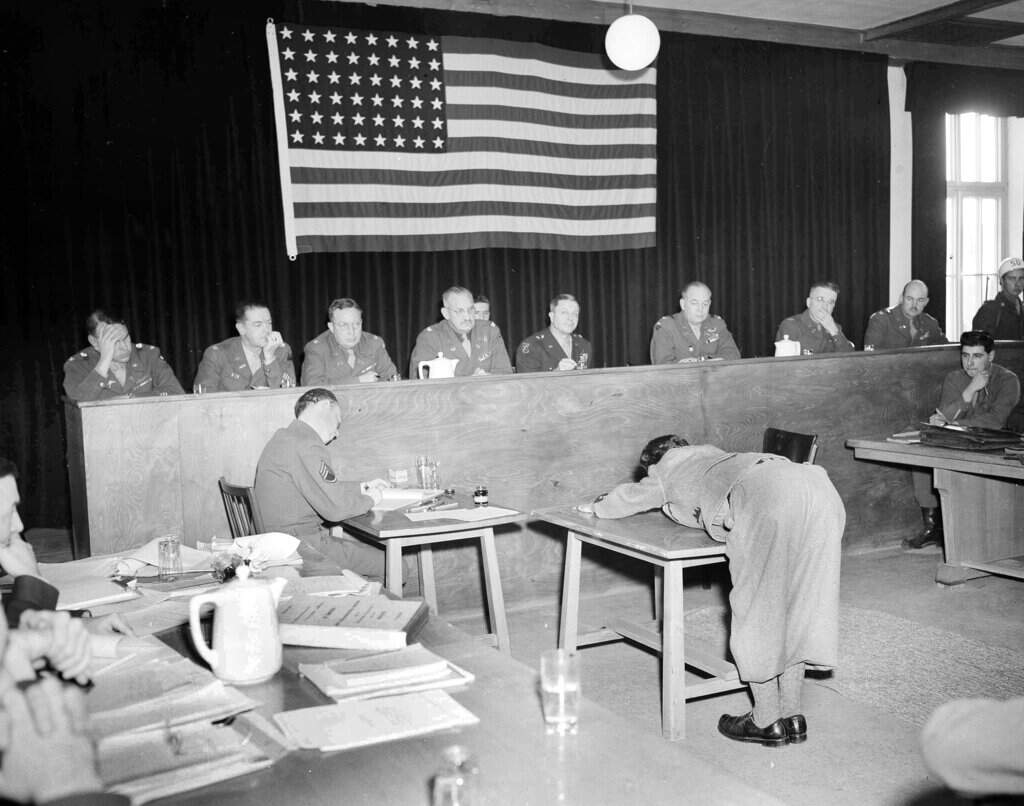
First-hand accounts of the trials connect us to American values, but also to complex behaviors America prosecuted. In an interview the U.S. military’s Chief Prosecutor William Denson explained that one of the biggest problems was securing testimony that could be believed: the atrocities depicted were so monstrous, it was difficult to believe — even for him — they could be committed by human beings. My grandfather told a journalist about a sadistic guard the prisoners named, “Bonecrusher,” who at dusk, after his dastardly deeds, strolled the compound with his wife singing lullabies to a baby in his arms.
According to a recent poll by Gallup, the level of anger in the world — and in the U.S. — is at an all-time high. Exposure to Holocaust education, and particularly first-person testimony, helps cultivate empathetic students who are 20-28% more likely to challenge intolerant behavior and stand up to stereotyping. When presented with a bullying scenario, students with Holocaust education are also more likely to offer help, and 50% less likely to do nothing.
To rekindle pride in American values, we should not only expand mandatory Holocaust education beyond the current 29 states, but spotlight America’s role in post-liberation rebuilding of Europe. Elevating first-person narratives using immersive technologies, including virtual reality, can help form emotional connections with historical events and moral choices. USC Shoah Foundation’s Dimensions in Testimony Project, for example, combines advanced technologies with thousands of hours of pre-recorded interviews so students and visitors can have virtual conversations not only with Holocaust survivors, but with American heroes like Alan Moskin who helped liberate Gunskirchen Concentration Camp, and Benjamin Ferencz, a Nuremberg Trials prosecutor.
Engaging with individuals who helped defeat Nazism and advocated for human rights can inspire us to preserve those values.
When America disbanded the War Crimes Group at Dachau, my grandfather swore he’d put the horrors he’d witnessed behind him. Like many refugees starting over after losing everything (whose advanced-degrees don’t match their destination’s requirements) at first my grandfather worked on a chicken-farm. Later, he started his own business, hired other refugees and eventually became a success. I know he would have wanted us to be proud of the American soldiers who freed Western Europe, and demand that our leaders uphold values that made America great.
Follow Cog on Facebook and Instagram. And sign up for our newsletter, sent on Sundays. We share stories that remind you we're all part of something bigger.