Support WBUR
Essay
How Medicaid cuts will hurt every hospital — including yours
Older hospitals feel like rabbit warrens, with corridors and buildings seemingly connected at random. Our nation’s medical billing system is much the same. Over the decades, our insurance-based system has grown patched together through compromises among private insurance companies, government programs and hospitals. While the individual parts of this system might have made sense at one point, our billing and health insurance plans are often completely disjointed and confusing.
We can all understand, though, that hospitals need to be solvent to stay open. The impending Medicaid cuts will make this problematic. The tax provisions in the One Big Beautiful Bill Act (OBBBA) mean spending cuts, including deep cuts to Medicaid. These cuts have often been framed in the context of limiting governmental waste and overspending, but regardless of ideology, the effects ripple, worsening access for all of us. (Well, not all of us. Those at the very top are often unaffected because their massive net worth allows them to afford concierge doctors who provide personalized, premium service.)
As research partners, we study the economics of surgery. Recently, we looked at our own hospital’s billing and collections data for a common orthopedic trauma surgery to determine the cost to a hospital for performing it, and whether reimbursements adequately cover the expense. You might think that’s an easy question. It isn’t.
Imagine falling off a ladder and breaking your leg. You’re evaluated in the ER and sent for surgery. If the swelling is severe, we apply an external fixator, a metal frame that stabilizes the leg. The frame costs the hospital about $4,000. After surgery, you’ll stay in the hospital about two and a half days, receiving meals, medications, nursing care and therapy before going home.
This single accident produces two sets of bills: hospital expenses (the external fixator, medication, nursing) and professional services (ER doctor, orthopedic surgeon, anesthesiologist). How much your insurance company will pay is predetermined and based on diagnosis codes, with rates negotiated between insurers and providers.
Here’s where Medicaid cuts become problematic. In our data, the biggest single expense for the hospital is always the same: the external fixator that we put on broken legs. This is a fixed cost for the hospital, regardless of how much any insurer pays. Direct costs like this come off the top, and the hospital uses whatever is left to pay for all the other expenses. So, what is the hospital’s reimbursement for everything else related to your hospital visit? It depends.
While the individual parts of this system might have made sense at one point, our billing and health insurance plans are often completely disjointed and confusing. We can all understand, though, that hospitals need to be solvent to stay open.
Commercial insurance, available with a good employer-based plan, paid our hospital about $20,000 for this procedure. The total cost in our data was roughly $16,500. So, after covering expenses for the frame, medications and staff, the hospital made a modest profit of around $3,000.
If the patient was over 65 and had Medicare (not to be confused with Medicaid), the hospital was paid about 30% less (about $14,000). The hospital can still cover its expenses, but only by offsetting costs with profits from commercial insurance.
By contrast, our Medicaid reimbursements averaged roughly $8,400, a nearly 60% decrease from our commercial payments. This amounts to half of the actual cost of care, leaving the hospital with a $10,000 loss per Medicaid patient. And in some cases, the reimbursement was less than the price of the external fixator, creating an even bigger loss.
Different hospitals accept different insurance plans. In general, commercial insurances pay the most, Medicare pays less, and Medicaid pays the lowest rates. The proportion of commercial, Medicare and Medicaid patients that any hospital sees is referred to as their payor mix, and this is a crucial concept to understanding how hospitals can stay in business. A healthy payor mix supports operations. But even before the OBBBA, nearly half of rural hospitals already operated in the red, largely because 1 in 4 rural Americans relies on Medicaid.
But this isn’t just a rural issue. Urban hospitals also care for large Medicaid populations, often at a loss, balancing the books with revenue from commercial insurers. So how do hospitals improve their payor mix and make higher margins? Many hospitals protect their payor mix by refusing to care for patients with lower-reimbursing insurance. You may have heard of someone being turned away because a hospital “doesn’t take their insurance”. That is payor mix in action.
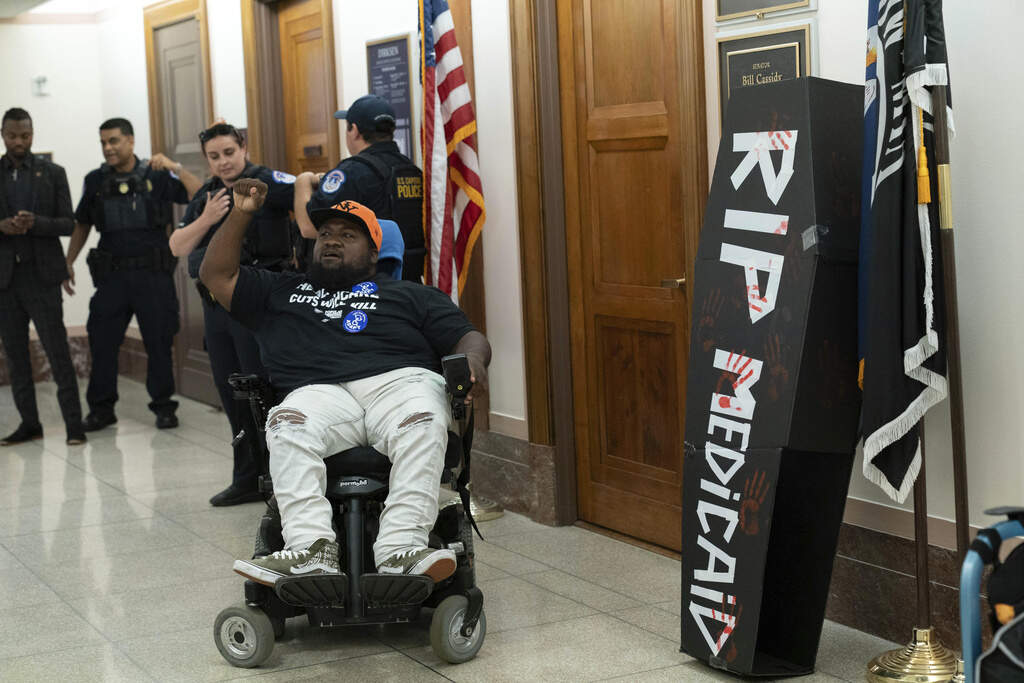
When steep Medicaid cuts are enacted, hospitals that accept a wide range of managed Medicaid insurance plans will face two options: seek higher reimbursement elsewhere in their book of business, or close. If they close, history has shown us that patients flood into already burdened hospitals, which then raises rates for commercial insurers, the so-called ‘good plans’. Insurers don’t absorb those increases; they pass them to employers and employees. Eventually, all of us pay more.
Politicians are not entirely tone deaf to voters, many of whom are justifiably angry when their hospital closes, forcing them to drive hours — and take more time off work — for care. As a patch for these deep Medicaid cuts, the Senate has proposed a $50 billion rural hospital fund. According to the KFF, that would cover about one-third of the projected Medicaid cuts in rural areas. But for hospitals already operating in the red, the magnitude of Medicaid cuts could still be fatal. Hospitals can trim expenses, but the hardest-hit hospitals will close.
Uninsured rates dropped by nearly half -- and 38 million more Americans had health insurance — after the major coverage provisions of the Affordable Care Act (ACA) were implemented. “Obamacare” may be a charged term, but by mandating that private insurers cover certain health care expenses, creating the Health Insurance Marketplace and, of course, expanding Medicaid, the ACA ensured that more lower-income working people had some insurance, and more hospitals could stay open with a less-than-ideal payor mix. Now we are slashing those funds, even though they helped keep hospitals solvent and families healthier.
Patients don’t see margins or payor mixes. They just know when health care for their broken leg is harder to access, when appointments are months away and when they’re left wondering if their insurance will be accepted, or if their local hospital even exists anymore.
Tax cuts in the OBBBA are being offset by deep cuts to Medicaid. This is not hyperbole: we will all pay for these tax cuts.