Support WBUR
Essay
‘Les Misérables’ is 40 this year — and I’ve never loved it more

I have seen the musical "Les Misérables" 14 times. Since I was a teenager, I’ve jumped at any opportunity to watch Jean Valjean break parole, Fantine dream a dream and Javert swear by the stars. So when I drove past a yard sign for the show this past summer, my knee-jerk response was, “Where??”
“Where” was Regis College, where the Weston Drama Workshop was staging "Les Misérables: School Edition." I got my ticket immediately. The national tour wouldn’t be in Boston again for another year; at the very least, a high school production would help tide me over.
On the big day, I settled into my seat and flipped through the playbill with the familiarity of a true professional. A few performances over the years had contained surprises — like the fire alarm that went off during the opening chain gang number, or the Valjean who accidentally hurled a loaf of bread into the pit — but for the most part, when I came to see "Les Mis," I sought sameness: same characters, same songs, same welling up of emotion for “Bring Him Home.” This time, though, the playbill held the surprise: a former student of mine was in the show. I hoped I would recognize him; I hadn’t seen him since he was 13.
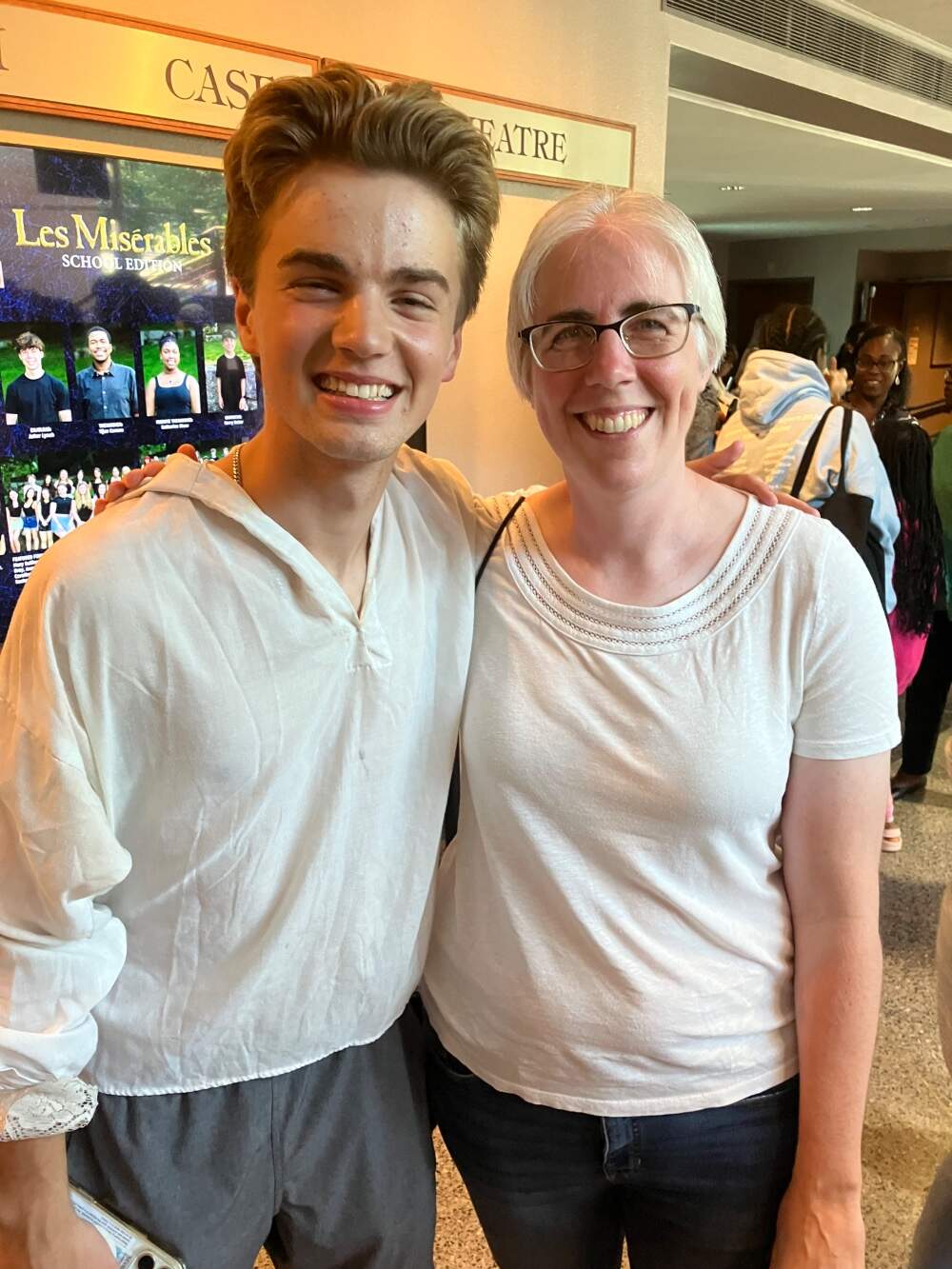
I didn’t have to wait long: Within minutes, he appeared as the bishop who sparks Valjean’s personal and spiritual transformation. “I have bought your soul for God,” he sang, and hit the low note like it was nothing. I recognized him, all right—and I understood that I had grossly underestimated what I was about to see.
How are they doing this? I wondered as the young man playing Inspector Javert sang “Stars” with just the right balance of intensity and restraint. Cosette and Marius’s romance felt more impetuous and urgent than ever before; Eponine’s unrequited love more acutely devastating; the revolutionaries’ fervor more believably misguided. These kids — kids! — singing and acting their hearts out on summer vacation — they could give Broadway professionals a run for their money.
My former student’s main role was Grantaire, the endearingly drunk revolutionary sidekick. Tall and lanky, he played the part with natural grace and ease. If I hadn’t known better, I would have believed he was such a man who, amid serious discussion about “the blood of angry men,” would lean back and motion to a friend to toss him the bottle. As he sang with the others about “a world about to dawn,” it hit me with keener clarity than before: He dies in the second act. They all do.
Like most veteran teachers, I have outlived students in my career. Car accident, suicide, illness — these and more have claimed the lives of young people my colleagues and I have taught. Now, as these kids stood ready at the barricades, themselves barely the ages of the student revolutionaries in Victor Hugo’s original novel, they brought to light the theme I had often chosen to overlook: Young people die, needlessly, before their time.
My student fell, with the others, in the final battle scene.
During “Empty Chairs and Empty Tables,” as my student looked on silently with the other ghosts, tears ran down my face. I thought of the empty chairs of my own students who have died, the empty chairs of children whose deaths have drawn national attention, and the empty chairs of those grieved only by the small community of those who loved them. I had never cried for this song before.
As a middle school teacher, I have my students for such a short time — only a year before it becomes my task to let them go. Sometimes they keep in touch; usually they don’t. It is a matter of faith, and sometimes blind hope, to believe that they are headed toward a future that will be kind to them; that they will reach adulthood, unencumbered; that they will find joy. Having taught for over a decade has given me the unique honor of being a part of hundreds of students’ lives — and the pain of realizing that not all of those lives will be as long as I would wish.
When the curtain calls were over, I staggered, speechless, into the lobby. On this unremarkable weekday matinee, only a few friends and family had gathered by the stage doors to greet the cast. My student emerged, tired and sweaty; I wondered if he would even remember me.
"To love another person is to see the face of God." That’s one of the final lines of the show. I know this line by heart, just like I know most of the others — but when my student exclaimed, “Ms. Wilfrid!” and opened his arms for a hug, this 14th performance of "Les Misérables" became the one that, unexpectedly, made it real.