Support WBUR
Opinion
The bad news? I had breast cancer. The good news? Doctors knew what to do

This October marks the first Breast Cancer Awareness Month when I am counting myself as a survivor. Though I have to admit, calling myself a survivor still doesn’t feel right to me. Not because I can’t believe I’m actually cancer-free, but because surviving something sounds like it should be arduous and my experience with breast cancer was more uncomfortable and inconvenient than arduous.
I first learned of my diagnosis when the biopsy results were uploaded to my online medical records. I wasn’t shocked; I’ve lived enough life to ask, “Why not me?” as opposed to “Why me?” What did take me by surprise was the amount of information the results contained.
From a single outpatient biopsy, my doctors already knew the exact kind of cancer I had, its location, estimated size, growth rate and whether it would be responsive to hormone treatment. A few Google searches later, and before even speaking with a doctor, I knew this was a treatable, non-life-threatening cancer. When I was finally sitting across from a breast surgeon, I told her how incredible I thought it was that she was able to start each case with so much information.
“Millions of women have marched and advocated for breast cancer to be one of the most well-researched diseases in the world,” she said in response.
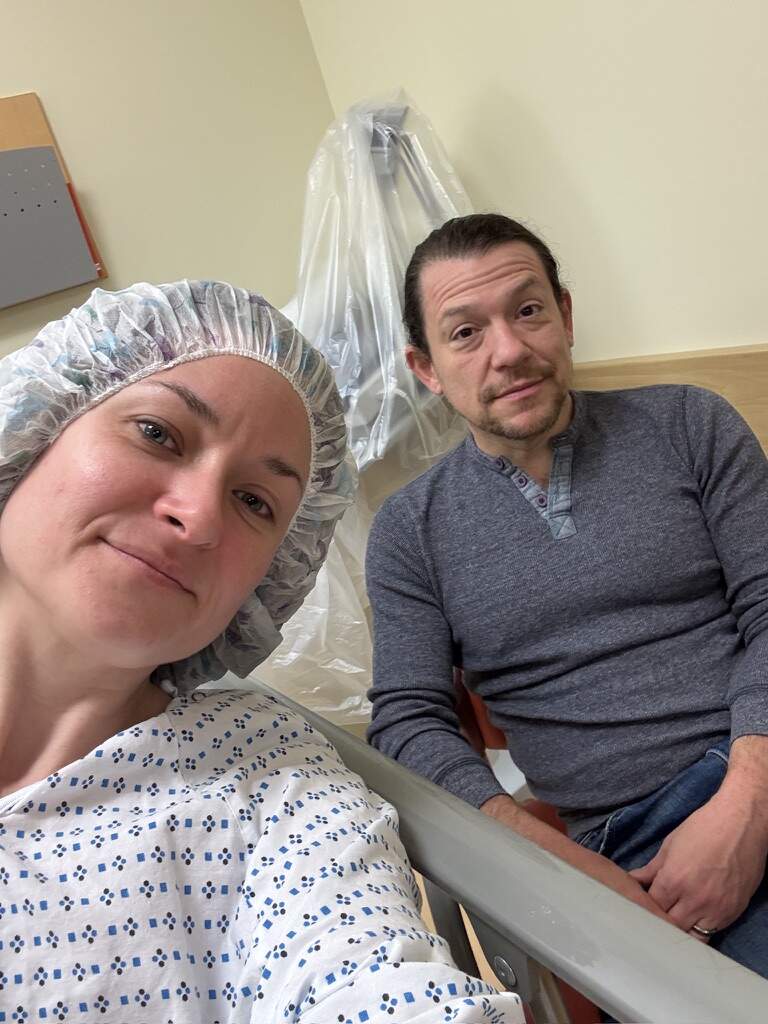
Yes! Of course! This was the result of research — lots and lots of research. And because of that investment, the little bit of cancer in my boob (as I had started referring to my 23mm-long mass), was caught before it spread anywhere else in my body. Because of that research, this doctor knew exactly how to treat it. Because of that research, as well as the prevention guidelines that stem from it, my life would be saved. Of all the times to get breast cancer, 2025 wasn’t so bad.
This kind of medical luck evaded my daughter.
Adelaide experienced her first seizure when she was 7 months old and was diagnosed with epilepsy shortly after that. We would spend the next three years of her life in and out of eleven different hospitals, trying every medication, medical implant and therapeutic diet, that we could access to stop the daily seizures damaging her brain and organs. She was followed by seven different medical specialists from epileptology to gastro and everything in between, and she was seen by occupational, physical, speech, bio feedback and music therapists. Nothing about her treatment was straightforward, and the test results were often inconclusive. In up to 50% of cases, including Adelaide's, the cause of epilepsy is unknown. In 25% to 30% of cases, including Adelaide's, the seizures continue despite treatment. All too often, it felt like Adelaide’s medical team was throwing darts at a treatment board. They missed every time. None of our doctor’s visits were as reassuring as my first visit to the breast surgeon.
I couldn’t help but wonder how my daughter’s diagnostic and treatment journey would have been different if epilepsy had received the same financial investment and been researched with the same ferocity that breast cancer has. I want to be clear that my point is not to say that less money should be spent on this disease or that more should be spent on another, but to illustrate the real impact that research dollars can make on progress — and on people’s lives.
For perspective: The combined breast cancer research budgets at the NIH and Congressionally Directed Medical Research Programs or CDMRP from 2013 to 2022 were $8.36 billion. The Breast Cancer Research Foundation, the largest non-governmental funder of breast cancer research in the U.S., has invested over $1 billion since its founding in 1993. The impact of this research is in the numbers. In October 2024, The American Cancer Society announced that breast cancer mortality rates had dropped by 44% since 1989, averting almost 520,000 deaths.
This is not to say that breast cancer is always curable. I lost a dear friend to breast cancer when she was only 37 years old — this disease kills. In fact, it is estimated that nearly 43,000 people will lose their lives to breast cancer in 2025 alone. The case is not closed, there is still work to be done, but oh my goodness look at how much good came from money spent on research.
And what about epilepsy? What about this tragically underfunded condition that ultimately led to my daughter’s death just days shy of her fourth birthday? An estimated 3 million U.S. adults (that’s about 1% of the adult population) and around 500,000 children live with epilepsy.
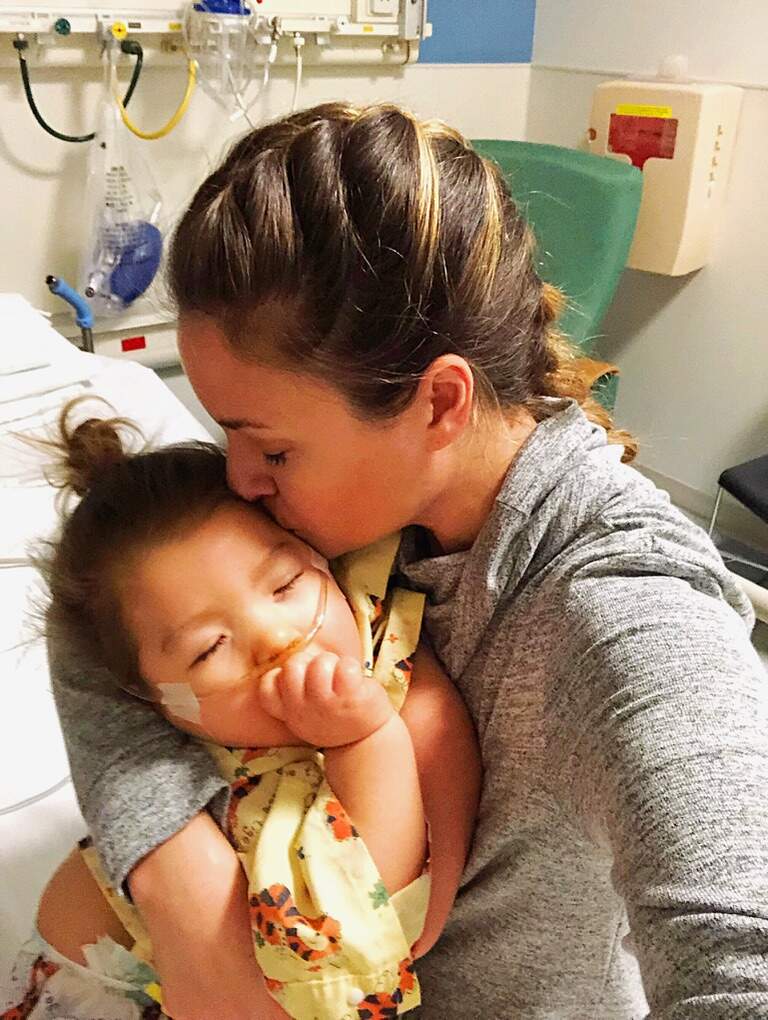
The largest non-governmental funder of epilepsy research in the world is CURE Epilepsy (where I am a board member). Since their inception in 1998, they have raised just over $100 million.
Epilepsy affects more people than multiple sclerosis, muscular dystrophy, Parkinson’s disease and ALS combined. Yet epilepsy receives less federal funding per person than each of these brain disorders. The 2024 epilepsy research budgets for the following government agencies were as follows: National Institutes of Health (NIH): $242 million, Department of Defense (DOD): $12 million, the Centers for Disease Control (CDC): approximately $11.6 million. In total? About $265.6 million.
Unfortunately, in 2025, as part of larger workforce reductions, nearly the entire staff of the CDC Epilepsy Program was dismissed. Other HHS agencies that work on epilepsy-related research, including the National Institute of Neurological Disorders and Stroke (NINDS) and the Food and Drug Administration (FDA), were also affected. And that’s to say nothing of dramatic cuts to NIH budget, which will jeopardize decades of biomedical research.
A study out of Dr. Avtar Roopra’s lab at the University of Wisconsin-Madison led by Dr. Olivia Hoffman, for instance, discovered that an arthritis drug cured acquired epilepsy in mice. Not just treated, but actually cured them. But now their research is on hold and they can’t progress to human trials without funding from the NIH.
Of course, that’s to say nothing of other medical advancements like cancer vaccines and new treatments for drug-resistant tuberculosis that are also at risk. Or the brain drain many experts have predicted.
At a time when research budgets are being slashed, and funds already appropriated by Congress are being delayed or withdrawn, I can’t help but wonder how many more people will suffer with and die from diseases and conditions that just needed a bit more attention.
If a pivotal role of our government is to help improve its citizens' lives, cutting medical research makes no sense. In 2025, it should not be the exception to have an experience like the one I had with breast cancer — an experience where science-backed treatments made all the difference. The only thing between us and that reality is research dollars.
Kelly Cervantes' memoir, "The Luckiest." comes out on November 4.