Support WBUR
Essay
Someone you know relies on SNAP. They just don't talk about it
When my social media feed filled with story after story about President Trump’s refusal to fund food stamps in the midst of the government shutdown, my body began to vibrate with anxiety. As my daughters carved Halloween pumpkins at the long table in our tiny house, I hid in the kitchen, hunched over a spare stretch of counter, taking deep breaths and wiping away tears as they landed on the stained Formica.
Trump’s refusal to fund benefits sends me back, in the most visceral manner, to the period when I, too, relied on public food assistance to feed my children. It’s been more than a decade now, but I still shake — physically shake — when I think back on those years; years in which I spent my days in a maelstrom of panic, a pervasive state of terror, wondering how and when I would be able to cobble together enough money to feed my kids and stay in our apartment.
And the shame. The terrible, terrible shame. Until this moment, only three other people in the world knew that I relied on federal food assistance.
All day, every day, I presented myself to the world as a thriving middle class mother, toting my healthy, neatly dressed children around Manhattan. Two years earlier, I had published a novel, which hit some best-seller lists, won awards and garnered a respectable advance. But that advance had vanished into paying off debt, repairing my crumbling apartment, preschool tuition and co-op maintenance fees and trips across the country to see my father in his final months of life. And just the general stuff of life, like food.
It was nightmarish, keeping both the terrible secret of our poverty — which I felt no one would understand, in the face of my public literary success — and the hot shame of going on public assistance.
My personal financial crisis coincided with the Global Financial Crisis. I lost my editorial job at a magazine — while five months pregnant with my second child — and my then-husband lost his once-robust freelance work. The media world, which had supported us in different ways for many years, collapsed.
We went through our savings, then liquidated our retirement accounts, then canceled our health insurance and gave up the minimal amount of child care we still had. I was supposed to be working on a new book, and essays and reviews for magazines, but money was all I could think about. How many months of maintenance fees I could miss before the building management started eviction procedures. What’s that old chestnut? When you’re rich, you never think about money. When you’re poor, it’s all you think about.
But none of this matters, really. The circumstances that led to our destitution are superfluous. That is what I learned, most of all, from those terrible years. Anyone, in the blink of any eye, can slip into financial ruin.
That is what I learned, most of all, from those terrible years. Anyone, in the blink of any eye, can slip into financial ruin.
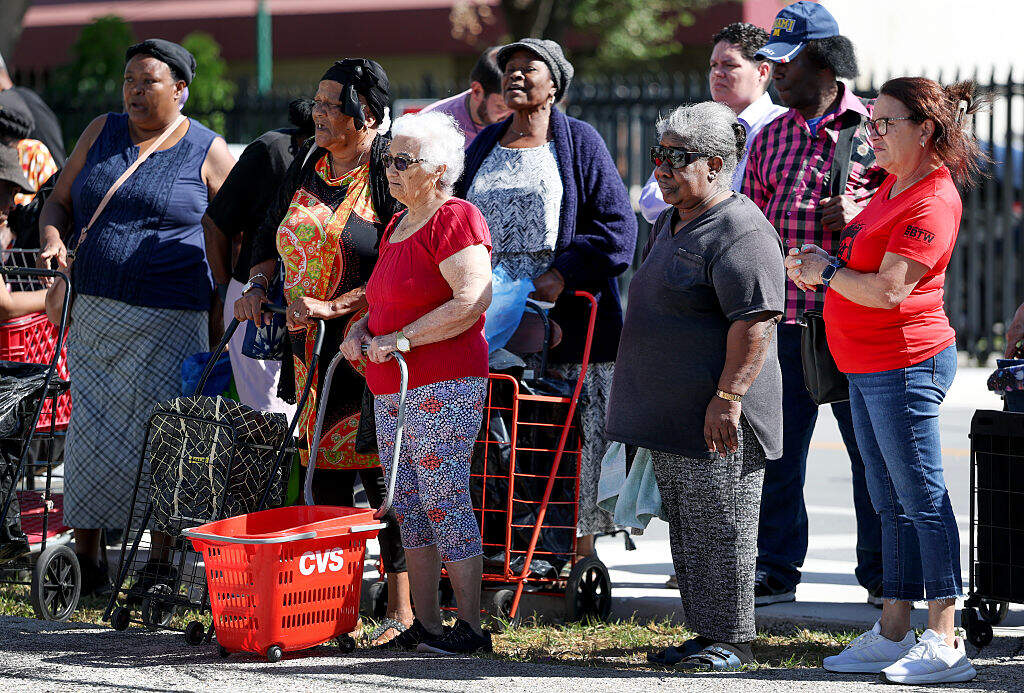
In America today, 42 million souls rely on SNAP benefits — some 1 in 8 U.S. residents get an average of $187 per person, per month. That includes some 89,000 households in Boston, 10,000 in Cambridge. Poverty has a thousand faces. Your neighbor, in the beautiful house, with its renovated kitchen and flowering trees, her face immaculately made up and her pants pressed, could be surviving on SNAP. The medical resident who bandages your burn at the ER. Your barber, mailman, Amazon delivery person, or, of course, your old friend, working furiously to keep up appearances.
I suppose that’s why I’m breaking my silence about this, pushing my shame and embarrassment to the side. It’s not because I fear the general public doesn’t understand the importance of food assistance programs — the massive, heartwarming surge of support from businesses and individuals shows how plainly it does — but because I fear that those who’ve never experienced extreme financial instability don’t understand what it feels like to rely on it.
If they did, they might see that while well-intentioned — and, of course, deeply necessary — actions, like rallying the PTA to stock local food banks or offering to buy groceries for a neighbor can help, technically, feed the hungry, they fail to provide a key benefit: The ability for those on food assistance to pretend that everything is OK. That all is fine, that they are no different than the person behind them in line at the Stop & Shop, whipping out his Bank of America card.
But I can tell you: pretending is what allows people — allowed me — to envision a moment when, financially, they will be no different, when they will be free of the crushing anxiety that accompanies poverty.
Pretending is what allows you to live, if only for an hour or two a day, without fear that you have ruined your life beyond repair, that you have failed: failed yourself and your children, failed your country by relying on it for mere survival. Pretending, too, allows you to live — if only for an hour or two a day — without worrying what the world thinks of you, for not being able to feed your family, for breaking the distinctly American code of self-reliance. Pretending can help you see food assistance not as a signifier of weakness, but one of hope: A tool to help you climb your way to solvency.
But there’s one anxiety food benefits can’t alleviate, not even a little: The constant, pervasive fear, that this support might, at any second — due to a bureaucratic blip or misfiled paperwork or plain old cruelty — be taken away.