Support WBUR
Essay
I came to the U.S. on a Freedom Flight. Other Cubans haven't been so lucky
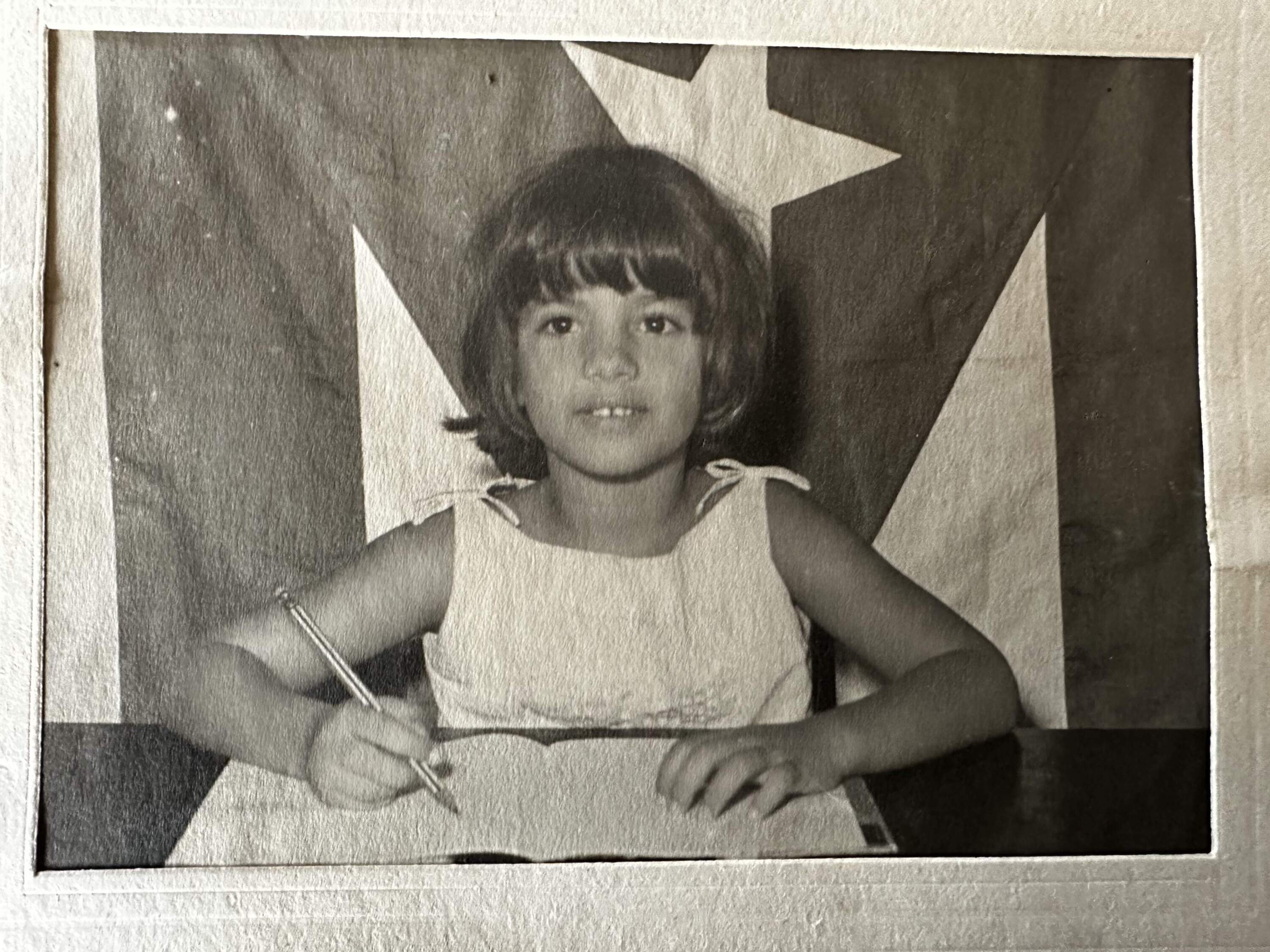
I peered through the tiny window and bounced in my seat, a cluelessly excited 5-year-old about to take off on her first flight. My grandmother sat next to me, one hand trying to keep me still, the other wiping her eyes. My parents and baby brother were nearby, packed in with the rest of the gusanos. Worms. That’s what the new revolutionary government called people like us who were fleeing Cuba on one of the Freedom Flights, a U.S.-run refugee airlift that began 60 years ago, in 1965, and ended in 1973.
Our family of factory workers and teachers had supported the revolution at first. My mother had risked her life for the cause, collecting money and medicine for the rebels during the 1950s. But rather than restoring democracy and Cuba’s 1940 democratic constitution as promised, the new government had turned life and society upside down. Thousands of real and perceived anti-revolutionaries had been executed by the late ’60s, when we left.
Gusano families like ours lived in fear. There was no safe way out. Cubans could no longer leave the country freely after the revolution. The new government had joined the handful of countries that require citizens to apply for exit visas if they wanted to leave. Cubans caught trying to escape by sea were imprisoned. Some were shot at the scene by the Cuban Coast Guard or executed while in prison.
But a door had opened. In 1965, President Lyndon B. Johnson created a safer way for Cubans with a U.S. sponsor to leave after negotiating with the Cuban government. Between December 1, 1965, and April 6, 1973, the twice-daily, five-days-a-week Freedom Flights would bring close to 300,000 Cubans to the U.S., becoming the largest refugee airlift in U.S. history.
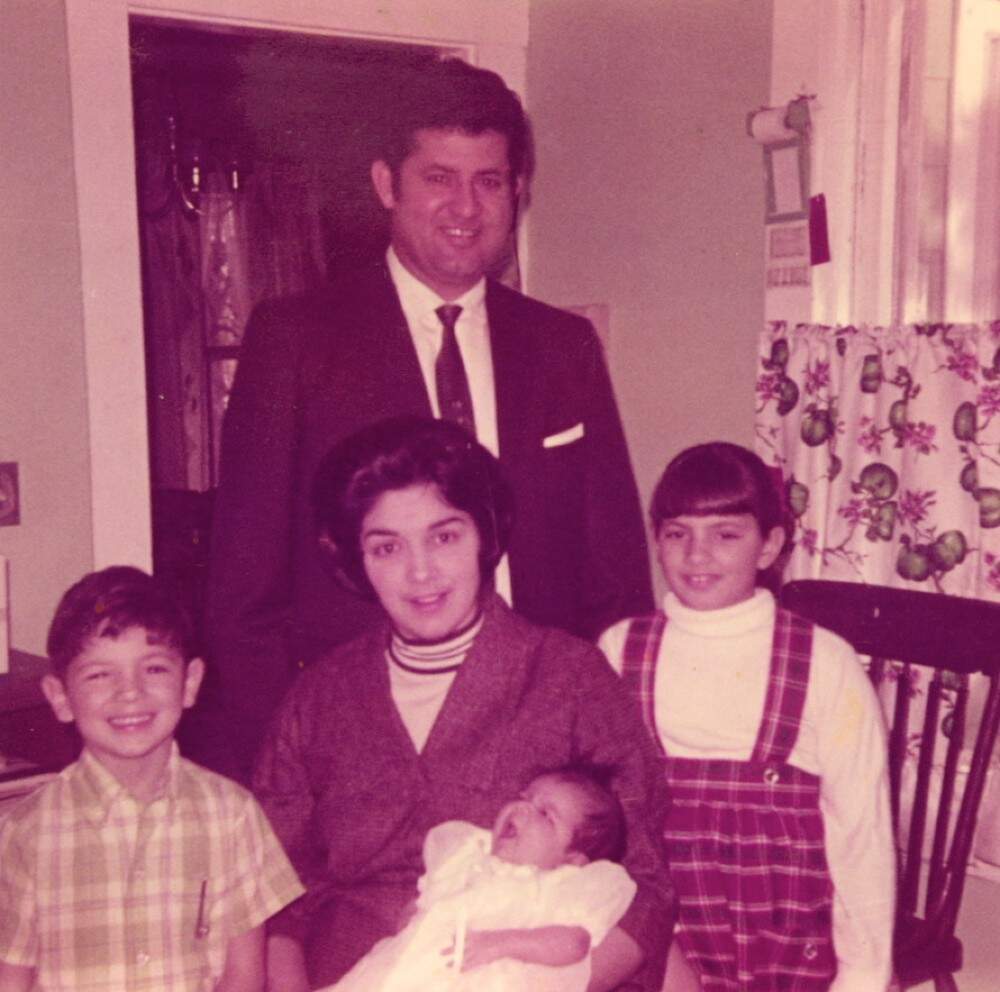
We applied for our exit visas, our permisos, and waited. Three years passed without a word. Then one night, a guard arrived unannounced with the papers that would let us go to the United States for good. We were allowed to take one suitcase with a change of clothes for each of the five of us. The guardia kicked us out of our house and sealed the door with a banner that read, “Property of the Revolution.” (That night stuck in my 5-year-old brain so firmly that used the words on that banner as the name for my memoir, which is about my family’s journey from a Cuban barrio to a New Hampshire mill town, from that banner.) We could leave Cuba, but the little material wealth we had now belonged to the revolution. Nothing of value could be sold or taken by fleeing gusanos.
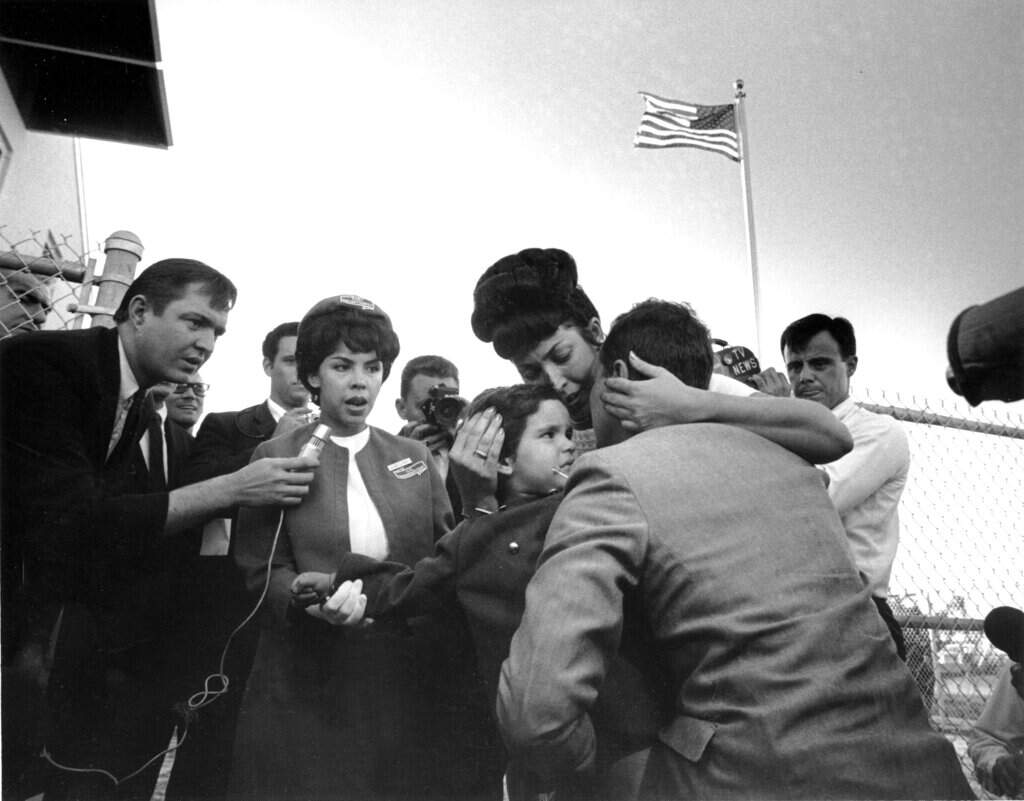
In Miami, my mother went to the pay phone at the refugee processing center to call her brother, who was already living there. She reached inside her pocket and realized she didn’t have a dime. She leaned against the phone and began to cry. But an American gentleman passing by asked if he could help. She pointed at the coin slot. He gave her a dime, smiled and walked away. That first act of American kindness remains central to our immigrant family lore.
----
The concept of sheltering ships and people appears in international law. No port can deny shelter to ships during storms or in distress. And the 149 countries that signed the 1951 Refugee Convention agreed to the same concept of sheltering people in need. The convention’s signatories have an obligation to protect refugees who reach their territory. They do not have to take them all in, but they have to offer help.
The U.S. did not sign the convention until 1967. That’s the year I was on board one of the 3,048 Freedom Flights — a lucky year for refugees.
The difference in how Cubans who are fleeing the island have been treated over the decades — and really how any immigrant or refugee — are treated depends more on U.S. political and economic interests than what’s happening in the country they are fleeing. I learned this as our Cuban friends and relatives followed our path out of Cuba and into the U.S.
Like my parents, grandmother, brother and me, our Uncle Mario was also welcomed into the U.S. a year after we fled, when he escaped on a raft and was rescued by the U.S. Coast Guard. Ships passing through the Florida Straits had grown used to plucking Cubans from the sea after the revolution.
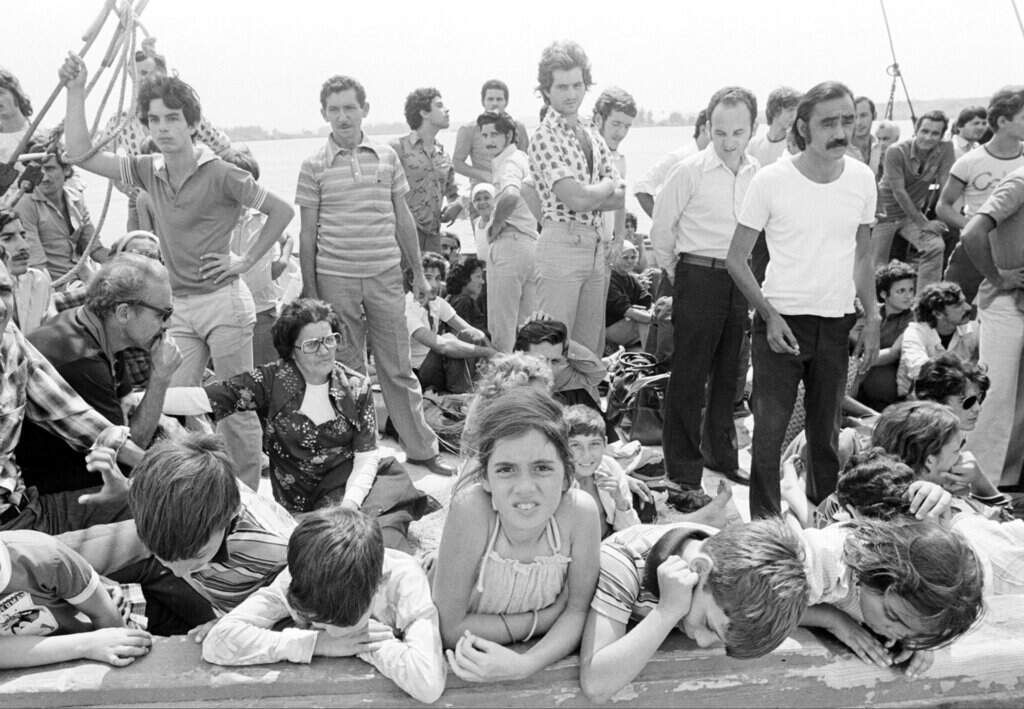
Cousin Sady came during the 1980 Mariel Boatlift, along with 120,000 other Cubans who took advantage of Castro’s announcement that — for a short time — he wouldn’t stop anyone who wanted to leave. But the so-called Marielitos weren’t well received in Miami. Too many arrived too fast for U.S. immigration and social services to properly attend to them. Images of dirty refugee camps under freeways and in the Orange Bowl parking lot tarnished the earlier mostly positive perceptions of Cuban refugees.
Unemployment was high at the time. The U.S. was in the midst of a recession. American and Cuban American job seekers in South Florida saw Marielitos as undeserving competitors.
Plus, Castro had pushed out violent criminals and patients from psychiatric hospitals along with the average Cubans. Brawls at the refugee camps — and later on the streets of Miami —added to the stigma of being a Marielito and set the stage for less welcoming policies toward Cubans in the coming years.
By 1994, the last time that Castro dropped the exit visa requirement for people who wanted to flee, Cuban rafters weren’t even brought to U.S. ports anymore. Instead, people like my cousin Antonio were picked up at sea and brought to Guantanamo for processing. Thirty-five thousand Cubans would end up in Guantanamo during what became known as the Balsero Crisis. The number who perished at sea will never be known.
Antonio was 17 and had never been away from home. He waited patiently at first, but grew frustrated and then depressed after about six months in Guantanamo. Tensions had been rising among anxious refugees who’d begun to wonder if they’d ever make it to the US. One day, the U.S. guards lowered the fences and cleared a path through the minefield surrounding the base. Anyone who wanted to go back to Cuban territory was free to do so, they announced. Antonio and a handful of other young refugees did just that. But once he reached home, he was marked for having attempted to flee, for abandoning the revolution. He never had the same opportunities after that.
President Bill Clinton’s answer to the 1994 Balsero Crisis was his wet foot, dry foot policy, which pulled up the welcome mat for Cubans fleeing the dictatorship. The hardship and repression in Cuba had only worsened over the decades, but U.S. interests had changed. Avoiding mass sea migrations was more important than aiding Cubans fleeing repression.
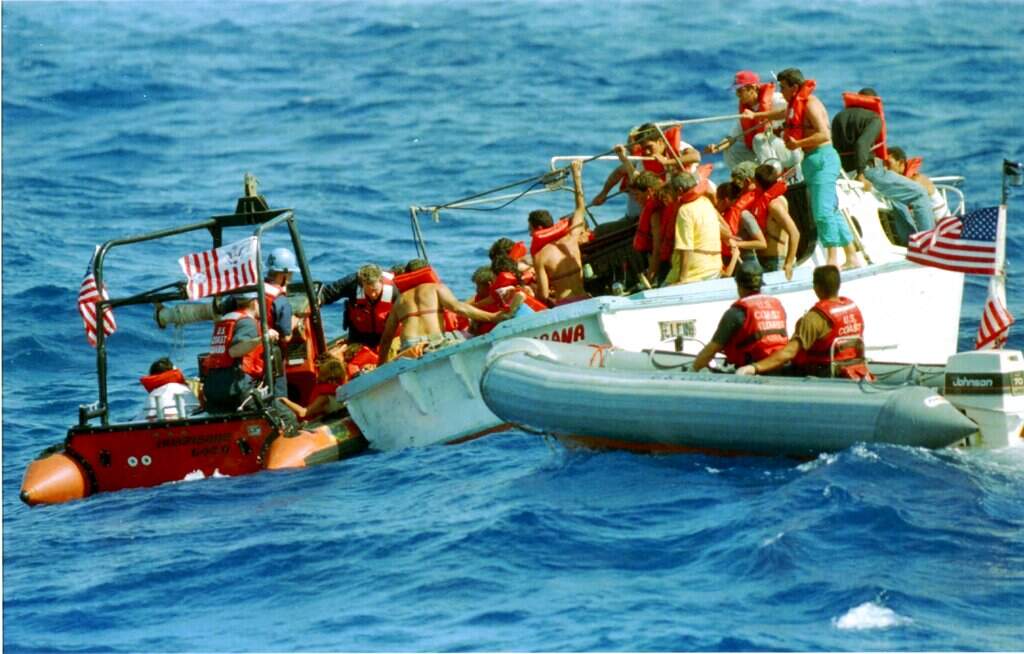
We’re in a starkly different world now. The repression and hardship Cubans endure every day has only worsened after more than six decades under a single-party political system backed by a military dictatorship. But the days of sending planes to rescue people fleeing totalitarian regimes are long over.
The global refugee and migrant crisis has hardened hearts and closed borders around the world. There were too many people, too fast — and they were usually too brown.
The U.S. has followed this global trend for years, but lately with gusto. Today, Freedom Flight Cubans are bracing for the deportations of relatives who arrived here recently and legally. The Trump administration has been detaining and threatening to deport Cubans who entered the U.S. legally through a Biden-era parole program that gave them, Haitians, Venezuelans and Nicaraguans temporary protected status (TPS).
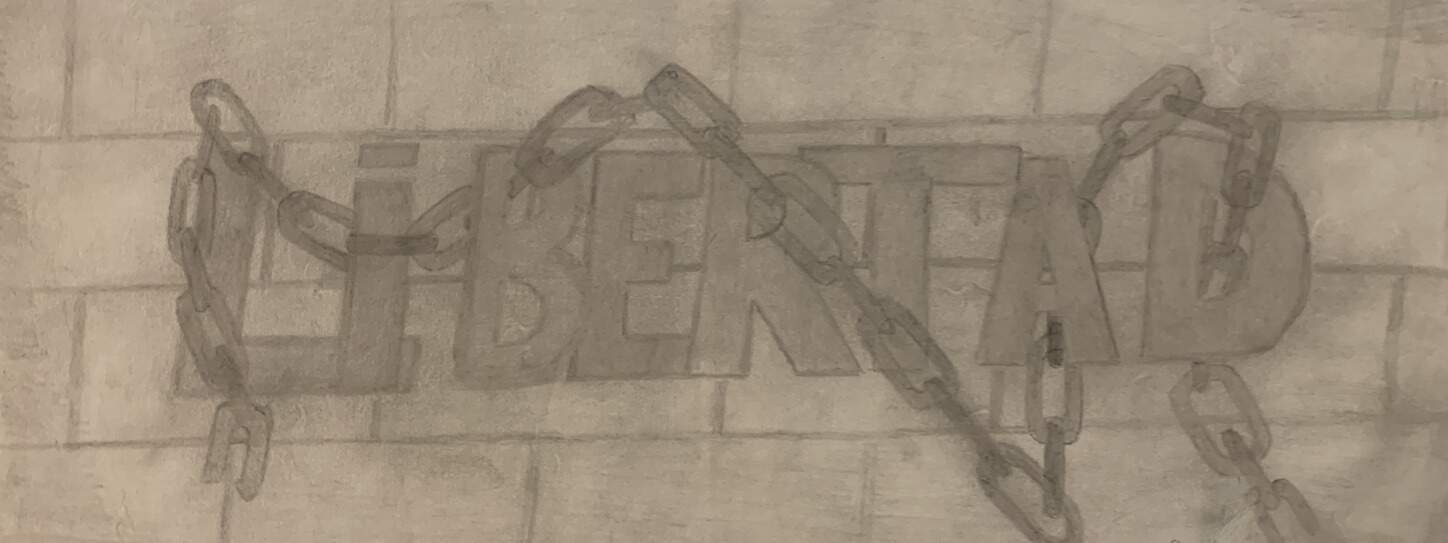
The U.S. has done right by refugees and immigrants before — never perfectly and never consistently. But we must stand by that tradition and defend it, as LBJ did when he signed the Immigration Act of 1965 and said: “So it is in that spirit that I declare this afternoon to the people of Cuba that those who seek refuge here in America will find it. The dedication of America to our traditions as an asylum for the oppressed is going to be upheld.”
As the grateful beneficiary of those traditions, and one who struggles daily with refugee guilt, I wish those seeking the freedom we found safe harbor and the protection of this mighty country. The tide will change again. Until then, buena suerte, hermanos y hermanas.