Support WBUR
Cog's Weekly Newsletter
Birds never had a chance
Editor's Note: This essay appeared in Cog's newsletter, sent every Sunday. We share stories that remind you we're all part of something bigger. Sign up here.
Thanks to Alfred Hitchcock, birds never had a chance with me.
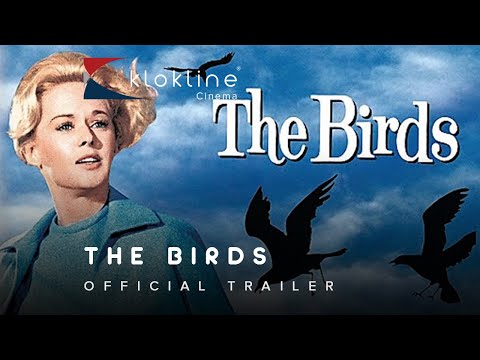
I must’ve been in 7th or 8th grade the first time I watched “The Birds.” It was my mom’s idea — I can picture her slipping the VHS tape into our dual TV-VCR, as I looked on from under a blanket on the floor. Since the moment I witnessed birds of all varieties dive-bombing Tippi Hedren, careening into telephone booths, assembling in attack formations in fields and on telephone wires, I’ve been suspicious of the entire biological class. It didn’t help that I’ve had my own run-ins with birds over the years: aggressive pigeons in New York City and Boston, seagulls at the beach, a female cardinal that found its way into my kitchen and resulted in me chasing it out wielding a tennis racket.
Despite all this, I am willing to admit that I might be missing out.
According to recent data by the U.S. Fish & Wildlife Service, 96 million Americans have engaged in “birding” as a hobby. This includes the amateurs with bird feeders and bird baths at home, and more serious watchers who travel great distances (at great expense) to glimpse a rare species or track a flock’s migration patterns. Birders are also big spenders: in 2022, they spent $107 billion on bird-related activities. And contrary to popular belief, they are not all old. Since the pandemic, young people have jumped on the birding boom.
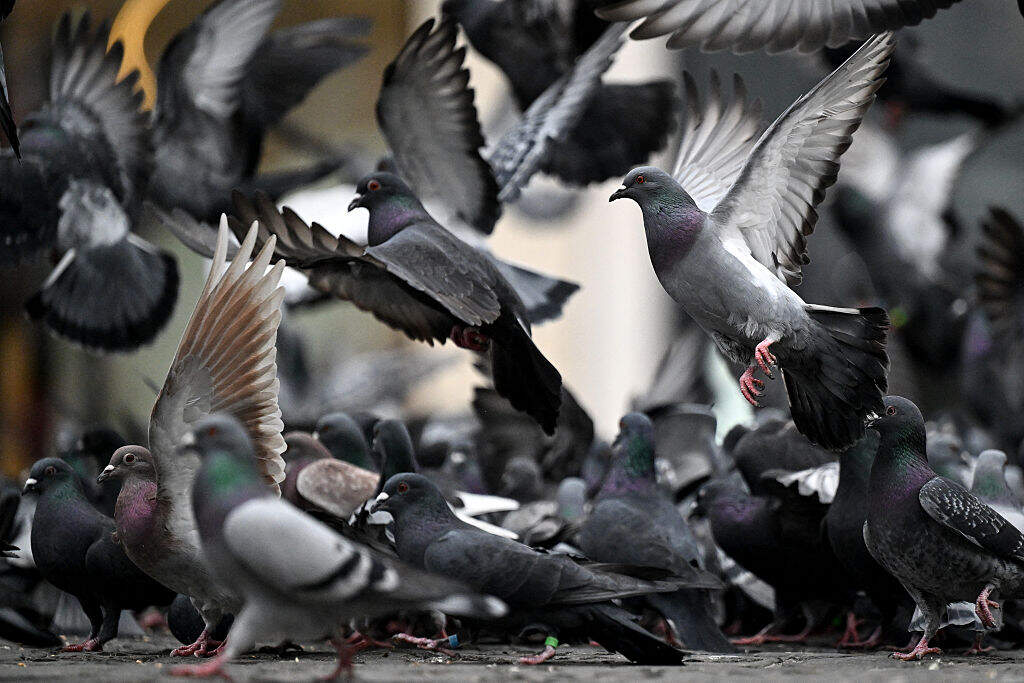
I spent 30 minutes this week poking around the Audubon Society’s website in a feeble attempt at exposure therapy. I discovered that even I am not impervious to birds’ remarkable feats: the Peregrine falcon can reach a velocity of 240 miles per hour during a dive, for example. The bar-tailed godwit can fly non-stop from Alaska to New Zealand. Some species of woodpeckers peck 16 times per second, up to 8,000 pecks per day. Turkey vultures vomit on predators — from as far as 10 feet away — as a form of self defense. And pigeons can recognize human faces — mine and yours, for real. That’s wild and more than a little unnerving.
I have a feeling that the birders on this email list — and surely there are hundreds of you — would tell me to keep going. To use these fun facts as a gateway drug to get outside and observe these creatures in their natural habitats. It’s time I lay down my armor and join the ranks of bird-watchers with their backpacks and binoculars!
I’m not there yet, reader. I may never be. My fear is hardwired: the beady eyes, the scratchy feet, all that unpredictable swooping and swirling that could result in an unintentional collision. But I’m inching closer, because theoretically, I should be a bird lover. I love being outside; nature calms me. I think there’s something wonderful and bizarre about joining others in a quest to see 50-plus species of North American warblers. Maybe I’ve just got to think about it differently.
I talked to someone last week who set a goal for himself to walk the entire perimeter of Cape Cod. His only rule is that he has to walk as close to the shoreline as possible. He set a related goal a few years back, when, while living in Cambridge, he tried to walk to the source of the Mystic River. He walks alone, and without the distraction of music or podcasts. It’s a walking meditation, when he puzzles out problems or thinks about nothing at all, for a few miles at a time.
As much as I can’t get into bird watching, I would happily sign up for walks like the ones my friend does. It engages all the senses. It’s active, not passive. It’s free, and it’s concrete — walking happens in the real world, not on a screen. If you pay close attention, you could be delighted by ordinary things, like a funny-shaped rock. I bet those benefits aren’t so different from birding for a few hours? And they’re things that are good for all of us, especially now, in the blur of holiday hustle and the pull to recap 2025 and set intentions and resolutions (yipes) for the year ahead.
Sociologist Colin Jerolmack sums up my feelings about pigeons in this way: “Like weeds in the cracks of pavement, pigeons represent chaotic, untamed nature in spaces designed for humans.” (Others might say: What if we humans are the chaotic untamed nature in spaces designed for birds? What if we are the weeds! Which, fair.)
Unlike Tove Danovich, my Instagram algorithm will never be overtaken by pigeons. But her exploration of the humble bird for Cog this week — which I refused to read when it came in, because of my own ick factor — did make me take a second look. I’m not planning to put a bird bath in my garden, and I will not be investing in a bird cam, but this level of engagement feels like progress.